
News
4 Months To Elections: Plots To Remove INEC Chair, Stop BVAS Raise Dust

Barely four months to the 2023 general elections, a plot to remove the chairman of the Independent National Electoral Commission (INEC), Prof. Mahmood Yakubu, is being hatched by top political actors in the country, Daily Trust has gathered.
Top politicians and persons close to the seat of power in Abuja are said to be firming up the plot as a last ditch plan should the INEC chairman fails to accede to their demands regarding the conduct of the elections.
Preparations for the conduct of the elections are in top gear following the lift of ban on campaign activities by the INEC on September 28.
The INEC, on its part, said it had reached an advanced stage with the process including procurement of materials. The commission has also advertised for the temporary election
The INEC chair, in an exclusive interview with Daily Trust penultimate week, had reiterated that the commission would deploy Bimodal Voter Accreditation System (BVAS) as done during recent off-season elections.
Yesterday, the Coalition of United Political Parties (CUPP) addressed a press conference in Abuja and raised the alarm over the plot to remove the INEC chairman.
CUPP spokesman, Ikenga Ugochinyere, who spoke on behalf of the opposition parties, said the coalition had also uncovered fresh plots to deactivate the Bimodal Voter Accreditation System (BVAS) from being used in the election and ultimately stop electronic transmission of results.
READ ALSO:
- Man gets life jail for defiling 17-year-old
- Wike appoints another 28,000 special advisers
- Sacked workers threaten ex-boss with kidnap, demand N5m
- UCL: Chelsea cruise to win at 10-man AC Milan
Prior to the CUPP’s press conference, sources had told Daily Trust that political actors believed the elections would be difficult to manipulate under the current circumstances.
The three “unwanted” elements about the elections which the politicians wanted expunged, Daily Trust gathered, include the use of BVAS for accreditation of voters, cancelation of the use of incident forms and electronic transmission of election results.
Two governors–one from the South East and another from North East–are said to be in the forefront of the plot to kick out the INEC chairman. Also, a leader in the National Assembly, who allegedly felt betrayed by the INEC chairman, is said to have joined the prey “to get back at the chairman”.
The fear over BVAS
BVAS, introduced by INEC to replace the smart card reader used in the 2019 elections, is a biometric system that recognises voters based on their finger prints or faces.
An INEC insider said politicians are now wary of the use of BVAS and cancellation of the use of incidence form for voters not recognised by the BVAS device.
“The BVAS is very advanced. It’s different from the smart card reader in many ways. If it cannot capture your fingers, it can capture your face, and there is no excuse for not using it.”
According to the source, the agitations that that the INEC brings back the incident form and cancel the use of BVAS and the IREV platforms have thickened since the Anambra State governorship election.
A governor from the South East was said to have made frantic efforts to have the election swayed but was made impossible because of the adamant nature of the INEC top leadership and the electronic transmission of results.
“They had results from 10 local governments which they wanted the INEC to accept but they were told it was impossible with the current system. It was frustrating for the governor who had already told one of the candidates he woukd be declared as the winner,” said the source.
According to another insider in the commission, rather than work with the party, the governor later discovered that three senior INEC officials, including one in charge of the electronic systems had “compromised” to pave way for another party to win the election.
“They obtained security reports about the three of them, showing the transactions they had. This was how they pushed the person in IT out of his seat and blocked the reappointment of another senior commissioner,” said the source who asked not to be named due to the sensitivity of the issue.
READ ALSO:
- Labour Party unveils 1,234 member Presidential Campaign Council
- Atiku engages ex-PDP govs, others to woo Wike, others
- Crisis brews in Labour Party over released presidential campaign council list
Aside the political pressure being exerted on INEC, there were reports of a lawsuit instituted before the Federal High Court in Owerri, Imo state, seeking to stop INEC from using BVAS for the 2023 elections.
Yakubu in the eye of the storm
Some politicians are said to be uncomfortable with the INEC chairman’s rigid posture and unwillingness to help them during critical periods.
Yakubu was also lately embroiled in allegations around his assets declaration.
In late September, a Federal High Court in Abuja okayed hearing in a suit asking to compel the Code of Conduct Bureau (CCB) to release the assets declaration forms of the INEC chairman.
The plaintiff in the suit, marked FHC/ABJ/CS/33/2021, is one Emmanuel Agonsi.
Daily Trust gathered that this was not the first suit of this nature against the INEC chairman.
“There was another suit in Abakaliki. It went up to the Court of Appeal, they wanted to stop his renomination for second term. They nearly succeeded both at the level of Presidency and the National Assembly.
“He was there thinking his name would be submitted for reappointment when he was told that they had tabled the name of one professor, who was later appointed a national commissioner. When it came to the screening there was move to also block him but a presiding officer gave him a smooth sail, it is for that reason that the man now feel pained for INEC to have rejected him as candidate of his party,” one of our sources said.
Use of BVAS irreversible– INEC
INEC yesterday dismissed the call for the re-introduction of the incidence form and the suspension of the use of BVAS for the 2023 general elections.
INEC National Commissioner and Chairman, Information and Voter Education Committee, Festus Okoye, in a chat with Daily Trust yesterday, said: “The decision of the commission to introduce and use the BVAS is final and irreversible. It is backed up by the law and a substantial number of the BVAS for the 2023 elections have been delivered. The BVAS is the game changer and has buried the incident forms.
“Those engaged in identity theft should not near the polling units. Those that have stolen or bought over PVCs are out of business and should not attempt to access the PUs. The commission is focused on delivering on its mandate.
READ ALSO:
- Nollywood producer Seun Egbegbe set free after three years in prison
- Buhari swears in Ariwoola as substantive CJN
- EFCC files money laundering charges against ex-Lagos attorney-general Shasore
“The commission is not and will not pay attention to the negatives or the antics of those that will want to delegitimize the electoral process and the commission. The commission has reached the critical stage of the electoral process and all Nigerians, and all the critical stakeholders should join the commission in delivering a clean election.”
CSOs react
Executive Director Yiaga Africa, Samson Itodo, told Daily Trust that,
“I won’t be surprised if there are plans to blackmail INEC to suspend the use of the BVAS. Nigerians have endorsed the use of BVAS, and that is what matters. Any attempt to stop the use of the BVAS should be considered an assault on the sovereignty of Nigerians and an effort to subvert the popular will of the people.
“INEC should continue to resist the attempt to capture the institution by all means possible. It is within INEC’s constitutional powers to undertake, organize and supervise elections. Its powers cannot be subjected to any authority. The commission has insisted that the use of the BVAS for election has come to stay. Stakeholders should respect the commission’s powers.”
Executive Director, Resource Centre for Human Rights and Civic Education (CHRICED), Ibrahim Zikirullahi, said:
“We know there’s a vast array of political and partisan interests who may want to subvert the electoral process for their own self-serving ends. It’s however important to note that the will of these elements should not be allowed to prevail over the will of the Nigerian electorate.
“The key to ensuring desperate elements don’t undermine the process is to ensure there is vigilance.”
Also, Chairman, Transition Monitoring Group (TMG), Auwal Musa Rafsanjani, said:
“In elections, numbers that have no relationship with the votes cast are routinely written up all over the country. This is what we call rigging. In 2015 INEC used a technology solution in the form of Card Reader to verify the PVC and close the gap between the voting tallies and achieve over 50% in using the device to accredit voters in the presidential election.
“The result was that for the first time in Nigeria’s presidential election history, the loser declined to sue and, overall, the percentage of elections ending in the courts fell to about 43%. In 2007, 86.25% of all offices contested ended in court while in 2011, it was just about 51%.”








News
Group Accuses Ogun Govt of Plot to Transfer Public Schools to Political Allies
Group Accuses Ogun Govt of Plot to Transfer Public Schools to Political Allies
A civic group, Rights and Freedom Advocates (RIFA), has accused the Ogun State Government of planning to unlawfully transfer ownership of public schools to private individuals and political associates, describing the alleged move as “unconstitutional” and “a form of stealing by proxy.”
The allegation was contained in a press statement issued by the group’s president, Luqman Soliu, on April 13, 2026, in response to reports that the state government had decided to “return” some public schools to former owners or affiliated organisations.
RIFA, however, dismissed the claim of “returning” schools, insisting that the policy under consideration amounts to the “donation of public schools to cronies of government officials.”
According to the group, such a move would amount to abuse of public trust and a violation of constitutional provisions guiding the management of state assets.
“What Ogun State government plans to do is not return of public schools but donation or stealing by proxy of public schools,” the statement said, adding that the alleged plan is “dubious and fraudulent.”
READ ALSO:
- Trump Claims 158 Iranian Ships Destroyed as US Enforces Naval Blockade in Gulf Region
- Wike Denies ADC Was Blocked From Using Eagle Square for Convention
- Judge Dismisses Trump’s $10bn Defamation Suit Against WSJ Over Epstein Report
The organisation argued that the schools in question have undergone significant public investment over the years and should remain fully under government ownership, warning that any attempt to transfer them outside public control would amount to mismanagement of state resources.
RIFA further contended that some of the schools had previously been acquired by the government from private owners who were compensated at the time of takeover, stressing that reopening ownership claims could set a “dangerous precedent.”
The group also criticised the justification for the alleged plan, suggesting it could be linked to political patronage. It alleged that government officials may be attempting to reward political allies with public assets instead of investing in new educational infrastructure.
It warned that such actions, if carried out, could undermine access to affordable education, particularly for students from low-income families who depend on public schools.
RIFA further referenced past transitions in the state’s education sector, recalling previous administrations that undertook reforms in public schools, and argued that the focus should be on improving infrastructure rather than altering ownership structures.
The group urged the state government to abandon any plan that could be interpreted as privatising or reallocating public educational assets without broad stakeholder consultation.
It also called on civil society organisations, education stakeholders, and the public to closely monitor developments to ensure accountability in the management of public property.
The Ogun State Government has not yet issued an official response to the allegations at the time of filing this report.
Group Accuses Ogun Govt of Plot to Transfer Public Schools to Political Allies
News
Shari’ah Council Denies Viral Prayer Claim, Reiterates Call for INEC Chairman’s Removal
Shari’ah Council Denies Viral Prayer Claim, Reiterates Call for INEC Chairman’s Removal
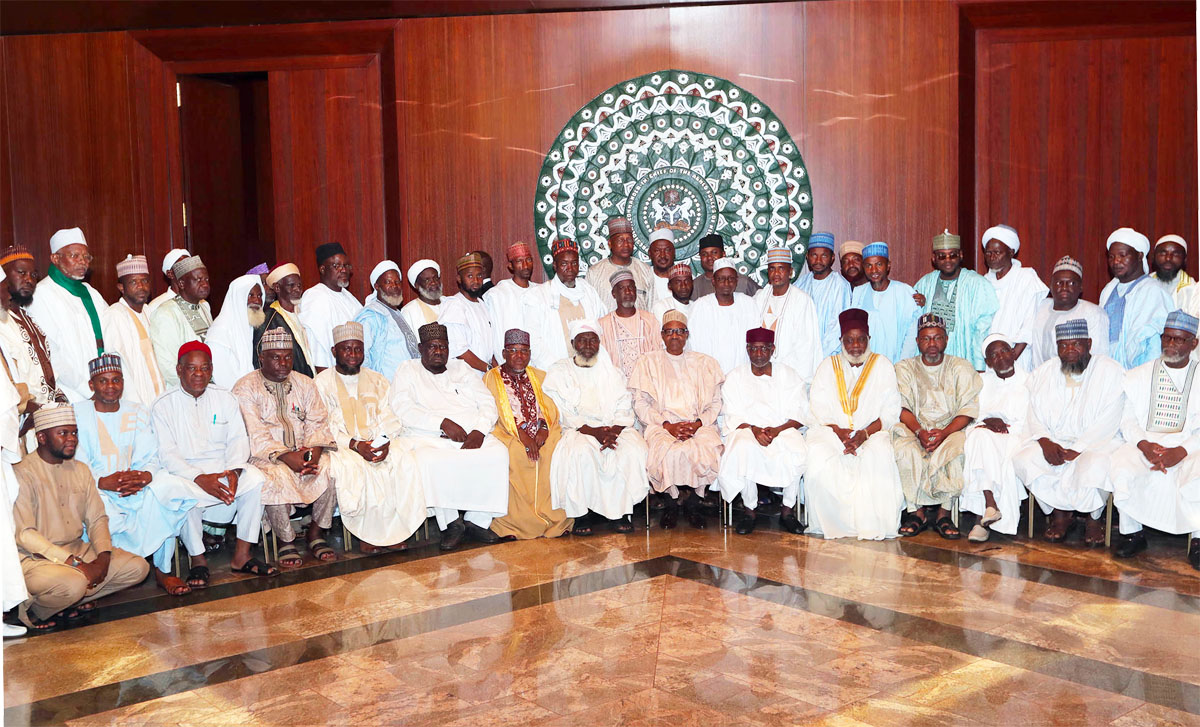
The Supreme Council for Shari’ah in Nigeria (SCSN) has distanced itself from viral social media reports alleging that it directed Muslims to embark on special prayers seeking the removal of the Chairman of the Independent National Electoral Commission (INEC), describing the claims as false, misleading, and politically motivated.
In a statement issued by its Secretary-General, Nafiu Baba Ahmed, the council said the reports circulating online did not originate from the organisation and should be disregarded by the public.
According to the SCSN, at no time did it instruct Muslims to organise prayers targeted at INEC or its leadership, stressing that the content being shared was fabricated with the intent to misinform Nigerians and create unnecessary tension.
“The fabrications are clearly intended to drag the Council into partisan political contestation and undermine national stability,” the statement said.
The council urged members of the public, especially the Muslim community and media organisations, to rely only on verified and official communication channels to avoid the spread of misinformation.
READ ALSO:
- Trump Claims 158 Iranian Ships Destroyed as US Enforces Naval Blockade in Gulf Region
- Wike Denies ADC Was Blocked From Using Eagle Square for Convention
- Judge Dismisses Trump’s $10bn Defamation Suit Against WSJ Over Epstein Report
While firmly denying the prayer directive, the SCSN reaffirmed its earlier position that the INEC chairman should either resign or be relieved of his duties. It said its stance is based on concerns it has consistently raised about leadership conduct and institutional neutrality.
The council alleged that its position is informed by what it described as actions and dispositions that suggest prejudice against Islam and Muslims, referencing concerns it said were contained in a widely circulated legal brief.
It argued that leadership of a sensitive national institution such as INEC must uphold strict neutrality, fairness, and public trust, warning that any perceived bias could undermine national cohesion and electoral credibility.
Reiterating its non-partisan status, the SCSN stressed that it remains committed to promoting justice, equity, and peaceful coexistence across religious and ethnic lines in Nigeria.
The organisation further cautioned against attempts to politicise its activities, insisting it would not be drawn into partisan disputes or used as a tool for political agendas.
“The Council will not allow itself to be drawn into the murky waters of partisan politics,” it added.
The development comes amid rising online misinformation trends in Nigeria, where religious and political statements are frequently misrepresented on social media, prompting calls for greater public caution and responsible information sharing.
The SCSN concluded by reaffirming its commitment to a peaceful and inclusive society where all citizens can practice their faith freely without discrimination or fear.
Shari’ah Council Denies Viral Prayer Claim, Reiterates Call for INEC Chairman’s Removal
News
Relief for Nigerian Doctors as FG Begins CONMESS Arrears Payment
Relief for Nigerian Doctors as FG Begins CONMESS Arrears Payment
The Federal Government has commenced the payment of long-awaited doctors’ salary arrears in Nigeria, offering relief to members of the Nigerian Association of Resident Doctors (NARD) after months of delays tied to the Consolidated Medical Salary Structure (CONMESS) review.
The association confirmed the development in an official communication signed by its Publicity and Social Secretary, Abdulmajid Ibrahim, noting that disbursement is already underway across various institutions.
According to NARD, the salary arrears payment covers between one and six months for affected doctors, with many members already confirming receipt. The association described the development as a significant step toward resolving lingering welfare concerns in Nigeria’s health sector.
“The leadership of NARD is pleased to inform all members that payment of the outstanding 25/35 CONMESS review arrears has commenced,” the statement read, highlighting progress on the implementation of the revised salary structure.
READ ALSO:
- OAU Students Begin 72-Hour Lecture Boycott Over Transport Crisis
- Ghanaian Footballer Dominic Frimpong Shot Dead in Berekum Chelsea Bus Attack
- Man Allegedly Kills Two Sisters, Five-Year-Old Daughter in Ondo
Despite the progress, NARD disclosed that the August component of the arrears is currently experiencing minor administrative delays. The association explained that the issue is being addressed and that payments for that period may take an additional one to two weeks to be completed.
Doctors who are yet to receive their payments have been urged to remain patient, as the Federal Government continues the phased disbursement nationwide.
The CONMESS review, which determines salary scales and allowances for medical and dental practitioners in public hospitals, has long been a source of tension between doctors and the government. Delays in implementing the structure and settling arrears have, in the past, triggered industrial actions by NARD, disrupting healthcare services across the country.
Resident doctors—who form a critical part of Nigeria’s tertiary healthcare system—have repeatedly raised concerns over poor welfare, unpaid salaries, and challenging working conditions. These issues have contributed significantly to the rising brain drain in Nigeria’s health sector, with many professionals relocating abroad in search of better opportunities.
Industry observers note that the loss of medical personnel has worsened Nigeria’s already strained doctor-to-patient ratio, placing additional pressure on healthcare facilities nationwide.
The commencement of the payment of doctors’ arrears is therefore seen as a strategic move by the Federal Government to stabilise the sector, improve morale among healthcare workers, and avert potential industrial unrest.
NARD further advised members who experience any discrepancies after the disbursement process to channel complaints through their respective institutions for prompt resolution.
Reaffirming its commitment, the association commended members for their patience and resilience, assuring them that efforts to improve welfare conditions will continue.
Relief for Nigerian Doctors as FG Begins CONMESS Arrears Payment

-
 metro3 days ago
JUST IN: FG Publishes List of 48 Individuals, Groups Linked to Terrorism Financing in Nigeria
-

 metro2 days ago
BREAKING: Troops Arrest 15-Year-Old Linked to Killing of Gen Braimah in Borno
-

 metro3 days ago
42-Year-Old Married Woman Declared Missing Found in Hotel with Man
-
 Politics3 days ago
2027: Oyo APC Governorship Aspirant Saheed Oladele Resigns From Party
-
 metro3 days ago
ADC Threatens Civil Disobedience To Force INEC Chairman To Resign
-

 metro2 days ago
Fayose Warns Makinde May Query Olubadan Over Absence at Ibadan Coronation Event
-
 metro2 days ago
Zulum Defends NAF Airstrike, Says Jilli Market Closed Five Years Ago
-

 metro2 days ago
BREAKING: 56 Killed in Accidental Bombing at Borno–Yobe Border Market