
Business
42 US states sue Meta for teens mental health crisis

42 US states sue Meta for teens mental health crisis
Dozens of States in the United States have filed a suit against tech giant, Meta for the alleged harm the company has done to teenagers in the country.
The company, which is parent to several social media platforms including Instagram, and Facebook, was sued on Tuesday by 42 states in the US. The Attorneys General of the states claimed that the company has contributed to the mental health crises facing young people in the country, ABC News reports.
A class suit was filed by 33 states in a California federal court, while the nine other states sued the company in their respective jurisdictions. Some of the states dragging Meta to court include California, New York, Florida, Kentucky, Massachusetts, Nebraska, New Jersey, Tennessee, Vermont, Washington, Wisconsin and several others.
The states accused Meta of violating the Children’s Online Privacy Protection Act by collecting data on children under the age of 13 without their parents’ consent.
READ ALSO:
- Troops kill scores of terrorists, recover arms in Sokoto
- Lagos CBD dislodges vehicles, traders on Carter Bridge
- JUST IN: Tinubu receives update on tax reforms, wants speedy implementation
The filing read in part, “Meta has harnessed powerful and unprecedented technologies to entice, engage, and ultimately ensnare youth and teens. Its motive is profit, and in seeking to maximize its financial gains, Meta has repeatedly misled the public about the substantial dangers of its social media platforms.
“It has concealed the ways in which these platforms exploit and manipulate its most vulnerable consumers: teenagers and children.”
The states further alleged that the social media applications are designed by Meta to keep teenagers and young kids addicted to the platforms. They claimed that this effect was achieved through the apps’ algorithms, numerous alerts, notifications and infinite scroll features on feed pages.
Responding to the suit, the company expressed disappointment at the action stating that it also shared the states’ “commitment to providing teens with safe, positive experiences online.”
“We’re disappointed that instead of working productively with companies across the industry to create clear, age-appropriate standards for the many apps teens use, the attorneys general have chosen this path,” the Tuesday statement read.
This action comes two years after a report by The Wall Street Journal in 2021 which revealed that the company was aware of the harm Instagram causes teenagers in terms of body image and mental health. Meta itself had carried out an internal study which showed that 13.5% of teen girls using the platform stated that it makes thoughts of suicide worse while 17 per cent attributed worsening eating disorders to their usage of the app.
42 US states sue Meta for teens mental health crisis








Entertainment
NRC, Entertainers Finalise Plans for 2026 Valentine Train Ride

NRC, Entertainers Finalise Plans for 2026 Valentine Train Ride
A team of leading Nigerian artistes and entertainment executives has paid a courtesy visit to the Managing Director of the Nigerian Railway Corporation (NRC), Kayode Opeifa, ahead of the 2026 Valentine Love Train experience.
The delegation included celebrated musician Sunny Neji, Managing Director of Ojez Entertainment Limited, Joseph Odobeatu, and veteran vocalist Yinka Davies.
The high-profile visit formed part of final preparations for the Valentine-themed train ride scheduled for Saturday, February 14, 2026, at the Mobolaji Johnson Train Station.
Dr. Opeifa received the artistes and commended the creative industry for choosing the national rail system as the venue for the annual Valentine event. He noted that the partnership reflects growing public confidence in the corporation’s safety standards, operational improvements, and renewed focus on customer experience.
READ ALSO:
- 2027 General Elections: INEC Announces February 20 for Presidential Poll
- EFCC Nabs Three in Borno Over Viral ₦500 Naira Mutilation Video
- Omokri Accuses El-Rufai of Rights Abuses During Kaduna Governorship
“The 2026 edition aims to deliver an unforgettable experience while deepening public engagement with the rail service,” Opeifa said, reaffirming the NRC’s commitment to providing secure and efficient transport for passengers during special events.
Organisers disclosed that this year’s edition will feature an expanded entertainment lineup, including performances and appearances by Charles Inojie, Yinka Davies, Sunny Neji, and Segun Arinze. Guests are expected to enjoy live music, comedy, a couple’s game show, fashion showcases, and special performances throughout the Lagos–Ibadan–Lagos train ride, culminating in a Valentine banquet ball.
The Valentine Love Train has in recent years become a fixture on the NRC’s festive calendar, attracting couples, families, and leisure seekers with its blend of travel, romance, and entertainment. The initiative also aligns with ongoing efforts by the corporation to promote rail transportation as a viable and enjoyable alternative for intercity travel.
With final logistics being fine-tuned, organisers say the 2026 edition promises to combine safety, comfort, and premium entertainment for participants.
NRC, Entertainers Finalise Plans for 2026 Valentine Train Ride
Auto
Lagos Motor Fair, Autoparts Expo to begin March 17, targeting Investment, Industry Growth

Lagos Motor Fair, Autoparts Expo to begin March 17, targeting Investment, Industry Growth
The 20th edition of the Lagos International Motor Fair and the 13th Africa Autoparts Expo is set to spotlight investment, technology transfer and industry collaboration as organisers intensify efforts to position Nigeria as a major automotive hub in West Africa.
The three-day event, which will also incorporate the Africa Motorcycle and Tricycle Expo, is scheduled to hold from March 17 to 19, 2026, at the Federal Palace Hotel in Lagos.
Organisers said the upcoming edition would focus strongly on accelerating the development of the country’s automotive sector by creating platforms that connect global manufacturers with local industry players.
“Nigeria has all it takes to become a global automotive industry giant,” the organisers stated, noting that the fair remains a strategic contribution toward driving growth despite prevailing industry challenges.
Chairman of the Organising Committee, Ifeanyichukwu Agwu, said the exhibitions had over the years evolved into a key platform for attracting investment into automobile spare parts and accessories manufacturing while strengthening aftermarket activities across the region.
“We have consistently used these events to attract investment into auto components manufacturing and to showcase the enormous capacity and potential of this critical sector of the economy,” he said.
READ ALSO:
- First Daughter of Murtala Muhammed Reflects on Life Without Father, Preserving His Legacy
- Anambra Police Arrest Motel Owner, Two Others Over Firearms, Drug Trafficking
- 2 Nigerians Killed While Fighting for Russian Army in Ukraine War
Agwu, who also serves as Managing Director of BKG Exhibitions Limited, disclosed that the 2026 edition would place emphasis on business-to-business engagement between original equipment manufacturers (OEMs) and auto parts dealers from Nigeria and neighbouring countries.
According to him, the goal is to foster partnerships capable of leading to the establishment of component manufacturing plants locally.
He added that the exhibition is expected to support government policies aimed at building a sustainable automotive industry by stimulating the emergence of companies involved in component production.
Calling for policy adjustments, Agwu urged the Federal Government to prioritise spare parts and components manufacturing over vehicle assembly, arguing that deeper technology transfer and innovation occur within the components segment.
“Spare parts manufacturing is where real technology transfer occurs. It involves precision engineering, planning and innovation—far beyond the coupling processes involved in assembly,” he said, while also advocating a review of the existing automotive policy to better support local production.
Despite the challenges associated with hosting large-scale industry events, Agwu reaffirmed the organisers’ commitment to sustaining the platform, warning that neglecting the automotive sector could have far-reaching consequences for the economy and employment.
The organisers said more than 100 original components manufacturers from countries including China, India, South Korea, South Africa, Singapore and Turkey, alongside major automobile distribution and manufacturing companies operating in Nigeria, are expected to participate.
In addition to product exhibitions, the event will feature seminars and technical workshops focusing on policy, investment opportunities, technology transfer and industry best practices, with each day structured to deliver value to exhibitors, investors, policymakers and other stakeholders.

Lagos Motor Fair, Autoparts Expo to begin March 17, targeting Investment, Industry Growth
Business
Naira Could Trade Below ₦1,000/$ With Dangote Refinery at Full Capacity — Otedola

Naira Could Trade Below ₦1,000/$ With Dangote Refinery at Full Capacity — Otedola
Billionaire businessman Femi Otedola has projected that the naira could strengthen to trade below ₦1,000 per US dollar as the Dangote Petroleum Refinery achieves full operational capacity. The prediction comes as Nigeria anticipates a major boost in domestic fuel production, potentially reducing import dependence and easing pressure on the foreign exchange market.
Otedola made the projection in a post on X, congratulating Aliko Dangote on the refinery reaching its designed processing capacity of 650,000 barrels per day (bpd). He described the milestone as a historic moment for Nigeria’s energy sector, saying it could positively impact the naira exchange rate, foreign reserves, and overall economic stability.
According to Otedola, the refinery’s capacity to produce up to 75 million litres of Premium Motor Spirit (PMS) daily positions Nigeria to meet domestic fuel demand and even generate surplus for export. He highlighted that this would reduce the country’s reliance on imported petroleum products, which historically exerted heavy pressure on the naira and foreign exchange resources.
READ ALSO:
- Adeyanju Urges EFCC, DSS to Probe El-Rufai Over Alleged Corruption, Insecurity in Kaduna
- Granite-Laden Truck Kills Motorist, Leaves Wife Critically Injured in Lekki–Ajah Crash
- City Boy Movement Receives Bus Donations from Zenco, Obi Cubana for Tinubu’s Campaign
“With domestic refining now firmly underway after decades of reliance on imports, pressure on the foreign exchange market should ease significantly, potentially pushing the naira below ₦1,000/$ before year-end,” Otedola said. He also noted that the EFCC and monetary authorities’ support in maintaining a conducive economic environment would complement these gains.
The Dangote Refinery, located in the Lekki Free Zone, Lagos, is Africa’s largest single-train refinery. Experts say that reaching full production will conserve billions of dollars previously spent on importing refined petroleum products and strengthen Nigeria’s foreign exchange reserves. Plans are also underway to expand refining capacity to 1.4 million bpd, with increased production of petrochemicals like polypropylene and linear alkyl benzene, further reducing industrial import dependence.
Economic analysts have welcomed the refinery’s milestone but caution that naira stability will still depend on broader macroeconomic reforms, oil prices, foreign capital inflows, and Central Bank of Nigeria (CBN) policies. Nevertheless, Otedola’s projection reflects renewed optimism that domestic refining capacity could be a turning point for the Nigerian economy, energy security, and the foreign exchange market.
Naira Could Trade Below ₦1,000/$ With Dangote Refinery at Full Capacity — Otedola

-

 metro1 day ago
IKEDC Sets Feb 20 Deadline for Customers to Submit Valid IDs or Face Disconnection
-
 Education1 day ago
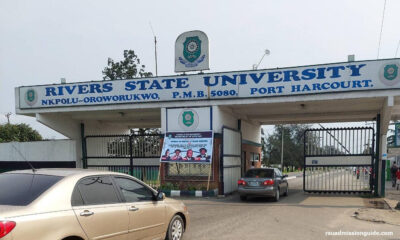
Supreme Court Affirms Muslim Students’ Right to Worship at Rivers State University
-

 metro21 hours ago
Lagos Police Launch Manhunt for Suspect in Brutal Ajah Murder
-

 Business3 days ago
Dangote Refinery Slashes Petrol Price to ₦774, Ends PMS Bonus Window
-

 News21 hours ago
Aso Rock Goes Solar as Tinubu Orders National Grid Disconnection
-

 Business2 days ago
Naira Could Trade Below ₦1,000/$ With Dangote Refinery at Full Capacity — Otedola
-
 metro3 days ago
Kwara, Katsina Bloodshed: TMC Condemns Attacks, Dismisses ‘Jihadist Preacher’ Claims
-

 metro1 day ago
Army University Professor Dies in Boko Haram Captivity After Nearly One Year