

International
Catholic church suspends priest over secret marriage in United States
Catholic church suspends priest over secret marriage in United States
The Catholic Diocese of Warri, has suspended Rev. Fr. Daniel Okanatotor Oghenerukevwe from the priesthood following his reported marriage in the United States.
This was made known in a statement titled: ‘Decree of Suspension’, dated Thursday, January 16, 2025, jointly signed by Bishop of Warri, Rt. Rev, Anthony Ovayero Ewherido and Chancellor/Notary Very Rev. Fr. Clement Abobo.
The statement alleged that Oghenerukevwe entered into marriage with one Ms. Dora Chichah at the Streams of Joy Church in Dallas, USA, on 29 December 2024, noting that the footage of the marriage had been widely circulated on social media.
By his this action, the church said that Oghenerukevwe has incurred a Latae Sententiae suspension in accordance with the provisions of Canon law of the church.
“Most Rev. Anthony Ovayero Ewherido, Bishop of Warri, do hereby officially decree that he is suspended from the exercise of sacred ministry.
READ ALSO:
- US deportation raids expected to begin on Trump’s first day in office
- Fuel price hike: Long queues resurface at petrol stations
- Sanusi: My comments on Tinubu’s policies sensationalised
“On November 30, 2024, Rev Fr Daniel Okanatotor Oghenerukevwe, who has been out of active ministry and without any official assignment in the United States of America, contacted me with a request to be released from all canonical obligations and responsibilities associated with Holy Orders within the Roman Catholic Church.
“The Diocese of Warri reached out to Fr. Oghenerukevwe, requesting the submission of documents required to initiate the process. However, on December 29, 2024, Fr. Oghenerukevwe entered into marriage with Ms. Dora Chichah at the Streams of Joy Church in Dallas, USA. Footage of this marriage has been widely circulated on social media.
“By this action, Rev. Fr. Daniel Okanatotor Oghenerukevwe has incurred a Latae Sententiae suspension in accordance with the provisions of Canon 1394 §1, and I, Most Rev. Anthony Ovayero Ewherido, Bishop of Warri, do hereby officially decree that he is suspended from the exercise of sacred ministry.
“As such, he is prohibited from presenting himself as a priest of the Catholic Diocese of Warri in any capacity. All canonical implications associated with this suspension take immediate effect (cf. Can. 1333). He retains the right to petition for the revocation or amendment of this decree in accordance with Canon 1734 §1 whenever he demonstrates a willingness to reform.
“May God grant him the grace to reflect on this situation and guide him on the path of reconciliation,” the statement said.
Catholic church suspends priest over secret marriage in United States











International
Iran Rejects US Talks as Trump’s Mixed Signals Deepen Hormuz Standoff
Iran Rejects US Talks as Trump’s Mixed Signals Deepen Hormuz Standoff
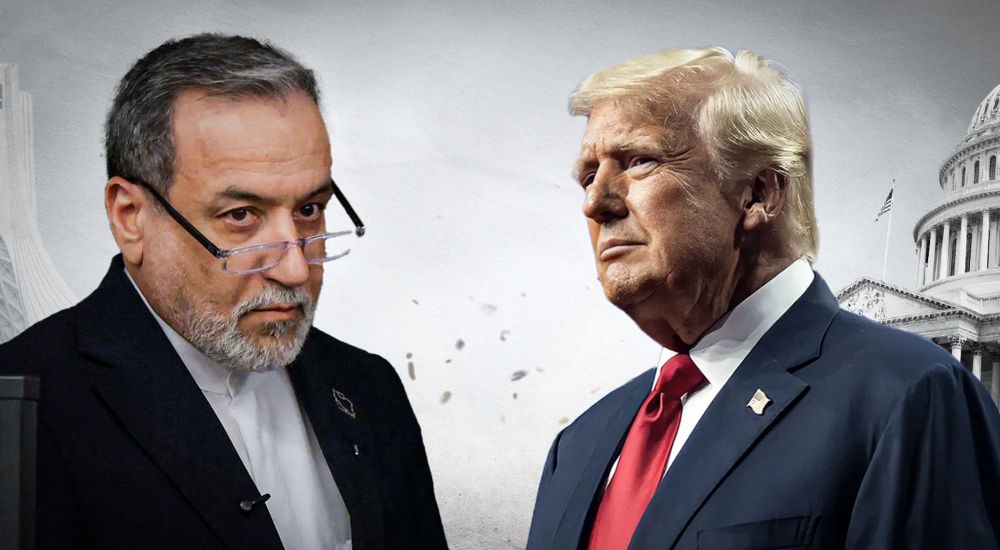
Iran’s top security official on Tuesday ruled out any negotiations with the United States, dismissing President Donald Trump’s suggestion that he was open to talks as “mixed signals” and insisting that Tehran’s conditions must be met before any dialogue can begin.
“Don’t get distracted by the U.S. president’s mixed signals — from ‘no negotiations’ to ‘we’re ready to talk’,” Mohsen Rezaei, secretary of Iran’s Supreme National Security Council, posted on X. “The stakes around oil and the straits have changed. Damage control won’t stop what’s coming. No talks until Iran’s conditions are met. Period!”
Trump said on Monday that he was open to holding talks with Iran, after weeks of saying it was too early to make a deal to end the Middle East war. “The failing Nation of Iran wants to make a deal, quickly and badly. I will determine whether or not the U.S.A. will choose to engage — The concept of which we are open to,” Trump wrote on his Truth Social network. The statement marked a sharp reversal from Trump’s remarks just days earlier. On September 9, he told reporters at Andrews Air Force Base that the US was “not looking for” negotiations with Iran. “Originally, I wanted to make a deal. We’re so far down the line; they have very little country left right now. So we’re not looking for it,” he said at the time.
Tehran has repeatedly listed demands as preconditions for ending the war and its blockade on the Strait of Hormuz. According to Iranian officials, these include a definitive end to the war and all aggression against Iran and its regional allies, lifting the naval blockade imposed on Iranian ports, full compensation for war damages, removal of sanctions against Iran’s economy, and the unconditional release of frozen Iranian assets abroad. Rezaei’s rejection came as Tehran and Muscat postponed talks between Iran and Gulf Arab states that had been scheduled for Monday. Iran’s Fars news agency reported that the postponement was made “at the request of some countries in the region and was a joint decision by Tehran and Muscat”.
READ ALSO:
- Saudi Arabia Vows ‘Firm’ Response as Houthi Attacks Wound 13
- Peter Obi Rejects Anambra Debt Claims, Challenges Soludo Govt to Produce Evidence
- Peter Obi: Release My UNN Academic Records, I Have Nothing to Hide
The diplomatic standoff unfolds against a backdrop of continuing violence in the Strait of Hormuz. On Sunday, an attack on an Iranian commercial cargo vessel killed one person and wounded four others, according to Iranian state media. The same weekend, an attack on the commercial vessel MT El Gaia left one Indian crew member missing and 13 rescued. The United Kingdom Maritime Trade Operations (UKMTO) has reported multiple incidents involving merchant vessels in the strategic waterway, advising mariners to “consider the latest maritime security information and maintain awareness of the evolving operational environment”. Oman, which has emerged as a key mediator in the conflict, saw its Foreign Minister Badr Albusaidi announce the postponement of the Gulf talks “in the interests of consensus.” “We remain committed to fostering dialogue that supports stability and lasting cooperation in our region,” he said on X.
The Strait of Hormuz remains a central point of contention. Before the war began in late February, about one-fifth of the world’s oil and liquefied natural gas supplies were shipped through the waterway. Traffic has since plummeted amid continued security risks. Brent crude futures jumped more than 2 per cent on Tuesday, trading above $107 per barrel as the diplomatic impasse deepened. Trump has pushed to restore shipping through the strait to pre-war levels to bring down energy prices ahead of November’s midterm elections. But Tehran has shown no sign of relinquishing what it regards as a key source of strategic leverage.
The latest exchange fits a broader pattern of conflicting signals from Washington. In June, the United States and Iran signed a framework agreement that included provisions for a $300 billion private investment fund to rebuild Iran’s economy. Negotiations were scheduled to conclude within 60 days, but the process stalled amid renewed hostilities. Iranian officials have repeatedly dismissed contradictory statements from Washington as political messaging rather than evidence of a genuine diplomatic opening. Tehran has stressed that any future diplomatic process would require concrete guarantees rather than verbal commitments, arguing that previous US reversals have undermined trust.
Iran Rejects US Talks as Trump’s Mixed Signals Deepen Hormuz Standoff
International
Saudi Arabia Vows ‘Firm’ Response as Houthi Attacks Wound 13
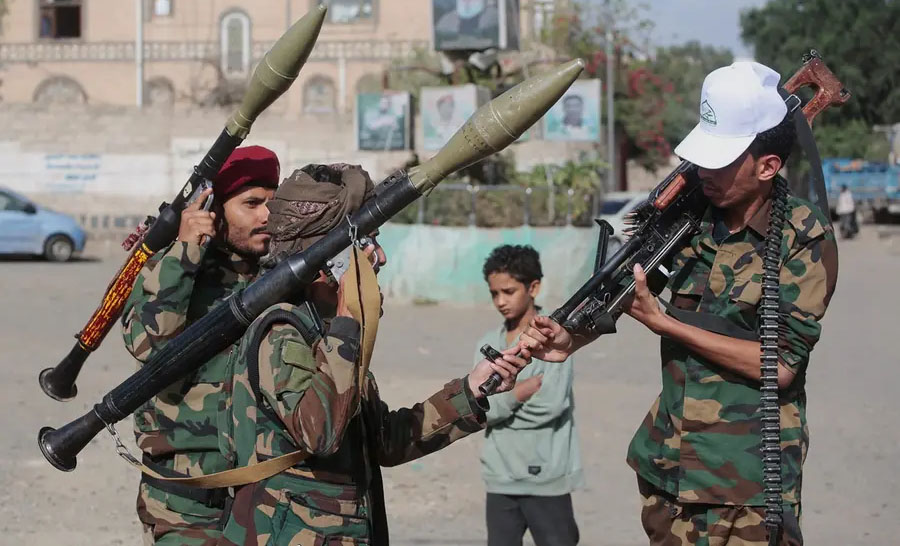
Saudi Arabia Vows ‘Firm’ Response as Houthi Attacks Wound 13
Saudi Arabia has pledged to respond “firmly” to a wave of Houthi missile and drone attacks that wounded 13 civilians in the kingdom’s south, as the Iran-backed group tightens its grip on the Bab al-Mandab Strait and pushes oil prices above $100 a barrel.
The Saudi-led coalition said it would take “all necessary operational measures” to protect the kingdom’s sovereignty after Monday’s strikes on Khamis Mushait, Abha and Taif — three southern cities far from the Yemeni border. The attacks injured 13 civilians, damaged seven homes and two vehicles, and triggered air-raid alerts across six Saudi regions, including Jeddah, Yanbu, Jizan and AlUla.
According to coalition spokesman Brigadier General Turki al-Maliki, Houthi forces launched “dozens of ballistic missiles and drones” at civilian and military targets in southern Saudi Arabia. A resident of Khamis Mushait told Agence France-Presse he heard “intense blasts” that left fires burning for a “long time”. “Honestly, we couldn’t sleep at all,” he said. Saudi air defences intercepted multiple projectiles, but falling debris caused civilian injuries. Civil Defence lifted the alerts by Tuesday morning, saying the danger had “passed”. The coalition retaliated with more than 50 airstrikes on Houthi-held areas, according to Houthi sources — matching the scale of the previous day’s bombardment.
READ ALSO:
- Peter Obi Rejects Anambra Debt Claims, Challenges Soludo Govt to Produce Evidence
- Peter Obi: Release My UNN Academic Records, I Have Nothing to Hide
- A Son Wouldn’t Have Done Better — Dangote Speaks on Daughters, Succession
The renewed fighting has far-reaching consequences beyond Yemen’s borders. Houthi forces have seized Mayyun Island, along with Greater and Lesser Hanish and Zugar Island, giving them control of all three key islands at the southern entrance to the Bab al-Mandab Strait. They have also captured the port city of Mokha and the coastal town of al-Khawkhah, completing their takeover of Yemen’s entire Red Sea coast. The timing is critical. With the wider US-Iran war choking the Strait of Hormuz, the Bab al-Mandab has become a vital artery for Saudi oil exports. Houthi attacks on Saudi oil infrastructure have already pushed oil prices above $100 per barrel**, while average US diesel prices topped **$6 for the first time. Saudi Arabia has shut down its East-West pipeline as a precaution following attacks in the Riyadh and Medina regions — a move that further constrains the kingdom’s ability to export crude.
The human cost of the renewed conflict continues to mount. The UN’s International Organization for Migration (IOM) reports that 93,864 people have been displaced since fighting reignited in July, with the heaviest impact in Ta’iz and Lahj governorates. UN monitors verified 40 civilian casualties — 8 deaths and 32 injuries — between 1 and 14 September. Women and children accounted for half of those killed and more than half of the wounded.
A member of the Houthi Political Bureau declared that “Yemen’s response will continue and escalate” until Saudi Arabia stops its “aggression” against the Yemeni people. Houthi military spokesman Yahya Saree claimed the attacks were retaliation for more than 300 Saudi airstrikes in Yemen over the past five days. The Houthis, who seized Yemen’s capital Sanaa in 2014 and sparked a civil war that has become one of the world’s worst humanitarian disasters, remain undeterred by Saudi air power.
Saudi Crown Prince Mohammed bin Salman met Egyptian President Abdel Fattah al-Sisi on Tuesday to discuss regional developments. But hopes of a broader de-escalation remain slim. US media reported last week that President Donald Trump had rejected a personal request from the Saudi crown prince to intervene in the war. Trump said on Monday he was open to talks with Iran, but Tehran’s top security chief Mohsen Rezaei responded that “there will be no negotiations until Iran’s conditions are met”. A proposed meeting between Gulf states and Iran over the future of Hormuz was postponed on Monday, with Tehran accusing Riyadh of using Yemen as a pretext to delay the talks.
Saudi Arabia faces a difficult path. Its airstrikes have so far failed to deter the Houthis’ advance, and the kingdom’s oil-dependent economy is increasingly vulnerable to disruption. With the Strait of Hormuz closed and the Bab al-Mandab now under Houthi control, the world’s leading crude exporter is navigating its most dangerous security environment in years. For ordinary Yemenis and Saudis alike, the cost is measured not only in oil prices but in lives, homes and displaced families.
Saudi Arabia Vows ‘Firm’ Response as Houthi Attacks Wound 13
International
Trump’s $5,000 Dividend: Big Cash Promise Raises $1.2tn Funding Question

Trump’s $5,000 Dividend: Big Cash Promise Raises $1.2tn Funding Question
With America’s crucial midterm elections looming, President Donald Trump has dangled a potentially massive financial windfall before voters, promising a $5,000 “dividend” for every adult US citizen if Republicans retain control of Congress—a pledge that could cost the government more than $1.2 trillion and is already raising questions over how the ambitious giveaway would be funded.
Trump unveiled the proposal as Republicans gear up for the November midterm elections, linking the proposed cash payment directly to a GOP victory in both chambers of Congress.
The President has argued that booming economic activity and revenue generated by his administration’s policies, particularly tariffs, would provide the resources for the payments.
But the scale of the promise has immediately put the spotlight on the numbers: with roughly 240 million adult Americans potentially eligible, a $5,000 payment could carry a price tag of about $1.2 trillion, far exceeding current tariff revenues.
More importantly, the proposed dividend is not yet an approved government payment. Congress would have to pass legislation authorising the scheme and determine its eligibility rules and funding mechanism.
The proposal therefore leaves Trump with a politically potent election-year promise—and Congress with a potentially trillion-dollar bill if Republicans emerge from the midterms with control of the legislature.
“If the Republicans win the House of Representatives and the United States Senate… I will issue a dividend to every adult citizen in the United States of America for $5,000,” Trump said.
The White House subsequently formally promoted the proposal as a $5,000 cash payment to every adult American citizen, describing it as a way for Americans to share in what the administration says are the benefits of its economic policies.
Trump compared the proposed payment to a dividend distributed by a successful company to its shareholders, arguing that Americans should benefit directly from the country’s economic gains.
He also indicated that the money would have to be spent within the United States, potentially directing a huge injection of cash into the domestic economy.
GOP victory condition
The proposed dividend, however, is tied directly to the outcome of the November midterm elections.
Trump’s promise is conditional on Republicans maintaining control of both the House of Representatives and the Senate.
That has given the proposal an unmistakable political dimension, coming as the Republican Party prepares for a difficult midterm contest in which control of Congress is at stake.
READ ALSO:
- Sanwo-Olu Joins Dangote as Historic N2.15tn Refinery IPO Opens on Nigerian Exchange
- Shehu Buba Submits Himself To DSS Over Banditry Allegations
- No Lives Lost as Responders Contain Dual Fire Outbreaks Across Lagos
Trump has insisted that the proposed payments are affordable and has dismissed concerns about the government’s ability to finance them.
But the proposal has immediately run into a major hurdle: Congressional approval.
House Speaker Mike Johnson has said legislation would be required before the government could make the payments, contradicting any suggestion that Trump could simply order the money to be distributed.
Over $1 trillion price tag
The size of the proposed programme is enormous.
Depending on the final eligibility requirements and the number of recipients, estimates put the total cost at between $1.2 trillion and $1.35 trillion.
That would make the proposed dividend one of the largest direct cash-transfer programmes in American history.
The Committee for a Responsible Federal Budget has estimated that giving $5,000 to every adult citizen could cost more than $1.2 trillion and substantially increase the federal deficit.
The organisation warned that such a programme would come on top of an already substantial US budget deficit and could worsen the country’s debt position.
The United States has already crossed the $40 trillion national debt threshold, according to recent reports, adding to concerns among fiscal conservatives about another massive federal spending commitment.
Where will the money come from?
The source of the money remains one of the biggest unanswered questions.
Trump has pointed to the strength of the economy and the revenue generated by his administration’s tariff policies.
Vice President JD Vance has also discussed tariff revenue as a potential source of funding, although the amount required for the proposed payments is substantially larger than the revenue generated by tariffs so far.
Commerce Secretary Howard Lutnick has offered another potential source, suggesting that part of the funding could come from a new visa programme.
But questions remain over whether these sources could generate enough money to finance a $5,000 payment to every eligible adult.
The scale of the challenge is illustrated by the mathematics: a $5,000 payment to roughly 240 million adult US citizens would require around $1.2 trillion.
Economists raise inflation concerns
Beyond the funding question, economists and fiscal policy analysts have raised concerns about what could happen if more than $1 trillion were injected into the economy.
Because recipients would receive large cash payments that could be spent on goods and services, economists warn that the programme could increase consumer demand and potentially add to inflationary pressure.
Critics also argue that borrowing to finance the payments would further increase the federal government’s debt burden and place upward pressure on interest rates.
Trump, however, has rejected the criticism and maintained that the payments would be affordable because of what he describes as unprecedented economic growth and revenue generation.
He has also rejected suggestions that the proposal amounts to an attempt to influence voters ahead of the midterms.
Not yet an approved payment
Despite the excitement generated by the announcement, the proposed $5,000 dividend is not currently an approved government payment.
There is no enacted law giving American adults an automatic entitlement to the money.
Congress would have to authorise the programme, establish eligibility requirements and determine how it would be financed before payments could be made.
There is also uncertainty over exactly who would qualify.
Trump initially described the beneficiaries as every adult US citizen, while subsequent comments from members of his administration have raised questions about whether higher-income Americans could be excluded.
Another Trump cash-payment promise
The proposal is also drawing attention because it follows earlier Trump proposals for direct payments to Americans.
Trump previously floated the idea of a $2,000 tariff-funded dividend, but that payment has not been distributed.
The new $5,000 proposal is considerably larger and would represent a major expansion of the direct-payment concept.
Trump has nevertheless doubled down on the latest promise, arguing that his administration’s economic policies have created sufficient resources to return money directly to Americans.
For now, however, the “Trump Dividend” remains a political promise rather than a guaranteed cheque.
Its implementation would depend on the outcome of the midterm elections, subsequent congressional action, agreement on funding and the final rules governing who would receive the money.
Trump’s $5,000 Dividend: Big Cash Promise Raises $1.2tn Funding Question
-

 metro3 days ago
MURIC fires back at Peter Obi: Forget Sallah ceremony, free Nigerian Muslims
-
 News2 days ago
SERAP Threatens Legal Action Over ₦126bn INEC Electoral Funds
-
 International3 days ago
Trump Tells Supporters to ‘Cheat Like Hell’ Ahead of US Election
-
 Politics2 days ago
Five Islamic Clerics Abducted After Tinubu Re-Election Prayer At Yari’s Zamfara Residence
-

 Auto3 days ago
Jetour Takes Award-Winning Dashing, Other SUVs to Abuja
-
 Business3 days ago
Dangote raises petrol price 6.7% to N1,350/litre
-
 Opinion2 days ago
‘Tinubu Will Win Again in 2027’ — Charismatic Bishops’ Secretary
-

 News3 days ago
Police Arrest Woman Over Alleged Drug Trafficking in Delta