Era of Police detaining suspects for weeks gone – Falana
The foremost Human Rights Lawyer and Senior Advocate of Nigeria, Femi Falana SAN has said that it is no longer permissible for the police to arrest or detain a suspect for weeks in their custody without contacting his or her relations to notify them about their whereabouts.
Falana who stated this while speaking during a 3-day capacity building workshop organized for prosecutors in Kano State on effective administration of criminal justice, said the era of such practice is gone.
The senior learned Silk said the police must contact the family to notify them that the suspect is in police custody so that the family won’t be looking for him, thinking that maybe he’s been kidnapped.
He also said Nigerians are entitled to demand legal representation right from the point they are in a police station before they are being interrogated.
According to him, “Our people, because of ignorance, are made to suffer daily in all police stations in Nigeria. For instance, if a Nigerian gets to the police station, a Nigerian is arrested, wherever, and you are taken to the police station, under the law, it is the duty of the police to contact the family that Mr so-so-so-and-so of this suspect is here so that the family won’t be looking for him, thinking that maybe he’s been kidnapped.
“You could be locked up for one week or more and there’s no contact with your family. That is no longer permissible under the law. If you have no lawyer and you are going to be interrogated by the police, you have the right as a Nigerian to demand legal representation and the police must contact the legal aid council to give you a lawyer.
“So from the police station, legal representation begins. It’s allowed. So by the time you are taken to court, that same body must also provide a lawyer for you if you don’t have the means to access justice.
“The rich can take care of themselves. The rich can have lawyers. They will have lawyers and if you find a big man or a big rich woman, you say, you meet me in court.
“I will instruct my lawyers to sue you. But for the poor, they say, God will judge. But God is saying, take advantage of the provisions made by the government to ask for justice,” he said.
He pointed out the need for more public defenders and lawyers across the 44 LGAs to stand for the rights and justice of the people.
“Of course, the poor continue to be denied access to justice. It’s not only the fault of the government, it has to do with the economic conditions in our country.
“To complain to a police station is problematic for the majority of our people because they may be asked to drop money to carry out investigations by the police officers. So the government will have to intervene by empowering the office of the public defender to assist the poor. You have the office of the public defender in Kano state.
“From the information at my disposal, it has just a few lawyers. I expect that office to operate in every local government in Kano state. That is the practice in legal.
“The office of the public defender is located in every local government in legal. And I’m saying the entire 44 local governments in Kano must have the office of the public defender so that the poor can have access to justice. And they must employ lawyers in the office of the public defender to take on the cases of the poor, just like you have the legal aid council at the federal level.
“The Legal Aid Council has offices in all the 36 states of the federation. In that manner, the office of the public defender must operate in every local government so that the poor who are denied justice, and access to justice, and the poor who want to fight cases in court but lack economic well-being, can complain to the office of the public defender. And that office will assign lawyers to take on the case,” the human rights lawyer however noted.
Era of Police detaining suspects for weeks gone – Falana
FG Declares Thursday Public Holiday for Nigeria’s 66th Independence Anniversary
The Federal Government has declared Thursday, October 1, 2026, a public holiday to mark Nigeria’s 66th Independence Anniversary.
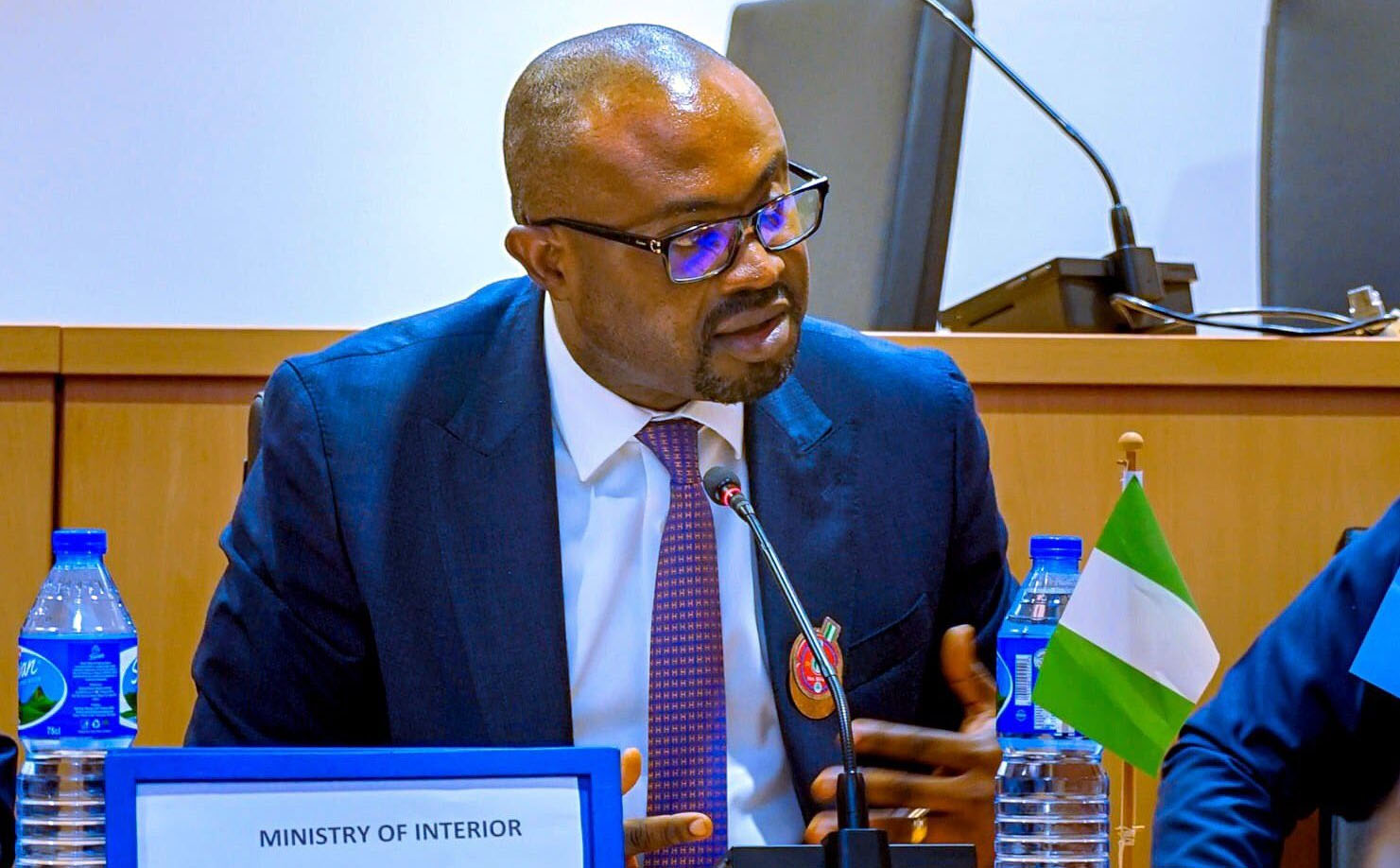
The Minister of Interior, Olubunmi Tunji-Ojo, announced the declaration on behalf of the Federal Government on Wednesday, congratulating Nigerians at home and abroad on the national celebration.
The minister urged Nigerians to use the occasion to promote national unity, patriotism, peaceful coexistence and mutual respect, while reflecting on the sacrifices of the country’s founding fathers and heroines.
Tunji-Ojo said peace and stability remained important to national development and called on citizens to remain committed to building a stronger and more prosperous Nigeria.
The minister also assured Nigerians that the Federal Government remained committed to strengthening national security, improving public safety and creating an environment where citizens could live and work with confidence.
The 2026 celebration marks 66 years of Nigeria’s independence, following the country’s attainment of independence from British colonial rule on October 1, 1960.
The Federal Government is marking the anniversary under the theme, “From Reforms to Stability: Consolidating Nigeria’s Renewed Hope for Shared Prosperity.” The anniversary programme was earlier announced as a low-key celebration.
As part of the programme, an Independence Day Public Lecture is scheduled for Wednesday, September 30, while President Bola Ahmed Tinubu is expected to deliver a nationwide broadcast on Thursday, October 1.
The President is also expected to participate in other anniversary activities in Lagos, including the premiere of a documentary on the late businessman and politician MKO Abiola at the National Theatre.
The Federal Government has urged Nigerians to use the Independence Day celebration to reflect on the country’s journey since 1960 and renew their commitment to a united and peaceful Nigeria.
The October 1 public holiday applies nationwide, giving workers and other citizens an official day off to commemorate Nigeria’s Independence Day.
FG Declares Thursday Public Holiday for Nigeria’s 66th Independence Anniversary
Five Remanded Over ‘Tinubu Must Go’ T-Shirts in Borno
Five men have been remanded in custody in Maiduguri, Borno State, after they were arraigned over the alleged printing and wearing of “Tinubu Must Go” T-shirts.
The defendants — Baba Aji Gremami, 44; Mustapha Abba Yemen, 28; Abbacha Mohammed Ali, 32; Adam Umar Gubio, 21; and Abdulhamid Mohammed, 21 — were arrested on September 25 around the West End Roundabout area of Maiduguri, according to a First Information Report issued by the State Criminal Investigation Department.
Police alleged that the five men conspired to print and wear the T-shirts bearing the inscription “Tinubu Must Go”, with the intention of causing a breach of public peace in the area.
They were subsequently charged with criminal conspiracy, inciting disturbance, disturbance of public peace and thuggery under Sections 60, 78, 79 and 392 of the Borno State Penal Code.
The defendants appeared before the Chief Magistrate Court I in Maiduguri and pleaded not guilty to the allegations. Their lawyers subsequently applied for bail.
The court remanded the five men in custody and adjourned the matter to October 6, 2026, for a ruling on the bail application. The substantive case was also listed for October 26, 2026.
The police case centres on the alleged intention behind the production and wearing of the shirts, with the authorities maintaining that the conduct was capable of causing a breach of public peace. The charges, rather than the political slogan alone, form the basis of the criminal proceedings.
The arrests have generated controversy, particularly over the balance between freedom of expression and public-order laws.
Amnesty International condemned the detention, arguing that wearing a shirt expressing political dissent should not, by itself, constitute a criminal offence. The organisation called for the men’s release and urged the authorities to protect the rights to freedom of expression and association.
The African Democratic Congress (ADC)in Borno State also condemned the arrests. The party said the men were being detained for expressing a political opinion and called for their immediate release. The party’s position is separate from the police allegations before the court.
There have also been claims that the arrests were politically directed, including an allegation that a senior political figure in Borno ordered the action. However, such claims have not been independently established, and the police report cited in the case does not establish that a political figure ordered the arrests.
The development comes as political activity increases ahead of the 2027 general elections, with opposition parties and supporters using different platforms to express criticism of the Federal Government and promote alternative political positions.
The case has consequently drawn attention to the application of freedom of expression, political dissent and public-order laws in Nigeria.
For now, the five men remain defendants in an ongoing criminal case. They have pleaded not guilty, and the allegations against them have yet to be determined by the court.
Five Remanded Over ‘Tinubu Must Go’ T-Shirts in Borno
FG Targets 24-Hour Electricity in Lagos, Abuja, Kano, Others
The Federal Government has begun discussions with electricity distribution companies on plans to establish Energy Zones aimed at delivering stable 24-hour electricity supply to homes, businesses and industries in major high-demand areas across Nigeria.
The proposed zones will initially focus on the Lagos axis, Abuja-Kaduna-Kano corridor and Enugu-Port Harcourt corridor, according to the Minister of Power, Joseph Tegbe.
Tegbe disclosed the plan after a strategic meeting with the leadership of selected electricity distribution companies (DisCos) as the government intensifies efforts to improve reliability across the power sector.
The proposed Energy Zones are designed to address bottlenecks at the distribution end of the electricity supply chain and ensure that more of the power generated and transmitted through the national grid reaches consumers.
Tegbe said the country’s power challenge extends beyond generation and transmission, stressing that the ability of distribution companies to take up available electricity and deliver it to homes, businesses and industries remains a major constraint.
He said the proposed zones would help close that gap, unlock additional commercial and industrial demand and improve the revenue and collection performance of DisCos.
The government also plans to expand electricity infrastructure in high-demand areas so that supply capacity can grow alongside the needs of Nigeria’s expanding economy.
The Energy Zones proposal comes as the government reports recent improvements in electricity generation and transmission. Tegbe said generation and transmission had risen above 5,000 megawatts (MW) in recent weeks, compared with about 3,700MW to 4,700MW before June, with generation reaching a reported peak of 5,330MW in August and September.
However, the minister has acknowledged that higher national generation figures do not automatically translate into reliable electricity for every community because of problems across the transmission and distribution networks.
The government has therefore been prioritising infrastructure repairs and upgrades along major electricity corridors. Tegbe previously said transformers commissioned at Apapa, Ijora, Alausa and Lekki in Lagos had unlocked 672MW of transmission capacity, while a 300MVA transformer at Katampe in Abuja added another 240MW.
The government has also been working to increase electricity metering. Tegbe said about 350,000 meters were installed during his first 100 days in office, bringing cumulative installations to more than one million by August 2026.
He also said the resolution of legal issues surrounding the AMMON smart-meter programme had cleared the way for procurement of about 1.4 million additional smart meters.
The minister has identified the Lagos, Enugu-Port Harcourt and Abuja-Kaduna-Kano corridors as priority areas for stabilisation, alongside plans for a proposed Transmission Super Grid.
The focus on Lagos reflects the state’s substantial industrial and commercial electricity demand. The Federal Government has been conducting technical assessments along major industrial corridors, including the Lagos-Sagamu corridor, to identify infrastructure problems affecting power delivery.
The government has also been pursuing targeted projects to improve electricity supply to industrial areas. In Abuja, Tegbe said the Idu Industrial Area was being targeted for a 50MW electrification project, with the first 10MW phase expected by December 2026 and the remaining capacity planned for 2027.
The proposed Energy Zones are expected to complement such targeted interventions by concentrating infrastructure and distribution improvements in areas where electricity demand is already high.
The initiative is also expected to support manufacturing, businesses and industrial production, with the government linking more reliable electricity to economic growth, job creation and industrialisation.
However, the Federal Government has not announced a specific implementation date, capacity target or detailed infrastructure investment plan for the proposed Energy Zones. The 24-hour electricity supply therefore remains a government target under the initiative and should not be interpreted as a guarantee that consumers in Lagos, Abuja, Kano or the other identified areas will immediately receive uninterrupted power.
The proposed zones also come against the backdrop of continuing financial and operational challenges in the electricity market. Tegbe said the government had mobilised about N1.23 trillion to address part of the sector’s accumulated debt burden.
He has also said the government currently has no plan to increase electricity tariffs, with the immediate focus instead on improving supply reliability, strengthening infrastructure, metering consumers and addressing financial weaknesses across the power value chain.
The minister has acknowledged that many Nigerians are still without reliable electricity, despite reported improvements in generation and transmission. He said the government would continue to focus on incremental improvements rather than promise a quick solution to the sector’s longstanding problems.
Representatives of the Abuja Electricity Distribution Company (AEDC), Ikeja Electric, Eko Power, Ibadan Electricity Distribution Company (IBEDC) and Sahara Energy Group participated in the latest discussions on the proposed Energy Zones.
The Federal Government now intends to work with the participating electricity companies on strengthening distribution infrastructure and ensuring that available electricity can be delivered more efficiently to high-demand customers.
For consumers, the key issue will be whether the proposed investments can translate improvements recorded at the generation and transmission levels into more dependable electricity at the distribution and household level.
For now, the 24-hour electricity plan remains at the development and engagement stage, with the government yet to provide a firm rollout date or detailed specifications for the proposed Energy Zones.
FG Targets 24-Hour Electricity in Lagos, Abuja, Kano, Others