
Business
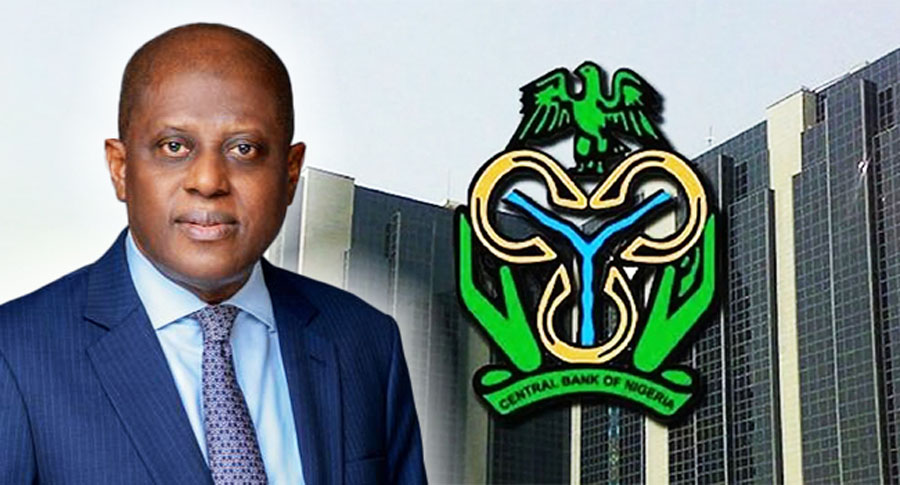
Nigerian banks generated N14tn from loans – Report
Nigerian banks generated N14tn from loans – Report
Nine leading Nigerian banks raked in a staggering combined interest income of N14.26 trillion in 2024, reflecting a sharp increase in borrowing costs for businesses, especially manufacturers.
According to an analysis of the audited financial results filed with the Nigerian Exchange Limited, the banks First Holdco, Guaranty Trust Holding Company, Zenith Bank Plc, United Bank for Africa, FCMB Group, Fidelity Bank, Stanbic IBTC Holdings, Access Holdings, and Wema Bank recorded a 119.55% surge in interest income compared to N6.49 trillion in 2023.
While these financial institutions reported massive earnings from interest on customer loans, manufacturers bore the brunt of the high cost of borrowing. Reports show that the manufacturing sector incurred a total of N1.3 trillion in loan-related expenses during the same period, further tightening the grip of financial pressure on Nigeria’s struggling industrial base.
According to the Corporate Finance Institute, interest income is the amount paid to an entity for lending its money or letting another entity (individual or corporate) use its funds.
Commercial banks, in their financial intermediary roles, provide funding for the productive sectors of the economy.
A breakdown of the results of the nine banks showed that Access Holdings grew its interest income by 98.69 per cent to N3.11tn from N1.56tn in the previous year.
Zenith Bank’s interest income rose by 137.74 per cent to N2.72tn. First HoldCo, the parent company of FirstBank, saw its interest income increase by 155 per cent to close at N2.39tn.
Also appreciated by more than 100 per cent were the interest incomes to United Bank for Africa, N2.37tn (120 per cent), Guaranty Trust Holding Company, N1.32tn (148 per cent), and Stanbic IBTC Holdings, N566bn (109 per cent).
The interest income of FCMB Group rose by 75.16 per cent to N621.81bn. That of Fidelity Bank rose by 85.03 per cent to N803.05bn, and Wema Bank’s interest income increased by 91.03 per cent to close the year at N354.63bn from N185.64bn.
The financial institution with the highest interest income in percentage terms was First HoldCo, followed by GTCO and Zenith Bank Plc.
In actual terms, Zenith Bank raked in the highest interest income of N1.58tn, followed by Access Holdings, which recorded a N1.54tn increase compared to last year, and First HoldCo with N1.46tn.
Meanwhile, some of the lenders indicated that the interest income was accrued on bad loans.
READ ALSO:
- How Nigerian hotelier died during wife’s 60th birthday celebration
- BREAKING: Tunde Onakoya breaks Guiness record for longest chess marathon
- Nigerian Uber driver shot dead on duty in US
For Zenith Bank, impaired financial assets amount to N18.25bn and N18.25bn (2023: N29.09bn and N5.48bn) for Group and Bank, respectively.
UBA said, “Interest income includes accrued interest on impaired loans of N4.26bn for the Group (Bank: N3.98bn) for the year ended 31 December 2024 and N4.64bn for the Group (Bank: N2.70bn) for the year ended 31 December 2023.”
Fidelity Bank indicated that its interest income on bad loans amounted to N8.10bn (2023: N6.19bn).
This revenue boost for the financial sector came on the back of sustained hikes in the Monetary Policy Rate by the Monetary Policy Committee of the Central Bank of Nigeria.
By the end of 2024, the MPC had increased the MPR by 875 basis points, pushing the benchmark rate from 18.75 per cent in 2023 to 27.50 per cent. A major argument for the MPC’s decision to hike rates was inflation.
The committee emphasised commitment to price stability as the bedrock of a thriving Nigeria, which necessitates substantial monetary tightening as headline inflation rose to 34.80 per cent as of December 2024.
On a year-on-year basis, the headline inflation rate was 5.87 per cent higher than the rate recorded in December 2023 (28.92 per cent).
This shows that the Headline inflation rate (year-on-year basis) increased in December 2024 compared to the same month in the preceding year (i.e., December 2023).
While the banks raked in trillions of naira from interest incomes, the real sector is not happy with the situation as funding costs climb.
Speaking at the recent Bankers Committee Town Hall, which the CBN organised in collaboration with the Bankers Committee in Lagos, the President of the Manufacturers Association of Nigeria, Francis Meshioye, decried the high cost of funding for businesses.
He said, “Manufacturers spent about N1.3tn on interest rate; the cost of funds last year, 2024, and that is huge. Next is the cost of energy, which was about N1.2tn. It’s between 30 and 35 per cent for the cost of funding and 30-40 per cent for the cost of energy.
“The fund that we use to pay for power is charged at around 35 per cent. We are paying 35 per cent for funds to pay for power. Some are even paying 37 per cent. How do you survive this?
“These two are very important things to address to be sure that we become competitive. Have we thought of getting long-term funding for manufacturers or businesses? We need to think outside the box.”
READ ALSO:
- Troops foil another violent clash in Plateau
- SERAP sues Tinubu govt over ban on Eedris song ‘Tell Your Papa’
- NDLEA intercepts cocaine in Saudi-bound religious books
Meshioye urged the banks to tone down their drive for profit, stressing that the high interest rates were stifling manufacturers.
“It’s very clear that if we want to achieve anything meaningful, we must look at infrastructure, particularly power. We have the power to do so many things. We just need the will and do not always aim to make overly ambitious profits. If you kill the place you make the money from, then how will you survive?” he challenged the banks.
As the banks rake in trillions of naira, experts warned that Nigeria’s spiralling interest rates, now well above 20 per cent, are worsening poverty and crippling access to credit for small-scale entrepreneurs and farmers, further threatening the fragile economy.
The CBN has been adopting an aggressive monetary tightening, with the Monetary Policy Rate around 24.75 per cent, making commercial lending rates range between 28 per cent and 35 per cent. The high rates have made it nearly impossible for most businesses and individuals in the productive sectors to access affordable financing.
Financial analysts had argued that while the central bank aims to curb inflation, the unintended consequence has been a severe credit crunch in sectors critical to employment and economic growth.
They noted that small and medium enterprises, which make up the backbone of Nigeria’s economy, were being squeezed out of the credit market, and farmers were increasingly unable to fund the next planting season.
At the same time, commercial banks are thriving. With risk-free government securities and high-interest lending, banks are posting record profits, while investment in the real economy, including agriculture, manufacturing, and small-scale industries, continues to collapse.
According to the National Bureau of Statistics, over 133 million Nigerians are living in multidimensional poverty. Rising borrowing costs are making it harder for individuals and businesses to access funds for investment, expansion, or even basic survival.
A senior analyst at Financial Derivatives Company, Tunde Ajayi, recently said the imbalance reflects a serious distortion in Nigeria’s financial architecture, one that prioritises the profitability of banks over the health of the real economy.
According to Ajayi, commercial banks are making windfall profits by investing heavily in risk-free government securities and offering loans at exorbitant interest rates to a few large borrowers, while critical sectors such as manufacturing, agriculture, and small and medium enterprises are being financially strangled.
“This model is unsustainable. What we have is a system where banks are incentivised to lend to the government or big corporations at high yields, while millions of small businesses and farmers are left without access to the capital they need to grow,” he mentioned.
He further warned that the long-term implications are dangerous, as it undermine economic diversification, domestic production, and employment generation.
Ajayi stressed that without affordable credit, the real sector responsible for creating jobs and driving inclusive growth will continue to shrink, further widening the gap between the rich and the poor.
Also, an agricultural finance consultant, Ngozi Uko, warned that the situation is even more dire for rural farmers.
“Access to credit for smallholder farmers has virtually dried up. We are seeing a drop in agricultural productivity, which is directly linked to the rise in food prices. Food inflation is now at over 35 per cent, and it’s pushing more Nigerians into hunger,” Uko said.
Nigerian banks generated N14tn from loans – Report
(Punch)










Business
Dangote Named Only Nigerian on TIME100 2026 Global Influence Ranking
Dangote Named Only Nigerian on TIME100 2026 Global Influence Ranking
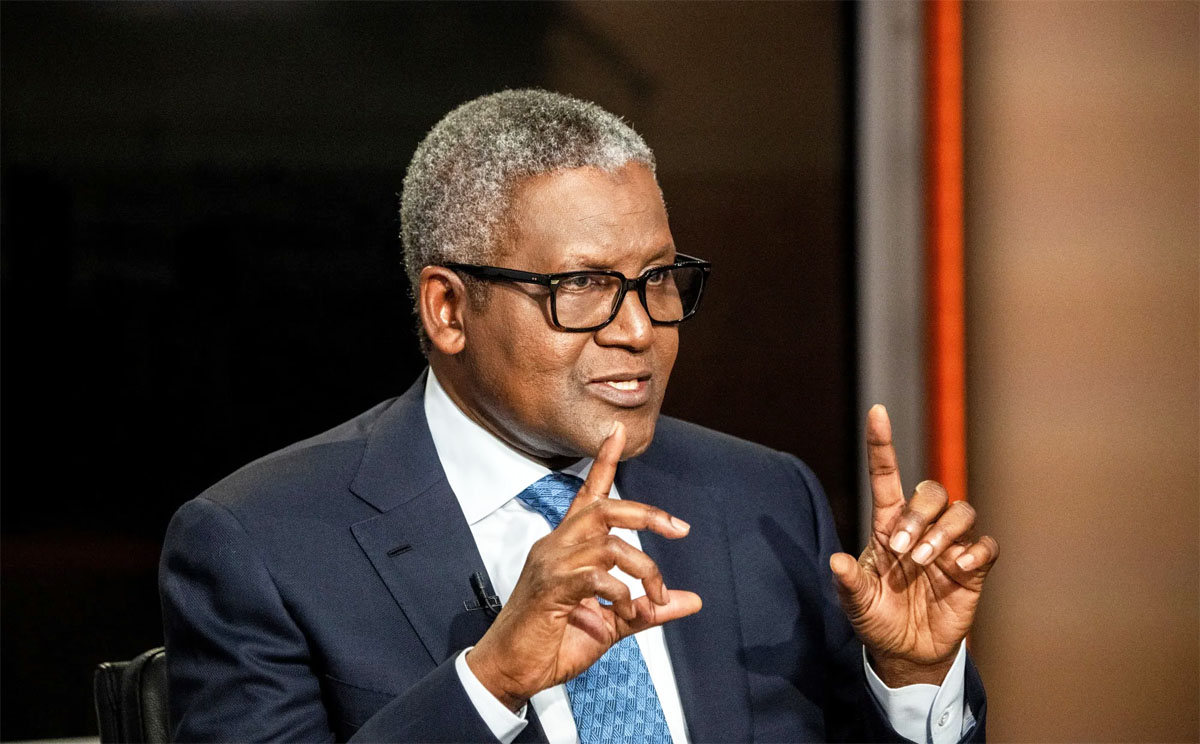
Nigerian business magnate Aliko Dangote has been named among the TIME100 Most Influential People in the World for 2026, as TIME Magazine released its latest list recognising individuals shaping global politics, business, technology, and culture.
Dangote, Africa’s richest man and founder of the Dangote Group, is the only Nigerian featured in the 2026 edition. He appears in the Titans category, recognised for his decades-long push to industrialise Africa through investments in cement, sugar, fertiliser, and the landmark Dangote Refinery—one of the largest single-train refineries in the world.
This marks Dangote’s second appearance on the TIME100 list, following his first inclusion in 2014, further cementing his status as one of Africa’s most globally recognised industrialists.
A key highlight of this year’s recognition is the tribute written by fellow Nigerian billionaire Tony Elumelu, who praised Dangote’s entrepreneurial journey and continental impact. Elumelu described him as “indefatigable, resilient, and foresighted,” and lauded him as “one of the greatest African entrepreneurs of our time.”
READ ALSO:
- UNILAG Lecturer Sexual Assault Trial: Student Testifies in Lagos Court
- Bayern Survive Real Madrid Comeback to Reach UCL Semi-Finals Against PSG
- Grandfather in police net for impregnating granddaughter
He added that Dangote’s work demonstrates that Africans can create large-scale value “with our own resources, on our continent,” reinforcing the philosophy of economic self-reliance that has shaped both businessmen’s careers.
Interestingly, the gesture reflects a role reversal from previous years, as Dangote once wrote Elumelu’s TIME100 tribute when the UBA chairman appeared on the list in 2020.
The 2026 TIME100 list, now in its 23rd edition, features global figures across multiple categories, including Titans, Leaders, Innovators, Icons, Artists, and Pioneers. High-profile names this year include U.S. President Donald Trump, Chinese President Xi Jinping, and major technology leaders such as Google CEO Sundar Pichai and YouTube CEO Neal Mohan.
Other political figures featured include Israeli Prime Minister Benjamin Netanyahu and Canadian Prime Minister Mark Carney, alongside global leaders in health, finance, and multilateral institutions.
Analysts say Dangote’s inclusion carries strong symbolic significance for Africa, particularly at a time of economic restructuring and renewed calls for industrialisation and self-sufficiency across the continent. His multi-billion-dollar refinery project, in particular, is seen as a strategic asset aimed at reducing Nigeria’s reliance on imported refined petroleum products, boosting local production, and creating thousands of jobs.
The recognition also reinforces Dangote’s global reputation as a leading figure in African entrepreneurship, with his business empire spanning critical sectors of the economy and influencing industrial policy conversations across the region.
The TIME100 announcement precedes the annual TIME100 Summit scheduled for April 22 in New York, where selected honourees are expected to participate in discussions on global leadership and innovation.
The full list and tributes are available via TIME Magazine’s official platforms.
Dangote Named Only Nigerian on TIME100 2026 Global Influence Ranking
Business
Experts Reject World Bank Fuel Import Advice, Warn of Economic Setback for Nigeria
Experts Reject World Bank Fuel Import Advice, Warn of Economic Setback for Nigeria
Energy experts have strongly criticised recent recommendations attributed to the World Bank urging Nigeria to deepen fuel importation and further liberalise its downstream petroleum sector, warning that the proposal is economically risky, poorly timed, and inconsistent with Nigeria’s petroleum law.
The criticism comes amid growing debate over the findings of the World Bank’s latest Nigeria Development Update, which some stakeholders say suggests a return to higher fuel import dependence as part of broader market reforms aimed at stabilising prices and improving efficiency.
However, energy economist Prof. Ken Ife faulted the recommendation, arguing that it contradicts Nigeria’s long-term goal of energy self-sufficiency and undermines ongoing investments in domestic refining capacity.
“You cannot advise a country struggling to achieve economic self-reliance to return to fuel importation,” Ife said, warning that such a policy shift would reverse gains made under the Petroleum Industry framework.
He stressed that the proposal runs counter to the provisions of the Petroleum Industry Act, particularly the Domestic Crude Supply Obligation, which prioritises crude allocation to local refineries to support domestic production.
According to him, abandoning this structure would weaken Nigeria’s refining ambitions, increase exposure to global oil shocks, and worsen pressure on foreign exchange reserves.
“We are building capacity that could exceed domestic demand. Reversing course now would discourage investors and destabilise the downstream sector,” he added.
Ife further questioned the empirical basis of the recommendation, describing it as inconsistent with the broader analytical strength of the World Bank report.
READ ALSO:
- Fake Image of Governor Alia Bowing to Sultan Sparks Controversy, Palace Reacts
- Tinubu Aide Defends Early INEC Statement Release on Amupitan Controversy
- Nigeria-Kenya Comparison Won’t Solve Economic Crisis — Peter Obi Replies Tinubu
Other energy analysts echoed similar concerns, arguing that Nigeria is already at a critical stage of expanding domestic refining, including private-sector-led investments that are expected to reduce dependence on imported petrol in the coming years.
Energy analyst Kelvin Emmanuel also criticised the proposal, insisting that it is disconnected from current global pricing realities and supply chain risks.
He argued that landing imported petrol in Nigeria is already significantly expensive when freight, insurance, and exchange rate factors are considered, making large-scale import reliance economically unsustainable.
Emmanuel further noted that rising crude oil prices—driven partly by geopolitical tensions in the Middle East—have pushed global energy markets into volatility, reinforcing the need for domestic refining resilience rather than import dependence.
He also disputed claims that imported fuel could be cheaper than locally refined products, arguing that such assumptions ignore structural cost realities in the global supply chain.
On inflation and fuel pricing, Emmanuel maintained that Nigeria’s challenges are linked more to policy implementation gaps than production shortages, particularly in crude allocation to local refineries as outlined in the Petroleum Industry Act.
“If domestic supply obligations are properly enforced, price stability will improve and market volatility will reduce,” he said.
He also criticised proposals suggesting that Nigeria should expand social safety nets through borrowing, arguing that such measures could worsen fiscal pressure and contradict responsible debt management principles.
While acknowledging that social protection is important, he insisted that funding should prioritise grants or targeted revenue sources rather than additional debt obligations.
The debate highlights growing tension between international policy advice and Nigeria’s domestic energy strategy at a time when the country is attempting to stabilise fuel supply, reduce import dependence, and strengthen local refining capacity.
Industry observers say the outcome of this policy direction could significantly shape Nigeria’s downstream petroleum sector, foreign exchange stability, and long-term energy security.
Experts Reject World Bank Fuel Import Advice, Warn of Economic Setback for Nigeria
Business
Official, Black Market Rates Diverge as Naira Starts Week on Stable Note
Official, Black Market Rates Diverge as Naira Starts Week on Stable Note
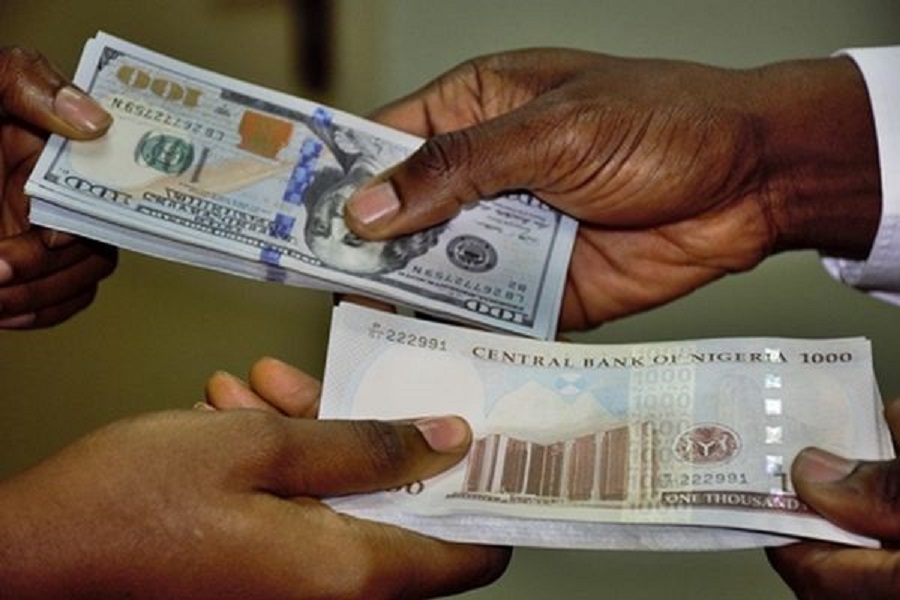
The Nigerian Naira began the new trading week on Monday, April 13, 2026, with slight movements against the United States Dollar across both the official and parallel foreign exchange markets, reflecting continued cautious stability in the currency environment.
In the Nigerian Foreign Exchange Market (NFEM), the official trading window, the Naira opened at about ₦1,358.84 per $1, before recording mild intraday fluctuations that pushed it briefly to around ₦1,362.08, before easing back toward the opening range.
The performance indicates a relatively stable session, supported by ongoing liquidity management efforts and sustained interventions by the Central Bank of Nigeria, which has continued to monitor dollar supply and demand in the banking system.
Analysts say the official market remains largely driven by inflows from oil exports, non-oil earnings, and diaspora remittances, all of which help moderate volatility in the NFEM window.
Parallel Market Remains Higher Amid Strong Demand
In contrast, the parallel market—commonly referred to as the black market—recorded significantly higher exchange rates as demand for dollars persisted among importers, traders, and individuals outside the official FX window.
READ ALSO:
- Kwankwaso Reveals Details of Kwankwasiyya’s ADC Power-Sharing Formula
- ADC Crisis: Supreme Court to Hear David Mark’s Appeal April 14
- FG Boosts Power Generation to 4,300MW in Two Weeks — Adelabu
Reports from currency dealers in commercial hubs such as Lagos, Abuja, and Kano indicate that the Dollar traded between ₦1,460 and ₦1,485 during the morning session.
The wide gap between the official and parallel market rates continues to reflect structural pressures in Nigeria’s foreign exchange system, including limited liquidity access and high demand for foreign currency for imports, travel, and education-related payments.
Market Outlook and Sentiment
Financial analysts note that market sentiment remains cautious, with traders closely watching upcoming macroeconomic indicators, crude oil price movements, and possible policy signals from monetary authorities.
Experts also point out that the stability in the NFEM suggests that recent reforms and tightening measures in the foreign exchange market may be gradually improving transparency and liquidity management, even though pressure persists in the informal market segment.
For many Nigerians, fluctuations in the exchange rate continue to directly impact the cost of imported goods, fuel-related logistics, and overall inflation expectations, making daily FX movements a key economic indicator.
As of early Monday trading, market activity remained steady, with expectations that the Naira will continue to trade within a relatively narrow range unless triggered by major external shocks or policy adjustments.
Official, Black Market Rates Diverge as Naira Starts Week on Stable Note

-
 metro1 day ago
Tension in Osogbo as Protesters Demand Respect for Court Judgments in LG Dispute
-

 metro2 days ago
Arise News Yet to Confirm Reported Suspension of Rufai Oseni
-

 metro2 days ago
Fresh Boko Haram Attack Leaves Colonel, Six Soldiers Dead in Borno
-

 Politics1 day ago
Obesere’s Wife Sekinat Adelakun-Akande Declares for 2027 Ibadan Reps Race
-
 International2 days ago
World Leaders Gather in Paris Over Strait of Hormuz Crisis
-
 News2 days ago
Lafarge Convicted of Terrorism Financing by French Court in Landmark Case
-
 News2 days ago
Tinubu Declares End to “Broken Revenue System”, Unveils New Economic Reforms
-

 metro12 hours ago
UNILAG Lecturer Sexual Assault Trial: Student Testifies in Lagos Court