

metro
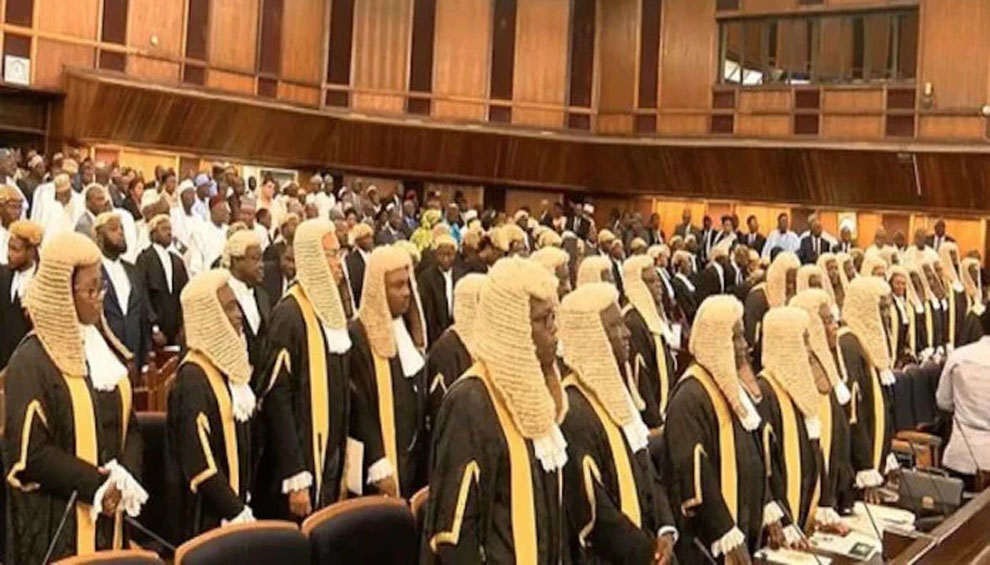
NJC rejects Imo CJ appointment, suspends three orhers
NJC rejects Imo CJ appointment, suspends three orhers
The National Judicial Council (NJC) has declared the appointment of Justice Theophilus Nzeukwu as acting Chief Judge of Imo State void, directing the Governor of Imo State, Senator Hope Uzodinma, to immediately reverse the decision and appoint the most senior judicial officer in the state in line with the provisions of the 1999 Constitution.
The decision was part of the resolutions reached at the NJC’s 108th meeting held on April 29 and 30, 2025, under the presidency of the Chief Justice of Nigeria, Justice Kudirat Kekere-Ekun.
According to a statement made by the Council’s Deputy Director of Information, Kemi Ogedengbe Babalola, “directed the Imo State Governor, Senator Hope Uzodinma, to appoint the most senior judicial officer in the state High Court’s hierarchy as the acting Chief Judge of the state in conformity with Section 271 (4) of the Constitution of the Federal Republic of Nigeria, 1999 (as amended).”
Citing the constitutional provision, the NJC stated, “If the office of the Chief Judge of a state is vacant or if the person holding the office is for any reason unable to perform the functions of the office, then, until a person has been appointed to and has assumed the functions of that office, or until the person holding the office has resumed those functions, the governor shall appoint the most senior Judge of the High Court to perform those functions.”
The Council also asked Justice Nzeukwu to show cause within seven days why disciplinary action should not be taken against him for presenting himself to be sworn in as acting Chief Judge of Imo State, which violates constitutional provisions.
READ ALSO:
- Only popular northern candidate can challenge Tinubu in 2027 – Dele Momodu
- Customs seize N921bn illegally imported goods at Apapa Port
- Explosion rocks army barracks in Maiduguri
It also took disciplinary action against Justice V. U. Okorie, the President of the Customary Court of Appeal in Imo State, who presided over the Judicial Service Commission meeting that recommended Justice Nzeukwu’s nomination.
Similarly, Justice Okorie was asked to also show cause within seven days “why disciplinary action should not be taken against him for his complicity in the recommendation”.
In a broader effort to combat judicial misconduct, the NJC suspended three judicial officers, including a sitting Justice of the Court of Appeals, for one year without pay.
Among those sanctioned is Justice Jane Inyang of the Court of Appeal, Uyo Division, who was found to have misused her position while sitting as a judge of the Federal High Court, Uyo Judicial Division.
The NJC said, Hon. Justice Jane E. Inyang was found to have abused his office by issuing inappropriate ex parte orders for the sale of Hon. Udeme Esset’s petrol station and other businesses at the interlocutory stage of the case.”
According to the NJC, Justice Inyang’s actions violated Rule 3(5) of the Revised Code of Conduct for Judicial Officers.
The misbehaviour occurred in Suit No. FHC/UY/CS/46/2023 prior to her elevation to the Court of Appeal.
Justice Inyang Ekwo of the Federal High Court, Abuja Division, was also suspended for a year without pay and placed on a five-year watch list, during which he will be prevented from advancement.
The NJC found that “His Lordship delivered a ruling in a pending application without hearing the parties… proceeded to deliver a ruling dismissing the Charge against the Defendants,” which contravened Rules 3.1 and 3.3 of the 2016 Revised Code of Conduct for Judicial Officers.
In the same vein Justice Aminu Baffa Aliyu of the Federal High Court, Zamfara Division, has been suspended for one year without pay and placed on a three-year watch list.
READ ALSO:
- Ronaldo’s Al Nassr dumped from Asian Champions League final
- FG warns Nigerians against fake online diplomatic job offers
- Elon Musk, other billionaires lose $300bn in Trump’s first 100 days — Forbes
In Suit No. FHC/GS/CS/30/2021 (Government of Zamfara State vs EFCC), he was held guilty of granting orders restricting security services from carrying out their statutory duties and of violating the stare decisis principle.
The NJC also cautioned Justice A. O. Awogboro of the Federal High Court, Lagos Division, on a petition filed in Suit No. FHC/CS/2021 by Chief Adesanya Musediku and the Assistant Inspector General of Police, Zone 2.
Other disciplinary actions included the formation of nine committees to probe 27 judicial officers on various claims.
The council also dismissed 29 petitions and held several others pending appellate court decisions.
It noted, “Council equally considered the report of its Preliminary Complaints Assessment Committee, which contained a total number of 43 petitions. Nine committees were empanelled for further investigation of eleven petitions, while 29 petitions were dismissed for lacking merit.”
The NJC also heard and dismissed a petition contesting Zamfara State’s judicial appointment process in 2022.
The petitioner, Mahmud Aliyu, was discovered to be “an interested party who had indicated interest but was not selected.”
The council found his charges were “unsubstantiated and substantially based on falsehood” and prohibited him from future involvement in judicial appointment processes.
Furthermore, the NJC dismissed a petition contesting the recruitment process for six Federal High Court justices in 2021, citing a violation of Section 11(1) of the Judicial Discipline Regulations, which states that complaints must be lodged within six months after the alleged event.
The NJC also resolved to make the appointment of judicial officers more transparent by inviting public input, stating, henceforth, the names of candidates being considered for appointment as judicial officers to superior courts of records will be published for information and comments by the public.”
The objective, it said, is “to solicit comments from the public where there is objection to the integrity, reputation and/or competence of the candidates by opening the process to public participation and scrutiny.”
The NJC also accepted the voluntary retirement of Justice Babatunde Bakre and approved a name change for Justice I. A. Osayande of the Edo State High Court, now to be known as Hon. Justice I. A. Dika.
NJC rejects Imo CJ appointment, suspends three orhers








metro
Church Growth Is Not About Numbers’: Bishop Smith Champions Training for Small Churches

‘Church Growth Is Not About Numbers’: Bishop Smith Champions Training for Small Churches
Concerned about the leadership challenges confronting independent and grassroots churches, Bishop James G. Smith, a veteran missionary with nearly three decades of international experience, is stepping up efforts to strengthen smaller congregations through ministerial training, mentorship and leadership development.
Smith, founder of Life and Power Global Ministry, Liberia, and owner of St. James Revival Assemblies, said the initiative was designed to equip church leaders with the spiritual knowledge, administrative skills and institutional capacity required to build sustainable ministries, regardless of their congregation’s size.
He made this known at a two-day ministers’ conference organised by his ministry on October 23 and 24, 2026, at Foursquare Gospel Church, Iba Housing Estate, Lagos.
The conference, tagged “Strength for the Journey of Ministry,” with the theme “Raising Strong and Effective Church,” brought together pastors, bishops, church leaders and ministers for spiritual enrichment, leadership development and capacity-building.
Smith disclosed that the initiative attracted representatives of about 68 churches and ministries, while the event report documented 64 participants.
Explaining the motivation behind the programme, the cleric said many independent and grassroots churches struggle with inadequate mentorship, weak administrative structures and limited access to the resources available to larger denominations.
Originally from Delta State, Smith spent 11 years pastoring in Nigeria before relocating to Liberia for missionary work about 29 years ago. His ministry has since focused on church planting, evangelism, leadership development and training ministers, with plans to extend the initiative to more countries.
He expressed concern that smaller congregations sometimes struggle to retain their members and maintain their identity, particularly when larger churches establish a presence in their communities.
However, he argued that the true strength of a church should not be determined by its numerical strength, physical structures or financial resources, but by the spiritual maturity of its members, the quality of its leadership and its commitment to evangelism.
“We are all working for one God, one purpose, one kingdom. All of the churches, whether a small church, grassroots church or giant church, we are all doing the same thing,” he said.
Smith therefore called for greater cooperation among Christian leaders, insisting that the growth of the Church required collective commitment rather than competition among congregations.
Discipleship, the foundation of sustainable growth
A central message of the conference was the need for churches to move beyond attracting worshippers to deliberately nurturing spiritually mature believers capable of sustaining their ministries.
Smith maintained that bringing people into the church was only the beginning of the responsibility of Christian leadership, stressing that members must receive proper biblical instruction, mentorship and practical guidance to enable them to contribute meaningfully to the growth of their congregations.
Drawing lessons from the ministry of Jesus Christ and His disciples, he urged pastors to invest in developing committed believers who could reproduce the values and teachings of Christianity across generations.
“If you have three members, and you disciple them, you have a church. If you have 20 members, and the 20 members are properly discipled, they can turn the city upside down,” he said.
He warned that large congregations without effective discipleship programmes risk producing spiritually immature members who could easily become vulnerable to misleading teachings.
The cleric also advocated functional leadership structures and administrative systems that would ensure continuity in church operations, even when the presiding pastor was unavailable.
Accountability, integrity in church administration
On church administration, Smith stressed the importance of transparency, integrity and accountability, particularly in the management of financial contributions and other resources.
He said church leaders must ensure that donations made for specific projects were used for their intended purposes, while members should be adequately informed about how church funds were managed.
“If the people give their money for a particular purpose, that purpose should be achieved,” he emphasised.
He equally urged ministers to demonstrate discipline in time management, programme coordination and their relationships with members, noting that effective leadership required both spiritual commitment and sound administrative practices.
Beyond administration, Smith highlighted the importance of prayer, evangelism, biblical teaching, fasting and spiritual preparedness in equipping ministers for the challenges of contemporary society.
Speaking on “The Necessity of Power in the Last Days,” he referenced Ephesians 6:10 and 2 Corinthians 10:3, encouraging ministers to remain spiritually grounded and steadfast in confronting the challenges of their calling.
He emphasised the need for a consistent relationship with God through prayer and the study of His Word, while cautioning against elevating personal convictions, traditions and preferences into doctrines unsupported by Scripture.
The bishop also reminded ministers that their physical well-being was important to effective service, urging them to get adequate rest and seek medical attention whenever necessary.
Christian leaders, ministers endorse initiative
The conference attracted several Christian leaders, including Rev. Dr. Mike Adeleke, PFN Chairman of Ojo Province; Bishop Vincent Paye Bagnoon; Apostle Veronica Ujah; Apostle Dr. Eddo Sylvanus of Foursquare Gospel Church, Iba Housing Estate; Pastor Iboro Promise Freedom; Bishop Kingsley Azuka of City of Priests Mega Church; Bishop-Elect James Esuku; and international gospel artist Praise Eddo.
Other ministers and church workers also participated in the programme.
Smith expressed appreciation to the host pastor, Apostle Dr. Eddo Sylvanus, for providing the venue and supporting the conference, as well as the facilitators and participants whose contributions enriched the sessions.
Speaking with journalists, Apostle Mrs. Dorcas Okonye Azuka of City of Priests Mega Church commended the initiative and encouraged female ministers to maintain humility in their homes and create sufficient time for their families.
She stressed the need for women in ministry to strike a healthy balance between their spiritual responsibilities and family commitments.
Similarly, Bishop-Elect James Esuku addressed concerns about transactional approaches to Christianity and perceptions that the power of God was diminishing.
He maintained that God’s ways remained unchanged, urging Christians to develop personal relationships with Him rather than allow the misconduct of some individuals to undermine their faith.
Expanding the grassroots ministry network
Smith also expressed concern about religious teachings that promise quick success without adequately emphasising discipline, diligence, repentance and commitment to God’s Kingdom.
Reflecting on his return to Nigeria after years of missionary service abroad, he called for balanced Christian teachings that promote spiritual maturity, responsible living and genuine commitment to faith.
He particularly urged Nigerian youths to deepen their relationship with God and participate actively in church activities.
The Lagos conference, he explained, was part of a broader effort to reach grassroots churches and ministers across different locations.
According to him, the initiative had earlier taken him to Bayelsa and Port Harcourt in 2026, while another ministers’ conference was being planned for Lekki, Lagos, in March 2027.
The long-term ambition, he said, was to establish a network of ministers who could share knowledge, exchange experiences, strengthen their congregations and collectively contribute to the development of Christianity.
For Smith, the campaign goes beyond organising religious gatherings. It is an effort to build a stronger foundation for grassroots Christianity through properly trained ministers, accountable leadership, sustainable administrative structures and effective discipleship.
His central message is that the future strength of the Church will depend less on the size of its congregations and more on the quality, spiritual maturity, integrity and preparedness of the people leading and sustaining them.

Bishop James Smith at the middle, with Officials of PFN IBA estate,at the Ministers conference in Lagos, Nigeria.
metro
ADC Leadership Crisis: Why Two Federal High Court Judgments Do Not Conflict – Obono-Obla

ADC Leadership Crisis: Why Two Federal High Court Judgments Do Not Conflict – Obono-Obla
By Newstrends Correspondent
A former Special Assistant to the President and legal practitioner, Okoi Obono-Obla, has dismissed claims that two recent Federal High Court judgments on the leadership crisis rocking the African Democratic Congress (ADC) are conflicting, insisting that the cases involved different plaintiffs, legal issues and reliefs.
Obono-Obla said the reaction of the ADC National Publicity Secretary, Mallam Bolaji Abdullahi, to the judgment delivered by Justice Peter Lifu on November 5, 2026, had introduced what he described as a misleading narrative into the public domain.
In a legal commentary titled “No Conflict of Judgments: Setting the Record Straight on the Two Federal High Court Decisions on ADC Leadership,” Obono-Obla argued that the judgment in the suit filed by Nafiu Bala Gombe against the ADC and four others was fundamentally different from an earlier ruling delivered by Justice Musa Liman.
The controversy followed a statement by the ADC, titled “Lifu Judgment: APC Wants to Set Nigeria on Fire,” in which the party reportedly questioned the latest judgment on the grounds that another Federal High Court had previously ruled on the party’s leadership dispute.
However, Obono-Obla maintained that the two cases were separate legal proceedings and should not be treated as contradictory decisions.
He explained that the first case, Suit No. FHC/ABJ/CS/1637/2025, was instituted by Hon. Leke Joseph Abejide, a serving member of the House of Representatives, who challenged the emergence of Senator David Mark and Ogbeni Rauf Aregbesola as the ADC National Chairman and National Secretary, respectively.
According to him, Justice Liman, in his judgment delivered on July 2, 2026, dismissed Abejide’s suit for lacking merit, holding that the matter concerned the internal affairs of the political party.
Obono-Obla said the second case, Suit No. FHC/ABJ/CS/1819/2025, was instituted by Nafiu Bala Gombe, who was the ADC’s elected National Deputy Chairman (North-East).
He explained that Gombe’s argument was based on the party’s constitution, particularly the succession procedure following the resignation of its former National Chairman, Chief Ralph Nwosu.
According to Obono-Obla, Gombe contended that the ADC constitution provided a mechanism through which he should have assumed the position of Acting National Chairman following Nwosu’s resignation.
He said Gombe consequently challenged the process that produced a caretaker committee led by Senator David Mark, describing it as unconstitutional and unlawful.
Obono-Obla noted that the Independent National Electoral Commission (INEC) was also joined in the suit because of its role in recognising and maintaining records of political party leadership.
He said Justice Lifu, after hearing the parties, found merit in Gombe’s arguments and declared the Mark-led caretaker committee illegal, while nullifying actions taken under it.
Explaining why the two judgments could not be regarded as conflicting, Obono-Obla said the legal principles governing res judicata and conflicting judgments required the parties, issues and reliefs involved in the cases to be substantially the same.
He argued that these requirements were absent in the ADC leadership cases because Abejide’s challenge was different from Gombe’s claim of a constitutional right to succeed the former party chairman.
He further maintained that the evidence and reliefs presented before the two judges were also different.
The former presidential aide also argued that judges of coordinate jurisdiction, such as two judges of the Federal High Court, were not bound by one another’s decisions in the same way that lower courts were bound by decisions of superior courts.
According to him, Justice Lifu was therefore not legally obligated to follow Justice Liman’s earlier decision, particularly as the two cases involved different facts and legal questions.
“To therefore claim that the judgment of 5th November 2026 conflicts with the judgment of 2nd July 2026 is to misunderstand the doctrine of precedent,” Obono-Obla stated.
He advised the ADC to pursue an appeal if it was dissatisfied with Justice Lifu’s decision, rather than relying on political statements questioning the circumstances surrounding the judgment.
Obono-Obla further cautioned against statements capable of creating the impression that the judiciary was being intimidated, insisting that the appropriate legal avenue for challenging a court decision was the appellate process.
He maintained that the Federal High Court had not contradicted itself, but had simply determined two different cases based on their peculiar facts and circumstances.
“The narrative of conflicting judgments should be discarded,” he added.
Obono-Obla, who writes from Abuja, is a legal practitioner and former Special Assistant to the President.
ADC Leadership Crisis: Why Two Federal High Court Judgments Do Not Conflict – Obono-Obla
metro
Niger Police Arrest Five Over Alleged Plot to Sacrifice Biological Children for Wealth

Niger Police Arrest Five Over Alleged Plot to Sacrifice Biological Children for Wealth
The Niger State Police Command has arrested five suspects, including four fathers accused of offering their biological children for money rituals in exchange for wealth.
The suspects were reportedly apprehended while allegedly preparing to perform a money ritual at an isolated compound in the Garima area of Bosso, Minna, following an intelligence report received by police operatives.
The Police Public Relations Officer, SP Wasiu Abiodun, disclosed this in a statement issued in Minna, saying the operation was carried out on October 27, 2026, at about 8:30pm.
According to him, operatives of the Anti-Kidnapping Unit, while on routine patrol around Bosso, received information about suspected ritual activities taking place at an isolated compound in Garima.
The officers reportedly stormed the location and arrested five men, identified as Mohammed Idris Dogara, 57, from Nasarawa State but residing in Bosso; Aliyu Sule, 25; Abubakar Abdullahi, 40, both of New Garima; Ibrahim Mohammed Hamisu, 43; and Shehu Abubakar, 40, a native doctor from Maikunkele.
Items recovered from the scene included blood-stained red and white clothing, four calabashes, two live chickens, three slaughtered chickens, a blood-stained knife and a large mat on which the suspected ritual materials were arranged.
The police said preliminary investigations revealed that four of the suspects — Ibrahim, Abubakar, Aliyu and Mohammed — had approached the native doctor to perform money rituals for them using a human skeleton allegedly discovered during mining activities.
However, the native doctor reportedly declined their request, insisting that he did not offer such services.
The four men allegedly persisted and offered their biological children as sacrifices in exchange for different sums of money.
Following their insistence, the native doctor reportedly instructed each of them to procure a chicken and meet at a designated location for the ritual.
The police said the suspects were arrested while allegedly carrying out the activities. Aliyu Sule was reportedly found holding a blood-stained knife and preparing to slaughter his chicken, while three other suspects had already slaughtered theirs.
The command added that the suspects had confessed to the allegations and were undergoing further investigation before being charged to court.
Meanwhile, the police statement did not disclose the identities or ages of the children allegedly offered for the ritual, or whether they had been located and placed under protective care.
It also remained unclear whether any of the children had been exposed to immediate danger or whether the alleged ritual had progressed beyond the slaughtering of the chickens.
The circumstances surrounding the alleged discovery of the human skeleton and its intended use in the ritual were also not fully explained by the police.
-

 metro3 days ago
FG’s N50,000 Relief: OPay Details Eligibility Check Process, Issues Strong Warning Against Scams
-

 metro3 days ago
Bandits Demand Over ₦100m Ransom for 15 Abducted Islamiya Students in Niger
-

 International3 days ago
Musk Breaks Silence After $458M Gamble Backfires in Historic Democratic Sweep
-

 News3 days ago
Omoda and Jaecoo Race Past 1.4m Sales, Expand Push into AI, Electrification
-

 International3 days ago
Abdul El-Sayed, Seven Other Muslims Make History In US Midterm Elections
-
 News3 days ago
Tinubu Reveals How He Worked As Taxi Driver In US Before Becoming Nigeria’s President
-

 Politics3 days ago
Appeal Court Upholds INEC’s Recognition of Wike-Backed PDP Leadership, Dismisses Turaki Faction’s Suit
-

 Politics3 days ago
Rufai, Abati Clash Over Natasha’s Cash Empowerment Programme in Kogi