

News
2021 Hajj: Saudi announces strict conditions, allows only 60,000 pilgrims
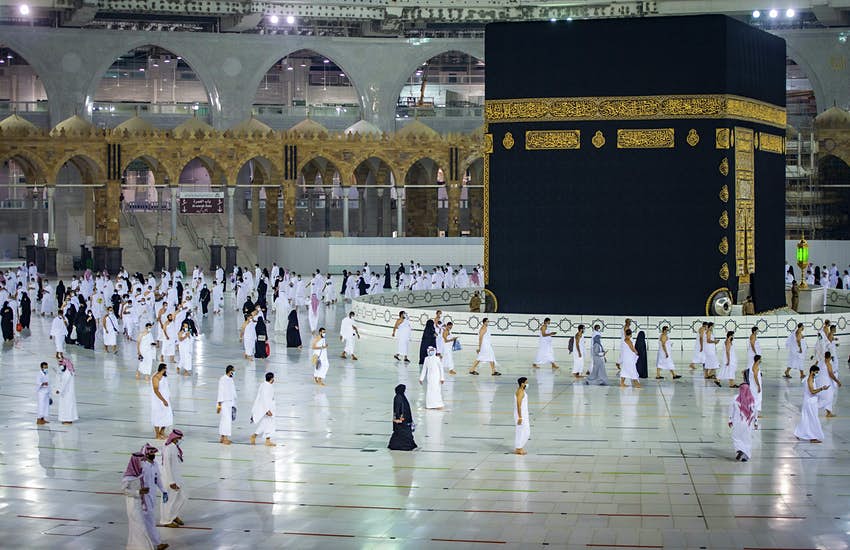
Saudi Arabia has announced a number of strict conditions for the 2021 Hajj, which it says will be performed only by 60,000 Muslims globally.
The conditions, which were aimed at preventing the spread of COVID-19, include limiting the pilgrimage to only those within 18 and 60 years, who have not been to hospital over any ailment six months before the journey for the Hajj rites.
The Saudi health ministry said they are allowing overseas Hajj pilgrims for the annual event in July but it would be on a smaller scale compared to the pre-pandemic time.
The Saudi health ministry said 45,000 pilgrims would come from outside the country and 15,000 from inside the Kingdom.
A report from one of the multiple online reports, Siasat, gives the highlights of conditions as follows:
Key points for the Hajj 2021:
Only 60,000 Hujjaj will be scheduled to perform Hajj this year which includes local and foreign pilgrims.
Those performing Hajj must be between the age of 18-60 years of Age.
Those performing Hajj must be in a good stated of health.
Those performing Hajj must not have been in hospital for any illness within the past six months prior to travelling for Hajj. (proof Is required)
The pilgrims must have had both doses of the vaccine with a vaccination card provided by the individual countries Health Organisation / Hospital / Ministry. (proof required)
The vaccine taken must be on the approved list that is recognised by the ministry of health within the Kingdom of Saudi Arabia.
The pilgrims must quarantine for three days if they are classed as foreign pilgrims as soon as they arrive in the Kingdom of Saudi Arabia.
The first dose of the vaccine must have been taken by the 1st Shawaal 1442. Note: This day has passed and was the day of the Eid Ul Fitr 1442.
The second dose of the vaccine must be taken by the 14th day before arriving within the Kingdom of Saudi Arabia.
The conditions of social distancing and the wearing of the mask and other precautionary measures will continue to protect pilgrims.
When a pilgrim arrives at their residence:
The pilgrims will undergo thermal screening.
The accomodation and hotels pilgrims will stay at must comply with the ministry of tourism, the ministry of Hajj, and other bodies.
There will be an implementation of precautionary measures to prevent crowding inside the rooms and hotels.
They will therefore provide catering services for every pilgrim in their room without the need to gather in dining halls and prevent open buffets.
All international pilgrims must quarantine for three days and will also conduct PCR Swabs at the place of residence.
Pilgrims will be educated that if they have symptoms, they are to go consult a doctor directly, in order to ensure their own safety and the safety of others.
The Hajj pilgrims will be dispatched in less batches compared to previous years in order to comply with social distancing. There will be meeting points for groups in all areas in fewer numbers compared to previous years.
All baggage for pilgrims must be disinfected & workers will be given the role to ensure this.
Security personnel have been assigned to organise the entry & exit of pilgirms according to the time allotted to them.
The protocol accommodation facilities
For Arafah
A bus will be specified for each group and a seat number will be assigned to each pilgrim during the entire trip, with follow-up on the implementation of precautionary measures when getting on and off the buses.
Pilgrims will not be allowed to stand during the journey.
Families will be allowed to sit together.
If a pilgrim has COVID-19 the bus will be disinfected and other procedures will follow.
The number of passengers will not exceed 50% of the total capacity.
In the bus, there will be an empty seat between each passenger.
Passengers must carry their luggage.
Food should only be prepackaged.
Preventing of gatherings and maintain social distancing.
The number of pilgrims will not exceed 50 per 50 square metres of the area of the tents.
Pilgrims will be provided with stones in sterilised bags packed by the organizer.
The pilgrims departure to and from the Jamarat facility must be scheduled so that the number does not exceed 50 pilgrims for each floor of the Jamarat facility.
For Al Haram mosque in Mecca
Pilgrims must have a permit to perform the Hajj from the electronic Hajj portal or via an electronic application.
Pilgrims must ensure social distancing and prevent over crowding issues.
Thermal imaging cameras are in place to measure the temperature at the entrances.
In the event of high temperatures or suspicions, the pilgrim will be prevented from entering and referred to the specialists at the Ministry of Health.
Carpets at Masjid Al Haram will be removed.
Stickers are marked on floors allowing 2 metres Social Distancing between pilgirms.
Food will be prevented from being allowed in the Mosque.
Educational lessons will continue to be suspended inside the Mosque.
Educational material however will be distributed.
Cleaning and disinfecting will take place around the clock.
Earlier this week, the Kingdom of Saudi Arabia announced that it would allow pilgrims from outside the country to perform Hajj this year.
Last week, Saudi Arabia warned citizens against traveling to 13 countries including India without permission due to security concerns and instability in several countries, while the COVID-19 pandemic continued and new strains of the virus spread to some other countries.
Earlier in March, the kingdom of Saudi Arabia health ministry said that will only allow people who have been vaccinated against COVID-19 to attend the Hajj this year.
The Corps Marshal of the Federal Road Safety Corps (FRSC), Dr Boboye Oyeyemi has advised, that the only solution to the problems of Nigeria’s transportation challenges is to adopt a multi-modal system, stressing that the pressure on the road system is too high.
Dr Boboye also decried the non-implementation of the National Transport Policy (NTP), 29 years after it was drafted.
Speaking on the topic: “Improving Nigeria Transportation Systems: The Way Forward” at the 8th Nigeria Annual Transport Lecture held recently at Sheraton Hotel, Dr Oyeyemi said there is need for improvement of the inter-modal transport system.
Boboye warned that the road system is not only dominant but its preference, totalling 95 per cent of all modes, has serious road safety concerns in the form of traffic crashes and infrastructure decays
Noting that road crashes have increased, the Corps Marshal said “the pressure is too much on the road. Fatality has been on the high. We used to have an average of 100 lives lost on the roads weekly. Speed is a major aspect we need to address”.
The FRSC boss maintained that utilising other modes of transport, including air, water, road, pipeline and rail as an alternative will decongesting traffic gridlocks in coastal cities in the country, and also has the potential to boost the economy from travel tourism perspective.
According to him, there has not been a balanced development of the country’s transportation system, pointing out that increase in road construction activities and some developmental challenges being experienced by the other sectors of transportation, the movement of people, goods and services is dominated by road transport.
Proffering solutions for the intermodal transport system to work, Boboye said “government should expand and upgrade existing air travel infrastructures so as to boost confidence in the industry with respect to air safety; encourage more investments to bring about healthy competition such that more people can opt for the mode as against the road especially for long-distance travel. This will largely reduce ‘fatigue’ induced and tyre related crashes on the road”.
According to him, greater investments as a follow up of the MoU between NIWA, NEXIM and Sealink Promotional Co. Ltd should be activated.
He also canvassed for the dredging of identified potential waterways in the country to improve safety and enhance navigation amongst others.
Commending the efforts of the present government, Boboye said “government should continue to improve on existing security framework to enhance investors and customers confidence in all modes of transportation in the country. The current state of transportation in the country is an improvement on what it used to be”.
FAAC disbursement drops N63bn to N616bn in May
The three tiers of government shared a total of N616.886 billion received from the federation accounts allocation committee (FAAC).
This is the revenue from April as allocation for May.
Henshaw Ogubike, director of information, press and public relations, at the office of accountant general of the federation (OAGF), disclosed this in a statement on Friday.
Of the total revenue derived in April, the federal government, in May, received N244.011 billion, while the state and local government councils got N193.432 billion and N143.298 billion, respectively.
This figure shows a decline of N63.45 billion when compared to FAAC disbursements for revenue accrued in March.
With increased revenue in March, the sum of N680.33 billion was shared among the three tiers of government in April.
In March, gross statutory revenue was N466.687 billion, value added tax revenue was N181.712 billion and exchange gain was N2.931 billion.
But according to the statement, gross statutory revenue fell to N429.733 billion in April.
Revenue from the value added tax also reduced to N164.340 billion while revenue from the exchange gain dipped to N2.250 billion.
The OAGF said the excess bank charges recovered was N0.563 billion, while revenue from non-oil was N20 billion.
For non-oil revenue, the federal government received N10.536 billion, the state government got N5.344 billion and the local governments was allocated N4.120 billion.
“In April 2021, the sum of N79.468 billion was the total deductions for cost of collection, statutory transfers and refunds,” the statement reads.
“The balance in the Excess Crude Account was $72.413 million.”
It noted that oil-producing states received the sum of N36.145 billion as 13 percent derivation revenue.
The statement also noted that from the gross statutory revenue, N207.477 billion was given to the federal government, the state governments received N105.235 billion while the local government councils received N81.132 billion.
“The Federal Government received N24.651 billion from the gross Value Added Tax (VAT) revenue of N164.340 billion, the state governments received N82.171billion and local government councils received N57.519 billion,” it reads.
The statement added that the federal government received N1.051 billion, the state governments receive N0.533 billion, the local government councils received N0.411 billion and N0.255 billion was given to the relevant states as 13 percent derivation revenue from the exchange gain revenue.
It added that petroleum profit tax and excise duty recorded a significant increase, while companies income tax, oil and gas royalties, VAT and import duty suffered a declin











News
EFCC Acted Lawfully in Freezing Osun Account – Falana

EFCC Acted Lawfully in Freezing Osun Account – Falana
Senior Advocate of Nigeria and human rights lawyer, Femi Falana, has declared that the Economic and Financial Crimes Commission (EFCC) did not act illegally by restricting the Osun State Government’s statutory allocation account. He cited landmark court judgments that affirm the anti-graft agency’s powers to investigate state finances, while also faulting President Bola Tinubu’s intervention on procedural grounds.
The controversy surrounding the EFCC’s decision to place a Post-No-Debit restriction on an Osun State Government account domiciled with First Bank has sparked intense debate across the country. The commission disclosed that the action was part of an ongoing investigation into the alleged fraudulent handling of approximately ₦11 billion in Ecology Funds, Intervention Funds, and Federation Account Allocation Committee (FAAC) allocations . According to the EFCC, investigators detected what it described as “precipitate and unwarranted movement of funds” from the account to various corporate entities beginning on August 2, 2026, prompting the need for swift intervention to prevent further diversion of public resources . The commission clarified that the restriction applied to only one account and was not a blanket freeze on all state government finances, a distinction that has been largely overlooked in public discourse surrounding the matter . The EFCC’s Director of Public Affairs, Wilson Uwujaren, defended the action, stating that the commission derived its powers from Section 34 of the EFCC Act and Section 7(6) of the Money Laundering (Prevention and Prohibition) Act, 2022 .
Falana made his declaration on Friday during an appearance on Channels Television’s Politics Today, wading into the controversy with a clear legal opinion that sought to clarify the legal basis for the EFCC’s action. The senior lawyer stated categorically that “as far as the law is concerned, the EFCC has not acted illegally” . He explained that under Nigerian law, the commission possesses the legal authority to freeze accounts belonging to the federal government, state governments, and local governments, provided it complies with the statutory requirement to obtain a court order within the prescribed period . According to Falana, the EFCC can impose a temporary restriction on an account for up to 72 hours without judicial authorisation, after which it must secure a court order to maintain the freeze . He maintained that the commission followed this legal framework in the Osun case, noting that the EFCC had indeed approached the Federal High Court, which “intervened based on information provided by the EFCC” . This judicial intervention, he argued, validated the EFCC’s actions under the existing legal framework, and the Osun State Government had appropriately challenged the legality and validity of the court order, rather than merely questioning the timing of the action .
READ ALSO:
- Osun election: Police pledge neutrality, warn against vote buying, violence
- VIDEO: Lagos Bridge Vandalism: 27 Arrested as Scavengers Strip Pillars of Iron Bars
- Ronaldo predicts Cristiano Jr. will be ‘bigger than me’, reveals biggest challenge
The legal history of the EFCC’s powers provides important context for understanding the current controversy, and Falana traced this history to demonstrate that the commission’s authority had been repeatedly affirmed by superior courts. He recalled that in 2019, the Federal High Court in Benue State had ruled that the commission lacked the authority to freeze the state government’s account and awarded N50 million in damages against the agency . However, he said the EFCC successfully appealed that decision, and in September 2022, the Court of Appeal overturned the lower court’s ruling, affirming the commission’s power to impose a Post-No-Debit restriction on a government account for up to 72 hours before obtaining a court order . “That remains the law in Nigeria today,” Falana said, emphasising that the Court of Appeal’s decision had not been overturned by any higher court and therefore remained binding on all lower courts and government agencies .
Beyond the Court of Appeal decision, Falana also referenced a 2024 Supreme Court judgment that further solidified the EFCC’s authority to investigate state finances. This judgment arose from a suit instituted by the Kogi State Government and joined by several other states, which challenged the authority of federal anti-corruption agencies to investigate state government finances . Falana stated that the apex court examined all relevant constitutional and statutory provisions and concluded that agencies including the EFCC, the Independent Corrupt Practices and Other Related Offences Commission (ICPC), and the Nigerian Financial Intelligence Unit (NFIU) have the power to probe accounts at the federal, state, and local government levels . He added that anyone dissatisfied with the existing legal framework should seek an amendment through the National Assembly rather than questioning the EFCC’s statutory mandate . “If Nigerians—those who are concerned—want the law changed, they can go to the National Assembly. But for now, as of today, EFCC has the power to freeze the account of any state and, in not more than 72 hours, has to go to court,” he said, making it clear that the legal question had been definitively settled .
The political dimension of the controversy emerged when President Bola Tinubu directed the EFCC to approach the court to vacate the order and discontinue the restriction, citing concerns about the timing so close to the August 15 Osun State governorship election . Tinubu stated that he was “deeply embarrassed” by the timing of the action, although he acknowledged the commission acted within its statutory powers by obtaining the court order . He said preserving public confidence in the integrity and credibility of the election informed his decision, a position that drew both support and criticism from various quarters . The President’s intervention raised questions about the appropriate limits of executive authority in relation to independent anti-corruption agencies, and whether such intervention could set a dangerous precedent for future investigations .
Falana, however, faulted President Tinubu’s intervention, arguing that the President ought to have respected the statutory independence of the EFCC and acted through the Attorney-General under Section 174 of the Constitution . He stated, “In intervening in the Osun State crisis, President Tinubu ought to have respected the independent status of the EFCC and the due process of law. As far as the law is concerned, the EFCC chairman is not at the beck and call of the President” . Falana noted that the Osun State Government had already taken legal steps to challenge the freezing order before Tinubu intervened, meaning the matter should have been resolved through the judicial process rather than through a direct presidential instruction to the anti-graft agency . He suggested that Tinubu could have directed the Attorney-General to take over the case under Section 174, with a view to withdrawing the case or not opposing the motion filed by the Osun State Government to vacate the ex parte order . Despite faulting the procedure, Falana appeared to welcome the eventual move towards restoring access to the state government’s funds, quoting William Shakespeare: “All is well that ends well” , indicating his pragmatic acceptance of the resolution while still criticising the process .
Looking beyond the immediate controversy, Falana also warned against establishing a precedent under which anti-corruption agencies would be expected to suspend investigations merely because an election is approaching . He argued that such an approach could provide governments with a window to move public funds without scrutiny during election periods, warning that “we must be very careful that we don’t give a dangerous impression that when elections are 10 days away, 20 days away, 30 days away, the anti-graft agencies must turn the other eye” . This warning reflects broader concerns about the integrity of electoral processes and the need for continued oversight of public finances, particularly during periods when governments may be tempted to use state resources for political purposes . Falana’s comments underscore the delicate balance between ensuring free and fair elections and maintaining robust anti-corruption enforcement, a balance that Nigerian authorities continue to navigate in practice .
EFCC Acted Lawfully in Freezing Osun Account – Falana
News
Osun election: Police pledge neutrality, warn against vote buying, violence
Osun election: Police pledge neutrality, warn against vote buying, violence
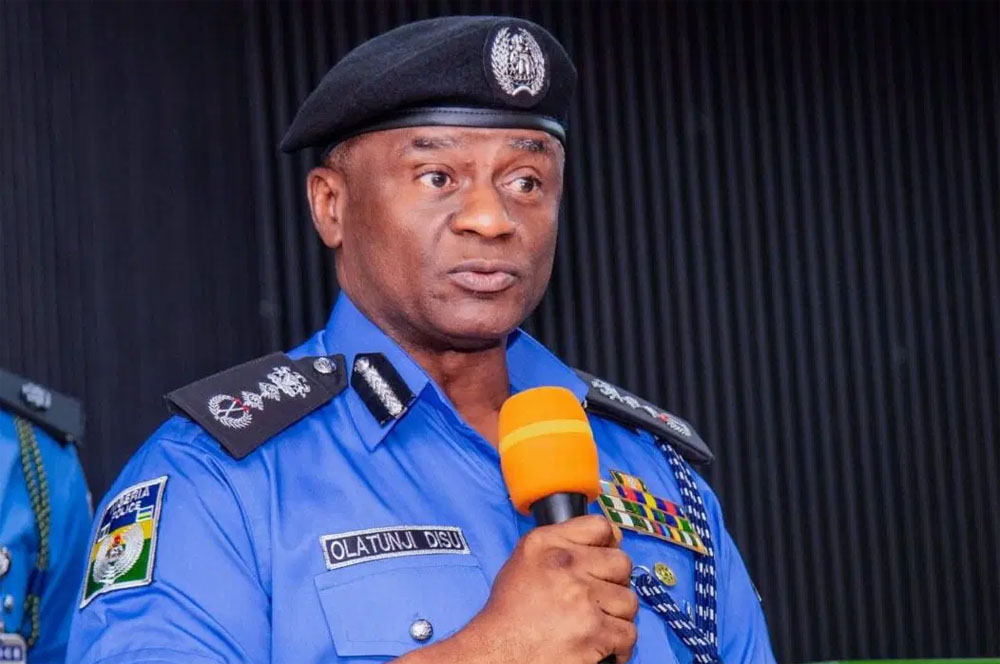
The Nigeria Police Force has assured residents of Osun State that it will remain neutral, professional and impartial during the August 15, 2026 governorship election, warning politicians, supporters and other stakeholders against vote buying, violence and electoral offences.
Inspector-General of Police Tunji Disu gave the assurance during a meeting with civil society organisations (CSOs) led by the Civil Society Legislative Advocacy Centre (CISLAC) in Abuja.
Disu said the police had no political interest in the outcome of the Osun governorship election, stressing that the force’s responsibility was to provide a secure environment where eligible voters could freely exercise their constitutional rights.
He said police officers deployed for election duties had been reminded of their constitutional obligation to enforce the law impartially and protect voters, candidates, electoral officials and other participants regardless of political affiliation.
“The Nigeria Police Force remains a professional, apolitical and impartial institution. We have no candidate, no political party and no vested interest in the outcome of the election other than ensuring that the lawful choice of the people prevails,” Disu said.
The IGP said adequate police personnel and operational assets had been deployed across the state, while intelligence gathering and threat assessments had been strengthened to identify and prevent potential security threats.
According to him, the police are also working with the Independent National Electoral Commission (INEC), the Inter-Agency Consultative Committee on Election Security (ICCES) and other relevant stakeholders to ensure effective coordination before, during and after the election.
Disu specifically warned that individuals involved in vote buying, voter intimidation, ballot-box snatching, political thuggery and other electoral offences would face the full weight of the law, irrespective of their political connections or status.
READ ALSO:
- VIDEO: Lagos Bridge Vandalism: 27 Arrested as Scavengers Strip Pillars of Iron Bars
- Ronaldo predicts Cristiano Jr. will be ‘bigger than me’, reveals biggest challenge
- ISWAP Overruns Rival JAS Enclave In Borno Following ₦40m Cash Theft
He also appealed to political parties and their supporters to conduct themselves peacefully, saying no political ambition should be allowed to result in the loss of lives or disruption of the electoral process.
The police chief urged eligible voters in Osun to participate in the election without fear and encouraged residents to report suspicious activities to security personnel.
The assurance comes amid increased attention on the security situation and the neutrality of law enforcement agencies ahead of the Osun 2026 governorship election.
Civil society organisations have continued to stress the importance of security agencies maintaining neutrality, particularly in view of concerns about electoral violence, voter intimidation and vote buying.
CISLAC Executive Director Auwal Rafsanjani said civil society organisations remained committed to working with security agencies and other stakeholders to promote a peaceful, credible and violence-free election.
Yiaga Africa Executive Director Samson Itodo also described the Osun governorship election as an important test for Nigeria’s electoral institutions ahead of the 2027 general election.
Itodo stressed that the neutrality and professionalism of security agencies would be crucial to strengthening public confidence in the electoral process.
Election-monitoring organisations have similarly identified security threats and voter inducement as issues requiring close attention ahead of the poll.
Yiaga Africa has announced the deployment of 332 observers across Osun State’s 30 local government areas and the state Area Office to monitor the election and provide independent assessments of the electoral process.
The organisation has urged political parties and candidates to prioritise peaceful campaigns and respect the rights of voters, while calling on security agencies to enforce electoral laws fairly.
INEC has also been intensifying preparations for the election, including measures aimed at strengthening election security and preventing violence.
The commission has said security personnel assigned to election duties would be required to take an oath of neutrality, reinforcing expectations that officers deployed for the exercise must perform their duties without favouring any candidate or political party.
The August 15 Osun governorship election is expected to attract significant attention as one of the major electoral exercises before the 2027 general election.
With concerns over vote buying, political violence, voter inducement and security neutrality, the conduct of security personnel and the ability of law enforcement agencies to respond impartially to electoral offences will be critical to the credibility of the poll.
For voters, political parties and civil society groups, the expectation is that all stakeholders will respect the rules, reject violence and allow eligible citizens to freely determine the next governor of Osun State.
Osun election: Police pledge neutrality, warn against vote buying, violence
News
School Shooting: 14-Year-Old Student Kills Grandparents, 6 at Nonthaburi School

-

 Sports3 days ago
Super Falcons Thrash Egypt 6-2, Book WAFCON Quarter-Final Date with Cameroon
-
 metro3 days ago
Former Finance Minister Kemi Adeosun Loses Husband, Niyi Adeosun
-
 metro2 days ago
Osun Govt Sues EFCC, First Bank for ₦2 Billion Over Unlawful Account Freeze
-

 metro3 days ago
Two Rifles, Live Ammunition Recovered as FCT Police Storm Bandits’ Hideout
-
 Politics3 days ago
Osun Election: ‘Prepare to Sign Your Uncle as Dancer’ — Uzodimma Fires Back at Davido
-
 metro2 days ago
Customs Intercepts 140 Pump-Action Rifles, Cannabis-Infused Products Worth ₦373.8 Million at Tin Can Port
-
 Politics3 days ago
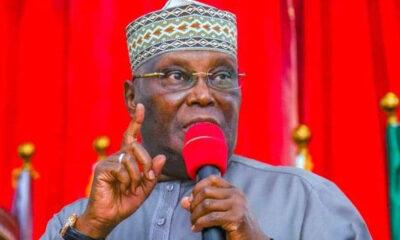
Osun Account Freeze: Atiku Accuses Tinubu of Weaponising State Institutions Against Opposition
-

 metro3 days ago
Nigerian Army Places N60m Bounty on Wanted ISWAP Leaders