

metro
Kano court sentences six to 120 years for child abduction

Kano court sentences six to 120 years for child abduction
A Kano State High Court has sentenced six members of a notorious child abduction syndicate to a combined 120 years in prison for their roles in abducting and trafficking children under the age of 10.
The convicts-Mercy Paul, Ebere Ogbono, Emmanuel Igwe, Loise Duru, Monica Oracha, and Chinelo Ifedigwe-were found guilty of concealment, abetment, kidnapping, and trafficking of minors.
The children were reportedly abducted from Kano and sold in Onitsha, Anambra State.
The syndicate leader, Mr. Paul Onwe, was previously sentenced to 104 years in July 2021 after pleading guilty to 38 counts. The six co-defendants, however, pleaded not guilty and were subsequently tried.
READ ALSO:
- How Tinubu abandoned Amaechi after 2023 elections — Ndume
- Court jails 17 Chinese nationals for cyber-terrorism, internet fraud in Lagos
- Monarch’s brother accused of slapping council chairman
Justice Zuwaira Yusuf, who presided over the case, found all six guilty as charged and sentenced them to various prison terms without the option of a fine.
She sentenced Mercy Paul to 55 years imprisonment, Ebere Ogbono to 41 years, Emmanuel Igwe to 9 years, Loius Duru to 6 years, Monica Oracha to 5 years, and Chinelo Ifedigwe to 9 years.
The group was arrested in 2019, and the final judgment has brought to a close a six-year-long trial that shocked the public and drew attention to child trafficking in Nigeria.
Kano court sentences six to 120 years for child abduction












metro
Nigerian Navy Recruitment 2026: October 31 Deadline, Full Requirements and How to Apply
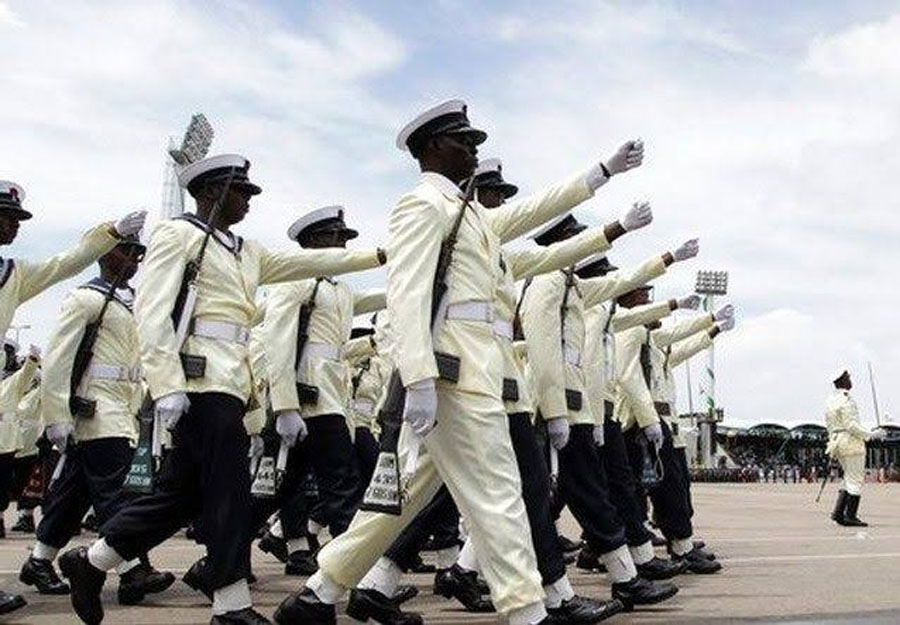
The Nigerian Navy has opened applications for its 2026 Batch 39 Basic Training School recruitment, giving eligible Nigerians until October 31, 2026, to complete their applications for enlistment.
The recruitment exercise commenced on October 2, 2026, with applications being submitted through the Navy’s official recruitment portal. The aptitude test is scheduled for November 21, 2026, subject to any subsequent changes announced by the service.
The exercise provides opportunities for qualified candidates with secondary school certificates, technical diplomas, professional qualifications and recognised trade skills to apply for different entry categories.
However, the educational qualifications, age limits and other conditions vary according to the position. Applicants are therefore advised to identify the category that matches their qualifications before completing the registration process.
The Navy has also warned prospective candidates that the recruitment exercise is free of charge and that no individual or agent can guarantee enlistment in exchange for money.
Nigerian Navy Recruitment 2026: General Eligibility Requirements
Applicants must be Nigerian citizens by birth and possess a National Identification Number (NIN). Candidates must also satisfy the Navy’s medical, physical and psychological fitness requirements and have no criminal conviction by a court of law.
The published general requirements include minimum height standards of 1.69 metres for males and 1.65 metres for females. Applicants should confirm all physical and other eligibility conditions in the official guidelines for their chosen category.
Candidates must provide genuine educational certificates and other supporting documents. Names, dates of birth and other personal details should be consistent across their application forms and official records.
READ ALSO:
- Osimhen Brace Sinks Fenerbahce as Galatasaray Win Istanbul Derby
- Certificate Scandal: UNN, NYSC Disown Uche Nnaji’s Certificates, ICPC Witness Tells Court
- Man, Teenage Girl Found Dead in Toyota Corolla as Police Begin Investigation
The Navy operates different entry categories, meaning that applicants with secondary school qualifications may face different requirements from those applying with technical diplomas, professional certificates or recognised trade qualifications.
Nigerian Navy Recruitment: Qualifications for Different Categories
The Nigerian Navy Batch 39 recruitment covers technical, medical, educational, administrative and other specialist roles. The following outlines the main qualification areas applicants should consider before applying.
1. Marine and Mechanical Engineering
Candidates seeking engineering-related positions may need an Ordinary National Diploma (OND) in Marine Engineering, Mechanical Engineering or another specified discipline, usually with the minimum grade stipulated for the category.
Relevant O’Level credits in subjects such as English Language, Mathematics, Physics and Chemistry may also be required. Applicants should confirm the accepted disciplines and certificate grades in the official recruitment guidelines.
2. Weapon Electrical Systems
Applicants interested in weapon electrical and related technical positions may need an OND in Electrical Engineering, Electronic Engineering or another approved discipline.
The required O’Level subjects, minimum diploma grade and any additional conditions depend on the specific position advertised.
3. Communications and Information Technology
Candidates applying for Communications and Information Technology roles may require relevant qualifications in Computer Science, Computer Studies, Programming, Telecommunications or specified engineering disciplines.
Applicants should check whether their diploma or professional qualification is recognised for the particular category and ensure that they possess the required O’Level credits.
4. Seaman and Survey
Applicants seeking entry into the Seaman category must meet the prescribed secondary school qualification requirements, including the specified credits in English Language and Mathematics.
Survey-related positions may require an OND in Land Surveying, Cartography, Geographic Information Systems or another approved field. Candidates should confirm the precise requirements for their chosen position.
5. Medical Services and Nursing
Medical and nursing positions have specialised requirements. Depending on the role, candidates may need relevant science subjects, a recognised nursing or medical-related qualification, professional registration and a valid practising licence.
Nursing applicants should verify the required nursing certificates and any additional qualifications specified for their category. Other medical-related positions may require diplomas or professional credentials in their respective fields.
6. Education
Candidates applying for education-related positions may need a National Certificate in Education (NCE) in an approved arts, science, technical or other teaching discipline.
READ ALSO:
- EFCC Busts Four Illegal Lithium Plants in Ogun, Arrests 14 Chinese Nationals
- Yamal Makes History With Third Consecutive Young Player Award at 2026 Ballon d’Or
- KANE ENDS 25-YEAR WAIT! England Captain Wins 2026 Ballon d’Or After Stunning 73-Goal Season
The required subjects and O’Level credits vary according to the specialisation. Applicants should ensure that their qualifications correspond with the teaching or education-related role for which they intend to apply.
7. Tradesmen and Women
The recruitment exercise may include technical and vocational categories for applicants with recognised skills in areas such as welding, plumbing, carpentry, electrical installation, masonry, tailoring, painting and refrigeration.
Depending on the trade, candidates may be required to possess a recognised trade certificate, Trade Test qualification, apprenticeship credentials or other approved evidence of competence.
Applicants should confirm which certificates are accepted and whether practical experience is required.
8. Drivers and Mechanics
Candidates seeking driving and mechanic-related positions may need relevant vocational training, evidence of practical experience and the appropriate driving licence where applicable.
The required educational credits, driving experience, licence class and technical certificates depend on the position. Applicants should check the specific conditions before submitting their applications.
9. Sportsmen and Women
Candidates applying for sports-related positions may be required to demonstrate recognised sporting ability and provide evidence of participation or achievement at the level specified by the Navy.
Applicants should confirm the accepted sporting disciplines, supporting documents and any additional educational or age requirements.
10. Clerical, Administrative and Other Support Roles
Administrative and support categories may include positions such as Writers, Store Assistants, Caterers, Bandsmen, Firemen and other specialised personnel, depending on the vacancies advertised.
Some roles require secondary school qualifications, while others may demand computer skills, relevant professional training, practical experience or a certificate in a specialised field.
Chaplain and Mosque Assistant positions may also have specific religious education, experience and recommendation requirements.
Age Limits and Category-Specific Conditions
For many O’Level entry categories, the published guidelines indicate an age range of 18 to 22 years. Some OND, NCE, nursing and other specialist categories may permit older applicants, potentially up to 26 years, depending on the position.
These age limits should not be treated as universal. Candidates must check the exact age requirement, educational qualifications, accepted subjects, minimum certificate grades and professional conditions applicable to their preferred category.
READ ALSO:
- Oyo Govt Draws Battle Line With Soun, Rejects Suspension of Ogbomoso Balogun
- Car of the Year, other top honours up for grabs as NAJA Awards race begins
- Cancelled Wedding: Man Sues Ex-Fiancée’s Father Over Unpaid ₦70,000 Dowry
Applicants should not assume that every position requires the same five O’Level credits or that a qualification accepted for one category will automatically qualify them for another.
How to Apply for Nigerian Navy Recruitment 2026
Interested and qualified candidates should follow these steps to complete their applications.
Step 1: Visit the official portal
Access the Nigerian Navy recruitment website at https://joinnigeriannavy.navy.mil.ng/ and read the recruitment guidelines carefully before beginning the registration process.
Step 2: Select the appropriate category
Review the available entry categories and choose the one that matches your educational qualifications, professional credentials or trade skills.
Confirm the applicable age limit and other conditions before proceeding.
Step 3: Register and provide your details
Follow the portal’s instructions to create an account, where required. Provide the requested personal information, including a valid email address, phone number and National Identification Number.
Step 4: Complete the application form
Enter your personal details, educational history and other required information accurately. Ensure that the details match your supporting documents.
Step 5: Upload the required documents
Upload clear copies of the certificates and identification documents requested for your category. Professional applicants should provide any additional credentials or licences specified in the guidelines.
Step 6: Review and submit
Check the entire application for errors before submitting it. Ensure that all mandatory fields have been completed and that the information provided is accurate.
Applicants should avoid submitting multiple applications, as this may lead to disqualification.
Step 7: Print the acknowledgement form
After successful submission, download or print the acknowledgement form and any other documents generated by the portal.
Where required, prepare the prescribed parent or guardian consent form, Local Government attestation and guarantor’s certification documents in accordance with the official instructions.
Step 8: Monitor examination updates
Regularly check the official recruitment portal for updates on the aptitude test, examination slips, designated centres, reporting time and subsequent recruitment stages.
Applicants should keep their login details and application documents safe throughout the process.
Nigerian Navy Recruitment Deadline and Aptitude Test
The stated application deadline is October 31, 2026, following the commencement of registration on October 2.
Prospective candidates are encouraged to complete their applications early to avoid last-minute technical problems or delays caused by missing documents.
The aptitude test is scheduled for November 21, 2026. Candidates should confirm the date, venue and reporting instructions through official Navy announcements before travelling to an examination centre.
Submitting an application does not automatically guarantee shortlisting, successful completion of the aptitude test or enlistment. Candidates must satisfy the relevant requirements and progress through the prescribed selection stages.
Navy Warns Applicants Against Recruitment Scams
The Nigerian Navy recruitment process is free of charge. Applicants should not pay individuals or agents who claim they can secure enlistment, influence shortlisting or guarantee success.
Candidates should rely on the official recruitment portal and authorised Navy announcements for application instructions and updates.
Submitting false information or forged certificates may result in disqualification and possible further action. Applicants should also protect their personal information and avoid unofficial websites requesting payments or sensitive details.
With the October 31 deadline approaching, prospective candidates should review the requirements for their preferred entry category, prepare the necessary documents and complete their applications through the official portal.
Nigerian Navy Recruitment 2026: October 31 Deadline, Full Requirements and How to Apply
metro
Terror in Sokoto: Bandits Invade University Students’ Community, Demand Students, Shoot Cattle Owner

Terror in Sokoto: Bandits Invade University Students’ Community, Demand Students, Shoot Cattle Owner
SOKOTO STATE — Panic gripped residents of Gidan Sarki, a community situated near Usmanu Danfodiyo University (UDUS) in Sokoto State, following a midnight invasion by armed bandits. The attackers stormed the settlement, reportedly demanding that students residing in the area be brought out, before shooting a local resident and carting away dozens of cattle.
According to local sources, the heavily armed hoodlums trooped into the community under the cover of darkness, shooting indiscriminately and causing palpable fear among students and permanent residents alike. During the rampage, the assailants targeted households near the university’s vicinity, aggressively demanding information on the whereabouts of students living off-campus.
Eyewitnesses recounted that when the terror gang met resistance and failed to capture any students, they turned their aggression on livestock farmers in the area. A cattle owner who attempted to secure his properties was shot in the leg by the marauders.
“They came into the community shooting sporadically and asking for students to be brought out,” a local resident, Muhammad, disclosed. “When they couldn’t get what they wanted, they broke in, shot an old man in the leg, and went away with more than 20 cows. Thank God he survived and has been rushed to the hospital for medical attention.”
Police Confirm Incident, Deploy Operatives
Confirming the incident, the Sokoto State Police Command stated that security operatives were immediately mobilized to the scene following distress calls.
While initial accounts from locals estimated the stolen livestock to be over 20, police records put the final tally of rustled animals at 28. Authorities also clarified that the attackers did not manage to penetrate any official student hostels or staff residential areas on the main university campus, as security patrols and tactical teams quickly intercepted the area to restore normalcy.
The latest breach has, however, amplified growing security concerns among students and academics living in off-campus settlements surrounding higher institutions in the region, prompting calls for heightened surveillance and a permanent security outpost to forestall future occurrences.
Terror in Sokoto: Bandits Invade University Students’ Community, Demand Students, Shoot Cattle Owner
metro
Certificate Scandal: UNN, NYSC Disown Uche Nnaji’s Certificates, ICPC Witness Tells Court

The University of Nigeria, Nsukka (UNN) and the National Youth Service Corps (NYSC) have denied issuing certificates allegedly presented by former Minister of Innovation, Science and Technology, Uche Nnaji, an investigator with the Independent Corrupt Practices and Other Related Offences Commission (ICPC) has told the Federal High Court in Abuja.
The disclosure was made on Monday, October 26, 2026, when Superintendent of Police Yakubu Ibrahim testified as the first prosecution witness in Nnaji’s trial over alleged certificate forgery, fraud, corruption and providing false information.
Ibrahim, who was led in evidence by the ICPC’s prosecuting counsel, J.A. Mumini, a Senior Advocate of Nigeria, told Justice Joyce Abdulmalik that the commission launched an investigation after receiving two separate petitions alleging that Nnaji presented questionable academic and national service certificates during his ministerial screening in 2023.
According to the witness, the investigation team sought documents from the National Assembly, the Office of the Secretary to the Government of the Federation (SGF), UNN and the NYSC to establish the authenticity of the certificates attributed to the former minister.
He said the Clerk of the Senate forwarded Nnaji’s Bachelor of Science certificate in Microbiology and Biochemistry, alongside his NYSC discharge certificate, to the commission for verification.
Ibrahim testified that the NYSC responded that it did not issue the discharge certificate presented in Nnaji’s name. He added that UNN similarly denied issuing the degree certificate attributed to the former minister.
The investigator said the university also supplied academic records relating to Nnaji’s studies, including a withdrawal notice dated November 7, 1984, concerning a course in General Microbiology.
According to his testimony, UNN explained that its academic regulations required students to obtain the prescribed grades and that students who failed to meet the requirements after four attempts would not qualify for a degree.
READ ALSO:
- Man, Teenage Girl Found Dead in Toyota Corolla as Police Begin Investigation
- EFCC Busts Four Illegal Lithium Plants in Ogun, Arrests 14 Chinese Nationals
- Yamal Makes History With Third Consecutive Young Player Award at 2026 Ballon d’Or
Ibrahim said the university’s records indicated that Nnaji failed at two stages and did not sit an examination at another stage for medical reasons. He added that the correspondence showed that Nnaji subsequently sat a supplementary examination for which he had not registered.
However, during cross-examination, Nnaji’s counsel, Wole Olanipekun, a Senior Advocate of Nigeria, drew the witness’s attention to another letter dated March 18, 1985, which he said rescinded the earlier withdrawal notice.
Ibrahim acknowledged the letter and confirmed that the original notice concerned General Microbiology. The exchange brought the university’s academic correspondence into focus during the proceedings.
The witness also admitted that he did not personally visit UNN during the investigation. He said, however, that members of the investigating team interviewed the university’s registrar.
When asked whether investigators established where the allegedly forged certificates were produced, Ibrahim said he did not know.
He further explained that the commission did not establish where Nnaji completed his national service because the NYSC had denied issuing the certificate in question.
“The NYSC said the certificate was not issued by it, which was why we didn’t inquire where he served,” the witness told the court.
Ibrahim also gave details of the steps taken to invite Nnaji for questioning. He said investigators could not initially locate the former minister’s address and subsequently sent an invitation to his email address and WhatsApp number.
According to the witness, Nnaji did not honour the invitation, prompting the ICPC to liaise with the Department of State Services (DSS). He said the former minister was arrested on July 1, 2026, and made statements to investigators on July 1 and 2.
The ICPC had earlier confirmed that Nnaji was arrested at the Nnamdi Azikiwe International Airport in Abuja, following a court order authorising his arrest for investigation into the allegations.
The investigator further told the court that the commission obtained documents from the SGF’s office, including a payslip, which prompted it to request the former minister’s bank statement.
He said the bank statement showed that Nnaji received approximately ₦29.58 million in salaries and allowances while serving as minister before his resignation.
The payments form part of the wider allegations in the case. The ICPC accuses Nnaji of receiving the money under circumstances it alleges involved unlawful proceeds and of using his position to confer a corrupt advantage on himself.
The six-count charge also includes allegations that he knowingly presented and used purportedly forged UNN and NYSC certificates as genuine documents.
Nnaji was arraigned before the Federal High Court in Abuja on July 13, 2026, and pleaded not guilty to all six counts. The court granted him bail in the sum of ₦20 million, subject to conditions, including the surrender of his international passport.
In September, Justice Abdulmalik temporarily released the passport to enable him to travel abroad for medical treatment, while the case remained pending.
During the latest proceedings, the prosecution tendered correspondence between the ICPC and the relevant institutions and government offices. The defence reserved its right to challenge the admissibility of the documents at the appropriate stage, and the court admitted them subject to the judge’s ruling that objections could be considered during final addresses.
At the conclusion of the cross-examination, the prosecution did not re-examine Ibrahim, and the judge discharged him as a witness.
The trial was adjourned for continuation, with reports indicating November as the next hearing period.
The case follows earlier reporting on questions surrounding Nnaji’s academic credentials, which drew public attention before his resignation as minister in 2025. The current proceedings are intended to determine the criminal allegations brought by the ICPC.
Nnaji remains entitled to the presumption of innocence unless and until the court establishes his guilt. The testimony presented so far represents evidence from the prosecution’s investigation, and the court has yet to deliver a final judgment on the charges.
Certificate Scandal: UNN, NYSC Disown Uche Nnaji’s Certificates, ICPC Witness Tells Court
-

 Politics2 days ago
2027: APGA Chairman Says South-East Must Back Tinubu to Secure Igbo Presidency
-

 metro8 hours ago
Cancelled Wedding: Man Sues Ex-Fiancée’s Father Over Unpaid ₦70,000 Dowry
-

 Entertainment2 days ago
Tope Alabi Threatens Pastor With Lawsuit Over Toluwanisings’ Death Claims
-

 International2 days ago
France Deploys 70,000 Police as Cost-of-Living Protests Intensify
-
 metro2 days ago
Borno: Troops Kill 15 Terrorists in Midnight Air Strike
-

 Auto8 hours ago
Car of the Year, other top honours up for grabs as NAJA Awards race begins
-

 Politics2 days ago
Atiku Condemns Attack on Edo Comedian Over Refusal to Support Tinubu
-

 News2 days ago
Bill Clinton condemns anti-Muslim prejudice, cites Qur’an’s message of coexistence