

International
Trump pushes back after leaked report suggests Iran strikes had limited impact
Trump pushes back after leaked report suggests Iran strikes had limited impact
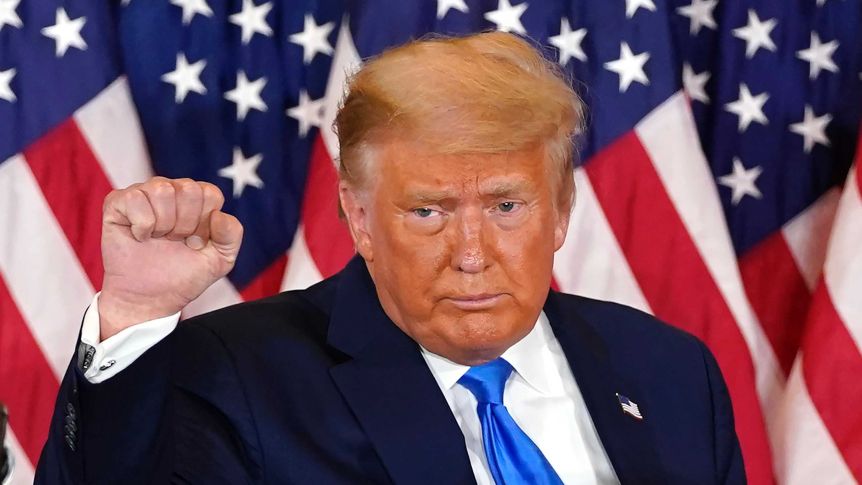
Donald Trump and his top officials have pushed back on a leaked intelligence report that said US strikes on Iran only set its nuclear programme back by a few months.
Speaking at a Nato summit in The Hague on Wednesday, Trump said the strikes led to the “virtual obliteration” of Iran’s nuclear capabilities and set its atomic programme back “by decades”.
Defence Secretary Pete Hegseth, who was also at the summit, said the preliminary Pentagon assessment was made with “low confidence” and the FBI was investigating the leak.
On Tuesday, sources familiar with the initial report into Saturday’s bombings told the BBC’s US partner CBS that Iran’s stockpile of enriched uranium was not eliminated.
They added that the strikes had only set the country’s nuclear programme back by a few months – an assessment the White House swiftly described as “flat-out wrong”.
According to the report, strikes on the heavily fortified enrichment facilities at Fordo and Natanz had sealed off entrances but failed to destroy underground structures.
Officials familiar with the leaked Defense Intelligence Agency evaluation warned it was an early assessment that could change as more information becomes available about the sites.
READ ALSO:
- 110 associations seek registration as political parties – INEC
- Four killed, many injured in Maiduguri-Damboa road explosion
- Man arraigned for threatening to set wife, children ablaze in Ekiti
The Defense Intelligence Agency is the Pentagon’s own agency which specialises in military intelligence to support operations. It collects large amounts of technical intelligence, but is distinct from other agencies like the CIA.
The US has 18 intelligence agencies, which sometimes produce conflicting reports based on their mission and area of expertise. For example, the American intelligence community is still not in agreement over the origins of Covid-19.
On Wednesday, while sitting alongside Nato Chief Mark Rutte, Trump initially acknowledged some uncertainty, saying the intelligence on the attack was “very inconclusive”.
But he then went further in his assessment, saying “it was very severe, it was [an] obliteration”.
When asked if the US would strike again should Iran resume its nuclear activities, Trump said: “Sure, but I’m not going to have to worry about that. It’s gone for years.”
Trump later likened the strikes to America’s atomic bombing of Hiroshima at the end of World War Two.
“I don’t want to use an example of Hiroshima, I don’t want to use an example of Nagasaki, but that was essentially the same thing – that ended a war,” he said.
The US president was flanked by Secretary of State Marco Rubio and Secretary of Defence Pete Hegseth, who both echoed his scepticism about the leaked intelligence.
Hegseth said the leak was politically motivated and insisted the bombs landed “precisely where they were supposed to”.
He added: “Any assessment that tells you it was something otherwise is speculating with other motives.” He characterised the leak as “completely false”.
Rubio also cast doubt on the leaked report’s credibility, suggesting the contents had been distorted in the media and labelling the leakers as “professional stabbers”.
READ ALSO:
- Victorious 1994 Super Eagles get FG’s promised houses
- Tinubu lands in Nasarawa State on one-day visit [Photos]
- Police neutralize two armed robbers, arrest two others in Kaduna
The preliminary assessment also indicated that some of Iran’s enriched uranium stockpile had been moved prior to the attack.
According to sources familiar with it, Iran’s centrifuges remain largely “intact” with the destruction limited to aboveground buildings.
Entrances to two nuclear facilities were blocked and some infrastructure was damaged, they said, but much of the deeper installations survived the blasts.
In US intelligence terminology, “low confidence” typically indicates that the information is either poorly sourced, fragmented, or uncertain – making it less reliable than assessments graded with “moderate” or “high confidence”.
Hegseth’s reference to the report being “low confidence” suggest it is tentative and its findings may change as more detail emerges.
The US struck three nuclear sites in Iran on Saturday – Fordo, Natanz, and Isfahan – using “bunker buster” bombs designed to penetrate hardened underground targets.
While the specific munitions used in the attack have not been confirmed, the 30,000lb (14,000kg) Massive Ordnance Penetrator (MOP), was thought to be the only weapon capable of destroying Iran’s underground enrichment facilities.
Tehran has always said its nuclear programme is for peaceful purposes.
In the hours that followed Saturday’s strikes, Gen Dan Caine, chairman of the joint chiefs of staff, told reporters that it would take time to assess the damage to the facilities.
But he added that “all three sites sustained extremely severe damage and destruction”. Satellite images showed six fresh craters clustered around two entry points at the Fordo nuclear sites, as well as grey dust and debris.
It is unclear from the latest satellite images, however, how much damage the sites sustained below the surface.
Hassan Abedini, the deputy political director of Iran’s state broadcaster, said the three sites targeted by the US had been evacuated a “while ago”, and that Iran “didn’t suffer a major blow because the materials had already been taken out”.
Both US and Israeli officials, meanwhile, have hailed the mission as a success.
Trump pushes back after leaked report suggests Iran strikes had limited impact










International
Iran Offers to Reopen Strait of Hormuz Within 48 Hours If…

Iran has offered to reopen the strategically important Strait of Hormuz within 48 hours, but says the move depends on the United States accepting a series of conditions aimed at easing tensions and paving the way for renewed negotiations.
Iranian Foreign Ministry spokesperson Esmaeil Baghaei announced the proposal on Monday, November 2, 2026, describing it as part of Tehran’s efforts to resolve the ongoing confrontation through diplomatic engagement.
Under the proposed arrangement, the United States would first have to meet Iran’s demands, after which the country could begin restoring access to the strategic waterway within two days. The proposal also provides for the resumption of negotiations between the two countries.
The offer marks a shift from an earlier seven-day framework reportedly communicated through mediators in September. Iran had previously proposed a sequence under which the Strait would reopen after certain conditions were met.
Baghaei described the shorter timeline as evidence of Tehran’s willingness to pursue a diplomatic solution. However, he made clear that the proposal would depend on Washington agreeing to the conditions.
Among Iran’s key demands is an end to the US naval blockade of Iranian ports, which Tehran regards as a major obstacle to negotiations. It is also seeking the removal of sanctions targeting its oil industry and the release of Iranian assets frozen abroad.
READ ALSO:
- I Believe God Has Answered My Prayer, Says Tinubu After Entering Holy Ka’abah
- Footballer Dies as Trailer Rams Car Into Bus on Lagos-Ibadan Expressway
- Gunmen Intercept Family Car, Abduct Woman, Two Children, Release Husband in Abuja
Iran has further called for an end to hostilities across the region, including the conflict involving Lebanon, arguing that any agreement should address the wider security situation rather than focus exclusively on the confrontation between Tehran and Washington.
Iranian Foreign Minister Abbas Araghchi has also outlined a proposed arrangement for maritime traffic through the Strait. Under the plan, ships would use a new route agreed upon by Iran and Oman, with passage taking place under Iranian supervision.
Tehran has additionally called for a reduction in the presence of US military forces in the region and the removal of sanctions imposed on Iran since August.
Qatar is among the countries involved in diplomatic efforts to ease the crisis. Iranian Deputy Foreign Minister Kazem Gharibabadi has also travelled to Doha as part of the consultations surrounding the proposed framework.
However, there has been no indication that the United States has accepted Iran’s conditions. Consequently, the proposed 48-hour timeline should not be interpreted as confirmation that the waterway will reopen within that period.
The proposal comes amid continued tensions between the two countries. US President Donald Trump has warned that military action could resume if diplomatic efforts fail, while leaving room for negotiations to continue.
The Strait of Hormuz is one of the world’s most important maritime energy corridors. Connecting the Persian Gulf with the Gulf of Oman and the Arabian Sea, it provides a major route for crude oil and liquefied natural gas shipments from Gulf producers to international markets.
Any prolonged disruption to shipping through the passage could affect global energy supplies, increase transportation costs and put further pressure on oil prices and fuel markets.
Iran’s latest offer has therefore attracted international attention, particularly among energy-importing countries and shipping operators concerned about the security of vessels using the route.
For now, the proposed reopening remains conditional on an agreement with Washington. Whether the two sides can bridge their differences over sanctions, the naval blockade and regional security will determine whether the 48-hour proposal translates into the restoration of normal maritime traffic.
Iran Offers to Reopen Strait of Hormuz Within 48 Hours If US Meets Demands
International
Nine Killed as Learjet Crashes Into Florida Residential Area, Erupts in Flames
Nine Killed as Learjet Crashes Into Florida Residential Area, Erupts in Flames
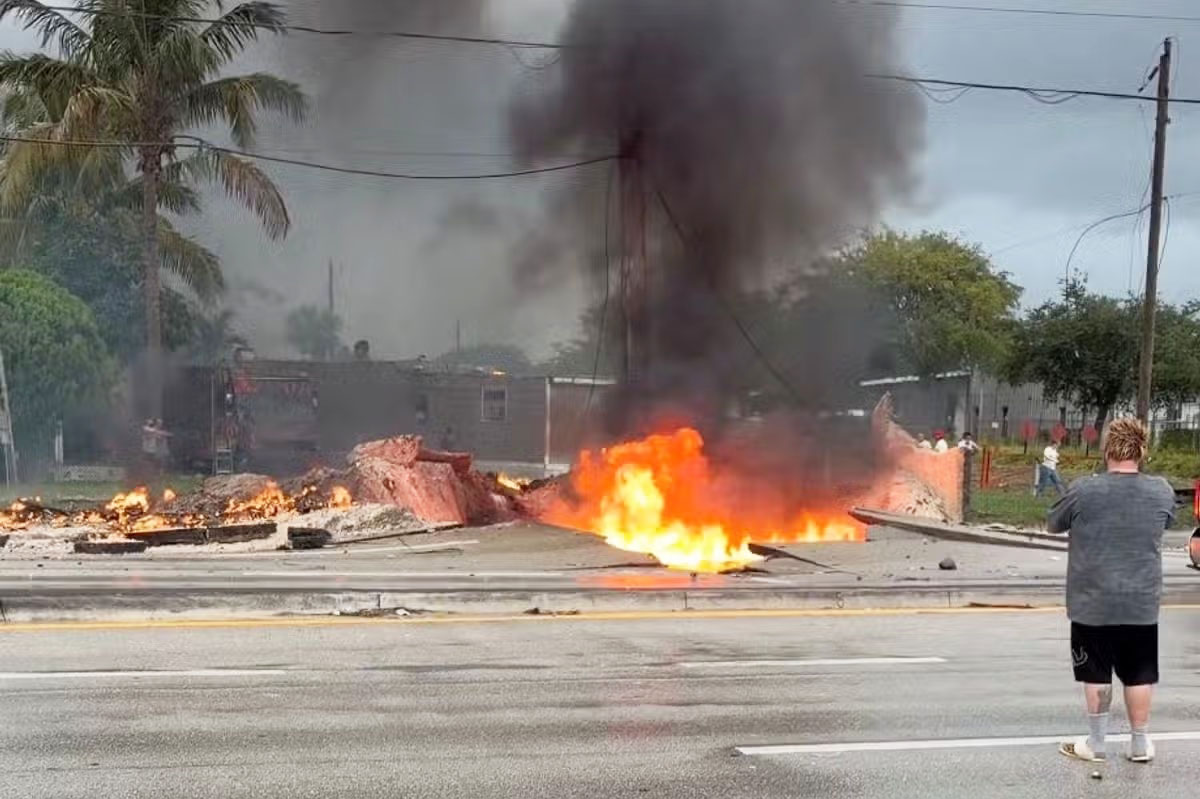
Nine people have been killed after a private Learjet 60 aircraft crashed into a residential area in Palm Beach County, Florida, United States, and burst into flames, triggering an emergency response and the evacuation of hundreds of residents.
The aircraft, which was travelling from Texas to the Bahamas, crashed at approximately 12:50 p.m. local time on Sunday, November 1, 2026, near Military Trail, between Cresthaven Boulevard and 10th Avenue North.
US Transportation Secretary Sean Duffy confirmed that all nine people aboard the aircraft died in the crash, describing the incident as a horrific tragedy.
The Federal Aviation Administration (FAA) said the Learjet 60 departed from Austin-Bergstrom International Airport in Texas and was heading to North Eleuthera Airport in the Bahamas when the accident occurred.
Videos recorded by motorists and other witnesses showed the aircraft descending rapidly before plunging towards the ground and exploding into a massive fireball. Thick black smoke subsequently billowed above the neighbourhood as emergency responders rushed to the scene.
The impact created a large crater beside the roadway, scattering aircraft debris across the surrounding area and damaging nearby infrastructure.
Florida Governor Ron DeSantis, who visited the crash scene, described the incident as a catastrophic accident.
He said the aircraft appeared to have plunged towards the ground like a missile, leaving a large crater along the road.
DeSantis added that there were no immediate reports of deaths or injuries among people on the ground, apart from those aboard the aircraft.
However, the crash prompted authorities to evacuate approximately 600 residents from a nearby mobile home community as emergency teams secured the area and assessed possible dangers.
READ ALSO:
- 2027 Election: Seun Okinbaloye Explains ‘Rigging’ Remark, Says Warning Was Not Against Any Party
- Christians Still Under Attack in Nigeria, US Lawmaker Tells Trump
- Gunmen Abduct 100-Level Female Student, Shoot Another Person in Plateau
Palm Beach County Commissioner Joel Flores said the affected residents were being assisted with temporary shelter and other emergency support at two designated locations.
The evacuation was necessary to protect residents while investigators and emergency personnel worked around the crash site.
Preliminary information from air traffic control recordings has provided some insight into the aircraft’s final moments before it crashed.
According to recordings of communications between the pilots and air traffic controllers, the crew reported ice accumulating on the aircraft while encountering moderate turbulence at high altitude.
The pilot initially described the icing as manageable but later reported worsening weather conditions and requested permission to climb to a higher altitude.
The situation deteriorated shortly afterwards as the aircraft began losing altitude rapidly.
In one of the final communications, the pilot declared an emergency and reported that the aircraft was descending at an alarming rate.
The crew initially reported a descent of about 10,000 feet per minute before indicating that the rate had increased to approximately 20,000 feet per minute.
The pilot eventually issued a distress warning, saying the aircraft was going to crash into the ground.
Flight-tracking information indicated that the jet lost approximately 27,000 feet in altitude within about a minute before tracking data stopped.
However, investigators have not established whether ice accumulation, turbulence, thunderstorms, mechanical failure or another factor caused the aircraft to lose control.
The Federal Aviation Administration and the National Transportation Safety Board (NTSB) have launched investigations to determine the circumstances surrounding the disaster.
The NTSB is leading the investigation, with support from the FAA. Investigators are expected to examine the wreckage, flight records, aircraft systems, weather conditions and communications between the crew and air traffic controllers.
The investigation will also seek to establish whether the aircraft experienced a technical malfunction or encountered conditions that affected its ability to maintain controlled flight.
The aircraft’s manufacturer, Bombardier, has indicated its willingness to cooperate with investigators.
Authorities had not publicly released the identities of the nine victims or provided a detailed breakdown of the passengers and crew as of the latest reports.
The crash site remained subject to emergency restrictions, with authorities closing sections of Military Trail and advising motorists to avoid the area.
The Florida accident has been described as one of the deadliest aviation disasters in the United States in 2026.
According to records cited by CNN, it was the second-deadliest US plane crash of the year, following a skydiving aircraft crash in Butler, Missouri, in June that killed 12 people.
The Learjet 60 accident was also reported as the deadliest crash involving the aircraft model.
The tragedy has renewed attention on aviation safety, particularly the risks associated with severe weather conditions and the importance of determining what happened during the aircraft’s final moments.
For families of the nine victims, the immediate concern remains the confirmation of identities and the circumstances surrounding the deaths, while investigators work to establish the cause of the disaster.
Nine Killed as Learjet Crashes Into Florida Residential Area, Erupts in Flames
International
Christians Still Under Attack in Nigeria, US Lawmaker Tells Trump
Christians Still Under Attack in Nigeria, US Lawmaker Tells Trump
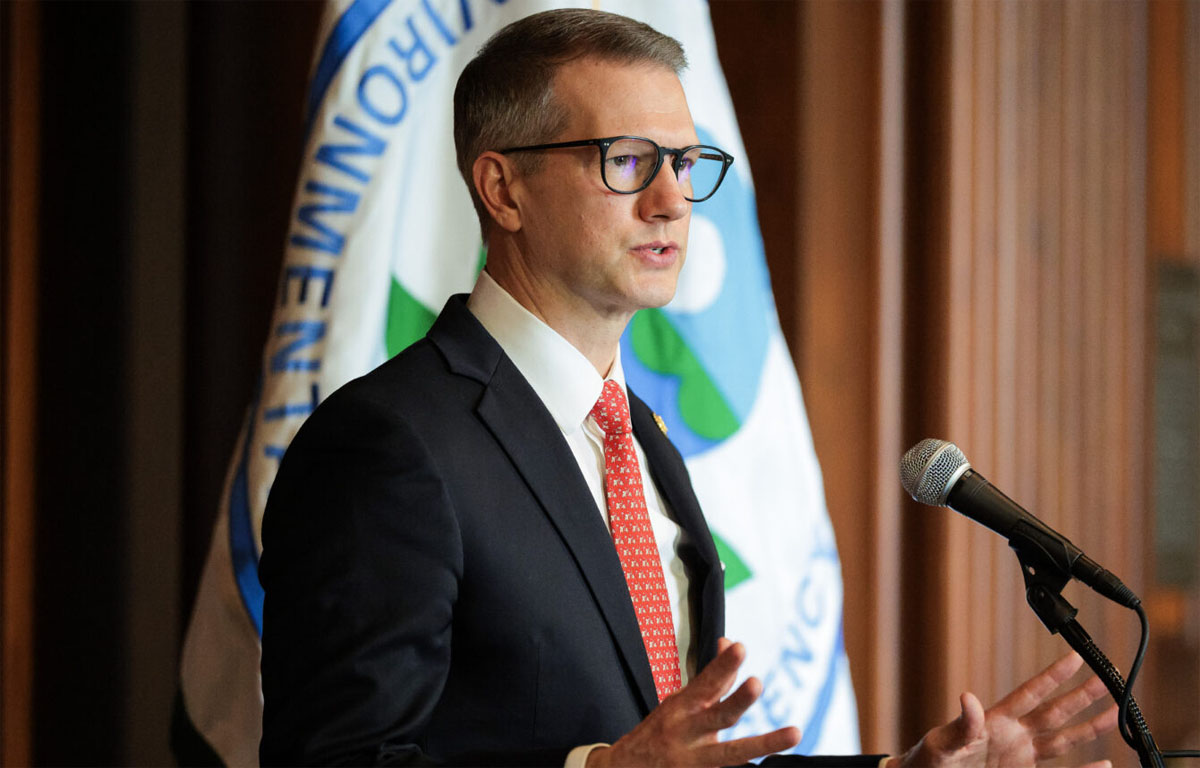
United States Congressman Riley Moore has said Christians in Nigeria continue to face severe violence and persecution, calling for renewed international efforts to protect religious communities one year after President Donald Trump redesignated Nigeria as a Country of Particular Concern (CPC).
Moore made the remarks in a statement posted on his X account to mark the anniversary of the designation, which was announced by Trump in November 2025 over concerns about religious freedom and attacks on Christian communities.
“Christians in Nigeria, and around the world, continue to face unspeakable violence. On this anniversary, we must rededicate our efforts to defend Christians in Nigeria and anywhere they face persecution,” the US lawmaker said.
He also defended Trump’s decision to place Nigeria on the CPC list, describing it as the right move and praising efforts by Republican lawmakers and faith-based organisations to press for stronger action against religious persecution.
In his post, Moore credited Trump’s leadership, alongside work by Republicans on the House Appropriations Committee, for what he described as progress in addressing attacks on Christians in Nigeria.
He specifically praised efforts by House Appropriations Republicans to introduce conditions on US assistance to Nigeria, including requirements for the Nigerian government to demonstrate concrete steps towards protecting Christian communities.
According to the congressman, pressure from the US government and advocacy by religious organisations had begun to produce results.
He claimed that Nigeria experienced its first Christmas without a massacre of Christians in recent memory, although he acknowledged that much more needed to be done to address the security challenges.
Moore also commended the Nigerian government, saying it had shown signs of willingness to confront violence against Christian communities.
READ ALSO:
- Gunmen Abduct 100-Level Female Student, Shoot Another Person in Plateau
- Tinubu Approves SUVs for FCT Traditional Rulers, Four Buses for Youths, says Wike
- Two Europe-Bound Nigerians Excrete 200 Cocaine Wraps at Abuja Airport
His latest comments are part of an ongoing campaign by some US lawmakers to draw international attention to attacks on Christians in Nigeria and push for stronger measures against those responsible.
Nigeria’s Country of Particular Concern designation
Nigeria was first designated a Country of Particular Concern by the United States in December 2020 under Trump’s first administration over concerns about violations of religious freedom.
However, the administration of former US President Joe Biden removed Nigeria from the list in 2021, a decision that attracted criticism from some American lawmakers and religious organisations.
Trump restored the designation in November 2025 after returning to the White House, citing concerns over attacks on Christian communities, particularly in parts of northern and central Nigeria.
The CPC classification is provided under the US International Religious Freedom Act and allows Washington to consider diplomatic and policy measures, including sanctions and restrictions on certain forms of assistance, against countries identified as engaging in or tolerating particularly severe violations of religious freedom.
The renewed designation has also intensified discussions between Nigerian and American authorities over insecurity, religious freedom and the protection of vulnerable communities.
US-Nigeria disagreement over religious persecution
The Nigerian government has repeatedly rejected the characterisation of the country’s security crisis as a campaign of religious persecution targeted exclusively at Christians.
The Federal Government maintains that insecurity in Nigeria is complex and involves terrorism, banditry, kidnapping, communal violence and farmer-herder conflicts, which have affected both Christians and Muslims.
It has also pointed to ongoing security operations, cooperation with international partners and efforts to protect vulnerable communities in states including Benue, Plateau and Kaduna.
Moore’s latest statement comes amid continuing international scrutiny of Nigeria’s response to insecurity and growing pressure on the government to strengthen the protection of religious communities.
The congressman, who has previously visited Nigeria as part of a US congressional investigation into religious freedom concerns, has continued to advocate stronger American involvement in addressing the violence.
In February 2026, Moore and fellow US Congressman Chris Smith introduced the Nigeria Religious Freedom and Accountability Act of 2026, seeking a comprehensive report on US efforts to address alleged religious persecution and mass atrocities against Christians in Nigeria.
The proposed legislation reflects continuing efforts by some members of the US Congress to make religious freedom and accountability central to Washington’s engagement with Nigeria.
Christians Still Under Attack in Nigeria, US Lawmaker Tells Trump
-

 metro2 days ago
Ogun Murder: Suspect Reveals How He Strangled, Macheted Retired Civil Servant Over N3.45m
-

 metro2 days ago
₦50,000 Monthly Relief: FG Begins Cash Payments to Vulnerable Nigerians
-

 International2 days ago
Romance Scam: FBI Declares Nigerian Woman Wanted, Offers ₦6.7m Reward
-

 metro2 days ago
N100,000 Deposit: FG Opens Homeownership Window for Teachers, Nurses, Police Officers
-
 Politics2 days ago
2027: G100 Coalition Moves to Unite Opposition as Leaders Meet Cardinal Onaiyekan
-

 Politics2 days ago
2027: INEC Rejects Adebutu, Gwarzo, Clears Pantami as Ogun, Kano Opposition Parties Face Setback
-

 metro2 days ago
Ghanaian Teen Chased, Shot Dead on Way to School in New York
-

 Business2 days ago
NCC Deploys Device Checker App to Tackle Fake, Cloned Phones in Nigeria