

Politics
Over 140 elected politicians defect to APC under Tinubu’s leadership — Group

Over 140 elected politicians defect to APC under Tinubu’s leadership — Group
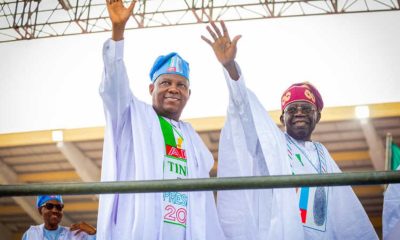
Since President Bola Ahmed Tinubu assumed office in May 2023, Nigeria’s political landscape has experienced a sweeping realignment, with over 140 elected officials defecting to the ruling All Progressives Congress (APC) without any national election taking place.
This was revealed in a statement issued on Saturday by Bamidele Atoyebi, Convener of the BAT Ideological Group, a policy advocacy platform focused on accountability and governance. Atoyebi, a social worker and criminologist, made the disclosure from Abuja.
He described the mass defections, spanning governors, senators, state and federal lawmakers, and local government officials, as a testament to President Tinubu’s expanding influence, performance, and inclusive leadership approach.
Highlighting specific cases, the statement noted that Delta State Governor Sheriff Oborevwori, originally elected on the platform of the Peoples Democratic Party (PDP), defected to the APC in April 2025.
He was accompanied by Speaker Emomotimi Guwor and 21 state lawmakers. Additionally, six PDP members of the House of Representatives from the state also crossed over, citing alignment with Tinubu’s national agenda.
A similar political shift occurred in Edo State after the APC’s win in the 2024 governorship election. Speaker Blessing Agbebaku, two other PDP lawmakers, and 17 local government chairmen defected to the APC. Two council chairmen and several councillors had earlier made the switch.
READ ALSO:
- Constitutional review: Group demands Sharia courts in S’West, Friday as public holiday
- New police commissioners named for Borno, Osun, Jigawa, others
- Coalition of corruption, not rescue – LP chieftain tackles Atiku, others
In Akwa Ibom, Governor Umo Eno joined the APC in June 2025, sparking a wave of defections including 24 state lawmakers. Two senators—Ekong Sampson and Aniekan Bassey—along with several federal legislators had already moved to the APC, further consolidating the party’s influence in the state.
The statement read: “The defection wave has also significantly reshaped the National Assembly. In the Senate, the APC’s numbers swelled from 59 to 69, with high-profile defectors such as Ned Nwoko (Delta North), Shehu Sani (Kaduna Central), and several senators from Kebbi and Akwa Ibom states.
“The House of Representatives has seen 30 members join the APC under Tinubu’s watch. Apart from the Delta bloc, lawmakers from states including Enugu, Katsina, Kano, Osun, Plateau, Kogi, Abia, and Zamfara have also defected. A group of Labour Party members from across the country similarly joined the ruling party, blaming internal party crises and applauding Tinubu’s leadership.
“In Rivers State, 27 PDP lawmakers in the State House of Assembly defected to the APC in December 2023—a move still entangled in legal proceedings, but politically significant.”
Atoyebi noted that Tinubu’s ongoing economic reforms, financial devolution, inclusive appointments, and a pragmatic governance approach are driving this historic political realignment.
“Governors and lawmakers are not just aligning for politics, but for practical results. Many are experiencing improved finances and increased autonomy at state and local levels due to Tinubu’s policies,” he said.
He added that while critics view the wave of defections as a threat to democratic balance, it is, in fact, a testament to the president’s performance. “These politicians are not coerced—they are moving toward a government that is delivering.”
According to Atoyebi, the scale and speed of the defections are unprecedented in Nigeria’s democratic history. “Not even under Obasanjo, Jonathan, or Buhari did we witness this level of crossover within such a short period. President Tinubu has done it in less than two years.”
As the 2027 election draws nearer, Atoyebi said the message is becoming clearer: “Nigeria is realigning behind a president who is bold, focused, and delivering results.”
Over 140 elected politicians defect to APC under Tinubu’s leadership — Group






Politics
Atiku Accuses Obasanjo of Distorting History, Defends Role in Third-Term Battle
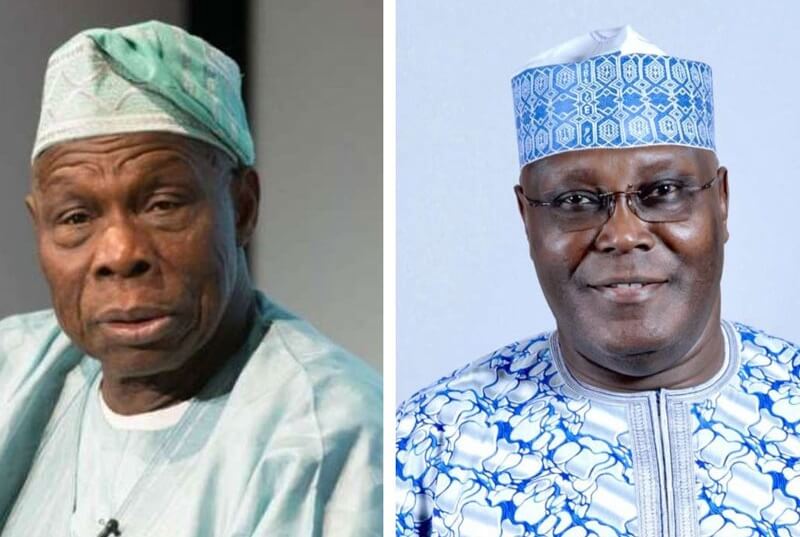
Atiku Accuses Obasanjo of Distorting History, Defends Role in Third-Term Battle
ABUJA – Former Vice President and presidential candidate of the African Democratic Congress (ADC), Atiku Abubakar, has accused former President Olusegun Obasanjo of attempting to rewrite history, insisting that he has no regrets for opposing the controversial third-term agenda during the Obasanjo administration.
In a statement issued on Saturday by his Senior Special Assistant on Public Communication, Phrank Shaibu, Atiku said Obasanjo’s recent public comments reflected “personal resentment” rather than historical facts.
According to the former vice president, his opposition to the third-term agenda was driven by his commitment to Nigeria’s Constitution and democratic principles.
“I am proud that I stood against the third-term agenda. I am proud that I stood by the Constitution of the Federal Republic of Nigeria. I have no apology whatsoever for frustrating every attempt to subvert our democracy for personal ambition,” Atiku said.
He maintained that no individual was greater than Nigeria, stressing that democracy ultimately triumphed over what he described as an unconstitutional bid to extend presidential tenure.
Atiku also claimed that the hostility between him and Obasanjo stemmed from his refusal to support the third-term project, saying he would wear any resentment arising from that decision “as a badge of honour.”
The former vice president further argued that history would remember the constitutional struggle as a victory for democracy rather than a personal feud between two political figures.
Atiku also referenced recent remarks by Director-General of the World Trade Organization, Dr. Ngozi Okonjo-Iweala, who reportedly praised the economic management team under the Obasanjo administration, saying the commendation underscored the contributions made during his tenure as vice president.
He alleged that despite such recognition, Obasanjo remained determined to downplay his role in what he described as one of Nigeria’s most successful periods of economic management.
The ADC presidential candidate also recalled supporting Obasanjo during his imprisonment under the late military regime, claiming he assisted his family, worked for his release, and later helped mobilise political structures that contributed to Obasanjo’s emergence as president in 1999.
While saying he did not regret those efforts, Atiku warned against what he described as attempts to replace gratitude with historical revisionism.
He expressed disappointment that, at a time when Nigeria faces economic hardship, insecurity and unemployment, a former president was focusing on old political disagreements instead of offering solutions to national challenges.
“The 2027 election should be about rebuilding Nigeria, restoring security, reviving the economy and giving hope to the next generation—not reopening old political wounds,” he said.
Atiku added that although he had maintained silence over the years out of respect for Obasanjo and the office he once occupied, he would no longer allow what he called repeated distortions of history to go unanswered.
He concluded by saying his focus remained on Nigeria’s future, declaring that “history is stubborn” and that both history and the Nigerian people would ultimately deliver their verdict.
Atiku Accuses Obasanjo of Distorting History, Defends Role in Third-Term Battle
Politics
INEC publishes Tinubu, Shettima’s credentials for public scrutiny ahead of 2027 election
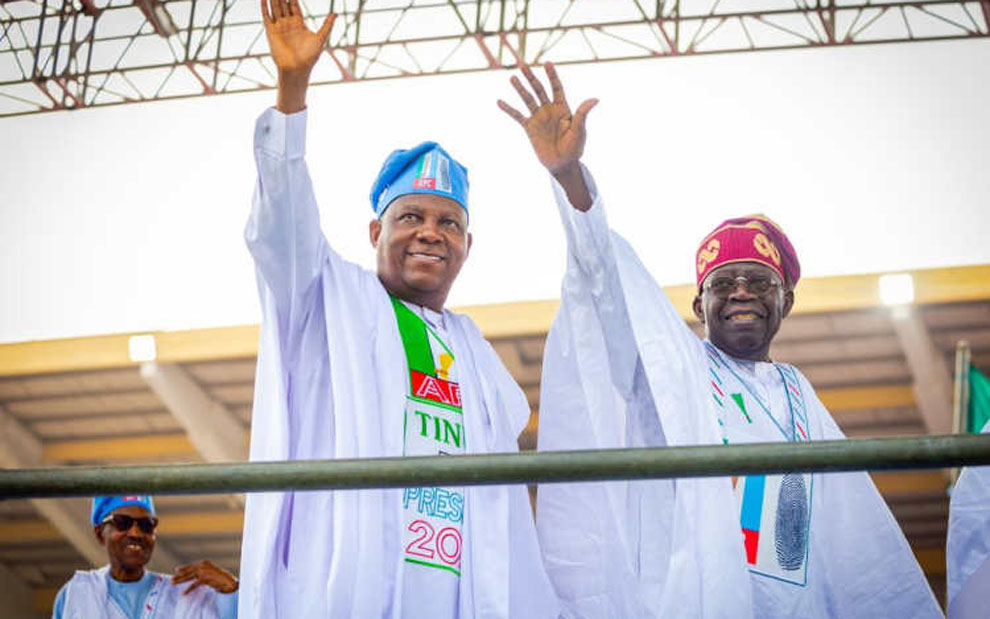
INEC publishes Tinubu, Shettima’s credentials for public scrutiny ahead of 2027 election
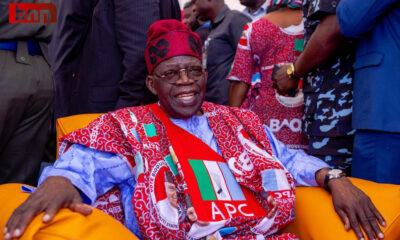
The Independent National Electoral Commission (INEC) has commenced the public display of the personal particulars, academic credentials and nomination documents submitted by candidates participating in the 2027 general election, including President Bola Tinubu and Vice President Kashim Shettima of the All Progressives Congress (APC).
The exercise is part of the statutory nomination process and provides members of the public with an opportunity to inspect the information and supporting documents submitted by candidates ahead of the 2027 presidential election.
 INEC had fixed August 1 for the publication of the personal particulars of presidential and National Assembly candidates after political parties completed the submission of their nomination documents through the commission’s designated portal. (Punch Newspapers)
Documents contained in President Tinubu’s Form EC9 show that he obtained a Bachelor of Science degree in Business Administration from Chicago State University in the United States.
His academic transcript indicates that the degree was awarded “with honours” on June 22, 1979.
The documents also include a National Youth Service Corps (NYSC) discharge certificate showing that Tinubu completed his mandatory national service in Oyo State between December 1982 and November 1983.
According to the employment history provided in the nomination form, Tinubu worked at Mobil Nigeria Limited from 1983 to 1992 before leaving for what was described as “advancement.”
READ ALSO:
- Policy Bottlenecks Threaten Nigeria’s Clean Mobility Drive, LCCI Warns
- Troops arrest three suspects over killing of soldier in Imo ambush, recover stolen rifles
- Kidnapped Lt. Col. Ofor Amobi, civilian rescued after 10-day military operation in Enugu
The form also records his service as Governor of Lagos State from 1999 to 2007 and indicates that he has served under the Federal Government since 2023.
While the form lists his university qualification, the sections relating to his primary and secondary school attendance contain the entry “0000,” with no specific years stated.
The documents list Tinubu’s date of birth as March 29, 1952, and describe his occupation as “politician.”
The nomination documents submitted by Vice President Kashim Shettima provide details of his educational background from the primary school level.
His Certificate of Primary Education, issued by the Ministry of Education of the former North-Eastern State, indicates that he attended Lamisula I Primary School between 1972 and 1978.
The certificate states that Shettima graduated second in a class of 22 pupils, with English, History and Religious Knowledge listed among his strongest subjects.
His West African Examinations Council (WAEC) certificate from Government Secondary School, Potiskum, dated June 1983, records six credits and passes, including distinctions in Religious Knowledge and Economics.
Shettima later obtained a Second Class Upper Division degree in Agriculture from the University of Maiduguri in August 1989.
He subsequently earned a Master of Science degree in Agricultural Economics from the University of Ibadan.
His NYSC discharge certificate shows that he completed the national service programme between October 1989 and October 1990.
INEC said the publication of candidates’ personal particulars is intended to promote transparency and enable public scrutiny of the information submitted by political parties on behalf of their candidates.
The commission explained that Form EC9 contains candidates’ personal information, educational qualifications, supporting credentials and sworn declarations.
The documents have been displayed at designated INEC offices across the country, including state and local government offices linked to the relevant constituencies.
Members of the public may inspect the documents and, where necessary, seek certified true copies of candidates’ nomination forms and supporting records through the procedures provided by law.
The electoral framework also provides legal channels for eligible persons to challenge alleged false declarations, inaccurate information or forged credentials before a court of competent jurisdiction.
The public display does not amount to an independent verification or endorsement by INEC of every detail contained in the submitted documents. Rather, it forms part of the electoral nomination process and allows the public to review candidates’ particulars and pursue any concerns through established legal procedures.
The publication comes as political parties and candidates prepare for the 2027 general election, with the presidential and National Assembly elections scheduled for January 16, 2027, while governorship and state Houses of Assembly elections are scheduled for February 6, 2027. (INEC Nigeria)
The public display of the candidates’ records marks another major stage in the electoral process as political parties intensify preparations for the nationwide polls.
INEC publishes Tinubu, Shettima’s credentials for public scrutiny ahead of 2027 election
Politics
Naming Atiku as My Running Mate in 1999 My Biggest Political Error – Obasanjo
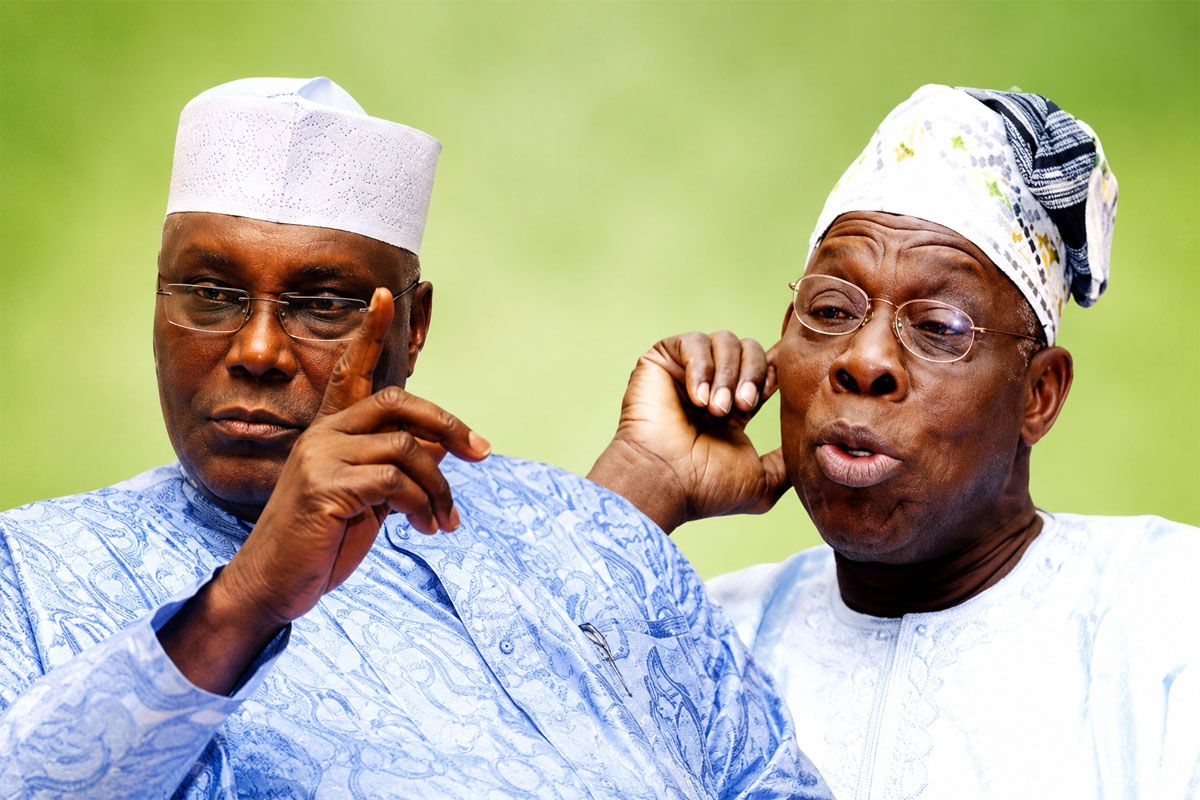
Naming Atiku as My Running Mate in 1999 My Biggest Political Error – Obasanjo
- Former President Olusegun Obasanjo says picking Atiku Abubakar as his vice-presidential candidate remains the greatest mistake of his political career, though he harbours no bitterness over their fractured relationship.
Former President Olusegun Obasanjo has described his decision to select former Vice President Atiku Abubakar as his running mate in the 1999 presidential election as the greatest mistake of his political career. Obasanjo made the remark on Friday in Lagos during a fireside conversation with veteran entertainer and activist Charles Oputa, popularly known as Charly Boy. The event was held to unveil Charly Boy’s foundation and his memoir, 999: A Memoir in Tribute to Late Justice Chukwudifu Oputa. The public presentation took place at the Alliance Française de Lagos/Mike Adenuga Centre on Osborne Road, Ikoyi. Reflecting on his years in office, the former president said that while every leader makes mistakes, his choice of vice president remained the one decision he regretted most. “The man I picked as my running mate, my number two. If I had known him as I came to know him later, I would not have picked him,” Obasanjo said. When Charly Boy sought clarification on whether he was referring to Atiku, Obasanjo replied, “My vice president. I don’t know what name you want to give him, but my vice president, I mean that.”
Despite his scathing assessment, Obasanjo insisted he harbours no personal bitterness toward his former deputy. “There is no bitterness because he did things he believed he should do, and God did the things God had to do, which enabled me to achieve what I was able to achieve,” he added. Obasanjo expressed gratitude that Atiku’s actions did not derail his administration or harm Nigeria. “What I know about him later makes me… thank God because God did not allow his actions and reactions to overwhelm me, or to divert my own focus from Nigeria, or to harm Nigeria even,” he said.
READ ALSO:
- Woman Strangles Co-wife’s 3-Year-Old Daughter to Death in Kwara
- Court Awards N12m Damages Against Police for Abduction, Unlawful Detention of Journalist
- INEC Rejects Jonathan’s 2027 Presidential Nomination Submitted by PDP Faction
The former president also addressed recurring discussions about his ancestry, insisting that his family traces its roots to Abeokuta, the Ogun State capital. “I still know our family house there,” he said.
The event drew several distinguished guests, including former Commonwealth Secretary-General Chief Emeka Anyaoku; Labour Party presidential candidate Peter Obi; businessman Leo Stan Ekeh, who announced donations of N20 million each on behalf of Obasanjo and Chief Emeka Anyaoku; book reviewer Dr. Austin Tam-George; and veteran broadcaster Bisi Olatilo, among other notable personalities.
Obasanjo and Atiku contested the 1999 presidential election on the platform of the Peoples Democratic Party (PDP) and jointly governed Nigeria from 1999 until 2007. Their relationship, however, deteriorated during their second term in office following a series of political disagreements. In his memoir, My Watch, published in 2014, Obasanjo accused Atiku of corruption, disloyalty, and placing personal ambition above national interest. Atiku dismissed the allegations, accusing Obasanjo of attempting to rewrite history. The verbal exchanges intensified recently after Obasanjo alleged that Atiku gave former Speaker Ghali Umar Na’Abba N5 million to begin impeachment proceedings against him during his first term. Atiku denied the allegation and accused the ex-president of fabricating claims.
Naming Atiku as My Running Mate in 1999 My Biggest Political Error – Obasanjo
-
 Aviation2 days ago
Obi Must Apologise, Pay ₦25,000 or Face FAAN Action — Keyamo Issues Ultimatum
-
 News3 days ago
Police detain Osun SSG, five others as ₦4.8m, voter cards are recovered
-
 Politics2 days ago
Where Will Peter Obi’s Votes Come From? I Can’t See It – Keyamo Predicts Tinubu’s Landslide Victory
-
 metro2 days ago
‘We’ll Marry Beautiful Ones, Kill the Rest’ – Terrorists Reject N155m Ransom for 176 Kwara Captives
-
 metro2 days ago
Grand Chief Imam warns Bennylee against religious provocation, urges respect for judicial process
-

 metro2 days ago
IGP Redeploys Osun CP to Force Headquarters Ahead of August 15 Governorship Election
-
 metro3 days ago
Suspect admits hitting UNIJOS student with plank over missing phone
-
 metro2 days ago
42 Cows Die Mysteriously in FCT Community, Herder Collapses in Shock