

International
233 children poisoned in Chinese pre-school

233 children poisoned in Chinese pre-school
Over 200 children are being treated in hospitals in northwestern China for lead poisoning after school chefs decorated their food with inedible paint.
Eight persons were arrested after testing revealed that food samples from a kindergarten in Tianshui City, Gansu province, contained lead levels that were 2,000 times higher than the national safety limit.
Following the consumption of steamed red date cake and sausage corn bun, 233 youngsters from Peixin Kindergarten exhibited elevated lead levels in their blood.
According to a police statement, the school principal requested that the culinary staff purchase the paint online.
However, as the children were unwell, cops had to seek for the goods that had been hidden.
According to the statement, the paint was clearly marked as not edible.
READ ALSO:
- ADC has no favourite presidential aspirant – David Mark
- Twitter ex-CEO introduces ‘BitChat’ internet-free messaging app
- Stop blaming Tinubu for your self-inflicted confusion, APC tells ADC
One parent told the BBC that he was concerned about the long-term effects of lead poisoning on his son’s liver and digestive system.
Mr Liu took his child to the hospital in Xi’an for testing last week after other parents raised concerns. His son now requires ten days of care and medications.
Chinese state media broadcast footage from CCTV cameras in the kitchen that showed employees applying paint pigment to the food.
Investigators discovered that the red date cake and corn sausage rolls contained lead levels of 1052mg/kg and 1340mg/kg, respectively, which exceeded the national food safety standard limit of 0.5mg/kg.
The principle of the privately owned kindergarten, along with seven others, including its main investor, will now be probed for creating hazardous and unsafe food.
It is unclear how long the paint has been present in the meal, but numerous parents have told Chinese state media that their children have been complaining of stomach and leg pain, as well as a lack of appetite, since March.
They reported their concerns to local authorities, and an investigation was initiated.
The mayor of Tianshui, Liu Lijiang, stated that the incident showed flaws and gaps in public food safety supervision and that the city would learn from the experience.
233 children poisoned in Chinese pre-school










International
Hamas Accepts US-Backed Disarmament Plan as Trump Unveils Gaza Peace Roadmap
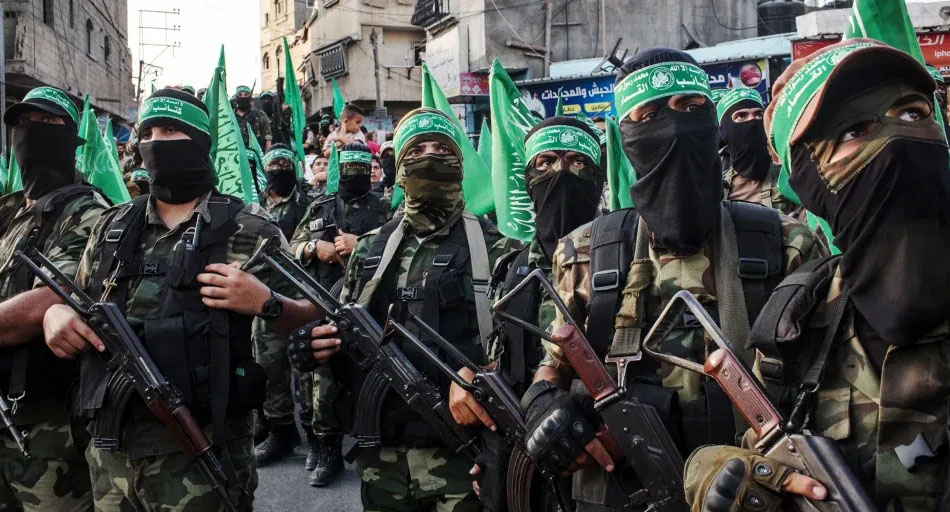
Hamas Accepts US-Backed Disarmament Plan as Trump Unveils Gaza Peace Roadmap
- A landmark agreement could reshape the future of Gaza, but Israel’s official response remains pending as key details hang in the balance.
In a significant diplomatic breakthrough, the Palestinian group Hamas has formally accepted a United States-backed proposal aimed at ending the 10-month-long war in the Gaza Strip. The agreement, unveiled by U.S. President Donald Trump, outlines a phased roadmap that includes the group’s complete disarmament and a gradual withdrawal of Israeli troops from the territory. The announcement, made on Friday, marks one of the most substantial developments since the October ceasefire. However, the deal remains conditional, and Israel has not yet issued an official response, leaving the international community in a state of cautious optimism.
Under the proposed framework, Hamas has agreed to surrender its weapons to the National Committee for the Administration of Gaza (NCAG) , a Palestinian governing body established under the Trump-administration-led Board of Peace initiative. The disarmament process is designed to be phased and verifiable, beginning with an initial phase where Hamas police forces are expected to hand over light weapons to the NCAG within the first two weeks. This would be followed by a second, more extensive phase lasting between 200 and 350 days, during which the full decommissioning of heavy weapons, tunnels, depots, and weapons production facilities would take place under strict international oversight. The roadmap follows a “zero trust” model, meaning each phase of disarmament must be independently verified before the next step of Israeli military withdrawal can proceed. Echoing this cautious approach, Nickolay Mladenov, the Board of Peace’s High Representative for Gaza, emphasized that “withdrawal must move in lockstep with decommissioning,” underscoring the need for synchronized and carefully monitored implementation.
For Hamas, the decision represents a difficult but necessary concession aimed at alleviating the suffering of Palestinian civilians. Ghazi Hamad, a member of the group’s negotiating team, described the move as a sacrifice made for the sake of the people in Gaza, to save them from continued killing and displacement. He further clarified that Israel will not intervene in the disarmament process, which will be solely managed by the NCAG. However, a senior Hamas official stressed that full implementation of the agreement depends on Israel fulfilling its prior commitments under the initial ceasefire, which include ending all military attacks, withdrawing forces to October 2025 positions, and significantly increasing humanitarian aid deliveries into the besieged territory.
READ ALSO:
- FG to phase out electricity subsidy from 2027 as power sector debts rise
- At least 43 migrants die as 49,000 cross into Spain’s Ceuta enclave
- Segun Aina assumes office as JAMB registrar, vows to protect examination integrity
As of this report, Israel’s government has not formally responded to the proposal, and its position remains a critical unknown. An Israeli political source indicated that the current framework does not “satisfactorily” address Israel’s core demand for the complete demilitarisation of the Gaza Strip. The source also reiterated that Prime Minister Benjamin Netanyahu’s recent meeting with President Trump in Washington did not include discussions on the Gaza conflict, casting doubt on the level of Israeli engagement with the plan. Another major sticking point is the so-called “Yellow Line” buffer zone, with an Israeli official insisting there would be no withdrawal from this area before Hamas is fully disarmed. Despite these reservations, the U.S. has expressed confidence that Israel will ultimately adhere to the 20-point plan, with one official noting that President Trump would be “very, very disappointed” if it did not.
The agreement was brokered by a coalition of international mediators, including Egypt, Qatar, and Turkey, who have been engaged in months of difficult negotiations. Egypt’s state-linked Al-Qahera News reported that Cairo is expected to host another meeting to advance discussions on the second phase of the truce, signaling continued diplomatic momentum. A diplomatic source familiar with the negotiations emphasized the roadmap’s commitment to unity and order, stating that “there will be no exceptions for certain weapons or certain people,” and that the goal is to establish “one authority, one law, one weapon.” The roadmap also includes a verification mechanism designed to monitor compliance by both parties, ensuring accountability and transparency throughout the entire process.
Despite the diplomatic progress, hostilities have persisted on the ground, underscoring the fragility of the current situation. Gaza’s health authorities reported that Israeli airstrikes on Thursday killed at least four people, including two children, even as negotiations advanced. The humanitarian situation in Gaza remains dire, with widespread displacement, acute food insecurity, and a collapsing healthcare system that has left thousands without access to basic medical care. The success of the agreement hinges not only on political will from all parties but also on tangible, on-the-ground improvements in the daily lives of Palestinian civilians, many of whom have been displaced multiple times since the conflict began.
The focus now shifts from negotiation to implementation, with the Board of Peace confirming in a post on X (formerly Twitter) that the NCAG will “soon begin a phased transition toward full authority.” Key milestones to watch include Israel’s official response to the proposal, which could shape the entire trajectory of the deal; the actual start of the weapons handover process; the deployment of an International Stabilization Force to work alongside a new Palestinian police force; and meaningful progress on humanitarian aid and reconstruction efforts that could help stabilize the region. Each of these steps carries significant weight and will be closely monitored by the international community.
This agreement represents a rare moment of compromise in a conflict marked by decades of violence and deep-seated mistrust. However, the path forward is fraught with challenges, and the “zero trust” approach reflects the profound suspicions that persist on both sides. Any misstep, whether a delay in weapons handover or a disagreement over troop withdrawal, could unravel the entire framework and plunge the region back into conflict. For now, the world watches and waits, with hopes pinned on a process that remains as fragile as it is historic. As Mladenov aptly put it, “What happens next matters even more. Implementation and verification have to be real.”
Hamas Accepts US-Backed Disarmament Plan as Trump Unveils Gaza Peace Roadmap
International
At least 43 migrants die as 49,000 cross into Spain’s Ceuta enclave
At least 43 migrants die as 49,000 cross into Spain’s Ceuta enclave
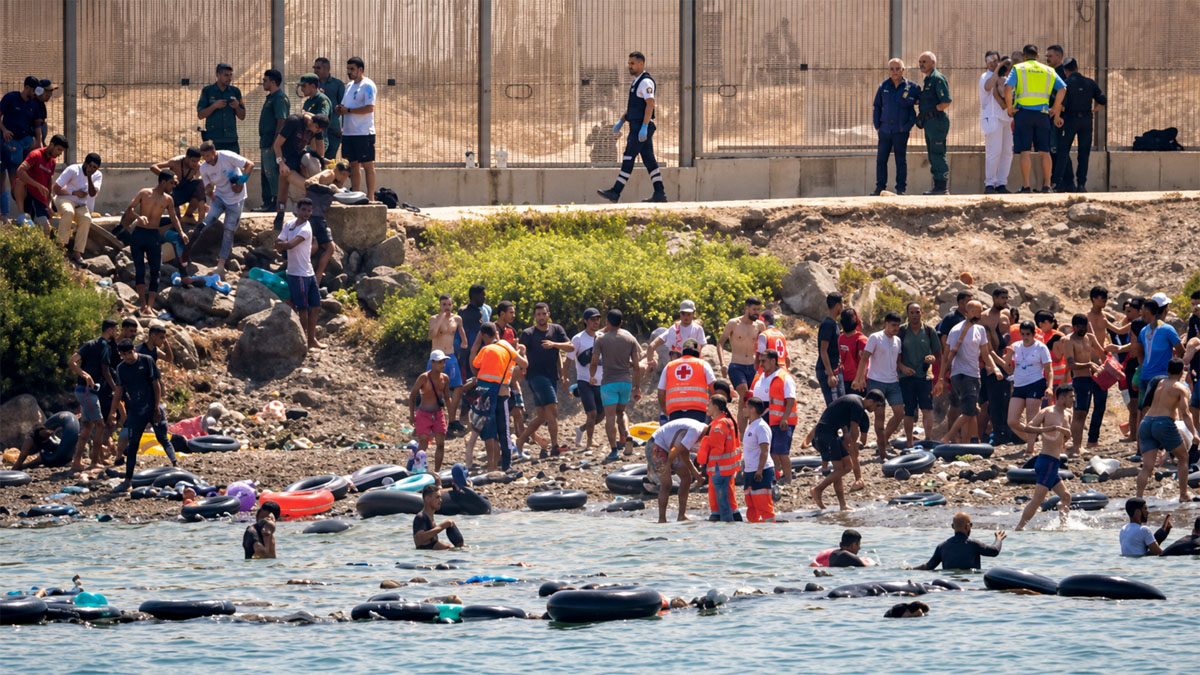
At least 43 migrants have died during a massive and chaotic attempt to enter Spain’s North African enclave of Ceuta from neighbouring Morocco, as tens of thousands of people crossed the border by land and sea.
Spanish authorities estimated that about 49,000 migrants entered Ceuta within 24 hours, creating an unprecedented pressure on the enclave’s security agencies, emergency services and reception facilities. The scale of the influx was significant for a territory with a population of about 80,000 people. (reuters.com)
Many of those attempting to reach Ceuta reportedly entered through coastal routes, with some swimming around border barriers from the Moroccan side. Others moved towards land crossings and border fences separating the Spanish territory from Morocco.
The large movement included men, women, children and families, according to reports from the area.
Authorities said several people died during the dangerous crossings, while emergency teams carried out rescue and recovery operations along the coastline.
The reported death toll has increased from the initial figure of 18 as authorities continued to assess the situation and recover bodies. The number may be subject to further updates as rescue and identification operations continue. (The Guardian)
READ ALSO:
- Segun Aina assumes office as JAMB registrar, vows to protect examination integrity
- Rivers police arrest 50-year-old man over alleged defilement of two minors
- Tyla drops Lagos from A*POP World Tour amid boycott calls, concert threats
Spanish and Moroccan authorities moved to contain the situation by reinforcing security around the border and coordinating efforts to prevent additional large-scale crossings.
Spain deployed additional security personnel to support the Civil Guard, while military units and armoured vehicles were positioned in areas around the border.
The Spanish government said it had regained control of the situation, with many of those who crossed into Ceuta returning to Morocco as authorities worked to restore normal movement around the enclave. (reuters.com)
Spanish Prime Minister Pedro Sánchez described the mass crossing as a serious challenge and called for coordinated action to protect the border while addressing the humanitarian consequences of the crisis.
The development has also drawn attention from European leaders, with concerns raised over border security, migration management and the safety of people attempting dangerous crossings. (The Guardian)
The cause of the sudden surge remains unclear.
Authorities are expected to examine whether misinformation, organised migration networks, economic pressures or other factors contributed to the unusually large movement towards Ceuta.
The crisis comes after Ceuta experienced increased migration pressure in the weeks leading up to the mass crossing. Spanish authorities had earlier reported a rise in the number of people attempting to enter the enclave by swimming from Morocco. (El País)
Ceuta and the nearby Spanish enclave of Melilla are located on the northern coast of Africa and share land borders with Morocco.
The two territories are among the main routes used by migrants seeking to enter Spain and, by extension, the European Union.
Migration attempts through the area have frequently resulted in deaths and injuries because of strong currents, difficult sea conditions, border barriers and overcrowding during large movements.
The latest incident has renewed calls for stronger cooperation between Spain and Morocco, improved border management and safer measures to protect people undertaking dangerous migration journeys.
Humanitarian groups have also stressed the need to ensure that people in vulnerable situations, including children and families, receive emergency assistance and access to appropriate protection.
Authorities are expected to provide further updates on the number of deaths, injuries, missing persons and people who remain in Ceuta as emergency and border-control operations continue.
At least 43 migrants die as 49,000 cross into Spain’s Ceuta enclave
International
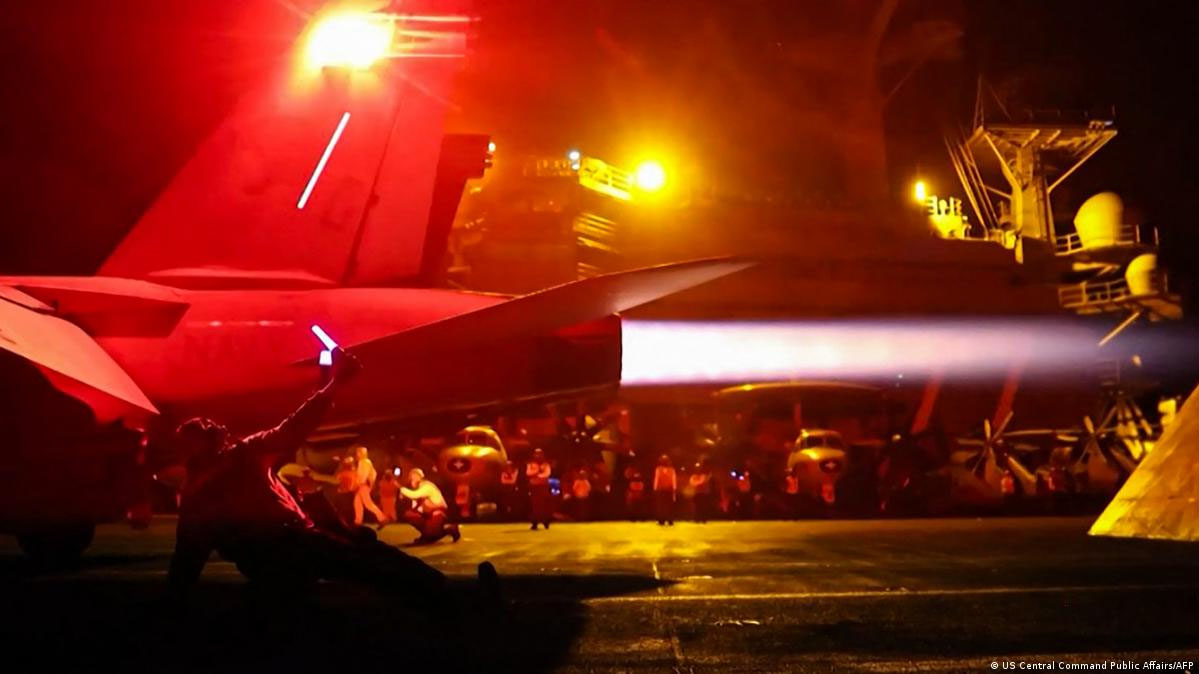
Houthis Launch Missile at Saudi Arabia as Regional Tensions Escalate Amid US-Iran Strikes
-

 Aviation14 hours ago
Obi Must Apologise, Pay ₦25,000 or Face FAAN Action — Keyamo Issues Ultimatum
-

 Politics3 days ago
Tinubu tells 2027 rivals: We’ll wrestle ourselves to the finishing line
-

 News2 days ago
Police detain Osun SSG, five others as ₦4.8m, voter cards are recovered
-

 Education3 days ago
BUK, Northwest University students demand prompt payment of NELFUND upkeep allowances
-

 metro3 days ago
Army Colonel Killed, Wife, Aides Injured as Gunmen Storm Home in Coordinated Attack
-

 Business3 days ago
Reps move to end dollar charges on locally refined petrol
-

 Entertainment3 days ago
Abia Gov Steps In With Medical Support for Ailing Nollywood Veteran Ngozi Nwosu
-

 Politics14 hours ago
Where Will Peter Obi’s Votes Come From? I Can’t See It – Keyamo Predicts Tinubu’s Landslide Victory