

metro
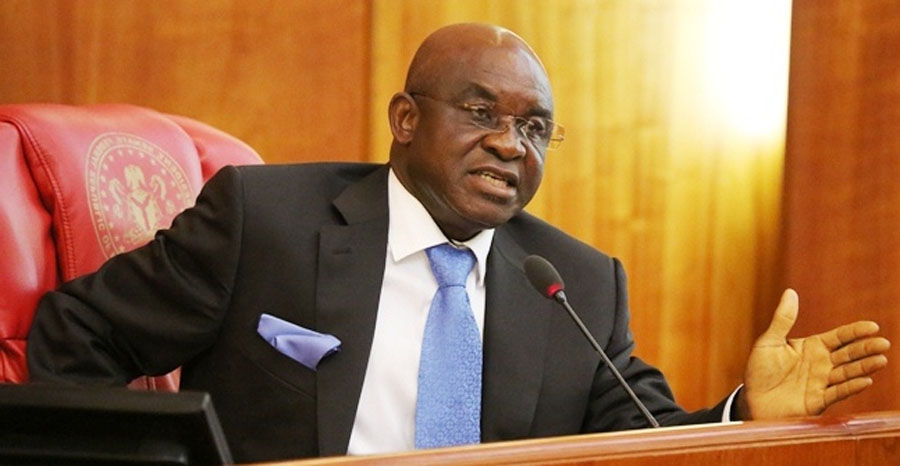
ADC has no favourite presidential aspirant – David Mark
ADC has no favourite presidential aspirant – David Mark
The Interim National Chairman of the African Democratic Congress, Senator David Mark, has disclosed that the party has no preferred presidential aspirant ahead of the 2027 election.
Mark, who made this known on Tuesday, spoke amid speculations that former Vice President Atiku Abubakar, the 2023 Labour Party candidate, Peter Obi, and former Minister of Transport, Rotimi Amaechi, were frontrunners for the ADC ticket.
In a statement issued by Mark’s media team in Abuja, he assured members of the public that the party would maintain transparency under his leadership.
READ ALSO:
- Twitter ex-CEO introduces ‘BitChat’ internet-free messaging app
- Stop blaming Tinubu for your self-inflicted confusion, APC tells ADC
- LP chairman joins Lagos APC ahead of local govt poll
“The ADC has no preferred or favourite presidential aspirant but has set out to first put out a platform that would be attractive and acceptable to majority of Nigerians.
“We are doing this because we do not want this great ship called Nigeria to sink because if we do not rise up, and now, they will sink all of us.
“I don’t own this party more than any of our members, and I urge all members to prepare to show Nigerians that ADC is a different party.
“A different party that is ready to properly run democracy in our country. All Nigerians must come together and take ownership of the ADC,” Mark said.
ADC has no favourite presidential aspirant – David Mark








metro
2027 Hajj: Nigeria Secures 10,000 Extra Slots, Allocation Hits 60,000

2027 Hajj: Nigeria Secures 10,000 Extra Slots, Allocation Hits 60,000
Nigeria has secured an additional 10,000 Hajj slots from Saudi Arabia, raising the country’s total allocation for the 2027 Hajj pilgrimage from 50,000 to 60,000 pilgrims.
The National Hajj Commission of Nigeria (NAHCON) announced the development on Thursday, October 1, 2026, saying the additional allocation followed sustained engagements between the Federal Government and Saudi Arabian authorities.
Of the additional 10,000 slots, 7,500 have been allocated to State Muslim Pilgrims Welfare Boards, Agencies and Commissions, while the remaining 2,500 slots have been assigned to seven lead licensed private tour operator companies.
The additional allocation represents a 20 per cent increase over Nigeria’s previously approved 50,000-slot quota for the 2027 Hajj.
Before the increase, Nigeria’s allocation stood at 50,000 pilgrims, comprising 35,000 slots for government-sponsored pilgrims and 15,000 for licensed private tour operators.
The latest approval followed an earlier decision by Saudi Arabia to reject Nigeria’s request for additional slots. NAHCON had announced in September that the request was turned down due to capacity limitations, structural constraints at the holy sites and the Kingdom’s policy of adhering to approved country quotas.
Further engagements between Nigerian officials and the Saudi authorities subsequently resulted in the additional allocation.
NAHCON Chairman and Chief Executive Officer, Ambassador Ismail Abba Yusuf, expressed appreciation to the Federal Government and Saudi authorities for the additional slots.
Yusuf also acknowledged Saudi Arabia’s Minister of Hajj and Umrah, Dr Tawfiq bin Fawzan Al-Rabiah, and Deputy Minister Dr Abdul Fattah bin Sulaiman Mashat, for the Kingdom’s cooperation.
READ ALSO:
- [UPDATED] Imo Highway Attack: 10 Rescued as Gunmen Abduct NYSC Prospective Members
- Workers to Begin Nationwide Warning Strike Over Petrol Price, Wage Award
- Nigeria at 66: MURIC Urges Unity, Peace, Justice Ahead of 2027 Elections
The NAHCON chairman said the development reflected the longstanding relationship between Nigeria and Saudi Arabia, particularly their cooperation in facilitating the Hajj pilgrimage for Nigerian Muslims.
He assured intending pilgrims and other stakeholders that the additional slots would be administered transparently and judiciously, in line with Nigerian and Saudi Arabian regulations and operational requirements.
NAHCON also reiterated its commitment to making Hajj accessible and affordable to Nigerians, while maintaining standards in service delivery, accountability and operational efficiency.
The commission said it would work with state pilgrims’ welfare boards, agencies and commissions, as well as licensed private tour operators, to implement the expanded allocation.
The increase comes as preparations for the 2027 Hajj are already underway. NAHCON had earlier required the biometric data of intending pilgrims to be uploaded to the designated Nusuk-Masar platform in line with requirements from the Saudi Ministry of Hajj and Umrah.
The additional allocation means NAHCON and relevant state and private pilgrimage operators will now have to incorporate the extra beneficiaries into the existing operational arrangements.
The precise breakdown of the additional 7,500 state-controlled slots among individual states was not contained in the commission’s announcement.
The new allocation is expected to provide additional places for Nigerian Muslims seeking to undertake the 2027 Hajj, following strong demand from intending pilgrims and requests for increased allocations.
NAHCON said it would continue working with Saudi authorities and other stakeholders to ensure a well-coordinated 2027 Hajj exercise and protect the welfare of Nigerian pilgrims.
With the latest approval, Nigeria’s 2027 Hajj allocation now stands at 60,000 pilgrims, comprising the original 50,000 slots and the newly approved 10,000 additional places.
2027 Hajj: Nigeria Secures 10,000 Extra Slots, Allocation Hits 60,000
metro
[UPDATED] Imo Highway Attack: 10 Rescued after Gunmen Abducted NYSC Prospective Members
[UPDATED] Imo Highway Attack: 10 Rescued after Gunmen Abducted NYSC Prospective Members
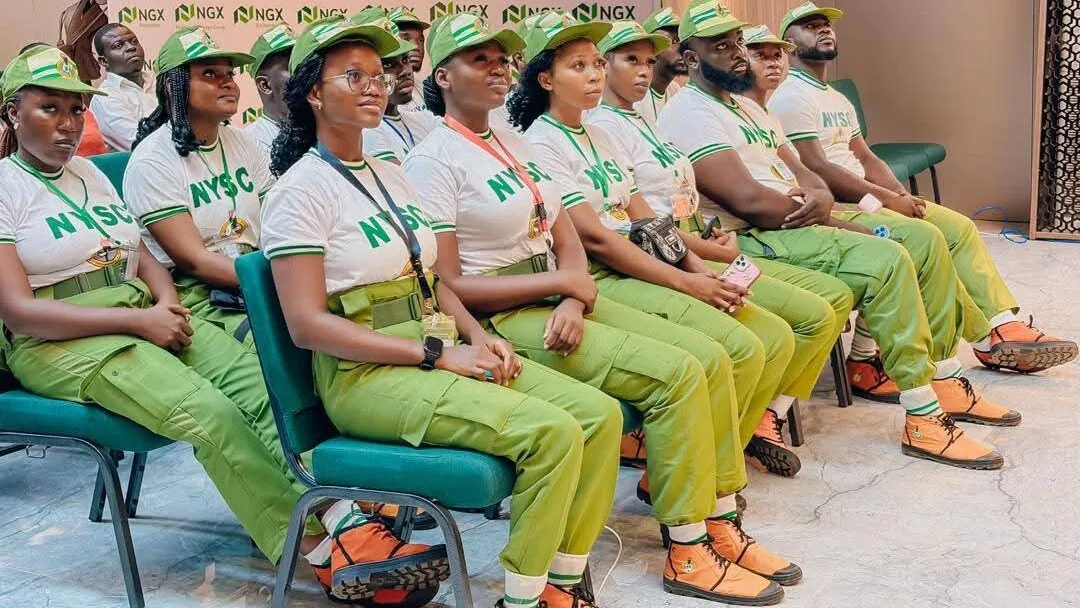
The Imo Police Command says 10 victims have been rescued and two passenger buses attacked by gunmen on Thursday recovered. It also disclosed that the rescued victims were safe and receiving attention.
Two buses carrying prospective NYSC members and other passengers from Ibadan, Oyo State, were attacked along the Owerri-Onitsha Road in Imo State, with some passengers abducted.
The incident occurred at about 6:30 a.m. on Thursday, October 1, 2026, near Umunoha in Mbaitoli Local Government Area, according to the Imo State Police Command.
The buses were travelling from Ibadan to different destinations in the South-East and South-South when they were intercepted by the suspected attackers.
One bus was travelling towards Uyo, Akwa Ibom State, while the other was heading to Bende, Abia State. The passengers included prospective National Youth Service Corps (NYSC) members travelling to their orientation camps, as well as other travellers.
The attack prompted a coordinated search-and-rescue operation by the police and other security agencies.
READ ALSO:
- Workers to Begin Nationwide Warning Strike Over Petrol Price, Wage Award
- Nigeria at 66: MURIC Urges Unity, Peace, Justice Ahead of 2027 Elections
- Atiku Challenges Tinubu’s Prosperity Claim, Says Nigerians Can Barely Afford to Live
However, the police said the exact number of people abducted was still being verified and would be made public after confirmation.
This clarification by the police late Thursday became important because several figures were circulated in early reports about the incident. Some reports initially stated that 20 NYSC members had been abducted, while other accounts gave different figures. The Imo Police Command has not confirmed any specific number of abducted persons.
The police added said the rescue operation was continuing to locate the remaining victims and apprehend the suspected abductors.
The Commissioner of Police in Imo State, CP Audu Garba Bosso, alongside other security commanders, visited the scene for an on-the-spot assessment and provided operational direction.
Tactical teams and other operational assets were deployed as part of the search operation, while security personnel remained in the area to protect commuters.
The police also said the affected section of the Owerri-Onitsha Expressway had been reopened to traffic after the incident.
The command is working with the NYSC Directorate to establish contact with the families of affected prospective corps members and provide updates as the operation progresses.
The incident has raised fresh concerns over the safety of prospective NYSC members travelling by road to orientation camps, particularly those travelling long distances across states.
It also comes weeks after another highway attack in Kogi State, in which NYSC members were among passengers abducted before a joint security operation led to their rescue.
As of the latest police update, 10 victims have been rescued, both buses have been recovered, and the total number of people still missing has not been officially established.
[UPDATED] Imo Highway Attack: 10 Rescued after Gunmen Abducted NYSC Prospective Members
metro
Bandits Kill Man, Abduct Wife, Children, Seven Others in Kaduna Community

Bandits Kill Man, Abduct Wife, Children, Seven Others in Kaduna Community
Suspected bandits have killed a man identified as Sikiru and abducted his wife, two children and six other residents during an attack on Babban Saura (PW) community in Chikun Local Government Area of Kaduna State.
The attack occurred in the early hours of Thursday, October 1, 2026, when the gunmen reportedly invaded three houses in the community.
A community source told the News Agency of Nigeria that the attackers first entered the residence of an elderly man and abducted two of his children before moving to Sikiru’s home.
The gunmen reportedly broke through the fence of Sikiru’s compound and entered the house. Sikiru was said to have confronted them after they entered his parlour, resulting in a struggle.
The attackers subsequently shot him dead before abducting his wife and their two children.
The assailants also invaded a neighbouring house and abducted a woman identified as Maman Mubarak and her four children.
Mubarak was later rescued after soldiers and local vigilantes pursued the attackers towards the Eastern Bypass area. However, her four children remained in captivity, along with the other abducted residents.
Usman Adamu, commander of the local vigilantes, confirmed that nine people were initially abducted during the attack.
He said the vigilantes received a distress call and immediately alerted soldiers, who joined the pursuit.
READ ALSO:
- Workers to Begin Nationwide Warning Strike Over Petrol Price, Wage Award
- Nigeria at 66: MURIC Urges Unity, Peace, Justice Ahead of 2027 Elections
- Atiku Challenges Tinubu’s Prosperity Claim, Says Nigerians Can Barely Afford to Live
According to Adamu, the security team traced the attackers towards the Eastern Bypass and succeeded in rescuing Mubarak, but the gunmen escaped with the remaining victims.
Another resident, who identified himself as Anas, said Sikiru had called him after the attackers entered the community.
When journalists visited the area, sympathisers had gathered at Sikiru’s residence while residents expressed concern over the worsening insecurity in Chikun LGA.
The attack came only days after suspected bandits invaded nearby Kadaure community, where a man was reportedly killed and cattle were rustled.
The latest incident also highlights continuing security concerns around Millennium City communities, including Babban Saura, Kyauta and Danhonu. Residents in the area have previously reported kidnappings, killings and cattle rustling, with some families reportedly relocating because of fear.
A September security report on the area said repeated attacks had increased residents’ reliance on community vigilantes and raised concerns about the abandonment of homes and investments.
The renewed violence comes despite ongoing security operations across Kaduna State.
The Kaduna State Police Command recently announced the arrest of 24 suspected kidnappers and the recovery of firearms, AK-47 magazines and more than 500 rounds of live ammunition in separate operations across the state.
The command said the operations targeted kidnapping, banditry, arms trafficking and cattle rustling, among other crimes. There was, however, no indication that any of those arrested had been linked to the Babban Saura attack.
As of Thursday, the Kaduna State Police Command had not issued a specific statement on the Babban Saura incident. Its spokesperson, DSP Mansur Hassan, could not be reached for immediate comment.
The whereabouts of the remaining abducted residents were unknown as of the latest reports, while security personnel and community vigilantes were expected to continue efforts to secure their release.
The attack has renewed calls for stronger security measures in communities on the outskirts of Kaduna metropolis, where residents say repeated kidnapping and bandit attacks are disrupting lives and forcing some families to leave their homes.
Bandits Kill Man, Abduct Wife, Children, Seven Others in Kaduna Community
-

 Education3 days ago
FG Releases 2026–2028 Approved Textbooks, Introduces QR Codes for Tracking
-

 metro2 days ago
$2.1m Land Suit: Court Orders Wike’s Son to Produce American Passport
-

 News3 days ago
Breaking: Tinubu Ends Extended European Vacation, Departs Paris for Nigeria
-

 metro3 days ago
Hamzat Clarifies Lagos Traffic ‘Lifestyle’ Remark After Backlash
-
 metro3 days ago
Troops Rescue 41 Travellers as Bandits Attack Senegal-to-Kano Vehicle in Zamfara
-

 metro2 days ago
Osogbo Food Bonanza: Angry Customers Loot Warehouse After Operators Vanish
-

 Sports3 days ago
Nigeria XI vs Guinea-Bissau: Awoniyi, Lookman, Adams Lead Super Eagles Attack
-

 News2 days ago
Tinubu Returns After 30 Days in Europe, Says ‘I’m Healthy and Ready to Work’