

Politics
‘Tinubu Must Stay’ Movement Launches Ahead of 2027 Election

‘Tinubu Must Stay’ Movement Launches Ahead of 2027 Election
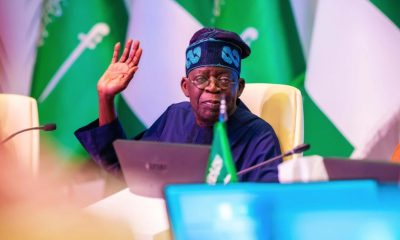
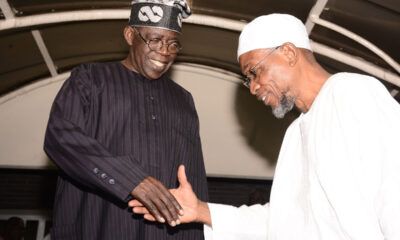
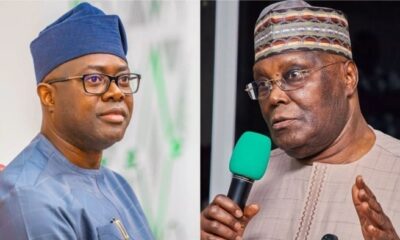
A political advocacy group, Tinubu Must Stay (TMS), has launched a national campaign ahead of the 2027 general election, calling for continuity in President Bola Ahmed Tinubu’s administration.
The movement was formally unveiled in Abuja on Thursday, October 1, 2026, with its National Convener, Ibrahim Uba, saying the organisation would promote its position through public engagement, data and what it described as fact-based communication.
Uba said the group was established by Nigerians who support the continuation of the Tinubu administration and want the government’s policies, programmes and reported achievements subjected to public discussion.
He acknowledged that major economic reforms, particularly the removal of the petrol subsidy and changes to the foreign-exchange system, had increased pressure on households through higher living, transportation and energy costs.
However, he argued that the reforms should also be assessed against their stated objectives, measurable outcomes and unresolved challenges.
According to Uba, TMS will operate around three main areas: presenting what it calls fact-based responses to criticisms of the administration, providing alternative explanations of government programmes based on available evidence, and increasing civic engagement ahead of the 2027 election.
READ ALSO:
- Trump Threatens Iran With ‘Very Hard’ Response Over Flydubai Attack
- Phyna Knocks Out Nkechi Blessing in Fourth Round, Wins ₦50m, New Car
- NDC Protests Police Cancellation of Obi-Kwankwaso March in Akwa Ibom
The group cited recent economic indicators in making its case. Uba referred to Nigeria’s reported 4.43 per cent real GDP growth in the second quarter of 2026, compared with 4.23 per cent in the same quarter of 2025 and 3.89 per cent in the first quarter of 2026. He also cited the reported moderation in headline inflation in August.
Uba, however, said economic statistics should not be used to dismiss the difficulties faced by Nigerians, arguing that government programmes should ultimately be assessed by their impact on citizens.
The movement also highlighted the Nigerian Education Loan Fund (NELFUND), the 3 Million Technical Talent (3MTT) programme, the National Health Fellows Programme and NG-CARES among initiatives it believes should feature in assessments of the administration.
On infrastructure, TMS cited projects including the Lagos-Calabar Coastal Highway, Sokoto-Badagry Super Highway and Abuja-Kaduna-Zaria-Kano Road, as well as housing projects under the Renewed Hope Housing Programme.
The group also pointed to the Federal Government’s Compressed Natural Gas (CNG) programme, saying it was part of efforts to provide alternatives to petrol and reduce transportation costs following the removal of the subsidy.
On security, Uba acknowledged that insecurity remains a major challenge, while saying government operations against terrorism, banditry, kidnapping, oil theft and other violent crimes had been intensified.
He said the movement would encourage Nigerians to examine both the administration’s reported achievements and the problems that remain unresolved as political activity ahead of the 2027 presidential election intensifies.
The launch of TMS adds to the growing number of political advocacy groups organising around President Tinubu’s political future. While TMS is campaigning for continuity, other groups have adopted opposing positions and are calling for a change of government in 2027.
Uba said TMS would pursue its campaign through what he described as peaceful, factual and democratic engagement, urging Nigerians to assess competing claims about the administration before making their choices in the election.
‘Tinubu Must Stay’ Movement Launches Ahead of 2027 Election







Politics
Presidency Deletes AI-Generated Tinubu Rally Photo After Public Outcry
Presidency Deletes AI-Generated Tinubu Rally Photo After Public Outcry
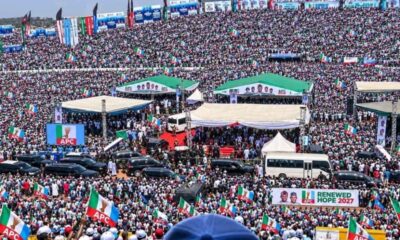
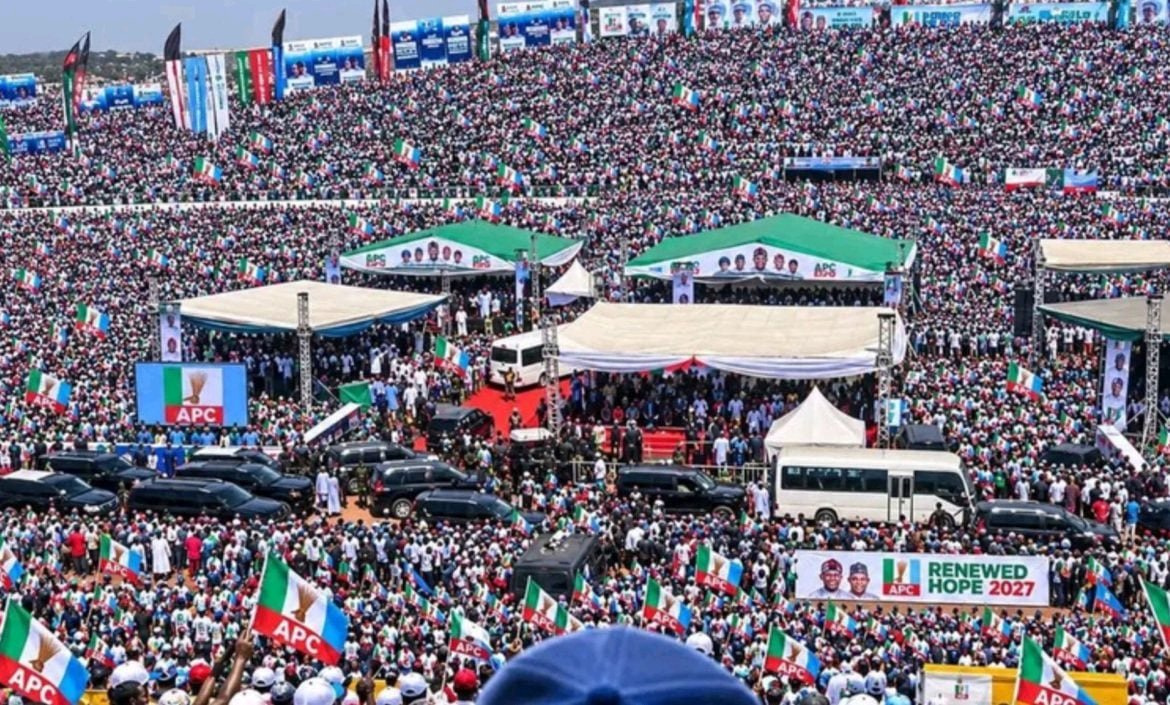
The Presidency has come under fresh public scrutiny after a controversial photograph shared by President Bola Ahmed Tinubu’s media aide, Dada Olusegun, purporting to show a massive crowd at the All Progressives Congress (APC) campaign rally in Plateau State, was deleted following accusations that it had been generated or manipulated using Artificial Intelligence (AI).
The development has sparked debate over the use of digitally manipulated images in political communication, particularly as political parties intensify preparations for the 2027 general elections.
Olusegun, Special Adviser to the President on Social Media, had reportedly shared the photograph on Sunday, November 15, with the caption, **“Plateau State for PBAT.”**
The image depicted what appeared to be a densely packed stadium, with thousands of supporters, APC flags, campaign banners and other political paraphernalia, creating the impression that the ruling party enjoyed overwhelming support at the rally.
However, the photograph soon attracted criticism after social media users began questioning its authenticity and comparing it with other photographs and video recordings from the same event.
The contrasting visuals reportedly showed sections of the stadium with considerably fewer spectators than those portrayed in the controversial photograph.
The controversy eventually drew attention to the authenticity of the image, with critics accusing the presidential camp of using artificial intelligence to exaggerate the rally’s attendance and create a misleading impression of popular support.
An investigation by the Foundation for Investigative Journalism (FIJ), published on November 16, examined the controversial photograph using digital image verification tools, including Google SynthID and Image Whisperer.
According to the investigation, Google SynthID returned an indication that the image had been made or edited with OpenAI technology.
FIJ also reported that two of the four principal detection tools used in its Image Whisperer examination identified strong indications of AI involvement, recording scores of 98 and 99 respectively.
However, the investigation acknowledged that the results were not unanimous, as two other detection tools did not support the AI-generated finding.
The report further explained that the available evidence could not conclusively establish whether the entire photograph was generated artificially or whether an original photograph had subsequently been modified using AI.
One of the visual inconsistencies identified was the appearance of Tinubu and Vice-President Kashim Shettima on a stadium banner, with their faces reportedly differing from their actual appearances.
The controversial photograph was associated with the APC North-Central presidential campaign rally held at Zaria Road Stadium in Jos, Plateau State, on Saturday, November 14.
President Tinubu attended the political gathering alongside Vice-President Kashim Shettima, Senate President Godswill Akpabio, APC National Chairman Nentawe Yilwatda, Plateau State Governor Caleb Mutfwang and other prominent party figures.
The rally formed part of the ruling party’s political activities ahead of the 2027 general elections.
Although the rally itself was confirmed, the debate centred on whether the disputed photograph accurately represented the number of people who attended the gathering.
Videos and photographs circulated by social media users became central to the controversy, with critics questioning why an image that appeared inconsistent with other available footage had been presented as a genuine representation of the event.
The subsequent deletion of the controversial photograph has further intensified public discussion.
Rather than ending the controversy, the development has raised additional questions about the circumstances surrounding its publication, the process through which it was produced and why it was removed after attracting criticism.
As of the time of filing this report, no detailed public explanation from Olusegun regarding the photograph’s creation, publication and deletion had been established in the reports reviewed.
The incident has also renewed concerns about the responsibility of government officials and political communication teams to ensure that photographs shared through official or government-associated platforms accurately represent events.
The controversy comes at a time when artificial intelligence is increasingly being deployed in political campaigns, digital advertising and public relations.
While AI tools can assist with content creation, image enhancement and campaign communication, their misuse can undermine public confidence when manipulated visuals are presented as authentic records of real-life events.
For a country approaching another fiercely contested election cycle, the incident has highlighted the growing importance of transparency and responsible use of digital technology in political messaging.
Ultimately, the controversy has shifted attention from the APC’s political gathering in Plateau State to a more fundamental question: should Nigerians trust campaign photographs circulated by political actors without independent verification?
Presidency Deletes AI-Generated Tinubu Rally Photo After Public Outcry
Politics
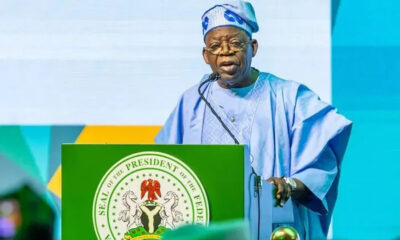
2027: Suspected Thugs Attack Kwankwaso’s Convoy in Kano, Injure Supporters
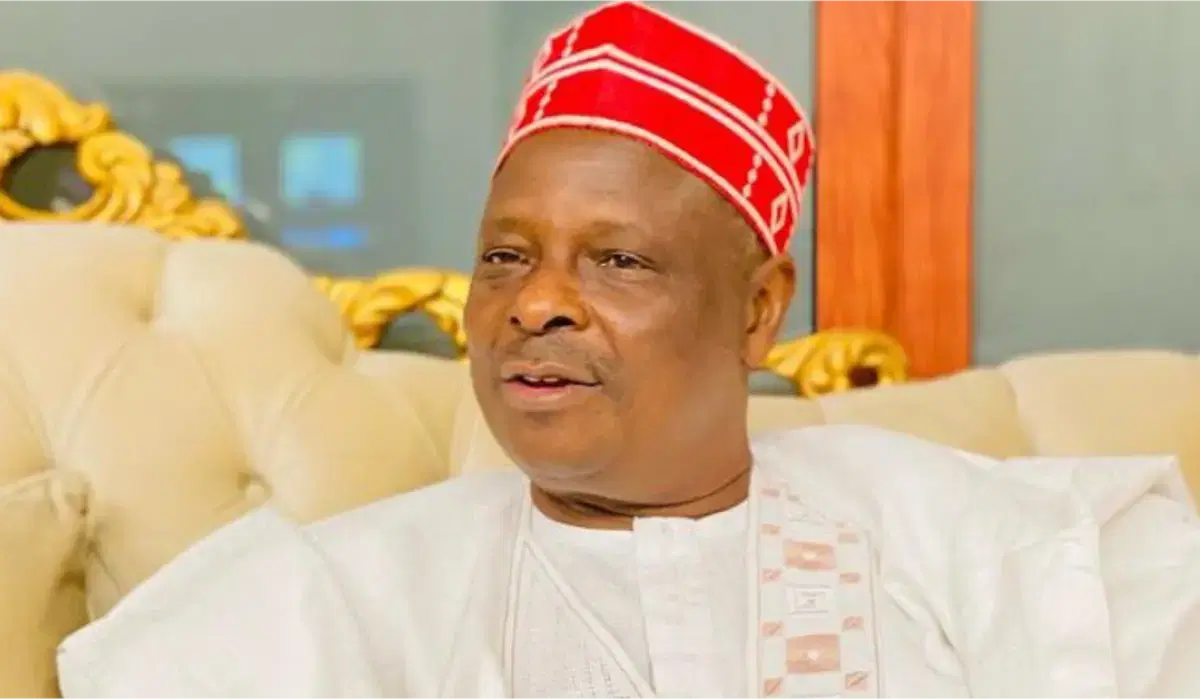
KANO – The campaign convoy of former Kano State Governor and Nigeria Democratic Congress (NDC) vice-presidential candidate, Rabiu Musa Kwankwaso, has reportedly been attacked by suspected political thugs in Bichi Local Government Area of Kano State, leaving several supporters injured and at least seven vehicles damaged.
The incident occurred on Sunday, November 15, 2026, during a political tour involving Kwankwaso and the NDC governorship candidate in Kano State, Aminu Abdussalam Gwarzo, as the party intensifies its activities ahead of the 2027 general elections.
The attack was confirmed by Ibrahim Garba Shu’aibu, spokesperson for Gwarzo’s campaign organisation, who alleged that the assailants attacked members of the delegation with stones and other weapons.
According to Shu’aibu, the campaign team had earlier visited Tofa, Rimingado, Kabo, Gwarzo, Shanono and Bagwai local government areas without experiencing any major security disturbance.
However, the situation reportedly changed as the delegation approached Bichi.
Shu’aibu said the campaign team received information that some individuals opposed to its activities had barricaded the road leading into the community.
READ ALSO:
- Eight Dead in New York Building Collapse as Nigerian Landlord’s Troubling Past Emerges
- Regulatory Violations: NSCDC Seals Seven Security Firms, Arrests 13 Guards in Delta
- Bahrain Under Attack as Iran Targets US Military Installation With Drones
Despite the warning, the delegation proceeded with its political engagements in the area.
The situation allegedly escalated after the convoy passed the Bichi Local Government Secretariat, where some youths reportedly emerged with weapons and began attacking vehicles belonging to members of the delegation.
The attackers allegedly hurled stones at the vehicles, smashed windscreens and damaged other parts of the cars.
Shu’aibu said he personally counted about seven vehicles damaged during the incident, adding that several members of the campaign team sustained injuries.
He did not provide a detailed breakdown of the number of injured persons or the severity of their injuries.
The campaign spokesperson maintained that the incident would not discourage the party from continuing its political activities and engaging with residents across Kano State.
Saifullahi Hassan, a media aide to Kwankwaso, also drew attention to the reported attack in a Facebook post.
As of the time of filing this report, the Kano State Police Command had not issued an official statement confirming the incident or providing details of any investigation.
The identities of the alleged attackers, their motives and whether any arrests had been made remained unclear.
The Kano incident comes amid growing concerns about political violence as parties and their supporters intensify activities ahead of the 2027 elections.
It also follows an earlier disruption of an NDC town hall meeting along Kudirat Abiola Way, Oregun, Ikeja, Lagos State, where suspected hoodlums reportedly attacked the venue.
The Lagos meeting was scheduled to feature the party’s presidential candidate, Peter Obi, and his running mate, Kwankwaso. However, neither politician had arrived when the violence reportedly broke out.
Following the incident, the NDC accused supporters of the ruling All Progressives Congress (APC) of involvement in the disruption.
The APC Presidential Campaign Council, through its spokesperson, Dele Alake, denied the allegation, condemned the violence and called on security agencies to identify and apprehend those responsible.
The latest reported attack in Bichi has further raised questions about the security of political campaigns, party gatherings and public engagements as preparations for the 2027 Nigerian general elections gather momentum.
Political parties and security agencies are expected to ensure that campaign activities can take place without intimidation, attacks or threats to the lives and property of participants.
Meanwhile, further clarification from the Kano State Police Command is expected to establish the circumstances surrounding the incident and identify those responsible.
2027: Suspected Thugs Attack Kwankwaso’s Convoy in Kano, Injure Supporters
Politics
2027: How We’ll Defeat Tinubu — Amaechi Reveals ADC’s Strategy
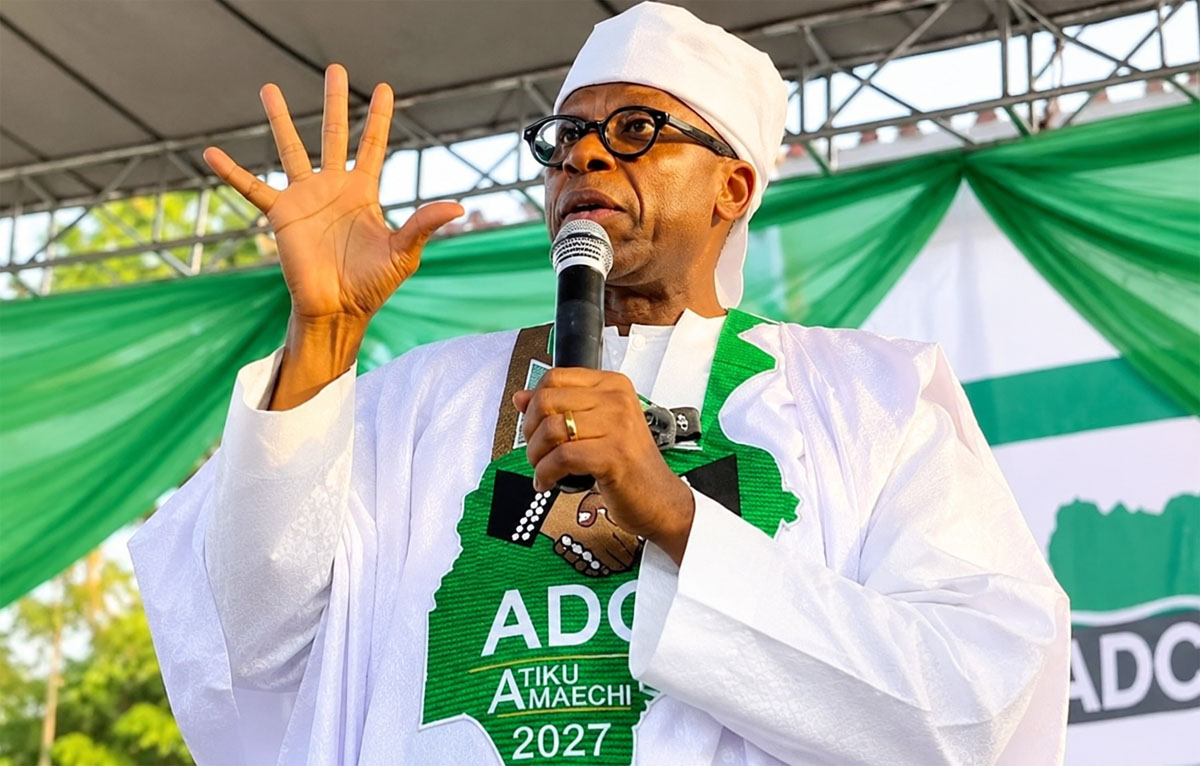
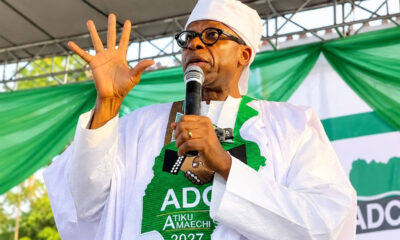
BAUCHI — Former Rivers State Governor and African Democratic Congress (ADC) vice-presidential candidate, Rotimi Amaechi, has outlined how the opposition party plans to defeat President Bola Ahmed Tinubu in the 2027 presidential election.
Amaechi said the ADC was banking on its anticipated support across all 13 states in the North-East and North-West, while seeking substantial electoral gains in the North-Central and South-South geopolitical zones.
He disclosed the strategy on Saturday, November 14, 2026, while addressing supporters at the ADC presidential campaign rally in Bauchi State.
The former Minister of Transportation, who is the running mate to former Vice-President Atiku Abubakar, argued that the ADC had a wider geographical reach than the ruling All Progressives Congress (APC).
According to him, the party expects to secure the 13 states in the North-East and North-West, which he claimed would give it a significant advantage in the presidential contest.
“We are the only party that comes with 13 states. The whole of North-East, the whole of North-West, that is 13, right? Let the President tell us how many states he comes with. He comes with only five in the South-West,” Amaechi said.
He also claimed that the APC would struggle to retain its influence across the South-West, predicting that the Allied Peoples Movement (APM) would secure the remaining state in the region.
“That’s if he will. And the sixth state in the South-West will vote APM, whether he likes it or not,” he declared.
READ ALSO:
- Regulatory Violations: NSCDC Seals Seven Security Firms, Arrests 13 Guards in Delta
- Bahrain Under Attack as Iran Targets US Military Installation With Drones
- Chatham House Protest: UK-Based Lawyer Alleges Anti-Amupitan Demonstrators Were Paid Actors
Amaechi further identified Niger, Kogi and Nasarawa states as areas where the ADC expects to defeat the APC, while acknowledging that the party would face strong competition from Tinubu’s supporters in the North-Central and South-South.
“We will fight with him in South-South. We will fight with him in North-Central. And be sure, be rest assured, Niger, Kogi, Nasarawa will be in ours easily,” he told supporters.
The former governor also dismissed the possibility of Tinubu securing significant electoral support in the South-East, expressing confidence that the ADC would win the region.
“He will not go to South-East at all. Be rest assured, we will win. We will win. Things will get better,” he said.
Beyond outlining the party’s regional calculations, Amaechi warned that the ADC would resist any attempt to manipulate the 2027 presidential election.
He accused those in power of repeating alleged irregularities associated with the 2023 general election, insisting that the opposition would not accept a similar situation in the forthcoming polls.
“Because these people will do what they did in 2023. This time, we shall not agree. Do you understand? We will not do what?” he asked supporters.
Amaechi’s remarks come amid intensified political activities ahead of the 2027 general election, with opposition parties seeking to challenge the APC’s hold on power.
However, the ADC’s electoral preparations face legal uncertainty following a November 5 judgment of the Federal High Court in Abuja, which nullified the National Working Committee led by former Senate President David Mark and invalidated decisions taken under its leadership, including the process that produced Atiku as the party’s presidential candidate.
Justice Peter Lifu also directed the Independent National Electoral Commission (INEC) not to recognise decisions reached at the party’s July 27, 2025, National Executive Committee meeting.
The ADC has rejected the judgment and announced plans to challenge it at the Court of Appeal, maintaining that its political activities and preparations for the 2027 elections would continue.
Atiku emerged as the ADC’s presidential candidate at its May 2026 primary, with Amaechi subsequently selected as his running mate.
The unfolding legal and political developments present additional challenges for the opposition party as it seeks to consolidate its structure and mobilise supporters ahead of the presidential contest.
-
 Politics2 days ago
Peter Obi, NDC in Fresh Storm as Keyamo Gives Dickson 48 Hours Over Old National Anthem, Raises Secession Alarm
-

 metro2 days ago
Kwankwaso’s Daughter, Kano Governor’s Wife, Files for Divorce, Offers to Refund Dowry
-

 metro2 days ago
“I Cheated Because I’m Human Too” — Divorced Restaurant Owner Accuses Ex-Husband of Sleeping With Over 16 Women
-

 Business1 day ago
OPay Faces ₦994m Regulatory Fines Over Money Laundering, Terrorism Financing Breaches
-

 metro22 hours ago
Tragedy: “I Suffered With This Man When He Had Nothing” — Woman Who Begged Alleged Rival To Leave Her Family Dies At 39
-
 metro2 days ago
Pastor Remanded Over Viral Video of Toluwanisings’ Corpse After Failed Attempt to Raise Singer From Dead
-

 metro1 day ago
Zamfara Bloodbath: 53 Killed as Vigilantes Ambush Bandits After Kidnapping Spree
-
 metro1 day ago
Zamfara Attack: Bandits Kill Governor Dauda Lawal’s Aide While Observing Fajr Prayer