

Business
OPay Faces ₦994m Regulatory Fines Over Money Laundering, Terrorism Financing Breaches
OPay Faces ₦994m Regulatory Fines Over Money Laundering, Terrorism Financing Breaches
LAGOS, Nigeria — OPay Digital Services Limited, one of Nigeria’s leading financial technology and mobile money operators, is facing increased regulatory scrutiny following reports that the company incurred statutory penalties totalling approximately ₦994 million between 2023 and 2025 over various compliance breaches.
The reported sanctions, which involved the Central Bank of Nigeria (CBN) and other regulatory authorities, included penalties relating to anti-money laundering (AML), counter-terrorism financing (CTF), customer due diligence, consumer protection and data privacy requirements.
The development has brought renewed attention to the compliance and risk-management practices of the fintech company, which has established a significant presence in Nigeria’s digital payments market through its mobile banking services, agent network and electronic payment platforms.
The revelations also come at a difficult time for OPay’s international expansion ambitions, following the collapse of its proposed Initial Public Offering (IPO) in the United States, which was expected to pave the way for its shares to trade on the New York Stock Exchange.
Although the company has not established any direct connection between its Nigerian regulatory penalties and the termination of the American share offering, the two developments have placed its regulatory record and international growth plans under increased scrutiny.
Details contained in regulatory and financial disclosures reportedly indicate that OPay accumulated several financial penalties over a three-year period, reflecting enforcement actions by different regulatory institutions.
Among the major concerns were alleged violations of anti-money laundering and counter-terrorism financing requirements.
These regulations are designed to prevent financial institutions and payment service providers from being used to conceal proceeds of crime, facilitate illegal financial transactions or channel funds to individuals and organisations involved in terrorism.
Financial institutions operating in Nigeria are required to establish effective customer identification and verification procedures, monitor suspicious transactions, maintain appropriate transaction records and report activities that may indicate money laundering or terrorist financing.
The regulatory requirements also place obligations on financial service providers to maintain effective internal controls and ensure that their platforms are not exploited for unlawful financial activities.
According to the reported breakdown, OPay incurred a CBN-related penalty of ₦26 million in 2023 over compliance issues connected to anti-money laundering and counter-terrorism financing requirements.
In 2024, the company reportedly faced another ₦113.7 million penalty over similar regulatory concerns.
Additional sanctions included a reported ₦197 million penalty relating to violations of the Banks and Other Financial Institutions Act (BOFIA) 2020, while another ₦10 million was attributed to customer due diligence lapses.
The company also reportedly incurred a ₦2 million penalty over consumer protection-related violations.
The cumulative penalties highlight the range of regulatory obligations facing digital financial institutions as Nigerian authorities intensify efforts to strengthen oversight of the country’s rapidly expanding financial technology sector.
OPay’s regulatory challenges were not limited to the banking and financial services sector.
The Nigeria Data Protection Commission (NDPC) reportedly imposed a ₦125 million penalty on the company over alleged violations of the Nigeria Data Protection Act 2023.
The legislation establishes requirements governing the collection, processing, storage and protection of personal information belonging to individuals.
For digital financial service providers such as OPay, compliance with data protection regulations is particularly important because their platforms routinely process sensitive customer information, including personal identification details, financial records and transaction histories.
The company also reportedly faced penalties from the Advertising Regulatory Council of Nigeria (ARCON) and the Corporate Affairs Commission (CAC) over issues relating to their respective regulatory responsibilities.
The involvement of multiple regulatory agencies underscores the wide range of legal and compliance requirements applicable to companies operating in Nigeria’s financial technology industry.
However, the individual breakdown of all the reported penalties requires further clarification, as the publicly cited itemised figures do not fully reconcile with the reported cumulative amount of ₦994 million.
The regulatory disclosures have coincided with a significant setback for OPay’s ambition to access the international capital market through a proposed listing in the United States.
The fintech company had planned to raise approximately $304 million through an Initial Public Offering involving 16 million American Depositary Shares, with an indicated offering price of $19 per share.
The proposed listing was expected to provide OPay with access to international investors and potentially strengthen its financial position as it pursued further expansion.
However, the plan encountered an unexpected obstacle after the company and its underwriters agreed to terminate their underwriting agreement.
The termination was announced on October 30, 2026, barely a day after the agreement was signed.
The development meant that the planned offering would not proceed as originally scheduled, effectively halting OPay’s anticipated debut on the New York Stock Exchange.
The company attributed the decision to a regulatory inquiry in an unnamed foreign jurisdiction.
Although details surrounding the inquiry were not fully disclosed, the development raised questions about the regulatory and legal considerations surrounding the proposed public offering.
OPay and its underwriters mutually agreed to terminate the arrangement, bringing the immediate IPO plan to an end.
Despite the setback, OPay has sought to reassure customers, business partners and other stakeholders that the foreign regulatory inquiry would not affect its day-to-day operations.
The company reportedly described the jurisdiction involved in the inquiry as immaterial to its core business operations and expressed confidence that the matter would be addressed.
It also maintained that its services remained operational and that its commitment to regulatory compliance and customer service had not changed.
However, the company has not provided comprehensive public details about the nature of the foreign inquiry or indicated when it might reconsider its proposed US listing.
The circumstances surrounding the withdrawal of the IPO are therefore likely to remain a subject of interest among investors and industry observers.
OPay’s reported penalties come amid increasing regulatory attention on Nigeria’s financial technology industry, which has experienced significant growth as millions of Nigerians embrace mobile banking, electronic transfers and other digital payment services.
The expansion of fintech platforms has created new opportunities for financial inclusion, particularly among people who have limited access to traditional banking services.
However, the growth has also increased the responsibility of regulators to ensure that digital payment operators maintain adequate safeguards against financial crimes, protect customer information and comply with consumer protection requirements.
The CBN has continued to emphasise the importance of effective anti-money laundering controls, customer verification and transaction monitoring across the financial services industry.
Similarly, data protection authorities have been strengthening enforcement of rules governing how companies collect and process personal information.
For major mobile money operators, regulatory compliance is essential not only to maintain operating licences but also to preserve public confidence and sustain relationships with financial institutions, investors and international business partners.
The combination of reported regulatory penalties and the aborted US IPO presents important questions about OPay’s next strategic steps.
While the company remains a major participant in Nigeria’s digital payments market, its ability to maintain investor confidence and pursue international expansion will depend partly on how it addresses regulatory concerns and strengthens its compliance framework.
The termination of the proposed IPO does not necessarily mean that the company has abandoned its plans to access international capital markets.
However, any future attempt to list its shares is likely to attract close attention from investors, underwriters and relevant regulatory authorities.
For now, attention remains focused on the company’s response to the reported sanctions, the circumstances surrounding the foreign regulatory inquiry and any further clarification it may provide regarding its compliance record.
OPay Faces ₦994m Regulatory Fines Over Money Laundering, Terrorism Financing Breaches










Auto
Toyota Urban Cruiser: The Compact SUV Set to Make a Big Statement in Nigeria

Toyota Urban Cruiser: The Compact SUV Set to Make a Big Statement in Nigeria
As Nigerian motorists increasingly seek vehicles that combine fuel economy, comfort, safety and the versatility of an SUV, Toyota is positioning the Urban Cruiser as a compelling option in the country’s growing compact sport utility vehicle market.
Designed to deliver the practicality of an SUV without the bulk of larger models, the Toyota Urban Cruiser brings together a 1.5-litre petrol engine, modern connectivity features and safety technologies aimed at making everyday motoring more convenient and reassuring.
Listed on the official website of Toyota (Nigeria) Limited (TNL), the Urban Cruiser represents the Japanese automaker’s offering in the mini-subcompact SUV category, a segment that appeals to motorists looking for a vehicle suitable for urban commuting as well as occasional long-distance journeys.
The model’s appeal lies in its combination of compact proportions, functional design and everyday usability, qualities that could make it attractive to Nigerian professionals, young families and individuals seeking an upgrade from conventional passenger cars.
Engine and performance
At the heart of the Urban Cruiser is an economical 1.5-litre, four-cylinder petrol engine, which Toyota Nigeria identifies as one of the vehicle’s major selling points.
The engine configuration is designed to provide a balance between everyday performance and fuel efficiency, making it relevant to motorists who must contend with rising vehicle ownership and operating costs.
Toyota Nigeria lists both automatic and manual transmission options for the model, giving prospective buyers the opportunity to select a configuration that suits their driving preferences.
READ ALSO:
- Fresh Legal Storm for Atiku as Court Rejects ADC Resignation Letter, Nullifies 2027 Ticket
- Traffickers Target Schoolchildren With Fake Scholarships, Jobs, Private Photo Threats – NAPTIP
- Tinubu Rewards Flamingos With ₦100m Each After Historic World Cup Triumph
The availability of an automatic option is particularly relevant to motorists navigating congested urban roads, where frequent stopping and starting can make driving demanding.
Beyond its engine and transmission, the Urban Cruiser is presented as a compact SUV designed to offer the elevated driving experience and versatility associated with the sport utility vehicle category.
Exterior design and interior appeal
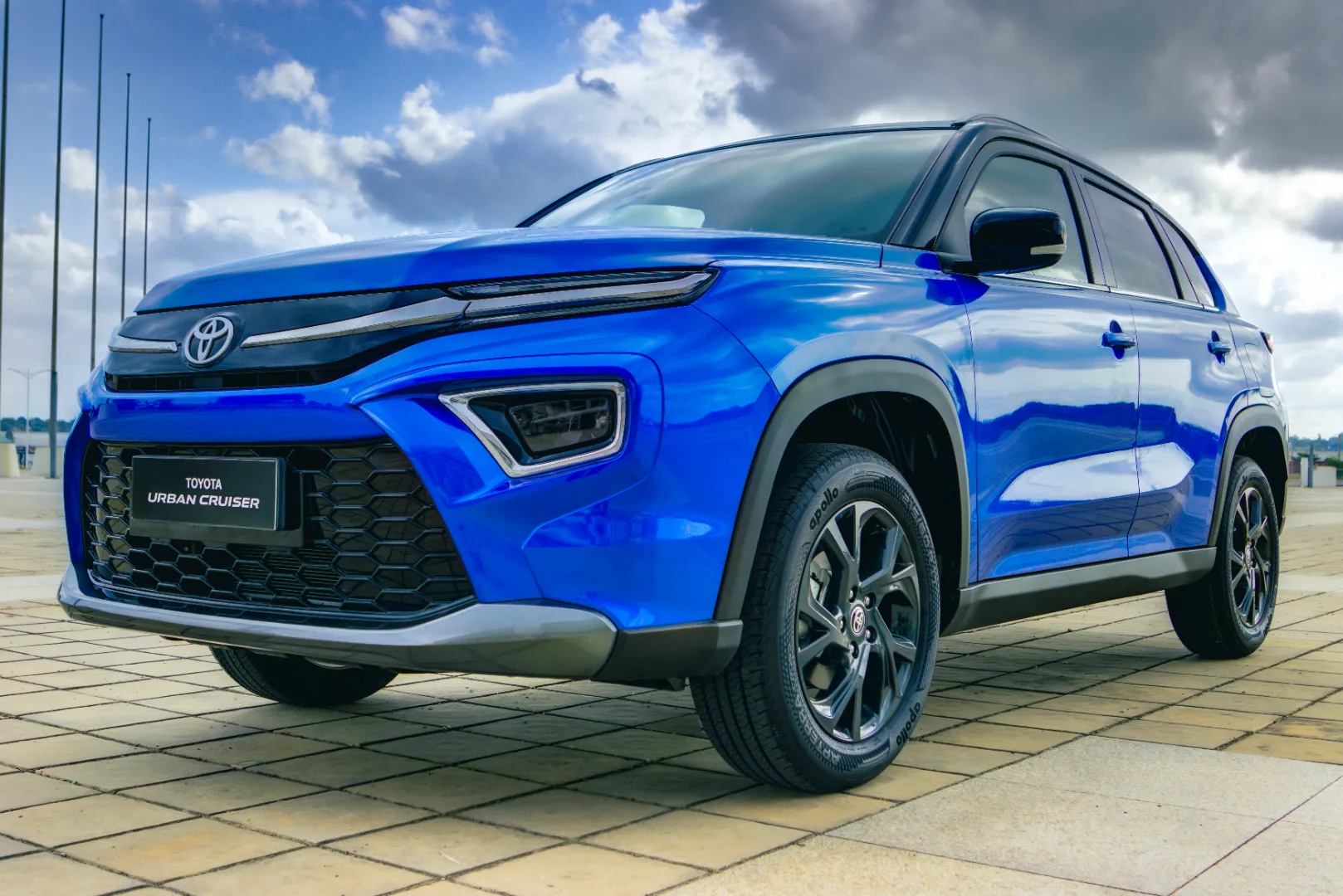
The Urban Cruiser adopts the familiar SUV styling language, combining a commanding road presence with a compact body structure that makes it suitable for everyday use.
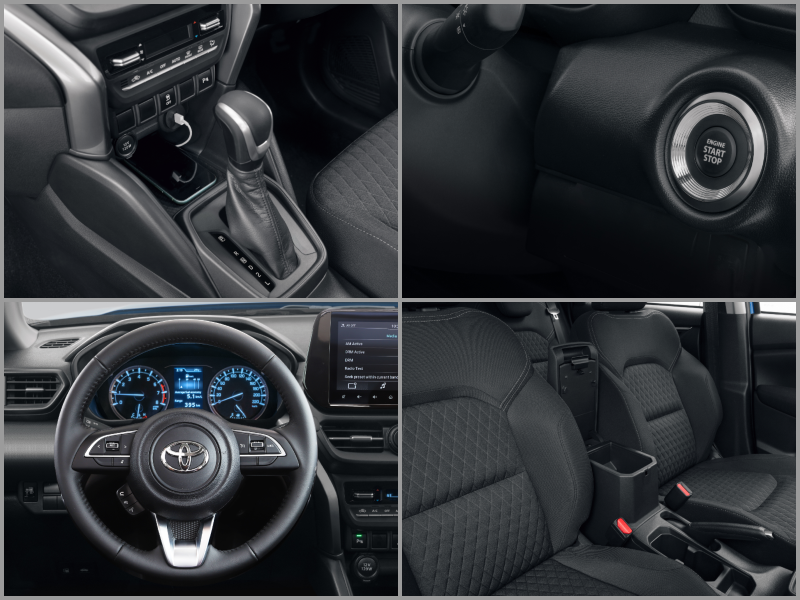
Its design is intended to balance functionality and contemporary styling, offering motorists the visual appeal of an SUV without the dimensions of larger, more expensive models.
Inside, Toyota highlights technology and connectivity as important elements of the vehicle’s appeal.
The manufacturer says the Urban Cruiser allows drivers to connect their mobile devices and access multimedia functions, including audio, hands-free telephone operation, reverse-camera functions and smartphone integration.
Voice-command functionality also enables drivers to interact with selected features while maintaining attention on the road.
These features reflect the increasing importance of in-car technology to modern motorists, particularly younger buyers who expect their vehicles to provide seamless connectivity and convenience.
Safety takes centre stage
Safety is another important feature highlighted by Toyota Nigeria in its presentation of the Urban Cruiser.
The vehicle incorporates Toyota’s Total Effective Control Technology (TECT) body structure, developed to help absorb and disperse impact energy in the event of a collision.
This structural approach is designed to enhance occupant protection by managing the forces generated during an accident.
The model also features an Anti-lock Braking System (ABS), which helps drivers maintain steering control during braking, particularly on slippery road surfaces.
These safety provisions underline the manufacturer’s emphasis on combining driving convenience with occupant protection.
For Nigerian motorists, who frequently encounter varying road conditions, unpredictable traffic situations and changing weather, safety technologies remain important considerations when choosing a vehicle.
A proposition for Nigeria’s changing automotive market
The Urban Cruiser’s positioning comes at a time when affordability, fuel consumption and maintenance considerations are increasingly influencing vehicle purchasing decisions in Nigeria.
With the cost of acquiring and operating vehicles remaining a major concern for many households and businesses, compact SUVs offer an alternative to larger sport utility vehicles for buyers seeking a combination of practicality, comfort and manageable proportions.
The Urban Cruiser’s 1.5-litre engine could therefore be an important consideration for motorists seeking a relatively modest engine capacity without sacrificing the SUV experience.
Its compact configuration also makes it relevant to city driving, where manoeuvrability and ease of handling are important advantages.
However, its appeal will ultimately depend on factors such as acquisition cost, availability, financing arrangements, fuel consumption under Nigerian driving conditions and the cost of routine maintenance.
Toyota’s dealer and after-sales advantage
Beyond the vehicle itself, Toyota’s established presence in Nigeria offers an important consideration for prospective buyers.
Toyota (Nigeria) Limited, trusted distributor of Toyota Motor Corporation in the country, operates through seven accredited dealers.
The company identifies Elizade Nigeria Limited, R.T. Briscoe (Nig.) Plc, Omoregie Motors, Germaine Auto Centre, Kojo Motors, Mandilas Motors and Metropolitan Motors Limited as members of its accredited dealership network.
Its after-sales infrastructure comprises a service centre in Lagos, a parts depot, vehicle diagnostics, mobile workshop services, body and paint facilities and genuine spare parts distribution, among others.
The availability of these facilities is particularly important in a market where access to genuine components, qualified technicians and dependable maintenance services can influence long-term ownership experience.
For buyers considering the Urban Cruiser, the strength of the distributor’s after-sales network could therefore form part of the vehicle’s overall value proposition.
A compact SUV with practical appeal
The Toyota Urban Cruiser brings together several attributes that are increasingly relevant to Nigeria’s changing automotive market: a 1.5-litre petrol engine, transmission choices, modern connectivity, safety provisions and the versatility of a compact SUV.
While its eventual market performance will depend considerably on pricing, availability and customer experience, the model gives Toyota another option for motorists seeking a vehicle that combines everyday practicality with contemporary SUV styling.
As competition intensifies in Nigeria’s compact SUV segment, the Urban Cruiser will be judged not only by its design and equipment but also by how convincingly it delivers on the fundamentals of fuel economy, reliability, comfort and ownership value.
For Toyota, the challenge and opportunity lie in translating the Urban Cruiser’s product attributes into a compelling proposition for Nigerian motorists.
Toyota Urban Cruiser: The Compact SUV Set to Make a Big Statement in Nigeria
Auto
After-Sales Support Will Define Future of Nigeria’s Auto Industry – Carloha Marketing Chief

After-Sales Support Will Define Future of Nigeria’s Auto Industry – Carloha Marketing Chief
As competition intensifies in Nigeria’s auto industry, after-sales support is becoming a key driver of customer loyalty and brand trust. In this interview, Felix Mahan, General Manager, Marketing at Carloha Nigeria, examines why reliable after-sales service is critical to business growth, customer retention and the future of the automotive industry:

Felix Mahan, General Manager, Marketing at Carloha Nigeria
Why should automotive companies regard after-sales service as a strategic business function?
After-sales service is central to customer retention, brand reputation and long-term business growth. In the automotive industry, the relationship between a company and its customer does not end with the purchase of a vehicle. Rather, it continues throughout the ownership journey.
A strong after-sales operation reinforces customer confidence, encourages repeat patronage and generates valuable referrals. It also strengthens brand loyalty and differentiates a business in a competitive market. For these reasons, after-sales should be regarded as a strategic investment in sustainable growth, not simply an operational expense.
How does the quality of service delivery influence customer trust and confidence in an automotive brand?
Trust is built when businesses consistently deliver on their promises. Customers expect transparency, timely communication and dependable solutions whenever they require assistance.
While advertising and marketing may attract buyers, their actual ownership experience ultimately determines whether they develop confidence in a brand. A company must therefore ensure that the quality of its service delivery matches the promises made at the point of sale. Ultimately, after-sales performance is what validates a brand’s claims and strengthens its relationship with customers.
What key performance indicators should automotive companies monitor to assess the effectiveness of their after-sales operations?
Automotive companies should pay close attention to service turnaround time, first-time repair success rates, spare-parts availability, complaint-resolution time, customer satisfaction and retention rates.
These indicators provide valuable insights into operational efficiency and the overall customer experience. However, measuring performance alone is not enough. Companies must use the findings to identify service gaps, address recurring problems and implement continuous improvements that deliver tangible benefits to customers.
READ ALSO:
- Sowore Says ‘Half-Dead’ Tinubu Should Be Taken to Old People’s Home
- Panic as CNG Bus Explodes on Lagos-Ibadan Expressway, 17 Rescued, One Severely Burnt
- Nigerian Pastor, 68, Dies Mid-Air While Returning From US Vacation
Can a strong after-sales service proposition influence a customer’s decision to purchase a vehicle in the first place?
Absolutely. Beyond a vehicle’s features, specifications and price, prospective buyers want assurance that they will receive dependable support after making their purchase.

Felix Mahan, General Manager, Marketing at Carloha Nigeria
A credible after-sales proposition reduces the uncertainties associated with vehicle ownership and gives customers greater confidence in their investment. This is particularly important in Nigeria, where maintenance costs, spare-parts availability and access to qualified technicians remain significant considerations for vehicle owners.
Consequently, the quality of after-sales support can be just as influential as the vehicle itself in determining a customer’s purchasing decision.
What lessons can the Nigerian automotive industry learn from ownership programmes that combine multiple after-sales benefits?
Integrated ownership programmes simplify the customer experience by bringing essential benefits together under clearly defined commitments.
At Carloha, our CarlohaCare 6-6-7 programme is an example. It combines a six-year warranty, six years of free servicing and a seven-day repair promise, subject to applicable terms and conditions.
The broader lesson for the industry is that businesses must move beyond general assurances of quality service and introduce measurable commitments that customers can understand, appreciate and hold them accountable for. Such initiatives help build confidence by giving buyers greater clarity about the support available throughout their ownership experience.
How should automotive distributors respond when competitors introduce initiatives that raise customer expectations and service standards?
They should regard it as an opportunity to improve rather than a threat. Healthy competition should encourage higher service standards, stronger customer protection and greater accountability across the industry.
READ ALSO:
- Osun Lawmaker Drags Fadahunsi to Court, Seeks Ban From 2027 Election Over Alleged Incitement
- Iran Accuses US of Threatening Nuclear Scientists With $20m Reward
- Troops Arrest Father, Son Over Terrorism Suspicions, Recover AK-47 in Sokoto
At Carloha, we believe customers ultimately benefit when businesses continually challenge themselves to deliver better ownership experiences. The objective should not simply be to imitate what competitors are doing but to raise the standard of service delivery and create greater value for customers.
What role should corporate leadership play in driving improvements in after-sales service?
Leadership plays a critical role because it determines the priority an organisation gives to after-sales and provides the resources required to achieve service excellence. This includes investing in technical training, modern diagnostic equipment, adequate spare-parts infrastructure and efficient service processes. Management must also establish clear accountability structures and regularly assess performance against customer expectations.
After-sales excellence cannot be left entirely to frontline personnel. It must be driven from the highest levels of management and embedded in the organisation’s culture, policies and everyday operations.
What would a truly customer-centred Nigerian automotive market look like?
A customer-centred automotive market is one in which buyers make informed decisions based not only on vehicle prices and specifications but also on the quality and reliability of after-sales support.
Such a market should have transparent warranty policies, dependable spare-parts supply, competent technicians, accessible service centres and clearly defined complaint-resolution procedures.
Most importantly, automotive businesses should be evaluated not just by what they promise before a sale but by what they actually deliver throughout the customer’s ownership journey. That is how the industry can build lasting relationships and earn public confidence.
What specific measures should automotive company boards and executive management teams adopt to ensure that after-sale service receives the attention it deserves?
Boards and executive management teams should make after-sales performance a core business priority, supported by measurable targets, dedicated budgets and direct management accountability.
Customer experience should receive the same level of attention as sales growth and financial performance during management reviews. Companies must recognise that the success of an automotive business cannot be measured solely by the number of vehicles it sells.
Ultimately, the real measure of success is how reliably, confidently and satisfactorily those vehicles serve their owners over time. When businesses understand this, after-sales becomes more than a support function; it becomes a fundamental driver of customer loyalty, brand credibility and sustainable growth.
After-Sales Support Will Define Future of Nigeria’s Auto Industry – Carloha Marketing Chief
Auto
Seven Drivers Emerge for Todays Naija Driver Challenge Grand Finale in Lagos

Seven Drivers Emerge for Today’s Naija Driver Challenge Grand Finale in Lagos
The maiden Nigerian Drivers Challenge will reach its climax on Tuesday, November 10, with seven finalists set to compete for honours at the National Stadium, Surulere, Lagos, in a contest aimed at promoting responsible driving, professionalism and improved road safety in Nigeria.
The grand finale, scheduled to begin at 9am, follows a nationwide response that saw 160 drivers register for the hybrid competition from 23 states of the federation.
The seven finalists emerged after preliminary assessments, including a proctored online Computer-Based Test (CBT), with participants required to attain a minimum pass mark of 60 per cent.
The final stage will feature practical driving assessments designed by the Lagos State Drivers’ Institute (LASDRI) to evaluate participants’ driving skills, vehicle control, road-use awareness and compliance with safety principles.
The eventual winner will be determined through a combination of CBT performance and practical assessment scores.
Organised to raise driving standards and promote safer roads, the Nigerian Drivers Challenge seeks to draw attention to the critical role of competent, disciplined and professionally trained motorists in reducing preventable road crashes.
The event is expected to attract representatives of government agencies, road safety institutions, automotive industry stakeholders, sponsors, the media and members of the public.
Speaking on the vision behind the initiative, Project Director, Adrian Egonu, said the encouraging response to the maiden edition demonstrated the need for platforms that promote responsible motoring.
“The Nigerian Drivers Challenge was conceived out of a conviction that safer roads begin with responsible, competent and professional drivers,” Egonu said.
He added that the initiative was more than a driving competition, describing it as a platform for raising road safety consciousness, improving driving standards and celebrating excellence behind the wheel.
The Project’s Head of Administration, Modupeola A. Elegba, also expressed satisfaction with the feedback from participants, particularly those who completed the training and CBT stages.
She said the positive responses, including participants’ appreciation of the knowledge gained on safe road use and the competition’s seamless online platform, had encouraged the organisers to expand the initiative in subsequent editions.
The organisers acknowledged the support of institutional partners, including LASDRI, the Federal Road Safety Corps and the Automobile and Touring Club of Nigeria.
Sponsors include Skinetics Aesthetics Skin Care Clinic and Med Spa, BUA Cement, Sovereign Trust Insurance Plc and AXA Mansard Health Ltd, while supporting organisations include the Lagos State Signage and Advertisement Agency, Lagos State Safety Commission, Lagos State Traffic Management Authority and Work and Play.
The public, stakeholders and members of the media have been invited to attend the grand finale.
-

 Politics14 hours ago
Peter Obi, NDC in Fresh Storm as Keyamo Gives Dickson 48 Hours Over Old National Anthem, Raises Secession Alarm
-

 metro16 hours ago
“I Cheated Because I’m Human Too” — Divorced Restaurant Owner Accuses Ex-Husband of Sleeping With Over 16 Women
-

 metro15 hours ago
Kwankwaso’s Daughter, Kano Governor’s Wife, Files for Divorce, Offers to Refund Dowry
-

 metro12 hours ago
Pastor Remanded Over Viral Video of Toluwanisings’ Corpse After Failed Attempt to Raise Singer From Dead
-

 News13 hours ago
Troops Rescue 119 Kidnap Victims, Eliminate Terrorists in Nationwide Crackdown – DHQ
-

 Politics13 hours ago
‘Control Your Supporters Now!’ – Sheikh Gumi Warns Politicians Ahead of 2027 Elections
-

 News17 hours ago
Photo News: Kwara Security Strategy Committee Submits Report to Gov AbdulRazaq
-

 Politics12 hours ago
2027: Atiku Pledges to Restore Fuel, Electricity Subsidies, Revive Kolmani Oil Exploration