

metro
Osogbo Food Bonanza: Angry Customers Loot Warehouse After Operators Vanish

Osogbo Food Bonanza: Angry Customers Loot Warehouse After Operators Vanish
The Osogbo food scheme controversy has taken a dramatic turn, with angry customers and other residents breaking into the warehouse of Global Food Initiative and carting away food items after the operators allegedly disappeared with customers’ advance payments.
Newstrends.ng had earlier reported how customers who paid for discounted food items besieged the company’s Odi-Olowo outlet in Osogbo, Osun State, after the operators failed to open for business or respond to calls.
The situation escalated on Tuesday when more residents returned to the premises, hoping to either collect the food items they had paid for or obtain an explanation from the operators.
According to reports, the crowd remained at the facility for hours before some people eventually forced their way into the warehouse and began removing food items.
The items taken reportedly included bags of rice, noodles, groundnut oil, spaghetti, semovita and other food commodities.
Residents from nearby communities were also said to have joined the rush, with some carrying away 50kg bags of rice, large containers of vegetable oil and other food products.
The looting reportedly continued despite heavy rainfall and the presence of security personnel deployed to maintain order.
Police officers were said to have fired shots into the air in an attempt to disperse the crowd, although the intervention initially failed to stop the looting.
There were also reports that some people who had not invested in the scheme took advantage of the confusion to remove food items from the warehouse.
READ ALSO:
- Trump Denies Offering Iran Sanctions Relief, Release of Frozen Funds
- Nigeria XI vs Guinea-Bissau: Awoniyi, Lookman, Adams Lead Super Eagles Attack
- Federal Workers Back N500 Petrol Demand, Threaten Three-Day Warning Strike
The situation reportedly became more chaotic when some alleged hoodlums threatened customers who had collected food items, with reports that weapons including axes and cutlasses were used to force some people to surrender what they had taken.
The development came barely a day after customers gathered at the same premises following the disappearance of the operators.
Global Food Initiative had attracted residents by offering food commodities at prices substantially below prevailing market rates, with customers required to pay in advance and return later to collect their purchases.
One customer, Mistura, reportedly said she paid ₦300,000 for 11 bags of rice at ₦27,000 per bag, while another customer, Olamide, said she paid ₦1.2 million for food items intended for her stepdaughter’s forthcoming wedding.
Other customers have also alleged that they paid millions of naira into the scheme. However, the various amounts cited by individual customers should not be interpreted as a confirmed total loss, as no official figure for the money collected by the company has been established.
The attraction for many customers was the unusually low prices. The company reportedly offered a 50kg bag of rice for ₦27,000, while a 25-litre container of vegetable oil was reportedly sold for ₦30,000.
The sudden disappearance of the operators triggered panic among customers who had already made payments but had yet to receive their goods.
Some affected customers also alleged that warnings about the scheme had been broadcast on a local radio programme before the operators disappeared.
According to the allegations, the warning prompted some customers to rush to the premises before their scheduled collection dates.
There were also claims that the operators had brought additional food items to the premises but failed to open the outlet because of concerns about their safety.
Those claims have not been independently established, while the operators themselves have not publicly explained what happened to the business, the food stocks or the money reportedly collected from customers.
The controversy has also generated calls for residents to avoid turning the incident into an ethnic dispute, with some affected customers stressing that people from different backgrounds were among those who participated in the scheme.
Meanwhile, the Osun State Police Command has yet to announce a confirmed total amount allegedly lost by customers or publicly disclose the whereabouts of the operators.
The warehouse looting has further complicated efforts to establish the actual scale of the alleged losses, identify the rightful owners of the food items removed from the premises and determine what happened to customers’ advance payments.
For the affected customers, the immediate concern remains recovering either the money paid into the food scheme or the food items they purchased, while security authorities are expected to investigate the circumstances surrounding the disappearance of the operators and the subsequent looting.
As of the latest reports, Global Food Initiative operators remained unreachable, while the full circumstances surrounding the collapse of the Osogbo food scheme remained unclear.
Osogbo Food Bonanza: Angry Customers Loot Warehouse After Operators Vanish









metro
Retiring Supreme Court Justice Warns Politicians Against Giving Cows, Rams to Judges
Retiring Supreme Court Justice Warns Politicians Against Giving Cows, Rams to Judges
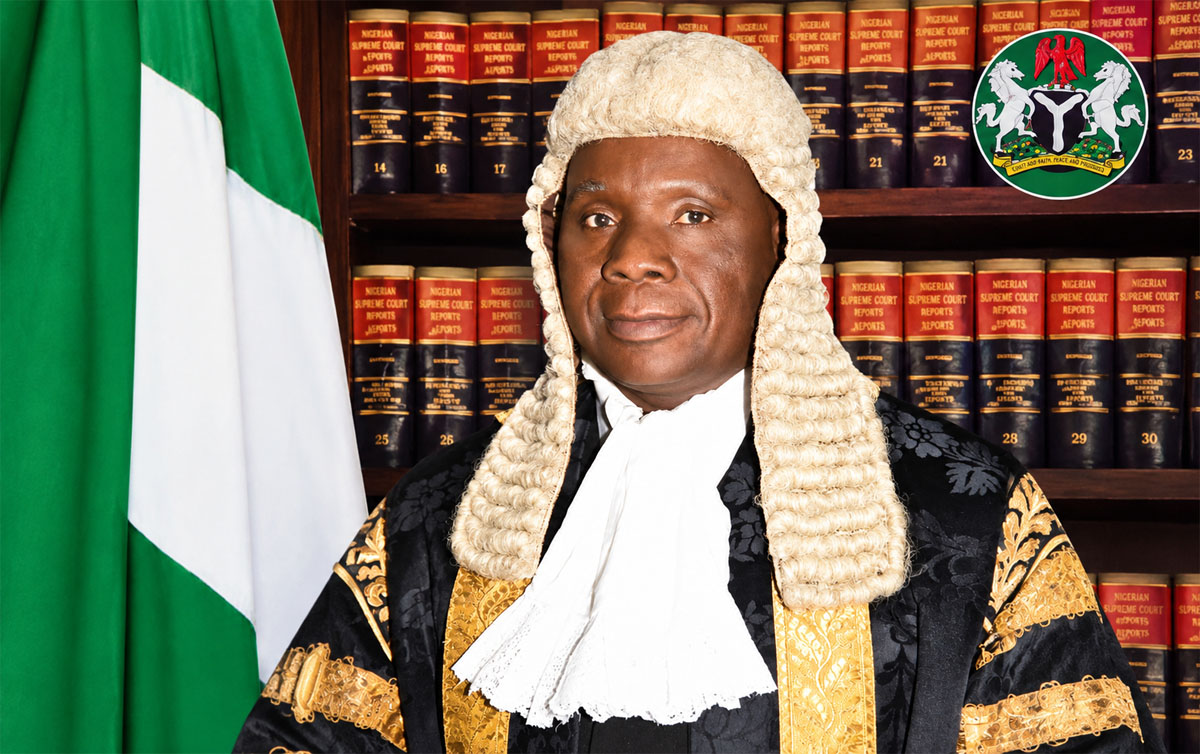
Retiring Supreme Court Justice Ibrahim Musa Saulawa has urged politicians and litigants to stop giving cows, rams and other gifts to judges, warning that such gestures could undermine judicial integrity and independence.
Justice Saulawa made the call during his valedictory court session at the Supreme Court in Abuja following his retirement after attaining the mandatory age of 70.
The retiring justice described some of the gifts presented to judicial officers as “Greek gifts” and questioned why politicians should send cows, rams and other items to Supreme Court justices.
He said he had previously raised the issue with the Chief Justice of Nigeria, Justice Kudirat Kekere-Ekun, and urged the judiciary to take steps to discourage the practice.
Saulawa said judges must maintain honesty, morality, contentment and integrity and avoid accepting anything that could compromise their independence or create an appearance of influence.
He recalled an incident from his time on the Katsina State Magistrate’s Court, when a prominent businessman, Alhaji Ali Bagobiri, offered him a Peugeot 504 car.
According to Saulawa, he rejected the vehicle despite efforts by the businessman and other prominent individuals, including the Emir of Katsina, to persuade him to accept it.
READ ALSO:
- Dangote Draws Battle Lines as Fuel Import Fight Heads Back to Court
- Tinubu Returns After 30 Days in Europe, Says ‘I’m Healthy and Ready to Work’
- NMDPRA Moves Against Fuel Pump Fraud, Threatens Licence Revocation
The businessman later appeared before Saulawa in a case involving the alleged assault of a worker, Ahmad, who was said to have spent about two weeks in an intensive care unit.
Saulawa said the accused persons were convicted and fined N7,000 each, while the victim was awarded N10,000 in damages.
The retired justice said the experience reinforced his position that judges must keep personal benefits and judicial responsibilities separate.
He also recalled his role during the June 12, 1993 presidential election crisis, when he was serving as Chief Registrar of the Court of Appeal.
Saulawa said conflicting court orders had emerged over the election and that he acted on the directive of the then President of the Court of Appeal, Justice Mohammed Mustapha Akanbi, to secure the appellate court’s registry and ensure that judicial processes were properly handled.
He said the judiciary resisted attempts to interfere with the judicial process during the crisis before the election was eventually annulled by the military government headed by General Ibrahim Babangida.
Justice Saulawa’s judicial career began in 1983 when he was appointed a Magistrate Grade II in the Kaduna State Judiciary. He subsequently served as a chief magistrate, Chief Registrar of the Court of Appeal, High Court judge in Katsina and Justice of the Court of Appeal before his elevation to the Supreme Court in November 2020.
Born in Katsina on September 29, 1956, Saulawa studied law at Bayero University, Kano, and was called to the Nigerian Bar in 1982. His retirement brings an end to a more than four-decade legal and judicial career.
At the valedictory session, the Chief Justice of Nigeria, Justice Kudirat Kekere-Ekun, praised Saulawa for his contribution to the judiciary and described his career as one marked by service and principle.
Kekere-Ekun also recalled an earlier occasion when she and Saulawa resisted an attempt to place a personal benefit before their judicial responsibilities, saying the episode underscored the importance of protecting the integrity of judicial office.
Former Chief Justices of Nigeria Mahmud Mohammed and Olukayode Ariwoola, along with other senior judicial officers and members of the legal profession, attended the ceremony.
Saulawa’s retirement leaves behind a judicial career spanning the magistracy, High Court, Court of Appeal and Supreme Court, with his final message focused on the need for judges to protect public confidence in the administration of justice.
Retiring Supreme Court Justice Warns Politicians Against Giving Cows, Rams to Judges
metro
NMDPRA Moves Against Fuel Pump Fraud, Threatens Licence Revocation

NMDPRA Moves Against Fuel Pump Fraud, Threatens Licence Revocation
The Nigerian Midstream and Downstream Petroleum Regulatory Authority (NMDPRA) has intensified its crackdown on fuel pump fraud, directing filling stations nationwide to immediately inspect, calibrate and verify their dispensing equipment following the discovery of cases of under-dispensing.
The regulator said it had identified incidents in which motorists and other consumers received less petrol than the quantity displayed on the pump, describing the practice as a serious breach of consumer trust.
Under its latest directive, operators of retail outlets must check and calibrate their fuel dispensers and totalisers to ensure that the equipment accurately measures the quantity of petroleum products sold.
The NMDPRA warned that stations found to be under-dispensing, operating with improperly calibrated equipment or otherwise compromising dispensing accuracy would be required to take corrective action.
It also warned that persistent or serious violations could lead to the revocation of operating licences.
The crackdown comes as motorists contend with elevated petrol prices across Nigeria. Recent reports put pump prices at around ₦1,350 to ₦1,400 per litre in Lagos, with prices reaching about ₦1,450 in Abuja and higher levels in some other locations.
The combination of higher pump prices and inaccurate dispensing has heightened concerns about the amount of fuel consumers actually receive for their money.
READ ALSO:
- $2.1m Land Suit: Court Orders Wike’s Son to Produce American Passport
- Two Nigerians Jailed 15 Years Over $2.4m US Cyber Fraud
- Osogbo Food Bonanza: Angry Customers Loot Warehouse After Operators Vanish
The problem, however, is not necessarily limited to deliberate manipulation. Faulty or poorly calibrated dispensing equipment can also cause inaccurate measurements, making regular inspection and verification important for both consumers and station operators.
The Petroleum Products Retail Outlets Association of Nigeria (PETROAN) has directed its members to inspect their dispensing meters following the NMDPRA warning.
PETROAN National President Billy Gillis-Harry said the association held an emergency meeting after the regulator raised the issue and subsequently instructed its members to check their equipment nationwide.
He also urged motorists to pay attention to the quantity displayed on the pump while buying fuel and to request receipts for their purchases.
The NMDPRA has also called on major industry associations, including the Major Energy Marketers Association of Nigeria (MEMAN), Depot and Petroleum Products Marketers Association of Nigeria (DAPPMAN), Independent Petroleum Marketers Association of Nigeria (IPMAN) and PETROAN, to ensure that their members comply with the directive.
The latest enforcement drive forms part of the regulator’s wider responsibility to protect consumers and ensure transparency in petroleum product transactions.
The NMDPRA has separately said that petrol pump prices are determined by market forces under the Petroleum Industry Act 2021 and are not fixed by the regulator. It has also said it is working with the Federal Competition and Consumer Protection Commission (FCCPC) to monitor practices including price-gouging, collusion, under-dispensing and compromised product quality.
The regulator has urged consumers and industry stakeholders to report suspected irregularities through its feedback and reporting channels for investigation and possible enforcement.
For motorists, the latest directive means greater attention should be paid to the quantity shown on fuel dispensers, receipts and any noticeable discrepancy between the amount paid and the fuel delivered.
The NMDPRA’s warning also puts filling station operators under increased pressure to ensure that their equipment remains properly calibrated and that consumers receive the full quantity of petrol or other petroleum products for which they have paid.
NMDPRA Moves Against Fuel Pump Fraud, Threatens Licence Revocation
metro
$2.1m Land Suit: Court Orders Wike’s Son to Produce American Passport

Wike’s Son Jordan Faces Fresh Court Twist as Judge Orders American Passport Produced
A Federal Capital Territory High Court sitting in Maitama has ordered Jordan Ezenwo Nyesom-Wike, son of FCT Minister Nyesom Wike, to produce his American passport in court as hearing continued in a $2.1 million Abuja land dispute.
Justice Sylvanus Oriji issued the order on Tuesday following an application by counsel to the claimants, Hamza Dantani, during cross-examination of Jordan in the suit marked CV/008/2026.
The case was filed by Safwan Garba GY and GY Global Oil and Gas Nigeria Limited, who allege that Jordan agreed to facilitate the acquisition of 60 hectares of land in Abuja—30 hectares each in Katampe and Guzape.
According to the claimants, they first met Jordan in London and later met him in Abuja, where they allegedly sought his assistance in securing the properties.
They allege that Jordan demanded $2.1 million as a facilitation fee, with $2 million allegedly intended for his father and $100,000 for himself.
The claimants further allege that the money was handed over on September 26, 2025, in the presence of Adamu Sani, Aliyu Sarki and Sai Wani, while Jordan was accompanied by Onor Sandy.
READ ALSO:
- Trump Denies Offering Iran Sanctions Relief, Release of Frozen Funds
- Nigeria XI vs Guinea-Bissau: Awoniyi, Lookman, Adams Lead Super Eagles Attack
- Federal Workers Back N500 Petrol Demand, Threaten Three-Day Warning Strike
They claim that after receiving the money, Jordan failed to facilitate the land acquisition or refund the funds and subsequently became unreachable.
Jordan has denied the allegations.
During cross-examination, Dantani questioned Jordan about his whereabouts on September 26, 2025. Jordan told the court that he was outside Nigeria on that date and had travelled using his American passport.
Dantani then asked the court to compel him to produce the document. Justice Oriji granted the application and ordered Jordan to bring the passport before the court.
The passport is expected to be relevant to the parties’ competing accounts of Jordan’s whereabouts on the date the claimants allege the $2.1 million was paid.
Earlier in the proceedings, the claimants’ counsel also asked Jordan to write his full name and signature five times each on a plain sheet of paper. The application was granted without objection from the defence.
The wider dispute is linked to a joint venture agreement dated October 17, 2025, involving Jordan and two companies, Apostle Associate Limited and Creekstone General Contractor Ltd.
According to the claimants’ statement of claim, the proposed project involved the construction of 24 units of six-bedroom fully detached duplexes on 1.7 hectares of land at Guzape New Extension and 1.5 hectares at Katampe New Extension.
The claimants were allegedly expected to contribute $4.2 million, valued at about ₦6.3 billion, while Jordan was to provide the land.
The defence has disputed the claimants’ account of their dealings with Jordan, including the allegation that he received the $2.1 million.
The court has not determined the merits of the competing allegations, and the proceedings remain ongoing.
Justice Oriji adjourned the case until Wednesday for continuation of the hearing.
Wike’s Son Jordan Faces Fresh Court Twist as Judge Orders American Passport Produced
-

 International3 days ago
Iran Claims Capture of Second US Underwater Drone in Strait of Hormuz
-

 metro1 day ago
Osogbo Food Bonanza Turns Nightmare as Discount Vendor Vanishes With Customers’ Millions
-

 News3 days ago
Anambra Govt Demands Unreserved Apology From Peter Obi Over Debt Claims
-

 News3 days ago
Fake Agency Scandal: Gbajabiamila Says He Never Betrayed Tinubu’s Trust
-

 metro3 days ago
Woman Busted With Alleged Alcohol Hidden in Water Pack at Ogun Prison
-

 metro2 days ago
24 Hours in Darkness: Iju Ishaga Residents, Businesses Count Losses as Ikeja Electric Fails to Restore Power
-

 metro3 days ago
Passenger Dies After Jumping From Moving Bus In Lagos
-

 Politics3 days ago
2027: NDC State Chairmen Reject Obi-Kwankwaso Movement’s Parallel Structures