

Business
FEC approves N18bn for Kano, Calabar free trade zones
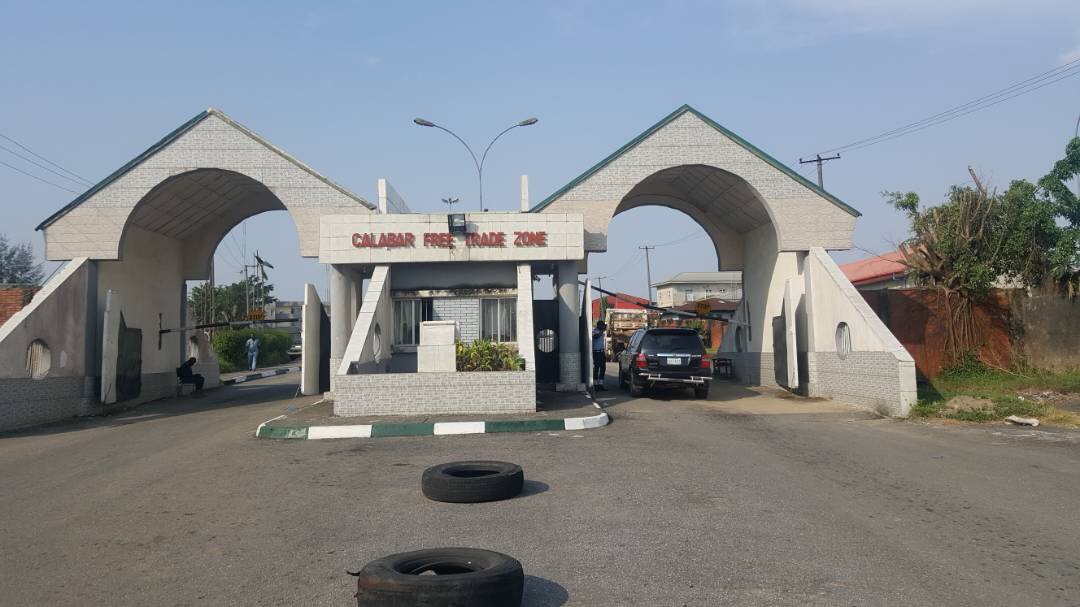
The Federal Executive Council has approved the sum of N18.1bn for the development of infrastructure at the nation’s free trade and economic zones.
Minister of Information and Culture, Lai Mohammed, announced this on Wednesday in Abuja, while addressing state house correspondents after the weekly FEC meeting.
Mohammed gave the affected zones as Kano and Calabar free trade zones, as well as the textile and garment park and the special economic zone in Lagos.
He said the approval was of critical importance to the infrastructure development plan of the country.
FEC also approved N9.24bn as premium for insurance firms that will manage federal civil servants group life insurance in the country.
The group life insurance is a joint regulation of the National Insurance Commission (NAICOM) and National Pension Commission (PenCom).
Section 9 (3) of the Pension Reform Act 2004 (now PRA 2014) requires that every employer, to which the Act applies, to maintain Life Insurance Policy in favour of the employee for a minimum of three times the annual total emolument of the employee. The policy provides cover to the insured against death.
Mohammed said, “On behalf of the Head of Civil Service of the Federation, I will like to report that council today approved the award of contract for the appointment of insurance companies for group life assurance for federal government employees, public servants paramilitary and the intelligence community for the year 2021-2022 in the sum of N9, 248. 995, 907 and this premium is for a period of 12 months.
“This is part of the government’s welfare programme for our public employees so that in case of death, they are assured that there would be compensation.”
The Federal Government last year paid about N15bn premium under the group life insurance scheme to insure over 89,000 workers across the country.
Mohammed said FEC also approved N18.1bn for the Ministry of Industry, Trade and Investment; N864.7m for two road contacts abandoned by previous administrations; and N1.1bn for the procurement of aviation security uniforms and accessories for use in various airports across the country.
“Minister of Aviation got an approval for the award of contract for direct procurement for the design, manufacture and supply of aviation security uniforms and accessories. The sum total is N1,127, 945. The unique thing about uniforms for the aviation industry is that it has some International Civil Aviation Organisation (ICAO) standards that would be followed,” he said.
“The Minister of Niger Delta got approval for Okpula-Igwartanta Phase I linking Imo and Rivers state, started in 2010. He got approval for a variation of N620, 763, 000. He also got approval for erosion flood control on Ndemili-Utagba-Onitsha road in Delta State, started in 2014. The council today approved N244m to augment the original contract sum.”









Business
NNPC Profit Rises to N7.2tn Despite Revenue Decline

NNPC Profit Rises to N7.2tn Despite Revenue Decline
The Nigerian National Petroleum Company Limited (NNPC Ltd) recorded a N7.2 trillion profit after tax in 2025, representing a 33.3 per cent increase from the N5.4 trillion it reported in 2024, despite a significant decline in revenue.
NNPC Group Chief Executive Officer, Bayo Ojulari, disclosed the figures on Tuesday while presenting the company’s audited financial results for the 2025 financial year in Abuja.
The company recorded N34.5 trillion in revenue in 2025, down from N45.1 trillion reported for 2024. Despite the revenue decline, profit increased as NNPC attributed the stronger bottom-line performance to improved operational efficiency and financial discipline.
Ojulari said lower international crude oil prices and reduced petroleum product sales, following changes in the downstream petroleum market, put pressure on revenue during the year.
However, improved operational performance helped cushion the impact, allowing NNPC profit to rise to N7.2 trillion.
The company also reported N22.33 trillion in taxes, royalties and other remittances to the Federal Government, representing a 39 per cent increase compared with the previous year.
The results also showed stronger production performance across the company’s upstream operations.
According to NNPC, crude oil and condensate production reached an average peak of 1.77 million barrels per day in 2025, the company’s highest level in five years.
READ ALSO:
- Hamzat Clarifies Lagos Traffic ‘Lifestyle’ Remark After Backlash
- US Judge Blocks Trump From Tying Counterterrorism Grants to Election Rules
- School Attack: 13-Year-Old Student Kills Teacher, Injures Two
Domestic gas supply also rose to a three-year high of 7.2 billion standard cubic feet per day, reflecting increased gas production and supply to the Nigerian market.
NNPC said the financial performance demonstrated the impact of efforts to improve asset management, increase production and strengthen efficiency across its businesses.
The company’s latest results come as Nigeria continues to seek higher crude oil production, increased domestic gas supply and greater investment across the petroleum value chain.
NNPC, which became a commercial company under the Petroleum Industry Act (PIA) in 2022, has been pursuing a strategy focused on increasing oil and gas output, expanding gas monetisation and strengthening its downstream operations.
The company said its future growth strategy would require continued investment in infrastructure, workforce development and operational capabilities.
NNPC also highlighted investments in digital capabilities and artificial intelligence as part of efforts to improve efficiency and strengthen its workforce.
More than 1,000 newly recruited professionals joined the company in 2025 and underwent a one-year internship and training programme before being deployed across its operations.
The company also reported that women now occupy more than 23 per cent of its leadership positions, compared with an industry average of 17 per cent.
The 2025 results come against the backdrop of major changes in Nigeria’s petroleum sector, including the removal of petrol subsidy and increased private-sector participation in fuel supply.
NNPC said the improved profitability had strengthened its capacity to invest in operations, contribute to government revenue and support Nigeria’s energy security.
The company’s performance will continue to be closely watched as Nigeria seeks to raise oil production, expand gas utilisation and increase the economic contribution of the oil and gas sector.
NNPC Profit Rises to N7.2tn Despite Revenue Decline
Business
Crude Oil Prices Ease After Monday Spike, Fuel Price Cuts Loom
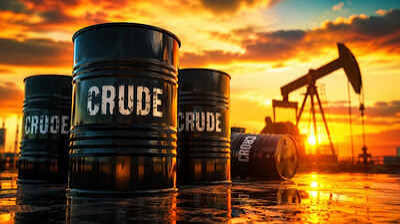
Crude Oil Prices Ease After Monday Spike, Fuel Price Cuts Loom
Global crude oil prices eased on Tuesday after a sharp rally triggered by renewed uncertainty over the possibility of a ceasefire between the United States and Iran, offering some relief to an oil market that has remained highly sensitive to geopolitical developments.
Brent crude, the international benchmark, fell to about $105.04 per barrel, while US West Texas Intermediate (WTI) declined to $92.24 per barrel, according to Reuters. The prices had risen sharply earlier amid concerns over possible disruptions to Middle East oil supplies.
The latest movement is particularly significant for Nigeria, where changes in international crude prices are increasingly reflected in the domestic petrol market following the removal of petrol subsidy and the operation of a largely market-driven downstream petroleum sector.
Nigeria has in recent weeks witnessed significant fluctuations in petrol prices as international crude prices rose on the back of Middle East tensions.
Dangote Petroleum Refinery, which has become a major source of domestic petrol supply, raised its gantry price to N1,350 per litre earlier in September before subsequently reducing it by N25 to N1,325 per litre as crude prices eased.
The impact has also begun to filter through to some retail outlets. Recent checks showed petrol selling at varying prices across the country, with some marketers reducing pump prices by between N20 and N25 per litre in response to lower wholesale costs.
In Abuja, for instance, MRS reportedly reduced its pump price from N1,395 to N1,370 per litre, while other marketers also adjusted their prices downward.
However, the latest fall in crude prices does not necessarily translate into an immediate or uniform reduction at filling stations.
This is because the price motorists pay is influenced by several factors, including the cost of crude, refining and wholesale prices, transportation and logistics, exchange-rate movements, and the margins of individual marketers.
Nigeria’s dependence on crude oil makes developments in the international petroleum market particularly important to the domestic economy.
Although the Dangote refinery has substantially increased local refining capacity and reduced reliance on imported petrol, international crude prices remain an important factor in determining the cost of feedstock and, ultimately, petroleum products.
The recent volatility has therefore kept motorists, transport operators and businesses on alert, with any sustained decline in crude prices potentially creating room for further reductions in petrol prices.
The latest crude movement followed reports of renewed diplomatic tension between Washington and Tehran.
Iran had reportedly proposed a seven-day truce, but US President Donald Trump rejected the proposal, triggering fresh concerns about the outlook for regional stability and oil supplies.
Crude prices surged during Monday’s trading session before retreating as investors reassessed the immediate supply risks and continued to monitor diplomatic efforts.
For Nigerian consumers, the key issue now is whether the downward movement in international crude prices will be sustained long enough to translate into broader and more significant reductions in petrol prices at filling stations.
Auto
TCAN Honours Dangote Cement Transport for Safety, Logistics Excellence

TCAN Honours Dangote Cement Transport for Safety, Logistics Excellence
Dangote Cement Transport has been recognised for its contributions to the development of Nigeria’s transport industry, winning the “Champion of Transport Industry Development Award” presented by the Transport Correspondents Association of Nigeria (TCAN).
The award, presented at the third Transport Summit organised by TCAN in Lagos, recognised the company’s efforts in improving road transport operations, strengthening safety standards and deploying more efficient logistics solutions to support industrial activities across the country.
Receiving the award on behalf of the company’s management, the Head of Dangote Cement Transport, Mr Murilo Silva, said the recognition was a reflection of the commitment of the company’s transport workforce, drivers, safety professionals, engineers and operational partners.
Silva said Dangote Cement viewed transportation as a critical component of industrialisation and economic development, stressing that the efficient movement of goods was essential to sustaining production, trade and national economic activities.
“We are deeply honoured to receive this award from the Transport Correspondents Association of Nigeria. This recognition reflects Dangote Cement Transport’s unwavering commitment to developing a safe, efficient and sustainable transport system that supports economic growth and national development,” he said.
READ ALSO:
- Osogbo Food Bonanza Turns Nightmare as Discount Vendor Vanishes With Customers’ Millions
- Obi’s Debt Storm Deepens as Okonkwo Says: ‘I Was Misled’
- Lagos Club Robbery: Police Arrest Suspect After N5m Bounty
According to him, the company would continue to invest in technology, safety initiatives and operational improvements as part of efforts to raise standards across its transport operations.
“At Dangote Cement, we recognise that transportation is much more than moving goods from one point to another. It is a vital link in the nation’s economic ecosystem,” Silva said.
He added that the company would continue to deploy innovative solutions, strengthen its safety culture and collaborate with relevant stakeholders to improve road transport operations.
Silva dedicated the award to the thousands of drivers, transport professionals, engineers, safety personnel and logistics workers whose daily efforts support the movement of Dangote Cement products across its extensive distribution network.
“This award belongs to our drivers, our safety professionals and every member of our transport team who work tirelessly every day to ensure that our operations are safe, reliable and efficient,” he said.
The recognition underscores Dangote Cement Transport’s investments in fleet management, driver training, road safety programmes and technology-driven logistics solutions aimed at improving operational efficiency and reducing risks associated with road transportation.
The award was presented against the backdrop of growing calls for stronger collaboration between government and private-sector operators to tackle infrastructure and logistics challenges confronting the country’s transport industry.
The TCAN summit also featured discussions on port modernisation, rail integration and technology deployment, with stakeholders emphasising the need for coordinated action to improve freight movement, reduce logistics costs and accelerate innovation across Nigeria’s transport sector.
TCAN Honours Dangote Cement Transport for Safety, Logistics Excellence
-
 International2 days ago
Iran Claims Capture of Second US Underwater Drone in Strait of Hormuz
-

 metro2 days ago
Woman Busted With Alleged Alcohol Hidden in Water Pack at Ogun Prison
-

 News2 days ago
Fake Agency Scandal: Gbajabiamila Says He Never Betrayed Tinubu’s Trust
-

 metro13 hours ago
Osogbo Food Bonanza Turns Nightmare as Discount Vendor Vanishes With Customers’ Millions
-

 metro1 day ago
24 Hours in Darkness: Iju Ishaga Residents, Businesses Count Losses as Ikeja Electric Fails to Restore Power
-

 News2 days ago
Anambra Govt Demands Unreserved Apology From Peter Obi Over Debt Claims
-

 metro2 days ago
Passenger Dies After Jumping From Moving Bus In Lagos
-
 Politics2 days ago
APC Sweeps Enugu LG Election, Wins All 17 Chairmanship, 260 Councillorship Seats