

Business
Lagos, Facebook, Google to build W/Africa’s largest tech hub in Yaba
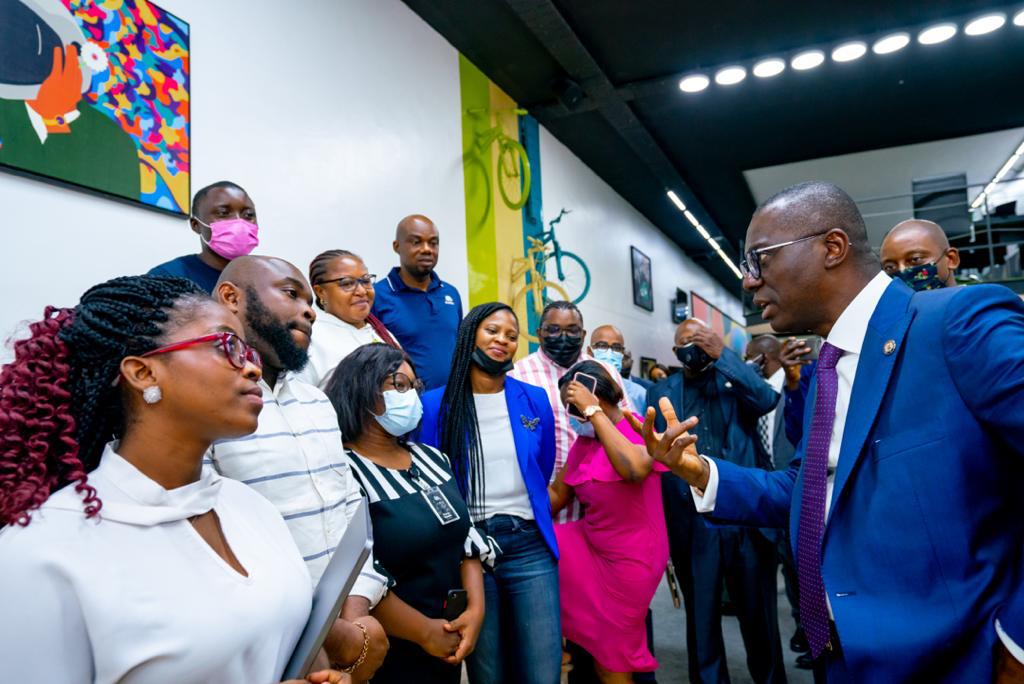
Lagos State Government has unveiled plans to construct in Yaba the biggest technology cluster in West Africa and expand the tech space to accommodate more startups.
Already, the state government has opened talks with Facebook, Google to Deliver K.I.T.E Project, a tech ecosystem to be sited in Yaba,
The Lagos State Governor, Babajide Sanwo-Olu, spoke on the development on Wednesday when he toured two major innovation and technology hubs in the state.
A statement by his Chief Press Secretary, Gboyega Akosile, said the governor was accompanied by members of the State’s Executive Council, including Commissioner for Science and Technology, Mr Hakeem Fahm, and Special Adviser on Innovation and Technology, Olatunbosun Alake.
The governor also visited the Venia Hub in Lekki and Impact Hub in Ikoyi, meeting scores of startups in the ecosystems for a roundtable discussion on expanding funding opportunities and infrastructure development.
Sanwo-Olu said the Yaba technology cluster, called K.I.T.E., would be a free zone that would allow the growth of funding and financing for innovative ideas generated by entrepreneurs in tech industry and FinTech space.
The governor said the ecosystem would also offer free labs for the use of startups to take their innovations to from ideation to the next level.
K.I.T.E. is an acronym for Knowledge, Innovation, Technology and Entrepreneurship.
The governor described technology as “the new oil” for Lagos – Africa’s largest megacity – to exponentially generate wealth and jobs for its young population, while also leveraging it in raising the status of the state to attain Fourth Industrial Revolution.
He said, “Technology is the new oil and the basic element for the Fourth Industrial Revolution globally. As a state with a massive population of young people, we need to play major role in the development of technology, which is an enabler to leapfrog into rapid socio-economic growth. We take technology as an important deliverable in our government’s development agenda.
“For us to make lasting impact in tech industry, we said to ourselves we needed to build the infrastructure to support sector. We are building a tech campus on a 22,000 square metres land in Yaba, which we christen K.I.T.E. We are working with global brands in the tech space, such as Facebook and Google, to deliver this important technology hub.
“We are currently laying 3,000 kilometres metropolitan fibre optic cables across the state to drop reliable and fast Internet connectivity in homes and work places.
“These are part of the infrastructure required as backbone for the tech industry to flourish and empower our young people in the space to take their businesses and ideas to the level of stability.”
Sanwo-Olu also said the state government had been providing support for startups through the Lagos State Employment Trust Fund (LSETF) and Lagos State Science Research and Innovation Council (LASRIC), which provide grant opportunities for innovators and tech researchers.
The governor disclosed that two out of the 20 start-ups ideas supported through LASRIC last year had secured patents for their innovations and ready to transform into fully-fledged businesses that would create jobs.
Sanwo-Olu said the state government’s intervention in the technology space was about creating opportunities for the future and providing platforms to make start-up businesses thrive.
He said, “The visit to your ecosystems today is for you to be assured that this Government is not sitting back in taking steps to ease access. We fully understand the role which technology plays in our lives and how technology is important to any society that wants to be relevant in coming decades.
“We are happy to be building the capability for Lagos, so that we can compete with other developed cities in the world.”
The governor had roundtable discussions with some of the startups to communicate the state’s effort and how the government could properly channel its interventions in the sector.
Some of the startups had the opportunity to present their business models and innovative solutions to the government’s team.
LSETF Executive Secretary, Mrs Teju Abisoye, said the agency had been providing support for over 38 partner hubs across all local government areas in the state, stressing that the objective of the funding was to support startups from idea to exit stages.










Business
Nigerians Pay N44 Extra Per Litre as Retailers Defy Falling Depot Prices – Full Report

Auto
Abuja Roars to Life as Jetour X50 Headlines Three-Day Motoring Experience
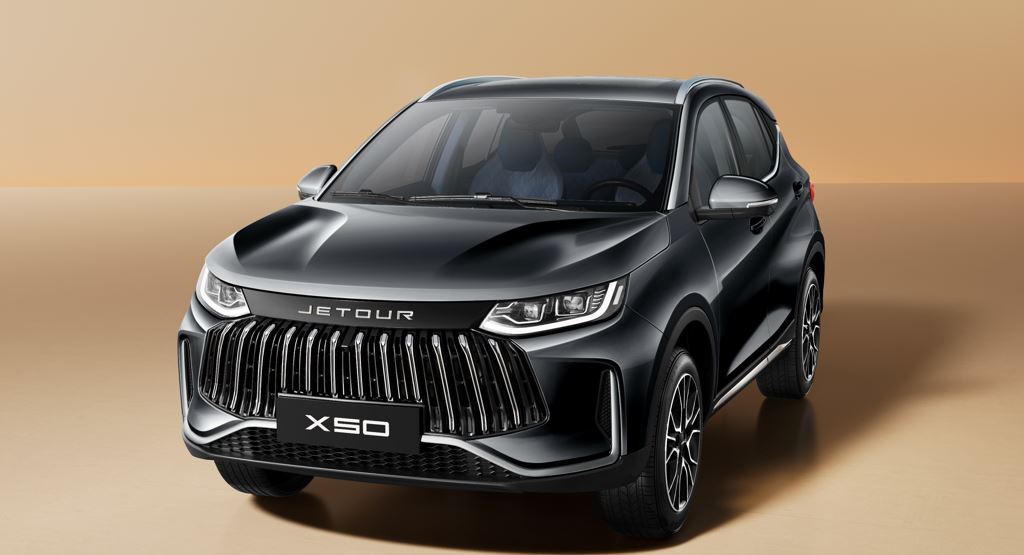
Abuja Roars to Life as Jetour X50 Headlines Three-Day Motoring Experience
Abuja is gearing up for a major motoring spectacle as Jetour Nigeria brings its fast-growing brand experience to the Federal Capital Territory, with the stylish Jetour X50 set to take centre stage in a three-day showcase of performance, technology and automotive innovation.
Scheduled for September 22 to 24, 2026, the Jetour Experience Abuja will move beyond the conventional vehicle exhibition, giving motorists and prospective buyers the opportunity to test-drive the X50, interact with automotive specialists and experience a range of entertainment and interactive activities.
The Abuja activation follows the strong reception recorded during Jetour Nigeria’s recent Lagos experience and forms part of the automaker’s strategy to deepen customer engagement while expanding its footprint across Nigeria.
Backed by an expanding authorised dealer network comprising Elizade Nigeria Limited, Mandilas Autos, Germaine Auto Centre, Kojo Motors, R.T. Briscoe, Tab Autos and New Era AutoVehicle Services, Jetour is also strengthening access to vehicle sales, after-sales support, genuine spare parts and certified technical services nationwide.
At the heart of the Abuja experience will be the Jetour X50, a compact SUV designed to combine contemporary styling, performance and a technology-rich driving environment.
Powered by a 1.5-litre turbocharged engine paired with a dual-clutch transmission, the X50 has positioned itself as a strong contender in Nigeria’s competitive compact SUV segment.
Jetour has equipped the model with a range of premium features, including a 360-degree camera, Blind Spot Detection, 10.5-inch infotainment system with Apple CarPlay and Android Auto, wireless charging and leather upholstery.
The combination of technology, comfort and performance is part of Jetour’s strategy of offering premium motoring features at competitive price points.
The Abuja event also highlights Jetour’s aggressive expansion strategy in Nigeria, following the brand’s recognition with industry accolades including Fastest Growing Auto Brand and Auto Brand of the Year.
With its expanding dealer network providing nationwide sales and after-sales support, Jetour is seeking to deepen customer engagement while making its vehicles and ownership services more accessible to motorists across the country.
As Abuja prepares to welcome the Jetour Experience, the three-day activation is expected to provide motorists with an opportunity to see, feel and drive the X50 while experiencing first-hand what is driving the brand’s growing appeal in Nigeria.
Business
Dangote Refinery Sets ₦525 Per Share for Landmark IPO
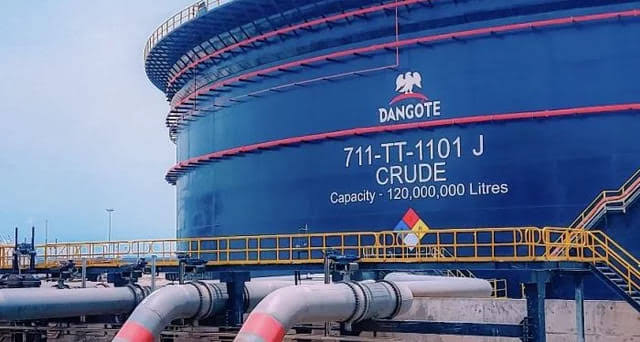
For ₦5,250, Nigerians could soon own a piece of the refinery that has reshaped the country’s fuel market.
-
 Auto3 days ago
Kaduna to Lead Govt Patronage of Local Vehicles as Sani Unveils Peugeot 5008
-
 metro2 days ago
El-Rufai Demands ₦10bn from Defence Minister Over Southern Kaduna Killings Allegation
-

 metro3 days ago
Socialite Igho ‘Tiny’ Ubiribo Dies After Penis Enlargement Surgery
-
 metro2 days ago
Catholic priest leaves priesthood, weds Kenyan woman after 12 years in Kenya
-

 News2 days ago
Lagos Moves to Slash Agency Fees, Curb Rent Hikes With New Tenancy Bill
-
 metro2 days ago
Oyoland Grand Chief Imam Celebrates Dr Sharafudeen Raji for Service to Islam
-
 Politics2 days ago
Why Did Peter Obi Attend Seyi Makinde’s Campaign Launch? Here’s What He Said
-
 metro2 days ago
No US Case Against Tinubu, Family Enjoy Unimpeded Transit for UNGA — Ambassador Ibrahim