

Education
Tinubu should scrap Post-UTME; it’s burden to parents, students: South-East Stakeholders
Tinubu should scrap Post-UTME; it’s burden to parents, students: South-East Stakeholders
The conduct of Post-Unified Tertiary Matriculation Examination by some Nigerian universities has continued to stir controversy, with many stakeholders describing it as a “legalised means of extorting admission seekers”.
The stakeholders in Anambra, Ebonyi, and Enugu expressed their views in separate interviews with journalists.
They argued that the continued administration of the additional entrance test was an unnecessary burden on parents and students.
They noted that the Unified Tertiary Matriculation Examination, conducted annually by the Joint Admissions and Matriculation Board, was sufficient to test candidates’ aptitude and determine their eligibility for admission into tertiary institutions.
In Ebonyi, Chukwu Ogamdi, a parent, described the post-UTME as “a revenue-generating scheme rather than an academic necessity” and called on the federal government to scrap it.
According to him, parents who have already paid heavily to register their children for the UTME conducted by JAMB are made to pay again for another round of testing that adds little or no value.
Similarly, Lizzy Nwafor, a student seeking admission into one of the federal universities, said the process discouraged many young Nigerians from pursuing higher education.
For Emmanuel Okorie, a civil society activist, the essence of JAMB was being undermined by the persistence of Post-UTME.
“JAMB was established to unify admission processes; allowing universities to conduct another test is like saying JAMB is not competent; it creates confusion, wastes resources, and opens the door to exploitation,” Mr Okorie argued.
READ ALSO:
- 3 children found dead in father’s car in Borno
- Saudi-led global Palestine peace effort rallies support at UN
- Syrian president warns against Israeli attacks in landmark UN address
He further called on the Federal Ministry of Education and the National Universities Commission to abolish the practice and sanction institutions still involved.
Also speaking, Nkeiruka Akam, a secondary school teacher, noted that the policy had outlived its usefulness.
According to her, the initial intention was to ensure quality control in admissions, but it has allegedly been abused over time.
“The noble purpose of Post-UTME has been defeated. Today, it is about money, not merit. Authorities must listen to the cries of parents and students and put an end to it,” she said.
The admission officer at Peaceland University in Enugu, Charles Igwe, states that the university does not conduct a post-UTME for its students but rather relies on the students it receives from JAMB.
He added that, based on his knowledge, universities conducting post-UTME were not trying to discredit the credibility of JAMB. He stressed that some students had attempted to manipulate the system, citing reports where students were being impersonated during JAMB exams and engaging in irregular activities to pass.
The registrar of the university, Patrick Ugwu, said that public universities, such as UNN and ESUT, and other large universities, had a large number of student applicants. According to him, the introduction of post-UTME helped those universities to, at least, admit those who really merit their admission.
Similarly, the deputy vice-chancellor (academics) at the Godfrey Okoye University, Enugu, MarySylvia Nwachukwu, says the university does not conduct a post-UTME but believes in the student’s qualifications.
Darlington Nweze, a secondary school teacher, said the post-UTME was not necessary, adding that the JAMB exam was enough to test the students’ abilities. He argued that conducting another exam after JAMB was a dual examination on the same procedure.
According to him, a student can pass JAMB but still fail the university test based on the questions asked.
READ ALSO:
- FG renews call for permanent seat at UN security council
- JSS 3 student hacks man to death in Cross River
- ADC’s one-term presidency prediction for Tinubu, idle talk – APC
A parent, Blessing Ani, noted that some students would score high grades in JAMB but would not obtain half of the grade in the post-UTME screening exam. According to her, some students still cheat during the JAMB exam, thereby making the exam not credible.
A cross-section of residents in Nsukka LGA of Enugu stated that they support the use of JAMB scores by candidates for admission.
In separate interviews with journalists in Nsukka, they called on both federal and state governments to ban universities from using post-UTME as a prerequisite for admission into tertiary institutions.
Titus Idu, the proprietor of Future Leaders Academy Secondary School, Nsukka, called for the government’s intervention on the matter through National Assembly legislation.
Florence Ogbonna, a guardian, said that the government should consider the risks and financial expenses incurred by candidates traveling long distances to take post-UTME screenings.
Ms Ogbonna urged the government to choose between JAMB and tertiary institutions in the country that would be vested with the responsibility of conducting admission examinations into tertiary institutions.
Meanwhile, in Anambra, some parents and prospective students have commended the scrapping of physical Post-Unified Tertiary Matriculation Examination (Post-UTME) and the adoption of online screening methods.
Major universities, including Nnamdi Azikiwe University, Chukwuemeka Odumegwu Ojukwu University, and Paul University, as well as several private institutions across Anambra, have adopted online screening for student admissions.
The parents and students said that the shift from physical Post-UTME exams to online screening reduced stress, saved costs, and improved accessibility for applicants nationwide.
Ngozi Ezenwa, a parent resident in Oyo State whose son applied to NAU, praised the initiative, describing it as a welcome relief.
READ ALSO:
- Dino Melaye threatens Kogi gov over attacks on ADC offices
- Singer Paul Okoye vows to go after X user who accused him of rape
- Police drag ex-AIG, 2 CPs, 2 others to court over age falsification
Another parent, Kenneth Agboola, an engineer whose daughter recently applied to COOU, raised concerns about the transparency of the online screening process.
Chisimdi Adogah, a prospective law student at NAU who resides in Lagos, said she paid N2,000 to register online and uploaded her JAMB scores, O’Level results, and other relevant academic records.
Similarly, Janet Ojomo, who applied to COOU, recounted that she went to a cyber cafe to complete her online registration and is now awaiting her screening results.
However, Franklin Okwaraogu, a prospective student of NAU, said he preferred physical exams to online screening, as there could be internet glitches or failures.
University administrators said the decision to adopt online screening was driven by years of logistical difficulties in organising the Post-UTME exams.
Harrison Madubeze, spokesman for COOU, said that admission screening now relied on JAMB scores and O-Level results to determine the internal cut-off marks.
“COOU stopped requiring prospective students to sit for the post-UTME examination five years ago. “The university now uses the results uploaded by students to determine the internal cut-off marks.
“There was no specific reason given for scrapping the physical Post-UTME, but I believe many institutions abandoned it due to logistical challenges and the burden of organizing the exams,” he said.
Chris Abakare of NAU stated that the university ceased conducting physical Post-UTME tests in 2020 to reduce logistical and financial costs.
Meanwhile, some education advocates warn that scrapping the physical Post-UTME could lead to less merit-based admissions.
Chukwudi Emejom, an education policy analyst, said scrapping the Post-UTME could open the door to backdoor admissions and favoritism.
Post-UTME was introduced in 2005 in response to concerns over examination malpractice in JAMB’s paper-based tests.
Proponents argued that it provided universities with an additional filter to assess candidates’ competence. However, critics insist that the transition of JAMB to a fully computer-based testing system in 2013 has addressed most of those concerns, making Post-UTME redundant.
They, therefore, urged the government to prevail on universities still collecting fees from prospective candidates, either for screening or testing, to desist in order to reduce financial pressure on families.
Tinubu should scrap Post-UTME; it’s burden to parents, students: South-East Stakeholders
(NAN)











Education
BREAKING: 61.54% Pass Rate as WAEC Releases 2026 WASSCE Results – How to Check Results
BREAKING: 61.54% Pass Rate as WAEC Releases 2026 WASSCE Results – How to Check Results
The West African Examinations Council (WAEC) has officially released the results of the 2026 West African Senior School Certificate Examination (WASSCE) for school candidates. This announcement was made on Wednesday via a post on the council’s official X (formerly Twitter) handle, directing candidates to begin checking their results online. According to the Head of WAEC Nigeria National Office, Dr. Amos Josiah Dangut, a total of 1,200,514 candidates — representing 61.54% of those who sat the exam — obtained credits and above in at least five subjects, including English Language and Mathematics. He noted that this figure represents a slight 1.42% decrease compared to the 2025 examination results. A total of 1,959,668 candidates registered for the examination from over 24,000 schools across Nigeria and other West African countries, with 1,950,726 eventually sitting for the test. The exams were conducted from April 24 to June 19, 2026. Of the 1.2 million candidates who met the university admission benchmark, 558,883 (28.65%) were male, while 641,631 (32.89%) were female. Overall, female participation edged out males, with 997,267 females (51.12%) compared to 953,459 males (48.88%).
WAEC also announced that the results of 167,486 candidates (8.59%) have been withheld over various allegations of examination malpractice. Dr. Dangut noted that the use of mobile phones in examination halls and organised cheating were among the infractions cited. This figure represents a decline from the 9.7% malpractice rate recorded in 2025. Some supervisors and invigilators suspected of assisting candidates in malpractice have been arrested and will be disciplined.
READ ALSO:
- Army Arrests Two Soldiers for Acting as Bouncers at TikToker Peller’s Lavish Lagos Wedding
- Canada Deports 205 Nigerians, 10,607 Illegal Immigrants in June Crackdown
- 2027: Sultan of Sokoto Dismisses Claims of Backing Tinubu’s Re-election
The council confirmed that 1,834,695 candidates (94.05%) have had their results fully processed and released, while the results of 116,031 candidates are still being processed due to candidate-related errors. A total of 1,213 candidates with special needs participated in the examination, including 137 visually impaired candidates and 491 candidates with hearing impairment.
Here are the steps to check your 2026 WAEC result:
Step 1: Get Your Serial Number and PIN
Before you can check your result, you need a Serial Number and PIN. If you don’t have them, you can recover them on the WAEC website:
-
Visit waec.org.
-
Click the “Serial Number and PIN” menu at the top of the page.
-
Select the 2026 examination year and the appropriate diet.
-
Enter your examination number and the National Identification Number (NIN) you used during registration.
-
Enter your email address and phone number to receive a One-Time Password (OTP).
-
Enter the OTP to recover your Serial Number and PIN.
Alternatively, you can purchase a new WAEC result checker e-PIN for ₦5,000 by visiting waeconline.org and following the payment instructions. Scratch cards from previous years remain valid and can be used up to five times.
Option 1: Check Online via the WAEC Website
Step 2: Visit the WAEC result portal
Go to waecdirect.org.
Step 3: Enter your examination number
Type your 10-digit examination number (7-digit centre number + 3-digit candidate number).
Step 4: Select the examination year
Choose 2026 from the dropdown menu.
Step 5: Select the examination type
Choose School Candidate Result.
Step 6: Enter your Serial Number and PIN
Input the Serial Number and PIN you recovered or purchased.
Step 7: Submit
Click the Submit button. Your result will appear on the screen and can be printed or saved.
Option 2: Check via the WAEC Mobile App
You can also check your result using the official WAEC Result Checker app:
-
Download the WAEC Result Checker app from the Google Play Store.
-
Open the app.
-
Enter your examination number, select 2026 as the year, and enter your Serial Number and PIN.
-
Submit to view and download your result.
Option 3: Check by SMS (No Internet Required)
If you do not have internet access, you can check your result via SMS on MTN, Glo, or Airtel networks:
-
Type your message in this format:
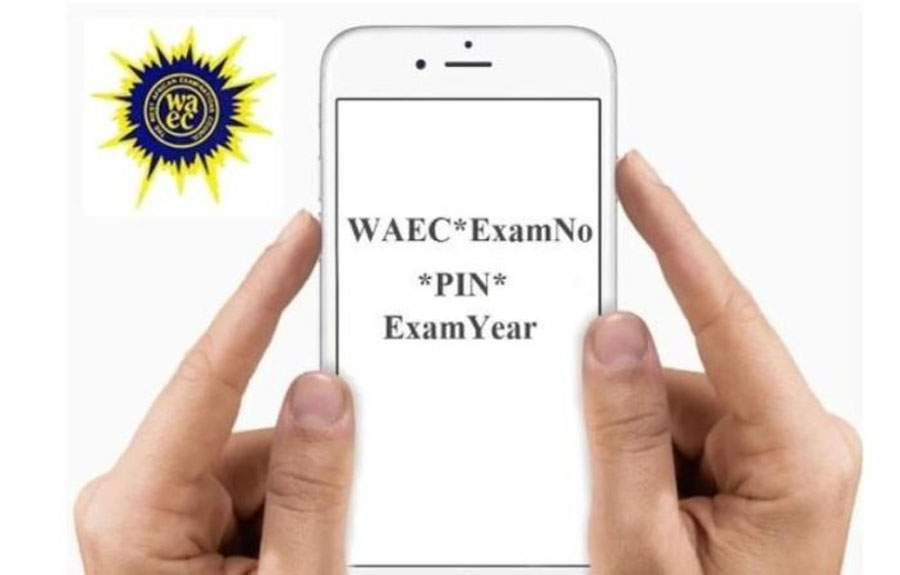
WAEC[Examination Number][PIN]2026
Example:WAEC4123456789*123456789012*2026 -
Send the message to 32327.
-
Standard SMS charges apply.
BREAKING: 61.54% Pass Rate as WAEC Releases 2026 WASSCE Results – How to Check Results
Education
UNIOSUN ranks third among state universities in latest Webometrics ranking

UNIOSUN ranks third among state universities in latest Webometrics ranking
Osun State University, Osogbo, has emerged as the third-best state-owned university in Nigeria in the July 2026 edition of the Webometrics Ranking of World Universities.
The institution also secured the 19th position among all universities in Nigeria, according to the latest ranking released by Webometrics, an international university ranking platform that assesses higher institutions based on their web presence, research visibility and academic impact.
In a statement made available on Monday, the university said the achievement reflects its sustained investment in quality teaching, impactful research, innovation and digital visibility.
The university added that it was also ranked 17th in Nigeria in the 2026 uniRank National University Ranking, another international assessment of higher education institutions.
Reacting to the development, the management described the rankings as a reflection of the commitment of its governing council, management, academic and non-academic staff, students and alumni to advancing the institution’s vision of becoming a globally competitive university.
READ ALSO:
- FRSC Boss: Tinubu’s CNG, EV Drive Creating Jobs, Attracting Investment
- Lanre Shittu Motors Leads Drive to Steer Lagos Students Away from Crime, Donates books to public Schools
-
State police: Shari’ah Council urges caution, wider consultations
According to the university, the recognition will further strengthen its resolve to sustain excellence in teaching, research, community service and international collaborations.
Webometrics, published by the Cybermetrics Lab of the Spanish National Research Council, releases its rankings twice a year, evaluating universities based on indicators such as research excellence, openness, visibility and the impact of their online academic content.
Established by the Osun State Government in 2006, UNIOSUN has continued to expand its academic programmes, research output and international partnerships, earning recognition among Nigeria’s leading public universities.
UNIOSUN ranks third among state universities in latest Webometrics ranking
Auto
Lanre Shittu Motors Leads Drive to Steer Lagos Students Away from Crime, Donates books to public Schools

Lanre Shittu Motors Leads Drive to Steer Lagos Students Away from Crime, Donates books to public Schools
Lanre Shittu Motors is expanding its investment in youth development beyond skills acquisition, launching a major education campaign aimed at steering thousands of Lagos secondary school students away from financial crime through value-based learning and character development.
In partnership with the author of Clean Hands, Bright Future: A Youth Guide to Avoiding Financial Crime in Africa, the foremost automotive company has begun distributing the book to 200 public secondary schools across Lagos State, with more than 150 schools already reached in the first phase of the initiative.
The campaign, which began at Kuramo Senior College and Victoria Island Senior Secondary School, seeks to equip students with a clear understanding of the dangers of fraud, cybercrime, identity theft, examination malpractice and other financial crimes, while promoting integrity, hard work, ethical leadership and responsible citizenship.
Author of the book, Mr. Adedayo Aluko, said the project was inspired by the alarming rise in financial crime among young people and the need to intervene early through education.
“The rate of financial crime among youths is becoming increasingly alarming. We believe education is one of the most effective tools to prevent crime. The message of the book is simple: crime does not pay, and with clean hands, every young person can build a brighter future,” Aluko said.
He explained that the initiative goes beyond book distribution, with plans to return to beneficiary schools for interactive enlightenment sessions and career talks to reinforce the message of integrity.
According to him, the book simplifies over 100 forms of financial crimes, helping students understand offences that many young people unknowingly become involved in. Rich illustrations and practical examples were deliberately included to engage students and make the lessons memorable.
Aluko commended Lanre Shittu Motors for supporting the project, describing the Managing Director of the company, Mr Taiwo Shittu, as a long-standing advocate of youth empowerment and education.
READ ALSO:
- UNIOSUN ranks third among state universities in latest Webometrics ranking
- State police: Shari’ah Council urges caution, wider consultations
“Mr. Taiwo Shittu believes there is no shortcut to success. During the flag-off, he personally handed copies of the book to students and encouraged them to embrace hard work, education and skill acquisition as the true pathways to success.
Speaking on the initiative, the LSM MD, Mr. Taiwo Shittu, said the company’s decision to sponsor the distribution reflects its belief that preventing crime begins with shaping values at an early age.
“Young people are the future of our nation. By investing in character development and educating students about the consequences of financial crime, we are helping to build responsible citizens who will contribute positively to society.
“At Lanre Shittu Motors, we believe integrity, education and hard work remain the surest foundations for lasting success,” he said.
Shittu noted that the company’s strong culture of corporate social responsibility was inherited from its founder and his father, the late Alhaji Rasak Olanrewaju Shittu.
 He said the late automotive icon instilled in his children and employees the enduring values of compassion, community service and giving back to society, a legacy that continues to shape Lanre Shittu Motors’ investment in education, youth development and other impactful social initiatives.
Published in May 2026 and endorsed by the Chartered Institute of Bankers of Nigeria (CIBN), Clean Hands, Bright Future, has been described as a practical guide for young people navigating increasing social and economic pressures.
The ongoing distribution programme underscores Lanre Shittu Motors’ commitment to corporate social responsibility and its determination to inspire a generation that chooses integrity over shortcuts and honest enterprise over criminality.
Lanre Shittu Motors has over the years maintained a strong record of investing in youth development through skills acquisition and capacity building initiatives.
The company has consistently provided opportunities for young Nigerians to acquire technical and vocational skills in automotive engineering, vehicle maintenance and related fields through internship, apprenticeship and industry training programmes.
It has also supported educational and youth empowerment initiatives aimed at preparing young people for productive careers, reinforcing its belief that equipping youths with employable skills remains one of the most effective ways to reduce unemployment, discourage crime and promote sustainable national development.
Lanre Shittu Motors Leads Drive to Steer Lagos Students Away from Crime, Donates books to public Schools
-

 News2 days ago
Oloyede clears air on JAMB’s ₦36m ‘snake swallowed money’ controversy
-

 News2 days ago
475 Police Officers Recalled After Controversial Retirement, Ordered for Mandatory Induction
-

 metro2 days ago
MURIC Hails Oloyede as ‘Game Changer,’ Says He Proved Muslims Can Excel in Public Office
-

 Sports2 days ago
Nigeria Shines in Commonwealth Games, Tops Africa with 10 Gold Medals
-

 Auto2 days ago
Lanre Shittu Motors Leads Drive to Steer Lagos Students Away from Crime, Donates books to public Schools
-

 Education2 days ago
UNIOSUN ranks third among state universities in latest Webometrics ranking
-

 metro2 days ago
DSS, Vigilantes Ambush, Kill Notorious Bandit Kingpin Idi Abasu Aiki, Over 60 Fighters in Katsina
-
 Auto2 days ago
FRSC Boss: Tinubu’s CNG, EV Drive Creating Jobs, Attracting Investment