

metro
Court Orders Wike to Respond to Tonye Cole’s ₦40bn Defamation Suit
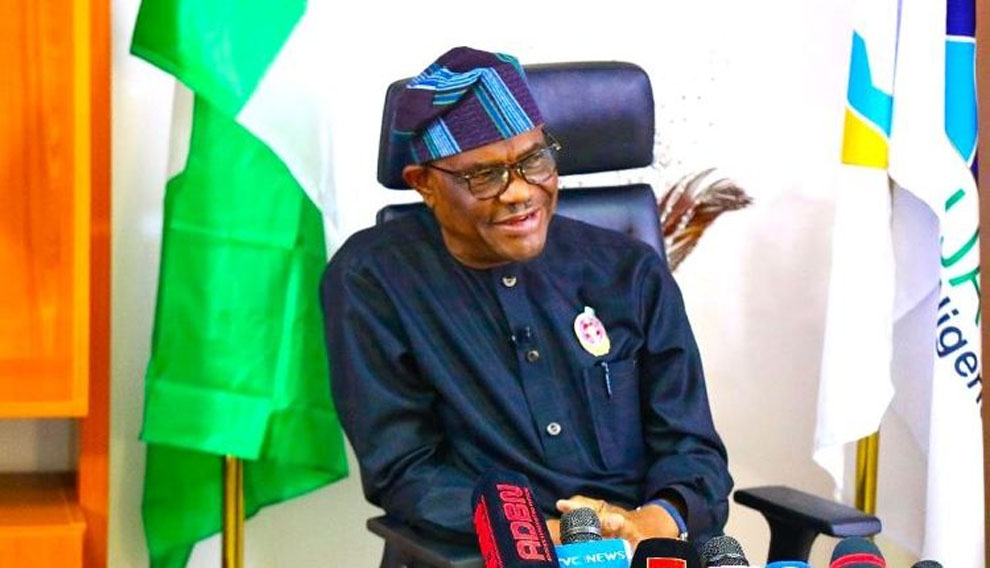
Court Orders Wike to Respond to Tonye Cole’s ₦40bn Defamation Suit
An Abuja High Court has directed Nyesom Wike, Minister of the Federal Capital Territory (FCT), to formally respond to a ₦40 billion defamation suit filed against him by Tonye Cole, a former governorship candidate of the All Progressives Congress (APC) in Rivers State.
Channels Television, owned by Channels Incorporated Limited, is also listed as a defendant in the case.
According to a court notice issued on Friday, the matter—Suit No. CV/4502/25—is scheduled for mention on December 9, 2025, before Justice M. A. Hassan of Court 33.
Cole’s legal team, led by Senior Advocate Jibrin Okutepa, stated that the lawsuit was initiated after Wike and Channels TV allegedly failed to act on a pre-action notice and demand letter dated October 8.
READ ALSO:
- CAC to Begin Nationwide Crackdown on Unregistered PoS Operators by January 2026
- Studies show menopause can reduce women’s memory, concentration by 40%
- South Africa Horror: Gunmen Kill 11 in Pretoria Hostel Shebeen Attack
The suit stems from comments made by Wike during a live interview on Channels Television’s “Politics Today” on September 18, which Cole describes as false, malicious, and damaging to his personal, professional, and public reputation.
Court documents show that Wike’s remarks appeared to link Cole to alleged financial impropriety and the mishandling of assets connected to Rivers State gas operations and the Olympia Hotel. Cole argues that the statements portrayed him as dishonest and involved in wrongdoing, thereby harming his national and international standing.
Cole claims the broadcast caused him humiliation, mental distress, and severe reputational damage.
In addition to the ₦40 billion damages, Cole is demanding ₦500 million for litigation costs and a court declaration that the comments were defamatory. He also seeks an order compelling Wike and Channels TV to retract the allegations, delete the broadcast from all platforms, and issue a public apology on Channels Television and in at least five national newspapers.
Furthermore, Cole is requesting a perpetual injunction restraining the defendants from making any further defamatory statements against him.
The court has given the defendants 21 days from the date of service to enter their appearance.
Court Orders Wike to Respond to Tonye Cole’s ₦40bn Defamation Suit








metro
From Pulpit to Ifá Shrine: Ex-Pastor Exposes ‘Deceit’ in Christianity, Embraces Yoruba Tradition
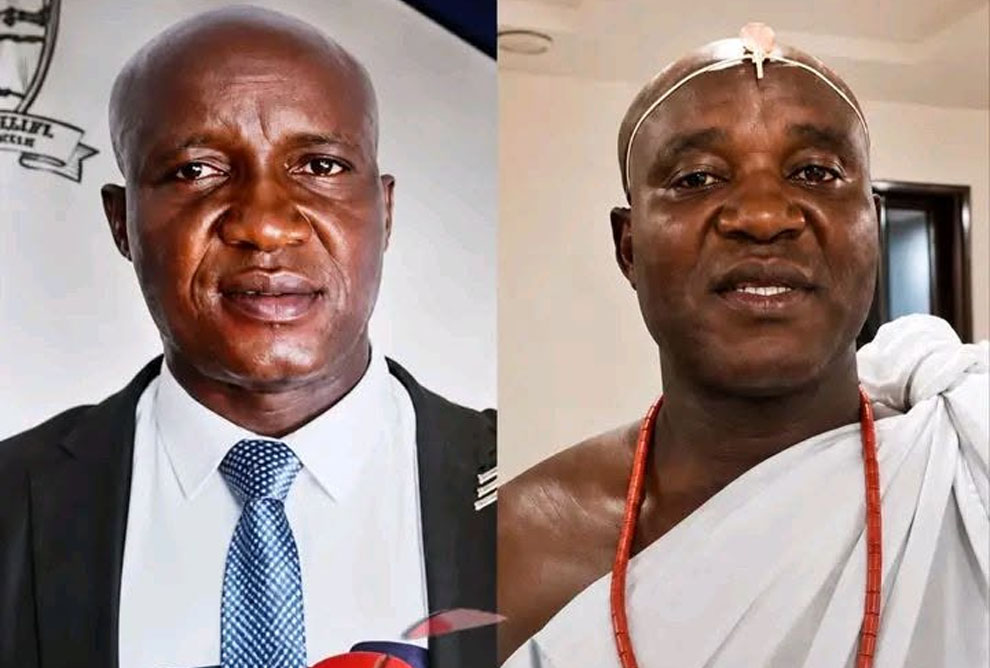
From Pulpit to Ifá Shrine: Ex-Pastor Exposes ‘Deceit’ in Christianity, Embraces Yoruba Tradition
After a two-year soul-searching journey, an Ondo State-based cleric has publicly abandoned his pastoral ministry to embrace Ìṣẹ̀ṣe, the traditional Yoruba spiritual practice, citing widespread deception among Christian leaders and contradictions in the Bible.
Olabanjo Felix, who once led the Image of God Evangelical and Prophetic Ministries in Ibaka, Oka Akoko, Ondo State, has officially transitioned from Christianity to become a Babalawo (Ifá priest). In a viral video that surfaced on Thursday, Felix announced his new spiritual identity as Ifawamiri Aworan Olodumare, declaring his allegiance to the indigenous Yoruba faith. The former pastor told Sunday PUNCH that his decision was not impulsive but the culmination of a two-year period of intense spiritual introspection. During this time, he became deeply troubled by what he perceived as contradictions within the Bible and what he described as the commercialisation and manipulation of Christianity by Nigerian pastors. He emphasised that he publicly announced his transition to stop people from continuing to address him as a pastor, stating that he could not accept a title that no longer reflected his beliefs.
Felix did not mince words in his criticism of the Christian faith as practised in Nigeria. He alleged that there is “no true pastor of the Bible in Nigeria,” with the exception of Pastor Gbile Akanni, and accused many church leaders of turning Christianity into a family business designed to enrich themselves and brainwash their congregations. He claimed that his deep understanding of the Bible, acquired through years of study, made him increasingly uncomfortable with the inconsistencies he found in the scriptures. Felix further alleged that many pastors who publicly condemn traditional religions secretly consult Ifá practitioners for divination, a hypocrisy he said he could no longer tolerate. His frustration, he explained, was not with God but with the institutionalised deception he witnessed, which ultimately drove him to seek spiritual authenticity elsewhere.
READ ALSO:
- Osun election: Adeleke widens lead as Oyinlola, Omisore lose polling units
- 2027: Atiku’s suit seeking Tinubu’s disqualification meets deadline, faces procedural hurdle
- APC Humiliates Aregbesola, Wins His Polling Unit in Osun Governorship Election
Before settling on Ifá, Felix revealed that he had seriously considered converting to Islam. He consulted a Muslim cleric who advised him to study the Quran, and he subsequently downloaded the Yoruba translation of the holy book. However, after reading it, he concluded that he found the same level of deception that had driven him away from Christianity. This realisation, he said, solidified his resolve to look inward toward his ancestral heritage, leading him to explore the traditional Yoruba spiritual system of Ifá. He began searching for genuine Ifá priests who could mentor him, determined to find a path that felt authentic and free from the manipulation he had experienced in the Abrahamic religions.
Felix’s search for guidance eventually led him to the Araba of Isararemọ, Oluṣẹgun Latunji Aifuwapẹ, whom he discovered on Facebook. He reached out to the revered traditional priest and expressed his intention to learn Ifá. Since joining the Araba’s spiritual community, Felix said he has been engaged in prayers, supplications, and the study of herbs and roots, which he described as potent and effective. He insisted that his practice is not fetish, as many outsiders assume, but rather a disciplined spiritual system focused on healing, destiny, and connection to the divine through the Orishas and ancestors. He noted that foreigners from around the world visit the Araba’s centre to learn about Ifá, a testament to the growing global interest in the tradition.
A significant factor in Felix’s decision to embrace Ifá was his personal experience with traditional herbs and roots. He said that his conviction was strengthened by witnessing their potency, which he contrasted with what he perceived as the empty rituals and ineffective prayers of modern Christianity. For Felix, the tangible results of traditional medicine and spiritual practices validated the Ifá system in a way that Christianity could not. He now views Ìṣẹ̀ṣe not as a primitive or backward belief system but as a sophisticated spiritual science that has sustained the Yoruba people for centuries, long before the arrival of colonial religions.
READ ALSO:
- Oyo Police Smash Human Parts Syndicate: 10 Arrested, Heart, Skull Recovered
- Heavy Security, Long Queues, Massive Turnout Mark Osun Governorship Election in Ede
- Protest in Osogbo Over Ballot Paper Shortage, Missing Voter Names
Felix’s public renunciation of Christianity has generated significant buzz on social media, with reactions sharply divided. Some online users have applauded his courage to follow his convictions and reconnect with his ancestral roots, while others have questioned the sincerity of his years in ministry. A number of commentators speculated that Felix may have always been a traditional practitioner in disguise, while others expressed sympathy for his former congregation, who had trusted his pastoral leadership. The viral video has also reignited broader conversations about the role of Christianity in Nigeria, the legacy of colonialism, and the growing movement of Nigerians returning to indigenous spiritual practices.
Felix’s story is part of a larger trend across the African diaspora, where individuals are increasingly rejecting foreign religions in favour of indigenous spiritual systems like Ifá, Vodun, and Candomblé. This movement is often framed as an act of decolonisation—a reclamation of identity, culture, and spirituality that was suppressed during the transatlantic slave trade and colonial era. For many, embracing Ifá is not merely a religious choice but a political and cultural statement about the importance of ancestral heritage and self-determination. Felix’s journey underscores this shift, as he described his transition as a homecoming to a faith that feels more authentic and aligned with his identity as a Yoruba man.
Now known as Ifawamiri Aworan Olodumare, Felix has fully embraced his new role as a Babalawo. He expressed gratitude to his mentor, the Araba of Isararemọ, for guiding him through the transition. While he acknowledged that his decision has attracted criticism, he remains firm in his conviction, stating that he cannot continue to live a lie. He said he will now dedicate his life to the practice and propagation of Ifá, focusing on healing, spiritual counselling, and the preservation of Yoruba cultural heritage. He also reiterated that his practice is transparent and open, in contrast to the hidden hypocrisy he claims to have witnessed in Christian circles.
Olabanjo Felix’s journey from Christian pastor to Ifá priest is a deeply personal and controversial one, reflecting broader tensions between tradition and modernity, faith and authenticity, and colonialism and cultural reclamation. While his allegations against Christianity have drawn sharp criticism from religious leaders, his story has resonated with many who feel disconnected from the faiths imposed on their ancestors. Whether viewed as a betrayal or a homecoming, Felix’s transition highlights the complex spiritual landscape of contemporary Nigeria and the enduring power of indigenous belief systems.
From Pulpit to Ifá Shrine: Ex-Pastor Exposes ‘Deceit’ in Christianity, Embraces Yoruba Tradition
PUNCH
metro
Oyo Police Smash Human Parts Syndicate: 10 Arrested, Heart, Skull Recovered
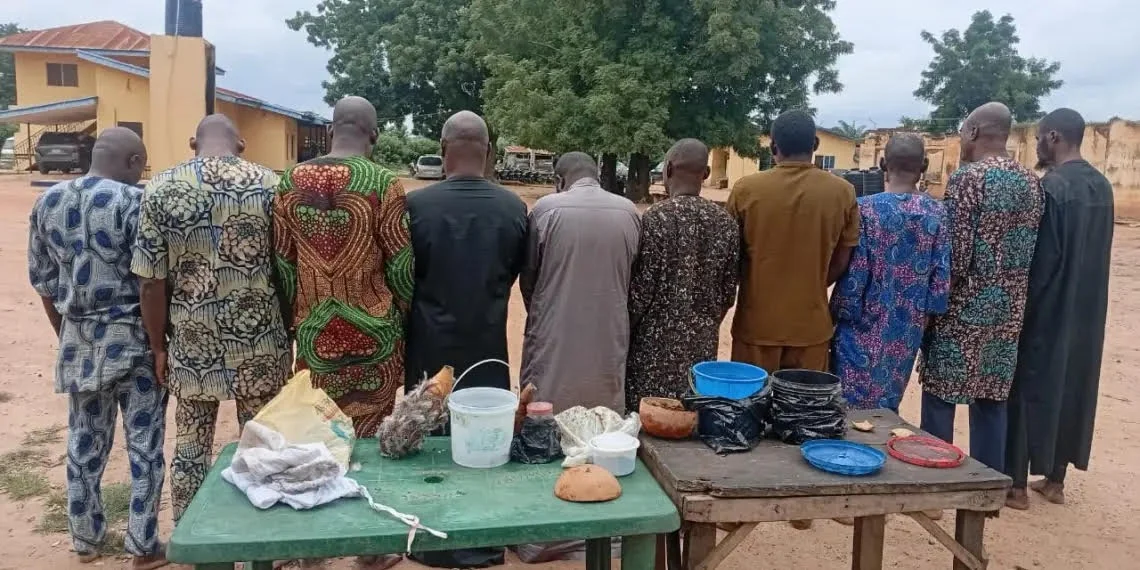
Oyo Police Smash Human Parts Syndicate: 10 Arrested, Heart, Skull Recovered
metro
Jowizaza’s Billionaire Father, Reverend Sister Regain Freedom After N1.5bn Ransom Demand
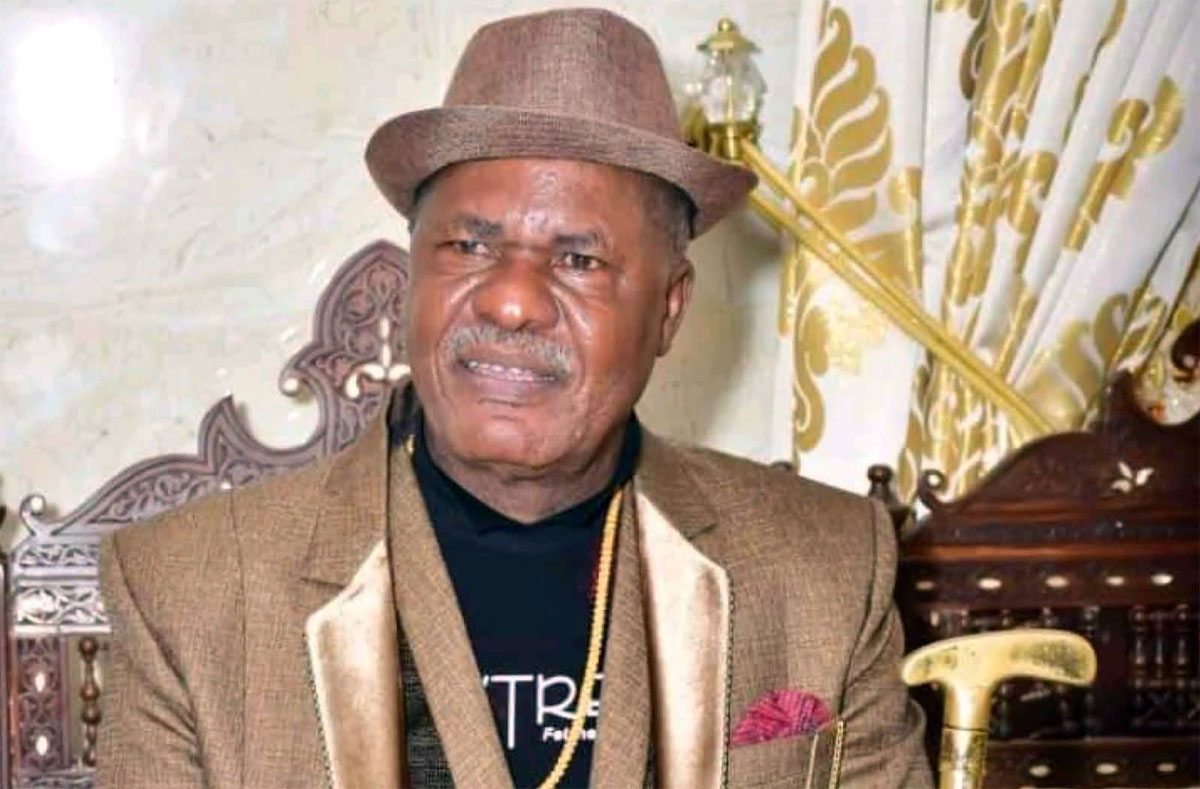
Jowizaza’s Billionaire Father, Reverend Sister Regain Freedom After N1.5bn Ransom Demand
Chief Sir Joseph Ebere Ezeokafor, the billionaire businessman and father of popular socialite Jowizaza, has regained his freedom alongside a Reverend Sister after spending several harrowing days in the custody of kidnappers in Anambra State. The Anambra State Police Command confirmed on Saturday, August 15, 2026, that the septuagenarian chairman of Jezco Group of Companies and the Reverend Sister, who were abducted by armed men at Ifite-Awka, Awka South Local Government Area, have been released and safely returned to their families.
Chief Ezeokafor was abducted in the early hours of Tuesday, August 4, 2026, while reportedly on his way to a prayer ground in Awka, Anambra State. He was travelling alone without any security personnel at the time of the incident, a practice his family described as a monthly routine, and his abduction had generated widespread concern across Anambra State and beyond, with security agencies coming under immense pressure to secure his release. The businessman was released late on Friday night and subsequently picked up by a family member near the boundary between Anambra and Enugu states, close to Ebenebe, near Awka. Described by a family member as an emerging location for kidnapping activities in the axis, the Ebenebe area has reportedly been where several victims have either been abducted or taken after being kidnapped elsewhere. Confirming the development, the Anambra State Police Public Relations Officer, SP Tochukwu Ikenga, said the command is currently taking necessary steps to establish the circumstances surrounding their release and obtain relevant information that will assist ongoing investigations and the identification of the perpetrators.
READ ALSO:
- [UPDATED] Osun Election: Police Arrest Lawmaker with 200 PVCs, 146 Suspected Electoral Mercenaries
- 2027 Hajj: NAHCON Announces N7.5m–N7.8m Fares, Sets September 26 Biometric Deadline
- Working in Canada Without a Permit: IRCC Warns of Serious Immigration Consequences
According to multiple reports, the abductors initially demanded N700 million from Ezeokafor’s family before allegedly increasing the ransom to N1.5 billion during negotiations. The family had reportedly accepted the initial N700 million demand as part of efforts to secure the businessman’s release, but sensing that there might be more money, the kidnappers subsequently raised their demand to N1.5 billion, after which they stopped further engagement with the family until their release on Saturday. A close family source claimed the family paid N1.5 billion to secure his release, though police have not officially confirmed whether any ransom was paid. The source told Punch that the family paid N1.5 billion for his release, with the kidnappers initially demanding N700 million, a figure which the victim’s family had accepted as part of efforts to secure their father’s release, but sensing some feelings that there may be more money, the kidnappers subsequently raised their demand to N1.5 billion, after which they stopped further engagement with the family until their release on Saturday. Although a police source had earlier confirmed to journalists during a police function in Awka on Friday that the family had paid the sum of N1.5 billion and was expected to be released soon, the police spokesperson declined to disclose whether ransom was paid.
READ ALSO:
- Osun Election: Davido Alleges Soldiers Tried to Stop Him from Entering State
- Indonesia Earthquake: Death Toll Rises to 38 as Rescue Teams Battle Landslides, Aftershocks
- Osun Election 2026: Police Allegedly Teargas Voters at Ife RAC Centre, Cart Away Election Materials
The businessman’s abduction sparked tension within the Ezeokafor family, with his eldest daughter, Blessing, publicly blaming her younger brother, Eberechukwu (Jowizaza), for making their father a target through his flamboyant lifestyle on social media. In a series of Facebook posts, Blessing accused Jowizaza of flaunting wealth on social media despite the family’s alleged financial struggles, claiming that his public display of wealth may have attracted kidnappers to their father and influenced them to demand a higher ransom. In her posts, Blessing wrote that her brother was the cause of the madness, saying social media noise when they don’t have that money, and that he uses audio money to make hoodlums think the money is available, imagining 1 billion. She further claimed the family owes banks over N40 billion in debts and insisted that the wealth projected online was “audio money.”
The Commissioner of Police, Anambra State Command, CP Nnanna Oji Ama, commended the safe return of the victims and directed intensified intelligence-led operations and a manhunt for those responsible for the abduction. The ongoing operation involves the Nigeria Police, Department of State Services, the military, Nigeria Security and Civil Defence Corps, Agunechemba security operatives and other relevant security agencies, and the command appealed to members of the public to remain vigilant and provide credible information that could assist security agencies in apprehending the perpetrators. Following his father’s release, Jowizaza took to Instagram on Saturday, August 15, 2026, to share his first public reaction with the caption “Forever grateful 🙏,” and the post, which gathered thousands of reactions within an hour, drew an outpouring of support from celebrities including Obi Cubana, Kiddwaya, and Cubana Chiefpriest, who flooded the comments with prayers and thanksgiving.
Jowizaza’s Billionaire Father, Reverend Sister Regain Freedom After N1.5bn Ransom Demand
-

 News3 days ago
FG to Attach 300 NYSC Corps Members to CNG Workshops for Skills Training
-
 metro3 days ago
Seven Miners Killed in Plateau Mining Pit Collapse, Renewing Urgent Calls for Safety Reform
-

 International3 days ago
Iran Had Detailed Intel on Trump’s Location Before Secret Turkey Escape
-
 Politics3 days ago
INEC reprints Osun ballot papers, result sheets, includes SDP candidate
-

 News23 hours ago
UK Opens 2026/27 Commonwealth Fellowship Applications for Nigerians – How to Apply
-

 Education2 days ago
JAMB Aggregate Score 2026/2027: How Nigerian Universities Calculate Your Admission Chances
-
 Politics2 days ago
Osun Governorship: Accord Party Faction Withdraws Support for Adeleke, Endorses APC’s Oyebamiji
-
 Sports3 days ago
WAFCON: Chawinga sisters fire Malawi into historic final