

News
Presidency Denies Altering Tax Laws as Reps Probe Alleged Changes to Tinubu-Signed Bills
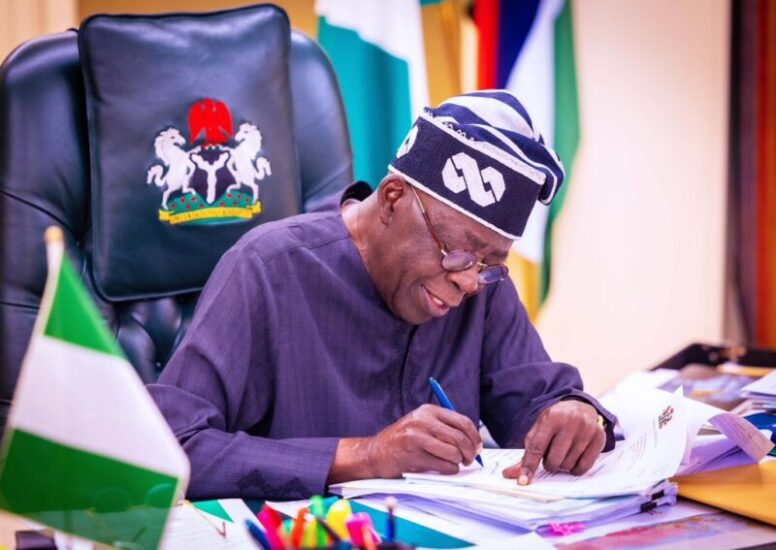
Presidency Denies Altering Tax Laws as Reps Probe Alleged Changes to Tinubu-Signed Bills
The Presidency has denied any involvement in the alleged alteration of Nigeria’s new tax laws, insisting that any discrepancies between versions of the legislation are strictly a matter for the National Assembly.
Responding to media inquiries on Tuesday, the Minister of Information and National Orientation, Idris Mohammed, dismissed claims of executive interference in the tax law-making process, following accusations by lawmakers that provisions of the bills were altered after passage.
Last week, Abdulsammad Dasuki (PDP, Sokoto) alleged that the officially gazetted tax laws differed from what lawmakers debated and approved, prompting the House of Representatives to set up a seven-member investigative committee. Amid growing public concern, the House is expected to deliberate on the matter at plenary today, while the Senate convenes separately to consider constitutional amendments and related issues.
Reacting to claims that the tax laws signed by President Bola Tinubu were inconsistent with those passed by the legislature, Idris said the issue falls squarely within the legislature’s remit.
“To be honest with you, I have not seen the two versions. What I know is that the executive presented a document, it was processed by the National Assembly, passed, returned, and signed. If the National Assembly has identified discrepancies and has set up a committee, we should allow that process to run,” he said.
READ ALSO:
- Akpabio Raises Hope for Ibadan State Creation During Visit to Olubadan
- Landlord Stabbed to Death Over N1,500 Electricity Bill in Delta Community
- Court Dismisses KWAM 1’s Bid to Stop Awujale Selection Process in Ogun
The minister added that, from the Federal Government’s standpoint, “there is only one version of the tax document,” noting that clarity would emerge after lawmakers conclude their review.
Similarly, Taiwo Oyedele, Chairman of the Presidential Fiscal Policy and Tax Reforms Committee, urged the National Assembly to thoroughly investigate the alleged inconsistencies. Speaking on Channels Television, Oyedele cautioned against drawing conclusions without access to the official, clerk-certified versions of the bills transmitted to the President.
“Before you can say there is a difference between what was gazetted and what was passed, we don’t even have what was passed. Only the lawmakers can say authoritatively what they sent,” he said.
Oyedele also addressed controversy surrounding Section 41(8), which reportedly introduced a 20 per cent security deposit, clarifying that the provision appeared in a draft but not in the final gazette. He stressed that documents circulating in the media may have predated the conclusion of legislative work.
Meanwhile, pressure has mounted from opposition figures, including former Vice President Atiku Abubakar and Labour Party presidential candidate Peter Obi, as well as civil society groups, calling for a suspension of the tax laws’ implementation.
President Tinubu recently signed four major tax reform bills into law—the Nigeria Tax Act, Nigeria Tax Administration Act, Nigeria Revenue Service (Establishment) Act, and Joint Revenue Board (Establishment) Act—describing them as the most comprehensive overhaul of Nigeria’s tax system in decades. The laws are scheduled to take effect on January 1, 2026.
However, the Reps committee has alleged that key provisions were inserted, deleted or modified after passage by both chambers, raising serious constitutional and institutional concerns. According to the panel, new coercive and fiscal powers—including arrest powers, garnishee proceedings without court orders, compulsory US dollar computations, and limits on appeal rights—appeared in the final acts without legislative approval, while several oversight and accountability mechanisms approved by parliament were removed.
The committee warned that such changes go beyond clerical corrections, stressing that Sections 4 and 58 of the 1999 Constitution vest exclusive law-making powers in the National Assembly. “What the National Assembly did not pass cannot become law,” the panel said, describing any post-passage alteration as unconstitutional and legally void.
Lawmakers are expected to debate the findings, consider corrective legislation, and possibly summon officials involved in the enrolment and certification process. Beyond legal risks, the report cautioned that unresolved discrepancies could undermine investor confidence, financial stability, and democratic governance.
Presidency Denies Altering Tax Laws as Reps Probe Alleged Changes to Tinubu-Signed Bills








News
FG Targets 95% NIN Coverage by December 2026
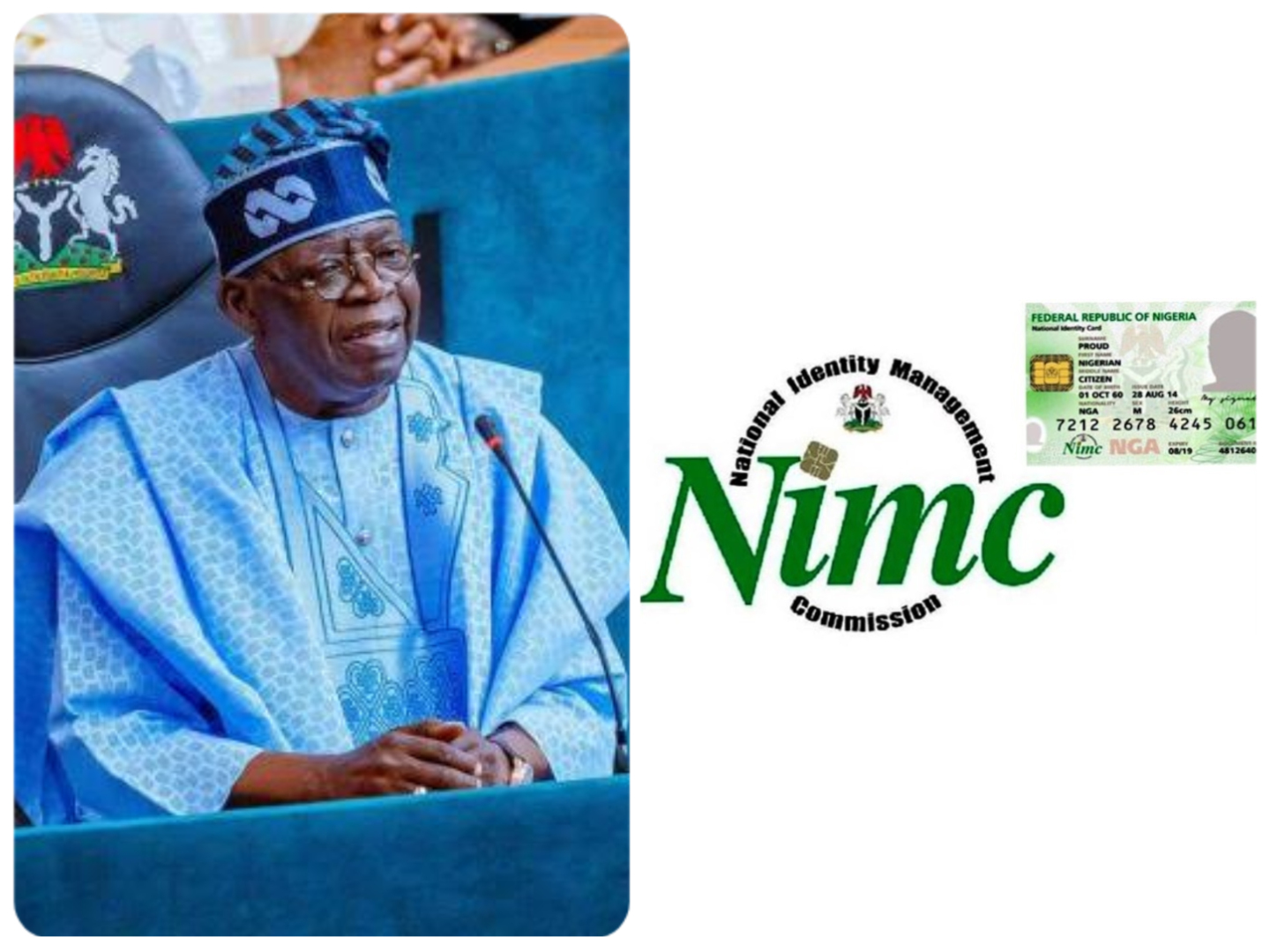
FG Targets 95% NIN Coverage by December 2026
The Federal Government is targeting 95 per cent National Identification Number (NIN) coverage nationwide by December 2026 as it expands Nigeria’s digital identity system.
President Bola Tinubu announced the target during the 2026 National Identity Day celebration in Abuja, where he was represented by Chief of Staff Femi Gbajabiamila.
The President said NIN enrolment had risen to about 142 million, up from more than 80 million recorded when his administration came into office.
To reach the new target, the government plans to expand registration through ward-level enrolment, mobile registration initiatives and licensed agents. Reports from the event said free enrolment is being extended to all 8,809 wards across the country.
Identity System for Digital Economy
Tinubu said the government wants to build an identity infrastructure that can support Nigeria’s growing digital economy.
He said a secure national identity could make it easier to access services while supporting areas such as digital banking, healthcare, transportation and government programmes.
The President also said the expansion must go hand in hand with safeguards for citizens’ privacy and dignity.
Beyond enrolment numbers, he said the government was working towards a more connected digital public system, including electronic health records, e-transport services and a more coordinated national data architecture.
The NIMC’s ongoing expansion therefore aims not only to register more Nigerians and legal residents, but also to make the identity system a key part of how people access digital and public services.
FG Targets 95% NIN Coverage by December 2026
Education
25 Universities, Teaching Hospitals Get Solar Power Under REA Programme

25 Universities, Teaching Hospitals Get Solar Power Under REA Programme
Twenty-five federal tertiary institutions have been connected to solar electricity under the Rural Electrification Agency’s (REA) Energizing Education Programme.
The REA Managing Director, Abba Aliyu, disclosed this during the commissioning of a 3MW captive solar hybrid power project at Yakubu Gowon University, Abuja.
According to Aliyu, the programme covers 22 federal universities and three affiliated teaching hospitals and has deployed more than 100MW of clean energy.
He said the initiative now benefits over 300,000 students and 50,000 academic and administrative staff.
Aliyu added that the new 3MW facility would power key university facilities, including lecture halls, laboratories, ICT systems, administrative buildings and campus lighting.
Meanwhile, Minister of Power Joseph O. Tegbe said reliable electricity was essential to supporting teaching, research, healthcare and digital services in universities.
He stressed that the long-term performance of the solar projects would be more important than their commissioning.
Vice-Chancellor of Yakubu Gowon University, Prof. Hakeem Babatunde Fawehinmi, also said dependable electricity was critical to the institution’s academic and research activities.
25 Universities, Teaching Hospitals Get Solar Power Under REA Programme
News
OAU Investigates Death of Final-Year Student as Police Begin Probe
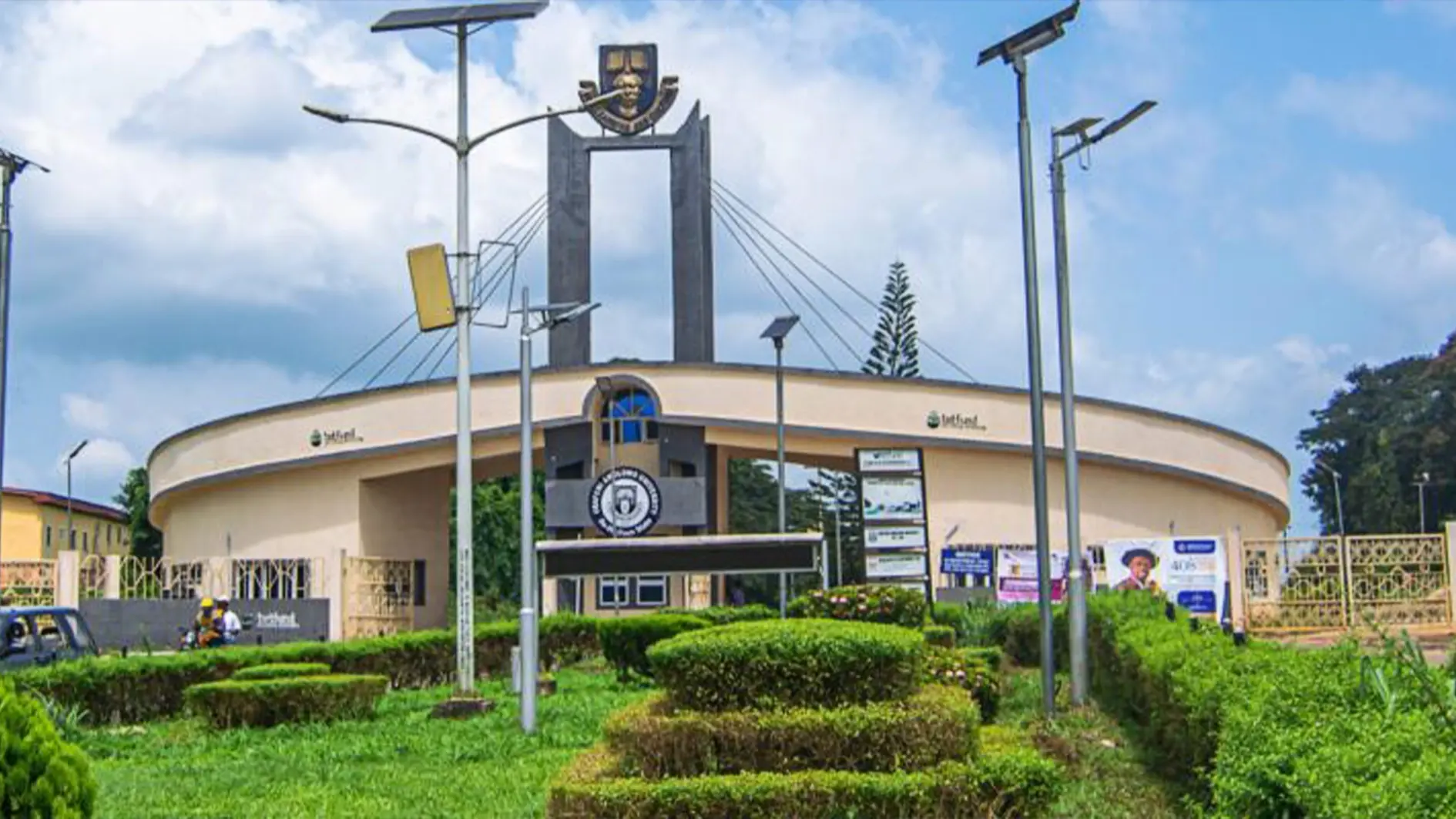
OAU Investigates Death of Final-Year Student as Police Begin Probe
Obafemi Awolowo University (OAU), Ile-Ife, Osun State, is investigating the death of a final-year student of the institution.
The student, Oluwole Oluwosegun, was studying Materials Science and Engineering at the university.
According to the university’s Public Relations Officer, Olarewaju Abiodun, the incident occurred on Tuesday afternoon at the student’s off-campus residence around the Damico area of Ooni Layout, Ile-Ife.
After receiving the report, the university’s Quick Response and Security (QRS) Team went to the location. The team also contacted the Nigeria Police, after which officers from the ‘A’ Division in Moore, Ile-Ife, joined them at the scene.
The university later took the student to its Health Centre, where a medical doctor confirmed his death.
READ ALSO:
- 57-Year-Old Man Arrested Over Sexual Abuse of Stepdaughter in Edo
- US-Based Nigerian Lawyers Disbarred: Full List of Fraud, Theft and Misconduct Cases
- Katsina Police Rescue Two Kidnapped Women, Arrest Suspected Kidnappers
Police Begin Investigation
Following the incident, university authorities handed relevant information and items recovered from the scene to the police to support their investigation.
The police have since begun inquiries into the circumstances surrounding the student’s death.
Meanwhile, the university said it had informed the appropriate student affairs authorities to provide necessary follow-up, particularly regarding the welfare and emotional support of students affected by the incident.
Vice-Chancellor Professor Simeon Bamire also expressed condolences to the student’s family, friends, classmates and colleagues.
The university further encouraged students facing severe emotional distress, relationship difficulties, financial pressure or other personal challenges to seek help from trusted people and available university support services.
Professor Bamire reaffirmed the institution’s commitment to the welfare of its students and staff, stressing that no student should feel they must face overwhelming difficulties alone.
OAU Investigates Death of Final-Year Student as Police Begin Probe
-

 Politics3 days ago
2027: Northern Lecturers Back Tinubu, ASUU Disowns Endorsement
-

 metro3 days ago
Police Arrest Mother Over Alleged Brutal Abuse of 7-Year-Old Girl in Anambra
-

 Sports2 days ago
‘I Was Never the Chosen One’ — Dembele Responds to Mbappe
-

 International1 day ago
Islamic Council Condemns Attempted Attack on Holy City of Mecca
-

 Education2 days ago
JAMB Moves 2027 UTME Time — Here’s What Candidates Need To Know
-

 metro2 days ago
Lagos Power Outage: Ikeja Electric Blames TCN as Businesses, Homes Groan
-
 News1 day ago
Keep Politics Out of My Office — Ogbomoso Grand Chief Imam Warns Politicians, Bloggers
-
 Politics2 days ago
2027: APC Governors Reject Wike’s Rainbow Coalition, Insist on Party Loyalty