

Health
Brain Drain Deepens as 16,156 Nigerian Nurses Secure UK Licences Since 2017

Brain Drain Deepens as 16,156 Nigerian Nurses Secure UK Licences Since 2017
No fewer than 16,156 Nigerian-trained nurses and midwives have been licensed to practise in the United Kingdom between 2017 and September 30, 2025, according to latest data from the UK Nursing and Midwifery Council (NMC).
The figure, obtained from the NMC register, underscores the deepening brain drain in Nigeria’s healthcare sector, popularly referred to as “japa”, as skilled professionals continue to migrate in search of better pay, working conditions and career opportunities.
In an email response, the NMC, which regulates nurses and midwives in the UK, confirmed:
“As of 30 September 2025, there were 16,156 nurses on the register who were educated in Nigeria.”
The data shows a steady rise in migration. As of March 31, 2025, the number stood at 15,421, representing a 4.8 per cent increase within six months. Nigeria ranked as the third-highest source of foreign-trained nurses in the UK, behind India and the Philippines, according to the NMC’s March 2025 report.
READ ALSO:
- Sheikh Gumi Drags Two to Court Over Alleged Fake Threat Against Defence Minister
- Lagos Fire Service Battles Blaze at 25-Storey Great Nigeria Insurance House
- AFCON 2025: Tanzania Coach Gamondi Praises Players Despite 2–1 Defeat to Nigeria
Although international recruitment into the UK slowed across major source countries, including Nigeria, India and the Philippines, the report noted that the increase in UK-trained nurses has been too slow to offset the decline, resulting in slower overall growth on the NMC register.
The impact of this migration is being strongly felt at home. The 2025 Nigeria Health Statistics report, released by the Federal Ministry of Health and Social Welfare, revealed that 43,221 healthcare professionals—including doctors, nurses, pharmacists and medical laboratory scientists—left Nigeria between 2023 and 2024.
Specifically, the report showed that over 23,000 Nigerian nurses and midwives migrated abroad in 2024 alone. Their preferred destinations were the United States (8,613), United Kingdom (7,463), Canada (5,603), Saudi Arabia (1,231) and Ireland (989).
Highlighting the scale of the crisis, the Minister of State for Health and Social Welfare, Dr. Iziaq Salako, said Nigeria’s doctor-to-population ratio stands at 1:5,000, far below the World Health Organisation (WHO) recommendation of 1:600, while the nurse-to-population ratio is about 1:2,000, compared to the recommended 1:300.
Salako said the Federal Government is working to address the shortfall through strengthening primary healthcare, expanding the Health Workforce Registry, increasing training quotas, and implementing retention policies aimed at slowing the tide of healthcare migration.
Brain Drain Deepens as 16,156 Nigerian Nurses Secure UK Licences Since 2017









Health
Unpaid arrears: Resident doctors threaten total nationwide strike
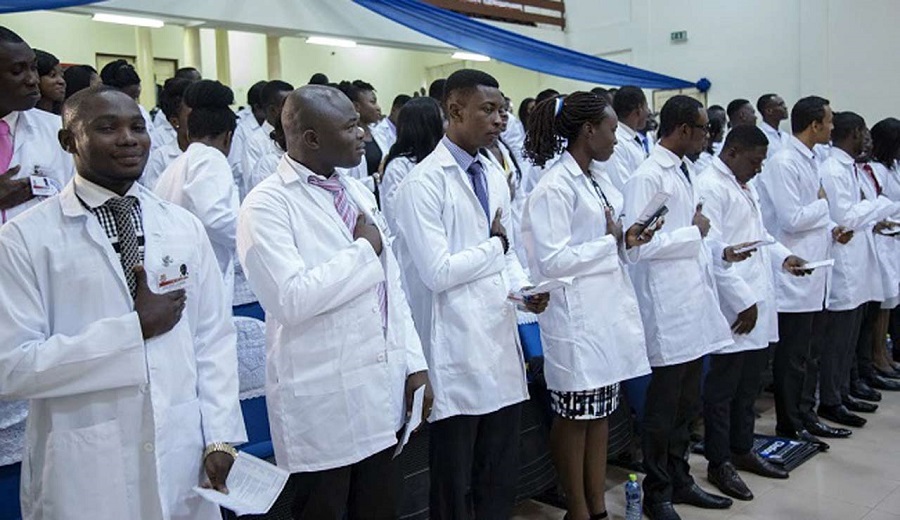
Unpaid arrears: Resident doctors threaten total nationwide strike
The Nigerian Association of Resident Doctors (NARD) has threatened to begin a nationwide indefinite strike from August 10, 2026, if the Federal Government fails to substantially address outstanding demands concerning salary arrears, welfare and working conditions.
The association issued the fresh strike notice after its National Executive Council (NEC) meeting held in Gombe State from July 26 to July 31, where members reviewed previous agreements with the Federal Government and assessed the state of healthcare delivery across the country.
Speaking after the meeting, NARD President, Dr. Mohammad Usman Suleiman, said the association was dissatisfied with what it described as the slow pace of implementation of agreements reached with the government despite months of negotiations and repeated engagements.
Suleiman said NARD had extended its previous strike ultimatum on four occasions to give the Federal Government more time to resolve the outstanding issues. However, he said several commitments had yet to be fulfilled.
The association warned that resident doctors across Nigeria would commence a total and indefinite industrial action if the government failed to substantially address the demands before the August 10 deadline.
Among the key demands is the immediate payment of outstanding arrears linked to the 25–35 per cent CONMESS salary adjustment, as well as 19 months of unpaid professional allowance arrears, promotion arrears and outstanding salaries owed to doctors in several federal health institutions.
NARD identified several facilities where some doctors are affected by unresolved salary and welfare concerns. The institutions include the University of Health Sciences Teaching Hospital, Okuki; Federal Medical Centre, Owo; Obafemi Awolowo University Teaching Hospitals Complex, Ile-Ife; University of Uyo Teaching Hospital; Federal University Teaching Hospital, Owerri; Alex Ekwueme Federal University Teaching Hospital, Abakaliki; and Federal Medical Centre, Makurdi.
The association also raised concerns over the safety of doctors and other healthcare workers, citing reports of assault, harassment, intimidation and attacks on medical personnel while performing their duties.
READ ALSO:
- IGP Redeploys Osun CP to Force Headquarters Ahead of August 15 Governorship Election
- Where Will Peter Obi’s Votes Come From? I Can’t See It – Keyamo Predicts Tinubu’s Landslide Victory
- Obi Must Apologise, Pay ₦25,000 or Face FAAN Action — Keyamo Issues Ultimatum
NARD warned that continued attacks on healthcare workers could worsen the shortage of medical personnel and further affect healthcare services, particularly in public hospitals already facing staffing and infrastructure challenges.
The association called on the Federal Government to establish a National Healthcare Workers Assault Prevention and Response Protocol and urged the National Assembly to pass legislation that would criminalise attacks on healthcare personnel and strengthen protections for health workers.
On the 2026 Medical Residency Training Fund, NARD acknowledged the Federal Government’s release of the fund but insisted that resident doctors who were excluded from the initial disbursement should be identified and paid without further delay.
The association said delays in accessing the training fund could affect the professional development of resident doctors and create additional financial pressure during their medical training.
NARD also expressed concern over the welfare of house officers, citing prolonged salary delays, unpaid entitlements and challenges relating to internship placement, documentation and onboarding.
According to the association, some newly employed doctors begin work and continue for several weeks or months before receiving their first salaries, a situation it said creates financial hardship and affects morale.
The doctors further demanded the immediate conclusion and implementation of the Medical and Health Workers Collective Bargaining Agreement.
They also called for urgent measures to address excessive workload, prolonged call-duty hours and shortages of healthcare workers in public hospitals.
NARD urged the Federal Ministry of Health and Social Welfare to intervene in the lingering industrial dispute involving resident doctors at the Lagos University Teaching Hospital (LUTH) and ensure that outstanding welfare concerns are resolved.
The association also called on the Federal Government and state governments to increase investment in the health sector through improved funding, rehabilitation and expansion of healthcare facilities, modern medical equipment, reliable electricity supply and the recruitment and retention of healthcare professionals.
According to NARD, stronger investment in healthcare infrastructure and human resources is necessary to improve access to quality medical services and support the implementation of universal health coverage across Nigeria.
The association also appealed to the Federal Capital Territory Administration, the Kaduna State Government and the management of affected federal tertiary health institutions to resolve outstanding salary, welfare and training issues involving resident doctors.
NARD linked many of the challenges facing Nigeria’s healthcare system to the increasing migration of doctors abroad in search of better pay, improved working conditions and stronger career opportunities.
The association said more than 16,000 Nigerian doctors had left the country within the last three to four years, warning that the continued loss of medical professionals could place additional pressure on the country’s healthcare system.
According to NARD, the number of doctors leaving Nigeria is now believed to be higher than the number graduating annually from the country’s medical schools.
The association warned that the continued migration of doctors, combined with inadequate recruitment, delayed payments and unresolved welfare concerns, could further increase workloads for healthcare workers who remain in the country.
NARD said it remained open to dialogue but stressed that the Federal Government must take concrete steps before August 10 to prevent a disruption of healthcare services in public hospitals nationwide.
If the strike proceeds, it could affect medical services in federal and state hospitals where resident doctors play major roles in patient care, emergency services, clinical training and the day-to-day operations of healthcare facilities.
Unpaid arrears: Resident doctors threaten total nationwide strike
Health
FG expands emergency healthcare services to 34 states

FG expands emergency healthcare services to 34 states
The Federal Government (FG) has expanded the National Emergency Medical Service and Ambulance System (NEMSAS) to 34 states, in a major push to improve emergency healthcare, strengthen intensive and critical care services, and accelerate progress towards Universal Health Coverage (UHC) across Nigeria.
The expansion was announced by the Minister of State for Health and Social Welfare, Dr. Iziaq Salako, during the opening of the 11th Annual Scientific Conference and Annual General Meeting of the Intensive and Critical Care Society of Nigeria (I-CCSN) in Abuja.
Speaking on the conference theme, “Sustainable Financing for Intensive Care in Public Hospitals in Nigeria,” Salako described emergency and intensive care as essential pillars of a resilient healthcare system, saying timely access to quality treatment saves lives, reduces preventable deaths and protects families from the devastating financial impact of critical illnesses.
According to a statement issued by the ministry’s Assistant Director of Information and Public Relations, Ado Bako, the minister said the expansion of NEMSAS from its pilot phase in the Federal Capital Territory (FCT) to 34 states represents one of the Federal Government’s flagship health sector reforms, with efforts already underway to extend the programme to all 36 states and the FCT.
The National Emergency Medical Service and Ambulance System (NEMSAS) was established to provide a coordinated national emergency response by ensuring the rapid evacuation and transportation of critically ill or injured patients to appropriate healthcare facilities. The initiative supports victims of road traffic crashes, maternal emergencies, medical complications, disasters and other life-threatening situations that require urgent intervention.
READ ALSO:
- Defence minister orders troops to shoot terrorists without waiting for orders
- US prosecutors, FBI investigate Argentine FA over alleged money laundering, fraud
- Properties Razed as Yoruba, Hausa Residents Clash in Ibadan
Salako said the Tinubu administration considers emergency and critical care a strategic investment in Nigeria’s healthcare system, noting that improved emergency response capacity is critical to achieving better health outcomes, strengthening national health security and reducing avoidable deaths.
He observed that delivering quality intensive care requires sustained investments in specialised infrastructure, fully equipped ambulances, intensive care units (ICUs), trauma centres, medical oxygen systems, modern diagnostic equipment, reliable electricity supply and highly trained healthcare professionals.
The minister also expressed concern over Nigeria’s continued dependence on out-of-pocket healthcare spending, warning that many households are forced into financial hardship because of the high cost of emergency treatment and intensive care.
To reduce this burden, he said the Federal Government is expanding health insurance coverage, strengthening sustainable healthcare financing and implementing reforms aimed at making emergency medical services more accessible and affordable.
According to Salako, the government is simultaneously implementing complementary programmes to improve maternal and newborn healthcare, strengthen referral systems and integrate ambulance services with intensive care units, operating theatres, rehabilitation centres and medical oxygen supply networks.
He added that lessons from the COVID-19 pandemic have prompted increased investment in medical oxygen infrastructure, with Pressure Swing Adsorption (PSA) oxygen plants already installed in several federal and state health facilities to improve oxygen availability for critically ill patients.
The minister further disclosed that the government is promoting digital health technologies, telemedicine and tele-critical care services to bridge gaps in access to specialist healthcare, particularly in underserved and rural communities.
Salako emphasised that achieving sustainable emergency healthcare requires stronger collaboration among the Federal Government, state governments, healthcare institutions, professional associations, academic and research institutions, development partners, civil society organisations and the private sector.
He also called for greater investment in healthcare workforce development through the training of more intensive care physicians, emergency medicine specialists, nurses, physiotherapists, pharmacists, anaesthetists, biomedical engineers and other specialised healthcare professionals.
The minister said these reforms align with the Nigeria Health Sector Renewal Investment Initiative and other ongoing efforts to strengthen primary healthcare, emergency medical services and referral systems nationwide.
Earlier, Chairman of the Conference Local Organising Committee, Dr. Harrison Nwogu, said participants would examine the persistent underfunding of intensive care units and explore innovative financing mechanisms, including public-private partnerships (PPPs), expanded health insurance, philanthropic support and diaspora investment.
Chairman of the occasion and Chief Medical Director of Zenith Medical and Kidney Centre, Dr. Olalekan Olutesi, urged wealthy Nigerians and corporate organisations to invest more in the health sector, suggesting tax incentives to encourage greater private-sector participation in healthcare delivery.
Delivering the keynote address, Professor Tamuno-Ojuemi Ogaji advocated a sustainable financing framework that guarantees access to quality intensive care regardless of a patient’s financial status.
He identified inadequate infrastructure, shortages of medical equipment and consumables, unstable electricity supply, limited intensive care beds and insufficient funding as some of the major obstacles affecting critical care delivery in Nigeria.
Also speaking, the Emir of Wase, Dr. Muhammadu Haruna, who represented the Emir of Tula, Dr. Abubakar Buba, described intensive care as a national development issue that affects every Nigerian family.
He said strengthening emergency and critical care services would improve survival rates, reduce preventable deaths and contribute significantly to Nigeria’s economic and social development.
The Federal Government expressed confidence that the continued expansion of NEMSAS, improved healthcare financing, stronger referral systems and sustained investments in emergency medical infrastructure would significantly improve access to life-saving care and strengthen Nigeria’s overall healthcare system.
FG expands emergency healthcare services to 34 states
Health
Tinubu approves new health technology agency to modernise Nigeria’s healthcare system

Tinubu approves new health technology agency to modernise Nigeria’s healthcare system
President Bola Tinubu has approved the establishment of the National Health Technology and Data Analytics Office (NHTDAO), a landmark initiative aimed at accelerating the digital transformation of Nigeria’s healthcare system through innovation, data-driven decision-making and improved coordination across the health sector.
The Presidency also announced the appointment of Dr. Obi Adigwe, a respected pharmaceutical researcher and health innovation expert, as the pioneer National Coordinator of the newly created office.
The development was disclosed in a statement issued by the Special Adviser to the President on Information and Strategy, Bayo Onanuga, who said the new agency would operate under the Office of the Coordinating Minister of Health and Social Welfare.
According to the Presidency, the NHTDAO will serve as a central coordinating platform for health technology, digital health systems and data analytics, helping to unify public and private healthcare institutions without taking over the statutory responsibilities of existing agencies.
Rather than replacing institutions already operating within the health sector, the office will strengthen collaboration among federal and state governments, healthcare providers, development partners and regulatory bodies while promoting the adoption of modern digital healthcare solutions nationwide.
The statement explained that the office would harmonise healthcare institutions, establish national interoperability standards and oversee the implementation of the National Digital Health Architecture, which was approved by the National Council on Health in November 2025.
READ ALSO:
- Borno: Troops Dismantle ISWAP Roadblock, Rescue 53 Hostages
- 44 Violent Incidents, 13 Deaths: Adeleke Demands Osun CP’s Removal Ahead of August Poll
- ‘Disconnected From Reality’ – Nigerians Blast Remi Tinubu Over Akara Business Comments
The initiative is expected to accelerate the deployment of electronic medical records, improve healthcare data management, strengthen disease surveillance systems and support evidence-based policymaking across Nigeria’s health sector.
Government officials believe the new office will also improve emergency response capabilities, facilitate secure information sharing among healthcare institutions and enhance transparency, accountability and efficiency in healthcare delivery.
The Presidency said the creation of the agency aligns with President Tinubu’s commitment to building a secure, technology-driven and data-enabled healthcare system capable of delivering quality medical services to Nigerians under the administration’s Renewed Hope Agenda.
The appointment of Dr. Obi Adigwe is expected to provide strong leadership for the initiative, given his extensive experience in pharmaceutical research, digital health innovation and healthcare policy.
Before his appointment, Adigwe served as Director-General of the National Institute for Pharmaceutical Research and Development (NIPRD), where he led several groundbreaking initiatives to strengthen Nigeria’s pharmaceutical and biomedical research capacity.
His achievements include managing a ¥300 million nanotechnology research grant, overseeing an AFREXIMBank-funded project that established Africa’s first Active Pharmaceutical Ingredients (API) Training Facility and coordinating the roadmap that secured an €18 million European Union grant to support Nigeria’s pharmaceutical industry.
Adigwe also gained international recognition during the COVID-19 pandemic after leading the world’s first scientific evaluation that challenged claims surrounding the effectiveness of Madagascar’s Covid Organics herbal preparation.
To ensure effective implementation and policy coordination, the Federal Government has constituted a high-level steering committee to oversee the activities of the National Health Technology and Data Analytics Office.
The committee will be co-chaired by the Coordinating Minister of Health and Social Welfare, Professor Muhammad Ali Pate, and the Chairman of the Nigerian Economic Summit Group, Olaniyi Yusuf.
Its membership also includes the Minister of State for Health and Social Welfare, the Special Adviser to the President on Technology and Digital Economy, the heads of the National Primary Health Care Development Agency (NPHCDA), the National Health Insurance Authority (NHIA), the National Information Technology Development Agency (NITDA), as well as six representatives of State Commissioners of Health from Nigeria’s six geopolitical zones.
The steering committee is expected to provide strategic guidance, monitor implementation and ensure that digital health reforms are effectively integrated across the country’s healthcare ecosystem.
The establishment of the NHTDAO complements ongoing reforms under the Nigeria Health Sector Renewal Investment Initiative, which seeks to strengthen primary healthcare services, improve access to quality medical care, expand emergency health services and modernise healthcare infrastructure across the country.
Health policy experts say the initiative could significantly transform Nigeria’s healthcare system by improving health data management, promoting innovation, strengthening policy coordination and enabling more efficient healthcare delivery nationwide.
The Presidency expressed confidence that the new office would accelerate Nigeria’s transition to a secure, interoperable and data-driven healthcare ecosystem capable of improving health outcomes for millions of citizens.
Tinubu approves new health technology agency to modernise Nigeria’s healthcare system
-

 Aviation3 days ago
Obi Must Apologise, Pay ₦25,000 or Face FAAN Action — Keyamo Issues Ultimatum
-

 Politics3 days ago
Where Will Peter Obi’s Votes Come From? I Can’t See It – Keyamo Predicts Tinubu’s Landslide Victory
-

 metro2 days ago
‘We’ll Marry Beautiful Ones, Kill the Rest’ – Terrorists Reject N155m Ransom for 176 Kwara Captives
-

 metro3 days ago
IGP Redeploys Osun CP to Force Headquarters Ahead of August 15 Governorship Election
-

 metro3 days ago
42 Cows Die Mysteriously in FCT Community, Herder Collapses in Shock
-

 Auto2 days ago
Côte d’Ivoire woos Nigerian auto investors to regional mobility expo
-

 Education1 day ago
ICYMI: Court orders JAMB, CBT centre to pay ₦10m over forced removal of candidate’s hijab during UTME
-

 metro2 days ago
Ansar-Ud-Deen Society to Commission New National Headquarters Saturday, Tinubu Expected as Special Guest