

Business
IPMAN leader backs police action against factional president

President of the Independent Petroleum Marketers Association of Nigeria, Alhaji Sanusi Abdu Fari, has called for calm among members of group in the face of leadership crisis.
He expressed support for the police intervention in trying to oust a factional president of the association, to allow those legally recognized as executive members o the association to run the affairs of the group.
He was reacting to the alleged invasion of the office of the IPMAN reportedly occupied by Elder Chinedu Okoronkwo, who also claims to be the president.
In a statement signed by the National Publicity Secretary and Public Relations Officer of IPMAN, High Chief Ukadike Chinedu, the president said the police had only followed due process to ensure the tenets of democracy and rule of law prevailed over sheer force, impunity and falsehood.
The IPMAN boss described Okoronkwo as an impostor, who had continued to cry wolf over a monumental lie they had tried to perpetuate since December 14, 2018 when the Supreme Court delivered a judgment in the IPMAN leadership crisis.
He declared that Okoronkwo had continued to impersonate the national president since 2014, challenging him and his team to point out one line in the judgment of the apex court which affirmed him as IPMAN’s president.
But Okoronkwo said he remained the authentic president of IPMAN, based on the Supreme Court judgement of December 14, 2018 wherein he was declared the winner of the case between him and Lawson Obasi, the erstwhile president of IPMAN.
Okoronkwo wondered where Fari, who claimed to be the president of IPMAN, was drawing his strength from, stressing that his name was never joined as a party to the suit between him and Obasi Lawson.
“Now, where is Fari coming from? I defeated Obasi, his master. Based on the judgement of the court, Obasi has paid N2m through his lawyer to me. Not only that, after all these Supreme Court judgement, last year 2020, Obasi went to court in Abuja here, based on that Calabar matter, to say I am an impostor, the court dismissed his matter,” he said.
Fari’s statement read in part, “The National President of IPMAN, Alhaji (Engr.) Sanusi Abdu Fari, and members of his executive speaking through the National Publicity Secretary/ Public Relation Officer, High Chief Ukadike Chinedu, said the NEC members are grateful to President Muhammadu Buhari, GCFR, the Minister of State for Petroleum Resources, Inspector-General of Police, the management of the NNPC and the FCT police command for showing abiding respect for due process and rule of law.
“Most unfortunately, true to their name and antics, one Elder Chinedu Okoronkwo and his band of impostors have continued to bleat about and cry wolf over a monumental lie they have tried to perpetuate since 14th December, 2018 when the Supreme Court delivered judgment in the IPMAN leadership crisis.
“We hereby challenge Elder Chinedu Okoronkwo and his rabble-rousers to point out one line in the judgment of the apex Court which affirmed him and Alhaji Danladi Pasali as National President and National Secretary respectively of IPMAN. Nothing is further from the truth!
“A lie repeated a thousand times does not transform into truth. It is common knowledge that the judgment of the Supreme Court in Appeal No. SC/15/2018 was interpreted and applied by the Federal High Court, Calabar in a judgment delivered on 21st February, 2019 in Suit No. FHC/C/CS/3/2019.
“That judgment in conjunction with the judgment of the Supreme Court put to rest the leadership dispute in IPMAN as they affirmed the provision of the 1997 Constitution of the association that the Deputy National President automatically becomes the National President!
“The apex court stated the constitutive instrument to determine the tenure of office is the ipman constitution which provides three years tenure for national executive.
“It is worthy of note that following the judgment of the apex Court and the judgment of the Federal High Court, Calabar, the Hon. Attorney-General of the Federation and the Honourable Minister of State for Petroleum Resources wrote their respective letters dated 20th May, 2019 and 27th January, 2020 recognizing Alhaji (Engr.) Sanusi Abdu Fari as the National President of IPMAN.
“The Inspector-General of Police has merely followed due process and ensured that tenets of democracy and rule of law prevail over sheer force, impunity and falsehood. It is worthy to reiterate the obvious fact that Elder Chinedu Okoronkwo and his henchmen are impostors and they ought to know that their luck will sooner or later run out!
“Chinedu Okoronkwo has continued to impersonate the office of the national president since 2014 till date .
“We thank the police and other security agencies for their courage in tackling the challenges posed by these impostors and taking steps to make right that which has been wrong all along.
“We hereby call on all members of IPMAN to embrace peace and be law-abiding as we vow to continue to cooperate and work closely with the Federal Government and other stakeholders to ensure that peace prevails in the downstream sector of the Nigerian Oil and Gas Industry.”







Business
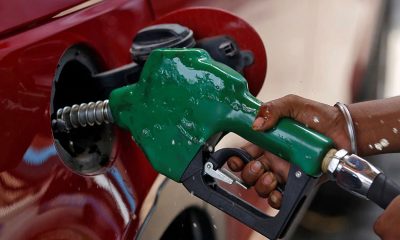
Nigerians Pay N44 Extra Per Litre as Retailers Defy Falling Depot Prices – Full Report

Auto
Abuja Roars to Life as Jetour X50 Headlines Three-Day Motoring Experience
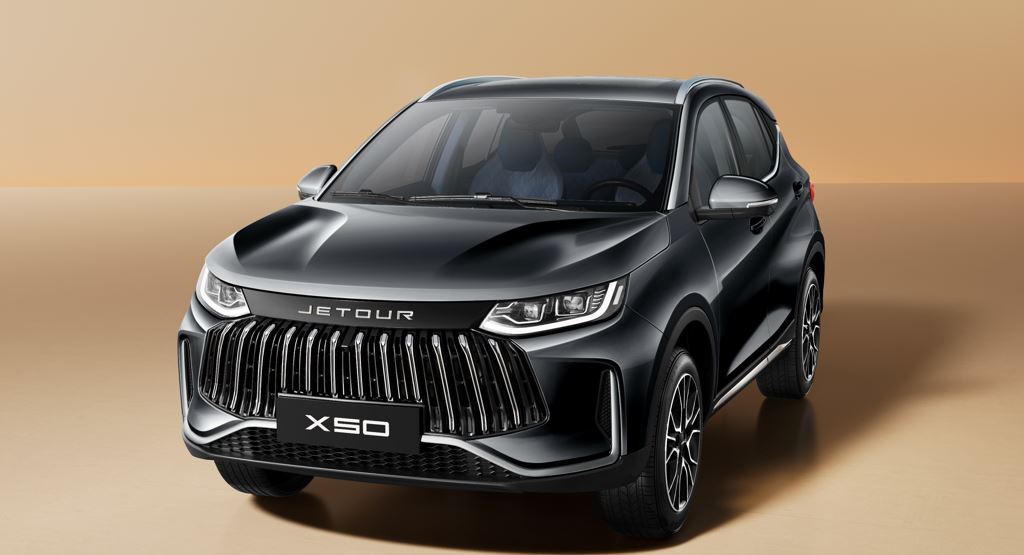
Abuja Roars to Life as Jetour X50 Headlines Three-Day Motoring Experience
Abuja is gearing up for a major motoring spectacle as Jetour Nigeria brings its fast-growing brand experience to the Federal Capital Territory, with the stylish Jetour X50 set to take centre stage in a three-day showcase of performance, technology and automotive innovation.
Scheduled for September 22 to 24, 2026, the Jetour Experience Abuja will move beyond the conventional vehicle exhibition, giving motorists and prospective buyers the opportunity to test-drive the X50, interact with automotive specialists and experience a range of entertainment and interactive activities.
The Abuja activation follows the strong reception recorded during Jetour Nigeria’s recent Lagos experience and forms part of the automaker’s strategy to deepen customer engagement while expanding its footprint across Nigeria.
Backed by an expanding authorised dealer network comprising Elizade Nigeria Limited, Mandilas Autos, Germaine Auto Centre, Kojo Motors, R.T. Briscoe, Tab Autos and New Era AutoVehicle Services, Jetour is also strengthening access to vehicle sales, after-sales support, genuine spare parts and certified technical services nationwide.
At the heart of the Abuja experience will be the Jetour X50, a compact SUV designed to combine contemporary styling, performance and a technology-rich driving environment.
Powered by a 1.5-litre turbocharged engine paired with a dual-clutch transmission, the X50 has positioned itself as a strong contender in Nigeria’s competitive compact SUV segment.
Jetour has equipped the model with a range of premium features, including a 360-degree camera, Blind Spot Detection, 10.5-inch infotainment system with Apple CarPlay and Android Auto, wireless charging and leather upholstery.
The combination of technology, comfort and performance is part of Jetour’s strategy of offering premium motoring features at competitive price points.
The Abuja event also highlights Jetour’s aggressive expansion strategy in Nigeria, following the brand’s recognition with industry accolades including Fastest Growing Auto Brand and Auto Brand of the Year.
With its expanding dealer network providing nationwide sales and after-sales support, Jetour is seeking to deepen customer engagement while making its vehicles and ownership services more accessible to motorists across the country.
As Abuja prepares to welcome the Jetour Experience, the three-day activation is expected to provide motorists with an opportunity to see, feel and drive the X50 while experiencing first-hand what is driving the brand’s growing appeal in Nigeria.
Business
Dangote Refinery Sets ₦525 Per Share for Landmark IPO
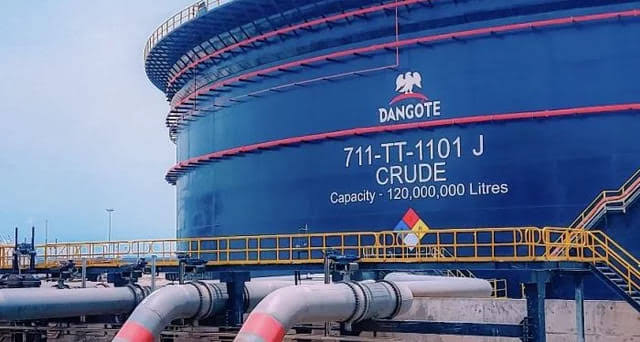
For ₦5,250, Nigerians could soon own a piece of the refinery that has reshaped the country’s fuel market.
-
 Auto3 days ago
Kaduna to Lead Govt Patronage of Local Vehicles as Sani Unveils Peugeot 5008
-
 metro2 days ago
El-Rufai Demands ₦10bn from Defence Minister Over Southern Kaduna Killings Allegation
-
 metro2 days ago
Catholic priest leaves priesthood, weds Kenyan woman after 12 years in Kenya
-

 News1 day ago
Lagos Moves to Slash Agency Fees, Curb Rent Hikes With New Tenancy Bill
-
 metro2 days ago
Oyoland Grand Chief Imam Celebrates Dr Sharafudeen Raji for Service to Islam
-
 metro2 days ago
No US Case Against Tinubu, Family Enjoy Unimpeded Transit for UNGA — Ambassador Ibrahim
-
 metro1 day ago
Osun Police Arrest Woman After Vigilante Member Dies During Sexual Encounter in Ile-Ife
-
 metro3 days ago
Socialite Igho ‘Tiny’ Ubiribo Dies After Penis Enlargement Surgery