
International
Israeli Airstrikes Kill 12 in Gaza as Violence Persists Despite Ceasefire
Israeli Airstrikes Kill 12 in Gaza as Violence Persists Despite Ceasefire
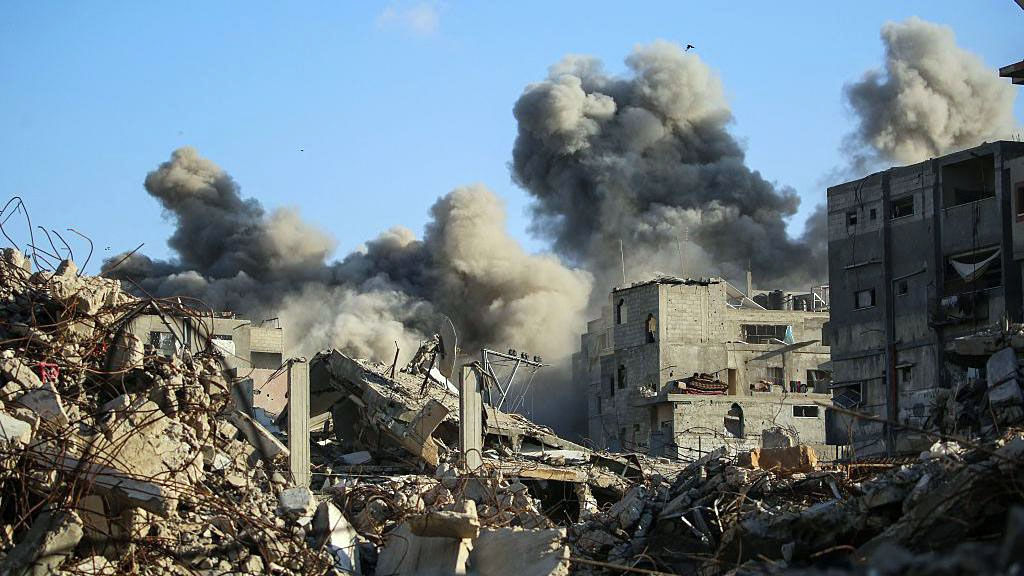
At least 12 Palestinians have been killed in Israeli airstrikes across the Gaza Strip, the territory’s civil defence agency reported on Sunday, marking one of the deadliest days since a fragile ceasefire was implemented. The strikes hit multiple areas, including Jabalia refugee camp in northern Gaza and the southern city of Khan Younis, leaving several others injured.
The Gaza Civil Defence, responsible for rescue and emergency operations under Hamas, said one airstrike struck a tent sheltering displaced civilians in Jabalia, killing at least five people and wounding others. Another strike in Khan Younis also claimed five lives, while additional shelling in Beit Lahia and western Gaza City caused further casualties. Local authorities said most victims were civilians, including families displaced by previous attacks.
READ ALSO:
- FBI Probe Continues as Ex‑Church Minister Who Confessed to Child Abuse Remains Free
- Presidency Dismisses El-Rufai’s Thallium Claim as Diversion From N432bn Probe
- Ghana Moves to Extradite Russian Man Over Secret Sex Video Scandal
The Israel Defence Forces (IDF) said its operations targeted armed militants and underground infrastructure allegedly used to launch attacks, describing the strikes as a response to ceasefire violations. Palestinian authorities condemned the strikes as a massacre and a breach of the truce, while international observers expressed concern over the continuing civilian casualties.
Since the U.S.-brokered ceasefire in October 2023, tensions in Gaza have remained high, with sporadic clashes and violations on both sides. Gaza health authorities report that over 600 Palestinians have been killed and more than 1,600 injured by Israeli strikes since the truce took effect. Humanitarian organisations warn that repeated airstrikes have devastated infrastructure, leaving displaced families vulnerable and worsening living conditions.
International observers note that the ongoing violence threatens reconstruction efforts and regional stability. With limited access for media and aid agencies, verifying casualty figures remains difficult, though reports consistently highlight the severe impact on civilians and displaced families.
The Gaza civil defence called on residents to stay vigilant, avoid military targets, and seek safety as authorities continue to respond to emergency situations across the territory. The situation underscores the fragility of the ceasefire and the urgent need for renewed diplomatic efforts to prevent further civilian casualties.
Israeli Airstrikes Kill 12 in Gaza as Violence Persists Despite Ceasefire





International
US Senate Rejects Measure to Limit Trump’s Iran Military Powers
US Senate Rejects Measure to Limit Trump’s Iran Military Powers
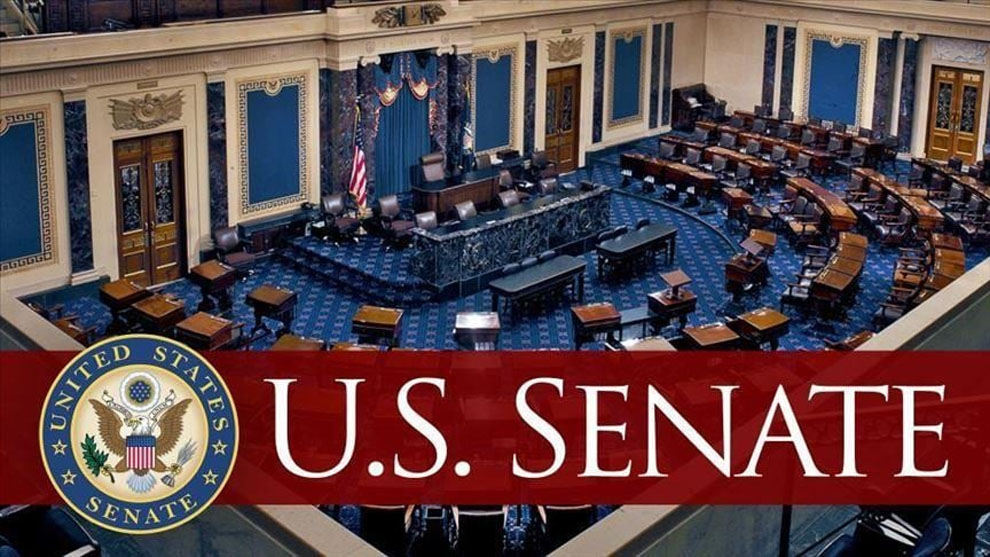
The United States Senate has voted against a resolution that sought to limit President Donald Trump’s authority to carry out further military strikes on Iran without prior approval from Congress, in a move that underscores deep divisions in Washington over war powers and executive authority.
In a closely watched vote, senators rejected the measure by 52 votes to 47, effectively allowing the president to continue ongoing military operations against Iran without needing immediate congressional authorization.
The proposed resolution, introduced under the framework of the War Powers Act, was aimed at reasserting Congress’s constitutional role in decisions involving armed conflict. Lawmakers backing the measure argued that the escalating hostilities between the United States and Iran required clear legislative approval to prevent a broader and potentially prolonged war.
However, the effort fell short, with most Republican senators voting against the proposal, aligning with the president’s position that the executive branch retains the authority to act swiftly in matters of national security. The vote largely followed party lines, although there were notable exceptions. Republican Senator Rand Paul broke ranks to support the resolution, while Democratic Senator John Fetterman voted against it.
Supporters of the failed measure warned that allowing continued military engagement without congressional oversight risks setting a dangerous precedent and undermines the balance of powers enshrined in the U.S. Constitution. They maintained that Congress must play a decisive role in authorizing acts of war, particularly in a volatile region like the Middle East.
Opponents, however, contended that imposing restrictions on the president at this stage could weaken the United States’ strategic position and limit its ability to respond effectively to emerging threats. They argued that the commander-in-chief must retain flexibility to protect American interests and personnel.
This marks the latest in a series of unsuccessful attempts by lawmakers to curb presidential war-making powers in relation to Iran. Analysts note that the repeated failure of such measures reflects enduring political divisions and the challenges Congress faces in reclaiming authority over military engagements.
The vote comes amid heightened tensions between Washington and Tehran, with concerns growing internationally over the risk of further escalation. While the Senate’s decision preserves the president’s current latitude to act, it also signals that the debate over war powers is far from settled, with the possibility of renewed legislative efforts in the coming weeks.
As the situation continues to evolve, attention is expected to remain focused on both the White House and Capitol Hill, where questions over the scope of executive power and the role of Congress in matters of war and peace persist.
US Senate Rejects Measure to Limit Trump’s Iran Military Powers
International
Trump Claims China Agrees to Halt Arms Supply to Iran

Trump Claims China Agrees to Halt Arms Supply to Iran
Former U.S. President Donald Trump has claimed that China has agreed not to supply weapons to Iran, as tensions continue to escalate in the Middle East.
In a statement shared via his verified account on X (formerly Twitter), Trump said he had secured an understanding with Chinese President Xi Jinping to prevent arms transfers to Tehran.
“They have agreed not to send weapons to Iran. President Xi will give me a big, fat hug when I get there in a few weeks. We are working together smartly, and very well! Doesn’t that beat fighting???” Trump wrote.
He added a warning note on U.S. military strength, stating that while diplomacy remains preferable, the United States is “very good at fighting, if we have to — far better than anyone else.”
The remarks come amid heightened geopolitical uncertainty surrounding Iran and ongoing military developments in the region, which Trump referred to as “Operation Epic Fury.” However, no official confirmation has been provided by the U.S. government or international bodies regarding the existence or scope of such an operation.
Chinese authorities have not publicly confirmed any agreement to halt weapons transfers to Iran as of the time of filing this report. Analysts note that Beijing has historically maintained strategic and economic ties with Tehran, making any sudden policy shift significant if verified. Foreign policy experts have also urged caution in interpreting Trump’s statement, stressing that it reflects his personal account rather than a confirmed diplomatic agreement.
If substantiated, such an arrangement could mark a major development in international efforts to contain military escalation in the Middle East. China remains a key global player with influence over Iran, and any restriction on arms supply could affect the balance of power in the region. However, in the absence of independent verification, observers say the claim should be treated as part of ongoing political messaging rather than established fact.
Trump has remained an influential voice in U.S. and global politics, frequently using his social media platforms to comment on international affairs and ongoing conflicts.
Trump Claims China Agrees to Halt Arms Supply to Iran
International
Rising Debt, Oil Shock Could Trigger Global Slowdown, IMF Warns
Rising Debt, Oil Shock Could Trigger Global Slowdown, IMF Warns
The International Monetary Fund (IMF) has warned that rising global debt, persistent oil price shocks, and escalating geopolitical tensions in the Middle East could significantly weaken the world economy, with total public debt projected to reach 100 per cent of global GDP by 2029.
The warning was contained in the IMF’s latest Fiscal Monitor report, which highlighted growing fiscal vulnerabilities across both advanced and developing economies as high interest rates, weak revenue growth, and rising borrowing costs continue to strain government budgets worldwide.
The Fund said the combination of energy price volatility, increasing debt servicing costs, and geopolitical instability is placing governments under mounting pressure, especially in emerging and developing economies that rely heavily on imported energy.
The IMF projected that global public debt rose to 93.9 per cent of GDP in 2025, up from 92 per cent in 2024, and is expected to rise further to 100 per cent by 2029, marking the highest level since the aftermath of World War II. It further warned that debt could continue increasing beyond that level, potentially reaching 102.3 per cent of GDP by 2031 if current trends persist.
According to the report, rising debt levels are being driven by structural spending pressures such as ageing populations, climate-related investments, higher defence and security spending, and increasing interest payments. Interest costs alone now account for nearly 3 per cent of global GDP, compared to about 2 per cent four years ago, significantly reducing fiscal flexibility for many governments.
READ ALSO:
- 2026 JAMB UTME: Over 2.2 Million Candidates Face Stricter Rules, CBT Reforms Begin
- 2027: Pro-Jonathan Group Launches Campaign Urging Goodluck Jonathan to Run
- 2027: Kwara APC Stakeholders Back Bolarinwa as Kwara South Gains Political Momentum
The IMF also cautioned that prolonged disruptions in global oil supply, driven by escalating Middle East tensions, could push crude oil prices above $100 per barrel through 2027, increasing the risk of a global economic slowdown or recession. Energy market instability, the Fund noted, remains one of the fastest channels through which geopolitical shocks impact inflation, trade, and household living costs.
The report also warned governments against introducing broad-based fuel subsidies in response to rising energy prices. Director of the IMF’s Fiscal Affairs Department, Rodrigo Valdés, said such policies distort market signals and could worsen global energy imbalances.
Instead, he recommended targeted cash transfers to vulnerable households, arguing that energy prices must reflect real supply conditions to allow for proper market adjustment.
Valdés stressed that while governments face political pressure to shield citizens from rising fuel costs, suppressing prices could delay necessary demand adjustments and worsen long-term instability in energy markets.
The IMF further highlighted emerging risks in global debt markets, including the growing influence of non-traditional investors such as hedge funds, which may be less stable during periods of financial stress. It also pointed to declining debt maturities, which increase countries’ vulnerability to short-term interest rate fluctuations and refinancing risks.
Additional fiscal pressures identified in the report include rising security expenditures, climate change adaptation costs, and increased debt servicing obligations, all of which are limiting governments’ ability to build fiscal buffers.
The Fund also warned that global trade fragmentation, political instability, and potential market corrections in fast-growing sectors such as artificial intelligence could further tighten global financial conditions and slow economic growth.
Despite these risks, the IMF stressed that the world is not yet in a full-blown debt crisis. However, it warned that delays in implementing fiscal reforms could lead to more severe economic corrections in the future.
“We’re not at a crisis point, but the more countries delay adjustment measures, the steeper the eventual correction,” Valdés said.
The IMF urged governments to begin implementing credible medium-term fiscal consolidation plans, improve revenue mobilisation, and ensure more efficient public spending once immediate economic pressures ease, stressing that restoring fiscal buffers is essential for long-term stability.
Rising Debt, Oil Shock Could Trigger Global Slowdown, IMF Warns

-

 metro2 days ago
Arise News Yet to Confirm Reported Suspension of Rufai Oseni
-

 metro17 hours ago
Tension in Osogbo as Protesters Demand Respect for Court Judgments in LG Dispute
-

 metro2 days ago
Fresh Boko Haram Attack Leaves Colonel, Six Soldiers Dead in Borno
-

 International3 days ago
Trump Sparks Global Outrage After Calling Pope Leo XIV “Weak, Terrible”
-

 News3 days ago
FG Opens Application for Second Cohort of TVET Programme to Tackle Unemployment
-

 International3 days ago
Trump Claims 158 Iranian Ships Destroyed as US Enforces Naval Blockade in Gulf Region
-

 metro3 days ago
Fake Image of Governor Alia Bowing to Sultan Sparks Controversy, Palace Reacts
-

 International1 day ago
World Leaders Gather in Paris Over Strait of Hormuz Crisis