
International
BREAKING: Israel Launches Pre‑emptive Strike on Iran, Explosions Reported Across Tehran
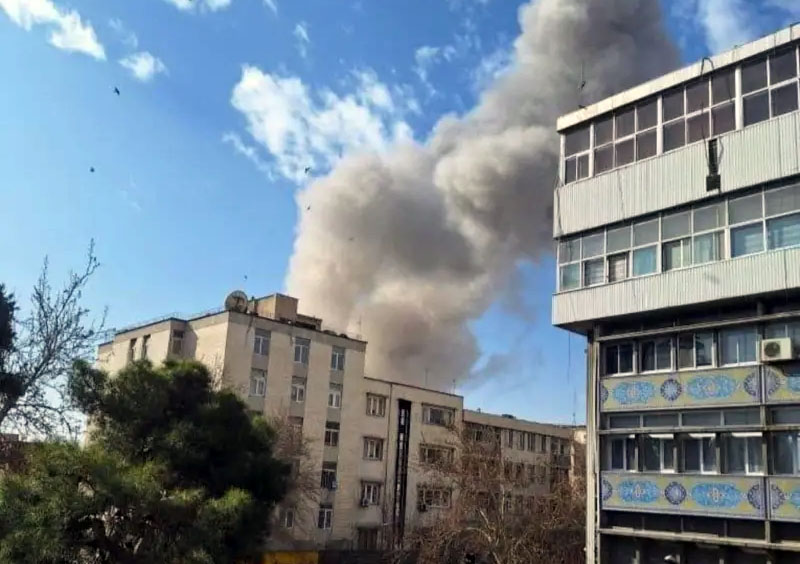
BREAKING: Israel Launches Pre‑emptive Strike on Iran, Explosions Reported Across Tehran
Israel has launched a pre‑emptive military attack on Iran, with explosions rocking the capital, Tehran, in an escalation that marks one of the most serious direct confrontations between the two nations in years. The strike occurred early Saturday, February 28, 2026, amid heightening tensions over Iran’s nuclear and missile programmes and ongoing diplomatic pressure from the United States and its allies. (Reuters)
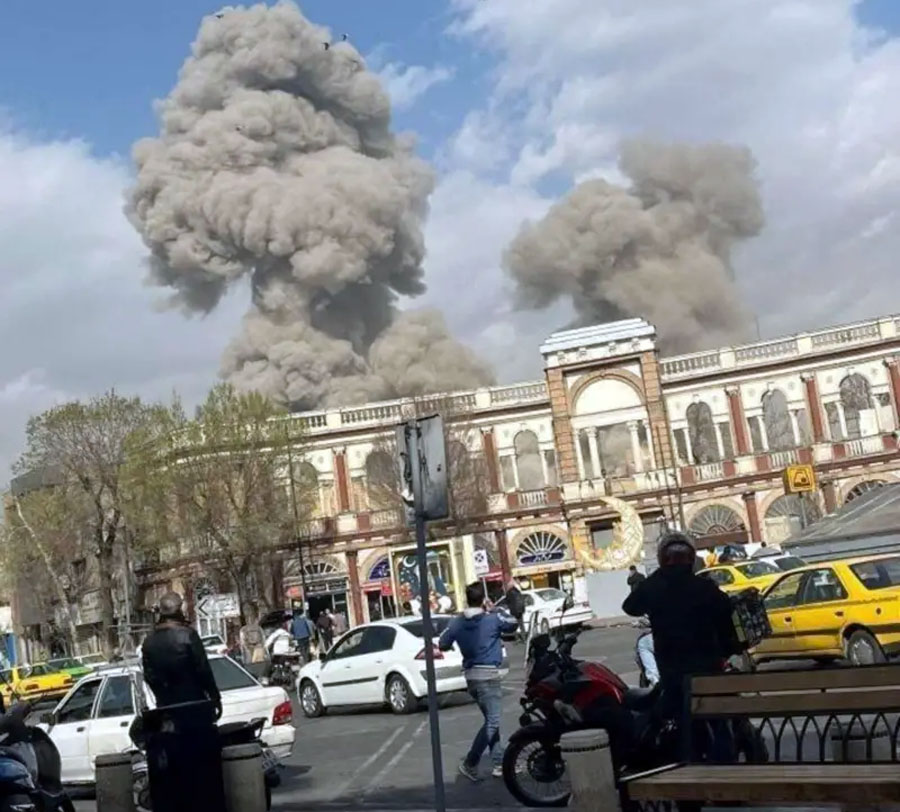
Hassan Abad Square
Israel Katz, Israel’s Defence Minister, confirmed that the country had carried out a “pre‑emptive attack” against Iran “to remove threats” to its national security, without providing detailed information on specific targets. Explosions were reported in multiple parts of Tehran, including areas near University Street and the Jomhouri district, with thick plumes of smoke visible over the city skyline. Iranian state media acknowledged the blasts but gave no immediate explanation or casualty figures. (Arab News)
Concurrently, the Israel Defence Forces issued alerts and sirens rang out across Israel, with authorities warning the public of the possibility of missile or drone retaliation from Iran. The Israeli military described its warnings as proactive measures to prepare civilians for potential attacks amid the rapidly escalating situation. Israel also closed its airspace to civilian flights and declared a state of emergency nationwide, urging residents to remain near protected spaces. (Khaleej Times)
READ ALSO:
- Popular Brain Supplement Amino Acid May Reduce Longevity in Men
- Amnesty Exposes Alleged Torture, Extortion, Deaths at Imo Police Tiger Base
- REVEALED: How Dispute Over VIP Police Protection, State Policing Led to Egbetokun’s Exit as IGP
The attack represents a dramatic intensification of an already volatile standoff between Tehran and Jerusalem, with Iran’s nuclear ambitions at the centre of international concern. In recent months, the United States and other Western nations have increased pressure on Iran through diplomatic and military deployments, including fighter jets and warships in the region, aimed at curbing Iran’s nuclear enrichment and missile development — disputes Tehran says are misunderstood or misrepresented. (ITVX)
At this stage, no verified information has been released about casualties or the scale of damage in Tehran, and there has been no formal response from the Iranian government. The global community is watching closely as analysts warn that such actions could further inflame regional tensions and risk drawing neighboring countries into broader conflict. (The Times of India)
The situation is fast‑moving, and further updates are expected as more verified information becomes available.
BREAKING: Israel Launches Pre‑emptive Strike on Iran, Explosions Reported Across Tehran










International
Two Women Killed in Georgia Shootings as Nigerian-Born Suspect Faces Murder Charges

Two Women Killed in Georgia Shootings as Nigerian-Born Suspect Faces Murder Charges
A 26-year-old United States citizen of Nigerian origin, Olaolukitan Adon Abel, has been arrested in connection with a series of shootings that claimed the lives of two women and left a man critically injured in the state of Georgia.
The incidents occurred across multiple locations, including DeKalb County and Brookhaven, sparking widespread concern among residents. Authorities have described the attacks as seemingly random, with no confirmed motive at this stage.
According to law enforcement officials, the shootings took place at a Checkers outlet on Wesley Chapel Road, a Kroger store at Cherokee Plaza in Brookhaven, and along Battle Forest Drive in DeKalb County.
Investigators were able to trace Abel through rental vehicle records, leading to his eventual arrest in Troup County. He is currently facing two counts of murder, along with charges of aggravated assault and unlawful possession of a weapon.
During a court hearing on Tuesday, a DeKalb County magistrate judge transferred the case to a superior court after the suspect’s legal team waived a formal reading of the charges. Details regarding his next court appearance have not yet been disclosed.
Authorities also revealed that this is not Abel’s first encounter with the law. He was previously convicted of a felony in California in 2024. In a separate case last year, he was arrested in Savannah and later pleaded guilty to four misdemeanor counts of sexual battery. He was subsequently sentenced to 48 months’ probation, banned from the city for four years, and ordered to undergo a psychosexual evaluation.
Court records from Chatham County confirm that Abel is a United States citizen.
Police officials have assured the public that there is no ongoing threat, emphasizing that the suspect is now in custody. Investigations remain ongoing as detectives continue to analyze evidence to determine the circumstances and motive behind the attacks.
“Our thoughts are with the victims and their families during this difficult time,” a police spokesperson said, adding that authorities remain committed to ensuring justice and public safety.
Two Women Killed in Georgia Shootings as Nigerian-Born Suspect Faces Murder Charges
International
US Senate Rejects Measure to Limit Trump’s Iran Military Powers
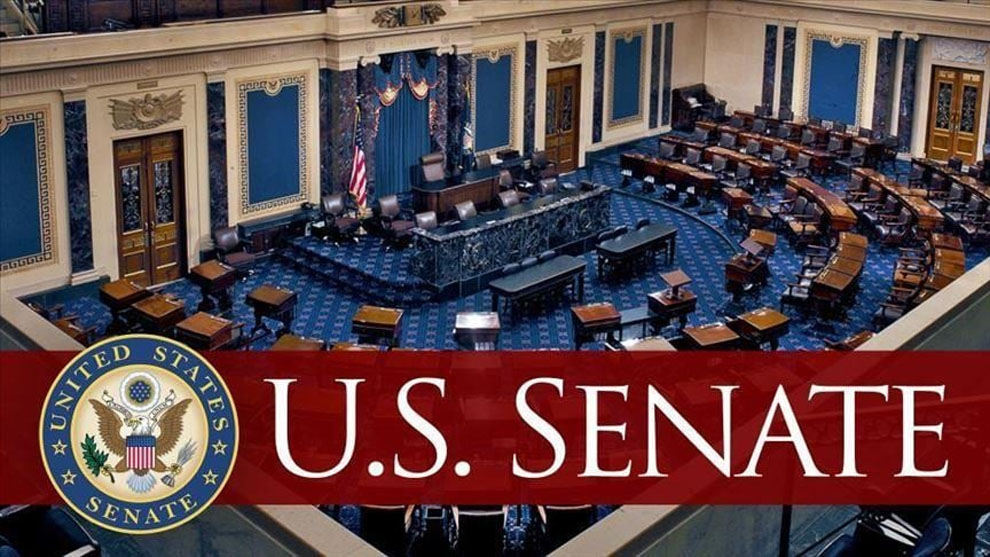
US Senate Rejects Measure to Limit Trump’s Iran Military Powers
The United States Senate has voted against a resolution that sought to limit President Donald Trump’s authority to carry out further military strikes on Iran without prior approval from Congress, in a move that underscores deep divisions in Washington over war powers and executive authority.
In a closely watched vote, senators rejected the measure by 52 votes to 47, effectively allowing the president to continue ongoing military operations against Iran without needing immediate congressional authorization.
The proposed resolution, introduced under the framework of the War Powers Act, was aimed at reasserting Congress’s constitutional role in decisions involving armed conflict. Lawmakers backing the measure argued that the escalating hostilities between the United States and Iran required clear legislative approval to prevent a broader and potentially prolonged war.
However, the effort fell short, with most Republican senators voting against the proposal, aligning with the president’s position that the executive branch retains the authority to act swiftly in matters of national security. The vote largely followed party lines, although there were notable exceptions. Republican Senator Rand Paul broke ranks to support the resolution, while Democratic Senator John Fetterman voted against it.
Supporters of the failed measure warned that allowing continued military engagement without congressional oversight risks setting a dangerous precedent and undermines the balance of powers enshrined in the U.S. Constitution. They maintained that Congress must play a decisive role in authorizing acts of war, particularly in a volatile region like the Middle East.
Opponents, however, contended that imposing restrictions on the president at this stage could weaken the United States’ strategic position and limit its ability to respond effectively to emerging threats. They argued that the commander-in-chief must retain flexibility to protect American interests and personnel.
This marks the latest in a series of unsuccessful attempts by lawmakers to curb presidential war-making powers in relation to Iran. Analysts note that the repeated failure of such measures reflects enduring political divisions and the challenges Congress faces in reclaiming authority over military engagements.
The vote comes amid heightened tensions between Washington and Tehran, with concerns growing internationally over the risk of further escalation. While the Senate’s decision preserves the president’s current latitude to act, it also signals that the debate over war powers is far from settled, with the possibility of renewed legislative efforts in the coming weeks.
As the situation continues to evolve, attention is expected to remain focused on both the White House and Capitol Hill, where questions over the scope of executive power and the role of Congress in matters of war and peace persist.
US Senate Rejects Measure to Limit Trump’s Iran Military Powers
International
Trump Claims China Agrees to Halt Arms Supply to Iran

Trump Claims China Agrees to Halt Arms Supply to Iran
Former U.S. President Donald Trump has claimed that China has agreed not to supply weapons to Iran, as tensions continue to escalate in the Middle East.
In a statement shared via his verified account on X (formerly Twitter), Trump said he had secured an understanding with Chinese President Xi Jinping to prevent arms transfers to Tehran.
“They have agreed not to send weapons to Iran. President Xi will give me a big, fat hug when I get there in a few weeks. We are working together smartly, and very well! Doesn’t that beat fighting???” Trump wrote.
He added a warning note on U.S. military strength, stating that while diplomacy remains preferable, the United States is “very good at fighting, if we have to — far better than anyone else.”
The remarks come amid heightened geopolitical uncertainty surrounding Iran and ongoing military developments in the region, which Trump referred to as “Operation Epic Fury.” However, no official confirmation has been provided by the U.S. government or international bodies regarding the existence or scope of such an operation.
Chinese authorities have not publicly confirmed any agreement to halt weapons transfers to Iran as of the time of filing this report. Analysts note that Beijing has historically maintained strategic and economic ties with Tehran, making any sudden policy shift significant if verified. Foreign policy experts have also urged caution in interpreting Trump’s statement, stressing that it reflects his personal account rather than a confirmed diplomatic agreement.
If substantiated, such an arrangement could mark a major development in international efforts to contain military escalation in the Middle East. China remains a key global player with influence over Iran, and any restriction on arms supply could affect the balance of power in the region. However, in the absence of independent verification, observers say the claim should be treated as part of ongoing political messaging rather than established fact.
Trump has remained an influential voice in U.S. and global politics, frequently using his social media platforms to comment on international affairs and ongoing conflicts.
Trump Claims China Agrees to Halt Arms Supply to Iran

-

 metro1 day ago
Tension in Osogbo as Protesters Demand Respect for Court Judgments in LG Dispute
-

 metro2 days ago
Arise News Yet to Confirm Reported Suspension of Rufai Oseni
-

 metro3 days ago
Fresh Boko Haram Attack Leaves Colonel, Six Soldiers Dead in Borno
-

 metro14 hours ago
UNILAG Lecturer Sexual Assault Trial: Student Testifies in Lagos Court
-

 International2 days ago
World Leaders Gather in Paris Over Strait of Hormuz Crisis
-

 Politics1 day ago
Obesere’s Wife Sekinat Adelakun-Akande Declares for 2027 Ibadan Reps Race
-

 News2 days ago
Lafarge Convicted of Terrorism Financing by French Court in Landmark Case
-

 News2 days ago
Tinubu Declares End to “Broken Revenue System”, Unveils New Economic Reforms