

metro
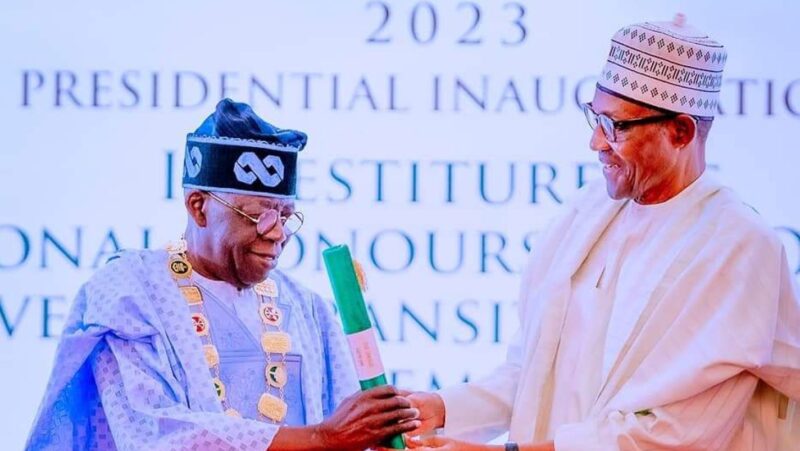
Jimoh Ibrahim: Tinubu Needs Time to Address Inflation Caused by Buhari’s Fiscal Policies
Jimoh Ibrahim: Tinubu Needs Time to Address Inflation Caused by Buhari’s Fiscal Policies
Jimoh Ibrahim has warned that it is unrealistic to expect President Bola Tinubu to immediately resolve Nigeria’s inflation crisis, which he attributed largely to the N30 trillion borrowed via Ways and Means overdrafts during the administration of the late President Muhammadu Buhari.
Ibrahim made the remarks in an interview on Channels TV’s Politics Today on Friday, highlighting that President Tinubu inherited an economy where cash-to-GDP was only 0.5%, yet chose not to fully expose the reckless financial practices of the previous administration. He said, “Buhari printed ₦30 trillion; so you want Tinubu to do magic to replace that ₦30 trillion?”, emphasizing that inflation caused by years of unbridled money printing cannot be solved overnight.
He further noted that he had advised President Tinubu to publish the financial data he inherited to inform Nigerians, but cabinet members reportedly discouraged the move, citing potential political distractions. Ibrahim stressed that a clear explanation of inherited fiscal challenges would have helped manage public expectations regarding inflation relief.
READ ALSO:
- Military Kills Over 30 Terrorists, Rescues Dozens of Kidnap Victims — DHQ
- Sanwo-Olu to Ban School-Age Children from Streets During School Hours
- Nigeria’s ex-Super Eagles player, 1980 AFCON hero Henry Nwosu, dies
Nigeria’s Wale Edun has similarly blamed the massive naira printing under Buhari for the persistent inflation. Speaking to the Senate Committee on Finance in March 2024, Edun revealed that the Central Bank of Nigeria (CBN) printed ₦22.7 trillion between 2015 and 2023 through Ways and Means overdrafts, without any corresponding increase in productive economic activity. He noted that a select few benefitted disproportionately from the excess liquidity, while the wider population suffered, stressing that measures must be taken to withdraw excess money and restore macroeconomic balance.
Ibrahim highlighted that President Tinubu also inherited a debt profile of over ₦46 trillion and rising inflation of around 22%, with fiscal challenges exacerbated by the ending of fuel subsidies and naira devaluation. While inflation existed before Tinubu’s administration, it has worsened in part due to structural economic challenges left by the previous administration. Economists agree that years of public borrowing and deficit financing fueled inflation by increasing money supply without corresponding output growth, creating pressures that cannot be reversed quickly.
On the global front, Ibrahim commented on the ongoing U.S.-Israeli war with Iran, noting that higher global oil prices could benefit Nigeria’s economy by boosting foreign exchange earnings. He explained that higher oil revenues could reduce the government’s borrowing needs and strengthen the Central Bank’s ability to stabilize the naira, improve cash inflows, and promote macroeconomic stability, although fuel price hikes could increase domestic transportation costs.
Ibrahim also praised the progress of Nigeria’s debt-to-revenue management under Tinubu, noting that the ratio now stands at 68%, compared to 96% under Buhari. He stressed that while the administration is making progress, expecting immediate inflation relief is unrealistic. Sustainable improvement requires long-term structural reforms, fiscal discipline, and collaboration between the government, private sector, and citizens.
He concluded that Nigerians should understand that addressing inflation is a gradual process, and the Tinubu administration is actively implementing measures to stabilize prices, improve revenue management, and strengthen the economy while navigating inherited fiscal challenges.
Jimoh Ibrahim: Tinubu Needs Time to Address Inflation Caused by Buhari’s Fiscal Policies






metro
ISWAP Overruns Rival JAS Enclave In Borno Following ₦40m Cash Theft
ISWAP Overruns Rival JAS Enclave In Borno Following ₦40m Cash Theft
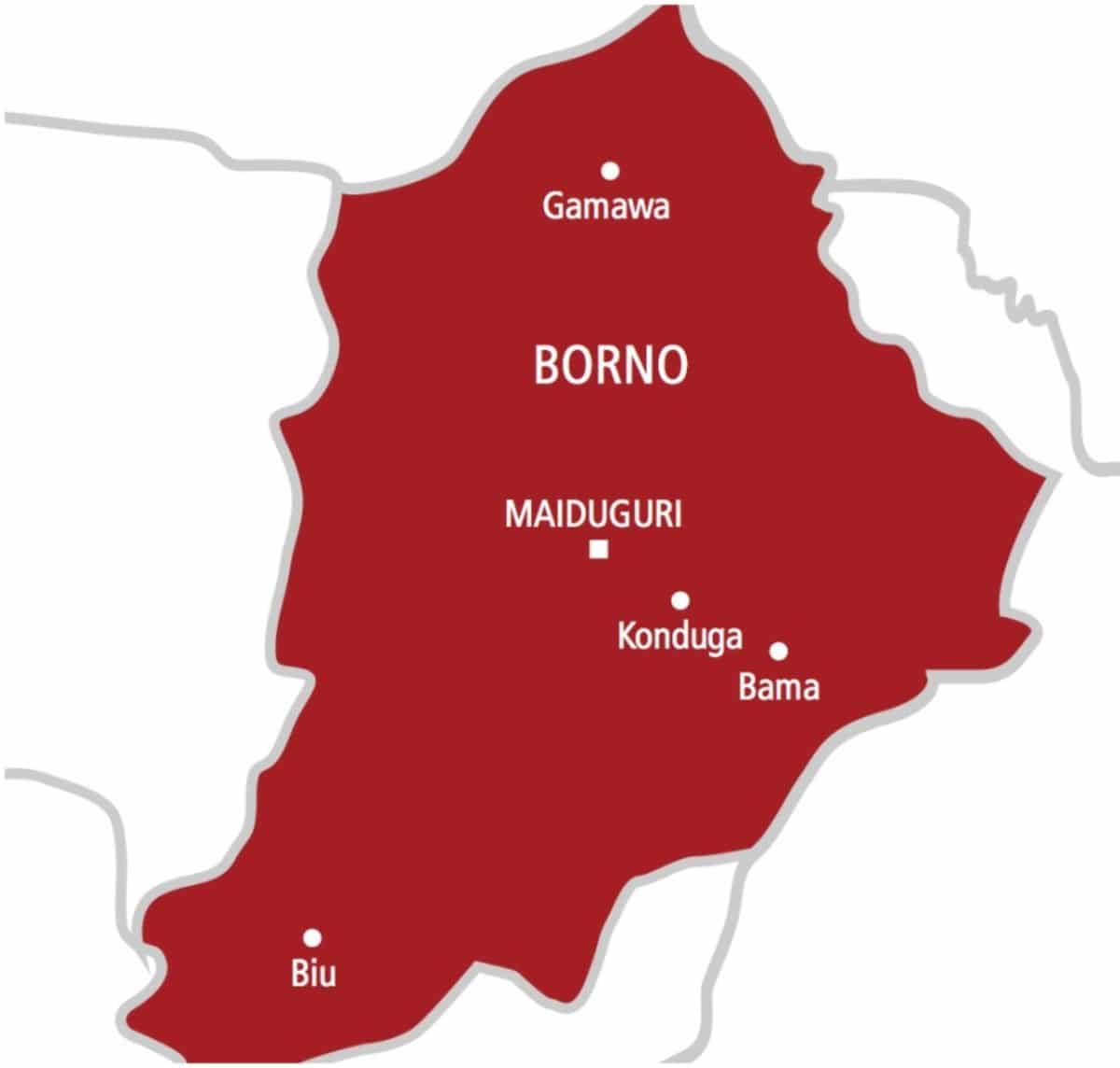
Fighters of the Islamic State West Africa Province (ISWAP) have reportedly overrun a major stronghold belonging to the rival Jama’atu Ahlis Sunna Lidda’awati wal-Jihad (JAS) , commonly known as Boko Haram, in Gazwa, Bama Local Government Area of Borno State . The fierce confrontation, which has intensified the long-standing rivalry between the two extremist groups, was reportedly triggered by the alleged theft of approximately ₦40 million from ISWAP logisticians operating along the Gazwa-Kwaltafarji axis . The details of this latest escalation emerged from the debriefing of recently surrendered JAS fighters, who provided intelligence on the intense competition and hostility between the factions . According to these sources, a JAS commander identified as Munzir orchestrated an ambush on ISWAP operatives transporting cash and supplies, and the attack resulted in the death of one ISWAP operative, while the JAS fighters reportedly seized an AK-pattern rifle along with the substantial sum of money, which they successfully escaped with .
The stolen funds were subsequently handed over to a senior JAS commander based in Gazwa, known as Baafu, and sources indicate that Baafu transferred the money to another high-ranking commander, Ali Ngulde, who is believed to be operating from the Mandara Mountains region . From there, the funds were distributed among the JAS commanders and fighters according to the group’s standard revenue-sharing arrangement, and military intelligence reportedly indicated that ISWAP viewed the incident as more than a robbery, considering it a direct challenge to its authority and a threat to its critical logistics network in the region . Approximately ten days after the initial ambush, ISWAP mobilised a significant force from their strongholds in Yuwe, the Sambisa Forest, and Zangeri, and in a coordinated dawn assault, they launched a fierce attack on JAS positions within the Gazwa enclave . The battle raged for several hours, with JAS fighters putting up initial resistance, but the arrival of ISWAP reinforcements from the Sambisa Forest ultimately overwhelmed the defenders, forcing the JAS fighters to abandon one of their key positions in the Bama axis . The successful overrunning of the camp allowed ISWAP to establish temporary control over the Gazwa camp, though intelligence sources note that ISWAP remains cautious and could withdraw if the displaced JAS faction mounts a major retaliatory offensive .
READ ALSO:
- Lagos Needs 80,000 More Health Workers to Avert Crisis – Sanwo-Olu Raises Alarm
- Leave Osun Alone! – Davido Threatens to Call Donald Trump Over Election Rigging Fears
- Customs Intercepts 140 Pump-Action Rifles, Cannabis-Infused Products Worth ₦373.8 Million at Tin Can Port
This latest confrontation is part of a broader series of intense clashes between ISWAP and JAS, as the rival factions compete fiercely for territorial control, valuable resources, and influence across the North-East region . The internal discord appears to be escalating, as evidenced by an earlier attack days prior, where ISWAP fighters reportedly ambushed a JAS faction around Bula Murge in the Gargash area, also in Bama Local Government Area, and that attack reportedly resulted in the deaths of several senior JAS commanders, including Abu Ubaida, Modu Kori, Alhaji Modu, Mure, Zarkawi, Sheriff, and Modu Maye . The clash also led to the destruction of JAS camps at Bula Murge and Nguro Bafuye, forcing surviving fighters to relocate their families towards Bula Daloye . The rivalry between the two factions dates back to 2016, when ISWAP broke away from the Abubakar Shekau-led Boko Haram movement over ideological and leadership disagreements, and since then, both groups have engaged in repeated battles over territorial control, taxation routes, recruitment of fighters, and strategic hideouts across the Lake Chad Basin and the Sambisa Forest . The rivalry intensified in May 2021 when ISWAP launched a major offensive that cornered Shekau, who reportedly died after detonating an explosive device rather than surrendering .
Military sources cited in the reports suggest that this ongoing rivalry could further expose weaknesses within the ranks of both groups, creating potential opportunities for security forces to disrupt their operations . The renewed infighting comes amid sustained military operations and airstrikes against insurgent groups in the North-East, which have reportedly weakened their logistics, operational capabilities and freedom of movement . Security sources said the rivalry presents an opportunity for the military to intensify coordinated land and air operations aimed at preventing either faction from regrouping or consolidating new positions in the Sambisa Forest and Mandara Mountains . Intelligence gathering is reportedly continuing to track the movements of both factions and prevent either group from regrouping or establishing new operational bases . The situation remains dynamic, with both factions seeking to consolidate their positions and recover from their recent losses as security forces continue to monitor developments across the North-East .
ISWAP Overruns Rival JAS Enclave In Borno Following ₦40m Cash Theft
metro
Customs Intercepts 140 Pump-Action Rifles, Cannabis-Infused Products Worth ₦373.8 Million at Tin Can Port
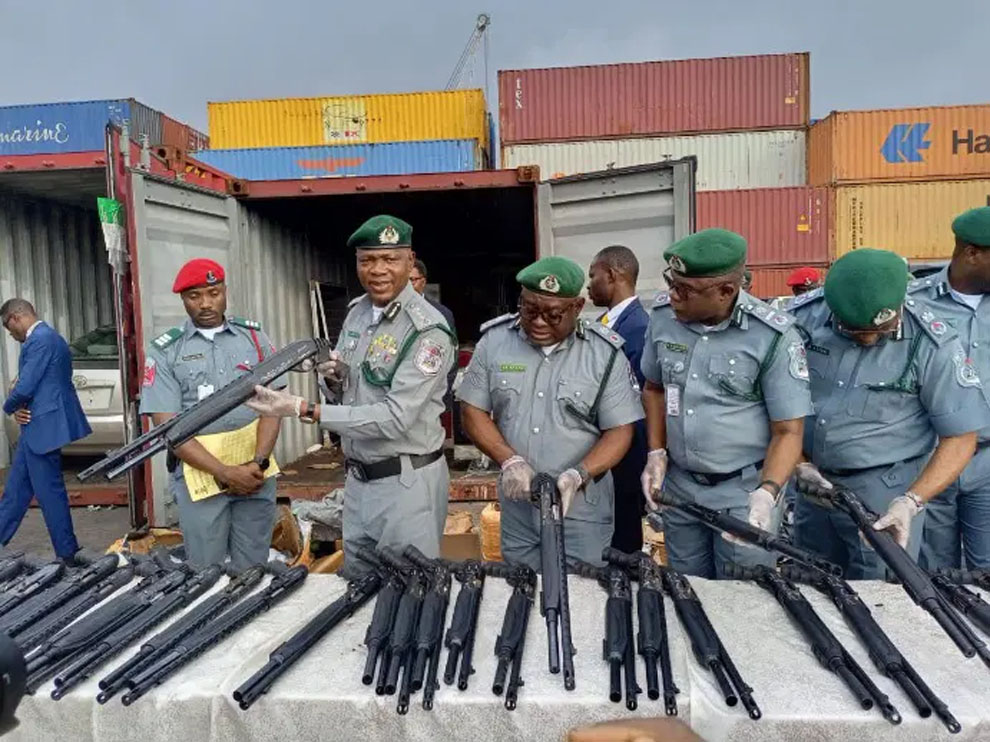
Customs Intercepts 140 Pump-Action Rifles, Cannabis-Infused Products Worth ₦373.8 Million at Tin Can Port
The Nigeria Customs Service (NCS) has recorded another major breakthrough in its anti-smuggling campaign with the interception of a container carrying concealed parts of pump-action rifles and the seizure of illicit cannabis-infused products valued at ₦373.8 million at the Tincan Island Port Command. Two suspects are currently in custody assisting investigators, while the principal importer of the firearms remains at large and is being actively tracked by security agencies. Addressing journalists during a press briefing on Thursday, the Comptroller-General of Customs, Adewale Adeniyi, described the seizures as a significant victory against transnational criminal networks exploiting Nigeria’s seaports to smuggle prohibited weapons and dangerous narcotics into the country. He warned that the intercepted items pose serious threats to national security and public health, reaffirming the Service’s commitment to preventing Nigeria’s ports from becoming safe havens for illicit trade.
According to Adeniyi, the operation followed intelligence-driven surveillance after Container No. TEMU 184536/9, which arrived aboard MV VELIKA on July 8, 2026, was flagged by the Service’s risk management system for enhanced scrutiny. Acting on credible intelligence, officers of the command placed the container under surveillance and subjected it to a detailed physical examination at the Customs Enforcement Station. A comprehensive physical examination uncovered concealed crates containing knocked-down components preliminarily identified as JoJeff pump-action rifles. As of the time of the briefing, Customs officials had reassembled 140 double-barrel pump-action rifles from the recovered parts, with counting and assembly of remaining components still ongoing. The recovered components are currently undergoing detailed technical examination and inventory to determine their exact quantity and configuration, which will inform the full charges to be filed against the suspects.
Investigations following the interception led to the arrest of a key suspect on July 31, 2026, at the Migfo Bonded Terminal while the individual was allegedly attempting to facilitate the release of the container. Customs disclosed that documentary evidence, financial records, and telecommunications analysis established links between the suspect and the named consignee on the shipping documents. Among the evidence cited was a ₦10,000 payment traced to a company account directly linked to the consignee of the container on the day of the arrest, providing a crucial forensic link between the suspect and the illegal shipment. The Service confirmed that two suspects are currently in custody assisting investigators with their inquiries, while another principal suspect remains at large and is being actively pursued by security agencies across multiple jurisdictions.
READ ALSO:
- Tinubu Approves Recruitment of 3,252 Verified PTA Teachers into Federal Civil Service
- Osun Govt Sues EFCC, First Bank for ₦2 Billion Over Unlawful Account Freeze
- Trump Signs New Executive Orders Targeting Birthright Citizenship, ‘Birth Tourism’
In a separate enforcement operation conducted concurrently, Customs officers intercepted two 40-foot containers loaded with cannabis-infused products cleverly concealed alongside legitimate imports, including two used vehicles, two used pumping generators, rolls of blue polypropylene spunbond fabric, new tubular batteries, and thunder arrester cables. The sophisticated concealment method demonstrated the lengths to which international trafficking syndicates are willing to go to evade detection. The seizures comprised 109 cartons of Delta-8 cannabis-infused pre-roll cookies containing 8,720 pieces (17.44kg) valued at ₦308.7 million, 125 cartons of Delta-8 cannabis-infused gummies comprising 740 packs (515.2kg) valued at ₦40.7 million, and 73 cartons of cannabis-infused cookies containing 442 packs (309.4kg) valued at ₦24.3 million. The total estimated street value of the seized illicit substances stands at ₦373,802,640, representing one of the largest seizures of cannabis-infused products by the Service in recent years.
The Comptroller-General noted that the interceptions highlight the increasing sophistication of international criminal syndicates using legitimate trade channels to traffic prohibited weapons and narcotic substances. He added that the successful operations reaffirm the effectiveness of the Service’s intelligence-driven enforcement strategy, advanced risk profiling mechanisms, and strong collaboration with sister security agencies, particularly the National Drug Law Enforcement Agency (NDLEA). Adeniyi warned that the cannabis-infused products were attractively packaged with flavours such as citrus, vanilla, pine, and peach pie to resemble ordinary snacks, making them particularly appealing to children, students, and other young people. He cautioned that unsuspecting consumers could unknowingly ingest the products because of their deceptive packaging, highlighting a growing public health crisis that extends beyond traditional drug enforcement concerns.
Receiving the seized items, the Commander of Narcotics at the NDLEA TinCan Strategic Command, Augustine Adewunmi, described cannabis-infused cookies, gummies, and smoothies as an emerging threat to public safety. He warned that the products, imported from the United States, were packaged as vegan snacks to deceive unsuspecting consumers and were designed to appeal to children, students, and club users, significantly increasing the risk of accidental drug consumption among vulnerable populations. He reaffirmed the Service’s determination to identify, apprehend, and prosecute all individuals connected to the criminal networks, declaring that “Nigeria’s ports will never be safe havens for the trafficking of illicit weapons, narcotics, or other prohibited goods.”
The Customs boss commended officers and men of the Tincan Island Port Command and the Customs Enforcement Unit for their vigilance, professionalism, and dedication, while also appreciating the support of partner security and law enforcement agencies, including the NDLEA. He assured Nigerians that the Service remains committed to securing the nation’s borders, facilitating legitimate trade, and preventing the importation of prohibited goods, urging members of the public to continue providing credible intelligence to support the fight against smuggling and organised transnational crime. The Nigeria Customs Service stated that investigations are ongoing and pledged to keep the public informed as prosecutions commence. Adeniyi further disclosed that the Service is working closely with international law enforcement partners to track the financial networks behind the illegal shipments, with a view to dismantling the entire criminal enterprise rather than merely intercepting individual consignments.
Customs Intercepts 140 Pump-Action Rifles, Cannabis-Infused Products Worth ₦373.8 Million at Tin Can Port
metro
Troops Arrest Fulani Youth Leader Over Deadly Kaduna Community Attack
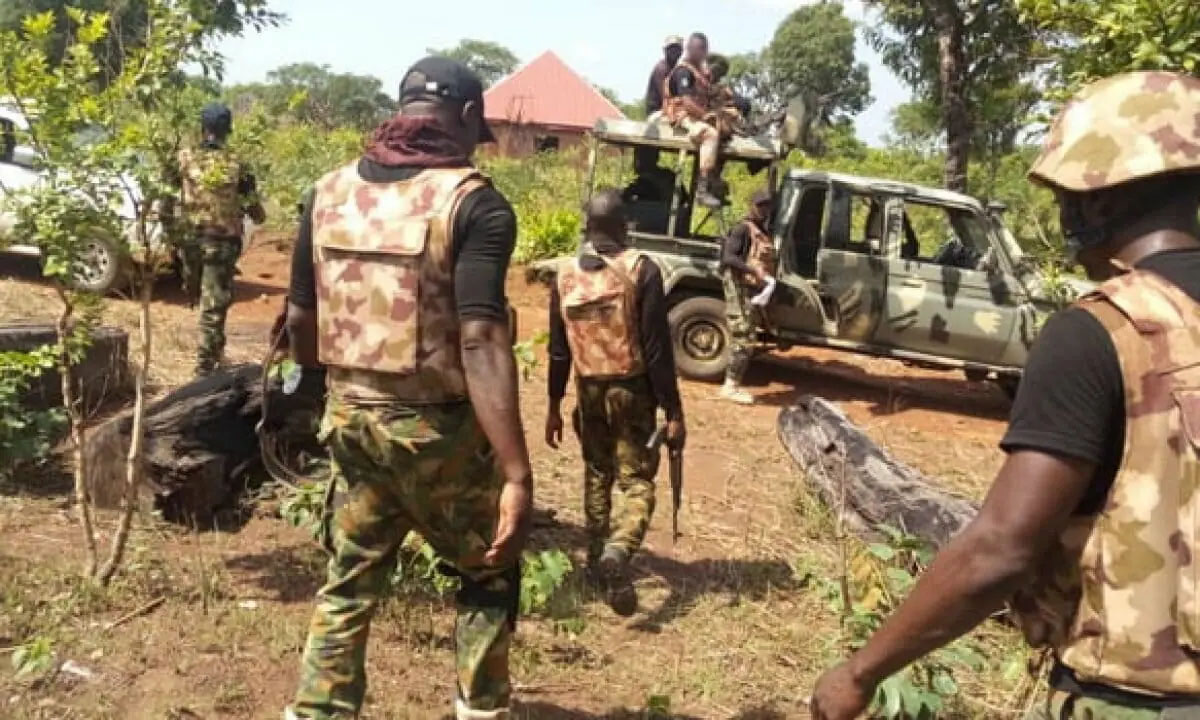
Troops Arrest Fulani Youth Leader Over Deadly Kaduna Community Attack
Troops of Sector 7 under Operation Enduring Peace have arrested a Fulani youth leader, Zakari Yahu Adamu, in connection with the recent terrorist attack on Naridon Community in Kauru Local Government Area of Kaduna State that left over 30 people dead. Security analyst Zagazola Makama confirmed on his X (formerly Twitter) account that Adamu was apprehended on Wednesday at Fadan Chanwe following intelligence-led investigations into the incident. The suspect, who serves as a Fulani youth leader in the area, is currently in military custody as investigators work to determine the extent of his involvement and identify other individuals connected to the attack. The arrest comes nearly two weeks after the deadly assault on Naridon Community, which occurred late Sunday, July 26, 2026, when unidentified gunmen invaded the remote village around 11:00 p.m., opening fire on residents and setting houses and shops ablaze.
Local sources confirmed that more than 30 people, including children, women, and the elderly, were killed in the attack. In one heartbreaking case, five siblings from the same family—Deborah Emmanuel, Friday Emmanuel, Yusuf Emmanuel, Yunana Emmanuel, and Irimiya Emmanuel—lost their lives while their parents escaped. Dogon Rana, secretary to the village head, reported that the gunmen surrounded the remote community and attacked indiscriminately, with the assault lasting approximately three hours. A resident, Barnabas Musa, told AFP that at least 30 dead bodies were gathered, including women and children. Community leader Yunusa Babados recounted that attackers broke into family homes, with one household losing six children. The attackers reportedly told the parents: “We will spare you and kill all your children.”
READ ALSO:
- Tinubu Approves Recruitment of 3,252 Verified PTA Teachers into Federal Civil Service
- Osun Govt Sues EFCC, First Bank for ₦2 Billion Over Unlawful Account Freeze
- Trump Signs New Executive Orders Targeting Birthright Citizenship, ‘Birth Tourism’
The Naridon community shares a border with Plateau State, an area that has experienced recurring herder-farmer clashes and communal tensions for years. Former Chairman of Kauru LGA, Musa Waziri, confirmed that the area has faced repeated security challenges, though he cautioned against drawing premature conclusions about the incident’s cause. Residents noted that security forces arrived after the attackers had already departed, highlighting longstanding concerns about response times in rural communities. Naridon reportedly lacks a motorable access road, making it difficult for security personnel and emergency responders to reach the area promptly. The Southern Kaduna Peoples Union (SOKAPU) condemned the attack and called on the Kaduna State Police Command to strengthen security across vulnerable communities. Amnesty International also condemned the killings, describing it as one of the deadliest recent assaults on communities in Southern Kaduna, and urged authorities to ensure accountability and improve civilian protection.
Kaduna State Governor Uba Sani condemned the killings and extended condolences to the affected families. He directed the Kaduna State Emergency Management Agency (KADSEMA) to provide immediate humanitarian assistance to survivors. The Commissioner for Information, Ahmed Maiyaki, stated that the government received news of the attack with “deep sorrow” and has directed security agencies to intensify operations to apprehend the perpetrators and bring them to justice. The government also announced plans to strengthen security cooperation with Plateau State, traditional institutions, and security agencies along the border.
The arrest of Zakari Yahu Adamu is part of sustained intelligence-led operations by Operation Enduring Peace aimed at tracking down those responsible for violent attacks and dismantling criminal networks operating in Kaduna State. Security sources confirmed that Adamu was apprehended at approximately 4:00 p.m. on August 6 at Fadan Chanwe in Kauru LGA. His arrest follows a separate operation by troops of Sector 3 of Operation Enduring Peace, which resulted in the detention of another suspect, Salihu Miakailu, 48, in Bassa LGA of Plateau State on August 3. Investigations are continuing to determine the full scope of involvement and identify other individuals linked to the Naridon attack. Security authorities have indicated that they would sustain offensive and intelligence operations to improve security and prevent further attacks across affected communities in Kaduna State.
Troops Arrest Fulani Youth Leader Over Deadly Kaduna Community Attack
-

 metro3 days ago
Troops arrest four suspected Boko Haram, ISWAP suppliers, intercept 20 relatives
-
 News2 days ago
Tinubu Meets Jim Ovia, NELFUND CEO at Aso Rock as Student Loans Hit ₦303bn
-

 Education2 days ago
BREAKING: 61.54% Pass Rate as WAEC Releases 2026 WASSCE Results – How to Check Results
-
 metro3 days ago
Police Probe AIG Jimoh Over VeryDarkMan’s Corruption Allegations
-

 metro3 days ago
N78 Million Solar Inverters, 410 Cattle, 10 Guns Recovered as Kaduna Police Arrest 25 Suspects
-

 Sports2 days ago
Super Falcons Thrash Egypt 6-2, Book WAFCON Quarter-Final Date with Cameroon
-
 metro3 days ago
Primate Ayodele Predicts Obi, Kwankwaso Will ‘Go Nowhere’ in 2027
-
 metro3 days ago
Tinubu Approves Historic 30–80% Military Pay Rise, N924bn Annual Wage Bill