

International
Iran Threatens to Shut Strait of Hormuz as US Ultimatum Escalates Regional Tensions
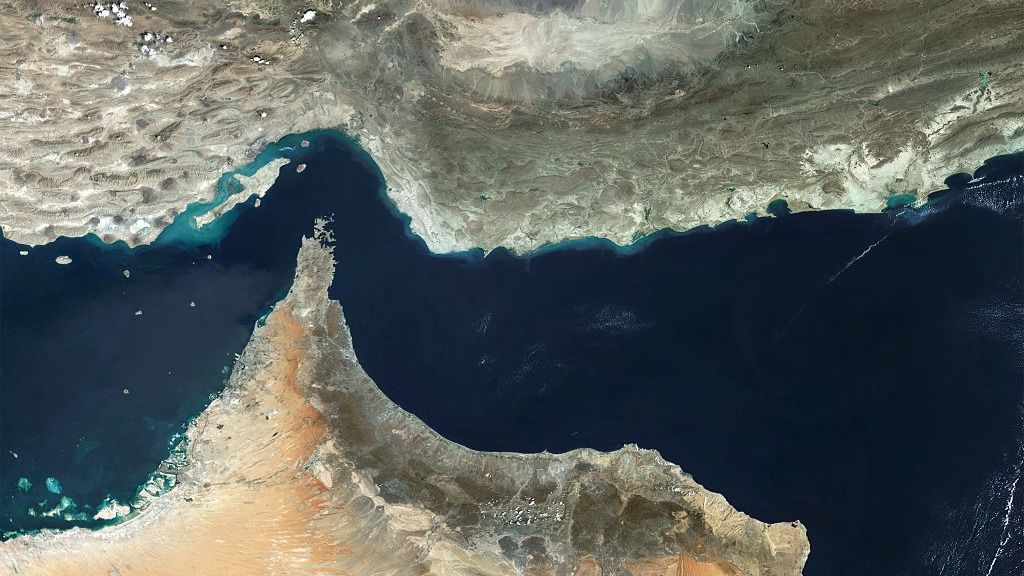
Iran Threatens to Shut Strait of Hormuz as US Ultimatum Escalates Regional Tensions
Tensions between Iran and the United States have intensified after Iranian military authorities warned that the country could shut down the strategic Strait of Hormuz if Washington proceeds with threats to target Iran’s power plants and critical infrastructure. The warning marks a significant escalation in an already volatile regional conflict.
Iran’s Khatam Al-Anbiya Central Military Headquarters issued the threat in a statement aired on state television, stating that any attack on Iran’s energy facilities would trigger the closure of the waterway. According to the statement, the Strait of Hormuz would remain closed until destroyed infrastructure is rebuilt, underscoring Tehran’s stance that it will respond firmly to perceived aggression.
The warning comes in the wake of a reported ultimatum issued by U.S. President Donald Trump, demanding that Iran reopen the vital maritime route within 48 hours. The strait has faced disruptions since the outbreak of hostilities on February 28, following U.S.-Israeli strikes on Iranian targets, further deepening the ongoing conflict.
The Strait of Hormuz, a narrow but globally critical shipping lane, serves as a key passage for a significant portion of the world’s crude oil and liquefied natural gas. Any disruption or closure could have immediate and far-reaching effects on global oil supply, energy prices, and international trade routes, making the situation a major concern for global markets.
READ ALSO:
- Baba Ijesha Speaks Out After Prison Release, Denies Sexual Assault Conviction
- Kurds: The Sepia Pawn on the Chessboard
- Police Arrest Suspected NSCDC Operative, Two Others Over Alleged Robbery
Beyond the threat of closing the strait, Iranian officials have also signaled broader retaliation if its infrastructure is attacked. Mohammad Bagher Ghalibaf, Speaker of Iran’s Parliament, warned that energy and critical infrastructure across the Middle East could become targets if Iran’s power plants are struck. His comments suggest that the scope of any escalation could extend beyond Iran’s borders.
The Islamic Revolutionary Guard Corps (IRGC) reinforced this position, stating that energy facilities in countries hosting U.S. military bases, as well as assets linked to American interests, could be considered legitimate targets in the event of an attack. The IRGC also indicated that Israel’s power plants, communications systems, and energy infrastructure could be included among potential targets in a broader conflict scenario.
Despite the heightened rhetoric, Iran maintains that the Strait of Hormuz remains open to global shipping, except for vessels it associates with adversarial nations. However, ongoing tensions have already contributed to instability in global energy markets, with analysts warning that prolonged uncertainty could trigger further volatility.
The conflict, now in its fourth week, has expanded across multiple parts of the Middle East, with reports of drone and missile exchanges involving Iran, Israel, and locations in Iraq, Jordan, and Gulf states. Iranian officials maintain that their operations are directed at military assets, though the strikes have resulted in infrastructure damage, casualties, and disruptions to aviation and trade.
Diplomatic efforts are ongoing to prevent further escalation. Regional and international actors, including Turkey and the European Union, have engaged in discussions with Iranian and U.S. officials in attempts to de-escalate tensions and explore potential avenues for peace. These efforts come amid growing concerns that continued confrontation could draw in additional parties and destabilize the wider region.
As the situation develops, the possibility of Iran restricting access to the Strait of Hormuz remains a key global concern. Any closure of the waterway could significantly disrupt global energy security, drive up fuel prices, and intensify economic pressure worldwide, making the standoff one of the most closely watched geopolitical flashpoints.
Iran Threatens to Shut Strait of Hormuz as US Ultimatum Escalates Regional Tensions







International
Trump Signs New Executive Orders Targeting Birthright Citizenship, ‘Birth Tourism’
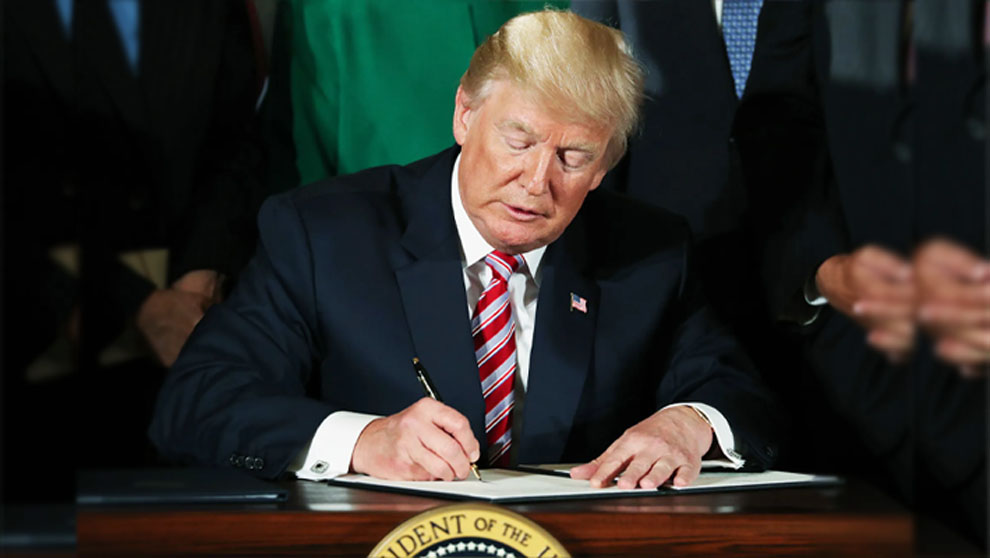
Trump Signs New Executive Orders Targeting Birthright Citizenship, ‘Birth Tourism’
International
Trump rejects US munitions shortage reports, threatens alleged leakers

Trump rejects US munitions shortage reports, threatens alleged leakers
US President Donald Trump has rejected reports that the United States is facing a broad military munitions shortage, insisting that the country retains substantial supplies while warning that officials responsible for leaking classified information about US weapons inventories could face severe punishment.
Trump made the remarks on Thursday as his administration faced renewed scrutiny over the condition of US weapons stockpiles following months of military operations against Iran.
In a post on his Truth Social platform, Trump said the United States had “massive amounts” of munitions, particularly certain types, and added that large quantities were being manufactured and shipped to the country as needed.
The President also warned officials accused of leaking information about US military capabilities, saying those responsible were being pursued and could face lengthy prison sentences.
Trump’s comments came after reports raised concerns about the depletion of some US long-range missiles and air-defence interceptors during the Iran conflict. Reuters reported that US forces had used virtually all of their stockpiles of some long-range precision missiles, including Army Tactical Missile Systems (ATACMS) and Precision Strike Missiles (PrSM), during the five-month war. (Reuters)
However, the reports do not indicate that the United States has run out of weapons generally. Instead, they point to significant pressure on particular categories of high-demand munitions, raising questions about how quickly depleted stocks can be rebuilt.
Trump himself acknowledged on Thursday that the availability of some types of weapons was tighter, while maintaining that the US had an almost unlimited supply of certain other powerful munitions. He also said American defence companies were expanding production capacity, including facilities producing Patriot and Tomahawk missiles. (Reuters)
READ ALSO:
- Military uncovers identities of senior ISIS, ISWAP commanders operating around Lake Chad
- Nigeria’s first indigenous female neurosurgeon appointed medical director of US hospital
- Why Osimhen Turned Down Galatasaray’s Iconic No. 9 Jersey
The issue has become particularly important because the United States is balancing its military requirements in the Middle East with commitments to allies, including Ukraine, which relies heavily on Western air-defence systems to protect against Russian missile and drone attacks.
Independent assessments have also highlighted pressure on US air-defence inventories. The Center for Strategic and International Studies (CSIS) said in July that US stocks of Patriot interceptors had fallen below 1,000, while THAAD interceptor inventories stood at about 250. The organisation warned that continued combat could further reduce stocks and create challenges for US readiness. (CSIS)
CSIS has also assessed that rebuilding some depleted US missile inventories could take several years. Its analysis found that replenishing systems such as THAAD, Patriot and Tomahawk to pre-war levels could take three years or more under existing production projections, while some other missile systems could be replenished more quickly. (CSIS)
The pressure has prompted Washington to accelerate efforts to expand its defence-industrial capacity. Reuters reported that the United States recently reached an agreement worth more than $3 billion with Lockheed Martin and Northrop Grumman to increase production of components for Patriot and THAAD interceptors. The arrangement is designed to significantly increase production capacity as the Pentagon seeks to rebuild depleted stocks. (Reuters)
The situation has also renewed concerns about the United States’ ability to respond simultaneously to multiple major security crises. CSIS has warned that reduced stocks of long-range offensive missiles and air-defence interceptors could create a strategic vulnerability if the US were required to fight another major conflict while continuing to support its allies. (CSIS)
Despite the concerns, the Trump administration maintains that US military readiness has not been fundamentally compromised. The administration has emphasised the size of America’s overall arsenal and the rapid expansion of domestic weapons production.
The disagreement therefore centres largely on the condition of specific weapons inventories rather than whether the United States has weapons available at all. While Trump insists that the country has substantial munitions reserves, independent assessments indicate that several important missile and interceptor stocks have been significantly reduced by sustained combat operations.
The debate is expected to continue as Washington weighs the demands of the Iran war, support for Ukraine and the longer-term need to rebuild American military stockpiles.
Trump rejects US munitions shortage reports, threatens alleged leakers
International
Trump Warns Iran: Open Hormuz or Get ‘Hit Very Hard’ as 48-Hour Deadline Looms
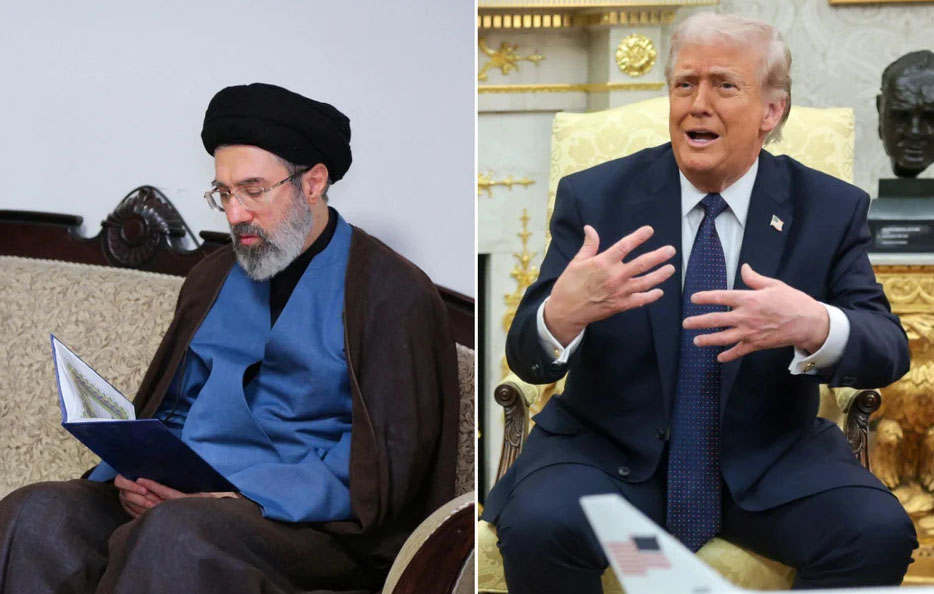
Trump Warns Iran: Open Hormuz or Get ‘Hit Very Hard’ as 48-Hour Deadline Looms
United States President Donald Trump has warned Iran it will be “hit very hard” unless the Strait of Hormuz is reopened “very soon,” while insisting that talks between the two sides were ongoing despite Tehran flatly denying any direct negotiations were taking place. Speaking in an interview with Fox News on Tuesday during a visit to California, Trump said he preferred a diplomatic resolution but left no doubt about the consequences of failure. “The strait is going to be open very soon, or they are going to get hit very hard, and then the strait’s going to be open,” he said. “If they back out again, they are going to get hit really hard. They know that. They understand that. I have no choice.” The president also described the planned military operation as extensive and still on the table despite his decision to pause it over the weekend. “It’s very tough to do what we have planned, still planned. We’ll see what happens,” he said, adding that he was “very proud” of giving Iran a chance to negotiate before launching what he suggested would be a large-scale assault. “We hit them very, very hard. But the hard hit is yet to come, and hopefully we won’t have to use it.” Trump simultaneously accused Iran of duplicity for publicly denying it was in talks with Washington. In a post on Truth Social, he wrote: “Iranian Leadership is unbelievably duplicitous! They ask for a meeting, some would say ‘beg,’ talks begin, with more scheduled in the immediate future, and they say, openly and proudly, that they’re not having any discussions, that nothing is being talked about, and they’re only dealing with ‘Oman’.” He added that “nothing gets through to Iran, unless we want it to, and nothing will get through, unless a Deal, or Total Surrender, is accomplished.”
Iran’s Foreign Ministry flatly rejected Trump’s characterisation. Spokesperson Esmaeil Baghaei said Tehran was not holding direct discussions with the United States and was only engaged in talks with Oman regarding a temporary safe route through the strait. “Discussions are currently focused on a possible navigation corridor for two-way vessel traffic. That initiative is unrelated to negotiations on fully reopening the strait. It is a separate issue,” Baghaei said. Baghaei added that all Iranian negotiators were currently in the country, with Foreign Minister Abbas Araghchi on a religious pilgrimage in Iraq and unavailable for negotiations at least until the end of the week. The only exception, he said, was the ongoing bilateral discussions with Oman as the two coastal states responsible for the waterway.
READ ALSO:
- Primate Ayodele Predicts Obi, Kwankwaso Will ‘Go Nowhere’ in 2027
- Police Probe AIG Jimoh Over VeryDarkMan’s Corruption Allegations
- N78 Million Solar Inverters, 410 Cattle, 10 Guns Recovered as Kaduna Police Arrest 25 Suspects
According to Axios, which cited unnamed regional and US officials, the United States, Iran, and Oman are nearing an interim agreement to reopen the Strait of Hormuz, with Washington hoping to announce the deal as early as Wednesday. The proposed arrangement would be a 60-day agreement for safe passage in the strait between Iran and Oman, with negotiators working on final details. Under the reported framework, ships entering the Persian Gulf would travel north through Iranian territorial waters, while outbound vessels would travel south through Omani waters in coordination with Tehran. The agreement would not involve the collection of transit fees or tolls, and the parties would clear mines from the central shipping lane within 30 days. A US official and one regional source told Axios that Iranian leadership had completed the approval process for the agreement on Tuesday. While US Secretary of State Marco Rubio confirmed that progress had been made in discussions with Iran, he noted that talks had not yet been finalized but that the White House was “hoping” for an agreement “in the very near future.”
Iran’s senior officials have taken a defiant stance, warning the United States against any adventurous actions. The Iranian Foreign Ministry reiterated that Tehran views Hormuz as a crucial source of strategic leverage that it cannot afford to surrender, while Washington insists that Iran must not be allowed to control an international waterway. Iran continues to insist that any agreement must leave it in control of the Strait of Hormuz. Regional officials told The Associated Press that any agreement to reopen Hormuz would also require the removal of the current US blockade on Iranian ports. Meanwhile, Iranian military sources have denied Trump’s claim that Tehran asked Washington to call off its strikes, calling his remarks “a new lie,” according to Iran’s semi-official Mehr news agency.
The diplomatic confusion was underscored when another cargo vessel was attacked near the strait’s Omani coast on Tuesday. The United Kingdom Maritime Trade Operations Centre (UKMTO) reported receiving multiple reports that a tanker had been struck by an unknown projectile approximately eight nautical miles east of Oman’s Limah. The tanker’s crew abandoned the vessel and boarded a lifeboat, with the vessel’s main engine disabled and a bunker tank on fire. The UKMTO did not identify the ship or its owner, and authorities are investigating. Separately, Iran’s Revolutionary Guards said on Tuesday that two oil tankers had caught fire after explosions while attempting to transit the southern route of the strait, though Reuters could not independently verify the Guards’ statement.
The disruption of the Strait of Hormuz has sent oil prices soaring and placed heavy pressure on Trump to stop the fighting, partly because of the effect rising energy prices could have on American voters ahead of the November congressional midterm elections. Treasury Secretary Scott Bessent had earlier told CNBC that a deal to reopen the strait could come as early as Tuesday or Wednesday, saying there were “hundreds if not 1,000 ships sitting in there waiting to go out,” including tankers carrying oil, fertiliser, refined products and industrial gases. Trump has vowed that Iran will not be permitted to collect transit fees in the strait, declaring, “If anyone is allowed to collect fees, it will be us. We have complete control.” The president had previously said he expected to know by Tuesday how the talks were going, “one way or the other,” but insisted that the path forward is clear. As the 48-hour window unfolds, the world watches to see whether the negotiations will yield a breakthrough or whether Trump will follow through on his threat to unleash a devastating military campaign. “If they don’t make a deal, it’s going to be too bad. And we have much more on Iran coming up,” Trump said. All parties remain on high alert, with the potential for a catastrophic escalation in West Asia now greater than at any point since the conflict began.
Trump Warns Iran: Open Hormuz or Get ‘Hit Very Hard’ as 48-Hour Deadline Looms
-
 News3 days ago
Tinubu Meets Jim Ovia, NELFUND CEO at Aso Rock as Student Loans Hit ₦303bn
-

 Education3 days ago
BREAKING: 61.54% Pass Rate as WAEC Releases 2026 WASSCE Results – How to Check Results
-

 metro3 days ago
Boat Operators Rescue Woman Who Jumped Into Lagos Lagoon From Carter Bridge
-
 Politics3 days ago
Why I Rejected Tinubu, Buhari’s Offers to Join APC — Fayose
-

 Sports2 days ago
Super Falcons Thrash Egypt 6-2, Book WAFCON Quarter-Final Date with Cameroon
-

 Politics3 days ago
‘We’ll Meet at The Field’ – Amaechi Replies Tinubu, Vows to Match Ruling Party’s Campaign Tactics
-

 metro3 days ago
Adeleke challenges EFCC over freezing of Osun government account
-

 Business3 days ago
Zenith Bank confirms cyberattack, says customers’ contact information was accessed