

Politics
APC Primaries: Tinubu Issues Stern Warning Against Rancour, Do-Or-Die Politics

APC Primaries: Tinubu Issues Stern Warning Against Rancour, Do-Or-Die Politics
Abuja, Nigeria – President Bola Ahmed Tinubu has called on members of the All Progressives Congress (APC) to prioritise unity, fairness and sportsmanship as the party commences its nationwide primary elections ahead of the 2027 general elections. However, even before the first ballots are cast, the exercise has been marked by a last-minute schedule change, growing resistance to consensus arrangements in several states, and allegations of intimidation in at least one senatorial district. In a personally signed statement released on Thursday, President Tinubu described the primaries as “a referendum on our unity, resilience and strength as a party” and “an opportunity to renew the bond and ideals that we share.” The President noted that the APC, which he co-founded on “the firm principles of progressive politics, consensus democracy, and personal devotion and sacrifice,” is now entering its fourth election cycle.
In a development that emerged shortly after the President’s statement, the APC National Secretariat announced the postponement of the House of Representatives primary election, initially scheduled for Friday, May 15, 2026. The party’s National Publicity Secretary, Felix Morka, confirmed in a late Thursday statement that the exercise will now hold on Saturday, May 16, 2026. The party did not provide an official reason for the adjustment. However, multiple reports indicate that logistical challenges and ongoing disagreements over consensus arrangements in various states contributed to the decision. The revised timetable is as follows: House of Representatives on Saturday, May 16, 2026; Senate on Monday, May 18, 2026; State House of Assembly on Wednesday, May 20, 2026; Governorship on Thursday, May 21, 2026; and the Presidential primary on Saturday, May 23, 2026. The party confirmed that all other previously announced dates remain unchanged.
READ ALSO:
- Why Peter Obi May Struggle to Retain South-East Support in 2027 – Okonkwo
- Court Remands Islamic Cleric for Allegedly Raping 14-Year-Old Girl in Ondo
- Shakira, Burna Boy Unveil Official 2026 FIFA World Cup Anthem
President Tinubu acknowledged ongoing consultations among party leaders aimed at producing consensus candidates in line with the provisions of the Electoral Act 2026 and the APC constitution. He described the consensus option as “commendable” and one that would help “in reducing rancour and bad blood among party members.” Noting the “impressive progress” made in consensus arrangements, the President encouraged party members to “make the most of this window to ensure a seamless process and a more unified party.” However, he cautioned the party’s National Working Committee, governors and state chapter executives against the imposition of favoured candidates, insisting on a level playing field for all aspirants.
Despite the President’s endorsement of consensus, reports indicate that the arrangement is facing widespread rejection across multiple states, potentially forcing the party to conduct direct primaries in several regions. In Yobe State, a consensus arrangement reportedly endorsed by Governor Mai Mala Buni and former Senate President Ahmed Lawan has been strongly opposed by other governorship aspirants, including Kashim Musa Tumsah, former Inspector-General of Police Usman Alkali Baba, and Senator Ibrahim Bomai. Tumsah insisted that consensus must strictly comply with Section 87 of the Electoral Act 2026, which requires the written consent of all cleared aspirants for a consensus candidate to emerge. “Consensus does not mean one or two people sitting in a room to select whoever they want as the party’s candidate,” Tumsah declared. Similar resistance has been reported in Benue, Nasarawa, Adamawa, Gombe, Kwara, Oyo, Sokoto, Zamfara, Kano, and Bauchi states, where aspirants have rejected proposed consensus arrangements and are insisting on direct primaries. Senate Leader Opeyemi Bamidele has defended the consensus provision, noting that “the law is rigid; even a single dissenting voice can nullify a consensus agreement and trigger a full direct primary.”
Where consensus arrangements fail, President Tinubu urged all participants to approach the primaries with maturity and discipline. “Election is an essential ingredient of democracy. Where consensus fails, I urge us all to go into the primaries as brothers and sisters,” he stated. The President warned that the party could not afford “rancorous conduct or the debasement of our democracy and party unity,” adding that all participants “must keep the peace and be ready to play as sportsmen and women in the overall interest of the party and our country.” Offering counsel to both winners and losers, Tinubu said: “In every contest, there will be a winner and a loser. I urge the winners not to gloat in victory and the losers to show sportsmanship by taking things in their stride and preparing for another time.” He further warned against a return to “the do-or-die politics that we have put behind us,” stressing that “politics should never be a zero-sum game.” The President called on winners and party leaders at all levels to reach out to those who did not succeed “with olive branches” and to prioritise reconciliation to strengthen internal cohesion. He noted that losers who feel aggrieved have the opportunity to appeal to the party’s committees set up for redress. In a pointed warning to party members, President Tinubu stated: “Our opponents are waiting for us to be against each other; we should disappoint them. The ultimate winners are those who don’t choose to wreck the boat but rather work to prepare for another round.”
President Tinubu issued a clear directive to the party leadership, governors and other leaders to ensure fairness throughout the primary process. “You must rise above sentiment to offer all aspirants a level playing field that guarantees participation without let or hindrance,” he directed. He added: “While only one person will win for every seat contested, we should give eventual losers the satisfaction of a fair contest.”
The President made a special appeal for greater inclusion of women and youth in politics, urging delegates and leaders to give them special consideration during the primaries. “The inclusion of women and youth is dear to my heart. I appeal to voters in the primaries and leaders at all levels to give special consideration to our women and youth in the contest,” he said, adding that the APC “cannot afford to relegate the two significant demographics of our population.” This appeal aligns with similar commitments made by state governors. In Imo State, Governor Hope Uzodimma recently assured that women and youths would receive priority consideration during the primaries in line with United Nations recommendations advocating broader inclusion in governance, while clarifying that such concessions would not come at the expense of male aspirants.
President Tinubu also directed the Nigeria Police Force and other security agencies deployed for the primaries to remain professional and avoid acting as interlopers during the exercise. “The Police and other security agencies must remain professional and avoid acting as interlopers during this exercise. Your duties strictly centre on ensuring peaceful exercise. Nothing more,” he stated. This directive comes amid concerns raised in Ogun East Senatorial District, where aggrieved party members have petitioned President Tinubu, the APC National Chairman, and the Inspector General of Police over alleged harassment, intimidation, and voter suppression ahead of the senatorial primary scheduled for Monday, May 18, 2026. The petitioners accused Governor Dapo Abiodun and the Ogun State APC leadership of orchestrating the alleged intimidation of supporters of Otunba Gbenga Daniel across the nine local government areas of the district. They have called for urgent intervention to prevent a “full-blown crisis” and demanded adequate security presence before, during, and after the primary election.
Meanwhile, the national leadership of the party has cleared all aspirants who purchased expression of interest and nomination forms for the House of Representatives in Lagos, Rivers, Enugu, Ekiti, and other states to participate in the primary election. A party official involved in the screening process confirmed that “no aspirant was disqualified,” describing the approach as “all-inclusive” despite intense lobbying and pressure from political opponents. President Tinubu concluded his statement by wishing all aspirants and party members success and expressing optimism that the eventual candidates would work together to secure victory for the APC in the general elections. “I look forward to working with the victorious aspirants for the success of our great party in the general election,” he said.
APC Primaries: Tinubu Issues Stern Warning Against Rancour, Do-Or-Die Politics


Politics
2027: Tinubu Has Already Won, Fayose Declares, Says Political System Favours Incumbent

2027: Tinubu Has Already Won, Fayose Declares, Says Political System Favours Incumbent
ABUJA — Former Ekiti State Governor, Ayodele Fayose, has declared that President Bola Ahmed Tinubu enjoys a significant political advantage ahead of the 2027 presidential election, arguing that the country’s political structure heavily favours an incumbent administration.
Fayose expressed confidence in Tinubu’s re-election prospects during a television interview on TVC News on Monday, November 16, 2026, where he discussed the emerging political calculations ahead of the next general elections.
The former governor maintained that defeating a sitting Nigerian president was not an easy task, insisting that opposition politicians could not remove an incumbent government simply by criticising its policies or expressing dissatisfaction with its performance.
According to him, political structures, grassroots mobilisation and the support of influential stakeholders remain critical factors in determining electoral outcomes.
Fayose argued that the political system was already tilting significantly towards Tinubu, suggesting that the President enjoys substantial backing from political actors and structures capable of influencing the 2027 contest.
He maintained that opposition parties must look beyond public criticism and concentrate on building the necessary political machinery if they intend to challenge the ruling All Progressives Congress (APC).
READ ALSO:
- 2027: How We’ll Defeat Tinubu — Amaechi Reveals ADC’s Strategy
- 2027: Suspected Thugs Attack Kwankwaso’s Convoy in Kano, Injure Supporters
- Eight Dead in New York Building Collapse as Nigerian Landlord’s Troubling Past Emerges
Incumbency Advantage
Explaining his position, Fayose said removing a sitting president from office was historically difficult, except under exceptional political circumstances.
He recalled that although former President Goodluck Jonathan lost his re-election bid in 2015, such an outcome should not be treated as something that happens automatically whenever opposition parties unite against an incumbent.
He argued that political ambition alone would not translate into electoral victory without effective grassroots structures and the support of influential political stakeholders.
The former governor also highlighted the importance of sitting governors and other political officeholders in mobilising voters and building support for candidates.
Fayose Challenges Opposition
Fayose further challenged opposition politicians to move beyond constant criticism of Tinubu’s administration and present Nigerians with practical alternatives to the country’s economic and security challenges.
He maintained that although criticism remained an important component of democracy, opposition parties needed convincing policies, political organisation and effective mobilisation to make meaningful electoral progress.
His comments come amid continuing discussions about possible opposition alliances involving prominent political figures, including former Vice-President Atiku Abubakar and former Anambra State Governor Peter Obi.
Reaffirms PDP Membership
Despite his expressed confidence in Tinubu’s political prospects, Fayose reaffirmed his membership of the Peoples Democratic Party (PDP), dismissing suggestions that his position should automatically be interpreted as an indication that he had abandoned the opposition party.
The former governor has repeatedly expressed support for Tinubu’s second-term ambition, even while maintaining his PDP membership.
His latest remarks have added to the growing political debate over the strength of the opposition and the challenges confronting parties seeking to unseat the APC in 2027.
However, Fayose’s declaration remains a political assessment ahead of an election that has yet to be decided. The eventual outcome will depend on voters, party mobilisation, candidates and the credibility of the electoral process.
2027: Tinubu Has Already Won, Fayose Declares, Says Political System Favours Incumbent
Politics
Sheikh Nuru Khalid Speaks on Tinubu, Atiku, Mosque Visits, Warns Against Mixing Politics With Religion
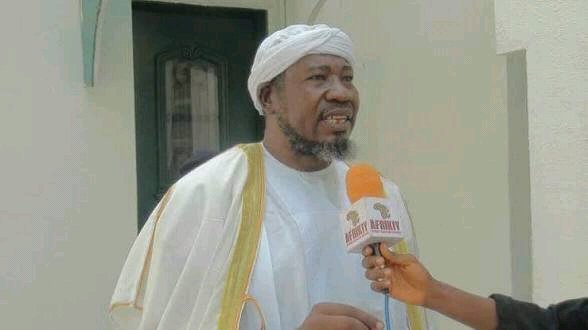
Sheikh Nuru Khalid Speaks on Tinubu, Atiku, Mosque Visits, Warns Against Mixing Politics With Religion
ABUJA — Prominent Islamic cleric, Sheikh Muhammad Nuru Khalid, has cautioned Nigerians against politicising religious activities, insisting that political affiliations should not determine where individuals choose to observe their prayers.
The outspoken cleric made the clarification amid public discussions surrounding the mosque attendance of prominent political figures, including President Bola Tinubu and former Vice President Atiku Abubakar.
Sheikh Khalid maintained that no political leader should be pressured to change their choice of mosque simply because another politician or public office holder has previously worshipped there.
According to him, choosing a place of worship is a personal right that should not be subjected to political sentiments, rivalry or unnecessary public controversy.
The cleric stressed that mosques should remain places dedicated to the worship of Allah, spiritual development and the promotion of unity, rather than becoming platforms for partisan political interests.
He warned against the growing tendency to attach political meanings to the religious activities of public figures, noting that such attitudes could create unnecessary divisions among worshippers.
Sheikh Khalid also called on religious leaders and members of the public to exercise tolerance and respect the freedom of individuals to worship wherever they choose.
He maintained that turning routine religious activities into political controversies would only distract Nigerians from more pressing national issues and undermine religious harmony.
The cleric’s position reinforces the need to maintain a clear distinction between religious responsibilities and partisan political interests, particularly as political activities gradually gather momentum ahead of the 2027 general elections.
He urged Nigerians to prioritise mutual respect, peaceful coexistence and national unity over political disagreements.
Sheikh Nuru Khalid Speaks on Tinubu, Atiku, Mosque Visits, Warns Against Mixing Politics With Religion
Politics
Presidency Deletes AI-Generated Tinubu Rally Photo After Public Outcry
Presidency Deletes AI-Generated Tinubu Rally Photo After Public Outcry
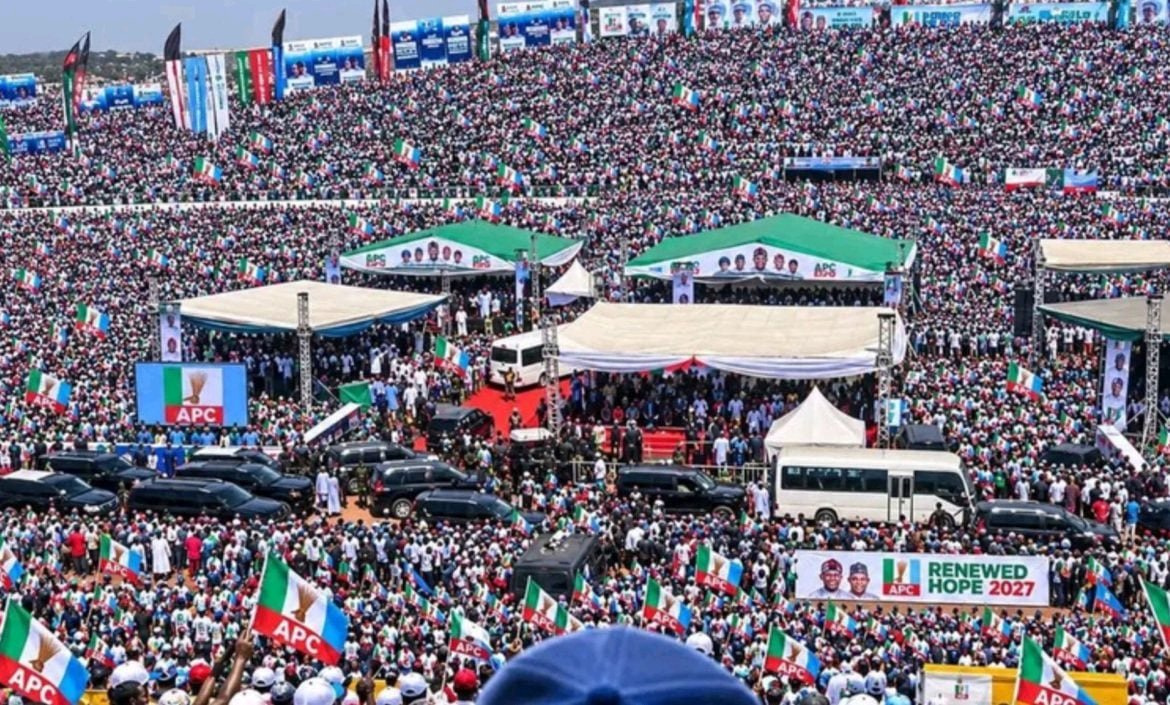
The Presidency has come under fresh public scrutiny after a controversial photograph shared by President Bola Ahmed Tinubu’s media aide, Dada Olusegun, purporting to show a massive crowd at the All Progressives Congress (APC) campaign rally in Plateau State, was deleted following accusations that it had been generated or manipulated using Artificial Intelligence (AI).
The development has sparked debate over the use of digitally manipulated images in political communication, particularly as political parties intensify preparations for the 2027 general elections.
Olusegun, Special Adviser to the President on Social Media, had reportedly shared the photograph on Sunday, November 15, with the caption, **“Plateau State for PBAT.”**
The image depicted what appeared to be a densely packed stadium, with thousands of supporters, APC flags, campaign banners and other political paraphernalia, creating the impression that the ruling party enjoyed overwhelming support at the rally.
However, the photograph soon attracted criticism after social media users began questioning its authenticity and comparing it with other photographs and video recordings from the same event.
The contrasting visuals reportedly showed sections of the stadium with considerably fewer spectators than those portrayed in the controversial photograph.
The controversy eventually drew attention to the authenticity of the image, with critics accusing the presidential camp of using artificial intelligence to exaggerate the rally’s attendance and create a misleading impression of popular support.
An investigation by the Foundation for Investigative Journalism (FIJ), published on November 16, examined the controversial photograph using digital image verification tools, including Google SynthID and Image Whisperer.
According to the investigation, Google SynthID returned an indication that the image had been made or edited with OpenAI technology.
FIJ also reported that two of the four principal detection tools used in its Image Whisperer examination identified strong indications of AI involvement, recording scores of 98 and 99 respectively.
However, the investigation acknowledged that the results were not unanimous, as two other detection tools did not support the AI-generated finding.
The report further explained that the available evidence could not conclusively establish whether the entire photograph was generated artificially or whether an original photograph had subsequently been modified using AI.
One of the visual inconsistencies identified was the appearance of Tinubu and Vice-President Kashim Shettima on a stadium banner, with their faces reportedly differing from their actual appearances.
The controversial photograph was associated with the APC North-Central presidential campaign rally held at Zaria Road Stadium in Jos, Plateau State, on Saturday, November 14.
President Tinubu attended the political gathering alongside Vice-President Kashim Shettima, Senate President Godswill Akpabio, APC National Chairman Nentawe Yilwatda, Plateau State Governor Caleb Mutfwang and other prominent party figures.
The rally formed part of the ruling party’s political activities ahead of the 2027 general elections.
Although the rally itself was confirmed, the debate centred on whether the disputed photograph accurately represented the number of people who attended the gathering.
Videos and photographs circulated by social media users became central to the controversy, with critics questioning why an image that appeared inconsistent with other available footage had been presented as a genuine representation of the event.
The subsequent deletion of the controversial photograph has further intensified public discussion.
Rather than ending the controversy, the development has raised additional questions about the circumstances surrounding its publication, the process through which it was produced and why it was removed after attracting criticism.
As of the time of filing this report, no detailed public explanation from Olusegun regarding the photograph’s creation, publication and deletion had been established in the reports reviewed.
The incident has also renewed concerns about the responsibility of government officials and political communication teams to ensure that photographs shared through official or government-associated platforms accurately represent events.
The controversy comes at a time when artificial intelligence is increasingly being deployed in political campaigns, digital advertising and public relations.
While AI tools can assist with content creation, image enhancement and campaign communication, their misuse can undermine public confidence when manipulated visuals are presented as authentic records of real-life events.
For a country approaching another fiercely contested election cycle, the incident has highlighted the growing importance of transparency and responsible use of digital technology in political messaging.
Ultimately, the controversy has shifted attention from the APC’s political gathering in Plateau State to a more fundamental question: should Nigerians trust campaign photographs circulated by political actors without independent verification?
Presidency Deletes AI-Generated Tinubu Rally Photo After Public Outcry
-
 Politics3 days ago
Peter Obi, NDC in Fresh Storm as Keyamo Gives Dickson 48 Hours Over Old National Anthem, Raises Secession Alarm
-

 metro3 days ago
Kwankwaso’s Daughter, Kano Governor’s Wife, Files for Divorce, Offers to Refund Dowry
-

 metro3 days ago
“I Cheated Because I’m Human Too” — Divorced Restaurant Owner Accuses Ex-Husband of Sleeping With Over 16 Women
-

 Business2 days ago
OPay Faces ₦994m Regulatory Fines Over Money Laundering, Terrorism Financing Breaches
-
 metro2 days ago
Tragedy: “I Suffered With This Man When He Had Nothing” — Woman Who Begged Alleged Rival To Leave Her Family Dies At 39
-
 metro3 days ago
Pastor Remanded Over Viral Video of Toluwanisings’ Corpse After Failed Attempt to Raise Singer From Dead
-

 metro2 days ago
Zamfara Bloodbath: 53 Killed as Vigilantes Ambush Bandits After Kidnapping Spree
-

 Business14 hours ago
Petrol Prices Crash as Dangote Refinery, NNPCL, MRS Adjust Rates Nationwide