

metro
Businessman Sues Ex-Wife Over Refusal to Leave His House Five Years After Divorce

Businessman Sues Ex-Wife Over Refusal to Leave His House Five Years After Divorce
A businessman, Abibu Yakubu, has filed a petition against his ex-wife at the Upper Area Court 1, Karu, over alleged refusal to leave his house after divorce.
Yakubu is also seeking custody of his four children.
He filed the case against his estranged wife, Shuwadatu Mohammed, on October 13, 2025.
According to the particulars of claim, Yakubu, who resides at Orange Market, Mararaba, Karu LGA, said the respondent is his ex-wife and also resides at the same address.
He averred that the respondent does not respect him and his parents and often insults them.
He said that the marriage is blessed with four children aged 22, 19, and a set of six-year-old twins.
Yakubu alleged that he divorced his wife about five years ago but she refused to vacate his house.
He claimed she said she would not leave until she killed him.
He further alleged that the respondent occupied his house and threatened his life, adding that he no longer sleeps with his eyes closed.
The petitioner told the court that the ongoing dispute has created fear and tension in his daily life.
He prayed the court to hold the respondent responsible if anything happens to him.
READ ALSO:
- INEC Timetable Nullification: ADC Predicts Mass Defections From APC
- Tinubu Has No Plan to Change Nigeria’s Name or Abolish Sharia Law – Presidency
- IGP Disu: Inside the rotting walls of Zone II
The petitioner also asked the court for a re-dissolution of the marriage and custody of the four children.
The Judge, Mohammed Yakubu, after hearing the matter, adjourned the case until June 3, 2026, for continued hearing.
Under Nigerian law, disputes over property after divorce are governed by several key principles.
For a property to be considered in asset distribution, it must generally have been acquired during the subsistence of the marriage.
Properties acquired before the marriage or after its dissolution are typically excluded.
The court also considers factors such as each spouse’s contribution to acquiring the property, including non-financial contributions like homemaking and child-rearing.
In this case, Yakubu claims the house belongs to him and seeks its vacant possession.
His ex-wife’s refusal to leave, despite the divorce being finalized five years ago, forms the crux of the dispute.
On the issue of child custody, Nigerian courts prioritize the welfare and best interests of the child.
Factors considered include the child’s age, health, education, emotional well-being, and the ability of each parent to provide proper care and stability.
For younger children, courts often prefer that they stay with the mother unless there is a compelling reason to decide otherwise.
Joint custody is often encouraged to ensure that both parents remain involved in the child’s life.
In a similar case, a man named Quadri dragged his ex-wife, Gbemisola, before a Grade A Customary Court in Mapo, Ibadan, over illegal possession of his properties.
Quadri stated that Gbemisola had been in possession of his three-bedroom apartment and shop for more than one year after the court had pronounced their marriage dissolved.
He regarded his ex-wife as either a tenant or a trespasser since they were no longer husband and wife.
Gbemisola, however, refused to be addressed as a tenant, explaining that she contributed N650,000 to the construction of the two properties.
She insisted that the properties be sold and the proceeds shared among her, her ex-husband, and their children.
The court president, Mrs. S.M. Akintayo, ruled that the defendant had no right to still be in possession of both properties since the court had dissolved their union.
Akintayo ordered the defendant to vacate the three-bedroom apartment and shop on or before September 12, 2025.
The Karu court is scheduled to resume hearing on June 3, 2026.
The judge will consider Yakubu’s claims of threats and his ex-wife’s alleged refusal to vacate.
The court may also address the custody request for the couple’s four children.
If the court rules in Yakubu’s favour, his ex-wife could be ordered to leave the property.
The case highlights the challenges some individuals face in enforcing property rights after divorce in Nigeria.
Businessman Sues Ex-Wife Over Refusal to Leave His House Five Years After Divorce













metro
Troops Take Down Zamfara Bandit Kingpins Baban Love, Mai Zamani, Three Others

Troops Take Down Zamfara Bandit Kingpins Baban Love, Mai Zamani, Three Others
Troops of Operation FANSAN YANMA have killed at least five suspected bandits, including two notorious figures identified as Baban Love and Mai Zamani, during a gun battle in Tsafe Local Government Area of Zamfara State.
The operation reportedly took place in the western axis of Tsafe LGA, where armed groups have maintained a presence and carried out attacks on communities and travellers.
Security sources said Baban Love, who was reportedly operating around Gunja, mobilised members of his gang before they encountered the troops, leading to a fierce exchange of gunfire.
The troops eventually overpowered the armed group, killing at least five suspected bandits, according to reports on the operation.
Mai Zamani was also identified among those killed. He was reportedly the younger brother of Idi Mai Randa, another suspected bandit kingpin who was killed about five months ago.
READ ALSO:
- FG Gives N250m To Families Of 37 Miners Who Died In NSCDC Custody
- Tompolo’s PBAT Movement Suspends Campaign Over Ondo Military Crash
- FULL LIST: NAF Releases Names Of 25 Victims Killed In Ondo Crash
Residents of Kwarin Ganuwa were said to have celebrated the reported deaths of the two bandit leaders, while vehicles belonging to the group were reportedly recovered after the encounter.
Security sources said efforts were ongoing to identify the other suspected bandits killed during the operation and assess the weapons and other items recovered from the scene.
The latest operation is part of intensified military operations in Zamfara State aimed at disrupting the activities of armed groups and restricting their movement across the state’s forests and communities.
Zamfara has continued to experience attacks and abductions despite sustained military operations. Governor Dauda Lawal said on Monday that the state government was working to improve security response time, particularly in areas such as Tsafe, where notorious bandit leader Ado Alero and his gang have been active.
The governor said poor road access in some areas had affected the ability of security personnel to respond quickly to attacks, while the government was also deploying technology, including drones, to improve surveillance.
The military has yet to publicly release a detailed official statement on the reported killing of Baban Love, Mai Zamani and the other suspected bandits.
Troops Take Down Zamfara Bandit Kingpins Baban Love, Mai Zamani, Three Others
metro
FG Gives N250m To Families Of 37 Miners Who Died In NSCDC Custody

FG Donates N250m To Families Of 37 Miners Who Died In NSCDC Custody
The Federal Government has donated N250 million to the families of 37 suspected illegal miners who died while in the custody of the Nigeria Security and Civil Defence Corps (NSCDC) in Niger State.
Vice President Kashim Shettima announced the financial support on Monday during a condolence visit to Minna, where he conveyed President Bola Ahmed Tinubu’s sympathies to the bereaved families, the Niger State Government and the people of the state.
The 37 men died after they were arrested during an NSCDC operation against suspected illegal mining in Minna earlier in September. The circumstances surrounding their deaths remain under investigation.
Shettima said the Federal Government was determined to establish what happened and ensure that anyone found culpable was held accountable in accordance with the law.
He said the deaths of citizens while in government custody raised serious questions that could not be ignored, stressing that every person deprived of liberty remained entitled to the protection of the state.
“The death of 37 young men in the custody of the Nigeria Security and Civil Defence Corps calls for initial questions,” Shettima said, adding that grief alone could not answer the questions being asked by the victims’ families.
READ ALSO:
- Former NADECO Leader Ralph Obioha Dies At 80
- Imo NYSC Abduction: CUPP Faults Security Strategy, INC Seeks Vigilantes’ Role In Rescue
- Three Dead, Eight Injured As Gunmen Strike Plateau Communities
The Vice President assured the families that the Federal Government would get to the root of the tragedy and provide answers on the circumstances that led to the deaths.
He also urged Nigerians not to politicise the incident or use it to demonise Niger State Governor Umaru Bago, noting that the NSCDC is a Federal Government agency.
The Federal Government had earlier constituted a 10-member independent investigative committee to establish the identities of the deceased, investigate their arrest and detention, determine the cause and manner of death through medical and forensic examinations, and establish whether negligence, misconduct or other breaches of duty occurred.
Several NSCDC officers, including the Niger State Commandant, were also suspended pending the outcome of the investigation.
The committee, inaugurated by the Minister of Interior, Olubunmi Tunji-Ojo, was given two weeks to complete its assignment and recommend appropriate action, including compensation where applicable.
Meanwhile, the Niger State Government has reportedly put the overall death toll connected to the incident at 38, with one additional person said to have been killed by gunfire during the unrest that followed the deaths. The 37 victims covered by the Federal Government’s N250 million support were those who died in NSCDC custody.
Governor Bago thanked the Federal Government for the intervention and said the state government would continue to cooperate with the investigative committee.
He also announced additional financial support for the affected families, while calling for stronger regulation of the mining sector and the creation of safer and lawful economic opportunities for young people.
The cause of the 37 miners’ deaths has not been conclusively established. The ongoing investigation is expected to determine what happened to the detainees and whether any individuals or institutions should be held responsible.
The Federal Government said the families deserve both justice and answers over the deaths.
FG Gives N250m To Families Of 37 Miners Who Died In NSCDC Custody
metro
FULL LIST: NAF Releases Names Of 25 Victims Killed In Ondo Crash
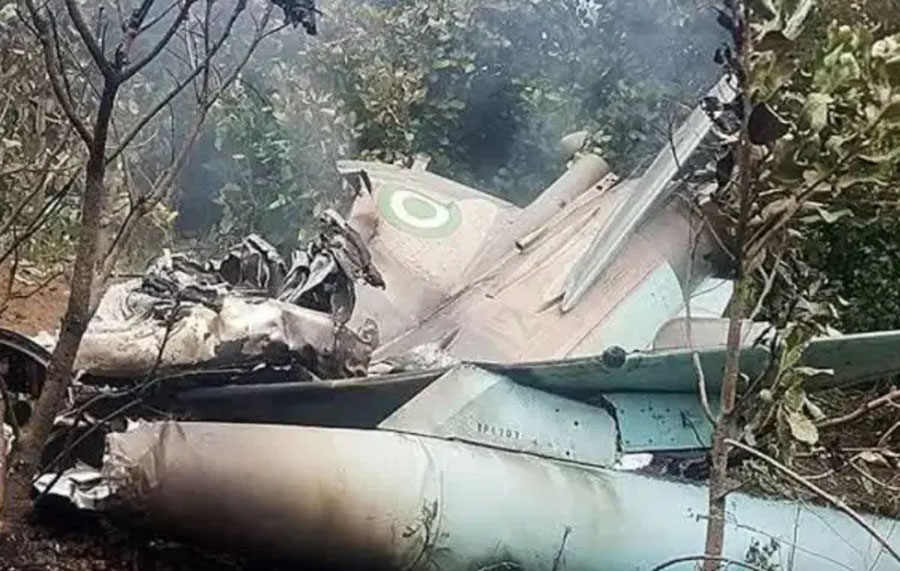
FULL LIST: NAF Releases Names Of 25 Victims Killed In Ondo Crash
The Nigerian Air Force (NAF) has released the names of the 25 people killed in the Ondo aircraft crash, confirming that five crew members and 20 passengers were on board the ill-fated aircraft.
The NAF 931 ATR-42 aircraft crashed in the Igbokoda area of Ilaje Local Government Area of Ondo State on Monday while on a routine mission from Benin to Lagos.
In a statement issued on Tuesday, the NAF said no survivors had been found.
The Chief of the Air Staff, Air Marshal Sunday Kelvin Aneke, expressed condolences to the families, loved ones and colleagues of the victims and directed a comprehensive investigation into the circumstances surrounding the crash.
The NAF also urged the public to avoid speculation and the circulation of unverified information.
The latest NAF figure of 25 people on board differs from the initial information released by aviation authorities on Monday, when the aircraft was reported to have had 25 passengers and seven crew members. The NAF’s subsequent review identified 20 passengers and five crew members. (State House Abuja)
READ ALSO:
- Supreme Council For Sharia Secretary-General Nafiu Baba-Ahmed Dies
- Former NADECO Leader Ralph Obioha Dies At 80
- Imo NYSC Abduction: CUPP Faults Security Strategy, INC Seeks Vigilantes’ Role In Rescue
FULL LIST OF VICTIMS
Crew members
- Squadron Leader M.I. Aburime — Flight Captain
- Squadron Leader A.P. Man-Ugwueje — Co-pilot
- Flight Lieutenant I.S. Bako — Co-pilot
- Warrant Officer Abubakar A. — Aircraft Technician
- Corporal Uguru H.C. — Aircraft Technician
Passengers
- Flight Lieutenant T.L. Lazarus
- Flight Lieutenant M. Akinloye
- Flying Officer I.M. Adeshina
- Master Warrant Officer Onwuka F.
- Master Warrant Officer Matini B.A.
- Warrant Officer Nuhu F.S.
- Flight Sergeant James R.B.
- Flight Sergeant Mohammed A.I.
- Sergeant Ani A.E.
- Sergeant Izibenikien S.I.
- Sergeant Alafuka C.
- Sergeant Mbadugha A.N.
- Lance Corporal Ugwuba F.C.
- Lance Corporal Eledan G.E.
- Mrs Ezeh Nneka
- Godstmine Tarabina
- Joy Micheal
- Sunday Micheal
- Ukeme David
- Gideon Omotola
The Air Force said search-and-rescue procedures were activated immediately after the accident in coordination with relevant authorities to locate and account for everyone on board.
Aneke described the crash as a deeply painful moment for the Nigerian Air Force and the nation and assured the bereaved families of the Service’s full support.
The NAF said it would continue to provide verified updates as the investigation progresses.
President Bola Ahmed Tinubu has also declared three days of national mourning for the personnel who died in the crash and directed that national flags be flown at half-mast. He also ordered a thorough investigation into the accident. (State House Abuja)
The exact cause of the Ondo plane crash remains under investigation.
FULL LIST: NAF Releases Names Of 25 Victims Killed In Ondo Crash
-

 metro2 days ago
‘I Thought I Was Dead’ — Hairstylist’s Daring Escape From Kidnappers After Benin-Ore Ambush
-

 metro3 days ago
Tension as Kidnappers Threaten to Kill Abducted Oyo Corps Members
-

 metro21 hours ago
Tragedy Strikes FMC: Medical Director Loses Two Daughters—A Doctor and a Pharmacist—Within 48 Hours
-

 Politics3 days ago
Wike to Amaechi: What Did You Bring to Rivers After 24 Years in Power?
-

 International3 days ago
Nigerian-Born Ex-Professor Jailed 78 Months Over $1.3m US Student Aid Fraud
-

 metro1 day ago
Transporters Urge IGP Disu to Arrest Illegal Highway Tax Collectors
-

 Entertainment2 days ago
“Sometimes, I Wonder Why I Married My Husband” — Omotola
-

 Politics1 day ago
2027: Soludo Govt Accuses Peter Obi Of Plot To Destroy APGA