

Business
Tantita Operations Push Oil Export Earnings to $9.39bn in Q2

Tantita Operations Push Oil Export Earnings to $9.39bn in Q2
Nigeria’s crude oil export earnings rose to $9.39 billion in the second quarter of 2026, with improved pipeline security, higher production and greater stability in the Niger Delta supporting the stronger performance.
Provisional Balance of Payments (BOP) data showed that Nigeria’s total goods exports increased to $20.08 billion in Q2, up from $15.56 billion in the first quarter.
Crude oil exports increased by 15.78 per cent to $9.39 billion, while natural gas exports climbed by 40.15 per cent to $3.63 billion.
The improvement has renewed attention on the role of pipeline security in protecting Nigeria’s oil production and ensuring that crude reaches evacuation points and export terminals.
Among the companies involved in pipeline surveillance in the Niger Delta is Tantita Security Services Nigeria Limited (TSSNL), which was engaged by the Federal Government to protect oil pipelines and other critical petroleum infrastructure.
Tantita’s operations, carried out alongside government security agencies, have focused on tackling oil theft, illegal bunkering and pipeline vandalism and improving the security of facilities used to transport crude oil.
READ ALSO:
- Fifty Years After “Africa Has Come of Age”: A Personal Reflection on Nigeria’s Silence at the United Nations
- Family seeks N10m to free kidnapped newlywed, other victims
- Trump launches ‘Super Intelligence Force’ to keep US ahead in AI race
Industry stakeholders have linked the improved operating environment in the Niger Delta to increased crude production and stronger export performance. However, the rise in export earnings cannot be attributed to Tantita alone, as production volumes, international oil prices, investments, operational efficiency and wider government measures also influence export receipts.
The broader export figures also showed significant improvements across other sectors of the petroleum industry.
Refined petroleum product exports increased by 66.24 per cent to $3.94 billion, while non-oil exports rose by 25.30 per cent to $3.12 billion during the quarter.
At the same time, Nigeria’s crude oil imports fell sharply from $1.39 billion in Q1 to $580 million in Q2, further strengthening the country’s external position.
The stronger export performance helped push Nigeria’s current account surplus to $7.54 billion, representing a 67.93 per cent increase from the $4.49 billion recorded in Q1. The figure was also higher than the $5.17 billion recorded in Q2 2025.
The increase in the current account surplus was driven largely by higher export earnings and an improved goods account.
The rise in crude earnings also coincided with stronger production, with Nigerian crude output reaching about 1.56 million barrels per day in June 2026, excluding condensates.
The development is significant for Nigeria, which has struggled in recent years to consistently meet its production potential because of crude oil theft, pipeline vandalism, ageing infrastructure and underinvestment in the upstream sector.
Improving security around oil-producing assets has therefore become a key part of efforts to raise output and increase foreign-exchange earnings.
Tantita, led by High Chief Government Oweizide Ekpemupolo, popularly known as Tompolo, has been at the centre of the Federal Government’s pipeline surveillance arrangement in the Niger Delta.
Stakeholders, however, say sustained growth in oil earnings will require more than surveillance operations. They have called for continued investment in exploration and field development, improved infrastructure, enhanced recovery from mature fields and faster development of major deepwater projects.
The Federal Government has also been pursuing measures aimed at attracting fresh investment into Nigeria’s upstream sector, including fiscal incentives for deepwater oil and gas projects.
For Nigeria, the latest export figures offer a boost at a time when the country is seeking stronger foreign-exchange inflows, increased oil production and greater fiscal revenues.
The challenge now is to sustain the improvement by keeping petroleum infrastructure secure, reducing crude losses and ensuring that higher production translates into consistent export earnings and broader economic benefits.
Tantita Operations Push Oil Export Earnings to $9.39bn in Q2





Auto
Dangote Sinotruk Unveils Nigeria’s First Locally Assembled Electric Truck, Targets West African Market

Dangote Sinotruk Unveils Nigeria’s First Locally Assembled Electric Truck, Targets West African Market
…Milestone positions Nigeria as emerging hub
Nigeria has taken a significant step towards clean-energy transportation and advanced automotive manufacturing with the rollout of its first locally assembled electric heavy-duty truck by Dangote Sinotruk West Africa Limited.
The historic development, which also marks the assembly of what Sinotruk described as the first new-energy truck on the African continent, signals the entry of Nigeria’s commercial vehicle industry into a new phase of electric mobility and reinforces the country’s ambition to become a major automotive manufacturing hub in West Africa.
The electric truck was unveiled at the company’s assembly facility in Ikeja, Lagos, at an event attended by senior officials of the Dangote Group, Sinotruk Group, Lagos State Government, industry stakeholders, customers and business partners.
The development represents a major expansion of the Dangote-Sinotruk joint venture beyond conventional commercial vehicle assembly into new-energy mobility, adding electric heavy-duty trucks to its existing range of trucks, tippers, pickups, light commercial vehicles and buses.
Speaking at the event, Group Vice-President of Dangote Industries Limited, Devakumar V.G. Edwin, described the rollout as another important milestone in the evolution of the partnership, reaffirming the group’s commitment to technological innovation, environmental sustainability and local industrial development.
He said the introduction of electric trucks followed the company’s earlier investment in compressed natural gas (CNG) technology and reflected its determination to keep pace with the changing dynamics of the global automotive industry.
“Today, we are taking an important further step as the global economy is looking for sustainable business, that is, vehicles which will also be protective of the environment. So, we went into CNG technology and now we are going into the electric technology. This is a technology which is revolutionising the whole world,” Edwin said.
According to him, electric commercial vehicles offer considerable opportunities for transport and logistics operators, particularly through reduced operating costs and lower tailpipe emissions, depending on electricity tariffs, vehicle applications and the availability of charging infrastructure.
“The electric commercial vehicle offers the potential for lowering the operating cost and reducing the tailpipe emissions. Depending on the application, the electricity cost and the charging infrastructure, it is going to be highly beneficial to the people,” he added.
Edwin acknowledged that the successful adoption of electric trucks would depend on the availability of reliable charging facilities, technical expertise, spare parts and efficient after-sales services.
He said the company was already putting the necessary structures in place, including developing its technical support team and preparing to assist customers with charging infrastructure and other requirements for operating electric commercial vehicles.
“We recognise that this successful adoption will also require reliable charging facilities, technical expertise and spare parts and a strong after-sales support. So, we are already getting ready with a strong after-sales support. We are setting up our team,” he said.
Beyond the introduction of electric trucks, Edwin said the Dangote Group’s broader ambition was to transform the joint venture into one of West Africa’s leading automotive assembly and manufacturing businesses.
He explained that the partnership was established to strengthen local production capacity, facilitate technology transfer, develop Nigerian technical expertise and create employment opportunities while reducing dependence on imported vehicles.
Edwin recalled that the Dangote Group undertook extensive assessments of Chinese truck manufacturers before selecting Sinotruk as its technology partner.
He said the company would continue to deepen local assembly, increase local content and equip Nigerian engineers and technicians with the skills required to participate in advanced vehicle manufacturing.
As part of the technology-transfer programme, Sinotruk is expected to provide specialised training for Nigerian personnel, including opportunities for selected engineers and technicians to receive practical exposure at its facilities in China.
“This is more than a launch of new vehicles. It’s a statement of our commitment to innovation, our commitment to green energy, and the future of mobility,” Edwin said.
Africa’s first new-energy truck
President of Sinotruk Group, Liu Wei, described the rollout as a historic achievement for Nigeria, the joint venture and the wider African automotive industry.
He said the electric heavy-duty truck represented a practical contribution to Nigeria’s energy-transition objectives and a major step towards localising the production of new-energy commercial vehicles on the continent.
“Today, we gather in the beautiful city of Lagos to witness the official roll-off of the first electric heavy-duty truck from the joint venture. More importantly, it represents a substantial step forward for Nigeria and West Africa in driving localised manufacturing and the green transition of new-energy commercial vehicles,” Liu said.
He noted that the initiative aligned with Nigeria’s long-term carbon-neutrality objectives and efforts to modernise its energy mix, reduce transportation emissions and strengthen domestic industrial capacity.
Tracing the evolution of the partnership, Liu said the relationship between Sinotruk and the Dangote Group began in 2010, while the joint venture was formally established in 2014.
The first heavy-duty truck rolled off the assembly line in 2017, while the commissioning of a commercial vehicle welding and e-coating paint line in 2024 marked another significant advancement in the company’s local manufacturing capabilities.
He disclosed that the joint venture had so far assembled more than 8,000 vehicles in Nigeria, adding that the company would continue investing in production technology, skills development and local manufacturing to serve the Nigerian and wider West African markets.
Liu also emphasised the importance of developing local technical capacity, particularly by providing Nigerian engineers and young people with opportunities to acquire the specialised skills required in electric vehicle manufacturing and maintenance.
Lagos Government hails milestone
The Lagos State Government welcomed the development, describing it as a defining moment for Nigeria’s industrial and transportation sectors.
A representative of the Commissioner for Transportation said the locally assembled electric truck demonstrated Nigeria’s growing capacity to participate in the global transition towards cleaner transportation rather than remain dependent on imported automotive technologies.
The government representative highlighted the potential of electric commercial vehicles to reduce transportation-related emissions, lower long-term operating costs for logistics operators and create new employment opportunities in engineering, vehicle assembly and technical services.
The government also commended Dangote Sinotruk for combining international automotive technology with local industrial capacity, urging the company to sustain its investment in local manufacturing and skills development.
The rollout marks another important phase in the growth of Dangote Sinotruk West Africa Limited, which has progressively expanded its product range and manufacturing operations to meet the demands of Nigeria’s transportation, construction and logistics sectors.
With electric heavy-duty trucks now added to its portfolio, the company is positioning itself at the intersection of commercial transportation, automotive industrialisation and the emerging green-energy economy.
For the Dangote Group, the development reinforces its broader industrialisation strategy of building local production capacity, transferring technology, creating jobs and developing Nigerian businesses capable of competing in regional markets.
As Nigeria’s first locally assembled electric heavy-duty truck prepares to enter the commercial transportation market, the milestone offers a glimpse into the future of the country’s automotive industry, where global technology, local manufacturing and cleaner energy could combine to reshape the movement of goods across Nigeria and West Africa.
Auto
Osanipin, FRSC Corps Marshal to Lead Dignitaries at 19th NAJA Auto Awards

Osanipin, FRSC Corps Marshal to Lead Dignitaries at 19th NAJA Auto Awards
The Director-General of the National Automotive Design and Development Council (NADDC), Chief Joseph Oluwemimo Osanipin, and the Corps Marshal of the Federal Road Safety Corps (FRSC), Shehu Mohammed, are among the high-profile dignitaries expected at the 19th Nigeria Auto Journalists Association (NAJA) International Auto Awards scheduled for December 3, 2026, in Lagos.
The two senior government officials have confirmed their attendance at the prestigious annual event, which will bring together leading automobile manufacturers, vehicle assemblers, distributors, policymakers, industry executives and other stakeholders to celebrate excellence and innovation in Nigeria’s automotive sector.
The ceremony will take place at the Civic Centre, Victoria Island, Lagos.
Osanipin’s participation is expected to add significant weight to the occasion, considering NADDC’s pivotal role in implementing the Federal Government’s automotive industrialisation policy and driving the development of the local automotive industry.
The council is at the forefront of initiatives aimed at promoting local vehicle assembly, developing indigenous automotive technology, building technical capacity and attracting investments into the sector, particularly as Nigeria explores opportunities in electric mobility and other alternative-energy solutions.
Similarly, the confirmation of the FRSC Corps Marshal as a Special Guest highlights the critical relationship between road safety and the growth of the automotive and transportation industries.
The FRSC plays a central role in road safety enforcement, driver education, vehicle safety advocacy and the promotion of responsible motoring practices across the country.
Chairman of the 2026 NAJA Awards Planning Committee, Frank Kintum, expressed satisfaction with the confirmation of the two government officials, saying their participation would further elevate the profile of the ceremony.
He said preparations were progressing steadily to deliver a memorable event that would recognise outstanding contributions, innovation and professionalism across the automotive value chain.
NAJA Chairman, Theodore Opara, said the awards had remained a credible platform for identifying and celebrating individuals and organisations whose contributions were advancing Nigeria’s automotive industry.
Now in its 19th edition, the NAJA International Auto Awards has grown into one of the industry’s major annual gatherings, recognising excellence among automobile manufacturers, vehicle assemblers, distributors, after-sales service providers and other key players.
This year’s awards will cover several segments of the industry, including Car of the Year, SUV of the Year, Bus of the Year, Pickup of the Year, automotive distribution, alternative-energy mobility, after-sales services and outstanding individual contributions.
The Car of the Year category is expected to be one of the major highlights of the evening, with established automotive brands and emerging players likely to compete for the coveted industry recognition.
The event is expected to attract leading personalities and corporate organisations whose investments, innovations and professional contributions continue to shape the future of Nigeria’s automotive industry.
Business
Petrol Prices Crash as Dangote Refinery, NNPCL, MRS Adjust Rates Nationwide
Petrol Prices Crash as Dangote Refinery, NNPCL, MRS Adjust Rates Nationwide
By Newstrends Reporter
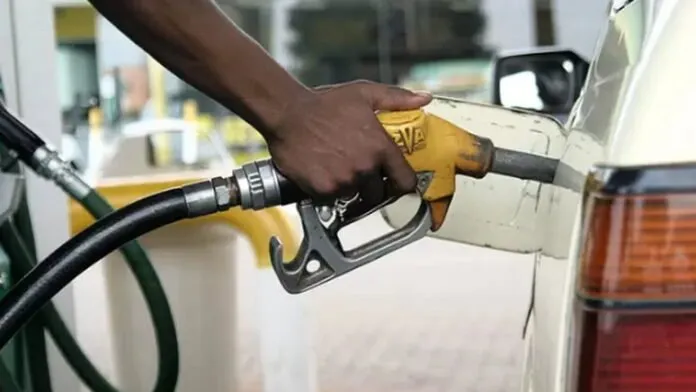
Motorists across Nigeria may heave a sigh of relief as petrol prices begin to drop following fresh adjustments by major players in the downstream petroleum sector, including the Dangote Refinery, Nigerian National Petroleum Company Limited (NNPCL) and MRS Oil Nigeria.
The latest development comes amid a decline in international crude oil prices and a reduction in the landing cost of imported petroleum products, raising hopes of cheaper petrol and reduced transportation costs for Nigerians.
Market checks indicate that the Dangote Refinery has adjusted its petrol gantry price to ₦1,159 per litre, while the landing cost of imported petrol has reportedly dropped to approximately ₦1,063 per litre.
The adjustment is expected to influence pricing decisions among depot owners and independent petroleum marketers, many of whom have continued to review their selling prices in response to changing market conditions.
Depot owners are reportedly dispensing petrol to marketers at prices ranging between ₦1,175 and ₦1,215 per litre, while retail pump prices vary across different locations.
In Abuja and some other parts of the country, petrol prices have reportedly ranged between ₦1,325 and ₦1,420 per litre, depending on the filling station and location.
The latest price movement has also drawn attention to the growing influence of locally refined petroleum products in Nigeria’s downstream market, particularly as the Dangote Refinery continues to compete with imported products.
The reduction is expected to bring some relief to commercial transport operators, private vehicle owners, manufacturers and small business operators who have been struggling with rising fuel and operational costs.
For many households, any sustained reduction in petrol prices could also help moderate transportation fares and the cost of moving food and other essential commodities across the country.
Industry observers believe that increased local refining capacity and competition among petroleum suppliers could help improve price stability in the domestic market.
However, the extent of the relief available to consumers will depend on how quickly filling station operators adjust their pump prices and whether the current decline in international oil prices can be sustained.
Other factors, including foreign exchange movements, crude oil prices and distribution expenses, will continue to influence the cost of petrol in Nigeria.
For now, the latest adjustments by the Dangote Refinery, NNPCL and MRS have raised expectations of further reductions in petrol prices, offering a potential reprieve to Nigerians grappling with the high cost of living.
Petrol Prices Crash as Dangote Refinery, NNPCL, MRS Adjust Rates Nationwide
-

 metro3 days ago
Goodluck Jonathan’s Second Wife, Ayima, to Unveil Memoir ‘Gold Dust’ in Abuja at 50
-

 metro19 hours ago
Viral Video: Nigerian Army Explains Why Soldiers, DSS Operatives Met Bandits In Kwara Forest
-
 Business3 days ago
Petrol Prices Crash as Dangote Refinery, NNPCL, MRS Adjust Rates Nationwide
-

 Politics3 days ago
Sheikh Nuru Khalid Speaks on Tinubu, Atiku, Mosque Visits, Warns Against Mixing Politics With Religion
-

 International2 days ago
Canada: Eight Nigerians Among 12 Arrested in $4.5m Auto Theft Bust, 96 Vehicles Recovered
-

 Sports3 days ago
Bukayo Saka, Fiancée Tolami Benson Spark Breakup Rumours Over Alleged Prenup Dispute
-

 News2 days ago
BREAKING: Fountain Of Life Crisis Deepens As Trustees Reaffirm Jimmy Odukoya’s Removal, Appoint Interim Leader
-

 metro2 days ago
Reports Claim Fountain Of Life Church Removes Jimmy Odukoya As Senior Pastor Over Succession Dispute