

Politics
‘Fix Oyo First’ – Presidency Tackles Makinde Over Attack on Tinubu
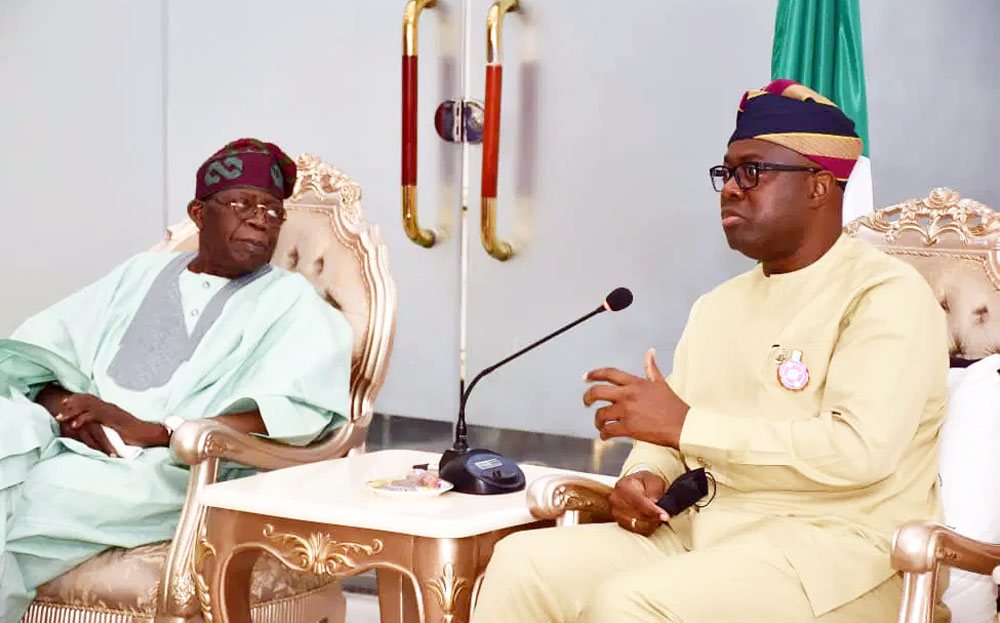
‘Fix Oyo First’ – Presidency Tackles Makinde Over Attack on Tinubu
ABUJA, Nigeria – The Nigerian Presidency has fired back at Oyo State Governor Seyi Makinde following his criticism of President Bola Tinubu’s administration regarding the proposed implementation of state police, telling the governor to “fix Oyo first” before lecturing the federal government on security matters. The presidency’s response was contained in a statement on Friday by the President’s Special Adviser on Social Media, Dada Olusegun, who accused Governor Makinde of using the federal government as a scapegoat to deflect from the rising insecurity and underfunding plaguing his own state. The exchange marks the latest escalation in a war of words between the Tinubu administration and the Oyo governor, who formally declared his intention to contest the 2027 presidential election just one day before his criticism of the President.
Recall that on Thursday, Governor Seyi Makinde urged the federal government to stop deceiving Nigerians over the creation of state police. He insisted that state governments already possess the power to establish their own policing structures through local legislation. Makinde made the assertions during the governorship, senatorial, House of Representatives, and House of Assembly primaries of the Allied Peoples Movement (APM) held at the Watershed Celebration Centre in Ibadan, the Oyo State capital. Addressing party members and delegates at the event, the governor reflected on the establishment of the Western Nigeria Security Network, codenamed Amotekun, across the South-west, describing the outfit as a fallback option after initial efforts to establish state police failed. According to him, the regional security outfit was created by South-west states through laws passed by their respective Houses of Assembly—a legislative process he argued could also be adopted for establishing full state police.
“Some people will know insecurity was one of the major pillars of this administration when we established Omitutun phase one and phase two, and it will remain a major pillar. Before this government’s emergence, there was nothing like Amotekun in Oyo State. We wanted state police. It was because we couldn’t get the state police that we established Amotekun as a stopgap. They should stop wasting Nigerians’ time,” Governor Makinde stated. “We know how we established Amotekun. The Speaker of the Oyo State House of Assembly is here. We passed a common law in the whole of the Southwest. The whole Houses of Assembly in all states in the Southwest passed the law, and that led to the creation of Amotekun. The only state that didn’t create Amotekun is Lagos State, and we know it is because their boss didn’t want Amotekun,” he said.
READ ALSO:
- Tinubu Launches 145 Tricycle Ambulances, Six Boat Ambulances to Save Mothers, Newborns Across Nigeria
- Tinubu Launches 145 Tricycle Ambulances, Six Boat Ambulances to Save Mothers, Newborns Across Nigeria
- Lagos Tenancy Reform 2026: What Tenants, Landlords Must Know
Governor Makinde’s renewed call for state police comes in the wake of a major security crisis in Oyo State. On May 15, 2026, gunmen invaded three schools in Esiele Community, Oriire Local Government Area, abducting seven teachers and 39 students from Community Grammar School, Baptist Nursery and Primary School, and L.A. Primary School. During the attack, a mathematics teacher was beheaded by the gunmen, while a motorcyclist and a security personnel also lost their lives. The Inspector-General of Police, Tunji Disu, subsequently visited the affected communities and ordered intensified rescue operations.
Replying via a post on his X handle, presidential aide Dada Olusegun accused Governor Makinde of playing politics with the challenges of insecurity, describing his outburst as “a masterclass in deflection.” Olusegun wrote: “Gov. Seyi Makinde’s recent outburst accusing President Tinubu of ‘wasting time’ on State Police and claiming Lagos boycotted Amotekun for political points is just a masterclass in deflection. When a Governor is grappling with rising insecurity in his own state, the instinct to scapegoat the center is predictable.” He denied Makinde’s claim that Lagos boycotted Amotekun due to Tinubu’s influence, stating it is “entirely false,” adding that President Tinubu was himself “one of the voices that clamoured for a local security network to aid the federal efforts on Security.”
The presidential aide then turned his attention to the operational challenges facing Amotekun in Oyo State. “Makinde praises Amotekun as his glorious ‘stop-gap,’ yet the reality in Oyo is tragic underfunding. While Lagos mobilizes billions for the welfare and resources of all security apparatus in Lagos state, Oyo sends brave Amotekun operatives into forests with pump-action rifles to fight AK-47-wielding syndicates. Press conferences don’t buy ballistic vests.” Historical records show that in August 2020, the Oyo State Government approved N59.78 million as a takeoff grant for Amotekun. However, critics argue this initial funding has proven inadequate for sustained operations against heavily armed criminal gangs. In contrast, Lagos State has consistently allocated billions of naira annually to security infrastructure across various agencies.
Olusegun questioned Makinde’s capacity to manage a full-fledged state police given his perceived inability to adequately fund the regional security outfit. “If Gov. Makinde cannot adequately finance, equip, and manage his own regional vigilante group, how does he plan to shoulder the colossal financial burden of a full-fledged State Police? State policing requires forensic labs, armories, pensions, and unassailable funding, not just loud rhetoric.” He further emphasized that President Tinubu understands that constitutional security reform “requires meticulous legality and rigid economic frameworks, not rushed politics to distract from local failures.”
READ ALSO:
- Tinubu Marks Third Anniversary, Says Nigeria’s Economy Recovering
- Xenophobia: “South African Men Are Jealous of Us Because We Service Their Women Well in Bed” – Ghanaian Man
- How to Check WAEC GCE Result Using Your Phone Fast (Step-by-Step Guide)
Olusegun concluded his statement by directly challenging the Oyo governor: “Before lecturing the architect of Nigeria’s most successful security funding model, Gov. Makinde owes the people of Oyo State a duty of care. Elevate Amotekun from a poorly funded political prop into a tactically superior force. Until then, the lectures remain hollow. Fix Oyo first!!! “
The exchange comes against the backdrop of a major security crisis in Oyo State. The abducted principal of Community Grammar School, Alamu Folawe, made a fresh appeal from captivity, urging President Tinubu and Governor Makinde to pursue dialogue over force to secure the release of herself and other abductees. “We are in the cold, we are under the sun, we are under the rain, the children and the adults as well. Please, we are begging you, don’t let them waste our lives,” she said in a video that has since gone viral. President Tinubu had earlier condemned the attack and renewed his call for the establishment of state police, with security agencies stepping up efforts to rescue the victims. In a statement issued by his Special Adviser on Information and Strategy, Bayo Onanuga, the President said security agencies were stepping up efforts to rescue the victims and that the Inspector-General of Police was personally coordinating a technology-driven operation aimed at securing their release.
The latest verbal confrontation between the Presidency and Governor Makinde also carries significant political undertones. On May 14, 2026, just one day before the school abduction and two days before his APM primaries address, Makinde formally declared his intention to contest the 2027 presidential election under an alliance involving the Peoples Democratic Party (PDP) and the Allied Peoples’ Movement (APM). At his declaration rally held at Mapo Hall, Ibadan, he launched the “Reset Nigeria Movement,” describing it as a platform for policy engagement, volunteer registration, grassroots coordination, and diaspora participation. Speaking at the rally, Makinde warned that Nigeria was drifting dangerously towards a one-party state, insisting that democracy itself was under threat if opposition forces failed to unite against what he described as systematic attempts to weaken alternative political voices. He declared, “Today, I, Oluseyi Abiodun Makinde, FNSE, announce my candidacy for the position of the President of the Federal Republic of Nigeria under the PDP/APM alliance.”
The Oyo governor has been actively building opposition alliances, hosting a major opposition summit in Ibadan in April 2026 that brought together former Vice-President Atiku Abubakar, former Anambra State Governor Peter Obi, former Kano State Governor Rabiu Musa Kwankwaso, and several other opposition figures. With his declaration, Makinde joined Atiku Abubakar, Rotimi Amaechi, Peter Obi, and Adewole Adebayo among those expected to challenge President Bola Tinubu in the 2027 presidential election. This political context adds another layer to the ongoing war of words, as Makinde positions himself as a leading opposition figure while the Presidency seeks to portray him as a governor failing to address security challenges in his own state. The battle lines are increasingly drawn ahead of 2027, with security governance emerging as a central theme of the emerging political contest.
‘Fix Oyo First’ – Presidency Tackles Makinde Over Attack on Tinubu








Politics
2027: Adeleke’s Camp Promises 1.5 Million Votes for Tinubu in Osun
2027: Adeleke’s Camp Promises 1.5 Million Votes for Tinubu in Osun
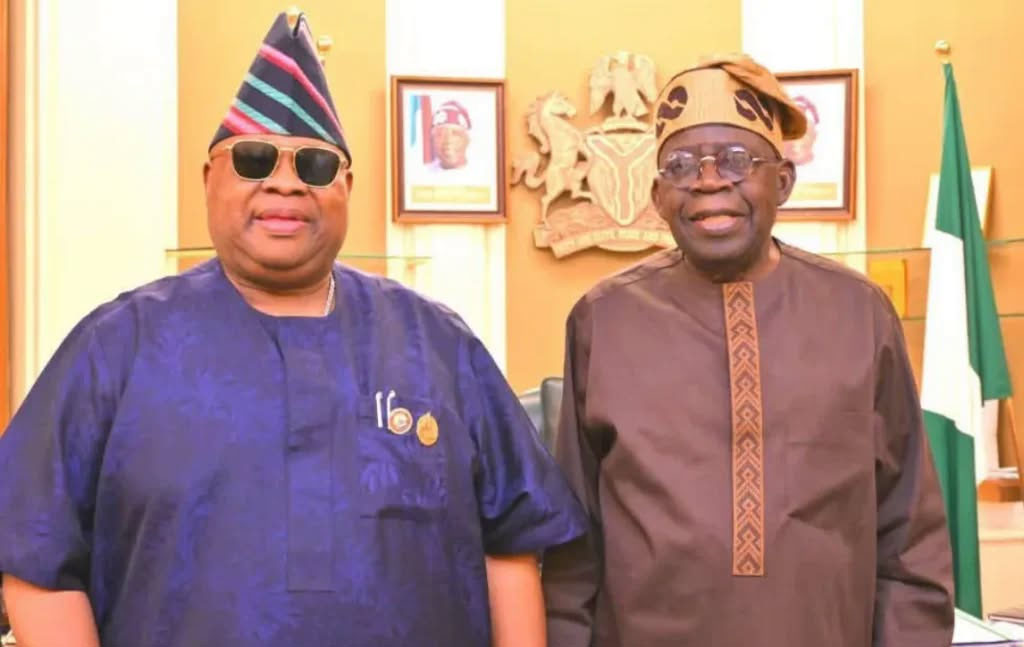
The Imole Campaign Council of Osun State Governor Ademola Adeleke has pledged to mobilise 1.5 million votes for President Bola Ahmed Tinubu in the 2027 presidential election, following the governor’s appointment as the state coordinator of the president’s re-election campaign.
The council, through its Director-General, Senator Olalere Oyewumi, announced the pledge on Tuesday, October 13, while welcoming Adeleke’s inclusion in the revised All Progressives Congress (APC) Presidential Campaign Council.
Oyewumi said the political structure of the Accord Party in Osun State would work towards securing Tinubu’s victory, expressing confidence that Adeleke would justify the confidence placed in him by the president.
“The Imole Campaign Council welcomes the appointment of Governor Adeleke as State Coordinator of the PBAT Presidential Campaign Council in Osun,” Oyewumi said.
He described the appointment as well deserved and assured Tinubu that the governor would work towards delivering the state for the president in the forthcoming election.
“We promise the President, just like Governor Adeleke said some time ago, that we will deliver 1.5 million votes to ensure his victory in the coming presidential election,” the council’s director-general said.
READ ALSO:
- APC Expands Tinubu’s Campaign Council, Names Wike, Adeleke, Soludo
- 2027: Tompolo Unveils 57 Tinubu Campaign Vehicles, Warns Lagosians Against 2023 Repeat
- Shell Exits Nigeria’s Gas Distribution Business, Sells Stake to Vaaris Energy
The council also urged Osun residents to continue supporting Adeleke, linking the governor’s administration to Tinubu’s re-election bid.
“Our message to the people of Osun State is to keep trusting and supporting Governor Adeleke as he continues to deliver on his campaign promises. A vote for President Tinubu is a support for Governor Adeleke,” the statement added.
Adeleke’s appointment places him at the centre of Tinubu’s campaign mobilisation in Osun, even though the governor belongs to the Accord Party rather than the ruling APC.
The revised campaign council also names prominent political figures, including Federal Capital Territory Minister Nyesom Wike, Delta State Governor Sheriff Oborevwori and Anambra State Governor Chukwuma Soludo, in key campaign roles.
The appointments indicate an effort to build support for Tinubu beyond the APC’s formal membership as political parties and influential figures position themselves ahead of the 2027 general election.
In a separate development, the All Progressives Grand Alliance (APGA) has also expressed support for Soludo’s appointment as Anambra coordinator of Tinubu’s presidential campaign.
APGA’s National Publicity Secretary, Ejimofor Opera, said the party had adopted Tinubu as its consensus presidential candidate for the 2027 election, citing its commitment to cooperation with the Federal Government.
The latest political alignments come as parties and campaign organisations begin strengthening their structures ahead of the next presidential contest.
However, the 1.5 million votes promised by Adeleke’s camp remain a campaign target. The actual number of votes Tinubu receives in Osun will depend on voter participation and the choices made by eligible voters on election day.
2027: Adeleke’s Camp Promises 1.5 Million Votes for Tinubu in Osun
Politics
APC Expands Tinubu’s Campaign Council, Names Wike, Adeleke, Soludo
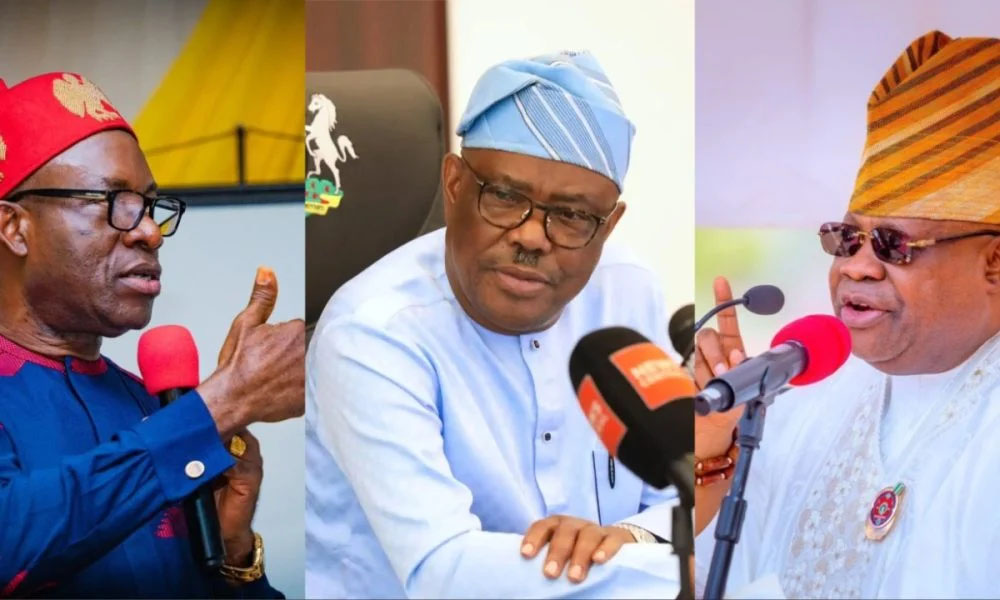
The All Progressives Congress (APC) has expanded its presidential campaign council for the 2027 general election, naming Federal Capital Territory Minister Nyesom Wike, Osun State Governor Ademola Adeleke, Anambra State Governor Chukwuma Soludo and several other prominent political figures to key positions.
The revised list, released on Tuesday, October 13, reflects the ruling party’s efforts to broaden its political support base ahead of President Bola Ahmed Tinubu’s re-election campaign.
The appointments have attracted attention because Wike belongs to the Peoples Democratic Party (PDP), Soludo is a member of the All Progressives Grand Alliance (APGA), while Adeleke belongs to the Accord Party.
Under the new arrangement, Wike will coordinate the APC’s presidential campaign in Rivers State and the Federal Capital Territory. Soludo has been assigned responsibility for Anambra State, while Adeleke will coordinate campaign activities in Osun State.
Delta State Governor Sheriff Oborevwori, former Lagos State Governor Babatunde Fashola, Aviation Minister Festus Keyamo and Marine and Blue Economy Minister Adegboyega Oyetola are also among the prominent figures featured in the expanded campaign structure.
Oyetola was appointed Deputy National Coordinator I for Stakeholders’ Mobilisation in the South-West.
President Tinubu will serve as chairman of the campaign council, with Vice-President Kashim Shettima and APC National Chairman Nentawe Yilwatda as vice-chairmen.
READ ALSO:
- 2027: Tompolo Unveils 57 Tinubu Campaign Vehicles, Warns Lagosians Against 2023 Repeat
- Shell Exits Nigeria’s Gas Distribution Business, Sells Stake to Vaaris Energy
- Delta Tragedy: Man Allegedly Kills Wife, Dies by Suicide After Land Dispute
Senate President Godswill Akpabio, Speaker of the House of Representatives Tajudeen Abbas and Kwara State Governor AbdulRahman AbdulRazaq have been named deputy vice-chairmen.
Senator Abdulaziz Yari, a former governor of Zamfara State, retains his position as Director-General of the campaign council.
Other deputy directors-general include Yobe State Governor Mai Mala Buni, Senate Leader Opeyemi Bamidele, Deputy Senate President Barau Jibrin and Deputy Speaker of the House of Representatives Benjamin Kalu.
Senator Adams Oshiomhole will oversee mobilisation, while Femi Gbajabiamila will handle administration. Works Minister David Umahi has been assigned responsibility for infrastructure mobilisation and sensitisation.
Imo State Governor Hope Uzodimma will serve as secretary of the council, with APC National Secretary Ajibola Basiru as deputy secretary and Hadiza Bala Usman as assistant secretary.
The revised structure also provides for campaign coordinators across the six geopolitical zones and at state level, including arrangements for states where the APC does not control the governorship.
The list includes 14 advisers, among them former Osun State Governor Bisi Akande, former Ogun State Governor Segun Osoba, Secretary to the Government of the Federation George Akume, former Ogun State Governor Ibikunle Amosun and former APC National Secretary Iyiola Omisore. Former Coordinating Minister of the Economy Wale Edun is also among the advisers.
The expanded council follows the initial list released in August, which generated questions about the campaign structure and the distribution of responsibilities. The latest revision introduces additional appointments and adjusts several positions within the council.
The inclusion of Wike, Adeleke and Soludo also highlights the importance of political alliances beyond the APC’s formal membership as the party prepares for the 2027 presidential election.
On Wednesday, October 14, reports indicated that the PDP, APGA and Accord had expressed support for the participation of their respective political figures in Tinubu’s campaign council.
The APC is expected to use the expanded structure to coordinate nationwide mobilisation, engage political stakeholders and strengthen its campaign organisation ahead of the election.
APC Expands Tinubu’s Campaign Council, Names Wike, Adeleke, Soludo
Politics
2027: Tompolo Unveils 57 Tinubu Campaign Vehicles, Warns Lagosians Against 2023 Repeat
2027: Tompolo Unveils 57 Tinubu Campaign Vehicles, Warns Lagosians Against 2023 Repeat
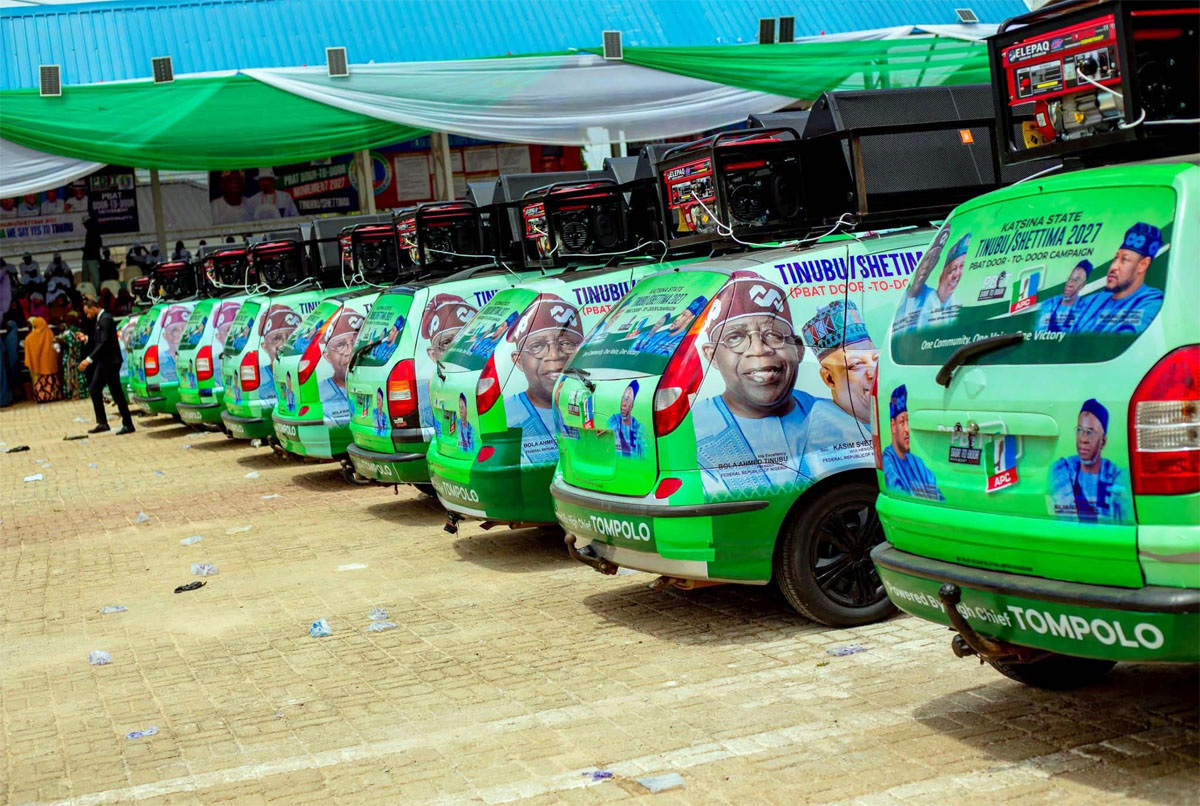
High Chief Government Ekpemupolo, popularly known as Tompolo, has urged Lagos residents to prevent a repeat of the 2023 presidential election outcome in the state, as his political support group unveiled 57 campaign vehicles for President Bola Ahmed Tinubu’s 2027 re-election bid.
Tompolo, grand patron of the PBAT Door-to-Door Movement, made the call on Tuesday, October 13, 2026, during a campaign event in Lagos. He was represented by Kestin Pondi, who presented the vehicles to the movement’s state coordinators for grassroots mobilisation.
Tompolo urged supporters to intensify efforts ahead of the 2027 presidential election, stressing the need for a stronger campaign structure across Lagos communities.
“What happened in 2023 must not repeat. He must win convincingly in 2027,” he said through his representative.
He also encouraged eligible residents to take advantage of the Independent National Electoral Commission (INEC) Continuous Voter Registration exercise and obtain their Permanent Voter Cards (PVCs) to participate in the election.
Tompolo argued that Tinubu’s experience as governor of Lagos State from 1999 to 2007 should inform residents’ assessment of his leadership. He urged voters to support the president’s re-election, describing the administration’s policies as reforms that require more time to consolidate.
READ ALSO:
- Shell Exits Nigeria’s Gas Distribution Business, Sells Stake to Vaaris Energy
- Delta Tragedy: Man Allegedly Kills Wife, Dies by Suicide After Land Dispute
- VIDEO: Outrage as Indian National Assaults Nigerian Truck Drivers in Lagos
The position reflects the campaign group’s support for Tinubu, although the effects of the administration’s economic and other policies remain subjects of public debate.
The unveiling of the 57 campaign vehicles is part of the movement’s strategy to expand its grassroots presence and take its message directly to households and communities ahead of the election.
The group has also organised campaign activities in other states. In Kano, it unveiled 50 vehicles in September, while its activities in Katsina and Taraba included the presentation of vehicles and the inauguration of state coordinators.
Lagos State Governor Babajide Sanwo-Olu, who spoke at the event, expressed support for the administration, saying Nigeria was moving towards economic stability under Tinubu’s leadership.
The campaign mobilisation comes as political parties and support groups begin strengthening their structures ahead of the 2027 general election.
In the 2023 presidential election, Peter Obi, then the Labour Party candidate, defeated Tinubu of the All Progressives Congress (APC) in Lagos State. Tinubu, however, won the national election and was declared president by INEC.
The PBAT Door-to-Door Movement’s latest initiative signals an effort by Tinubu’s supporters to strengthen their organisation in Lagos and secure a different result in the state in 2027. The vehicles are intended to support campaign activities and grassroots outreach as the political contest approaches.
2027: Tompolo Unveils 57 Tinubu Campaign Vehicles, Warns Lagosians Against 2023 Repeat
-
 metro2 days ago
₦8.7bn Erosion-Control Budget Gap Raises Questions as Anambra Gullies Expand
-
 Politics2 days ago
Obi Positioning for SGF Role Under Atiku’s ADC Ticket – Sowore
-
 Politics3 days ago
NDC Blames Computer Glitch as INEC Omits Kano Governorship Candidate From Final List
-
 International3 days ago
US Names 24 More Nigerians in Fresh Fraud, Money Laundering Crackdown
-
 metro2 days ago
How Bandits Demand ₦300m Ransom for Abducted Kaduna Couple, Baby in Viral Video
-
 Politics2 days ago
Okonkwo Alleges Return of Subsidy, Accuses NNPC of Plotting Trillions in ‘Lost Profit’
-
 metro2 days ago
Child Soldiers, Baby Factories: US Raises Alarm Over Official Complicity in Nigeria
-
 metro2 days ago
2027 Elections: Atiku Demands Names of INEC Ballot Printers, Questions Secret Contracts