

metro
Oyo School Kidnapping: Troops Tighten Siege as Abductors Drop Key Demands
Oyo School Kidnapping: Troops Tighten Siege as Abductors Drop Key Demands
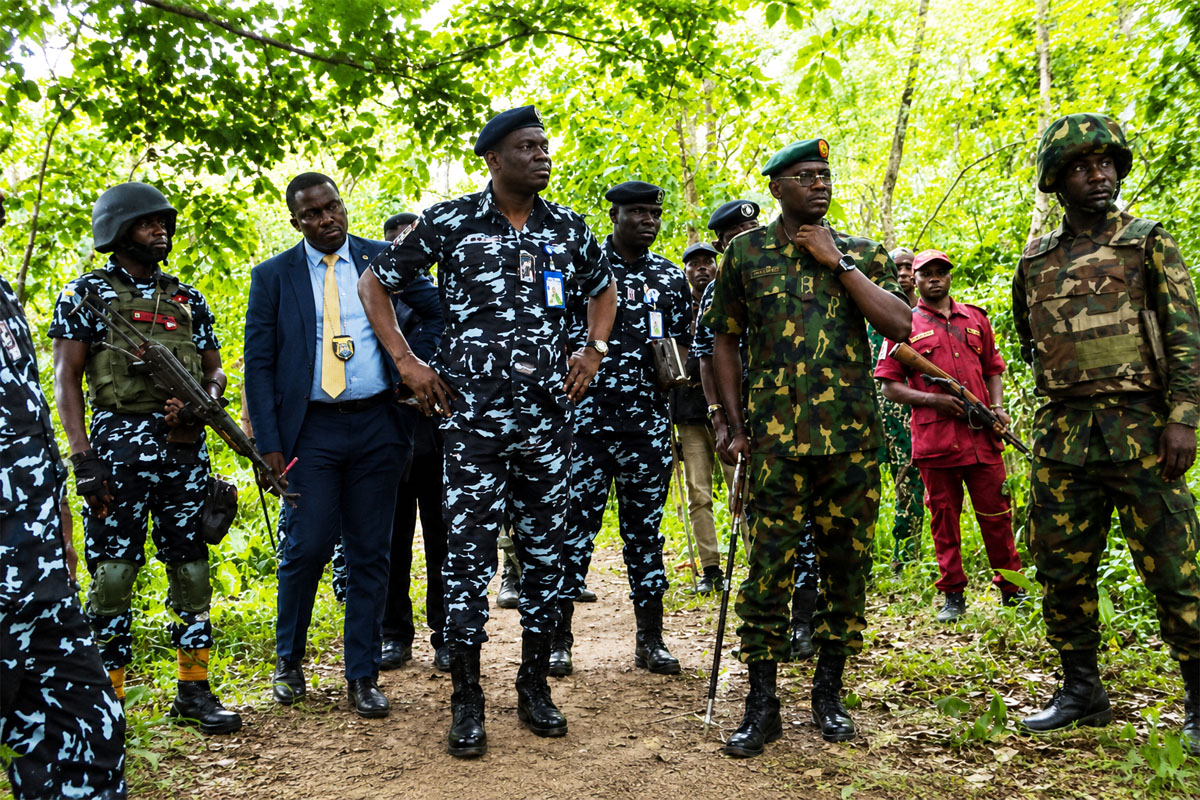
Fresh hope has emerged for the safe return of the 39 abducted schoolchildren and seven teachers in Oyo State as security agencies intensify operations and tighten the noose around the kidnappers believed to be hiding inside the National Park forest.
Multiple security sources said sustained military offensives have significantly restricted the movement of the abductors, forcing them to scale back some of their earlier demands and focus mainly on ransom negotiations.
The victims were kidnapped on May 15, 2026, when heavily armed men stormed three schools in Ahoro-Esinle, Yawota and Alawusa communities in Oriire Local Government Area of Oyo State, sparking nationwide outrage and renewed concerns over the growing threat of terrorism and mass abductions in the South-West.
Security sources familiar with the ongoing operation disclosed that troops of the Nigerian Army, working alongside other security agencies, have successfully blocked major escape routes leading out of the National Park forest where the victims are believed to be held.
The operation, supported by aerial surveillance and ground intelligence, has reportedly confined the kidnappers within a narrow forest corridor, making movement increasingly difficult. Officials said security operatives have maintained constant pressure on the armed group, with surveillance teams monitoring strategic routes connecting the forest to neighbouring states and border communities.
According to intelligence reports, the continuous military presence has disrupted the kidnappers’ operations and weakened their negotiating position.
Sources revealed that the abductors initially made a series of far-reaching demands, including the payment of ransom, the release of detained terrorist commanders, the provision of two Hilux vehicles and the implementation of Sharia-related laws.
Among those reportedly requested for release were Mahmud Usman, also known as Abu Bara’a or Abbas Mukhtar, and his deputy, Abubakar Abba, alias Isah Adam or Mahmud Al-Nigeri. Both men are believed to be senior members of Ansaru, a breakaway faction of Boko Haram, and were arrested by operatives of the Department of State Services (DSS) last year.
READ ALSO:
- Bello Turji Boasts of Killing Soldiers as Army Confirms Sokoto Weapons Camp
- Islamic Teacher Lynched, Body Set Ablaze in Kaduna Over False Child Theft Accusation
- Trump Predicts Starmer’s Resignation, Blames UK PM’s Immigration, Energy Policies
However, fresh intelligence indicates that the kidnappers have abandoned several of those demands and are now concentrating primarily on ransom negotiations. Security insiders described the development as a sign that the group is coming under increasing pressure as troops continue to close in on their location.
The rescue operation has also received significant support from the Nigerian Air Force (NAF), which deployed surveillance aircraft to assist ground troops with real-time intelligence gathering. The aerial operation is aimed at tracking the movement of the kidnappers, identifying possible hideouts and preventing any attempt to relocate the victims through the vast forest terrain.
Security officials believe the combined air and ground operations have significantly reduced the kidnappers’ ability to manoeuvre, increasing optimism that the victims could soon be rescued safely.
The crisis took a tragic turn after reports emerged that one of the abducted teachers was killed while in captivity. Security officials believe the killing was intended to pressure authorities and instill fear among the families of the victims.
The development has heightened anxiety across Oriire Local Government Area, with residents anxiously awaiting positive news from the ongoing rescue mission. President Bola Tinubu condemned the killing and reaffirmed the Federal Government’s commitment to securing the release of all remaining victims.
Investigations have revealed that the alleged leader of the kidnapping gang is an indigene of Oriire Local Government Area who reportedly lived within the community before becoming radicalised. Security sources said he later joined the Ansaru terrorist network and adopted extremist ideology.
The affected communities are strategically located near routes linking parts of Nigeria to the Niger Republic and the Kainji axis, making the area vulnerable to movements by armed groups. The dense forest and poor communication infrastructure have also complicated rescue operations.
Security agencies had reportedly received intelligence warnings about possible terrorist attacks targeting schools in the region before the incident occurred. Those warnings led to preventive measures, including the temporary closure of some schools, but the attackers still managed to carry out the coordinated assault that resulted in the abduction of dozens of pupils and teachers.
Security analysts believe sustained offensives against terrorist organisations across Nigeria are forcing insurgents to abandon traditional strongholds and target vulnerable rural communities and schools. Recent operations against Ansaru, Boko Haram and the Islamic State West Africa Province (ISWAP) have reportedly resulted in the elimination of at least 168 high-profile terrorist commanders, while several suspects have been arrested and many insurgents forced to flee into neighbouring countries.
A senior security official expressed confidence that ongoing operations are gradually weakening terrorist networks across the country.
“The war against terrorism will be won. We will not relent in the ongoing offensive until these criminals are either eliminated or forced out of the country. President Bola Tinubu has issued a strong warning to them, and the signs of victory are already becoming evident,” the official said.
As military operations intensify and negotiations evolve, residents of Oriire and neighbouring communities remain hopeful that the 39 abducted pupils and seven teachers will soon regain their freedom. Families of the victims continue to pray for a peaceful resolution as security agencies push deeper into the forest in what officials describe as a decisive phase of the rescue operation.
Oyo School Kidnapping: Troops Tighten Siege as Abductors Drop Key Demands










metro
Osun Account Freeze: EFCC Insists It Has 72-Hour Power Without Court Order

Osun Account Freeze: EFCC Insists It Has 72-Hour Power Without Court Order
The Economic and Financial Crimes Commission (EFCC) has firmly defended its decision to restrict an Osun State Government account, asserting that it possesses the legal authority to impose a temporary freeze for up to 72 hours without obtaining a court order. EFCC Director of Public Affairs, Wilson Uwujaren, stated that the action was backed by law and taken after suspicious transactions were detected on the account over the past week. Speaking on Arise Television on Thursday, Uwujaren said the commission acted to preserve the account pending further investigation. “As we indicated in the statement released by the Commission, we took that step to preserve the account of the Osun State Government. We observed in the past one week that activities on that account looked suspicious, and based on the mandate of the Commission, we took the step of placing a restriction on that account to preserve it,” Uwujaren said. He clarified that the commission did not freeze all of Osun State’s accounts, stressing that the restriction applied to only one account. “That restriction order does not mean that all the accounts of Osun State have been frozen. No. It is just a targeted restriction on one account of the Osun State Government,” he explained. Uwujaren said investigators noticed multiple transfers from the account to several corporate entities within one week, prompting the intervention. “The essence, like I said, is just to preserve that account because we observed suspicious activities on that account in terms of the transfer of funds to a number of entities within one week. So we had to take that decision to place a restriction on that account, not minding the fact that there is an election process in place,” he said. He argued that failing to act could have attracted criticism if public funds were later diverted. “We have the responsibility under the law to do so because if we don’t take that step and, for instance, funds are looted from the account of the Osun State Government, I’m sure the Nigerian public will also ask, ‘Where was the EFCC when those funds were being moved?'” Uwujaren stated.
Uwujaren maintained that the restriction would not disrupt governance, noting that the state still had access to other accounts. “It does not stop the Osun State Government from running the government of the state because they have access to other funds in the other accounts that they have. In any case, the payment of salaries and other expenditures by the state government happens just once in a month. What we have done is not a blanket freezing of the account,” he said. He added that the restriction would be lifted once the commission was satisfied that activities on the account were no longer suspicious.
READ ALSO:
- Osun Election: ‘Prepare to Sign Your Uncle as Dancer’ — Uzodimma Fires Back at Davido
- Abuja Earth Tremor: Minister Orders Hourly Monitoring, Assures Residents of Safety
- Tinubu Orders EFCC to Unfreeze Osun Govt Accounts, Says Timing ‘Embarrassing’
On the legality of the action, Uwujaren said the commission derived its powers from the EFCC Act and the Money Laundering (Prohibition) Act. “A number of people have asked whether the Commission has the power to do so under the law. I can assure you that we have the power to place a temporary restriction on an account. Section 34 of the EFCC Act and Section 7, Subsection 6 of the Money Laundering (Prohibition) Act 2022 give us that authority to take that step,” he said. He explained that the commission could impose a temporary restriction for up to 72 hours before approaching the court if necessary. “The restriction order can last within 72 hours before we can come with a court order if we need to provide a court order,” Uwujaren stated.
Uwujaren revealed that the EFCC is currently investigating about 18 other states over suspected financial infractions, though he declined to name them to avoid jeopardising ongoing probes. The EFCC spokesman said the action against Osun was not an isolated case, noting that the commission had previously restricted an Edo State Government account over suspected movement of funds into suspicious accounts.
The EFCC had earlier disclosed that it had been investigating the Osun State Government since March 2026 over the alleged fraudulent handling of about N11 billion in Ecology Funds, Intervention Funds and Federation Account Allocation Committee (FAAC) allocations. The commission said some state officials, including the Accountant General, had already been questioned as part of the investigation. The EFCC head of media and publicity, Dele Oyewale, explained that the Commission was compelled to place a Post-No-Debit order on the account after detecting what it described as “precipitate and unwarranted” movement of funds to different suspicious accounts from August 2, 2026. “The Commission noticed huge transfers of funds into different corporate entities and had to swiftly halt the trend by freezing the accounts from which such heavy funds are being moved,” Oyewale stated. The EFCC insisted its action was not politically motivated despite the timing ahead of the Osun governorship election, stressing that it could not overlook financial infractions on account of the poll. “While the Commission is fully aware of the impending governorship election in Osun State, it has a responsibility to act in defence of the sanctity of the funds of the state. It will be uncharitable for the Commission to allow an excuse of an upcoming election to fold its arms to perform its legally-assigned functions,” the EFCC stated.
The controversy has triggered a fierce legal debate, with legal experts pointing to the 72-hour limit for temporary investigative restrictions established by the Court of Appeal in the case of EFCC v. Attorney-General of Benue State. The appellate court held that the anti-graft agency could place a stop order on an account suspected to be connected with financial crime for 72 hours without a court order. Beyond that period, however, the commission must obtain a court order if it intends to maintain the restriction. The appellate court made clear that once the 72-hour period expires without the necessary judicial authorisation, the restriction lapses and the financial institution is required to restore normal access to the account.
READ ALSO:
- Osun Account Freeze: Atiku Accuses Tinubu of Weaponising State Institutions Against Opposition
- Former Finance Minister Kemi Adeosun Loses Husband, Niyi Adeosun
- 176 Kwara Abductees Regain Freedom After Six Months in Captivity
Uwujaren’s comments came after Governor Ademola Adeleke challenged the legality of the account restriction and directed the state’s Attorney General, Oluwole Jimi-Bada (SAN), to contest the action at the Federal High Court in Osogbo. Adeleke described the action as unlawful and a threat to democracy, arguing that it was taken without any court order. The governor alleged that the freezing of the account was the latest in what he described as a coordinated campaign of intimidation against his administration ahead of the August 15 governorship election. He claimed that several Accord Party members had been killed, while about 60 members were arrested and transferred to Abuja where they remain in detention without formal charges. He also accused former Governor Gboyega Oyetola of orchestrating the alleged harassment through federal agencies because, according to him, the All Progressives Congress (APC) candidate “cannot win” the forthcoming governorship election. “All I ask is for the EFCC chairman to explain to the good people of Osun State and Nigerians in general why he froze the Osun State Government account and provide evidence to support whatever reason he presents. This and other actions being taken against Osun State are turning our democracy into a huge joke,” Adeleke said.
The Nigerian Bar Association has also faulted the EFCC over the freezing of Osun State Government’s bank account, saying the anti-graft agency lacks the constitutional power to impose a blanket restriction on a state’s finances without due legal process. NBA President Afam Osigwe (SAN) warned that any directive restricting withdrawals from accounts belonging to a state government would effectively cripple governance and amount to an abuse of power. “No government agency or any person has the right or the power to restrict withdrawals from the account of any state because, first of all, the order has the effect of grounding the activities of a government,” Osigwe said. “If the EFCC knows that any particular account is being used for the purpose of fraud, it may be able to obtain a court order, but it cannot make a blanket order freezing the accounts of any state. Such an order would be unconstitutional and also violate the powers of the EFCC and may actually amount to an abuse of power,” he added. Osigwe urged First Bank not to comply with the EFCC’s directive unless it is backed by a valid court order.
Osun Account Freeze: EFCC Insists It Has 72-Hour Power Without Court Order
metro
Abuja Earth Tremor: Minister Orders Hourly Monitoring, Assures Residents of Safety

Abuja Earth Tremor: Minister Orders Hourly Monitoring, Assures Residents of Safety
The Federal Government has activated enhanced seismic monitoring following a light earth tremor that shook parts of the Federal Capital Territory on Tuesday, with the Minister of Solid Minerals Development, Dele Alake, directing the Nigerian Geological Survey Agency (NGSA) to provide hourly updates on seismic developments around Abuja. The directive came after the NGSA confirmed that several buildings across Abuja experienced vibrations on August 4, 2026, with the agency’s Seismic Monitoring Station in Utako recording the event at exactly 11:23:27 a.m.
According to the NGSA, the earth movement originated from a depth of one kilometre beneath the earth’s surface and spread across a distance of four kilometres within five seconds. The agency classified the incident as a “light event of I to II magnitude” on the Mercalli Intensity Scale, explaining that such tremors pose no threat to lives or property. “This is a characteristic feature of a surface earth tremor that poses no threat to lives and properties except for the discomfort of the shake and fear of possible destruction,” the agency stated.
READ ALSO:
- Tinubu Orders EFCC to Unfreeze Osun Govt Accounts, Says Timing ‘Embarrassing’
- Osun Account Freeze: Atiku Accuses Tinubu of Weaponising State Institutions Against Opposition
- Former Finance Minister Kemi Adeosun Loses Husband, Niyi Adeosun
Alake, who is currently in Washington, D.C., United States, engaging American investors on joint venture opportunities in Nigeria’s solid minerals sector, responded through a statement issued by his Special Assistant on Media, Lara Owoeye-Wise. He directed the NGSA to submit hourly reports on any fresh seismic developments for his regular review and, where necessary, onward communication to other relevant government agencies. The minister assured residents that proactive measures had been deployed to safeguard lives and property across affected locations, noting that government agencies are closely monitoring the situation. “Residents should go about their lawful activities without anxiety. Necessary measures have been deployed to ensure public safety,” Alake said.
Nigeria experiences occasional low-intensity earth tremors despite lying outside the world’s major earthquake zones. Isolated tremors have been recorded in parts of the country over the years, including in Abuja, Kaduna, Kogi, Oyo and Bayelsa states. The Nigerian Geological Survey Agency operates a network of seismic monitoring stations across the country to detect and analyse such events, providing early scientific assessments to guide emergency response and reassure the public. Experts have consistently noted that most tremors recorded in Nigeria have been of low magnitude and have not resulted in significant damage to lives or property, but they underscore the importance of continuous seismic monitoring and emergency preparedness.
Abuja Earth Tremor: Minister Orders Hourly Monitoring, Assures Residents of Safety
metro
Former Finance Minister Kemi Adeosun Loses Husband, Niyi Adeosun
Former Finance Minister Kemi Adeosun Loses Husband, Niyi Adeosun
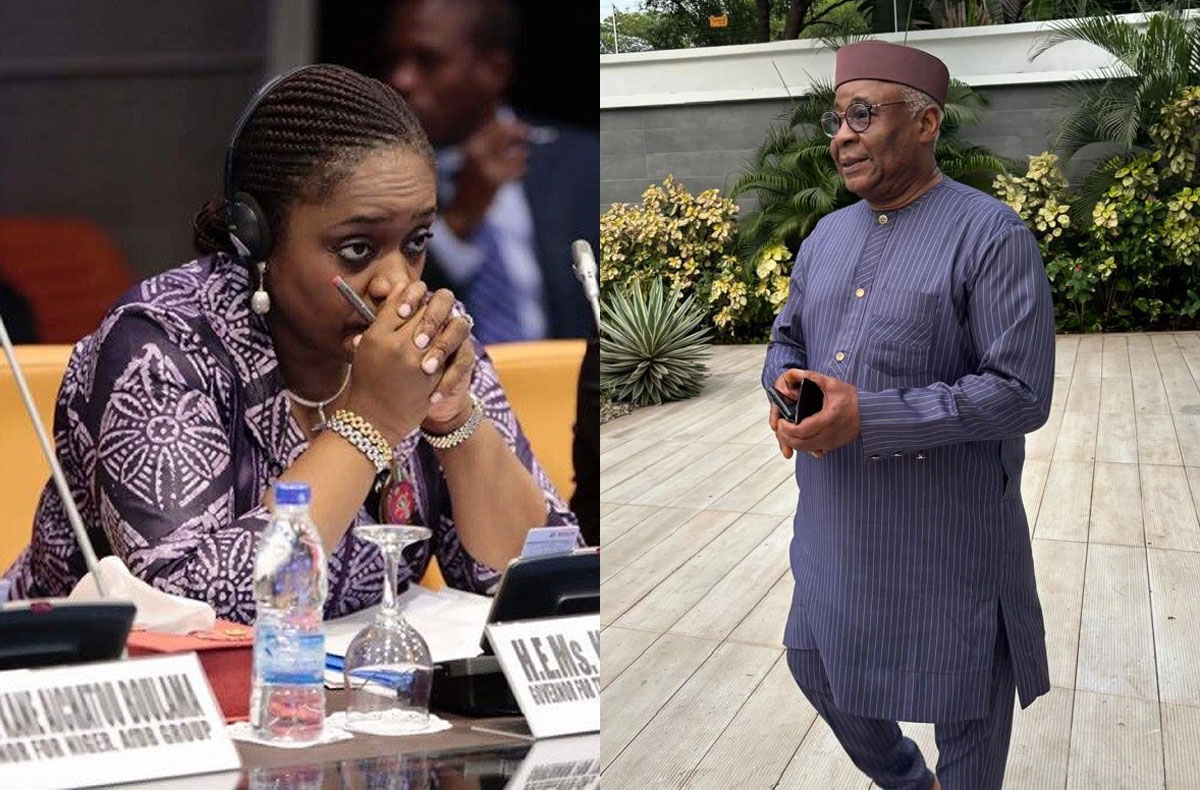
The Adeosun family has announced the passing of Mr. Anthony Adeniyi (Niyi) Adeosun, husband of former Minister of Finance, Mrs. Kemi Adeosun. He died on Tuesday, August 5, 2026, in Lagos at the age of 62.
In a statement issued on Thursday, the family confirmed the news “with profound sorrow, yet in total submission to the will of Almighty God.” The announcement was signed by Reverend C. A. Adeosun on behalf of the family.
According to the family, the late Anthony Adeosun was a distinguished businessman and a devoted Christian whose life was marked by integrity, generosity and unwavering faith. His character and values earned him admiration from all who knew him, as he remained devoted to serving God while making lasting contributions to his family and community. “Niyi was a distinguished businessman and a devoted Christian whose integrity, generosity, and steadfast faith touched the lives of all who knew him. He lived a life defined by hard work, service to God, and an unwavering commitment to his family and community,” the family’s statement read.
The deceased is survived by his wife, former Minister of Finance Kemi Adeosun; his cherished children; and his siblings, including Mr. Adewale (Wale) Adeosun, founder of Kuramo Capital Management, a leading African private equity firm with over $500 million under management. He is also survived by numerous other relatives, friends and associates.
READ ALSO:
- 176 Kwara Abductees Regain Freedom After Six Months in Captivity
- Nigerian Army Places N60m Bounty on Wanted ISWAP Leaders
- Super Falcons Thrash Egypt 6-2, Book WAFCON Quarter-Final Date with Cameroon
- Two Rifles, Live Ammunition Recovered as FCT Police Storm Bandits’ Hideout
While mourning his death, the family said it was comforted by its Christian faith and the assurance of eternal rest for believers. They cited Revelation 14:13, which says: “Blessed are the dead which die in the Lord… that they may rest from their labours; and their works do follow them.”
The family has appealed to the public to respect its privacy as it mourns the loss, noting that details of the funeral and Christian burial arrangements would be announced in due course. The family also expressed appreciation to friends, associates and well-wishers who had reached out with prayers, condolences and support since the news of his passing. “We thank all who have reached out with prayers, condolences, and support. May his gentle soul rest in perfect peace in the bosom of the Lord,” the statement added.
Mrs. Kemi Adeosun served as Nigeria’s Minister of Finance from 2015 to 2018 under the administration of late former President Muhammadu Buhari. During her tenure, she spearheaded a number of fiscal reforms, including the Whistle-blower policy, the Treasury Single Account (TSA), and the Efficiency Unit, which helped recover billions of naira and improve transparency in public finance. She has since devoted herself to philanthropy, focusing on uplifting vulnerable children and supporting the less privileged.
Former Finance Minister Kemi Adeosun Loses Husband, Niyi Adeosun
-

 metro1 day ago
Troops arrest four suspected Boko Haram, ISWAP suppliers, intercept 20 relatives
-

 Opinion2 days ago
WHO WILL SPEAK FOR WASILAT? WHEN TRADITION BECOMES HUMILIATION, JUSTICE MUST SPEAK
-
metro2 days ago
TikToker undergoes cleansing after filming Oloolu procession in Ibadan
-
 News1 day ago
Tinubu Meets Jim Ovia, NELFUND CEO at Aso Rock as Student Loans Hit ₦303bn
-

 Education1 day ago
BREAKING: 61.54% Pass Rate as WAEC Releases 2026 WASSCE Results – How to Check Results
-

 metro1 day ago
Police Probe AIG Jimoh Over VeryDarkMan’s Corruption Allegations
-

 metro1 day ago
N78 Million Solar Inverters, 410 Cattle, 10 Guns Recovered as Kaduna Police Arrest 25 Suspects
-

 metro1 day ago
Boat Operators Rescue Woman Who Jumped Into Lagos Lagoon From Carter Bridge