

News
Shelve State Police Until After 2027 Election, Obi Tells Tinubu
Shelve State Police Until After 2027 Election, Obi Tells Tinubu
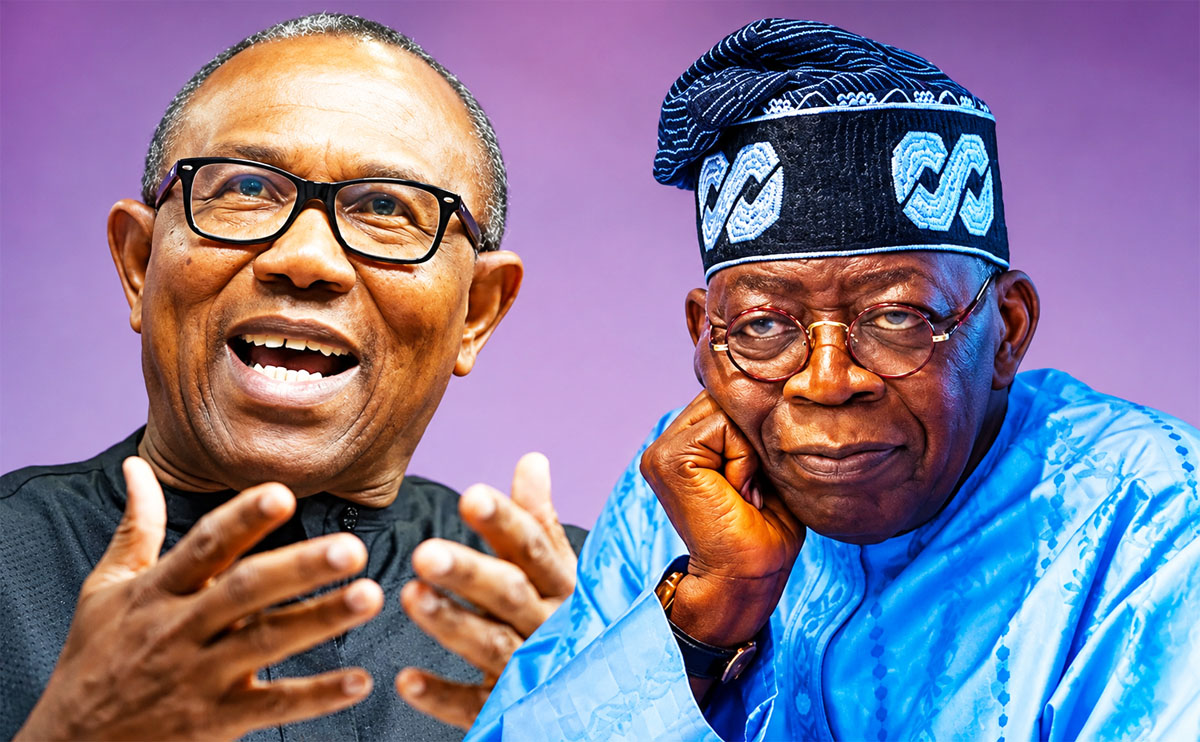
The presidential candidate of the Nigeria Democratic Congress (NDC), Mr Peter Obi, has urged President Bola Tinubu to postpone the implementation of the newly passed State Police framework until after the 2027 general election, warning that the initiative could be exploited for partisan purposes if introduced before the polls .
Obi made the call in a statement posted on his X (formerly Twitter) handle on Friday, June 26, 2026, titled “State Police: Commendable Step, but Disorderly Legislation Raises Concerns of Political Misuse” . His intervention comes barely days after the Senate passed the Constitution Alteration Bill seeking to establish state police, a landmark reform aimed at decentralising Nigeria’s policing system in response to growing insecurity across the country .
Obi began by acknowledging the significance of the legislative milestone. He noted that the passage of the State Police Bill represents a long-standing demand of the Nigerian people, as many security experts and regional stakeholders have consistently argued that a highly centralised policing structure is fundamentally unsuitable for a country as vast, diverse, and complex as Nigeria . “For years, many of us, alongside security experts and regional stakeholders, have consistently argued that a highly centralised policing structure is fundamentally unsuitable for a country as vast, diverse, and complex as Nigeria,” Obi stated .
However, the former Anambra State governor criticised what he described as a flawed and disorderly legislative process that lacked adequate public participation and transparency . He expressed concern that such a sensitive constitutional amendment was rushed through without proper public hearings, which has fuelled suspicion among observers about the political motives behind the initiative . “The mechanism for passing the law appears highly disorganised, with no public hearing on such a sensitive issue. Indeed, the rush to enact the law without proper legislative procedures fuels suspicion among many observers about the political motives behind it,” he said . Obi maintained that such a far-reaching security reform required extensive engagement with citizens and stakeholders, insisting that policing should be more visible at the community and local government levels .
READ ALSO:
- Rising Cost of Living: FG Signals Fresh Review of N70,000 Minimum Wage
- BREAKING: Court Nullifies Judgment Compelling INEC to Register NDC
- Opeifa Seeks EU Investment to Fast-track Nigeria’s Low-Carbon Rail Revolution
Obi said his greatest concern was not logistical issues but the possibility that state police forces could become instruments in the hands of governors to intimidate political opponents, disrupt opposition activities, and manipulate elections . He cited Nigeria’s political history as justification for this fear, warning that a state-controlled police force could be weaponised against political rivals . “The greatest concern does not arise from logistical issues; it stems from history. There is a widespread, justifiable fear that state police forces could become instruments in the hands of governors. The suspicion is that a state-controlled police force could be weaponised to suppress political rivals, disrupt opposition rallies, and manipulate elections,” he warned .
To guard against such abuses, Obi called for the establishment of independent oversight institutions insulated from executive interference before state police become operational . He proposed the creation of state-level Police Service Commissions that are entirely free from executive influence to ensure that policing serves the public interest rather than the interests of the ruling elite . “For state policing to evolve from a risky political gamble into a genuine security solution, the law must not only permit states to establish police forces but also clearly provide for independent oversight bodies, such as a state-level Police Service Commission that is entirely free from executive influence, to ensure that policing serves the public interest rather than the interests of the ruling elite,” he said .
Obi further expressed doubts that the current administration would resist the temptation to use state policing to influence the 2027 general election by proxy, given what Nigerians have witnessed so far . He argued that implementing the new State Police law before the next general election could allow governors to deploy state-controlled police forces to intimidate political opponents and influence electoral outcomes . “Going by what Nigerians have seen so far, there is no guarantee that this administration can resist the temptation to take advantage of state policing to influence the 2027 general election by proxy. In view of that possibility and the danger it poses to the polity, it is necessary to defer its implementation until after the general election,” Obi stated . He concluded his statement with his trademark slogan: “A New Nigeria is Possible” .
The Senate on Wednesday, June 24, 2026, passed the landmark Constitution Alteration Bill seeking to establish state police across the federation, marking a major step in Nigeria’s decades-long debate over decentralising the country’s policing structure . The bill was approved after a clause-by-clause consideration during plenary and secured the support of more than two-thirds of senators through a manual voting process after the electronic voting system crashed . The proposed constitutional amendment empowers states to establish and operate their own police services, while retaining a Federal Police Service with overarching responsibility for national security, including terrorism, border protection, and other federal offences . The bill now awaits approval by at least 24 state Houses of Assembly before it can be transmitted to President Bola Tinubu for assent and eventual implementation .
The passed bill introduces significant constitutional safeguards to prevent abuse of state police powers by political office holders . Under the proposal, governors would be constitutionally barred from deploying state police services for partisan, ethnic, religious, sectional, or personal purposes . The bill further provides for the establishment of independent State Police Service Commissions in each state to oversee recruitment, promotions, discipline, and general administration . Additionally, federal intervention in state police operations would be permitted only under exceptional circumstances, such as a breakdown of public order, serious violations of fundamental rights, or electoral intimidation, and would require written authorisation by the president subject to Senate oversight .
Shelve State Police Until After 2027 Election, Obi Tells Tinubu





News
Ex-CSU Lecturer Reopens Tinubu’s Certificate Controversy, Says President Never Attended University
Ex-CSU Lecturer Reopens Tinubu’s Certificate Controversy, Says President Never Attended University
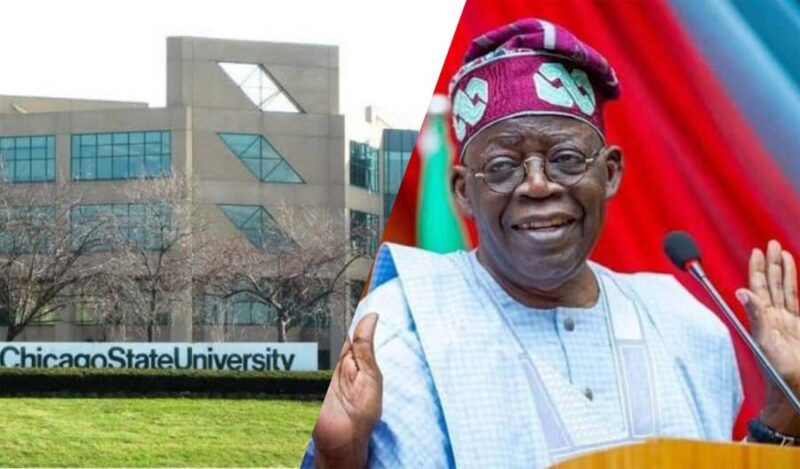
A fresh controversy has emerged over President Bola Ahmed Tinubu’s educational background after a former lecturer at Chicago State University (CSU), Dr Adetokunbo Pearse, claimed that the Nigerian leader never attended the American institution.
Pearse made the allegation during an interview on News Central Television on Sunday, November 8, 2026, insisting that he had personal knowledge of the university’s academic programme and Tinubu’s alleged attendance.
The former lecturer, who said he worked at Chicago State University between 1985 and 1990, claimed he was the director of the programme Tinubu reportedly attended.
According to him, he was familiar with the institution’s records and maintained that the President never enrolled there.
“The fact of the matter is, I know he never attended Chicago State University. He knows that I know. So the man (Mr Tinubu) has no integrity,” Pearse said.
He also questioned the educational institutions Tinubu listed in documents submitted to the Independent National Electoral Commission (INEC), arguing that the President had identified schools he allegedly never attended.
Pearse further claimed that he was approached in 1999 by individuals seeking information about Tinubu’s academic records when the late Funsho Williams was reportedly making inquiries into the matter.
The allegation has reopened public debate over Tinubu’s educational qualifications, which generated considerable controversy during the 2023 presidential election and subsequent legal proceedings.
However, Pearse’s assertion contradicts Chicago State University’s official position. In September 2023, the institution confirmed that Tinubu attended the university and graduated in 1979 with a bachelor’s degree.
The university subsequently released academic records following legal proceedings initiated in the United States by former Vice-President Atiku Abubakar.
The records indicated that Tinubu attended the institution between August 1977 and June 1979 and was awarded a Bachelor of Science degree in Business Administration.
Although questions were raised during the legal proceedings about the authenticity of the particular diploma submitted to INEC, Chicago State University maintained that its records confirmed Tinubu’s attendance and graduation.
Pearse’s latest comments therefore introduce a fresh personal challenge to the university’s previously stated position, although his assertion does not, on its own, invalidate the institution’s official records.
As of the time of filing this report, the Presidency had yet to publicly respond to the latest allegations, according to reports on the interview.
The renewed controversy is likely to attract further political attention as Nigerians continue to debate questions surrounding transparency, public accountability and the President’s educational background.
Ex-CSU Lecturer Reopens Tinubu’s Certificate Controversy, Says President Never Attended University
News
One Killed, Five Injured as Violence Disrupts Obi-Kwankwaso Rally in Delta
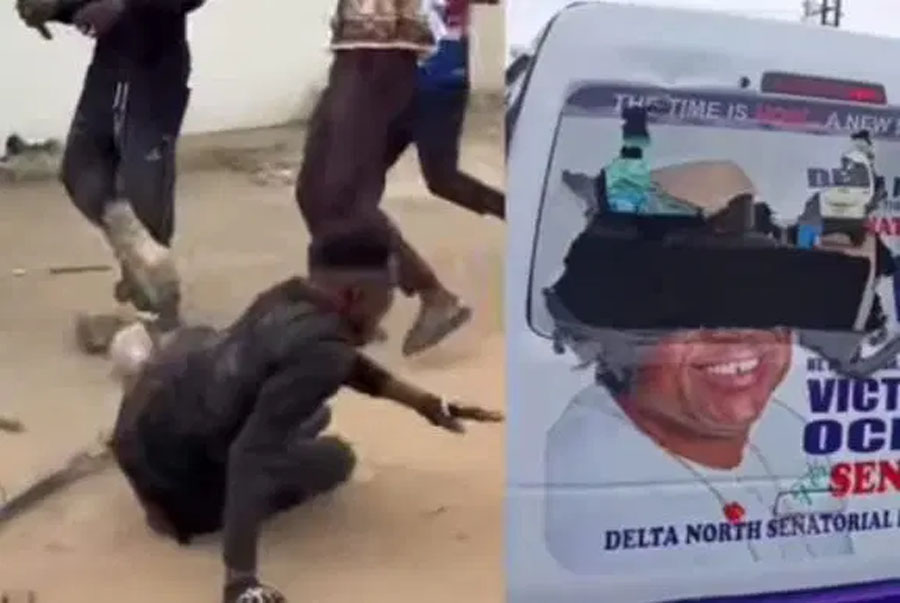
One Killed, Five Injured as Violence Disrupts Obi-Kwankwaso Rally in Delta
One person has been killed and five others injured following a violent clash that disrupted a political procession organised by supporters of the Nigeria Democratic Congress (NDC) presidential candidate, Peter Obi, and his running mate, Rabiu Kwankwaso, in Asaba, Delta State.
The incident occurred at about 12:15 p.m. on Saturday, November 7, 2026, along Nnebisi Road, during a one-million-man march organised by supporters of the Obi-Kwankwaso Movement.
The Delta State Police Command confirmed the casualties, disclosing that the identities of the deceased and injured persons had yet to be established as investigations commenced.
In a statement issued by the Police Public Relations Officer, SP Bright Edafe, the command said it had received intelligence indicating the possibility of violence ahead of the procession.
According to the police, organisers of the rally were invited to a security meeting, where they were briefed about the identified threats and advised against holding an open-road procession.
The command said the organisers were encouraged to conduct their political activities at a designated venue where adequate security arrangements could be provided.
However, the police alleged that the organisers ignored the advice and proceeded with the procession.
READ ALSO:
- ‘Stop Blaming Us’, APC Tells Atiku, ADC Over Court Judgment
- Atiku to Tinubu: You Cannot Use Courts to Escape Nigerians’ Verdict
- University Funding Crisis: States Beg FG to Take Over Cash-Strapped Institutions
Following a distress call, police operatives were deployed to the scene and evacuated the injured victims to hospital for medical attention.
Security was subsequently reinforced in the affected area to prevent further breakdown of law and order.
The police said investigations were ongoing to establish the circumstances surrounding the violence and identify those responsible.
Commissioner of Police, Samuel Erale, condemned the incident and reiterated that political parties were free to conduct lawful campaigns and other political activities across the state.
He, however, urged political parties and their supporters to avoid road processions in the interest of public safety and liaise with the police ahead of political gatherings to facilitate adequate security arrangements.
The command also appealed to members of the public with useful information about the incident to contact the police through 09155570008 or 09155570007.
Meanwhile, the NDC has accused the ruling All Progressives Congress (APC) of being behind the attack, alleging that the incident was an attempt to intimidate opposition supporters and disrupt its political activities.
Former Speaker of the Delta State House of Assembly and NDC senatorial candidate for Delta North, Victor Ochei, called on Governor Sheriff Oborevwori to order an immediate investigation and ensure that those responsible were arrested and prosecuted.
Ochei alleged that more than 30 campaign buses were destroyed during the attack, accusing suspected attackers of being mobilised by individuals allegedly connected to the ruling party.
However, Delta APC spokesperson, Valentine Onojeghghuo, dismissed the allegation, insisting that the NDC had provided no evidence linking APC members to the incident.
He described the accusation as baseless and urged the opposition party to embrace peaceful political engagement.
The Delta State Coordinator of the Obi-Kwankwaso Movement, Favour Emerue, also alleged that the gathering was peaceful before suspected hoodlums disrupted the procession, leaving some participants injured.
In a separate reaction, Peter Obi condemned the reported attacks on his supporters and NDC members in Delta State, calling on the state government and security agencies to investigate the incidents and bring those responsible to justice.
The latest violence has renewed concerns about the safety of political activities ahead of the 2027 general elections.
The police have assured residents that a thorough and impartial investigation will be conducted to establish the circumstances surrounding the clash and ensure that anyone found culpable faces the law.
One Killed, Five Injured as Violence Disrupts Obi-Kwankwaso Rally in Delta
News
Power Outage: Tegbe Gives Nigerians 72-Hour Timeline as FG Moves to Restore Electricity
Power Outage: Tegbe Gives Nigerians 72-Hour Timeline as FG Moves to Restore Electricity
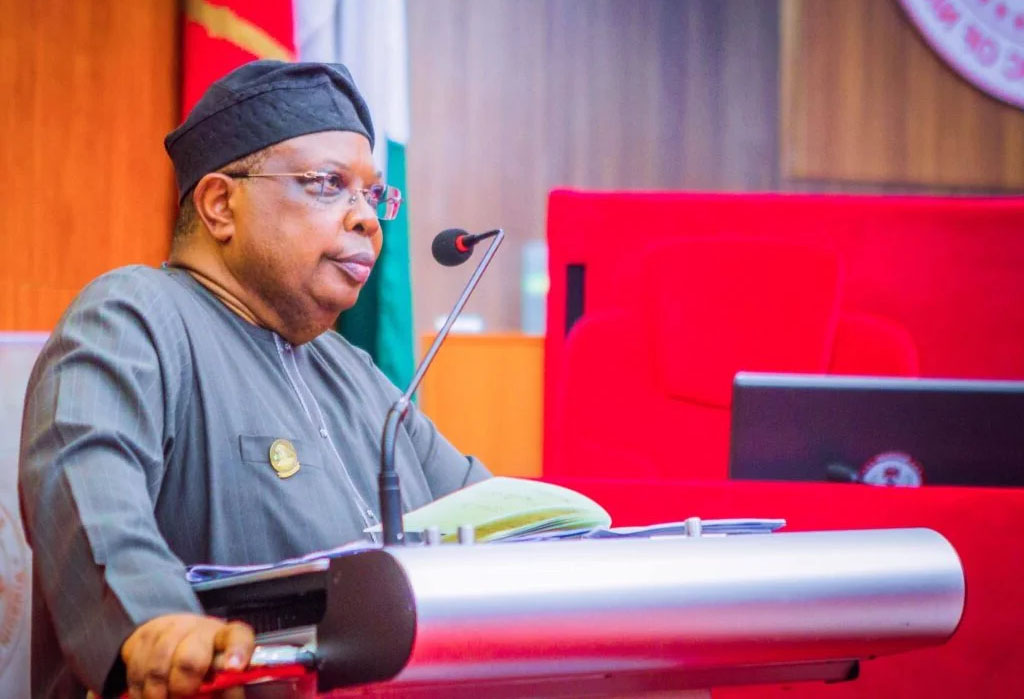
ABUJA – Minister of Power, Joseph Tegbe, has assured Nigerians that electricity supply will begin to improve within the next 48 to 72 hours as the Federal Government intensifies efforts to address the challenges responsible for the recent power outages across parts of the country.
Tegbe gave the assurance in an update on the country’s power situation amid growing complaints from electricity consumers over prolonged blackouts, particularly in Lagos and the Federal Capital Territory.
The minister attributed the worsening electricity supply to a combination of planned maintenance at Egbin Power Station, inadequate gas supply to some thermal power plants and sabotage of critical transmission lines.
According to him, the challenges have reduced the volume of electricity available on the national grid, forcing grid operators to implement load shedding in some areas to manage the shortfall.
He explained that maintenance activities at Egbin Power Station, one of Nigeria’s major electricity-generating facilities, had contributed significantly to the reduction in power generation.
The minister also identified gas supply constraints affecting some thermal power stations as another factor responsible for the decline in electricity generation.
READ ALSO:
- One Killed, Five Injured as Violence Disrupts Obi-Kwankwaso Rally in Delta
- BREAKING: Flamingos Make History, Defeat Japan 2–1 to Win First FIFA U-17 Women’s World Cup
- White House Reaffirms US Policy Recognising Only Two Genders
Tegbe further alleged that sabotage of key transmission lines had restricted the use of alternative routes for supplying electricity to some locations, particularly Lagos.
He said the Federal Government was working with relevant operators to address the challenges and restore the affected generating units in phases.
“My team and I are working to return the affected generating units to service in phases, with the first units coming back online within the next 48 to 72 hours.
“We are also working with operators to improve gas supply and accelerate repairs to the damaged infrastructure,” he said.
The minister acknowledged the hardship caused by the outages, noting that the disruptions had placed considerable pressure on households and businesses in the affected states.
He apologised to electricity consumers experiencing the interruptions and thanked them for their patience, promising to provide further updates as efforts to restore supply progress.
The latest assurance follows growing public complaints over worsening electricity supply, with residents and businesses in several locations struggling to cope with prolonged outages.
The power crisis has also triggered disagreements between the Transmission Company of Nigeria (TCN) and Ikeja Electric over the causes of recent supply interruptions.
While Ikeja Electric had cited grid instability in explaining its inability to meet electricity supply obligations to some Band A customers, TCN disputed the explanation, attributing the decline largely to inadequate gas supply and reduced electricity generation.
Tegbe had earlier directed TCN, the Nigerian Independent System Operator (NISO) and electricity distribution companies (DisCos) to address operational challenges contributing to the decline in power supply.
Nigerians will now be watching closely to see whether the promised improvement materialises within the 48-to-72-hour timeframe.
Power Outage: Tegbe Gives Nigerians 72-Hour Timeline as FG Moves to Restore Electricity
-

 Sports2 days ago
BREAKING: Flamingos Make History, Defeat Japan 2–1 to Win First FIFA U-17 Women’s World Cup
-
 News3 days ago
ADC Heads to Appeal, Insists Mark, Aregbesola Remain Party Leaders Despite Court Ruling
-

 News3 days ago
Tinubu’s Visit: One Feared Dead, Several Injured as APC Women’s Bus Collides With Security Vehicle in Uyo
-

 Auto3 days ago
Uwatse Joins Ade-Ojo, Maduka in Exclusive League of Nigeria Auto Legends
-

 News3 days ago
Sex Trafficking: ‘They Took Us To Native Doctor, Shaved Our Private Parts Before Leaving Edo’ – Survivor
-

 Entertainment2 days ago
Mohbad: Court-Supervised DNA Samples Collected From Singer’s Remains, Son Liam
-
 News3 days ago
2027: Abati Takes On Keyamo Over Atiku, ADC Court Judgment, Says ‘Stop Celebrating’
-
 News2 days ago
Power Outage: Tegbe Gives Nigerians 72-Hour Timeline as FG Moves to Restore Electricity