

Sports
UEFA condemns FIFA’s Balogun suspension reversal
UEFA condemns FIFA’s Balogun suspension reversal
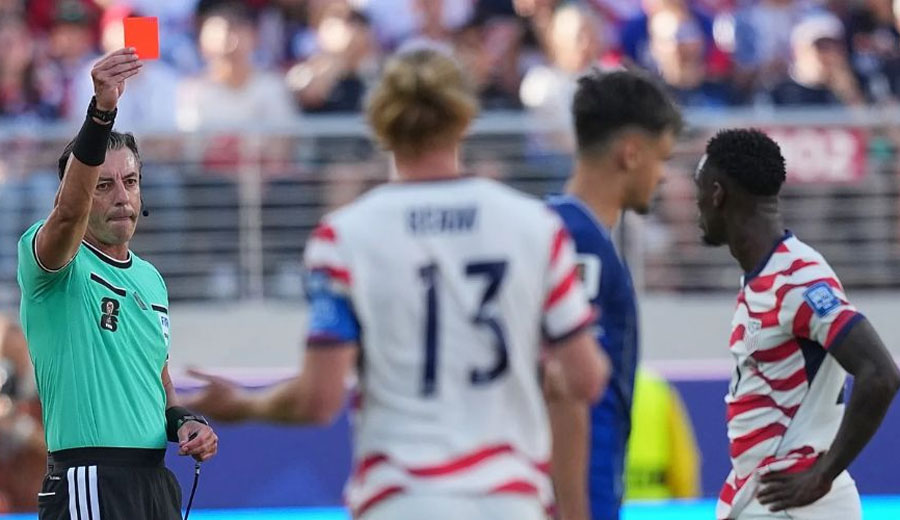
The Union of European Football Associations (UEFA) has strongly criticised FIFA over its decision to overturn the automatic one-match suspension of United States striker Folarin Balogun, describing the ruling as “unprecedented, incomprehensible and unjustifiable” and warning that it could undermine the integrity of global football.
The controversy erupted after FIFA allowed Balogun to feature in the United States’ Round of 16 clash against Belgium at the 2026 FIFA World Cup, despite receiving a straight red card during his team’s victory over Bosnia and Herzegovina in the previous round.
Under FIFA’s disciplinary regulations, a player shown a straight red card is automatically suspended for the next match. However, the world football governing body ruled that while Balogun’s dismissal would remain on his disciplinary record, the one-match suspension would be deferred for a one-year probationary period, making him immediately eligible to face Belgium.
The decision has sparked intense debate across the football world, with critics questioning whether FIFA departed from one of the sport’s most fundamental disciplinary principles.
In a strongly worded statement, UEFA insisted that an automatic suspension following a straight red card is not discretionary and should not be altered during an ongoing competition.
The European football governing body stressed that football depends on the consistent application of its rules to guarantee fairness, transparency and equal treatment for every player and team.
UEFA warned that when those responsible for enforcing the rules fail to apply them consistently, confidence in the sport and the credibility of major competitions are placed at risk.
READ ALSO:
- AGF contradicts Presidency, says PFIPC has no operational CBN account
- 15 killed, 17 injured in fatal Kwara trailer crash as FRSC blames driver fatigue
- Netanyahu insists on Hamas disarmament before Gaza reconstruction
The organisation further argued that FIFA’s decision establishes a dangerous precedent because similar disciplinary cases during the tournament could now demand identical treatment.
Describing the ruling as “unprecedented, incomprehensible and unjustifiable,” UEFA said it was deeply concerned about the implications for the integrity of the 2026 FIFA World Cup and future international competitions.
The controversy intensified after reports emerged that United States President Donald Trump held discussions with FIFA President Gianni Infantino before the disciplinary decision was announced.
Although FIFA has not linked its ruling to those reports, Trump later publicly thanked the football governing body for what he described as reversing “a great injustice,” prompting fresh debate over the independence of football’s disciplinary processes.
The Royal Belgian Football Association (RBFA) also criticised FIFA’s decision, describing it as surprising and seeking clarification on the legal basis for allowing Balogun to play despite the automatic suspension rule.
Belgium’s football authorities have reportedly appealed the decision, arguing that FIFA should provide a detailed explanation for departing from its established disciplinary procedures.
The issue has attracted reactions beyond football administrators.
Belgium’s Foreign Minister, Maxime Prévot, warned that political influence over disciplinary decisions would represent a serious breach of football’s governing principles and could damage public confidence in international competitions.
Similarly, European Commissioner for Sport Glenn Micallef emphasised that sporting decisions should remain the exclusive responsibility of football authorities, cautioning that political interference threatens the autonomy and credibility of sport.
Former FIFA President Sepp Blatter also criticised the decision, insisting that football “must never become a playground for political power.”
His remarks echoed growing concerns among football stakeholders that inconsistent disciplinary decisions risk weakening trust in FIFA’s governance and regulatory framework.
Despite the criticism, United States head coach Mauricio Pochettino welcomed the ruling, maintaining that Balogun’s original dismissal was excessively harsh and expressing satisfaction that the striker would be available for the crucial knockout encounter.
The Balogun controversy has since become one of the defining off-field stories of the 2026 FIFA World Cup, raising broader questions about the consistency of disciplinary decisions, transparency in football governance and the need to protect the independence and integrity of the global game.
With Belgium’s appeal attracting international attention and criticism mounting from football officials, former administrators and political leaders, pressure is increasing on FIFA to provide a detailed legal justification for one of the tournament’s most controversial disciplinary decisions.
UEFA condemns FIFA’s Balogun suspension reversal






Sports
Portugal Beat Denmark 4-2 Without Ronaldo in Nations League Clash
Portugal Beat Denmark 4-2 Without Ronaldo in Nations League Clash
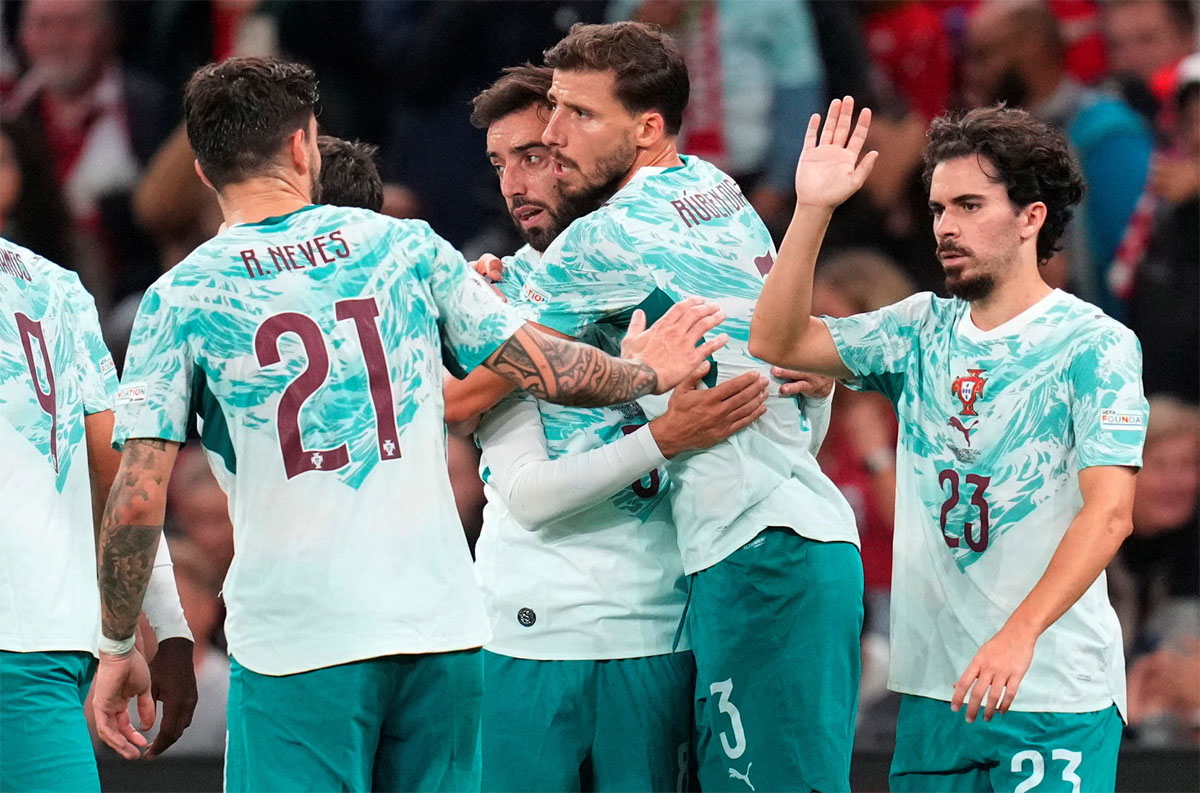
Portugal defeated Denmark 4-2 in the UEFA Nations League on Thursday, producing a strong performance despite the absence of captain Cristiano Ronaldo.
The result extended Portugal’s perfect start under head coach Jorge Jesus, who has now overseen three victories from three matches since taking charge of the national team.
Playing in Copenhagen, Portugal took the lead in the 13th minute when João Cancelo finished from close range after Denmark struggled to clear the ball.
The hosts responded when Mikkel Damsgaard produced a composed finish to level the score.
Portugal regained the advantage shortly afterwards through Gonçalo Ramos, who found the net at the near post to make it 2-1.
Denmark refused to surrender and drew level again early in the second half through Rasmus Højlund.
READ ALSO:
- Military Personnel Begin Receiving FG-Approved Salary Increase
- Trump Threatens Iran With ‘Very Hard’ Response Over Flydubai Attack
- Phyna Knocks Out Nkechi Blessing in Fourth Round, Wins ₦50m, New Car
Portugal then regained control of the contest, with Vitinha heading home in the 57th minute to restore the visitors’ lead.
João Félix completed the scoring three minutes from full time, finishing a counter-attack to secure the 4-2 victory.
The match was played against the backdrop of Ronaldo’s absence after the veteran forward left Portugal’s training camp before the game.
Ronaldo’s departure followed a decision by Jesus not to start him against Denmark. The 41-year-old subsequently said in a social media post that he would explain the circumstances surrounding his exit at a later time.
With Ronaldo unavailable, Jesus handed Ramos the responsibility of leading the attack, and the Paris Saint-Germain forward responded with Portugal’s second goal.
The victory moved Portugal to nine points from three matches in the competition and maintained their winning run under Jesus.
Denmark, meanwhile, were left to reflect on another match in which they twice came from behind but were unable to prevent Portugal from taking all three points.
Portugal will continue their Nations League campaign against Norway, while attention is expected to remain on Ronaldo and his future involvement with the national team.
Portugal Beat Denmark 4-2 Without Ronaldo in Nations League Clash
Sports
Why Ronaldo Left Portugal Camp Ahead of Denmark Clash
Why Ronaldo Left Portugal Camp Ahead of Denmark Clash
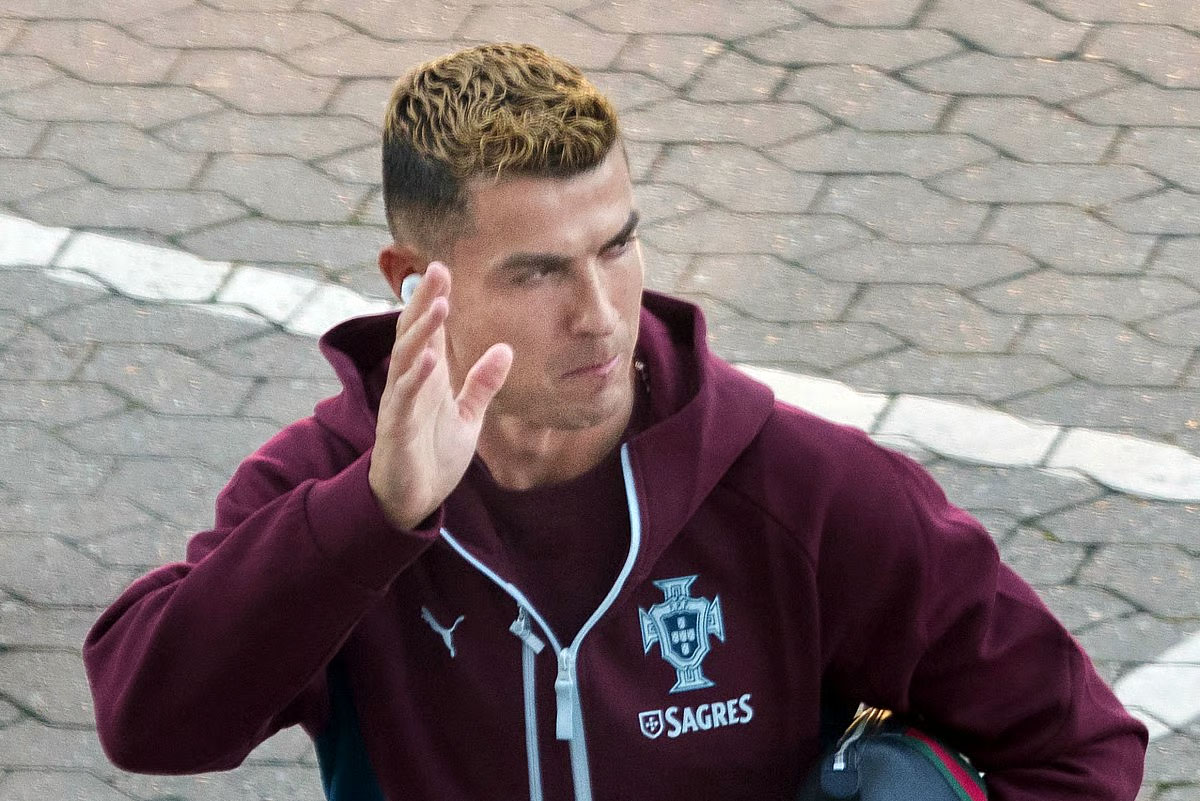
Cristiano Ronaldo has left the Portugal national team camp ahead of the country’s UEFA Nations League meeting with Denmark, following reports of tension over his role in the team.
Ronaldo’s departure came after Portugal coach Jorge Jesus confirmed that the 41-year-old forward would not start against Denmark.
The situation reportedly followed Portugal’s 2-1 victory over Norway, when Ronaldo remained on the bench throughout the match despite warming up during the game.
According to reports, Ronaldo was unhappy after he was not introduced and went straight to the dressing room at the final whistle rather than joining his teammates in acknowledging the Portuguese supporters.
Jesus later addressed the issue and acknowledged that Ronaldo was unhappy with the decision, but denied that there had been a major confrontation between the two.
The Portugal coach also dismissed reports that Ronaldo had refused to train, explaining that the forward had instead completed individual mobility and strengthening exercises.
READ ALSO:
- 2027: Amaechi Vows to Resign If Nigeria Fails to Change Within One Year
- Dangote Sets 40-Month Deadline for $16bn East Africa Refinery in Kenya
- Nigeria at 66: Tinubu Unveils Fresh Push for Lower Costs, Jobs, Prosperity (Full Text)
The situation intensified after Jesus confirmed that Ronaldo would again not be in the starting lineup for the Denmark vs Portugal fixture, with Gonçalo Ramos expected to lead the attack.
Jesus said Ronaldo could still be introduced as a substitute depending on how the match developed.
Ronaldo subsequently held a conversation with Portuguese Football Federation president Pedro Proença before leaving the national team camp in Copenhagen.
The Portugal captain later posted a statement on social media confirming his departure and indicating that he would explain the circumstances behind the decision at a later time.
He did not directly accuse Jesus or the Portuguese federation of wrongdoing in the statement.
The episode has nevertheless generated renewed questions about Ronaldo’s role in the Portugal national team, particularly as he approaches the later stages of his international career.
Ronaldo remains Portugal’s record goalscorer and one of the country’s most decorated players. He has also previously indicated that his playing career is approaching its final stage.
For now, the confirmed sequence is that Ronaldo was left unused against Norway, Jesus subsequently announced that he would not start against Denmark, Ronaldo met with the federation president and then left the training camp.
Portugal’s immediate focus remains its Nations League campaign, while further details about Ronaldo’s decision are expected to emerge if the player follows through on his promise to explain the circumstances.
Why Ronaldo Left Portugal Camp Ahead of Denmark Clash
Sports
Super Eagles Suffer Bissau Nightmare as Guinea-Bissau Smash Nigeria 3-0
Super Eagles Suffer Bissau Nightmare as Guinea-Bissau Smash Nigeria 3-0
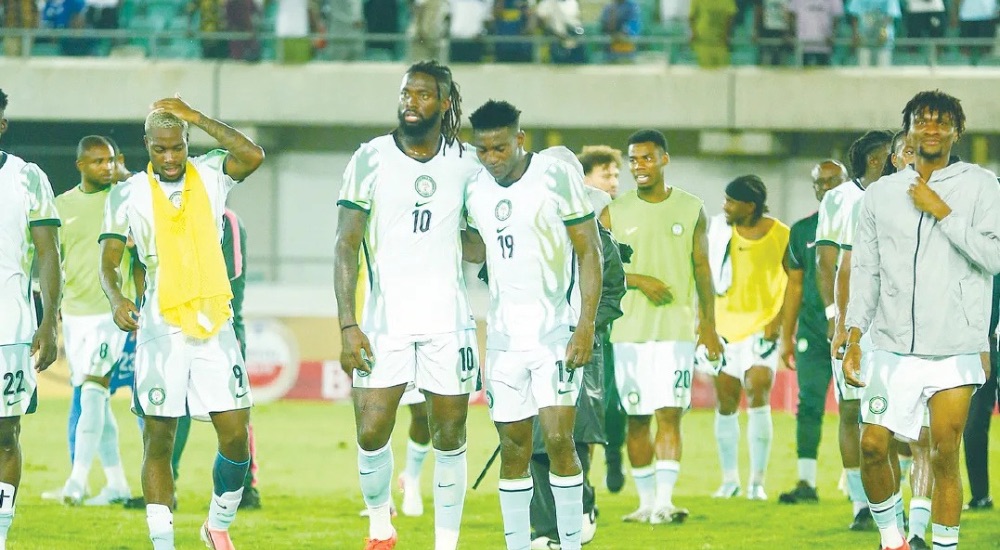
Nigeria’s Super Eagles suffered a stunning 3-0 defeat to Guinea-Bissau on Tuesday night, as their 2027 Africa Cup of Nations (AFCON) qualifying campaign suffered a major setback in Bissau.
The hosts produced a dominant display at the Estádio Nacional 24 de Setembro, scoring once in the first half and twice after the break to move to the top of Group L with six points from two matches.
Franculino Djú put Guinea-Bissau ahead in the 15th minute after receiving a long pass from Renato Nhaga. He worked his way into the Nigerian penalty area before curling a left-footed effort beyond goalkeeper Stanley Nwabali.
The Super Eagles struggled to find their rhythm after conceding and failed to create enough clear chances to trouble the hosts before the interval.
Coach Eric Chelle responded at the start of the second half by introducing Moses Simon and Moses Usor for Taiwo Awoniyi and Frank Onyeka.
READ ALSO:
- Trump Denies Offering Iran Sanctions Relief, Release of Frozen Funds
- Nigeria XI vs Guinea-Bissau: Awoniyi, Lookman, Adams Lead Super Eagles Attack
- Federal Workers Back N500 Petrol Demand, Threaten Three-Day Warning Strike
The changes did little to alter the pattern of the match, with Guinea-Bissau continuing to pose the greater attacking threat.
The hosts doubled their advantage in the 66th minute through Mama Baldé, who collected a pass from Mamadi Camará before cutting into the Nigerian box and firing a low shot past Nwabali.
Chelle subsequently brought on George Ilenikhena and Raphael Onyedika for Akor Adams and Wilfred Ndidi, while Tolu Arokodare replaced Ademola Lookman.
Ilenikhena came close to reducing the deficit late in the game, but Guinea-Bissau goalkeeper Embadjé made another important save to preserve his side’s two-goal advantage.
Nigeria’s miserable night was completed in the fifth minute of stoppage time when Álvaro Djaló finished a through ball from Tamble Monteiro to make it 3-0.
The result leaves Nigeria with three points from two matches, following their opening 2-1 victory over Madagascar.
Guinea-Bissau, meanwhile, have six points after beating Tanzania 2-0 in their opening fixture before defeating Nigeria.
Madagascar and Tanzania drew 1-1 in the other Group L match.
With Tanzania already guaranteed a place at the 2027 AFCON as one of the tournament co-hosts, Nigeria, Guinea-Bissau and Madagascar are competing for the qualifying position available to the highest-ranked non-host nation in the group.
The Super Eagles will have an opportunity to respond when they face Tanzania in a double-header during the November international window.
For Chelle and his players, however, the 3-0 defeat in Bissau leaves little room for another disappointing performance as the AFCON 2027 qualifying race continues.
Super Eagles Suffer Bissau Nightmare as Guinea-Bissau Smash Nigeria 3-0
-
 Entertainment3 days ago
Phyna Knocks Out Nkechi Blessing in Fourth Round, Wins ₦50m, New Car
-
 metro2 days ago
NYSC Kidnap: Abductors Demand N950m for 19 Prospective Corps Members in Imo
-
 Entertainment3 days ago
Olu Jacobs Laid to Rest in Lagos as Dignitaries, Nollywood Stars Honour Screen Icon
-

 Politics2 days ago
2027: Oshiomhole Dares Opposition Over ₦500 Petrol Promise, Says APC Will Take Argument to Nigerians
-
 International3 days ago
Trump Threatens Iran With ‘Very Hard’ Response Over Flydubai Attack
-
 metro3 days ago
Nigeria Launches 11-Character Digital Postcode System for Every Addressable Building
-
 metro2 days ago
Amaechi: Tinubu’s Policies Made My Mother’s Drugs Unaffordable
-
 Politics3 days ago
NDC Protests Police Cancellation of Obi-Kwankwaso March in Akwa Ibom