

Politics
“Obi Is a Regional Champion” — Dino Melaye Explains Why He Can’t Be President

“Obi Is a Regional Champion” — Dino Melaye Explains Why He Can’t Be President
Former Kogi West Senatorial District lawmaker, Dino Melaye, has explained why he believes the Nigeria Democratic Congress (NDC) presidential candidate, Peter Obi, cannot become Nigeria’s president in the 2027 general elections — describing the former Anambra governor as a “regional champion” rather than a nationalist with the nationwide political structure required to secure victory .
Melaye stated this during an appearance on the KAA Truths podcast on Thursday, August 13, 2026, where he discussed the political landscape ahead of the 2027 general elections . The former lawmaker argued that a politician perceived primarily through a regional political identity would struggle to secure the presidency in Nigeria, regardless of personal popularity or moral standing .
“Atiku is a nationalist. Obi is a regional champion. It may sound awkward. It may sound offensive but Obi is a good man and he’s my friend. I have respect for him but he’s a regional champion and no regional champion in this country will ever be president,” Melaye stated .
He acknowledged that his assessment could be viewed as controversial but maintained that it reflected his understanding of Nigeria’s political dynamics . Melaye claimed that Obi’s strongest electoral support would still come from the Southeast if the presidential election were repeated, and while he acknowledged that Obi attracted votes from several states outside the Southeast during the 2023 election, he maintained that the former Anambra governor’s most significant electoral strength remained concentrated in the region .
READ ALSO:
- Adeleke Campaign Council Protests Release of APC Assembly Candidate Arrested with Gun in Osun
- Omo-Agege Escapes Assassination Attempt in Usiefrun, Six NDC Members Injured
- From One Goat to a Global Empire: Dino Melaye’s Inspiring Journey to Financial Freedom
According to Melaye, winning votes in different parts of the country does not necessarily translate into having a nationwide political structure. He stressed the importance of grassroots mobilisation, political organisation and strong relationships with influential political actors . He further compared Obi’s position with that of politicians who have historically enjoyed strong regional backing, noting that while regional popularity can generate substantial votes, it may not be enough to secure victory in a presidential contest .
Melaye contrasted Obi with the African Democratic Congress (ADC) presidential candidate, Atiku Abubakar, whom he described as a nationalist with a broader national political network, attributing this to Atiku’s long experience in Nigerian politics and his ability to command support across the country’s diverse geopolitical zones .
In a separate appearance on Channels Television in March 2026, Melaye had similarly described Obi as a “fantastic Nigerian” but insisted that “this is not his time to be President” . He suggested that Nigeria at this point needs someone who can pull the country together — “it is not just about being a good person or having a business background; it is about political maturity and the network to unite every segment of this country” .
Melaye also criticised Obi’s political history, accusing him of avoiding tough situations. In a May 2026 X post, he said: “Peter Obi excused himself from tough situation. If he can not face party tribulations and crisis, how does he intend to handle Nigeria? … He has never gone through primary, APGA gave him free Governorship ticket, Atiku gave him free VP ticket, Labour gave free Presidential ticket. He can not be part of primary election, reason why he left PDP, reason why he left ADC for another free ticket in NDC” .
Obi emerged as the presidential candidate of the Labour Party for the 2023 general election after leaving the Peoples Democratic Party (PDP), where he had previously served as a presidential running mate . His 2023 campaign, which was largely driven by the “Obidient” movement, attracted significant support among young Nigerians and voters in several parts of the country . Obi finished third in the 2023 presidential election, securing 6,101,533 votes, according to results announced by the Independent National Electoral Commission (INEC). Bola Ahmed Tinubu of the All Progressives Congress (APC) won the election with 8,794,726 votes, while Atiku Abubakar of the PDP came second with 6,984,520 votes .
Ahead of the 2027 election, Obi has moved from the Labour Party to the NDC, joining the opposition coalition seeking to challenge the ruling APC . The development has reshaped the opposition landscape, with several prominent political figures aligning with different platforms as parties prepare for the next presidential election . Obi’s departure from the ADC, alongside other leaders like former Kano Governor Rabiu Kwankwaso, followed a crisis within the ADC coalition and has positioned the NDC as a primary opposition force against President Tinubu’s APC .
It is worth noting that Melaye’s position has not been entirely consistent. In July 2022, he had released a video praising Obi and urging Nigerians to support his movement, though that same video included advice that “your time is not now” . A manipulated version of that 2022 video was recently circulated online to falsely suggest Melaye had endorsed Obi for 2027, but fact-checkers confirmed the clip was taken out of context .
The 2027 presidential election is shaping up to be a highly competitive contest, with the APC seeking to retain power, the NDC positioning itself as the main opposition challenger, and other parties such as the ADC, PDP, and Labour Party also fielding candidates . Political analysts have noted that the ability of any candidate to build a broad-based national coalition will be critical to electoral success .
“Obi Is a Regional Champion” — Dino Melaye Explains Why He Can’t Be President








Politics
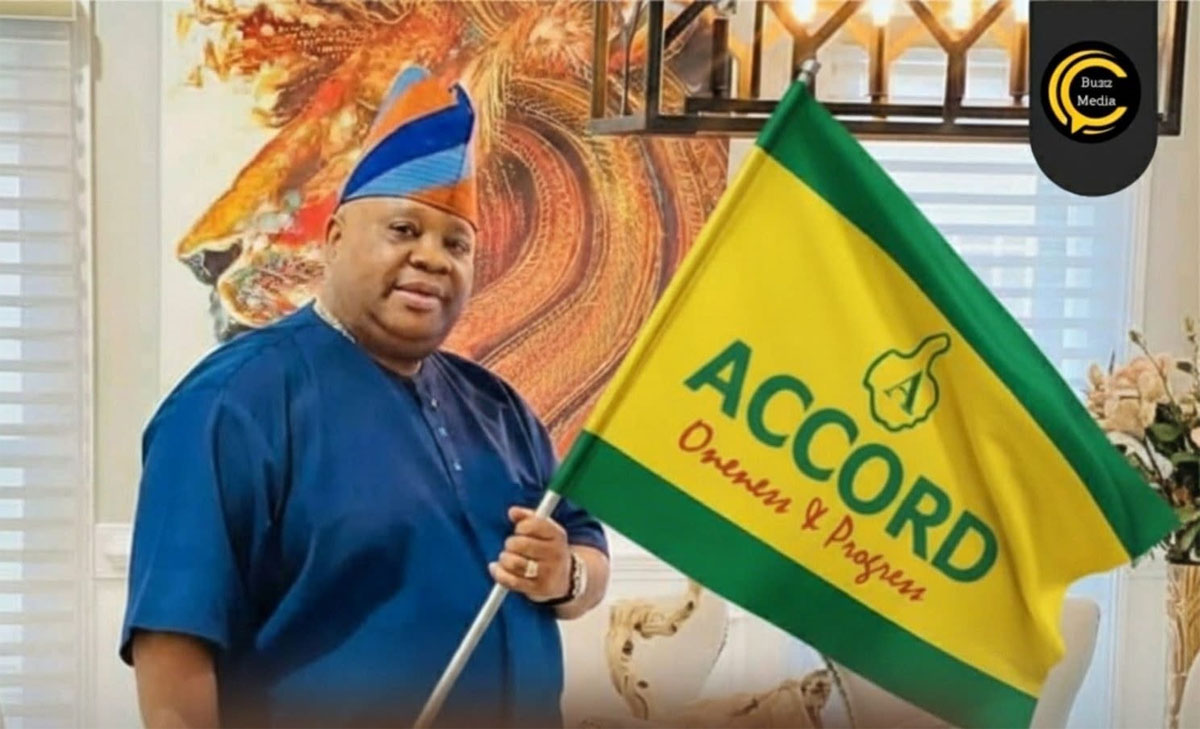
Adeleke Wins Polling Unit, Boasts of Wide Margin Victory as APC Trails
Politics
2027: Atiku’s suit seeking Tinubu’s disqualification meets deadline, faces procedural hurdle
2027: Atiku’s suit seeking Tinubu’s disqualification meets deadline, faces procedural hurdle
Former Vice President’s certificate forgery challenge may be “dead on arrival” due to choice of Originating Summons, legal experts say
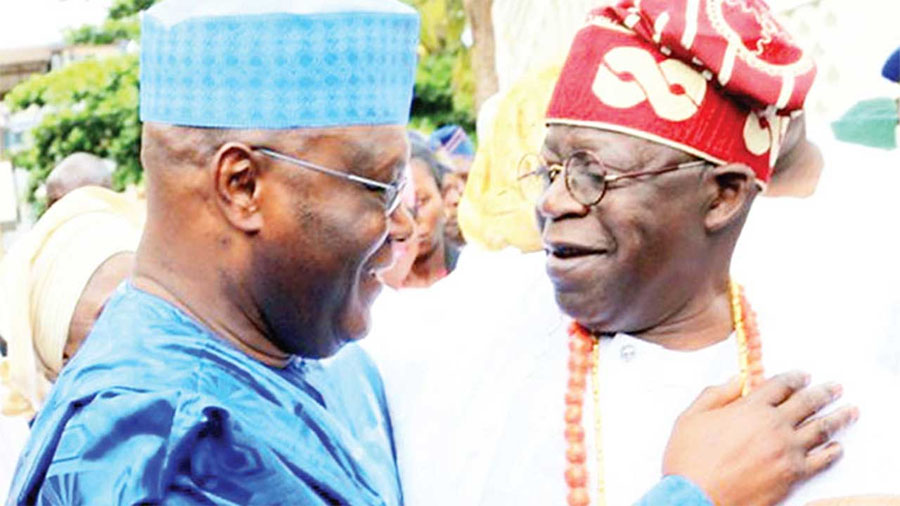
The suit filed by former Vice President Atiku Abubakar seeking President Bola Ahmed Tinubu’s disqualification from the 2027 presidential race met the constitutional deadline for pre-election matters, but the procedure used to bring the case may expose it to a strong legal challenge, according to a review of the filing and established case law. Atiku personally appeared at the Federal High Court registry in Abuja on Friday, August 14, 2026, to depose to an affidavit backing the suit, which he filed alongside his party, the African Democratic Congress (ADC) , against Tinubu, the All Progressives Congress (APC) and the Independent National Electoral Commission (INEC) . The action rests on Sections 137(1)(j), 139(1)(a)(i) and 285(14)(c) of the 1999 Constitution as amended, along with relevant provisions of the Electoral Act 2026. At its core is an allegation that the NYSC discharge certificate Tinubu submitted to INEC bears a name that differs from his own—”Tinubu Bola Adekunle” rather than “Bola Ahmed Tinubu”.
Legal analyst Ekene Aninze, reviewing the timing of the filing, noted that Atiku fell squarely within the 14-day window set by Section 285(9) of the Constitution for pre-election matters. INEC had displayed the personal particulars of presidential candidates, including Tinubu’s, on Saturday, August 1, 2026, in line with its published election timetable. Counting from that date, Atiku’s filing on August 14 came on the 13th day, within the statutory limit. This timing is critical, as Nigerian courts have repeatedly dismissed pre-election cases filed outside the 14-day window. In the Edo State governorship dispute, the Court of Appeal held that a case challenging candidate credentials was statute-barred when filed beyond the stipulated period. Similarly, courts have affirmed that the reckoning date is the occurrence of the event complained of, not when the aggrieved person became aware of it.
READ ALSO:
- APC Humiliates Aregbesola, Wins His Polling Unit in Osun Governorship Election
- Oyo Police Smash Human Parts Syndicate: 10 Arrested, Heart, Skull Recovered
- Heavy Security, Long Queues, Massive Turnout Mark Osun Governorship Election in Ede
Where the case may run into difficulty, according to Aninze, is the format in which it was brought. The suit was filed by way of Originating Summons, a procedure typically reserved for disputes over the interpretation of documents rather than contested facts. Nigerian courts have repeatedly held that allegations bordering on forgery cannot be resolved on affidavit evidence alone and require a Writ of Summons, which allows for oral testimony and cross-examination. That principle traces back to the Supreme Court’s handling of the Delta State PDP governorship tussle between Sheriff Oborevwori and David Edevbie, where the apex court held that Edevbie’s forgery allegations against Oborevwori could not be resolved through Originating Summons and ought to have been commenced by Writ of Summons, since only oral and documentary evidence tested in open court could settle such claims. Justice Tijani Abubakar, who delivered the judgment of the panel, held that the grievous allegations of supply of false information and certificate forgery brought against the Speaker cannot be proved beyond reasonable doubt with the use of Originating Summons. A similar reasoning shaped the Court of Appeal’s earlier intervention in the same dispute, which faulted Edevbie for not calling the institution alleged to have issued the disputed document as a witness. The same logic featured in the long-running feud between Godwin Obaseki and his APC rivals, where the University of Ibadan had to be drawn into proceedings to speak to the authenticity of a contested credential, and in Bashir Machina’s dispute with the APC over the Yobe North senatorial primaries, often cited as a cautionary tale on the risks of using Originating Summons for a contentious matter. Applying that pattern to the Atiku suit, Aninze argued that questions over the authenticity of the NYSC certificate would likely require testimony from the NYSC itself to confirm or deny that it issued the document, something an Originating Summons process, built on affidavits, is not designed to accommodate. Activist lawyer Maduabuchi Idam went further, describing the suit as “dead on arrival.” He explained that the judicial system lacks the courage to allow justice to be done in such a matter, adding that “whether the action succeeds or fails, it will continue to expose the weaknesses of our institutions, lampoon the system, and subject it to public scorn and ridicule.”
Atiku’s decision to personally appear at the court registry was deliberate, according to his Senior Special Assistant on Public Communication, Phrank Shaibu. The former vice president stated: “I came here personally because the issues before the court go to the heart of our Constitution and the integrity of the office of President. I cannot ask Nigerians to respect the Constitution while treating a matter of this magnitude casually. I have therefore put my name, my signature and my oath behind the facts we are presenting to the court. Now it is President Tinubu’s turn to answer them.” Atiku emphasized that the matter should be settled through evidence rather than political arguments or social media exchanges. “We are not asking Nigerians to decide this matter on social media,” he said. “We are asking the institution holding the records to produce them and the judiciary to examine the evidence and pronounce on it.” He added: “If the certificate belongs to Bola Ahmed Tinubu, let that be established before the court. If ‘Tinubu Bola Adekunle’ and ‘Bola Ahmed Tinubu’ are one and the same person for the purpose of that certificate, let the evidence establish it. These are questions that deserve answers, not political insults or presidential silence.”
READ ALSO:
- Protest in Osogbo Over Ballot Paper Shortage, Missing Voter Names
- Osun Guber: APC Candidate Oyebamiji Casts Vote, Commends BVAS, Voter Turnout As Voting Continues
- Osun Guber 2026: Adeleke Alleges Police Aiding APC to Rig Election
Beyond the certificate dispute, Atiku and the ADC are also challenging provisions of the Electoral Act 2026 which, according to their written address, effectively restrict who may challenge the qualification of a candidate at pre-election stage and the removal of qualification as a ground for questioning an election as envisaged by Section 139(a)(i) of the Constitution. Their argument is that legislation cannot be used to shut the door against enforcement of an express constitutional provision. They contend that where an Act of the National Assembly conflicts with the Constitution, the Constitution must prevail. “This case therefore raises a fundamental question for our democracy,” Atiku said. “Can an Act of the National Assembly be used as a shield against an express provision of the Constitution? Can we write into ordinary legislation an escape route from a constitutional standard applicable to everyone seeking the Presidency? Our position is that the Constitution remains supreme.”
In a parallel development, a legal counsel and chieftain of the ADC, Kalu Agu, submitted a petition against Tinubu to the European Commission in Brussels, Belgium, for allegedly submitting a forged certificate to INEC. Agu was captured in a video shared on X by Paul Ibe, Atiku’s media aide, while submitting the petition. He alleged that Tinubu presented false academic credentials to INEC as part of the constitutional requirements for the 2027 election, asking the EU to intervene over what he described as the alleged subversion of constitutional order in Nigeria.
Reacting to the suit, the APC described it as an exercise in futility. The National Secretary of the APC, Ajibola Basiru, said: “Atiku should go and brace for another defeat in the general election. The President is qualified to contest the election; nothing is disqualifying him, and the matter has been settled by the Supreme Court.” Basiru added: “Atiku has nothing to offer Nigerians, and he knows that he will be rejected at the poll. That is why he is looking for a shortcut. But there’s no shortcut to power. He should go and mobilise for the poll, where he will be rejected by Nigerians as usual. That will end his political misadventure into the presidency.”
Neither Tinubu’s legal team nor the APC had filed a response to the suit as of the time of this report. The originating summons asks the Federal High Court to determine whether the statutory restrictions complained of can prevent the plaintiffs from invoking Section 137(1)(j), and ultimately whether Tinubu and the APC should be disqualified from participating in the 2027 presidential election if the plaintiffs’ case is established. Among the substantive reliefs sought is an order disqualifying Tinubu and the APC from participating in the 2027 presidential election on the grounds pleaded by the plaintiffs. Atiku has also placed INEC on notice to produce Tinubu’s Form CF001 submitted in connection with the 2023 and 2027 presidential elections. The affidavit states that Atiku had applied for certified true copies of the relevant form before filing the suit but had received no response at the time the processes were prepared. Atiku concluded: “Nobody should misunderstand what is at stake. Nigerian graduates cannot complete NYSC documentation with one identity and simply ask employers to ignore discrepancies. Young Nigerians seeking ordinary jobs are subjected to rigorous scrutiny of their certificates. The Presidency is not an immunity certificate against constitutional scrutiny.”
2027: Atiku’s suit seeking Tinubu’s disqualification meets deadline, faces procedural hurdle
Politics
APC Humiliates Aregbesola, Wins His Polling Unit in Osun Governorship Election

-

 News2 days ago
FG to Attach 300 NYSC Corps Members to CNG Workshops for Skills Training
-
 metro2 days ago
Seven Miners Killed in Plateau Mining Pit Collapse, Renewing Urgent Calls for Safety Reform
-
 International2 days ago
Iran Had Detailed Intel on Trump’s Location Before Secret Turkey Escape
-
 Politics2 days ago
INEC reprints Osun ballot papers, result sheets, includes SDP candidate
-
![[UPDATED] Osun Election: Police Arrest Lawmaker with 200 PVCs, 146 Suspected Electoral Mercenaries](https://newstrends.ng/wp-content/uploads/2026/08/1786781299004-400x240.jpg)
![[UPDATED] Osun Election: Police Arrest Lawmaker with 200 PVCs, 146 Suspected Electoral Mercenaries](https://newstrends.ng/wp-content/uploads/2026/08/1786781299004-80x80.jpg) Politics11 hours ago
Politics11 hours agoOsun Decides: Over 100 ‘Imported’ Voters Arrested With New PVCs
-

 Education2 days ago
JAMB Aggregate Score 2026/2027: How Nigerian Universities Calculate Your Admission Chances
-

 News12 hours ago
UK Opens 2026/27 Commonwealth Fellowship Applications for Nigerians – How to Apply
-
 Sports2 days ago
WAFCON: Chawinga sisters fire Malawi into historic final