

Politics
2027: Atiku, Obi, Makinde absent as opposition parties chart path to common candidate
2027: Atiku, Obi, Makinde absent as opposition parties chart path to common candidate
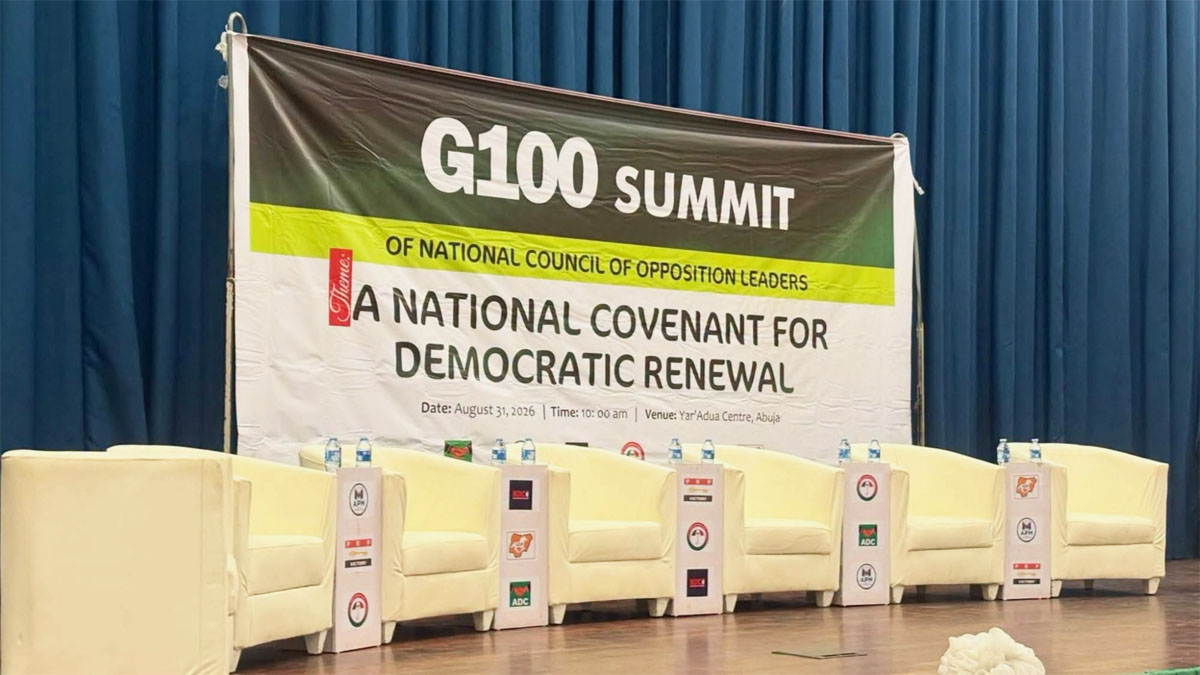
The presidential candidates of the African Democratic Congress (ADC), Atiku Abubakar; Nigeria Democratic Congress (NDC), Peter Obi; and Allied Peoples Movement (APM) and Oyo State Governor, Seyi Makinde, were absent as leaders of six major opposition parties converged on Abuja on Monday to begin a structured process towards building a united political platform ahead of the 2027 general election.
The first Summit of Nigeria’s Opposition Political Parties was held at the Shehu Musa Yar’Adua Centre, with representatives of the ADC, APM, NDC, Peoples Democratic Party (PDP), Peoples Redemption Party (PRP) and Social Democratic Party (SDP) in attendance.
The summit was organised with the participation of the G100 and the Minority Caucus of the House of Representatives as opposition politicians seek to avoid the vote fragmentation that characterised the 2023 presidential election.
Although Atiku, Obi and Makinde were not at the meeting, several presidential and vice-presidential candidates attended, alongside national working committee members and representatives of the boards of trustees of the participating parties.
Those in attendance included SDP presidential candidate Adewole Adebayo, PRP presidential candidate Donald Duke and APM vice-presidential candidate Lawal Musa Daura.
The discussions focused largely on developing a framework that would enable the opposition parties to coordinate their activities, resolve differences and eventually work towards a common presidential candidate for 2027.
Speaking on behalf of the G100, former APC National Vice Chairman Salihu Moh. Lukman proposed the establishment of a Government of National Competence anchored on a single four-year transition term.
Lukman said the proposal was designed to create a government based on competence, integrity, national inclusion and fair representation among parties participating in the proposed alliance.
He said the arrangement should be backed by an enforceable Transition Charter that would commit the parties to a single four-year term and prevent future disagreements from undermining the coalition.
According to Lukman, the opposition should avoid repeating the pattern of political agreements that depend solely on goodwill and personal assurances.
He argued that any agreement reached must be written, witnessed and enforceable, with clearly defined consequences for parties or individuals who violate its provisions.
Lukman also drew lessons from Nigeria’s previous elections, particularly the 2015 presidential election, when opposition parties successfully united under the All Progressives Congress (APC) to defeat the then ruling Peoples Democratic Party.
READ ALSO:
- Security Forces Rescue 10 NYSC Members from Kogi Forest
- Messi Retires from Argentina National Team for Second Time at 39
- IPOB Gives FG 14-Day Ultimatum to List Nnamdi Kanu’s Appeal or Face Election Boycott
He contrasted that outcome with the 2023 presidential election, when votes for major opposition candidates were divided among different platforms.
According to him, the combined votes of the leading opposition candidates were significantly higher than the votes secured by the eventual winner, but the fragmentation of those votes allowed the ruling party to emerge victorious under Nigeria’s electoral system.
Lukman described the 2023 outcome as an arithmetical lesson for the opposition, arguing that parties cannot expect to defeat an established political structure if they continue to divide their support base.
He also cited Kenya’s 2002 election and Malaysia’s 2018 political transition as examples of opposition forces defeating long-standing ruling parties after choosing cooperation over political fragmentation.
To give the proposed alliance a formal structure, the G100 recommended three standing bodies.
The first is a Central Leadership Committee, comprising national chairmen, national secretaries, presidential candidates and vice-presidential candidates of the participating parties. The committee would provide political direction and coordinate the coalition process.
The second is a Publicity and Communication Committee, which would coordinate joint messaging and communication among the participating parties.
The third is a Legal Committee, which would provide legal advice and coordinate legal strategies on matters relating to the proposed opposition cooperation.
The summit also agreed to establish five working groups, with each participating party expected to nominate one representative.
The groups are expected to produce working papers within four weeks covering a National Covenant for Democratic Renewal, Single-Term Transition Charter, National Reform Programme, Framework for Opposition Unity and Roadmap to a Common Presidential Candidate.
The documents are expected to form the basis for deliberations at a second opposition summit, where the parties would consider the next stage of the coalition process.
Lukman stressed that Monday’s meeting was not intended to force any political party to dissolve or merge with another.
He also clarified that the summit was not asking any presidential candidate to withdraw from the 2027 race immediately.
Instead, the immediate objective was to establish the rules and institutional framework that would allow the parties to negotiate their differences before addressing the question of a common presidential candidate.
Leading the House of Representatives Minority Caucus to the summit, Minority Leader Fred Agbedi urged opposition parties to close ranks and replicate the strategy that helped the APC defeat the PDP in 2015.
Agbedi said the Minority Caucus had decided to work with the G100 to help opposition parties streamline their ambitions and develop a collective strategy capable of producing victory in 2027.
READ ALSO:
- Tinubu’s FBI records: Reno Omokri explains why President opposes release
- Seyi Tinubu Can Change Things at NFF — Obafemi Martins Backs President’s Son for Football Reform
- “I Cursed the Pastor” — Yemi Solade Reveals Why He Quit Church 13 Years Ago
He warned that repeating the fragmentation of 2023 could again leave the opposition with millions of votes that would not translate into electoral victory.
Agbedi urged political leaders to put aside personal ambitions and focus on building a viable alternative to the ruling APC.
PRP presidential candidate Donald Duke also called for political leaders to subordinate individual ambitions to the broader interest of the country.
Duke said he was prepared to support any presidential candidate who emerges through a credible and jointly agreed process involving the participating parties.
He argued that political ego had repeatedly prevented opposition politicians from working together effectively.
Duke warned that the opposition would struggle to defeat the ruling party if individual politicians insisted on pursuing their ambitions independently.
Speaking on behalf of the ADC, its National Vice Chairman for the South-South, Usani Uguru Usani, expressed confidence in the coalition initiative but warned opposition politicians against internal attacks.
Usani said opposition figures were sometimes more focused on attacking one another than confronting the political challenges they collectively faced.
He urged the parties to concentrate on developing a credible alternative capable of winning the confidence of Nigerian voters.
APM National Chairman Yusuf Mamman Dantalle described the summit as an important development in Nigeria’s political history and urged participants to look beyond individual and party interests.
Representing the Tanimu Turaki-led faction of the PDP, its Board of Trustees Secretary, Dr Babangida Aliyu, commended the initiative and called for the coalition-building process to be extended to the state and local government levels.
PRP National Chairman Dr Hakeem Baba-Ahmed described the meeting as historic and said Nigerians were watching the opposition’s efforts closely.
He said the participating parties faced significant political and legal challenges but insisted that the coalition-building process would continue.
SDP National Chairman Prof. Sadiq Gombe also pledged his party’s commitment to the initiative, arguing that Nigerian voters had demonstrated a willingness to support credible alternatives.
NDC National Chairman Senator Moses Cleopas Zuwoghe, speaking on behalf of his party and Peter Obi, endorsed the coalition process and described it as an opportunity for opposition parties to develop a pathway towards addressing the country’s challenges.
READ ALSO:
- EFCC Recovers N1.23tn, $684m as Convictions Hit 10,872 in Three Years — Olukoyede
- NELFUND Boss Dismisses Misappropriation Claims, Insists All Payments Traceable Electronically
- ANTP Debunks Cancer Rumors as Actor Wale Elesho Undergoes Successful Facial Surgery
At the end of the meeting, the six parties adopted a Joint Communiqué committing themselves to a structured process of negotiation on opposition cooperation ahead of the 2027 election.
The parties formally established the Central Leadership Committee, Publicity and Communication Committee and Legal Committee.
They also agreed to constitute the five working groups and directed them to produce their respective documents within four weeks ahead of the proposed second summit.
The communiqué confirmed that the G100 would remain a facilitator and observer, rather than assume the authority of the political parties involved in the process.
In another major resolution, the parties called on the United States government to ensure the timely and lawful disclosure of all non-exempt official records concerning President Bola Ahmed Tinubu that are relevant to legitimate public interest.
The demand is connected to an ongoing Freedom of Information Act case before the United States District Court for the District of Columbia.
The opposition parties, however, clarified that the request did not presume the contents of any undisclosed records and did not amount to a finding of wrongdoing against President Tinubu.
They also resolved to formally communicate their position to the ECOWAS Commission.
The major challenge now facing the emerging opposition coalition is whether it can translate the resolutions reached in Abuja into a functioning political alliance capable of competing effectively in 2027.
The absence of Atiku, Obi and Makinde from the inaugural summit also highlights the political complexities that could shape the coalition process, particularly because all three remain influential figures whose political ambitions and support bases could affect any eventual opposition arrangement.
For now, the parties have deliberately avoided the most contentious question — who will fly the eventual opposition presidential ticket.
Instead, they have chosen to establish the negotiating framework first, with the five working groups expected to develop proposals on how a common candidate could eventually emerge.
Whether the parties can overcome individual ambitions, ideological differences, leadership disputes and competing political interests will determine whether the latest opposition unity effort develops into a genuine electoral alliance or becomes another short-lived political arrangement.
With the 2027 general election drawing closer, the Abuja summit marks a renewed attempt by Nigeria’s opposition parties to learn from the lessons of 2023 and build a more coordinated challenge to the ruling APC.
2027: Atiku, Obi, Makinde absent as opposition parties chart path to common candidate






Politics
Shettima Attacks Atiku Over Tinubu Remarks, Questions Subsidy Plan
Shettima Attacks Atiku Over Tinubu Remarks, Questions Subsidy Plan
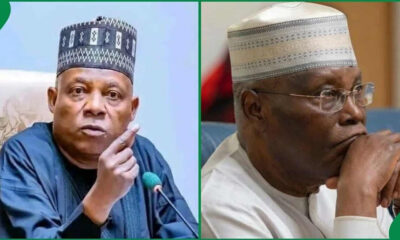
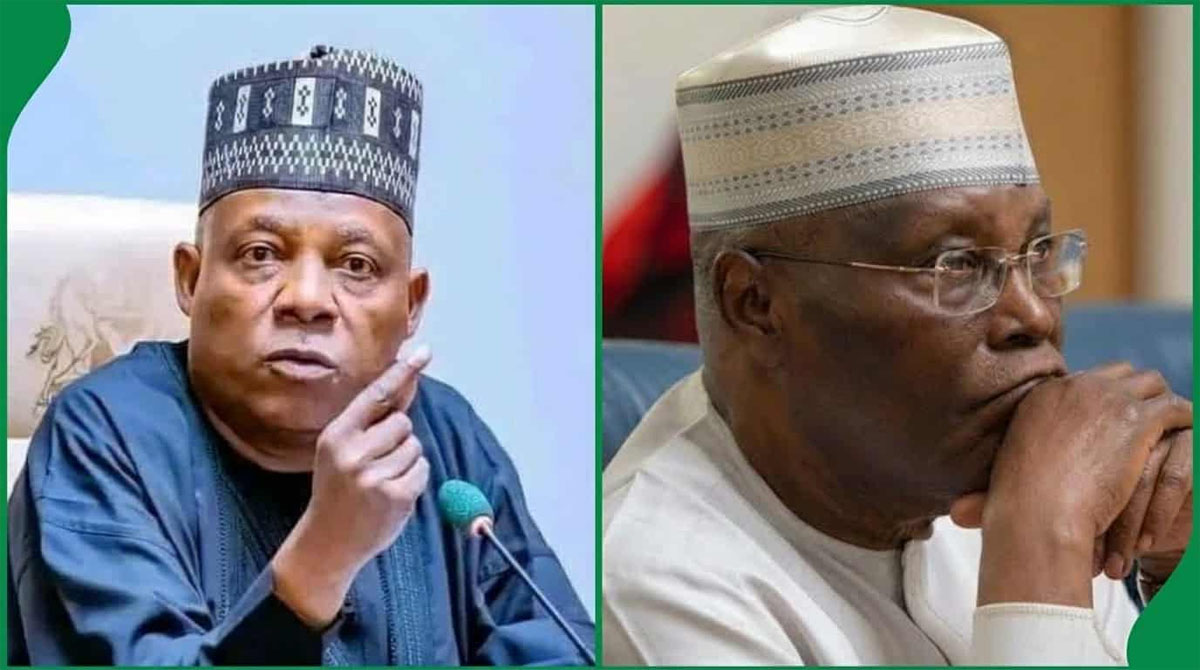
Vice-President Kashim Shettima has launched a fresh attack on former Vice-President Atiku Abubakar, declaring that he is “no Abraham Lincoln” while criticising him for addressing President Bola Ahmed Tinubu by his first name and questioning his proposed production subsidy policy ahead of the 2027 presidential election.
Shettima made the remarks on Wednesday, October 14, 2026, during the inauguration of the All Progressives Congress (APC) Presidential Campaign Council at the Banquet Hall of the Presidential Villa in Abuja.
The event provided an opportunity for the Vice-President to defend the Tinubu administration, challenge opposition figures and outline the ruling party’s arguments as preparations for the 2027 general election gather momentum.
Shettima argued that anyone aspiring to become Nigeria’s president should demonstrate maturity, discipline and respect for public institutions, even while criticising the incumbent administration.
“Those who want equity must come with clean hands. You can call him Bola. If you like, you can call him Adekunle. But the truth is that he is the President and Commander-in-Chief of the Armed Forces of the Federal Republic of Nigeria,” he said.
The Vice-President added that he would continue to address Atiku by his former official title despite their political differences.
“Your Excellencies, distinguished ladies and gentlemen, Atiku Abubakar. I will still respect him and call him his former Vice President, Atiku Abubakar,” Shettima said.
He subsequently compared Atiku with Abraham Lincoln, the 16th president of the United States, who is widely associated with the abolition of slavery in the country.
“But believe me, Atiku Abubakar, who has contested for the presidency of this country for the eighth time, is no Abraham Lincoln. He is more of Oginga Odinga,” the Vice-President said.
Oginga Odinga was a prominent Kenyan political figure who served as the country’s first vice-president. Shettima’s comparison formed part of his criticism of Atiku’s repeated presidential bids and political approach.
READ ALSO:
- 2027: We Know How to Stop Tinubu From Getting Second Term – Momodu
- Borno Woman Jailed Two Years for Sexual Exploitation of 16-Year-Old Girl
- Cosmetics Top Fake Products as NAFDAC Seals 179 Establishments, Arrests 52
The Vice-President maintained that the Nigerian presidency should not be regarded as an ordinary political prize, arguing that the office demands sound judgment, responsibility and respect for constitutional institutions.
“The presidency of the Federal Republic of Nigeria is not an ordinary political prize. It is the highest expression of constitutional authority in our country,” he said.
The dispute over the use of Tinubu’s first name has also attracted a response from Atiku’s camp. His aide on public communication, Phrank Shaibu, defended the former vice-president’s choice of words, arguing that “Bola” was the President’s name and that using it did not necessarily amount to disrespect.
The exchange highlights the increasingly sharp rhetoric between the ruling APC and opposition figures as political parties prepare for the next presidential election.
Shettima challenges Atiku over production subsidies
Beyond the disagreement over presidential protocol, Shettima questioned Atiku’s proposal for production subsidies, demanding explanations about how the policy would be financed and which competing government priorities might lose funding.
Atiku has advocated economic measures aimed at stimulating domestic production and easing pressure on consumers. His production subsidy proposal has become a point of contention between the opposition and the Tinubu administration.
Shettima argued that policy announcements must be accompanied by clear explanations of their costs, funding arrangements and expected benefits.
“This political season has become a masterclass in cinematic comedy,” he said.
The Vice-President continued: “Vice President Atiku Abubakar’s proposal for production subsidies raises questions that some changes cannot answer. Who pays? Who benefits? And which competing priorities must surrender their funding?”
“A change in ideological wardrobe cannot balance a national budget,” he added.
The APC Presidential Campaign Council has also challenged Atiku to explain the proposed subsidy’s funding source, spending limits, intended beneficiaries and safeguards against diversion or fraud. The council has questioned how the proposal would operate within Nigeria’s existing petroleum regulatory framework.
The disagreement raises important questions about the feasibility of fuel price relief, the cost of supporting domestic production and the government’s ability to balance economic assistance with other public spending needs.
READ ALSO:
- Nigeria Secures UN Human Rights Council Seat With 172 Votes
- Houthi Missile Targeting Riyadh Shot Down as Debris Injures Four, Damages 15 Homes
- Outrage as Israeli Settlers Torch Mosque, Burn Vehicle in Occupied West Bank
For the proposal to be properly assessed, details of its funding model, eligibility rules, implementation arrangements and expected impact on consumers and producers would need to be examined.
Vice-President questions opposition unity
Shettima also challenged opposition politicians over their ability to manage Nigeria’s competing interests, arguing that political leaders seeking to replace the APC government must demonstrate that they can work together.
“Meanwhile, those offering to rescue Nigeria cannot keep their own political households intact,” he said.
He questioned how opposition leaders could reconcile the interests of more than 200 million Nigerians if they struggled to resolve disagreements within their own political organisations.
“So I ask, if reconciling a few party leaders defeats you, how will you reconcile the interests of over 200 million citizens?” he asked.
The comments come amid political realignments ahead of the 2027 general election, with opposition figures seeking to build alliances capable of challenging the ruling party.
Shettima also criticised former Anambra State Governor Peter Obi, the presidential candidate of the Nigeria Democratic Congress (NDC), over his economic proposals and claims concerning the 2023 presidential election.
He questioned whether policies adopted in other countries could be transferred directly to Nigeria without accounting for differences in population, institutions and economic conditions.
The Vice-President argued that claims about elections and economic performance should be supported by evidence, while defending the APC’s record in office.
Shettima defends Tinubu’s economic reforms
The Vice-President also defended the Tinubu administration’s economic reforms, particularly the removal of the petrol subsidy and changes to the foreign exchange system.
He maintained that the government had inherited serious fiscal and economic challenges and that its reforms were intended to address longstanding structural problems.
According to the administration’s position, the changes are designed to reduce distortions in public finances, improve economic stability and create conditions for sustainable growth.
However, the reforms have placed significant pressure on households and businesses, with the cost of living, transport expenses and food prices remaining important concerns for many Nigerians.
These pressures are likely to feature prominently in the 2027 election campaign, as opposition parties scrutinise the government’s performance and propose alternative economic policies.
For the APC, the challenge will be to demonstrate that its reforms are delivering tangible improvements in employment, purchasing power, investment and public services.
For the opposition, presenting credible and adequately funded alternatives will be central to persuading voters that a change in leadership would produce better economic outcomes.
Shettima’s remarks reflect the intensifying political exchanges ahead of the election, with the ruling party defending its record and opposition leaders challenging its policies and leadership.
Ultimately, the debate over Tinubu’s second-term bid, Atiku’s production subsidy proposal and the opposition’s ability to work together will place economic performance, leadership and policy credibility at the centre of the 2027 presidential contest.
Shettima Attacks Atiku Over Tinubu Remarks, Questions Subsidy Plan
Politics
2027: We Know How to Stop Tinubu From Getting Second Term – Momodu

Veteran journalist and African Democratic Congress (ADC) chieftain, Dele Momodu, has expressed confidence that the opposition can prevent President Bola Ahmed Tinubu from securing a second term in the 2027 presidential election.
Momodu, who serves as Deputy Director-General of the ADC Presidential Campaign Council, made the remarks during an interview on Arise News’ Prime Time programme on Wednesday, October 14, 2026.
He criticised Tinubu’s political leadership, alleging that the President had consolidated excessive power and brought several arms of government under his influence.
The veteran journalist compared the current political situation with the administration of the late military ruler, General Sani Abacha, arguing that Tinubu had gone beyond what Abacha did in drawing political actors into his sphere of influence.
Momodu’s comments come amid growing political realignments ahead of the 2027 general election, with the ruling All Progressives Congress (APC) and opposition parties intensifying efforts to build support for their respective candidates.
The ADC chieftain expressed confidence that the opposition could mount an effective challenge against Tinubu, who has indicated his intention to seek re-election after winning the APC presidential primary.
READ ALSO:
- Cosmetics Top Fake Products as NAFDAC Seals 179 Establishments, Arrests 52
- Nigeria Secures UN Human Rights Council Seat With 172 Votes
- Houthi Missile Targeting Riyadh Shot Down as Debris Injures Four, Damages 15 Homes
Momodu has repeatedly argued that the opposition’s chances would depend on its ability to build a strong coalition, agree on an effective electoral strategy and prevent divisions from weakening its challenge to the ruling party.
In January 2026, he said defeating Tinubu was possible if opposition parties closely monitored the Independent National Electoral Commission (INEC) and presented candidates with sufficient political strength to compete against the APC.
He also identified prominent opposition figures, including former Vice-President Atiku Abubakar, former Anambra State Governor Peter Obi, former Rivers State Governor Rotimi Amaechi, former Kaduna State Governor Nasir El-Rufai and former Sokoto State Governor Aminu Tambuwal, as political figures with the capacity to contribute to a formidable challenge.
In March, Momodu further argued that an opposition presidential ticket pairing Atiku with a prominent southern politician, such as Obi or Amaechi, could threaten Tinubu’s re-election bid.
He maintained that opposition leaders needed to prioritise strategic cooperation over personal ambitions if they hoped to defeat the incumbent president.
Momodu has also warned that disagreements over presidential zoning could undermine the opposition’s chances by splitting votes along regional lines.
His latest comments come as Tinubu’s supporters continue to mobilise for his re-election. On October 10, Secretary to the Government of the Federation, George Akume, and six APC governors from the North-Central region endorsed Tinubu and Vice-President Kashim Shettima for a second term.
The endorsement illustrates the competing political efforts taking shape ahead of the 2027 election, as the APC seeks to consolidate its support base while opposition parties work to present a credible alternative.
Although Momodu has expressed confidence in the opposition’s prospects, the outcome of the election will depend on several factors, including candidate selection, party organisation, voter participation and the conduct of the electoral process.
The 2027 presidential contest is expected to test the strength of the ruling party and the ability of opposition groups to coordinate their political ambitions into an effective electoral challenge.
2027: We Know How to Stop Tinubu From Getting Second Term – Momodu
Politics
‘Tinubu Is Clearing Your Mess’ – Keyamo Blasts Atiku Over Nigeria Airways
‘Tinubu Is Clearing Your Mess’ – Keyamo Blasts Atiku Over Nigeria Airways
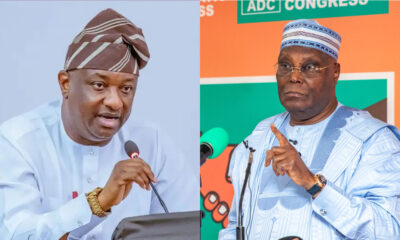
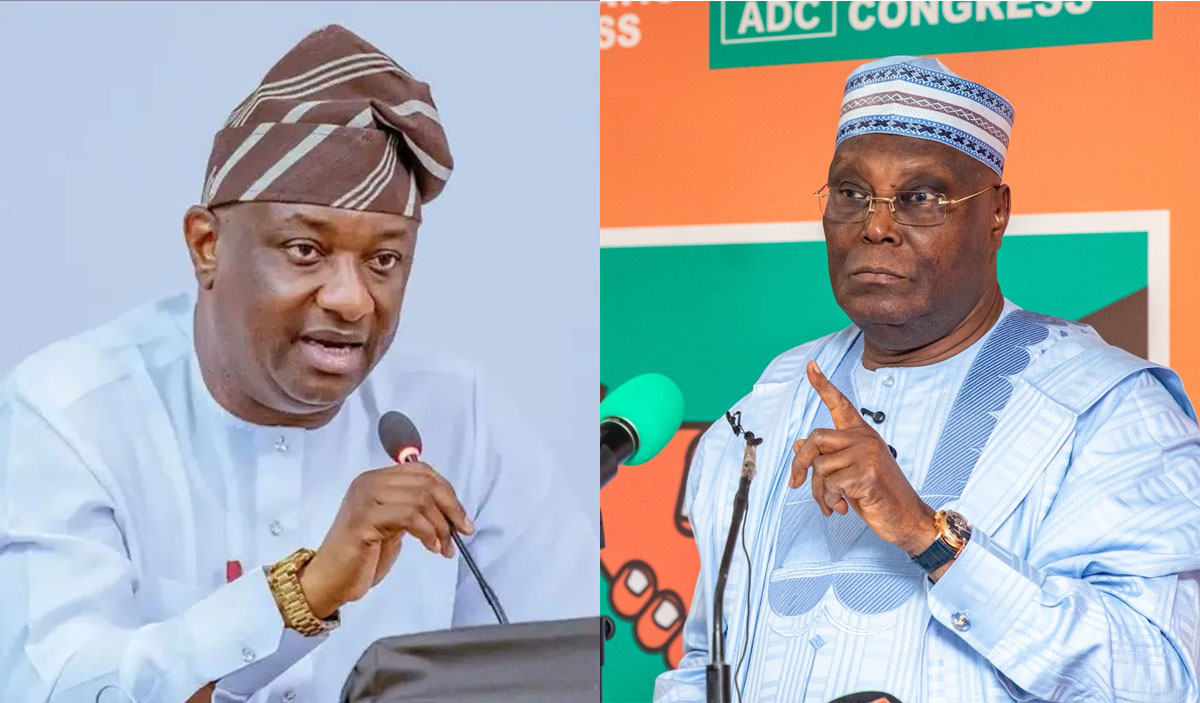
Minister of Aviation and Aerospace Development, Festus Keyamo, has described former Vice-President Atiku Abubakar as a “hypocrite” and a “con artist” over his criticism of President Bola Ahmed Tinubu’s administration, accusing him of distancing himself from controversial decisions taken while he was in government.
Keyamo’s remarks followed Atiku’s criticism of Nigeria’s worsening economic conditions and insecurity ahead of the 2027 general elections. The former vice-president had urged Nigerians to collect their Permanent Voter Cards (PVCs), promising to make life more affordable and restore security if given the opportunity to lead the country.
In his post, Atiku said rising living costs had made it increasingly difficult for families to provide basic necessities, while pensioners faced difficult choices between buying food and obtaining medication. He also expressed concern about kidnapping and attacks that have left communities living in fear.
Reacting in a post on his official X account on Wednesday, October 14, Keyamo challenged Atiku’s criticism, citing the liquidation of the defunct national carrier, Nigeria Airways, in September 2004, when Atiku was vice-president under former President Olusegun Obasanjo.
“Your Excellency, Atiku Abubakar, this is hypocrisy at its peak! Let me just talk only about the sector that I head, Aviation,” Keyamo wrote.
The minister alleged that the liquidation left thousands of airline workers without jobs and that their pensions and gratuities, amounting to billions of naira, remained unpaid for years.
He argued that Atiku could not criticise the current administration over economic hardship without addressing the record of the government in which he served.
Keyamo further claimed that some former Nigeria Airways workers died while waiting for their outstanding entitlements, leaving their families to bear the consequences of the prolonged delay in payment.
According to the minister, President Tinubu had approved and released ₦36 billion to settle the outstanding entitlements owed to the former airline workers.
READ ALSO:
- Nigeria Secures UN Human Rights Council Seat With 172 Votes
- Houthi Missile Targeting Riyadh Shot Down as Debris Injures Four, Damages 15 Homes
- Outrage as Israeli Settlers Torch Mosque, Burn Vehicle in Occupied West Bank
Keyamo said payments had begun reaching beneficiaries and claimed that the workers’ union had recognised Tinubu’s intervention.
He presented the payment as evidence that the current administration was addressing an outstanding obligation inherited from previous governments, although the claim about the release and disbursement of the funds was made by the minister.
The aviation minister also accused Atiku of selectively taking credit for the achievements of the Obasanjo administration while distancing himself from decisions that attracted criticism.
“When it is convenient for you, you claim some credit of the Obasanjo-Atiku government and when not convenient, you say Obasanjo was in charge and not you as Vice-President,” he wrote.
Keyamo said younger Nigerians who were unfamiliar with the former vice-president’s political record could be misled by his criticism of the Tinubu administration.
He added that Atiku’s political ambitions should not, in his view, be disguised by what he described as misleading rhetoric.
“The proper posturing of a con artist!” the minister concluded.
The exchange adds to the growing political confrontation between the Tinubu administration and opposition figures as political activities intensify ahead of the 2027 elections.
Atiku, the presidential candidate of the African Democratic Congress (ADC), has repeatedly criticised the Federal Government over the cost of living, insecurity and the impact of its economic policies on households and businesses.
Tinubu’s administration, meanwhile, has defended its economic reforms and highlighted measures it says are intended to address longstanding fiscal challenges and support affected groups.
Keyamo’s latest comments shift the argument from the current administration’s performance to the record of the previous government, particularly its handling of Nigeria Airways and the entitlements owed to the airline’s former employees.
Atiku’s response to Keyamo’s latest allegations was not included in the reports available at the time of publication.
‘Tinubu Is Clearing Your Mess’ – Keyamo Blasts Atiku Over Nigeria Airways
-

 metro3 days ago
Oyo School Kidnappings: How ANSARU Allegedly Used Children to Pressure FG
-

 metro3 days ago
Tragedy in Ibadan as Truck Kills Female Corps Member, Injures Others
-

 metro3 days ago
Drama as Dutch Police Use Batons, Dogs to Shut Down Nigerian Wedding; Two Arrested
-
 International3 days ago
French Students Return to Streets as Anger Over School Conditions Grows
-

 metro3 days ago
VIDEO: Outrage as Indian National Assaults Nigerian Truck Drivers in Lagos
-
 News3 days ago
Obasanjo Backs Higher Oil Derivation, Says 13% Is Only the Beginning
-

 metro2 days ago
Money Rituals: Four Arrested in Kwara Over Suspected Human Parts
-
 metro3 days ago
LAWMA Deploying CCTV Cameras to Hunt Down Illegal Dumpers, says MD