

News
NAF recruitment 2026: Step-by-step guide to applying for BMTC 47/2026

NAF recruitment 2026: Step-by-step guide to applying for BMTC 47/2026
The Nigerian Air Force (NAF) has commenced its 2026 recruitment exercise, inviting qualified Nigerians to apply for enlistment as tradesmen/women and non-tradesmen/women under the Basic Military Training Course (BMTC) 47/2026.
The NAF recruitment 2026 exercise opened on Thursday, September 3, 2026, and the online application portal will remain open until October 14, 2026.
The application is free of charge, and prospective applicants have been advised to carefully study the eligibility requirements and application guidelines before submitting their forms.
The recruitment exercise provides an opportunity for eligible Nigerians who meet the educational, age, physical and medical requirements to begin the process of joining the Nigerian Air Force.
Applicants are expected to complete the entire registration process through the official NAF recruitment portal and should not engage agents or individuals who request money in exchange for recruitment assistance.
To begin the application, prospective candidates should visit the official NAF recruitment portal and select the BMTC 47/2026 recruitment exercise.
Applicants should first read the recruitment guidelines carefully to determine whether they meet the requirements for their preferred category. Candidates are advised to understand the requirements before starting the form because the conditions for tradesmen/women and non-tradesmen/women are different.
After confirming their eligibility, applicants should complete the online application form by providing the required personal, educational and other relevant information.
READ ALSO:
- Oyo kidnap rescue: Five security personnel, four civilians killed — DSS DG
- Amaechi: Atiku will restore electricity subsidy if elected in 2027
- I woke up daily to leaked NECO questions during 2025 exams — Minister
Candidates should ensure that the information supplied is accurate and corresponds with their official documents. Particular attention should be paid to names, dates of birth, educational qualifications and other personal details because inconsistencies could create difficulties during subsequent verification.
Before submitting the form, applicants should carefully review all the information entered and make any necessary corrections.
Candidates who successfully complete the online application will be required to print the relevant documents generated by the recruitment portal. These include the Acknowledgement Form, Parent/Guardian Consent Form and Local Government Area Attestation Form.
The LGA Attestation Form must be properly signed and authenticated by an authorised official in accordance with the NAF’s requirements. Depending on the conditions specified for the exercise, an authorised signatory may include a military officer from the applicant’s state, a police officer of the required rank, a substantive local government chairman or secretary, or a magistrate.
Applicants should carefully check the specific instructions on the form before obtaining the required signature and authentication.
The NAF has also warned that applicants who fail to successfully complete their online registration may not be able to generate the required forms.
For general eligibility, applicants must be Nigerian citizens by birth and must be medically, physically and psychologically fit. They must also satisfy the medical and employment standards prescribed by the Nigerian Air Force.
The minimum height requirement is 1.66 metres for male applicants and 1.63 metres for female applicants.
For tradesmen/women, applicants must be between 18 and 27 years old by March 1, 2027.
READ ALSO:
- Presidency breaks silence on Tinubu’s US FOIA case, denies criminal trial
- Ex-Benue councillor remanded for allegedly pushing woman into fire
- 20-year-old arrested over alleged gang-rape of 19-year-old woman in Ogun
Candidates applying under this category with National Diploma (ND) or National Certificate in Education (NCE) qualifications must have obtained their certificates from accredited institutions and meet the required academic conditions.
Applicants must generally possess at least five credits, including Mathematics and English Language, in not more than two sittings in recognised examinations such as WAEC, NECO, GCE, NABTEB or NBAIS, where applicable to the particular category.
Candidates applying for driving positions and other trades requiring a Trade Test certificate must possess the relevant Trade Test qualification and satisfy the required secondary-school certificate conditions.
Applicants seeking recruitment as drivers must also possess a valid driving licence.
Those applying under sports-related categories are expected to provide evidence of professional sporting experience. Such evidence may include relevant certificates, medals and other recognised records of sporting achievement, subject to the specific requirements of the recruitment exercise.
For non-tradesmen/women, applicants must be between 18 and 22 years old by March 1, 2027.
They must possess at least five credits, including Mathematics and English Language, in not more than two sittings in WAEC, NECO, GCE, NABTEB or NBAIS.
Applicants in this category are also required to possess the relevant Primary School Certificate and Secondary School Testimonial.
Candidates should ensure that the names and other personal information contained in their educational documents are consistent with the details provided on their NAF application form.
Submitting an application does not automatically mean that a candidate has been selected for enlistment.
According to the recruitment guidelines, applicants who successfully progress to the next stage will be considered for a Zonal General Aptitude Test.
The NAF said the date and other details concerning the aptitude test will be communicated through the official recruitment portal.
Only applicants who are successful at the aptitude-test stage will subsequently be invited for the selection interview.
Candidates are therefore advised to regularly check the official recruitment portal for announcements concerning the aptitude test, shortlisted applicants, selection interviews and other stages of the recruitment exercise.
The NAF has also warned applicants to beware of recruitment scams.
The Force says the NAF recruitment exercise is free of charge, meaning applicants are not required to pay money to submit their forms or secure consideration for enlistment.
Candidates should not give money to anyone claiming to have the ability to secure a recruitment slot, influence the selection process, guarantee placement on the shortlist or manipulate examination or interview results.
Prospective applicants should also be cautious about fake websites, social-media accounts and individuals impersonating NAF officials.
Applicants are advised to obtain recruitment information only through official Nigerian Air Force communication channels and the designated NAF recruitment portal.
Candidates should also avoid submitting multiple applications. Applicants are expected to provide accurate information and complete the application process carefully under the appropriate recruitment category.
The NAF BMTC 47/2026 recruitment exercise will close on October 14, 2026. Applicants who are interested in joining the Nigerian Air Force are advised to complete their registration before the deadline rather than waiting until the final days of the exercise.
The recruitment process is free, and meeting the eligibility requirements does not by itself guarantee enlistment. Candidates must successfully pass the various stages of the selection process before they can be considered for training.
Prospective applicants should therefore carefully follow every instruction published by the Nigerian Air Force and continue monitoring the official recruitment portal for subsequent announcements.
NAF recruitment 2026 at a glance
Recruitment exercise: Basic Military Training Course 47/2026
Application opening date: September 3, 2026
Application closing date: October 14, 2026
Application method: Online
Application fee: Free
Male minimum height: 1.66 metres
Female minimum height: 1.63 metres
Non-tradesmen/women age: 18–22 years by March 1, 2027
Tradesmen/women age: 18–27 years by March 1, 2027
Next major stage: Zonal General Aptitude Test
Subsequent stage: Selection interview
Applicants should verify the latest requirements directly on the official NAF recruitment portal before submitting their applications, particularly if the Force publishes additional instructions or updates during the recruitment period.
NAF recruitment 2026: Step-by-step guide to applying for BMTC 47/2026







News
Delta Mourns as Former Governor Uduaghan Dies After Brief Illness
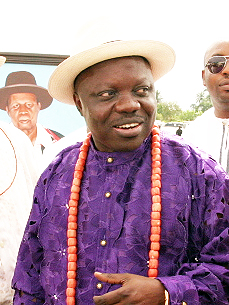
Delta Mourns as Former Governor Uduaghan Dies After Brief Illness
A former Governor of Delta State, Dr Emmanuel Eweta Uduaghan, has died at the age of 71 after a brief illness, his family announced on Monday.
Uduaghan, who governed Delta State for eight years between 2007 and 2015, died on the morning of October 19, 2026, according to a statement issued by the family and signed by Toju Andre Uduaghan.
The family described his death as a devastating loss, saying his life and years of public service touched many people across Delta State and Nigeria.
The statement, titled “Announcement of the Passing of His Excellency, Dr Chief Emmanuel Eweta Uduaghan,” read in part, “It is with hearts weighed down by immeasurable grief and profound sorrow that we announce the passing to glory of our beloved Father, Brother, Uncle, and Patriarch.”
The family said Uduaghan was a source of strength and a respected elder whose contributions to public service and family life would remain indelible.
“He served as Commissioner for Health from 1999 to 2003, Secretary to the Delta State Government from 2003 to 2007, and Governor of Delta State from 2007 to 2015,” the statement said.
It added that throughout his years in public service, the former governor demonstrated a commitment to the human and infrastructural development of the state.
The family described his death as a profound loss not only to his relatives but also to the people of Delta State and the country at large.
While expressing gratitude to God for his life and legacy, the family prayed for the repose of his soul and for divine comfort for those mourning his death.
“We pray that Almighty God, in His infinite mercy, will grant his soul eternal rest and comfort our family, friends, associates, former colleagues, and all who mourn this painful loss,” the statement added.
The family said Uduaghan’s memory would remain alive through the lives he touched and the legacy he left behind.
“Rest well, our beloved Father, Brother, and Uncle. Your memory will forever remain in our hearts, and your legacy will endure in the lives of those you touched,” it said.
The statement concluded with a prayer for the peaceful repose of his soul.
News
FG Challenges World Bank’s 124% Debt-to-Revenue Warning, Cites Rising Income
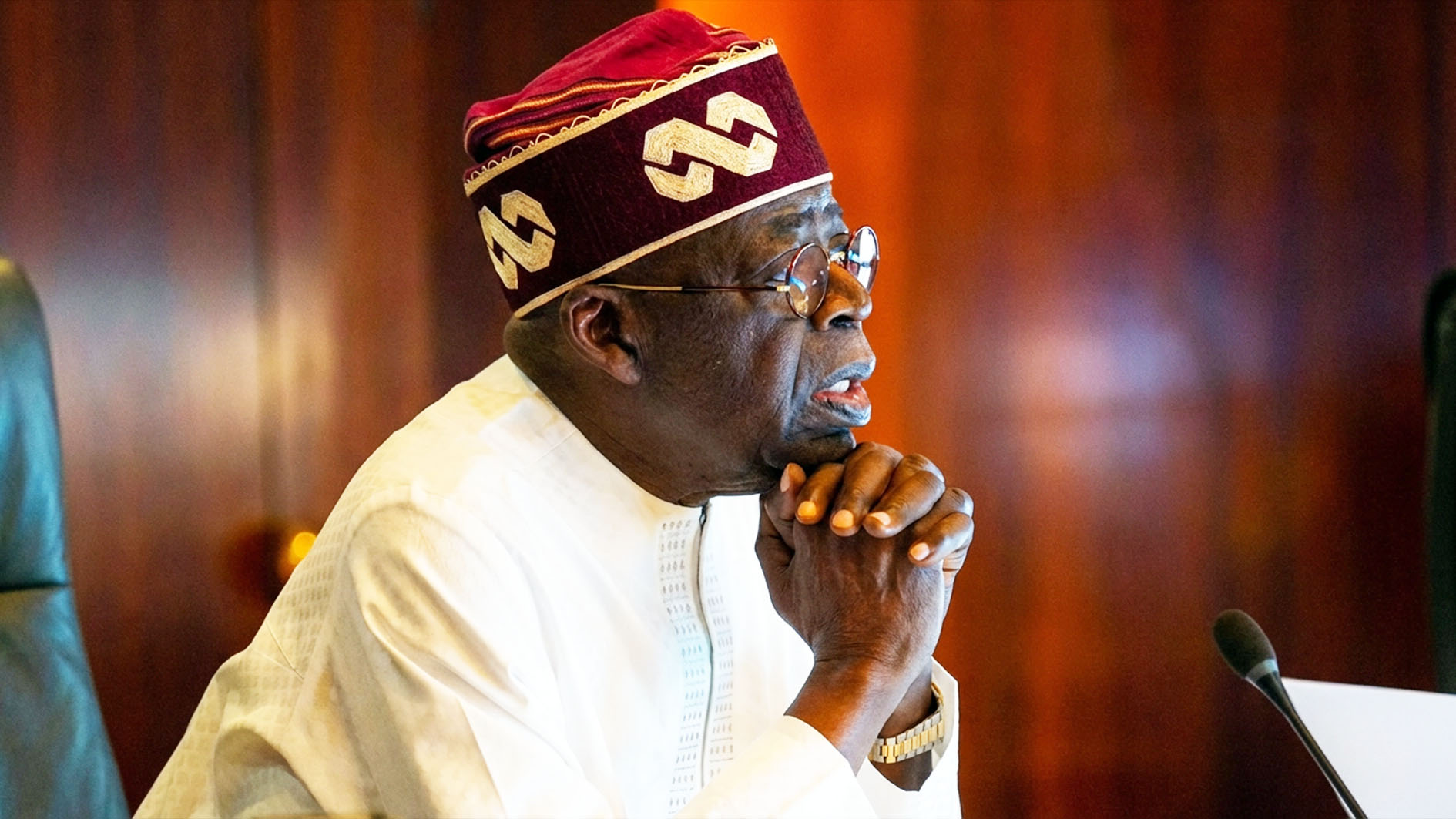
FG Challenges World Bank’s 124% Debt-to-Revenue Warning, Cites Rising Income
The Federal Government has disagreed with the World Bank’s assessment that its interest payments consumed 124 per cent of revenue in the first half of 2026, describing the calculation as misleading and arguing that it fails to capture the full picture of Nigeria’s public finances.
The dispute followed the World Bank’s October 2026 Nigeria Development Update, which reported that the Federal Government spent ₦7.7 trillion on interest payments between January and June 2026, compared with revenue of ₦6.2 trillion.
The figures imply an interest-to-revenue ratio of approximately 124 per cent, meaning the government’s interest bill exceeded its reported revenue by about ₦1.5 trillion during the six-month period.
However, the Federal Ministry of Finance, in a statement issued on Sunday, October 18, argued that the comparison combined debt obligations covering different tiers of government with a revenue figure that did not include all government earnings.
The ministry said the interest-payment figure included debts serviced by the Federal Government on behalf of other tiers of government, including external loans obtained by state governments.
It argued that comparing these obligations with federal revenue alone overstated the ratio because the figures did not cover the same level of government.
The ministry also said the revenue figure excluded independent income already earned by government agencies and enterprises but not yet remitted to the Treasury.
According to the ministry, the timing of tax collections also affects first-half revenue figures, as some statutory payments are concentrated in the second half of the year. It therefore maintained that a six-month comparison should not be treated as a definitive assessment of Nigeria’s debt sustainability.
READ ALSO:
- Mbappé Runs Riot as Real Madrid Crush Sevilla 4-1 Ahead of El Clásico
- Ogun House Fire Horror: Husband Arrested After Wife Dies Following Domestic Dispute
- NLC, Falana Mobilise Nigerians Against Petrol Price Hike, Mount Pressure on Tinubu Govt
To support its position, the government highlighted an improvement in revenue collection between the first halves of 2025 and 2026.
The ministry said Federal Government revenue increased by 72 per cent, rising from ₦3.6 trillion in the first half of 2025 to ₦6.2 trillion in the corresponding period of 2026.
Interest payments, meanwhile, rose by 38 per cent, from ₦5.6 trillion to ₦7.7 trillion over the same period.
The ministry said the difference between interest payments and revenue consequently narrowed from ₦2 trillion in the first half of 2025 to ₦1.5 trillion in the first half of 2026.
It added that the interest-to-revenue ratio fell from 156 per cent to 124 per cent, a decline of 32 percentage points.
The government attributed the improvement to its economic reforms, arguing that revenue was growing faster than interest costs and that the figures did not, on their own, establish that Nigeria was facing a debt crisis.
The ministry further argued that debt sustainability should be assessed using full-year figures, rather than a six-month snapshot that may not reflect the timing of revenue collection and debt payments.
It cited the World Bank’s projection that Nigeria’s full-year 2026 debt service, covering both interest and principal repayments, would amount to 46 per cent of revenue.
The ministry described the projected full-year ratio as a more appropriate benchmark for assessing the government’s debt obligations.
It also defended the Federal Government’s borrowing programme, insisting that borrowing remained within the limits approved by the National Assembly under the 2026 Appropriation Act and the approved borrowing plan.
According to the ministry, the government’s borrowing activities comply with the Fiscal Responsibility Act 2007 and the Debt Management Office (Establishment) Act 2003, with debt information published regularly by the Debt Management Office.
Despite the government’s objections, the reported figures highlight the pressure that rising interest costs can place on public finances. When interest payments absorb a large share of government revenue, fewer resources may be available for infrastructure, healthcare, education and other public services.
The central disagreement, therefore, concerns the appropriate basis for measuring Nigeria’s debt burden. While the World Bank’s reported figures point to interest payments exceeding federal revenue in the first half of 2026, the Finance Ministry insists that differences in government coverage and revenue timing make the ratio an incomplete measure of the country’s fiscal position.
FG Challenges World Bank’s 124% Debt-to-Revenue Warning, Cites Rising Income
News
NLC, Falana Mobilise Nigerians Against Petrol Price Hike, Mount Pressure on Tinubu Govt

NLC, Falana Mobilise Nigerians Against Petrol Price Hike, Mount Pressure on Tinubu Govt
The Nigeria Labour Congress (NLC), human rights lawyer Femi Falana, and pro-democracy activists have called on Nigerians to unite against rising petrol prices and worsening economic hardship, accusing the Federal Government of pursuing policies that have placed an unbearable burden on workers and low-income households.
The labour leaders and activists made the call at a symposium in Lagos held as part of the first memorial activities in honour of late labour activist Abiodun Aremu. They demanded an immediate reduction in petrol prices, improved wages and a review of economic policies they said had eroded the purchasing power of millions of Nigerians.
NLC President, Joe Ajaero, represented by the union’s Acting General Secretary, Benson Upah, said the removal of the petrol subsidy had significantly increased the cost of living, citing rising transport fares, food prices, electricity tariffs and the depreciation of the naira.
Ajaero said workers were struggling to meet basic needs as the cost of essential goods and services continued to rise faster than their earnings.
He argued that many workers had been forced to make difficult choices between paying high transportation costs and walking long distances to their workplaces, while small businesses were also struggling with increasing operating expenses.
The labour leader further criticised the government for failing to provide sufficient relief to cushion the effects of its economic reforms, arguing that the burden of adjustment had fallen disproportionately on ordinary Nigerians.
According to him, the ₦70,000 national minimum wage has lost much of its purchasing power amid rising inflation and the soaring cost of petrol.
“When the minimum wage was set at ₦70,000 in July 2024, petrol sold for approximately ₦668.30 per litre. Today, prices in many parts of the country have exceeded ₦1,400 per litre,” the NLC said in its address.
READ ALSO:
- Buhari Feared Tinubu Presidency, Resisted Pressure to Back Him – Baba-Ahmed Claims
- NAFDAC Probes Corps Member’s Death at Enugu Camp as Fake Drug Claims Emerge
- Nigerian Universities Have Not Expired, Only Teaching Methods, Professor Tells Ojuolape
Ajaero described the situation as unacceptable, insisting that a worker earning ₦70,000 monthly could no longer cope with the rising cost of transportation, food, rent, education and healthcare.
He warned that organised labour would intensify pressure on the government if urgent measures were not taken to address the situation.
The NLC president also disclosed that the union had issued a two-week ultimatum to the Federal Government on October 9, demanding an immediate reduction in petrol prices.
He said the ultimatum was intended to compel the government to respond to workers’ concerns and address the widening gap between wages and the cost of living.
According to the union, failure to meet its demands could force organised labour to consider further action.
Beyond petrol prices, the NLC called for measures to stabilise the naira, reduce inflation, strengthen domestic refining capacity and improve workers’ earnings.
Falana, who chaired the symposium, also challenged the Federal Government’s position on petrol subsidy removal, arguing that governments in other countries continued to subsidise essential goods and services to protect citizens from economic shocks.
The Senior Advocate of Nigeria questioned why Nigeria should treat the withdrawal of petrol subsidies as the only available policy option when other countries provide support for fuel, education, healthcare and other essential services.
He argued that the government should consider alternatives capable of reducing the burden on households rather than allowing rising energy costs to deepen poverty.
Falana also criticised the government’s discussion of a possible petrol landing cost of ₦1,350 per litre, noting that transportation and distribution expenses could push the final pump price higher in different parts of the country.
He said Nigerians needed concrete measures that would make petrol more affordable and ease the pressure on households and businesses.
The lawyer also referred to political figures, including Omoyele Sowore and Donald Duke, who he said had advocated petrol prices below ₦500 per litre if given the opportunity to govern.
Meanwhile, Rashidat Adesina, representing the Joint Action Front (JAF), said the increase in petrol prices since the removal of the subsidy in 2023 had placed a disproportionate burden on workers and poor Nigerians.
Adesina recalled that petrol sold for approximately ₦165 per litre before the subsidy was removed, before rising to around ₦500 and subsequently ₦600 per litre.
She said prices had since climbed to between ₦1,350 and ₦1,400 per litre in some locations, depending on the filling station.
Using ₦1,400 per litre as an example, Adesina noted that a worker earning the national minimum wage of ₦70,000 could purchase only 50 litres of petrol with an entire month’s salary.
She argued that the calculation illustrated the pressure on workers, who must also pay for food, rent, school fees, transportation and other household necessities.
Adesina further accused the government of failing to adequately protect low-income earners from the consequences of its economic policies, calling for a change in the country’s economic priorities.
The speakers collectively demanded lower petrol prices, better wages, measures to stabilise the naira and increased investment in domestic refining as part of efforts to address the cost-of-living crisis.
The renewed calls come amid mounting pressure on the Tinubu administration over the impact of petrol subsidy removal and other economic reforms introduced since 2023.
The NLC’s ultimatum has also raised the prospect of further confrontation between organised labour and the Federal Government if an agreement is not reached within the stipulated period.
The labour movement maintains that urgent intervention is necessary to prevent further deterioration in workers’ living standards, while the activists have urged Nigerians to unite in demanding policies that prioritise economic relief and social welfare.
NLC, Falana Mobilise Nigerians Against Petrol Price Hike, Mount Pressure on Tinubu Govt
-

 metro2 days ago
Suspended Archbishop Ibezim Drags Anglican Primate to Court, Challenges Six-Month Leave
-

 Entertainment3 days ago
ToluwaniSings’ Final Hours: Aide Reveals Desperate Search Across 8 Hospitals
-

 Sports3 days ago
Real Madrid Demand Tebas’ Exit After Explosive Nazi Propaganda Row
-
 Politics3 days ago
2027: Kwankwaso Signals Fuel Subsidy Comeback as NDC Vows to Crash Petrol Prices
-
 metro2 days ago
NAPTIP Raises Alarm as Parents Allegedly Trade Children for Sex, Arrests Woman in Abuja
-

 metro2 days ago
Imodi-Ijebu Muslim Community Bets on 20 Chiefs to Drive Education, Economic Growth
-
 metro3 days ago
NAF Deploys Pumps in Desperate Push to Recover Submerged Aircraft After Crash Killed 25
-

 metro3 days ago
Osun Murder: Three Arrested as Police Recover Weapons, Link Suspect to Earlier Killings