

Politics
Atiku, X user clash over Almajiri crisis, street begging
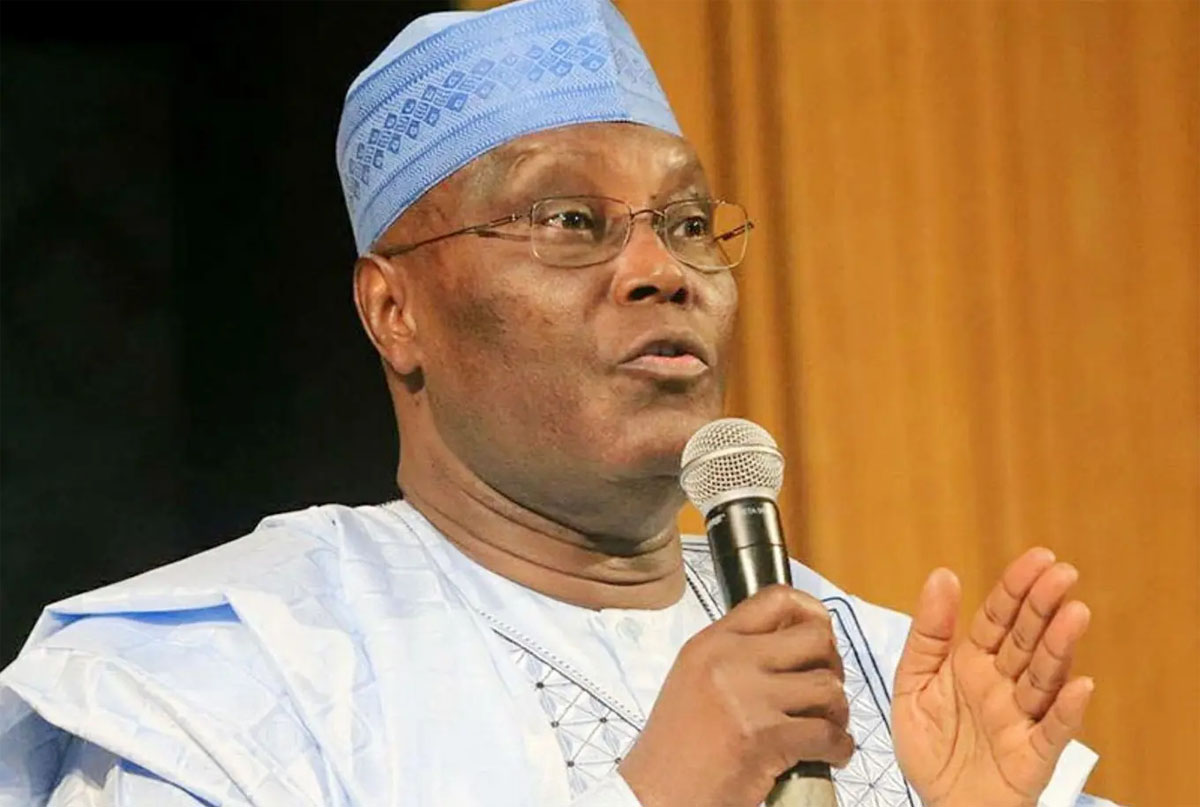
Atiku, X user clash over Almajiri crisis, street begging
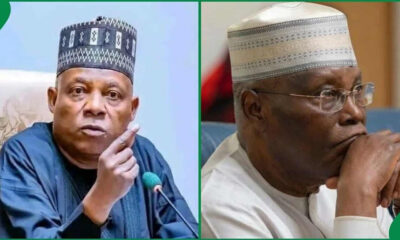
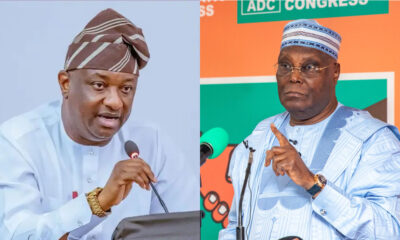
Presidential candidate of the African Democratic Congress (ADC), Atiku Abubakar, has clashed with an X user, Oluwa Bunmi, over the persistent Almajiri crisis and the continued presence of children involved in street begging in northern Nigeria.
The exchange followed a post by Bunmi on Friday in which the X user questioned Atiku’s record on the issue, particularly during his eight-year tenure as Vice President of Nigeria between 1999 and 2007.
Bunmi tagged Atiku in a post featuring children carrying begging bowls and asked whether the former vice president had ever taken steps to address the situation.
“Have you ever addressed this, sir? You were VP for 8 years, these innocent children are in your region and you couldn’t do anything to stop this calamity,” Bunmi wrote.
Responding, Atiku acknowledged the seriousness of the problem but defended his record on education and interventions for vulnerable children, pointing to initiatives associated with the American University of Nigeria (AUN) in Yola, Adamawa State.
“I understand your concern, @Oluwabunmi63697. The sight of children begging on our streets should trouble every Nigerian,” Atiku said.
The former vice president explained that he established AUN in Yola as part of his effort to contribute to education and development in the North-East.
According to Atiku, the decision to locate the institution in Yola was deliberate because he wanted to expand access to quality education in a region he believed required greater investment.
“If profit had been my primary motivation, I could easily have located the university in Abuja or Lagos, where the commercial advantages would have been greater,” he said.
“I chose Yola because I wanted to invest in my people, create opportunities, and bring world-class education closer to a region that had long needed greater access and development.”
Atiku also rejected suggestions that AUN was established as a personal or family asset.
He said he had signed a deed of gift transferring ownership of the institution to the community.
“And as I have publicly stated before, this university is not my personal property or that of my family,” he said.
READ ALSO:
- Court restrains Lizzy Anjorin from posting Priscilla Ojo’s son’s photos
- NBA controversy: VDM apologises to security agencies over ‘unknown gunmen’ remarks
- LASU: Mother allegedly assaults daughter’s roommate, student rushed to LASUTH with eye injury
“I have already signed a deed of gift transferring it to the community. AUN belongs to the community it was established to serve.”
Atiku further cited AUN’s Feed and Read programme, which he said was created to provide vulnerable Almajiri children with food while helping them acquire basic literacy and numeracy skills.
“Beyond its classrooms, AUN created the Feed and Read programme, providing vulnerable Almajiri children with daily meals while teaching them literacy and numeracy,” he said.
The programme has been documented by AUN as an initiative aimed at supporting children who are outside the formal education system.
The university has previously reported graduating cohorts of children from the programme, with the initiative designed to provide basic education and help beneficiaries transition into formal schooling.
Atiku also highlighted AUN’s Technology-Enhanced Learning for All (TELA) initiative, saying it provided educational support to more than 20,000 internally displaced children through educational radio programmes.
The programme was developed to reach children affected by displacement and insecurity, particularly those who had been unable to access conventional classrooms.
Atiku said AUN’s interventions were part of his broader belief that education should be used to create opportunities for children facing difficult circumstances.
He also referred to the university’s response to the 2014 Chibok schoolgirls’ abduction, saying AUN awarded scholarships to some of the young women who escaped captivity.
“Following the Chibok tragedy in 2014, seven years after I left office, AUN awarded scholarships to young women who had escaped Boko Haram, giving them an opportunity to rebuild their lives through education,” Atiku said.
The former vice president stressed that his commitment to education extended beyond his time in public office.
“My conviction remains simple: every child belongs in a classroom, not on the street with a begging bowl,” he said.
“Whether in government or outside it, I have always sought to turn that conviction into practical action.”
The exchange has renewed public attention on the Almajiri system, a traditional Islamic education arrangement in northern Nigeria under which children may leave their homes to study Islamic teachings under Mallams.
The Almajiri system itself is not synonymous with street begging. However, concerns have persisted over the welfare and educational conditions of some children enrolled in the system, particularly those who lack adequate food, shelter, healthcare or access to formal education.
READ ALSO:
- Sambisa Forest: Over 23 terrorists reportedly killed as Boko Haram, ISWAP clash in Borno
- NAF recruitment 2026: Step-by-step guide to applying for BMTC 47/2026
- Oyo kidnap rescue: Five security personnel, four civilians killed — DSS DG
Some children involved in the system are seen begging on streets and in public places, making the issue a major component of Nigeria’s wider out-of-school children crisis.
The problem has remained particularly pronounced in parts of northern Nigeria, where poverty, insecurity, limited access to schools and other socioeconomic challenges have contributed to difficulties in ensuring that children remain in education.
The Federal Government has attempted to address the challenge through the National Commission for Almajiri and Out-of-School Children’s Education (NCAOOSCE).
The commission is responsible for coordinating policies and programmes aimed at improving access to education for Almajiri and other out-of-school children, including efforts to integrate Qur’anic education with basic and formal education.
The commission has also reported establishing learning centres and undertaking community mobilisation efforts aimed at encouraging vulnerable children to return to education.
However, the scale of Nigeria’s out-of-school children problem means that government interventions continue to face significant challenges.
The issue has also increasingly become part of political debates ahead of elections, with politicians from northern Nigeria regularly facing questions about what their administrations have done to reduce child begging and improve access to education.
Atiku’s latest response did not provide a detailed breakdown of specific federal government policies implemented during his tenure as vice president to eliminate street begging among Almajiri children.
Instead, he pointed to education initiatives associated with AUN and interventions he has supported outside government.
That distinction has become central to the debate triggered by Bunmi’s post, with the X user focusing on Atiku’s record while in government and Atiku responding by highlighting his broader educational contributions.
The exchange also reflects the difficulty of separating the responsibilities of individual political leaders from the wider structural causes of the Almajiri and street-begging crisis.
Issues such as poverty, parental displacement, limited school infrastructure, insecurity and inadequate social protection have all contributed to the persistence of vulnerable children outside formal education.
As the country moves towards the 2027 general election, education and child welfare are expected to remain important issues in political campaigns, particularly in northern states.
Atiku, who is seeking the presidency under the ADC, is likely to face further scrutiny over his record in public office and his proposals for addressing poverty, education and youth development.
For now, his response to the X user has shifted the conversation from a direct question about his eight years as vice president to his wider record and continuing involvement in education and support for vulnerable children.
The debate has also placed the plight of children seen begging on Nigerian streets back in the public spotlight, highlighting the need for sustained policies that address both access to education and the underlying socioeconomic conditions driving children into vulnerable situations.
Atiku, X user clash over Almajiri crisis, street begging







Politics
Buhari Feared Tinubu Presidency, Resisted Pressure to Back Him – Baba-Ahmed Claims

Buhari Feared Tinubu Presidency, Resisted Pressure to Back Him – Baba-Ahmed Claims
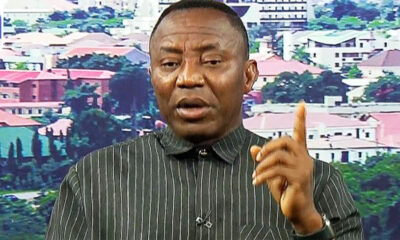
The National Chairman of the Peoples Redemption Party (PRP), Hakeem Baba-Ahmed, has claimed that former President Muhammadu Buhari had reservations about President Bola Ahmed Tinubu succeeding him in 2023, describing the current President as “bad news” for Nigeria.
Baba-Ahmed made the allegation at a summit organised by the Northern Elders Forum (NEF), where he criticised Tinubu’s administration and questioned the President’s handling of the country’s economic and political challenges.
According to him, Buhari resisted pressure from some political associates who wanted Tinubu to emerge as his successor after the 2023 general election.
“Even Buhari saw Tinubu as bad news for this country. In fairness to him, he is not around him. Buhari resisted some people who insisted it had to be Tinubu,” Baba-Ahmed said.
He did not identify the individuals who allegedly pressured Buhari or provide further details of the former President’s reported reservations about Tinubu’s candidacy.
Baba-Ahmed also revisited Tinubu’s declaration of “Emilokan”, a Yoruba expression meaning “it is my turn”, during the build-up to the 2023 presidential election, arguing that Nigerians should have examined the statement more critically.
“Nigerians ought to have known there was something wrong the day Tinubu said ‘It’s my turn’. Maybe we missed it,” he said.
Questioning the purpose behind the declaration, Baba-Ahmed argued that the presidency of a country with more than 200 million people should be about public service rather than the fulfilment of an individual’s political ambition.
The PRP chairman further accused the Tinubu administration of worsening the country’s difficulties, citing economic hardship and what he described as failures across key areas of governance.
READ ALSO:
- NAFDAC Probes Corps Member’s Death at Enugu Camp as Fake Drug Claims Emerge
- Nigerian Universities Have Not Expired, Only Teaching Methods, Professor Tells Ojuolape
- Kano: Soldiers Kill Two Kidnappers, Rescue Victim, Recover ₦10m
He argued that the President should not prioritise his ambition for a second term over the welfare of Nigerians, insisting that the country needed a change in direction.
Baba-Ahmed also expressed confidence that Nigeria would overcome its current challenges, describing its people as resilient despite the economic and political difficulties confronting the nation.
“We are very resilient people. We have seen crises bigger than this, and we survived it. We survived this one, and we will survive this one,” he said.
On the 2027 general election, Baba-Ahmed disclosed that opposition parties were working towards a coalition to challenge Tinubu, adding that the alliance would seek to unite political interests behind a single candidate.
He urged Nigerians opposed to the President’s re-election bid to support whoever emerges as the coalition’s candidate.
Baba-Ahmed also called on the Independent National Electoral Commission (INEC) to ensure that the 2027 elections are credible and reflect the wishes of voters.
Tinubu succeeded Buhari on May 29, 2023, after winning the presidential election on the platform of the All Progressives Congress (APC). His administration has introduced major economic reforms, including the removal of petrol subsidies and changes to the foreign exchange system, which have generated sustained public debate over their impact on households and businesses.
Baba-Ahmed’s claim about Buhari’s alleged opposition to Tinubu’s emergence has not been independently established in the account of the summit. His remarks come amid growing political manoeuvring ahead of the 2027 elections and renewed criticism of the President’s performance by opposition figures.
Buhari Feared Tinubu Presidency, Resisted Pressure to Back Him – Baba-Ahmed Claims
Politics
2027: Shehu Sani Breaks Silence on Claims Kwankwaso Is Working for Tinubu
2027: Shehu Sani Breaks Silence on Claims Kwankwaso Is Working for Tinubu
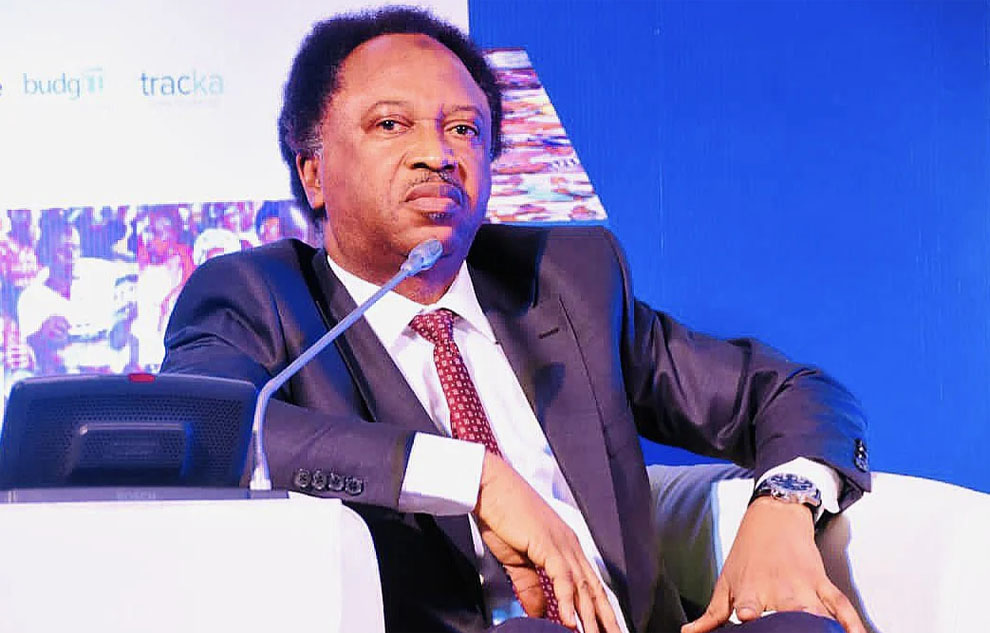
Former Kaduna Central senator Shehu Sani has defended Rabiu Musa Kwankwaso against allegations that the former Kano State governor is working to advance President Bola Ahmed Tinubu’s re-election bid, blaming supporters of the African Democratic Congress (ADC) for what he described as a smear campaign following Kwankwaso’s political split with Peter Obi.
Sani made the remarks in a post on his verified X account while reacting to accusations by the ADC Presidential Campaign Council that Kwankwaso was undermining opposition efforts ahead of the 2027 presidential election.
“The ADC guys are still bitter about the Peter and Kwankwaso divorce, hence the smear that they are working for the ruling party or the President,” Sani wrote.
The former lawmaker argued that Obi and Kwankwaso were established politicians with independent political identities and should be allowed to make their own decisions about political alliances without facing hostility from former allies.
According to him, political figures should have the freedom to associate with political parties and coalitions of their choice or withdraw from them without being accused of working against the interests of the opposition.
“No consideration to the fact that they are all accomplished politicians with their own independent track records, and have the right to associate and disassociate,” he added.
READ ALSO:
- Omoda, Jaecoo Storm Europe as Global Sales Surge 123% to 73,421
- 16-Year-Old Girl Recounts Horror of Hookup Encounter, Says Man Threatened Her With Knife, Acid
- Ex-Super Eagles Coach Westerhof Battles Colon Cancer in Critical Condition, Wife Seeks Help
Sani further criticised political groups that, in his view, attempt to control their members or punish them for choosing a different political direction.
“This is the price they will continue to pay for refusing to be supplementary, and disposable cargoes in someone’s container,” he stated.
He added: “Political parties shouldn’t be cultish groups where one can’t pull out in peace.”
The comments came after the ADC Presidential Campaign Council accused Kwankwaso, who is now the running mate to Obi under the Nigeria Democratic Congress (NDC), of weakening the opposition through his criticism of former Vice-President Atiku Abubakar.
Kwankwaso had called on Atiku, the ADC’s presidential candidate, to step aside for Obi, prompting a strong reaction from the ADC campaign council.
In a statement, the council’s Director of Media and Publicity, Kola Ologbondiyan, described Kwankwaso’s intervention as reckless and self-serving, alleging that it could deepen divisions among opposition politicians and benefit Tinubu and the ruling All Progressives Congress (APC).
Ologbondiyan argued that opposition figures should concentrate on challenging the Tinubu administration rather than attacking one another or attempting to influence the choice of presidential candidates in rival parties.
The ADC campaign council also questioned Kwankwaso’s political calculations, alleging that his actions were driven by personal ambition and future political negotiations rather than a genuine effort to strengthen the opposition.
However, Sani’s response challenged the suggestion that Kwankwaso’s departure from the ADC-led opposition arrangement amounted to support for Tinubu. He maintained that political disagreements and changes in alliances should not automatically be interpreted as evidence of collaboration with the ruling party.
The disagreement reflects the growing tensions among opposition politicians as parties and political leaders position themselves for the 2027 elections.
Obi and Kwankwaso’s move to the NDC followed their departure from the ADC-led opposition coalition, which had sought to bring prominent political figures together behind a common platform to challenge Tinubu.
Their exit has complicated efforts to maintain a united opposition front, with competing presidential ambitions and disagreements over candidate selection continuing to shape political discussions.
For now, the allegations that Kwankwaso is advancing Tinubu’s interests remain a claim by the ADC campaign council, while Sani has publicly rejected that interpretation. Neither the accusation nor Sani’s response, on its own, establishes that Kwankwaso is secretly working with the President.
The exchange underscores the widening political differences among opposition figures as the race towards 2027 gathers momentum.
2027: Shehu Sani Breaks Silence on Claims Kwankwaso Is Working for Tinubu
Politics
2027: Kwankwaso Signals Fuel Subsidy Comeback as NDC Vows to Crash Petrol Prices
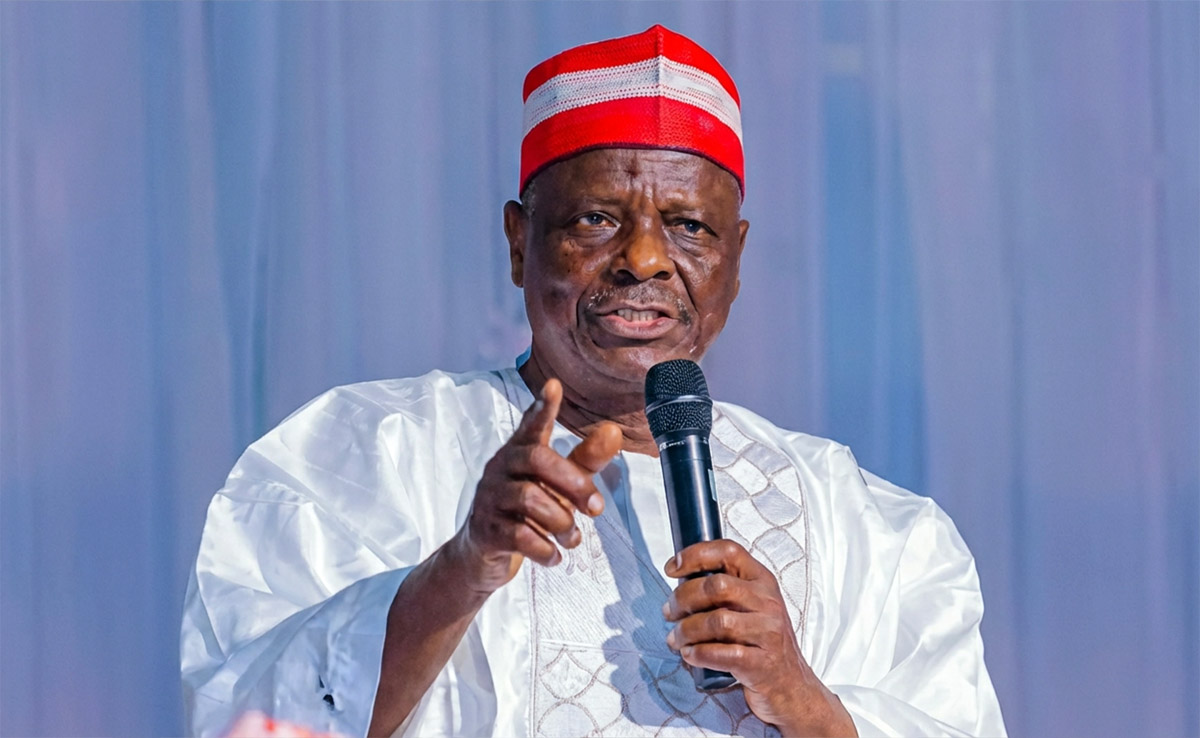
The Nigeria Democratic Congress (NDC) has signalled its willingness to consider restoring petrol subsidy if it wins the 2027 general election, with its vice-presidential candidate, Rabiu Musa Kwankwaso, promising to explore all necessary measures to reduce fuel prices and ease the economic hardship facing Nigerians.
Kwankwaso made the declaration during an interview on Channels Television’s Politics Today on Thursday, October 15, saying the party’s leadership was united on the need to make energy more affordable.
The former Kano State governor said he, the NDC presidential candidate, Peter Obi, and the party’s leader, Seriake Dickson, had aligned their positions on addressing the high cost of energy in the country.
According to Kwankwaso, the party would consider whatever measures were necessary to bring down petrol prices, including a possible return to fuel subsidy.
He argued that the cost of petrol had become a major burden on households and businesses, contributing to higher transportation fares, rising food prices and increased operating costs for companies.
The NDC candidate said an incoming government would need to examine available policy options to reduce the pressure on Nigerians, particularly low-income earners and small businesses struggling with the rising cost of living.
READ ALSO:
- NAF Deploys Pumps in Desperate Push to Recover Submerged Aircraft After Crash Killed 25
- Rivers Police Remove DPO as Suspected Cultists’ Outpost Renovation Sparks Probe
- Osun Murder: Three Arrested as Police Recover Weapons, Link Suspect to Earlier Killings
Kwankwaso also identified corruption and irregularities in the petroleum industry as issues that must be addressed to ensure Nigerians benefit from reforms in the sector.
He suggested that reducing waste and tackling abuses could help improve the management of public resources and support efforts to make petroleum products more affordable.
The comments reopen the debate over fuel subsidy removal, one of the most consequential economic decisions taken by President Bola Ahmed Tinubu, who announced the end of the policy during his inauguration on May 29, 2023.
The removal led to a sharp increase in petrol prices, with the effects spreading across transportation, food distribution, manufacturing and other sectors of the economy.
The Tinubu administration has defended the decision as part of broader economic reforms intended to reduce the government’s subsidy burden and redirect public funds towards other priorities. However, the resulting increase in living costs has remained a major concern for many Nigerians.
Kwankwaso’s statement suggests that the NDC would be prepared to revisit the policy if elected in 2027. However, the party has yet to publish a comprehensive framework explaining how a possible subsidy scheme would operate, how much it would cost or how the government would fund it without creating additional pressure on public finances.
Questions also remain about the proposed safeguards against corruption, the method of determining eligible beneficiaries and whether any intervention would involve a blanket subsidy or a more targeted arrangement.
The NDC’s position is expected to feature in the wider debate over economic policy ahead of the 2027 presidential election, as political parties outline their plans for addressing high petrol prices, inflation and the cost-of-living crisis.
For Nigerians facing elevated transportation and household expenses, the central issue will be whether the party can translate its promise of cheaper petrol into a practical, transparent and financially sustainable policy.
2027: Kwankwaso Signals Fuel Subsidy Comeback as NDC Vows to Crash Petrol Prices
-
 metro3 days ago
Suspended Archbishop Ibezim Drags Anglican Primate to Court, Challenges Six-Month Leave
-
 metro3 days ago
Imodi-Ijebu Muslim Community Bets on 20 Chiefs to Drive Education, Economic Growth
-
 metro3 days ago
NAPTIP Raises Alarm as Parents Allegedly Trade Children for Sex, Arrests Woman in Abuja
-
 News2 days ago
FG Draws Red Line on Fuel Subsidy, Warns of Naira Crisis if Reforms Are Reversed
-
 News3 days ago
Tinubu Reappoints INEC Commissioner, Nominates Six Others Ahead of 2027 Elections
-
 metro3 days ago
DSS Arrests Maina’s Fugitive Son in Abuja After Six Years on the Run
-

 Auto3 days ago
Tesla’s Flying Roadster Rekindles Race to Put Cars in the Sky
-

 Entertainment3 days ago
Toyin Abraham Breaks Silence as Leaked Audio Sparks Fresh Nollywood Feud