

Politics
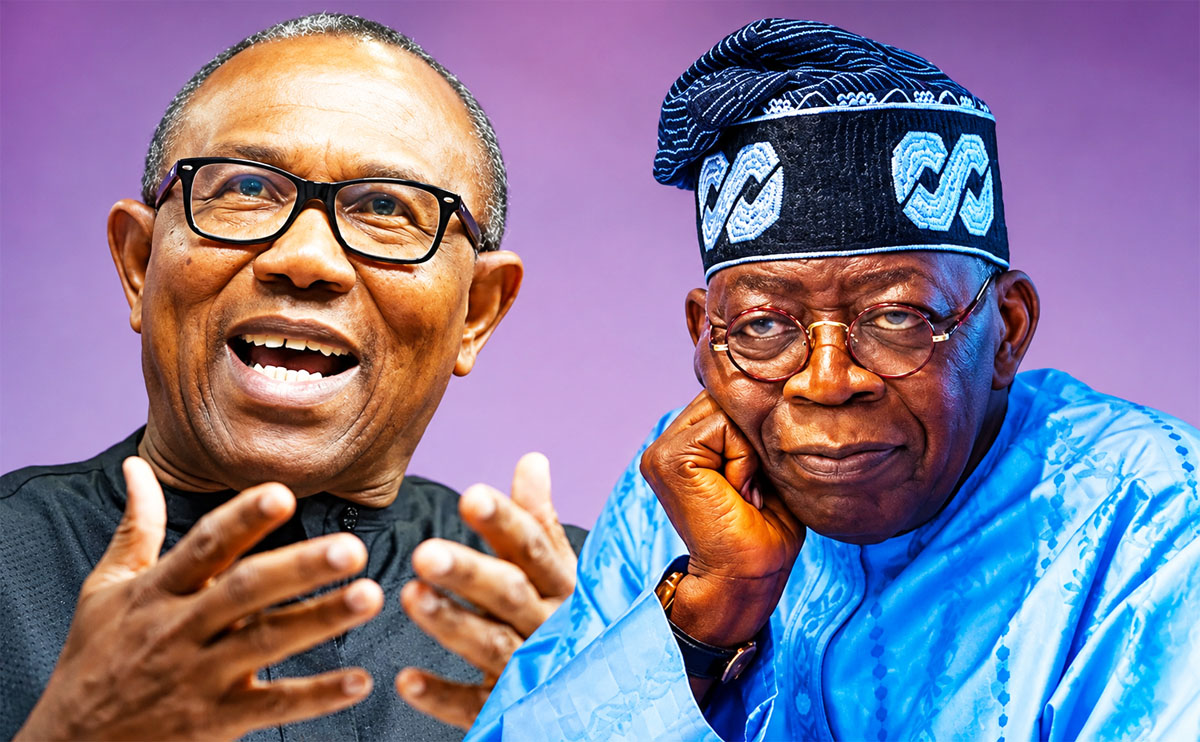
2027: Tinubu Edges Peter Obi by 1.55 Points in Oxford-Metro Poll
2027: Tinubu Edges Peter Obi by 1.55 Points in Oxford-Metro Poll
President Bola Ahmed Tinubu has narrowly edged Peter Obi in the latest Oxford-Metro Analytics National Trust Poll conducted ahead of Nigeria’s 2027 presidential election, with the incumbent recording 1,067 more responses than the former Anambra State governor.
The poll, which closed on September 7, recorded 69,110 approved and unflagged responses in its final analytical dataset. Tinubu received 24,469 responses, representing 35.41 per cent, while Obi polled 23,402 responses, representing 33.86 per cent.
The figures put Tinubu 1.55 percentage points ahead of Obi, based on the published percentages. Former Vice-President Atiku Abubakar, the ADC presidential candidate, finished third with 18,430 responses, representing 26.67 per cent of the total.
The result points to a closely contested three-way race among Tinubu, Peter Obi and Atiku Abubakar, although the poll should not be interpreted as a prediction of the eventual outcome of the 2027 election.
The geographical distribution of the responses presented a more complex picture. Tinubu recorded the highest number of responses in 20 states and the Federal Capital Territory, while Obi and Atiku each led in eight states.
Tinubu’s reported support extended into several northern states where he did not emerge as the leading presidential candidate in the 2023 election. He recorded the highest number of responses in Kaduna, Katsina and Gombe, states won by Atiku in 2023.
The President also led in Kano, where Rabiu Kwankwaso of the New Nigeria Peoples Party won the presidential election in 2023.
READ ALSO:
- Obafemi Martins Plans Six-Zone Football Tournament for Tinubu’s Re-election
- NANS Threatens ‘Mother of All Protests’ Over Ondo Varsity Strike
- Former PDP Chairman Bamanga Tukur Dies at 90
- Police Arrest Woman Over Alleged Drug Trafficking in Delta
At the geopolitical-zone level, Tinubu led in the South-West, North-West and North-Central, while Obi recorded the strongest showing in the South-East and South-South. Atiku dominated the North-East.
Tinubu’s strongest regional performance came in the South-West, where he received 10,968 responses, representing 43.53 per cent of participation in the zone. He also led in the North-West with 4,129 responses, representing 43.10 per cent, while his 6,370 responses in the North-Central accounted for 36.97 per cent of participation.
Obi recorded his strongest performance in the South-East, where he secured 5,796 responses, representing 63.97 per cent of the region’s participation. He also led in the South-South with 2,389 responses, representing 41.48 per cent.
Atiku’s strongest regional showing came in the North-East, where he received 1,235 responses, accounting for 55.46 per cent of participation in the zone.
The regional figures underline the different political bases of the three leading contenders. While Tinubu recorded a broader geographical spread in the poll, Obi maintained a commanding position in the South-East and a lead in the South-South, while Atiku’s strongest support remained concentrated in the North-East.
Some state-level contests were particularly close. In Kogi State, Tinubu received 39 responses, compared with 38 for Atiku and 33 for Obi, out of 110 responses recorded.
The Federal Capital Territory recorded a considerably larger number of participants. Tinubu polled 5,599 responses against Obi’s 5,278, giving the President a lead of 321 responses, while Atiku received 3,954.
In Rivers State, Tinubu also finished ahead of Obi, polling 975 responses against Obi’s 892, while Atiku received 568.
Beyond the three leading contenders, Omoyele Sowore received 1,016 responses, followed by Oyo State Governor Seyi Makinde with 519 and former President Goodluck Jonathan with 284.
Other candidates recorded significantly smaller figures, with Anita Zugwai-Chukwu receiving 18 responses, Sandy Onor six and Prince Kennedy Ahanotu two.
The poll also recorded 638 participants who selected “I Do Not Trust Any Candidate Yet”, while 204 respondents were undecided and 122 selected “Other Candidate”.
READ ALSO:
- Dangote raises petrol price 6.7% to N1,350/litre
- Anambra Police Arrest Woman Over Alleged Sexual Abuse of Child, Rescue Four
- MURIC fires back at Peter Obi: Forget Sallah ceremony, free Nigerian Muslims
One of the most significant features of the exercise was the concentration of participation in a relatively small number of locations. Lagos and the FCT accounted for 54.44 per cent of all responses, meaning more than half of the final dataset came from the two locations.
The final dataset also contained 56 diaspora responses, which were excluded from the six domestic geopolitical-zone tallies.
The distribution of responses varied considerably from state to state. While Lagos and the FCT recorded tens of thousands of responses combined, some states had fewer than 100 participants. This variation is important when interpreting state-by-state comparisons and the broader national figures.
Oxford-Metro Analytics describes the exercise as an open public-pulse poll rather than a conventional scientific opinion survey. The organisation says its platform applies measures designed to identify duplicate submissions, suspicious voting patterns and other forms of manipulation.
However, the poll’s own methodology makes clear that it should not be regarded as a population-representative scientific poll or an official election forecast. The results reflect the preferences expressed by people who participated in the online exercise and were approved for inclusion in the final dataset.
That distinction is particularly important ahead of the 2027 Nigerian presidential election, as the actual electorate will be determined by registered voters who participate in the election conducted by the Independent National Electoral Commission.
The Oxford-Metro figures nevertheless provide an indication of the political preferences expressed by participants in the exercise and highlight the competitiveness of the emerging presidential contest.
Tinubu’s narrow national lead over Obi contrasts with the stronger regional leads recorded by the two opposition contenders in their respective areas of strength. The figures also show Atiku retaining significant support in the North-East despite trailing Tinubu and Obi nationally.
The results could therefore fuel further debate among political parties and supporters about the strength of the major candidates as preparations for the 2027 presidential election intensify.
For Tinubu, the poll’s most notable feature is the reported lead across the South-West, North-West and North-Central, alongside gains in northern states where other candidates performed strongly in 2023.
For Obi, the figures reinforce his continued dominance among participants in the South-East and his lead in the South-South. Atiku’s performance in the North-East, meanwhile, points to his continuing regional strength.
Overall, the Oxford-Metro exercise places Tinubu on 35.41 per cent, Obi on 33.86 per cent and Atiku on 26.67 per cent among the 69,110 approved responses.
With the difference between Tinubu and Obi standing at just 1,067 responses, the figures indicate a close contest within the poll, while the significant regional variations suggest that the geographical distribution of political support could remain a major factor in the build-up to the 2027 election.
2027: Tinubu Edges Peter Obi by 1.55 Points in Oxford-Metro Poll








Politics
“I Won’t Slap Wike’s Son, I Won’t Kick Seyi Out — But Tinubu MUST Go!” Fayose Explodes
“I Won’t Slap Wike’s Son, I Won’t Kick Seyi Out — But Tinubu MUST Go!” Fayose Explodes
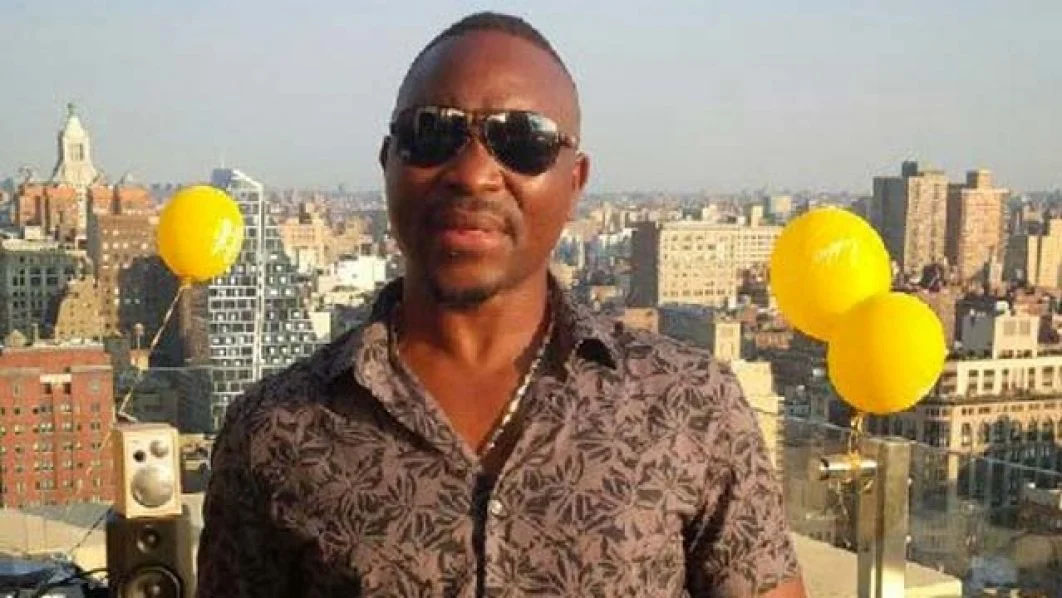
Abuja — Isaac Fayose has fired back at critics in dramatic fashion, declaring he will neither slap Nyesom Wike’s son nor kick President Bola Tinubu’s son Seyi out of his presence — but insisting with equal fury that the President must be voted out in 2027.
The businessman and younger brother of former Ekiti State Governor Ayodele Fayose ignited a firestorm after photos surfaced of him hanging out with Seyi Tinubu and Joaquin Wike, son of the FCT Minister. Critics immediately accused him of betraying the Nigeria Democratic Congress (NDC) and its presidential candidate, Peter Obi.
Fayose, however, refused to back down. In a video posted on his Facebook page, he threw a rhetorical punch at his accusers: “Tinubu must go. Wike is a land grabber. That doesn’t mean that Wike’s son will come and greet me and I will slap him. Or President Bola Tinubu’s son, Seyi, will come and greet me and I will kick him.”
He doubled down on his loyalty to Obi, declaring: “I campaigned for Obi. Do you know how much I spent on the last election? I still support Peter Obi. I still want Tinubu out of power.”
The controversy exploded after Fayose posted a photograph with Joaquin Wike, calling the minister’s son his younger brother. The image set social media ablaze, with users questioning why a self-proclaimed “101% Obidient” supporter would be seen with the family of a top APC figure.
It is not the first time Fayose has faced such backlash. In July 2026, a video showed him alongside Seyi Tinubu and socialite Cubana Chief Priest at an Abuja gathering where prayers were offered for the President and Nigeria. Fayose dismissed the meeting as a private social visit, not a political endorsement.
The latest storm underscores the fever-pitch sensitivity in opposition circles as political actors jostle for position ahead of the 2027 presidential contest. Fayose insists he is drawing a clear line — political allegiance on one side, personal courtesy on the other — but his critics are not buying it.
As of press time, neither the NDC nor Peter Obi’s camp has issued an official statement.
“I Won’t Slap Wike’s Son, I Won’t Kick Seyi Out — But Tinubu MUST Go!” Fayose Explodes
Politics
‘They Created Hunger, Poverty’: Tinubu Fires at Opposition as 2027 Re-election Campaign Begins
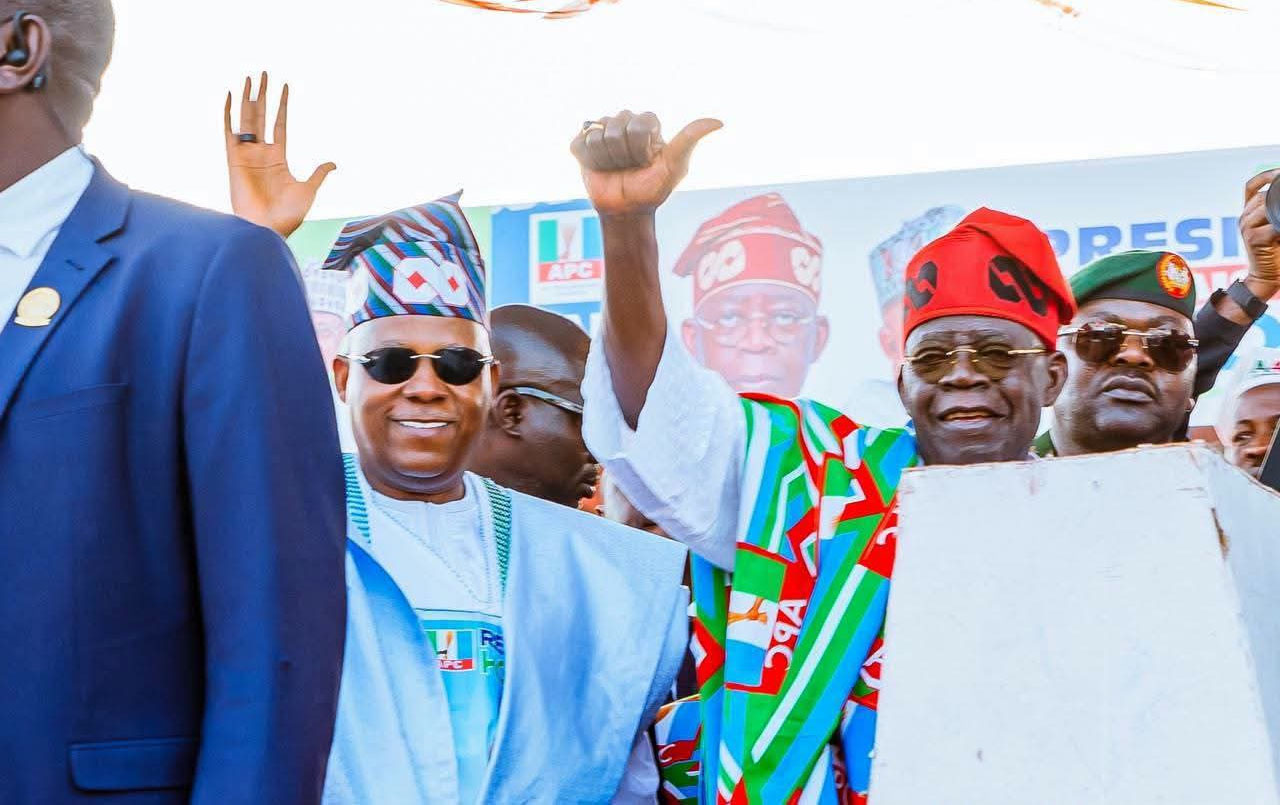
President Bola Ahmed Tinubu has blamed opposition politicians for the hunger and poverty confronting Nigerians, insisting that his administration is working to address the economic challenges as he formally launched his campaign for a second term in office.
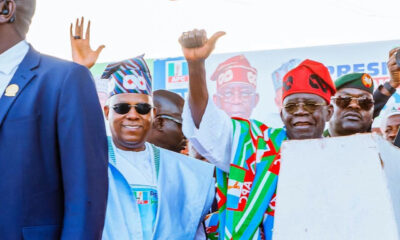
Tinubu made the remarks on Saturday, October 24, 2026, during the All Progressives Congress (APC) presidential campaign flag-off rally at the Kaduna Township Stadium, where he urged Nigerians to renew his mandate in the 2027 presidential election.
The President’s comments come amid persistent public concerns over rising food prices, petrol costs, transportation expenses and declining purchasing power, with the economy expected to remain a major issue in the contest for the presidency.
Addressing supporters at the rally, Tinubu challenged opposition politicians who have criticised his administration over hunger and poverty, arguing that they were responsible for creating the problems they now accuse his government of failing to resolve.
“I hear my opponents talking about hunger and poverty. Who created it? They did. They created hunger, they created poverty. We are trying to eradicate them,” the President said.
Tinubu defended his administration’s economic policies, maintaining that his government was taking steps to improve the country’s finances, promote development and create conditions for greater prosperity.
He also commended APC governors for their efforts in their respective states and promised Nigerians improved economic opportunities if he secured a second term.
“To you, the children of our country, we promise prosperity in our second term. You will not regret going to the polls,” he told the gathering.
The President urged eligible voters to obtain their Permanent Voter Cards (PVCs) and participate in the forthcoming election. He also called on APC supporters to vote for the party’s candidates at the presidential, governorship and legislative levels.
READ ALSO:
- Bill Clinton condemns anti-Muslim prejudice, cites Qur’an’s message of coexistence
- MURIC Applauds Army as Mogadishu Cantonment Mosque Reopens After Week-Long Closure
- Atiku Condemns Attack on Edo Comedian Over Refusal to Support Tinubu
Tinubu further defended his administration’s decision to remove the petrol subsidy, insisting that the country would not return to the previous arrangement.
“Fuel subsidy is in our past: no more corruption, no more falsification of invoices, no more lies, no more smuggling of fuel,” he said.
The removal of the petrol subsidy, announced shortly after Tinubu assumed office in May 2023, remains one of the most consequential and controversial economic decisions of his administration.
The government has argued that the policy would reduce public expenditure, eliminate distortions in the petroleum market and free up resources for development. However, the increase in petrol prices following the reform has contributed to higher transportation and distribution costs, putting additional pressure on households and businesses.
The administration’s economic reforms, including changes to the foreign exchange system, have also generated debate over their long-term benefits and immediate effects on living standards.
Opposition politicians have repeatedly questioned the government’s management of the economy, arguing that the reforms have imposed significant hardship on Nigerians without delivering sufficient relief.
Former Vice-President Atiku Abubakar, the presidential candidate of the African Democratic Congress (ADC), criticised Tinubu’s attempt to blame opposition parties for the country’s economic difficulties.
Atiku argued that the APC had governed Nigeria since 2015, first under former President Muhammadu Buhari and subsequently under Tinubu, and should therefore accept responsibility for the country’s economic conditions during its period in power.
He maintained that Nigerians were experiencing significant hardship under the current administration and urged the President to address the concerns of citizens rather than blame political opponents.
The exchange highlights the growing political contest over responsibility for hunger, poverty and the cost-of-living crisis as parties position themselves ahead of the 2027 elections.
At the Kaduna rally, Vice-President Kashim Shettima also urged Nigerians, particularly voters in the North, to support Tinubu’s re-election bid.
Shettima recalled Tinubu’s previous support for northern presidential aspirants, including Atiku in 2007, Nuhu Ribadu in 2011 and Muhammadu Buhari in the 2015 and 2019 elections. He argued that Tinubu had demonstrated political support for northern interests and called on voters to reciprocate.
Kaduna State Governor Uba Sani also appealed to northern voters to back the President, pointing to federal infrastructure projects, education initiatives and security interventions.
The rally attracted prominent APC figures, including Senate President Godswill Akpabio, House of Representatives Speaker Tajudeen Abbas, APC National Chairman Nentawe Yilwatda, campaign Director-General Abdulaziz Yari, ministers, lawmakers and governors.
The event marked the beginning of Tinubu’s campaign for another presidential term, with the President asking Nigerians to give his administration additional time to pursue its economic and development agenda.
However, the debate over the causes of Nigeria’s economic hardship is likely to remain central to the election campaign. While the APC is defending its reforms and promising improved prosperity, opposition parties are demanding greater accountability for the impact of government policies on food affordability, employment, household incomes and living standards.
As the 2027 election approaches, voters will have to assess the competing claims of the ruling party and the opposition against their own experiences of the economy and the policy proposals presented by the candidates.
‘They Created Hunger, Poverty’: Tinubu Fires at Opposition as 2027 Re-election Campaign Begins
Politics
2027: Shettima Urges North to Repay Tinubu’s Support With Re-election
2027: Shettima Urges North to Repay Tinubu’s Support With Re-election
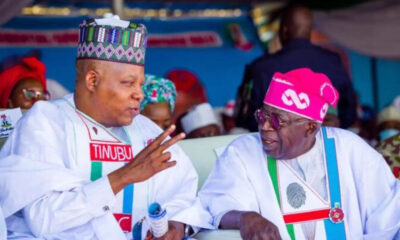
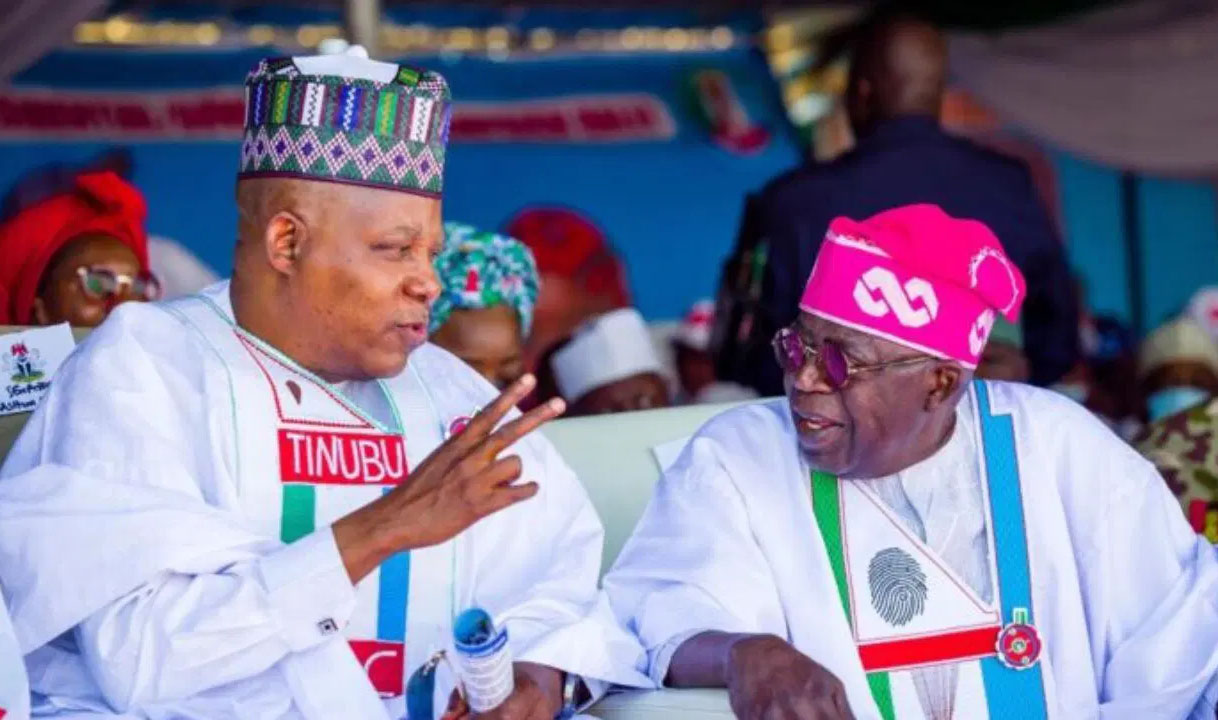
Vice-President Kashim Shettima has called on northern voters to rally behind President Bola Tinubu’s re-election bid in 2027, arguing that the region owes the President a political debt for his longstanding support for northern leaders, including the late President Muhammadu Buhari.
Shettima made the appeal on Saturday at the All Progressives Congress presidential campaign launch in Kaduna, where he urged voters to support Tinubu and other APC candidates across the country in the forthcoming general elections.
According to the Vice-President, Tinubu’s political history demonstrates a consistent willingness to support leaders from the North, making it imperative for the region to reciprocate by backing his administration for another four-year term.
“We have come to ask you to renew a second time for the APC from top to bottom,” Shettima said.
He cited Tinubu’s role in supporting political figures from the North, including former Vice-President Atiku Abubakar, whom he said the President had provided a platform to contest the presidency in 2007 following his departure from the Peoples Democratic Party.
Shettima also recalled Tinubu’s support for Buhari during the 2015 and 2019 presidential elections, describing the former Lagos State governor’s loyalty as evidence of honour and political commitment.
“And you can bear witness that in 2015 and 2019, President Tinubu stood solidly behind the late President Muhammadu Buhari, throughout his first and second term victories. This is a mark of honour and our faith in a man of honour,” he said.
Beyond appealing to the North on the basis of political loyalty, Shettima defended the Tinubu administration’s performance, highlighting projects and institutional developments he said demonstrated its commitment to national growth and the development of Kaduna State.
He said the administration had promised to restore Kaduna’s status as a leading centre of learning and pointed to the establishment of the Federal University of Applied Sciences in Kachia, the transition of the institution in Zaria to a federal university of education and the establishment of a state vocational institute in Rigachikun as evidence of progress.
The Vice-President also listed major infrastructure projects, including the Ajaokuta-Kaduna-Kano gas pipeline, the Kano-Maradi railway, the Lagos-Kano rail corridor and the Abuja-Kaduna-Kano road, as part of the administration’s development agenda.
He further highlighted ongoing work on the Sokoto-Badagry highway, describing the project as a strategic investment that could expand agricultural production and unlock economic opportunities across the country.
According to Shettima, the highway would improve connectivity, open up agricultural communities and strengthen the movement of goods and services, with potential benefits for farmers and businesses.
His appeal in Kaduna combined a call for political reciprocity with a defence of the administration’s record, as the APC seeks to consolidate its support base ahead of the 2027 general elections.
The Vice-President urged northern voters to consider Tinubu’s past political alliances and the administration’s stated achievements in deciding whether to renew the President’s mandate.
-

 metro1 day ago
Cancelled Wedding: Man Sues Ex-Fiancée’s Father Over Unpaid ₦70,000 Dowry
-

 Auto1 day ago
Car of the Year, other top honours up for grabs as NAJA Awards race begins
-

 metro2 days ago
School Bus Driver Turns Kidnapper, Collects ₦503,000 Ransom, Rapes 14-Year-Old Delta Student
-

 metro2 days ago
IKEDC Blames National Grid for Two-Week Power Crisis in Ishaga, Oke-Ayo
-

 Sports1 day ago
KANE ENDS 25-YEAR WAIT! England Captain Wins 2026 Ballon d’Or After Stunning 73-Goal Season
-

 metro1 day ago
Nigerian Navy Recruitment 2026: October 31 Deadline, Full Requirements and How to Apply
-
 metro1 day ago
EFCC Busts Four Illegal Lithium Plants in Ogun, Arrests 14 Chinese Nationals
-

 metro1 day ago
Man, Teenage Girl Found Dead in Toyota Corolla as Police Begin Investigation