

Politics
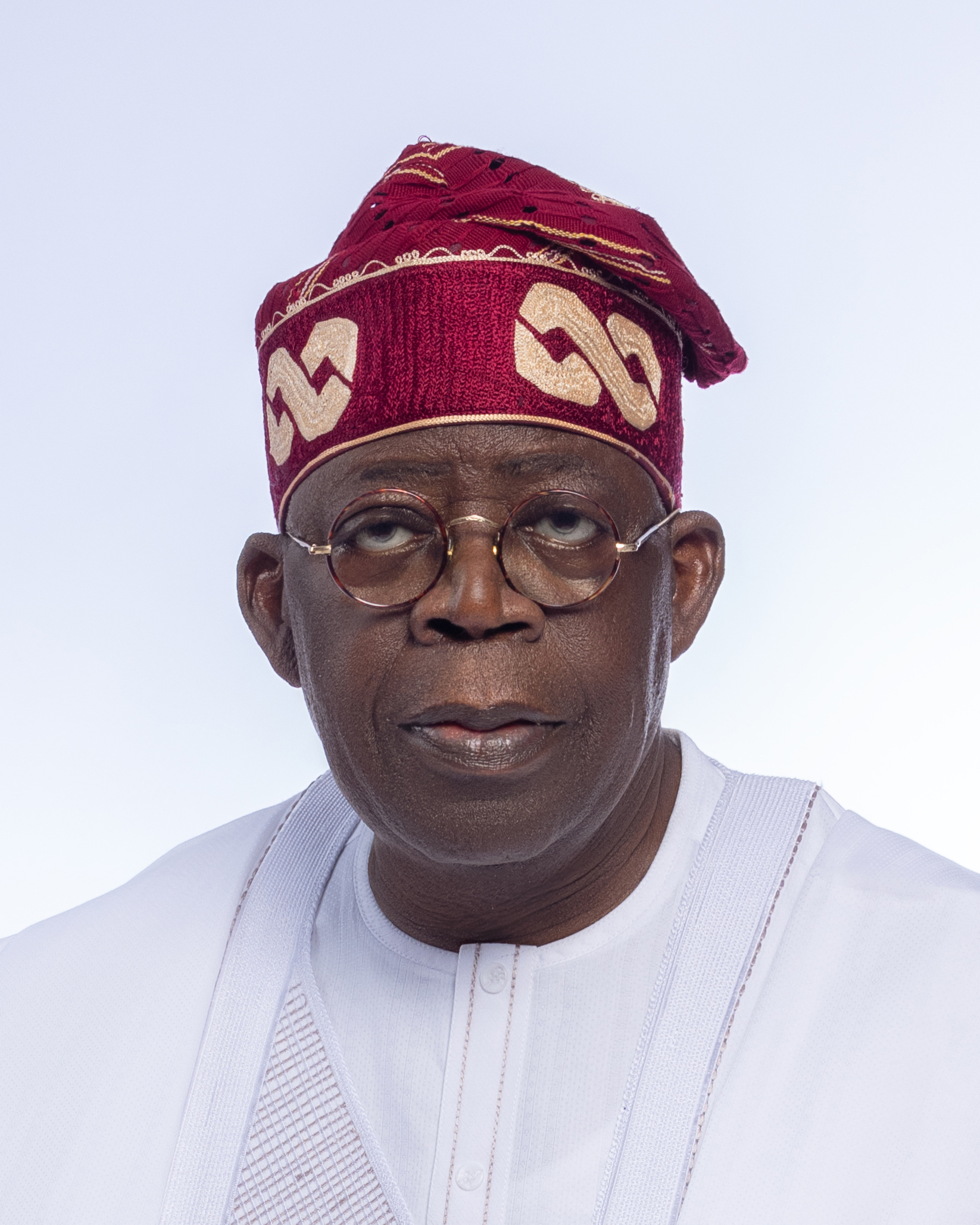
Tinubu Unpopular, Yet 2027 Re-election Still Possible — The Economist
Tinubu Unpopular, Yet 2027 Re-election Still Possible — The Economist
President Bola Ahmed Tinubu may be facing widespread dissatisfaction among Nigerians, but a divided opposition, religious considerations, incumbency and low voter turnout could shape the outcome of the 2027 presidential election, according to an analysis by the British publication, The Economist.
In a report titled “Nigerians Dislike Their President, But May Re-elect Him Anyway,” the publication examined the political dynamics surrounding the forthcoming presidential election and questioned why the President appears relatively confident about his chances despite the economic and security challenges confronting the country.
The analysis was published as Nigeria approaches the 2027 presidential election, with The Economist noting that Tinubu’s administration is operating amid a worsening security situation and economic pressures that have affected many households.
The publication specifically examined the situation in Borno State, where insurgency has persisted for years, damaging economic activities and leaving many young people without jobs and businesses struggling.
It noted that while Tinubu secured 54 per cent of the presidential vote in Borno in 2023, recent polling cited from SBM Intelligence suggested that his popularity in the state had fallen behind those of opposition figures Peter Obi and Atiku Abubakar.
The report said some residents of Maiduguri were prepared to express their dissatisfaction at the ballot box.
READ ALSO:
- Less Than Four Months After Wedding, Jarvis Threatens Peller With Lawsuit Over Second-Wife Plan
- 2027: Oshiomhole Dares Opposition Over ₦500 Petrol Promise, Says APC Will Take Argument to Nigerians
- Ughelli Hotel Assault: Police Arrest Key Suspect in Viral Underage Abuse Video
However, The Economist argued that public dissatisfaction alone might not determine the election, pointing to several structural factors within Nigeria’s political system.
One of the major factors identified was the fragmentation of the opposition.
The publication observed that Obi and Atiku had not formed a joint ticket, meaning that voters opposed to the ruling All Progressives Congress could be divided among different candidates.
It quoted Joachim MacEbong of Control Risks as saying that because there was no united opposition ticket, the anti-APC vote was not necessarily being consolidated behind one candidate.
The publication also identified incumbency as another factor in Nigerian elections, noting that sitting governments have access to established political structures and resources that can be mobilised during campaigns.
Religion was also discussed in the analysis, particularly in relation to northern Nigeria.
The Economist noted that Tinubu and Vice-President Kashim Shettima are Muslims, as are the majority of people in the northern region.
It quoted SBM Intelligence chief Cheta Nwanze as saying that the continued Muslim-Muslim ticket “resonates with quite a number of people”.
The report also suggested that religious identity could affect some voters considering Peter Obi, a Catholic, despite his Muslim running mate.
Beyond party politics and religion, the publication highlighted what it described as political cynicism among some voters.
It quoted MacEbong as saying that in communities where citizens have experienced prolonged shortages of security, healthcare and quality education, expectations of government can become increasingly low.
The report cited Borno as an example, saying that some residents might judge the government differently because of the long history of poor public services in the state.
The security situation could also affect voter participation.
According to the publication, turnout in Borno during the 2023 presidential election was below 20 per cent, compared with about 27 per cent nationwide.
It suggested that insecurity could discourage some voters from travelling to polling units during the next election.
In southern Nigeria, particularly Lagos, the report noted that regional identity could also influence voting behaviour, with some residents potentially considering Tinubu as a “son” of the state despite dissatisfaction over economic conditions.
The Economist also acknowledged that Tinubu’s economic reforms, including the removal of the petrol subsidy, have been welcomed by some investors and have contributed to economic adjustments.
However, it said the reforms had yet to translate into noticeable improvements in the daily lives of many Nigerians.
The publication consequently presented the 2027 contest as one in which economic hardship and insecurity could coexist with political factors capable of shaping voter behaviour.
The analysis has generated debate in Nigeria, particularly over whether dissatisfaction with the administration would translate into a consolidated opposition vote.
The 2027 presidential contest is expected to feature Tinubu and several opposition candidates, making the configuration of alliances and the distribution of votes among the major contenders significant factors in the election.
The Economist’s report is an analysis of the factors that could influence the 2027 contest; it is not a poll establishing the eventual winner.
Tinubu Unpopular, Yet 2027 Re-election Still Possible — The Economist







Politics
Abure Fires Fresh Shot at Obi, Says Ex-LP Candidate Lacks Capacity to Govern Nigeria

Abure Fires Fresh Shot at Obi, Says Ex-LP Candidate Lacks Capacity to Govern Nigeria
Former Labour Party National Chairman, Julius Abure, has launched a fresh attack on former Anambra State Governor and 2023 presidential candidate, Peter Obi, questioning his ability to manage people and lead a country as diverse as Nigeria.
Abure alleged that Obi lacks the capacity to build lasting political relationships, unite people around a common goal and effectively manage organisational challenges, arguing that his experience within the Labour Party raises questions about his leadership abilities.
The former party chairman made the remarks during an appearance on Channels Television’s Politics Today on Monday, November 23, 2026, while explaining his decision to support President Bola Ahmed Tinubu’s re-election bid ahead of the 2027 presidential election.
According to Abure, Obi’s inability to retain several prominent individuals who worked with him during the 2023 presidential campaign demonstrates what he described as his shortcomings in managing people.
Questioning what happened to some of Obi’s former political associates, Abure specifically mentioned his former campaign spokesman, Yunusa Tanko, former running mate, Datti Baba-Ahmed, and businessman Valentine Ozigbo, among others.
He argued that the departure of several individuals associated with Obi’s political movement raised concerns about his ability to sustain political alliances and build a dependable leadership structure.
Abure said someone who struggled to keep his political associates together might find it difficult to manage a country with Nigeria’s ethnic, religious and political diversity.
He also dismissed allegations that the Labour Party leadership frustrated Obi after the 2023 general election, insisting that the party had given the former governor considerable influence over its affairs.
According to him, Obi was practically handed control of the party after the election, but the subsequent developments exposed what he considered weaknesses in his ability to manage the organisation.
The latest criticism comes amid Abure’s increasingly open opposition to Obi’s 2027 presidential ambition and his decision to align with President Tinubu.
On Monday, Abure and some factional leaders of the Labour Party formally endorsed Tinubu for another term in office during a National Executive Council meeting in Abuja.
At the gathering, Abure declared that his faction was prepared to mobilise at least six million votes for the president in the 2027 general election.
He maintained that Tinubu possessed the political experience and leadership qualities required to lead Nigeria beyond 2027, while ruling out support for Obi and former Vice-President Atiku Abubakar.
Abure also explained that his faction’s decision followed what he described as a comparative assessment of the leading presidential contenders, insisting that political support should be based on strategic calculations and leadership considerations.
However, the endorsement comes against the backdrop of the prolonged leadership crisis within the Labour Party, which has produced rival factions claiming control of the party.
The Nenadi Usman-led faction, which TheCable reported is recognised by the Independent National Electoral Commission (INEC), has challenged Abure’s continued use of the party’s leadership position, describing members of his group as expelled members.
Meanwhile, Obi has moved to the Nigeria Democratic Congress (NDC) ahead of the 2027 presidential election, further deepening the political separation between him and the Labour Party faction that supported his 2023 presidential bid.
Abure’s latest comments have added another dimension to the unfolding political realignments ahead of the 2027 elections, particularly as former allies and political associates reposition themselves for the next electoral contest.
The development also raises fresh questions about the future of the Labour Party’s political structure and the extent to which its internal divisions could influence opposition alliances ahead of the presidential election.
Abure Fires Fresh Shot at Obi, Says Ex-LP Candidate Lacks Capacity to Govern Nigeria
Politics
Tinubu Reveals How Buhari Made Him APC Campaign Co-Chairman Despite Past Anger
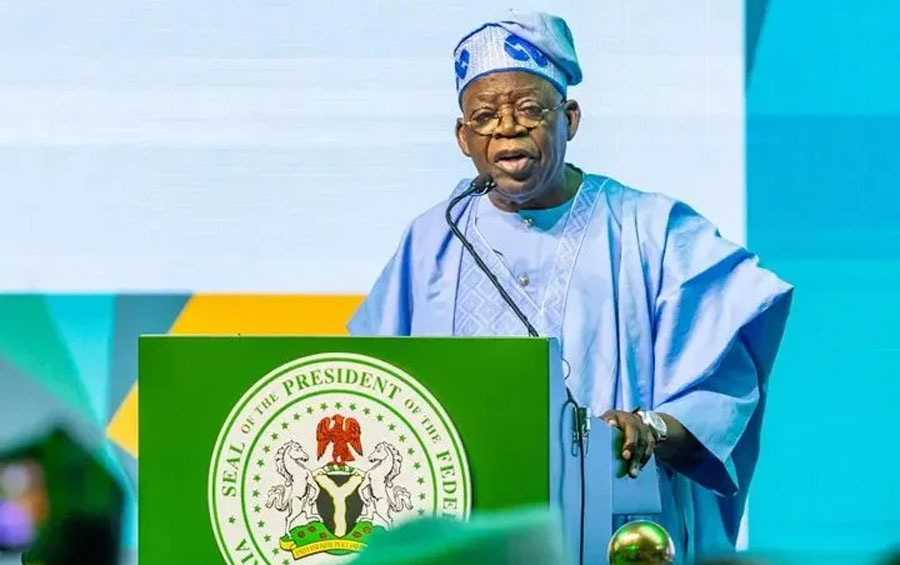
Tinubu Reveals How Buhari Made Him APC Campaign Co-Chairman Despite Past Anger
President Bola Ahmed Tinubu has recounted how he overcame personal grievances and anger during the administration of late former President Muhammadu Buhari, following his appointment as coordinator and co-chairman of the All Progressives Congress (APC) presidential campaign ahead of the 2023 general elections.
Tinubu made the revelation on Sunday while speaking at a special prayer session organised by his family at the historic Yoruba Tennis Club in Onikan, Lagos State.
Reflecting on the political disagreements and tensions that characterised the period between 2021 and 2022, the President admitted that he had been deeply hurt but eventually decided to put his grievances aside when Buhari entrusted him with a major responsibility in the party’s presidential campaign.
“In 2021–2022, I had my own anger and hurt feelings. When Muhammadu Buhari called me and said, ‘You are the Coordinator and Co-Chairman of the campaign,’ I was still angry, but I had to let it go; today, that’s in the past,” Tinubu said.
His remarks offered a glimpse into the political developments and internal disagreements that preceded his emergence as the APC presidential candidate and eventual victory in the 2023 presidential election.
The President also used the occasion to urge APC leaders and supporters to put aside personal differences, stressing the importance of unity as the ruling party prepares for the 2027 general elections.
Tinubu equally challenged political leaders and residents of Lagos State to intensify grassroots mobilisation and ensure increased voter participation in the forthcoming elections.
Expressing concern over what he described as poor voter turnout in Lagos despite the state’s large number of registered voters, he questioned why millions of registered voters had failed to translate into significantly higher votes during elections.
“For me, Lagos is a big deal. How can you have seven million voters registered and produce 100,000, 200,000 votes? That’s a failure. Even if you win, you have to generate the maximum,” he said.
He further urged residents who were dissatisfied with political developments, the media or other issues to express their feelings through participation in the electoral process rather than staying away from the polls.
“It’s not anger; anger will not do it. If you are angry with cinema or you are angry with the media, go and vote,” the President added.
The gathering attracted prominent political figures, community leaders, family members and other dignitaries, providing an opportunity for Tinubu to reflect on past political disagreements while rallying support ahead of the 2027 electoral contest.
The President’s comments have brought renewed attention to the relationship between him and Buhari during the period leading up to the 2023 presidential election, particularly the political tensions that preceded his emergence as the APC candidate.
Tinubu Reveals How Buhari Made Him APC Campaign Co-Chairman Despite Past Anger
Politics
‘Tinubu Must Go’: Protesters Storm INEC HQ, Demand Electoral Accountability
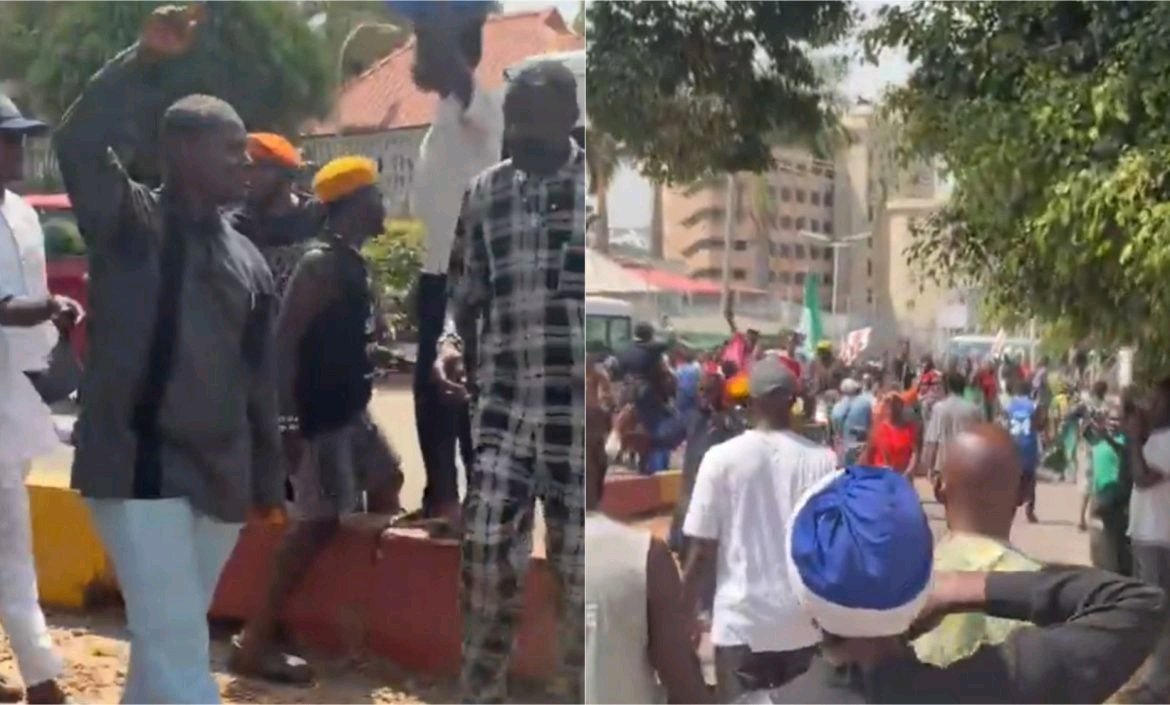
‘Tinubu Must Go’: Protesters Storm INEC HQ, Demand Electoral Accountability
ABUJA, Nigeria — Tension mounted in Abuja on Monday, November 23, 2026, as Nigerian youths and opposition supporters staged a fresh protest at the national headquarters of the Independent National Electoral Commission (INEC), chanting “Tinubu Must Go” and demanding greater transparency ahead of the 2027 general elections.
The demonstrators, who reportedly gathered at Unity Fountain before marching towards the INEC headquarters, carried placards and chanted slogans including “Tinubu Must Go” and “Rig and Die” as they expressed concerns over the credibility of the forthcoming elections.
The protesters accused the electoral commission of taking decisions they believed could undermine the integrity of the 2027 polls and give President Bola Tinubu and the ruling All Progressives Congress (APC) an unfair advantage.
They insisted that INEC must demonstrate its independence and reassure Nigerians that their votes would count in the next general elections.
One of the protesters accused the commission of failing to release some Permanent Voter Cards (PVCs), while also raising concerns about the proposed use of artificial intelligence in the electoral process.
“INEC must be accountable. INEC has refused to release voters’ cards for people to vote. They are using AI to pollute the polling units,” the demonstrator alleged.
The protester further accused the commission of preparing an electoral process about which Nigerians were not adequately informed, insisting that the electoral body must be held accountable.
Human rights activist and African Action Congress (AAC) presidential hopeful, Omoyele Sowore, was also reported to have joined the demonstrators at the INEC headquarters, where he addressed protesters and participated in the anti-government chants.
The demonstration comes amid growing political disagreements between opposition parties and INEC over the commission’s handling of internal party leadership disputes, particularly the lingering crisis within the African Democratic Congress (ADC).
Opposition figures have accused the electoral body of taking steps that could weaken opposition parties ahead of the 2027 elections, allegations INEC has consistently rejected.
INEC Chairman, Professor Joash Amupitan, has maintained that the commission remains committed to conducting free, fair and credible elections, insisting that its decisions are guided by relevant laws and judicial pronouncements.
The latest demonstration has once again brought the electoral commission under public scrutiny, with protesters demanding transparency, accountability and assurances that the outcome of the 2027 elections will reflect the genuine choices of Nigerian voters.
As political activities gradually intensify ahead of the polls, the protest underscores growing pressure on INEC to address public concerns and strengthen confidence in the country’s electoral process.
‘Tinubu Must Go’: Protesters Storm INEC HQ, Demand Electoral Accountability
-

 metro2 days ago
Chibok Girl Escapes After Eight Years in Boko Haram Captivity, Reveals 20 Classmates Still Held
-

 Education3 days ago
UNILAG Gets 10 CNG Buses as FG Expands Campus Transport Scheme to 60 Institutions
-

 metro3 days ago
Jimmy Odukoya Sues Sister, Church Trustees Over Removal as Senior Pastor
-

 Politics1 day ago
Kwankwaso Made Me Swear on Qur’an to Join APC After Election Victory — Gov Yusuf Reveals Tinubu Deal
-
 metro19 hours ago
‘I Paid My Ex-Husband Before He Slept With Me’ – Islamic Preacher Kaola Makes Shocking Revelation
-
 Politics3 days ago
2027: Tinubu Urges Oyo Voters to Stick With APC, Promises More Development
-

 Politics2 days ago
‘Makinde Should Call Wike Uncle, Not Me’ – Ogun Fires Back
-
 Education3 days ago
Doctor Shortage: FG Increases Medical Student Admissions by 140%