

Opinion
Fifty Years After “Africa Has Come of Age”: A Personal Reflection on Nigeria’s Silence at the United Nations
By Disu Kamor, Executive Chairman, Muslim Public Affairs Centre (MPAC)
There are moments when a nation’s silence says more than its speeches. Last week at the United Nations was one of them. For years, I have introduced myself in rooms around the world as a Nigerian, and I have done so with a certain inherited pride. Not pride in our perfection, but pride in our posture. We were the country that once told the world, at great cost to itself, where it stood. We were the country that severed ties, nationalised oil companies, lost contracts and risked isolation because we believed that freedom in Southern Africa and freedom in Palestine were not foreign causes, but our own.
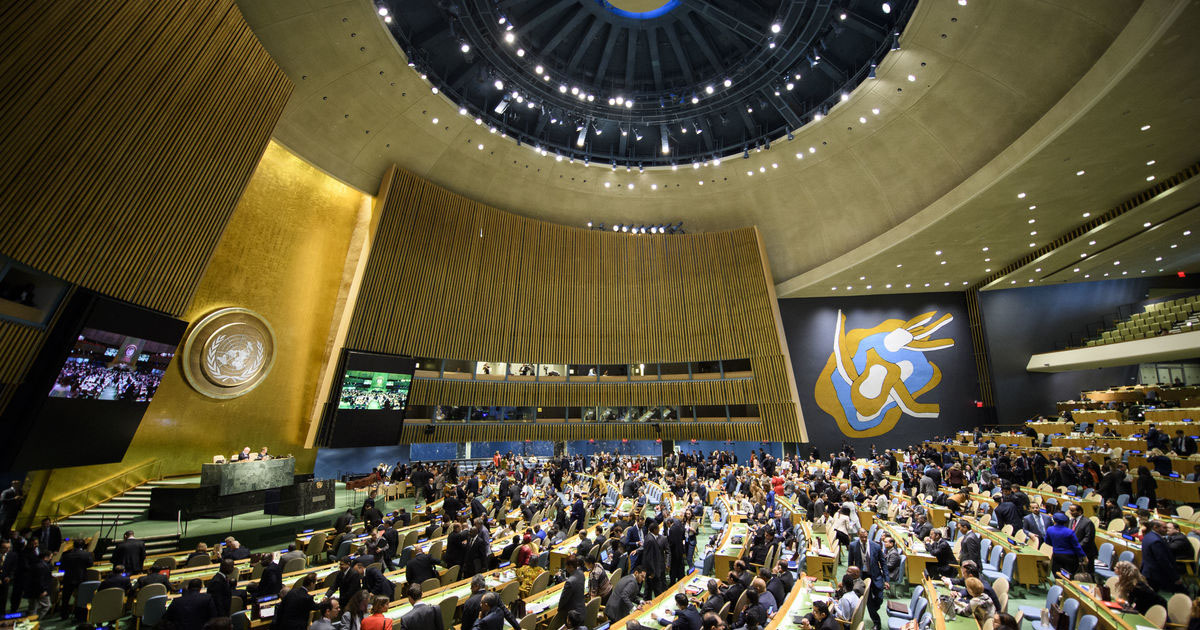
So when the organisation I chair, the Muslim Public Affairs Centre, issued a press release last week asking why Nigeria’s address to the 81st United Nations General Assembly could not find a single sentence for Palestine, I felt it personally, not just institutionally. Because twelve months earlier, at UNGA 80, Nigeria had not whispered. It had spoken, and spoken clearly. It spoke about the devastation in Gaza. It condemned violence and aggression against innocent civilians. It looked the world in the eye and declared, “without stuttering and without doubt,” that a two-state solution remained the path to lasting peace, and that the people of Palestine are not collateral damage but human beings, equal in worth, entitled to the same freedoms we take for granted. MPAC’s release laid out the record: last year’s clarity, this year’s erasure, the Security Cooperation Agreement with Israel signed quietly in August 2025 in between, the Joint Commission, the intelligence deals, and our three demands — join South Africa’s genocide case at the ICJ, make security cooperation conditional on accountability, and next time nations walk out when Netanyahu speaks, let Nigeria walk with them. I stand behind every word.
But this article is not that press release. This is what that silence has weighed on me as a Nigerian who was raised on the memory of a different Nigeria, and who fears we are now spending down a moral inheritance we did not earn, and will struggle to recover once it is gone.
Fifty years ago this January, a young Nigerian Head of State stood before his fellow African leaders in Addis Ababa and said four words that outlived him by half a century. General Murtala Mohammed, addressing an Extraordinary Session of the Organisation of African Unity convened to decide where Africa would stand on Angola’s liberation, rejected a letter from the American government pressuring Nigeria to side with apartheid South Africa. “Africa has come of age,” he told them. Thirty-four days later, he was dead, assassinated in a coup attempt, having spent the last months of his life turning that declaration into policy rather than leaving it as a line for historians to admire.
READ ALSO:
- Family seeks N10m to free kidnapped newlywed, other victims
- Trump launches ‘Super Intelligence Force’ to keep US ahead in AI race
- NDLEA intercepts N5bn worth of drugs at ports, arrests Milan-bound businessman
This year, the fiftieth anniversary of that declaration, I watched Nigeria’s national statement at the United Nations General Assembly run to twenty-four paragraphs — Security Council reform, climate finance, artificial intelligence, debt architecture, counter-terrorism in the Sahel — without once naming Gaza, or Palestine, or the two-state solution Nigeria itself had insisted on just a year before. I do not think that is a small thing. I think it is a rupture. I grew up understanding Nigeria as a country that put its resources where its convictions were, not merely its rhetoric. This is not nostalgia. It is documented history, and it deserves to be told again because too few Nigerians under fifty have ever been taught it.
Under Murtala and his successor, Olusegun Obasanjo, Nigeria funnelled oil revenue to liberation movements across the continent — the MPLA in Angola, ZANU and ZAPU in Zimbabwe, the ANC and PAC in South Africa, SWAPO in Namibia. Nigeria led the rejection of South Africa’s Bantustan system at the UN General Assembly in 1975 and donated $500,000 to SWAPO, granting it office space in Lagos. When Obasanjo’s government discovered that Nigerian crude, sold through British Petroleum, was indirectly reaching apartheid South Africa’s refineries, Nigeria nationalised BP’s entire Nigerian operation in 1979 rather than let its oil serve a racist regime even by accident. When Margaret Thatcher’s government moved to ease sanctions on Rhodesia, Obasanjo pulled British contracts from Lagos’s Apapa port and threatened to leave the Commonwealth, pressure credited with contributing to Robert Mugabe’s election victory in 1980. Nigeria went on to chair the UN’s Special Committee Against Apartheid until 1994.
And on Palestine specifically, Nigeria did not merely speak. It paid a real, sustained cost. When the Yom Kippur War broke out in 1973, Nigeria, in solidarity with the Organisation of African Unity and the Arab world, severed diplomatic relations with Israel entirely. That severance held for nearly two decades, across multiple changes of government, before ties were restored in 1992. An entire generation of Nigerian diplomats came of age in a country that had decided that Palestinian self-determination was worth nineteen years of severed ties.
That history is what makes this year’s silence so difficult to bear, because what Nigeria was silent about is not abstract. It is a living catastrophe now in its eighth decade. It began with the Nakba in 1948, when some 750,000 Palestinians were expelled from their homes during the creation of the State of Israel. What followed in 1967, after the Six-Day War, was a military occupation of the West Bank, including East Jerusalem, and the Gaza Strip that has never ended. For fifty-eight years, Palestinians in those territories have lived under military law while Israeli settlers in the very same land live under civil law, their settlements expanding, their roads segregated, their movement controlled by checkpoints and walls. In July 2024, the International Court of Justice declared that this occupation itself is unlawful, that it amounts to racial segregation and apartheid, and that it must end.
Within that occupation, violence has never been episodic. Palestinians remember Deir Yassin and Tantura in 1948, Khan Younis and Rafah in 1956, Sabra and Shatila in 1982, when Israeli forces encircled Palestinian refugee camps in Beirut while allied militias slaughtered thousands, the Ibrahimi Mosque in Hebron in 1994, Jenin in 2002, and the successive wars on Gaza in 2008-09, 2012, 2014 and 2021, each leaving thousands dead, overwhelmingly civilian.
READ ALSO:
- Madonna University expels final-year nursing student, suspends 14 over dance video
- JUST IN: WAEC appoints Suleiman Kum as new Nigeria National Office head
- Ojudu Reveals How Tinubu, He Narrowly Escaped Death In Third Mainland Bridge Crash
But what has happened in the last three years has no parallel. Since October 2023, Gaza has endured a war that UN agencies and courts now describe in terms of genocide. In less than three years, more than 65,000 Palestinians have been killed, the majority women and children, and more than 120,000 wounded. Almost the entire population of 2.3 million has been forcibly displaced, many ten times over. The United Nations has documented the systematic destruction of hospitals, of every university in Gaza, of schools sheltering displaced families, of mosques, churches, bakeries and water plants. UN experts, Amnesty International, Human Rights Watch and Israeli human rights groups have documented the blocking of food, water, medicine and fuel as a weapon of war. It is this record that led South Africa to bring its case under the Genocide Convention to the International Court of Justice in December 2023.
And for the first time, accusation has moved to indictment. On November 21, 2024, the International Criminal Court issued arrest warrants for Prime Minister Benjamin Netanyahu and former Defence Minister Yoav Gallant for war crimes and crimes against humanity, including using starvation as a method of warfare, murder, persecution and intentionally directing attacks against civilians. The sitting prime minister of a state with which our government signed a Security Cooperation Agreement in August 2025 is now wanted in 125 member states.
I cannot reconcile the Nigeria under Murtala and Obasanjo with the one that could not find a single sentence for Palestine this year while, rather unbothered, it got busy signing discreet pacts and agreements with an apartheid and genocidal state as recently as March 2026. I cannot reconcile it with the fact that when dozens of nations walked out of the General Assembly hall this year as Netanyahu spoke, Nigeria’s delegation remained seated.
And it was not just any walkout. When the footage came out, it was Africa itself that stood up. South Africa, Senegal, Botswana, Uganda, Namibia, Kenya, Ghana, Angola, Niger, Madagascar, Mozambique, Chad, Central African Republic, Liberia, Eritrea, Lesotho, Eswatini, Equatorial Guinea, both Congos — the Republic of the Congo and the Democratic Republic of the Congo — were among the African countries that walked out or refused to sit through that speech. These are not marginal states. They include countries that fought apartheid alongside us, countries we trained, funded and housed. If Africa has come of age, as Murtala said fifty years ago, then Africa showed it last week. Nigeria, the country that once taught the continent how to stand, chose to remain seated.
I do not say this to manufacture hostility toward any state. Murtala’s generation did not act out of hostility either. They acted out of principle, and they paid whatever price principle demanded. What troubles me is the gap between the courage that generation had when the cost was real, and the caution my generation has settled for now that the cost is merely inconvenient. MPAC’s press release said what needed to be said institutionally. But I wanted to say this as one Nigerian to others: I was raised on the memory of a country that told the most powerful nation on earth it would no longer take orders from anyone. Fifty years later, having watched genocide beamed live on our screens, at the world’s most powerful podium, we managed silence instead.
Let me be clear about what this article is not calling for. It is not a call for Nigeria to once again funnel its oil revenue into the Palestinian cause of self-determination, as we did for Southern Africa five decades ago. The world has changed, and Nigeria’s burdens at home are heavy enough. What this article calls for is simpler and more urgent: that Nigeria remembers that its moral standing is diminishing due to its romance with a state that is considered a pariah by the vast majority of the world’s nations, and finds the courage to re-earn it. A nation does not inherit its moral standing and build on it through immoral dealings with a state openly engaged in war crimes and genocide, and then react with silence on the world stage. It re-earns it, decision by decision, generation by generation. Murtala’s generation earned theirs at real cost — with severed ties, nationalised assets, lost contracts and, ultimately, blood. They did not do it for applause. They did it because they understood that justice could not be seasonal. They did it also for the simple reason that, as Rev. Dr. Martin Luther King Jr. wrote in his “Letter from Birmingham Jail”, “Injustice anywhere is a threat to justice everywhere.” I am not yet ready to accept that my generation should spend that inheritance in silence. And I do not believe most Nigerians are either, if they are given the full record and asked to judge for themselves.
Lastly, what is at stake here is bigger than Palestine alone. It is the independence of Nigeria’s foreign policy itself. That policy must never be outsourced, subcontracted, or dictated by any foreign capital, however powerful. It must be independent of foreign control and influence, and must reflect, first and foremost, the interests, the vision and the values of the Nigerian people. It must draw from the long history of our nation’s reputation — not as a follower of convenience, but as a champion of just causes.
What worries many Nigerians today is the growing impression that our foreign policy is no longer guided by that long, principled history, but is now at the mercy of a few individuals who have prioritised personal friendship and the influence of Israel over Nigeria’s reputation and historical values. When private affinities and lobbying networks begin to shape national statements at the United Nations, when security deals are signed quietly while the National Assembly and the public are kept in the dark, we have departed from the Murtala doctrine. Foreign policy ceases to be Nigerian policy; it becomes the project of a few. Murtala understood this danger when he tore up that letter from Washington. Obasanjo understood it when he chose principle over BP. That is the tradition I am now calling on us to honour, not abandon. Nigeria must return to a foreign policy that is truly Nigerian — independent, people-centred, and anchored in justice.









Opinion
Toluwanisings: Envy + Jealousy = Wickedness
Toluwanisings: Envy + Jealousy = Wickedness
Tunde Odesola
(Published in The PUNCH, on Friday, November 13, 2026)
Up until a few hours ago, my mind was made up to take a break this week from writing my column, Hunter’s Whistle, published in The PUNCH every Friday. This decision was due to another writing assignment I was committed to, but which I have had no time to complete.
As a newshound with an understanding of the rules of journalistic engagement, I texted the Editor of The PUNCH, Mr Tunji Abioye, and the Opinion and Editorial Page Editor, Mr Felix Oloyede, excusing myself from writing this week. In their church minds, I know both bosses would be magnanimous not to axe me if I failed to give an official reason for going AWOL.
Earlier than I envisaged, however, I had cracked the other assignment on the grindstone of hard labour, after I gave it 110%. I was happy to fill my lungs with the fresh air that comes after a sigh of relief. Now, what do I do? I still have a few hours before The PUNCH deadline. Exhausted but relieved, a part of my mind whispered, “Tunde, go and rest. You’ve worked yourself to the bones already!”
But another part of my mind hissed and asked, “Rest? What do you want your readers to read on Friday? PUNCH will not publish a blank page. C’mon, don’t be lazy! The reward for hard work is more work!”
Yet another voice, this time, firm and clear, tries to mediate between the pull and push of the first two voices, negotiating a way through the crisis between the first two voices.
The voices in my mind were the id, the superego and the ego; three dominant forces identified by Austrian psychologist Sigmund Freud in his pioneering concept of the human mind – Psychoanalytic Theory – developed in the last decade of the 19th century and the first decade of the 20th century.
Should I say yes? Should I say no? The id wants to sleep, the superego wants to work, the ego sits in the middle, trying to broker a peace treaty between a tired body and an ambitious conscience. What should I do?
Amid a thumping headache, I heeded the pull of the superego, believing I would just prepare something light and fast for my readers, like concoction rice prepared with a boiling ring by schoolboys. “The article doesn’t need to be heavy. Just make it snacky like noodles,” I told myself.
The ladle becomes a victim of hot water because of its inability to refuse certain assignments, says a Yoruba proverb. The id spoke. The superego spoke. The ego did, too. But behind the door of my mind, where I chose work over rest, lies exhaustion, vulnerability, and a potential sudden death. This is the tragedy of Good Samaritans who do not know how to turn excessive requests down. Wholesomely, I am guilty of such stupidity.
A consistent pattern of siding with the superego, I believe, is what has led many Nigerians to sudden death. Again, I am guilty. May we save ourselves from sudden death before it is too late, I pray.
READ ALSO:
- Lagos-Ibadan Expressway Horror: Seven Dead, 11 Injured as Truck Crushes Passenger Bus
- Offa Robbery: Saraki, Ahmed Await Appeal Court Verdict as Battle Over Trial Judge Intensifies
- Lagos Police Recover Seven Vehicles, Direct Owners to Ikeja Division
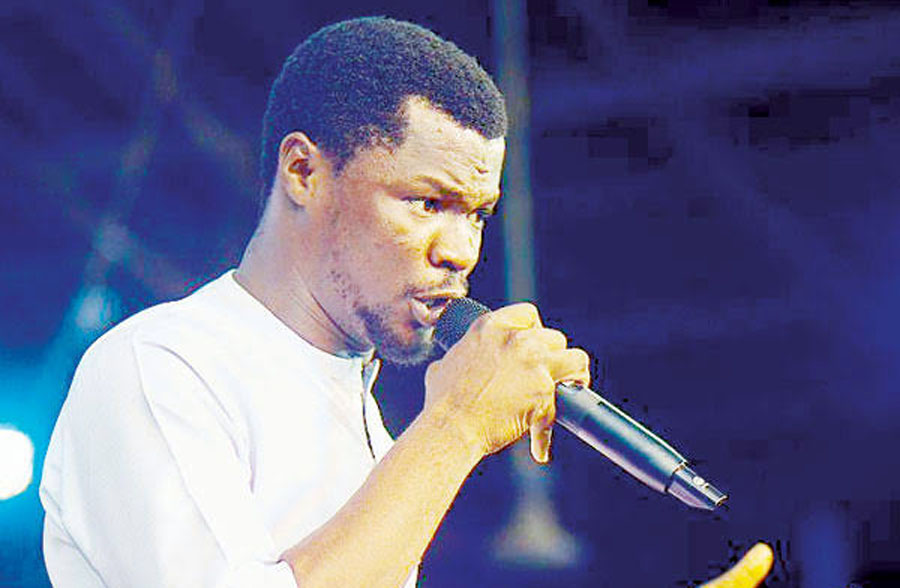
This same pattern was seen in the overburdening financial responsibilities borne by popular gospel singer Olayemi Bayonile Bolaji, aka Toluwanisings, who suddenly slumped and died a few weeks ago after complaining of a nagging headache and tiredness. A good family man, Toluwanisings had reportedly performed all night at a show and slumped in the morning while about to take his two daughters to school.
Uhnm, the multi-talented grass-to-grace Toluwanisings is dead, and has taken the unused nine of his 10 talents back to his creator. Leaked voice notes from the members of Toluwanisings’ maternal and paternal families portray poverty as a cancer that shreds the mind. A friend of mine, resident in London, Olufunso Titus, sent the voice notes and some videos to me. I managed to listen to a few – those were the ones by his maternal auntie, her son, Taye, his uncle, Tunde (I cover my own Tunde with the blood of Jesus), and another male member. The recordings were thoroughly devastating.
The one by his auntie – the alleged younger sister of his mother – was done before Toluwanisings died. It was squarely addressed to him. Her ranting was an oration of heartlessness and godlessness. The voice note by her son, Taye, was worse; it brimmed with satanic verses. In the voice note, Taye said all that Toluwanisings did for him was no big deal, blaming the singer’s wife for the crisis surrounding his burial. Two voice notes by one Babatunde, a supposed uncle, displayed ingratitude in rainbow colours, just as another one by an unidentified family member was maggoty.
In all the voice notes, Toluwanisings was heard creaking under the yoke of financial requests that saw him buy SUVs, a refrigerator, a tricycle, and send more millions of naira to Taye in the UK, despite having sent N6m to him earlier on. Despite granting their crazy financial requests, the maternal family members kept asking for more, and yet guilt-tripped him like he had done nothing.
In some voice notes, Toluwanisings promised to sell some cars to fund Taye’s stay in the UK with his pregnant white wife. The 34-year-old singer lamented that the financial pressure being piled upon him had affected his health, and that it had resulted in him consulting a therapist. He urged Taye, 31, to man up by finding a way to cope with life in the UK.
In all his voice notes, Toluwanisings was shockingly respectful and restrained, a reflection of his accommodating disposition. Also, his wife has maintained dignified silence since the show of shame starring mother, son, and uncles began.
I daresay the human body is not an inexhaustible machine, and the demands of people can oftentimes become tools of self-destruction. The dead are soon forgotten; ẹní kú, ni tì ẹ̀ gbé. Toluwanisings is dead, and the Oliver Twists in his family have moved on.
Anyone who listened to the online voice and video recordings of Toluwanisings begging his maternal family members not to kill him with financial burdens, and the unending requests for more and higher financial aid by his relatives, would understand how the mind of Judas worked. The maternal relatives of Toluwanisings were a brood of greedy ingrates. They have elevated guilt-tripping into an art more brutal than murder.
However, beyond the greed and ingratitude of Mama Taye, Taye, Tunde and others, lay a venom of envy and jealousy. It is their greed and ingratitude that many members of the public see; I see envy and jealousy at the root of their greed and ingratitude.
Neither envy nor jealousy is inherently evil. Both are natural human emotions. However, they have different psychological foundations, and either can become destructive when left unchecked.
According to Merriam-Webster Dictionary, envy “is a painful or resentful awareness of an advantage enjoyed by another joined with a desire to possess the same advantage”. It is a feeling of discontent, resentment or inadequacy arising from another person’s possession, achievement, quality or advantage that you desire. For example, when envious Richard sees his friend’s new house, pronto, his own house suddenly becomes a rathole.
READ ALSO:
- Two Sentenced to Death in Osun, Maina’s Son Finally Heads to Prison
- EFCC Drags Fuji Musician to Court Over Alleged ₦21.2m Fraud
- ‘Tinubu Graduated in 1979, You Arrived in 1985’: Omowaiye Challenges Pearse Over CSU Claims
Jealousy, on the other hand, says Collins Dictionary, generally involves the fear of losing something or someone you already have, particularly to a rival.
There is, however, a useful distinction between what psychology calls Benign Envy and Malicious Envy. The former is when I admire what you have and feel motivated to achieve something similar. But Malicious Envy is when Richard resents what his friend has, and I would rather see his friend lose it than improve his own circumstances. Remember what the brothers of Joseph did to him?
Jealousy becomes dangerous when it is possessive, controlling, intimidating, and surveilling. People become jealous or envious because of insecurity, social comparison, entitlement, familiarity and proximity, fear of losing affection or status, and scarcity mentality, which derives from the belief that other people’s success diminishes theirs.
Jealousy reared its bald head when relatives, including Taye, frontally attacked Irawomitan, Toluwanisings’s wife, accusing her of not being there with them when the singer was struggling. Taye’s mother insinuated that someone was behind Toluwanisings’ complaints of being overburdened by financial requests. Another relative guilt-tripped and gaslit the singer for not buying a TV for Mama Taye after he had spent millions on her son abroad.
Sadly, they see his wife as a rival competing with them for his affection, attention and financial resources. The maternal relatives appear jealous of Toluwanisings’ new family hierarchy, which places his wife as the closest person to him. In some families, relatives accept this transition gracefully, but in some others, the Third World War may be around the corner.
For telling her son to look for a job in the UK, Mama Taye recalled when she secured police bail for Toluwanisings when he was young. That act, in her estimation, qualified her son and family members to be leeches in the armpits of Toluwanisings. Mama Taye’s song of sorrow was an inability to appreciate the singer’s selfless sacrifice.
Entitlement becomes malicious envy when people who have known someone from humble beginnings find it difficult to reconcile that person’s present prosperity with their own circumstances. They remember the struggling young man they once knew. Suddenly, he becomes rich. Rather than simply appreciate his progress, they begin to regard his prosperity as an entitlement that should be shared according to their expectations.
Malicious envy is when you admire Elon Musk, Aliko Dangote, Mike Adenuga, Lionel Messi, LeBron James, Jay-Z, etc., without any emotional disturbance, but you begin to vibrate with envy when a childhood friend or relative becomes successful. Many friends and relatives find other people’s successes uncomfortable because they cannot understand why somebody who started from the same humble beginnings as them now enjoys a significantly better life.
One of my friends is perpetually like that. I recently discovered a distant relative with such a streak. I think everyone does have such friends and relatives. And, I tell you what: such malicious friends and relatives do not go far in life. They are like ponds; stagnant, stale and smelly.
Adieu, Toluwanisings. Rest in peace.
///
Email: tundeodes2003@yahoo.com
Facebook: @Tunde Odesola
X: @Tunde_Odesola
Toluwanisings: Envy + Jealousy = Wickedness
Opinion
Saudi Executions: Truth Behind Viral Kissing Claim
Saudi Executions: Truth Behind Viral Kissing Claim
A Muslim scholar, Mallam Ibrahim Agunbiade, has urged the public to exercise caution over viral claims that two Bangladeshi nationals executed in Saudi Arabia were a married couple killed for kissing inside the Grand Mosque in Makkah, saying available official information does not establish the allegation.
In an article dated October 22, 2026, Agunbiade, a member of Al-Rabwa Islamic Propagation in Riyadh, Saudi Arabia, said the execution of the two Bangladeshis on October 14 had generated widespread controversy, particularly on social media, where claims about the circumstances of their deaths circulated without sufficient verification.
He said the Saudi Ministry of Interior announced that the individuals, identified as Nazrul Islam Abdul Basir and Siti Akhtar, also known as Sweety Akhtar, had been convicted of committing an indecent act inside a mosque in Makkah and sentenced to death under ta’zir, a category of punishment determined under the applicable Islamic legal framework.
According to Agunbiade, the Saudi authorities stated that the judgments had received the necessary judicial approval and that a royal order had authorised the executions.
However, he noted that the ministry’s announcement did not specify the precise act for which the two were convicted or state that they were executed for kissing on the forehead, as alleged in viral social media posts.
The scholar said the distinction was important because claims that the deceased were a married couple who had been punished for kissing inside the Grand Mosque had not been substantiated by the publicly available official statement.
Citing a report published by Bangladesh’s The Daily Star on October 20, Agunbiade said a confidential consular memorandum reportedly indicated that the two were not married but had worked as cleaners for the same company in Saudi Arabia.
He added that the memorandum reportedly stated that Nazrul was detained in August 2023 under Saudi Arabia’s cybercrime law, while Sweety was detained the following day over an allegation of adultery.
Agunbiade said the available information did not explain how the earlier allegations related to the offence subsequently cited in the Saudi government’s execution announcement.
READ ALSO:
- Shettima Blasts States Over Power Woes, Says Govs Must Stop Waiting for Abuja
- Fourth Gas Leak in Six Months: Over 100 Ogun Pupils Hospitalised, Schools Shut as Parents Panic
- Nigerian Journalist Sentenced to 4 Years Over Facebook Post Criticising Police
He further disclosed that Nazrul’s parents had told Bangladeshi media that their son was unmarried and that the family did not know the woman involved.
The Bangladeshi government has reportedly requested copies of the court judgments and further clarification from Saudi authorities, according to the account presented by the scholar.
He said the documents would be important in establishing the precise offences, the evidence considered by the courts and the circumstances surrounding the convictions.
Until the judgments and additional official explanations become available, Agunbiade advised the public against presenting the claims that the pair were newlyweds or were executed specifically for kissing inside the mosque as established facts.
Islamic teachings on the sanctity of mosques
Beyond the controversy surrounding the executions, Agunbiade emphasised that Islam attaches great importance to the sanctity of mosques and appropriate conduct in places of worship.
He cited Qur’an 72:18, which states: “And the mosques are for Allah, so do not invoke anyone along with Allah.”
According to him, the verse underscores the sacred purpose of mosques as places devoted to the worship of Allah.
He also referred to a narration in Sahih Muslim concerning the purposes of mosques, including the remembrance of Allah, prayer and the recitation of the Qur’an.
Agunbiade said Muslims should respect these sacred spaces and avoid behaviour that distracts worshippers or undermines their religious purpose.
However, he cautioned against using religious teachings to justify the circulation of unverified allegations or drawing conclusions about a criminal case without sufficient evidence.
Qur’an warns against spreading unverified information
The scholar said the controversy also highlighted the importance of verifying information before sharing it, particularly when reports involve criminal allegations, religious sensitivities and the lives of individuals who can no longer respond to claims made about them.
He cited Qur’an 49:6, which instructs believers to investigate information brought by an unreliable source before acting upon it.
The verse states: “O you who believe, if a rebellious person comes to you with information, investigate it.”
READ ALSO:
- Hyundai Unveils Mufasa, Grand Creta SUVs to Strengthen Nigeria Line-up (Updated)
- NAFDAC Busts Illegal Herbal Factory in Lagos, Arrests Manager Over Fake Registration Number
- NELFUND Warns Schools: Student Loans Are Voluntary, Not Compulsory
Agunbiade also cited a narration in the introduction to Sahih Muslim, commonly numbered Hadith 5, which warns that a person may be considered a liar if they narrate everything they hear.
He said the teachings were particularly relevant in an era when sensational claims could spread rapidly across social media platforms, often reaching large audiences before journalists or other responsible parties had established their authenticity.
According to him, journalists, religious commentators and members of the public have a duty to distinguish verified facts from allegations, speculation and unconfirmed accounts.
He warned that repeating a claim without checking its authenticity could mislead the public, damage reputations and inflame religious or social tensions.
Calls for clarification should not be confused with rejection of justice
Agunbiade also addressed questions surrounding the judicial proceedings that resulted in the executions, saying the reported request by the Bangladeshi government for copies of the judgments and further clarification deserved attention.
He cited Qur’an 16:90, which states that Allah commands justice and excellence, to underline the importance of fairness and accountability.
The scholar argued that seeking clarification about a criminal case should not automatically be interpreted as rejecting a court’s judgment.
Rather, he said, understanding the precise offence, the evidence presented and the circumstances of the proceedings was essential to an informed assessment of the case.
He also cautioned against drawing conclusions from the timing of the executions alongside international political developments, saying that the coincidence of events did not, by itself, establish a connection.
Any such suggestion, he maintained, would require credible supporting evidence.
Facts must be separated from speculation
Agunbiade concluded that the information presented in the Saudi Ministry of Interior’s announcement established that two Bangladeshi nationals had been executed after being convicted of an indecent act inside a mosque in Makkah.
However, he stressed that the announcement, as described in his article, did not substantiate the viral claim that the two were a married couple executed specifically for kissing on the forehead inside the Grand Mosque.
He called for responsible reporting and urged the public to avoid treating unverified social media narratives as confirmed accounts of the case.
The scholar said respect for the sanctity of mosques should go hand in hand with respect for truth, justice and responsible journalism.
As questions remain about the precise offence and the circumstances of the proceedings, the full court judgments and further official clarification from the relevant authorities would be necessary to establish a more complete account of the case.
The allegations circulating online should therefore be distinguished from the information confirmed in the publicly described official announcement, pending the release of further details.
Saudi Executions: Truth Behind Viral Kissing Claim
Opinion
OPINION: Who Still Needs the NYSC? — By Bola Bolawole
OPINION: Who Still Needs the NYSC? — By Bola Bolawole
The recent abduction of National Youth Service Corps (NYSC) members travelling from Ibadan, Oyo State, to orientation camps in the South-East and South-South has once again raised a difficult question: does Nigeria still need the NYSC in its present form?
The question is not new, but the latest incident has made it more urgent.
On October 1, two buses conveying NYSC members and other passengers from Ibadan to Uyo, Akwa Ibom State, and Bende, Abia State, were attacked by suspected armed men in Imo State. The police subsequently reported that 10 victims had been rescued, while efforts continued to establish the exact number of people still in captivity.
If the abducted young Nigerians travelled from Ibadan, some of them could be from Oyo and neighbouring South-West states, although victims may also have come from other parts of the country. The incident should therefore concern Nigerians collectively.
Governors whose citizens are affected should not leave the matter entirely to the Federal Government. Even where they do not directly control the police or military operations, they can support affected families, communicate with them and provide whatever assistance falls within their powers.
Questions over police handling
There are also serious questions about how information concerning the operation was handled.
The Imo State Commissioner of Police, CP Audu Bosso, disclosed that security operatives had located the kidnappers’ camp but were unable to immediately advance because intelligence indicated that the area had been mined with explosives. He also spoke about the use of drones and preparations for further operations.
That raises an important question about the disclosure of sensitive operational information while a rescue operation is still ongoing.
Security agencies must communicate with the public, but such communication should not inadvertently expose operational strategies, locations or vulnerabilities that could assist criminals.
The media, too, must exercise responsibility. The desire to break news or attract traffic should never override the safety of victims or security personnel.
Why was NYSC established?
The National Youth Service Corps was established by Decree No. 24 of May 22, 1973, following the Nigerian Civil War.
According to the NYSC, the scheme was created to promote national unity and develop common ties among Nigerian youths. Its broader purpose was to encourage young Nigerians to serve communities outside their immediate cultural and geographical environments.
The idea was understandable.
Nigeria had just emerged from a devastating civil war. The wounds were still fresh, distrust among different sections of the country was considerable, and there was an urgent need to rebuild bridges.
READ ALSO:
- Ondo High Chief Shot Dead During Colleague’s Burial, One Arrested
- ‘We Are Ignorant, We Don’t Read’ — NAFDAC DG Raises Food Safety Concerns
The NYSC was therefore conceived as an instrument of reconciliation, integration and national development.
But more than five decades later, we must ask whether the circumstances that gave birth to the scheme still exist in the same form — and whether the scheme is achieving its original objectives.
Fifty-three years later, what has changed?
The NYSC has undoubtedly produced benefits.
Millions of young Nigerians have lived and worked outside their home states, interacted with people from different ethnic and religious backgrounds and contributed to communities through their primary assignments and community development projects.
For many Nigerians, NYSC remains one of the few institutions where young people from different parts of the country experience Nigeria beyond their immediate environments.
But the challenges have also become enormous.
Over the years, corps members have died in road accidents while travelling to their places of primary assignment or during their service year. More recently, insecurity, terrorism, banditry and kidnapping have introduced an additional and frightening dimension to the risks confronting young Nigerians serving their country.
The latest abduction therefore forces us to ask:
For how long should young graduates be compelled to travel long distances and serve in places where their safety cannot be guaranteed?
And more importantly:
Is the present structure of the NYSC still the best way to promote national unity?
Has the NYSC achieved its central objective?
After more than five decades of the NYSC, Nigeria continues to struggle with ethnic suspicion, regional grievances and demands for greater autonomy or restructuring.
The emergence of groups such as MASSOB and IPOB in the South-East, alongside various self-determination and restructuring movements in other parts of the country, suggests that the challenge of national cohesion has not disappeared.
The South-West, too, has witnessed the emergence of different groups advocating varying forms of restructuring and self-determination.
These developments do not necessarily mean that the NYSC has failed. National integration is far more complicated than a single government programme.
But they should compel policymakers to examine whether the original model remains adequate for today’s Nigeria.
Reform rather than sentiment
The answer may not necessarily be to abolish the NYSC overnight.
There may be a strong case for fundamentally reforming it.
A modern national service programme could place greater emphasis on skills acquisition, technology, entrepreneurship, healthcare, education, disaster response and community development.
The compulsory nationwide posting system could also be reviewed, particularly where security conditions make deployment dangerous.
Nigeria should not continue doing something simply because it has been done for 53 years.
At the same time, we should not discard an institution simply because it has weaknesses. The real question should be: what works, what no longer works, and what should replace it?
Time to rethink government agencies
The NYSC debate should also be part of a broader conversation about the cost and effectiveness of government institutions.
Nigeria has numerous Ministries, Departments and Agencies whose functions sometimes overlap, while some institutions have become largely ineffective.
The Federal Government should therefore revisit recommendations on restructuring and rationalising government agencies, including the Oronsaye reforms.
The objective should not merely be cutting institutions for the sake of cutting them. It should be about creating a leaner, more efficient government that delivers better services to Nigerians.
Who still needs the NYSC?
That is ultimately the question.
The NYSC was born out of the circumstances of post-Civil War Nigeria. Its founders wanted young Nigerians to develop common bonds and a stronger sense of national identity. Those objectives remain desirable.
But the Nigeria of 2026 is not the Nigeria of 1973.
Our security challenges are different. Our population is different. Our economy is different. Our young people face different challenges. Technology has transformed communication and interaction.
The government must therefore have the courage to ask whether the NYSC should continue unchanged, be radically reformed, or eventually replaced with a more effective national service framework.
What we cannot continue to do is expose young Nigerians to avoidable danger simply because a policy was created more than half a century ago.
National unity is important. But so is the safety and dignity of the young Nigerians who are expected to serve the nation.
Bola Bolawole, a former Editor of PUNCH Newspapers, Chairman of its Editorial Board and Deputy Editor-in-Chief, writes columns for Nigerian newspapers.
Source note: The opinion is adapted for Newstrends.ng from Bola Bolawole’s October 7, 2026 article. The NYSC’s official account confirms that the scheme was established by Decree No. 24 of May 22, 1973, principally to promote national unity and common ties among Nigerian youths.
OPINION: Who Still Needs the NYSC? — By Bola Bolawole
-

 metro2 days ago
Chibok Girl Escapes After Eight Years in Boko Haram Captivity, Reveals 20 Classmates Still Held
-

 metro1 day ago
‘I Paid My Ex-Husband Before He Slept With Me’ – Islamic Preacher Kaola Makes Shocking Revelation
-

 Politics2 days ago
Kwankwaso Made Me Swear on Qur’an to Join APC After Election Victory — Gov Yusuf Reveals Tinubu Deal
-

 Politics3 days ago
‘Makinde Should Call Wike Uncle, Not Me’ – Ogun Fires Back
-

 News2 days ago
How I Linked Wike With Tinubu After His Son’s Death – Donu Kogbara Reveals
-

 Politics1 day ago
2027: Makinde Invokes 1966 Coup, Questions Obi-Kwankwaso Ticket
-

 Education1 day ago
South-West Leaders Challenged to Emulate Kwankwaso, Invest in Education of Poor Children
-

 Politics2 days ago
Shehu Sani Warns Northerners Against Celebrating Abuja Attack on Tinubu, Fears Ethnic Reprisals