

Business
NNPCL: We Introduced ₦66 Fuel Discount Before FG’s Announcement
NNPCL: We Introduced ₦66 Fuel Discount Before FG’s Announcement
The Nigerian National Petroleum Company Limited (NNPCL) has said it introduced a ₦66-per-litre petrol discount on October 1, before the Federal Government announced a separate fuel price-relief measure aimed at cushioning Nigerians against rising petrol prices.
The national oil company said the initial discount was introduced to commemorate Nigeria’s 66th Independence Anniversary and would remain in effect until October 31, 2026, at NNPC Retail filling stations nationwide.
NNPCL’s clarification followed the Federal Government’s announcement of a 30-day petrol discount arrangement on October 8, under which the company’s retail arm would temporarily forgo its profit margin and sell petrol at cost to provide relief to consumers.
In a statement issued on Friday, October 9, NNPCL’s Chief Corporate Communications Officer, Andy Odeh, said the company’s earlier discount was a customer-relief initiative and should not be interpreted as a restoration of petrol subsidy.
“Before the announcement, NNPC Limited had introduced a sales discount on 1 October 2026 to commemorate Nigeria’s 66th Independence Anniversary. This will now continue until 31 October 2026 across NNPC Retail stations nationwide,” the company said.
NNPCL explained that the initiative was designed to ease the financial pressure on motorists and other customers amid rising global crude oil prices and their impact on domestic petrol costs.
READ ALSO:
- ‘Mad People’: Presidency Fires Back at Amaechi Over Tinubu Re-Election Remarks
- ‘What Happens on Day 31?’ Atiku Slams Tinubu’s 30-Day Fuel Discount as Election-Laced Package
- Ronaldo Breaks Silence on Portugal Row as Pelé, Maradona Comparison Sparks Meme Frenzy
The company stressed that the discount applied to its retail outlets and did not establish a uniform petrol price nationwide or change the market-based pricing framework governing petroleum products.
It also urged Nigerians not to confuse the temporary price reduction with the return of the fuel subsidy regime, which the Federal Government ended in May 2023.
The Federal Government’s separate intervention, announced by the Minister of Finance and Coordinating Minister of the Economy, Taiwo Oyedele, provides for NNPC Retail to forgo its retail profit margin for an initial 30-day period. Public transport operators are to receive priority under the arrangement.
The government has maintained that the new measure is not a subsidy because the discount is to be absorbed through NNPC Retail’s profit margin rather than funded by public revenue.
NNPCL said it would continue working with the Federal Government and other stakeholders to help cushion the impact of elevated fuel prices on households, businesses and the wider economy.
The clarification comes amid mounting concern over petrol prices and transportation costs, which have increased the financial burden on Nigerian households and businesses.
The company reaffirmed its commitment to reliable fuel supply, responsible customer service and clear communication about the scope and duration of its pricing initiatives.
NNPCL: We Introduced ₦66 Fuel Discount Before FG’s Announcement







Auto
Omoda and Jaecoo Enters Nigerian Market, Appoints HAP Autos as Official Dealer

Omoda and Jaecoo Enters Nigerian Market, Appoints HAP Autos as Official Dealer
- Five models unveiled as pre-sales begin, with petrol, hybrid and fully electric options
- Buyers get seven-year, 200,000-kilometre warranty
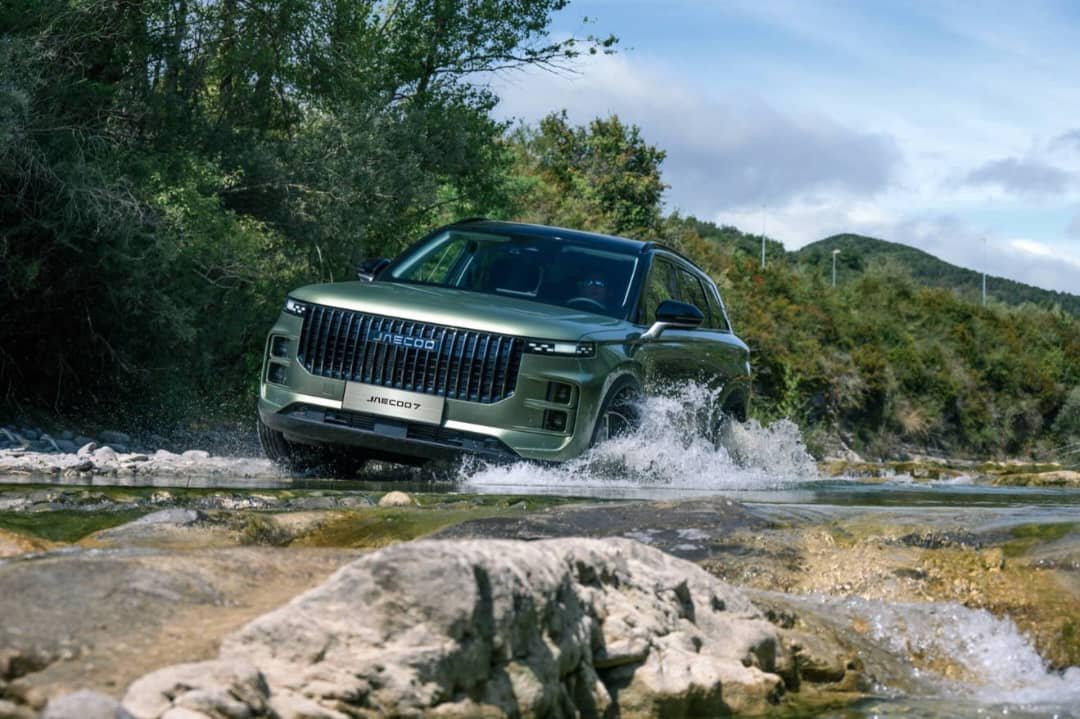
Nigeria’s automotive market is set for increased competition as global automotive brand OMODA&JAECOO makes its official entry into the country, appointing HAP Autos as its authorised dealer and opening pre-sales for five models spanning petrol, hybrid and fully electric powertrains.
The appointment marks the company’s formal arrival in Nigeria after months of anticipation, giving prospective buyers access to its vehicle portfolio through an officially recognised local dealership.
The Nigerian debut features five models: the JAECOO J5, JAECOO J7, flagship JAECOO J8 and the OMODA 5, which is available in both hybrid and fully electric versions.
The diverse line-up is designed to appeal to different categories of motorists, offering alternatives for buyers weighing fuel consumption, vehicle performance, charging infrastructure and long-term ownership costs.
One of the major attractions is the JAECOO J7, which has emerged as a strong performer in the United Kingdom’s new-car market.
The entire range is backed by a seven-year or 200,000-kilometre warranty, an ownership assurance aimed at boosting customer confidence in the brand’s Nigerian debut.
Although its entry into Nigeria is recent, OMODA&JAECOO has built a growing international presence. Its cumulative global sales have surpassed 1.4 million vehicles within three and a half years, spanning 80 markets.
Its expansion into the United Kingdom and other European markets has further strengthened its international profile, providing a platform for its latest push into Africa’s largest automotive market.
For HAP Autos, however, the partnership goes beyond introducing new vehicle models. The company says its priority is to establish an ownership experience built around reliable after-sales service, customer care and sustained support.
Its founders bring experience and interests spanning manufacturing, automotive operations, logistics and construction, which the company believes will help it understand and address the peculiar demands of vehicle ownership in Nigeria.
Speaking on the appointment and HAP Autos’ market strategy, its Managing Director, Ali Sharafeddine, said Nigerian motorists were looking beyond the vehicles themselves to the quality of support available after purchase.
“Nigerians are not short of options. The market is competitive, but what most people seek when buying a car is reassurance, knowing that throughout their ownership journey, there will be comprehensive support and a sense of belonging,” he said.
Sharafeddine explained that the decision to introduce OMODA&JAECOO was informed by the suitability of its engineering standards for the Nigerian market and HAP Autos’ determination to address customer concerns beyond the point of sale.
“We have brought in the OMODA and JAECOO brands because the engineering standards are ideal for this market, and we have built the entire structure of HAP Autos around what concerns our clients the most, which is everything that happens after the sale,” he added.
On the company’s warranty and customer service commitments, the managing director said the seven-year or 200,000-kilometre coverage reflected its determination to provide lasting value to customers.
“We want the confidence our customers feel at delivery to be reinforced by the service, attention and support they receive from us over time.
“We are determined to create a brand where clients can feel like they are part of a family, while also getting the utmost value, and we have made significant investments to ensure this,” Sharafeddine said.
Meanwhile, HAP Autos has introduced a limited-time introductory offer ahead of OMODA&JAECOO’s official launch event scheduled for later this month, giving prospective customers an early opportunity to explore the vehicles and place orders.
The brand also received an early introduction to an influential audience at the recently concluded 25th WIMBIZ Annual Conference.
As part of the engagement, an OMODA 5 EV was presented to WIMBIZ, alongside an engineering training initiative launched in collaboration with the brand’s affiliate company, Iron Products Industries (IPI).
The initiative is designed to provide training opportunities for eligible women within the WIMBIZ network, extending the partnership beyond vehicle sales to professional development and skills acquisition.
OMODA&JAECOO’s Nigerian operations will be anchored by HAP Autos’ flagship showroom at 31B Akin Adesola Street, Victoria Island, Lagos, where customers can inspect the vehicles and experience the models firsthand.
Prospective buyers can also book test drives through the company’s website, www.hapautos.com.
With five models spanning conventional and electrified powertrains, OMODA&JAECOO is positioning itself to compete in Nigeria’s evolving automotive market, while HAP Autos is betting that strong after-sales support and customer confidence will be central to building a sustainable presence.
Auto
Modern Vehicles, Smarter Technology: Why After-Sales Support Must Keep Pace

Modern Vehicles, Smarter Technology: Why After-Sales Support Must Keep Pace
As vehicles become increasingly sophisticated, the ability to maintain and repair them is emerging as a major test of automotive dealers’ capacity and commitment to customers. Beyond selling modern vehicles, dealers must invest in the technical expertise, diagnostic equipment and workshop infrastructure required to keep them running efficiently throughout their lifespan.
Today’s vehicles are equipped with electronic control units, advanced safety systems, digital instrument panels, sensors and increasingly complex powertrain technologies. While these innovations enhance performance, safety, comfort and convenience, they have also made vehicle maintenance more specialised and technically demanding.
Consequently, having experienced mechanics is no longer sufficient. Technicians must undergo continuous training to understand the specific technologies, electronic systems and mechanical configurations of the models they service.
Access to appropriate diagnostic equipment is equally critical. Modern diagnostic tools enable technicians to identify faults accurately, interpret vehicle system data and follow manufacturer-recommended repair procedures. Without the right equipment, troubleshooting can become time-consuming, less accurate and potentially more expensive for vehicle owners.
However, effective technical support goes beyond initial training and the provision of diagnostic tools. As vehicle models, electronic systems and software continue to evolve, technicians must have regular access to updated technical information, specialist guidance and opportunities to upgrade their skills.
This is particularly important in Nigeria, where the automotive market is gradually embracing increasingly sophisticated internal-combustion engine vehicles, hybrids and electric vehicles. The growing diversity of vehicle technologies presents fresh challenges for dealers, workshops and independent service providers.
For prospective buyers, assessing a dealer’s technical capacity should therefore form part of the vehicle purchasing decision.
Customers need to establish whether technicians are adequately trained to service their preferred models, whether manufacturer-approved diagnostic equipment is available and whether the workshop has the capacity to handle specialised electronic and mechanical repairs.
Dealers, on their part, must communicate their technical capabilities transparently, particularly where certain repairs require specialised facilities, manufacturer intervention or external technical support.
Ultimately, a comprehensive after-sales proposition must go beyond warranty coverage. It should encompass the human expertise, diagnostic technology, genuine spare parts and technical infrastructure required to support vehicles throughout their ownership lifecycle.
As automotive technology advances, investment in technical training and workshop capabilities must receive as much attention as the expansion of sales networks and the development of modern showrooms.
The future of automotive after-sales service in Nigeria will depend not merely on the sophistication of vehicles entering the market, but also on the industry’s ability to build the technical capacity and infrastructure needed to maintain them, ensure reliability and sustain customer confidence.
Business
NNPCL, MRS, Other Marketers Slash Petrol Prices Across Nigeria As Motorists Get Fresh Relief
NNPCL, MRS, Other Marketers Slash Petrol Prices Across Nigeria As Motorists Get Fresh Relief
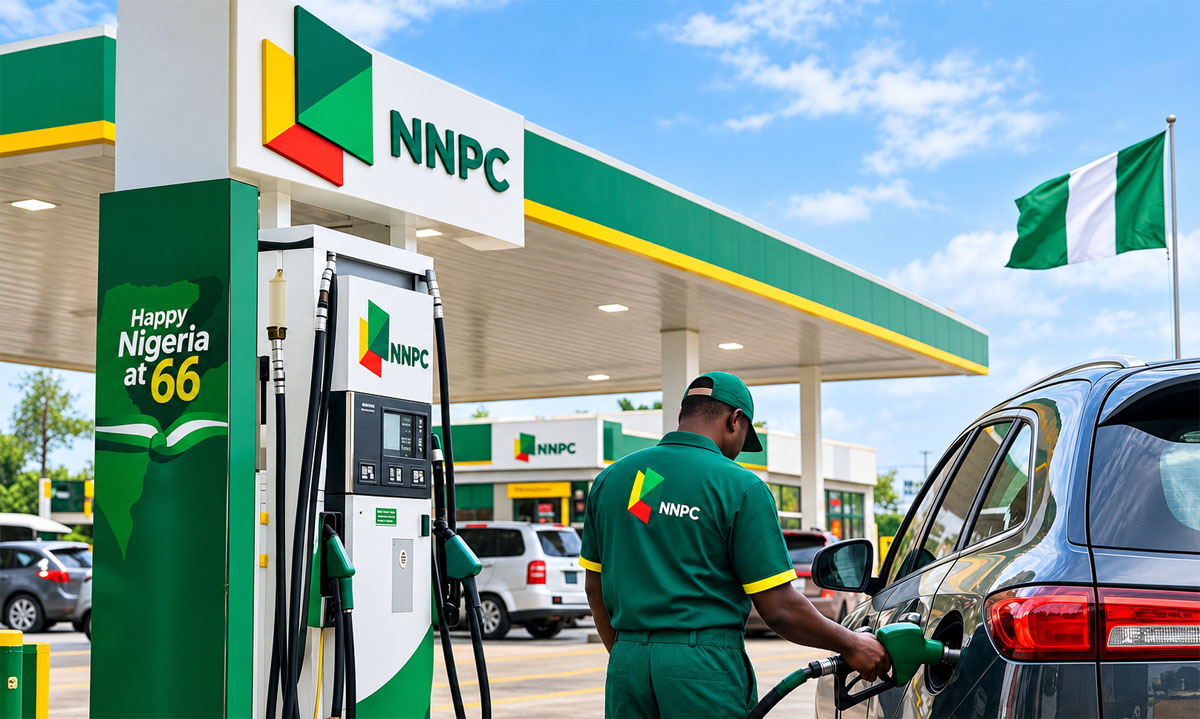
LAGOS, Nigeria — Motorists and transport operators across Nigeria are beginning to enjoy fresh relief as the Nigerian National Petroleum Company Limited (NNPCL), MRS Oil Nigeria and other major petroleum marketers reduce petrol pump prices in response to falling supply costs.
The latest adjustments have seen petrol prices drop at several filling stations, particularly in Lagos and Abuja, following reductions in depot and ex-gantry prices, alongside easing import landing costs.
Market reports indicate that the downward movement has intensified competition among fuel retailers, with some filling stations adjusting their pump prices to attract customers.
NNPCL retail outlets in Lagos are reportedly selling petrol at between ₦1,289 and ₦1,300 per litre, while prices at some of its stations in Abuja have dropped to approximately ₦1,325 per litre.
Other northern cities, including Kaduna and Sokoto, have also reportedly witnessed price adjustments.
Meanwhile, private petroleum marketers, including MRS, Ardova, NIPCO and Rainoil, have also reviewed their pump prices, although the rates differ across locations.
In Lagos, MRS outlets are reportedly selling petrol at approximately ₦1,330 per litre, while Ardova stations have been quoted around ₦1,350 per litre.
In Abuja, petrol prices at different filling stations reportedly range between ₦1,325 and ₦1,420 per litre, depending on the operator and prevailing supply costs.
The latest reductions have been linked to falling petroleum product prices at the supply level, particularly adjustments in refinery and depot benchmarks.
Industry reports indicate that recent movements in Dangote Petroleum Refinery’s gantry prices and reductions in depot prices have created room for marketers to review their retail rates.
Depot prices have reportedly hovered around ₦1,175 to ₦1,215 per litre in recent market checks, although actual costs vary among suppliers.
Another factor contributing to the reductions is the decline in the landing cost of imported petrol compared with the higher levels recorded towards the end of September.
The softer international crude oil market has also helped ease some of the cost pressures affecting petroleum product supply and distribution.
Despite the general downward movement, petrol prices remain different across filling stations and locations.
Market operators attribute the differences partly to existing stock purchased at higher prices, transportation expenses, distribution costs and individual marketers’ pricing policies.
Consequently, some filling stations may take longer to adjust their pump prices until their existing inventory is exhausted and replaced with newer supplies purchased at lower rates.
For motorists, commercial drivers and businesses that depend heavily on petrol, the latest reductions offer some relief amid persistent concerns over transportation and operating costs.
However, consumers will be watching closely to see whether further reductions in depot and refinery prices translate into additional savings at filling stations across the country.
NewsTrends.ng advises motorists to confirm prevailing pump prices at their preferred filling stations, as retail rates may change depending on location and supply conditions.
Have you noticed a reduction in petrol prices in your area? Share your location and the current price per litre in the comments section.
NNPCL, MRS, Other Marketers Slash Petrol Prices Across Nigeria As Motorists Get Fresh Relief
-

 metro3 days ago
Hoodlums Descend on Tinubu’s Praise Singer Rarara at Abuja Mosque, Tear His Clothes
-

 metro1 day ago
Chibok Girl Escapes After Eight Years in Boko Haram Captivity, Reveals 20 Classmates Still Held
-
 Education2 days ago
UNILAG Gets 10 CNG Buses as FG Expands Campus Transport Scheme to 60 Institutions
-

 metro2 days ago
Jimmy Odukoya Sues Sister, Church Trustees Over Removal as Senior Pastor
-

 Politics18 hours ago
Kwankwaso Made Me Swear on Qur’an to Join APC After Election Victory — Gov Yusuf Reveals Tinubu Deal
-
 Politics2 days ago
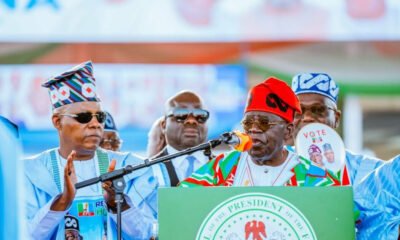
2027: Tinubu Urges Oyo Voters to Stick With APC, Promises More Development
-

 metro3 days ago
Tinubu’s Chicago University Row Deepens as Fresh Findings Cast Doubt on Pearse’s Lecturer Claims
-

 Politics2 days ago
‘Makinde Should Call Wike Uncle, Not Me’ – Ogun Fires Back