

News
Obasanjo Backs Higher Oil Derivation, Says 13% Is Only the Beginning
Obasanjo Backs Higher Oil Derivation, Says 13% Is Only the Beginning
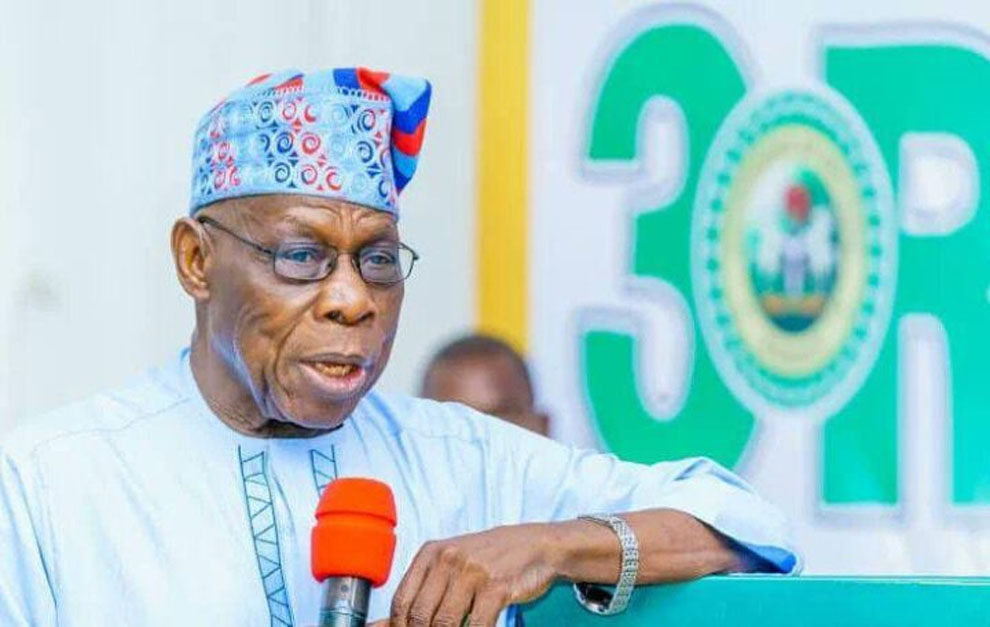
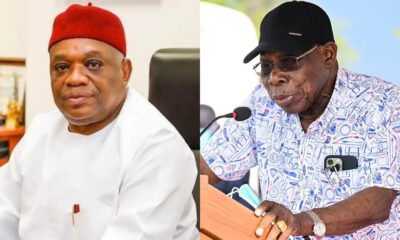
Former President Olusegun Obasanjo has backed calls for an increase in the 13 per cent oil derivation fund allocated to oil-producing states, saying the existing arrangement should be regarded as a starting point rather than a final settlement.
Obasanjo made the position known on Monday during the inauguration of the Crude Distillation Unit (CDU) of the $1 billion Azikel Refinery at Obunagha in Yenagoa Local Government Area of Bayelsa State.
Addressing Bayelsa State Governor Douye Diri, the former president acknowledged that oil-producing states and communities had yet to receive what he considered a fair share of the benefits from the exploitation of their natural resources.
“You are right that the states and oil-producing communities have not got a fair deal so far. Thirteen per cent is the beginning. You can continue to talk,” Obasanjo said.
His remarks reinforced renewed demands for a review of Nigeria’s revenue-sharing arrangement, particularly from the Niger Delta, where crude oil production has remained central to the national economy.
Under the existing constitutional framework, oil-producing states receive at least 13 per cent of revenue accruing to the Federation Account directly from natural resources, in line with the principle of derivation.
However, the allocation has remained a source of debate, with stakeholders in the oil-producing region arguing that the revenue does not adequately address the environmental damage, infrastructure challenges and economic difficulties associated with petroleum exploration.
Diri also criticised the existing arrangement, insisting that communities where crude oil is extracted should have a greater say in how the resources are managed and how the resulting wealth is distributed.
READ ALSO:
- How Bandits Demand ₦300m Ransom for Abducted Kaduna Couple, Baby in Viral Video
- 2027 Elections: Atiku Demands Names of INEC Ballot Printers, Questions Secret Contracts
- ₦8.7bn Erosion-Control Budget Gap Raises Questions as Anambra Gullies Expand
The governor argued that the region had endured years of agitation over what residents perceive as an imbalance between the resources extracted from their communities and the benefits they receive.
He also faulted the Land Use Act, arguing that the distinction between state control of surface resources and Federal Government control of resources beneath the ground places oil-producing communities at a disadvantage.
Diri maintained that the Niger Delta was not demanding exclusive ownership of the proceeds from petroleum production but wanted to become a more active participant in decisions affecting the industry.
“We do not want to take all to ourselves. We just want to be co-players in determining how it is done. Thirteen per cent is not enough for the states,” he said.
The governor urged young people in Bayelsa to acquire relevant technical and professional skills to benefit from industrial investments, including the refinery project.
He warned that the presence of major oil and gas facilities would have limited benefits for local communities if residents lacked the expertise needed to secure employment and participate in their operations.
The refinery project, owned by Azikel Petroleum under the Azikel Group, is expected by its promoters to produce about 2.5 million litres of petrol and two million litres of diesel daily, alongside other petroleum products, when completed.
The installation of the crude distillation unit marks a significant stage in the development of the facility, whose foundation was laid by Obasanjo about eight years ago.
The former president commended Azikel Group President, Azibapu Eruani, for sustaining the project and urged him to complete the refinery within the next 12 months.
Obasanjo also acknowledged the contributions of the African Finance Corporation and the African Export-Import Bank (Afreximbank), calling for continued support to bring the investment to completion.
He praised Diri for supporting the project and commended the Bayelsa government for what he described as the productive use of the state’s available revenue.
Eruani said the refinery was conceived to position Bayelsa and the wider Niger Delta as active participants in the petroleum industry rather than merely suppliers of crude oil.
He expressed confidence that the project would support industrialisation, create economic opportunities and strengthen local participation in the oil and gas value chain.
The refinery initiative comes amid continuing debates over resource control, revenue allocation and development in the Niger Delta, with calls for oil-producing communities to receive greater economic benefits from the natural resources extracted from their territories.
Obasanjo Backs Higher Oil Derivation, Says 13% Is Only the Beginning







News
BREAKING: Lagos Senator Idiat Adebule Dies at 56, Hours After Birthday Celebration
BREAKING: Lagos Senator Idiat Adebule Dies at 56, Hours After Birthday Celebration
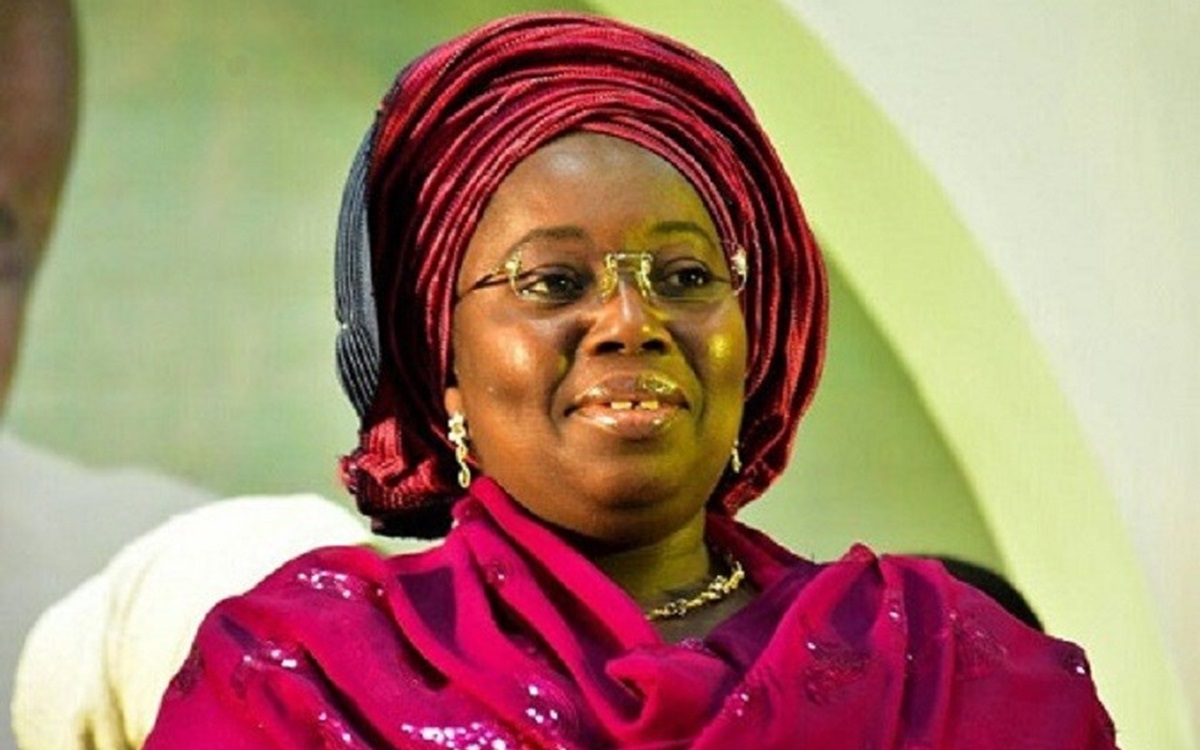
The Senator representing Lagos West Senatorial District, Dr Idiat Adebule, is dead, barely 24 hours after celebrating her 56th birthday.
Adebule, a former Deputy Governor of Lagos State and chieftain of the All Progressives Congress (APC), reportedly died at a private hospital in the Government Reserved Area (GRA), Ikeja, Lagos.
A source close to the late senator confirmed her death to Daily Trust, although the circumstances and cause of her death were not immediately disclosed.
Medical personnel at the hospital were also said to have confirmed her death.
Her demise came amid preparations for the Lagos West Senatorial campaign rally scheduled for Monday, November 30, at the Police College, GRA, Ikeja.
The rally, which was expected to attract APC leaders and supporters, has now been postponed following the development.
In a postponement notice, the Lagos State Governorship Campaign Council of the APC said a new date for the rally would be announced in due course, while apologising for any inconvenience the decision might cause.
The notice was signed by the Lagos APC spokesman, Mogaji (Hon.) Seye Oladejo.
Adebule, who was seeking re-election for a second term in the Senate, celebrated her 56th birthday on Friday and took to her X account to express gratitude to Allah for the gift of life.
In her birthday message, she wrote: “Today, I return all glory and adoration to Almighty Allah for His infinite mercy, grace and the gift of life as I celebrate another year.
“I am deeply grateful for His guidance, protection and countless blessings. It is my prayer that this new age brings me renewed vigour to continue serving humanity and contributing meaningfully to the growth and development of Lagos West, Lagos State and our dear nation. Alhamdulillah for another year.”
News
Adeleke Begins Second Term, Pledges Industrialisation, Jobs, Infrastructure
Adeleke Begins Second Term, Pledges Industrialisation, Jobs, Infrastructure
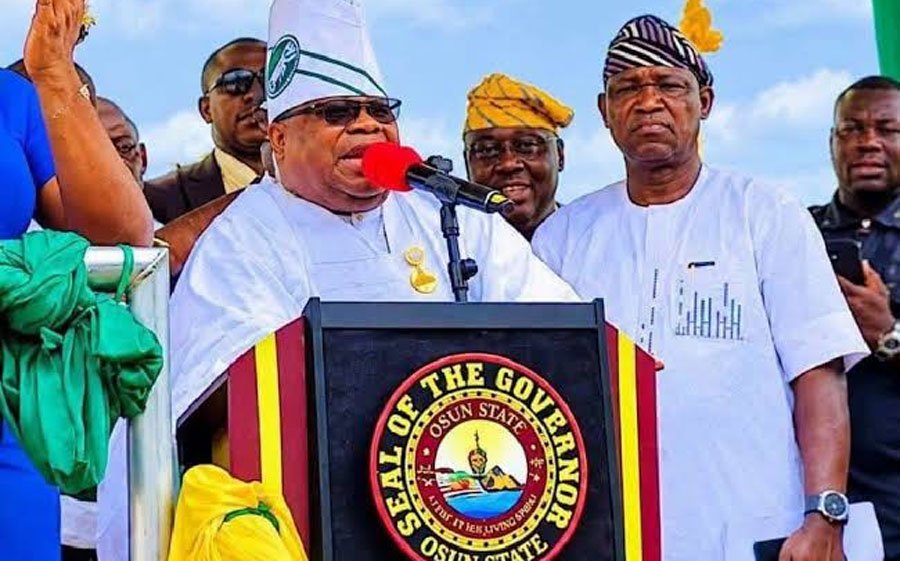
Osun State Governor Ademola Adeleke has been sworn in for a second term in office, pledging to pursue economic transformation, industrialisation, job creation, infrastructure development and improved welfare for residents.
Adeleke took the oath of office on Friday, November 27, 2026, at the Osogbo Township Stadium, marking the beginning of another four-year tenure following his re-election in the August 15 governorship election.
His deputy, Kola Adewusi, had earlier been sworn in at the inauguration ceremony.
The state’s Chief Judge, Justice Oyebola Adepele-Ojo, administered the oath to Adeleke at about 11:35 a.m., with the ceremony lasting approximately four minutes.
Vice-President Kashim Shettima, who represented President Bola Ahmed Tinubu, was among the dignitaries at the event, alongside former Osun governor Adebisi Akande, former Senate President Bukola Saraki and other political leaders and traditional rulers.
In his inaugural address, Adeleke said his administration would work to move Osun away from dependence on the civil service towards an industrialised economy capable of generating sustainable revenue and employment.
He said the government would target agro-processing factories, industrial parks across the state’s districts, free trade zones, tourism and sports development, while creating a more conducive environment for private investment.
The governor said citizens’ welfare, infrastructure expansion, agricultural transformation, digital economy development, wealth creation and the empowerment of young people and women would feature prominently in his second-term agenda.
He also pledged to complete ongoing projects and embark on new ones, particularly in water supply, electricity, education and healthcare.
READ ALSO:
- Ex-Governor Jailed 25 Years for Murder of Pregnant Lover
- Plateau Attack: Death Toll Rises to 22 as Gunmen Kill Residents in Fresh Bloodbath
- Niger Communal Violence: Bago Pledges ₦148m as 74 People Die in Kambari-Fulani Clash
Adeleke said major waterworks across the state would be rehabilitated, while his administration would seek a lasting solution to water challenges in Ilesa.
On electricity, he announced plans to establish the Osun State Electricity Regulatory Commission, following the state power sector law he signed earlier this year, saying stable electricity supply was critical to economic growth and industrial development.
He also promised to establish digital hubs in each of Osun’s three senatorial districts to expand employment opportunities and support growth in the digital economy.
In education, the governor pledged to recruit additional teachers, accelerate school rehabilitation, expand bursary and scholarship programmes, keep tuition affordable, address cultism and revive technical colleges.
Adeleke further promised to strengthen healthcare delivery through the upgrading of general hospitals, recruitment of additional health workers and improved availability of drugs across the state.
He said his administration would continue to prioritise the completion of existing projects while introducing new initiatives to accelerate development and improve living conditions.
The governor’s second term follows his victory in the August 15, 2026 governorship election, in which he contested on the platform of the Accord Party after leaving the Peoples Democratic Party (PDP).
The Independent National Electoral Commission (INEC) declared Adeleke winner with 511,067 votes, defeating the All Progressives Congress (APC) candidate, Bola Oyebamiji, who polled 444,815 votes. African Democratic Congress (ADC) candidate Najeem Salaam finished third with 17,180 votes.
Adeleke won in 19 of Osun’s 30 local government areas, while Oyebamiji secured victories in the remaining 11, giving the governor a winning margin of 66,252 votes.
The governor’s new tenure also begins amid a prolonged dispute over local government administration in Osun, involving the state government, the APC and elected council officials.
The crisis has affected local government operations and triggered political and legal disputes over control and legitimacy of council administrations.
During his inaugural address, Adeleke expressed optimism that the dispute would be resolved following President Tinubu’s intervention, saying he expected a breakthrough within a week.
He called on political leaders and stakeholders to embrace reconciliation, unity and cooperation, urging them to put the state’s interests above political differences.
The governor’s second term is expected to be closely watched, particularly on his promises to diversify Osun’s economy, attract investment, create jobs, improve infrastructure and strengthen public services.
Adeleke Begins Second Term, Pledges Industrialisation, Jobs, Infrastructure
News
Fake Drugs: NAFDAC Plans Wholesale Centres in Lagos, Anambra
Fake Drugs: NAFDAC Plans Wholesale Centres in Lagos, Anambra
The National Agency for Food and Drug Administration and Control (NAFDAC) has announced plans to establish Coordinated Wholesale Centres (CWCs) in Lagos and Anambra states as part of efforts to strengthen pharmaceutical distribution and curb the circulation of fake and substandard medicines.
The initiative is aimed at relocating open drug markets to designated facilities where pharmaceutical products can be properly monitored, stored and traced across the supply chain.
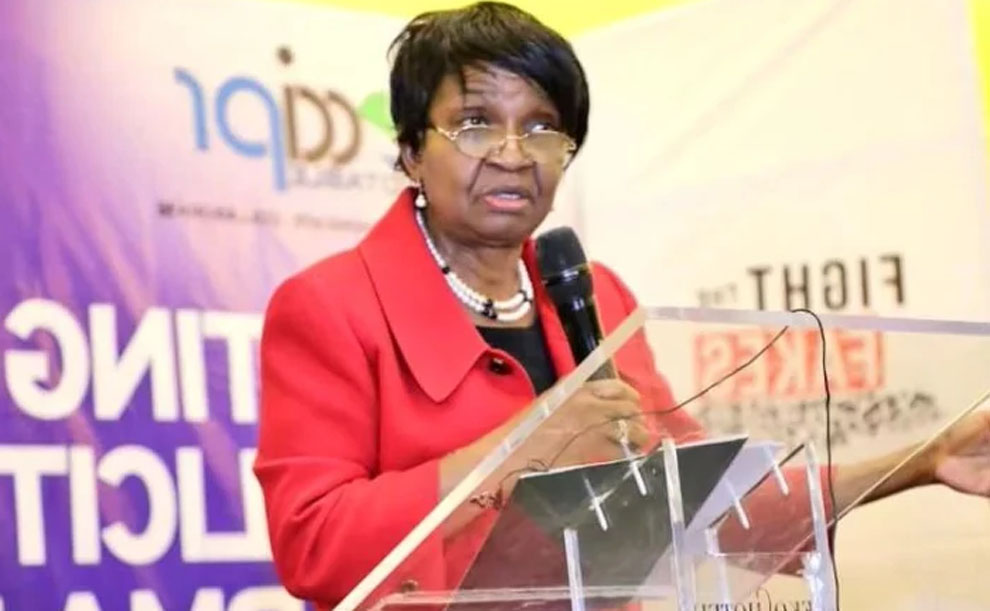
Musa Godiya, a member of NAFDAC‘s Federal Taskforce and Investigation, Enforcement Directorate, disclosed the plan on Thursday at the 10th annual conference of the Association of Nigerian Health Journalists in Abuja.
Godiya said the centres would improve regulatory oversight and help the agency trace the sources of falsified and substandard medicines entering the distribution network.
“With the CWC, we will be able to trace where the bad products are coming from and have strong regulatory oversight over the distribution of these products in our supply chain,” he said.
He explained that the proposed centres would build on the pilot Coordinated Wholesale Centre unveiled in Kano State in February 2023.
According to him, NAFDAC had already shut down major open drug markets, including Idumota Market in Lagos, Bridge Head Market in Onitsha, Anambra State, and a market in Aba, Abia State, as part of its crackdown on unsafe pharmaceutical distribution.
Godiya said traders in the affected markets had signed irrevocable undertakings to relocate to designated wholesale centres once the facilities were ready.
READ ALSO:
- Niger Communal Violence: Bago Pledges ₦148m as 74 People Die in Kambari-Fulani Clash
- ‘Useful Errand Boy’ — Imo APC Rejects Wike’s Bid To Lead Tinubu Campaign
- Kenyan Pastor Serving 200 Years For Murder Convicted Of Terrorism-Related Charges
The Coordinated Wholesale Centres are designed to replace open drug markets with regulated environments that would improve storage conditions, product authentication, monitoring and accountability in the pharmaceutical supply chain.
The initiative is expected to reduce the circulation of counterfeit medicines, expired drugs and improperly stored pharmaceutical products, which pose serious health risks to consumers.
NAFDAC intensifies enforcement against sachet alcohol
Godiya also announced the commencement of the second phase of enforcement against sachet alcohol and alcoholic beverages packaged in containers below 200 millilitres.
He said the agency had concluded the first phase, which involved inspections of manufacturing facilities, and had now moved to market and street-level enforcement.
“We have concluded the first phase of the ban, which involved visiting manufacturing factories.
“We are now going to markets and streets for a total mop-up and enforcement action on sachet alcohol,” he said.
He disclosed that enforcement activities had commenced in markets, including a raid on Zuba International Market on Thursday.
NAFDAC‘s latest initiatives form part of wider efforts to strengthen public health regulation, improve medicine safety and address the proliferation of unregistered, falsified and substandard products in Nigeria.
Fake Drugs: NAFDAC Plans Wholesale Centres in Lagos, Anambra
-

 News7 hours ago
BREAKING: Lagos Senator Idiat Adebule Dies at 56, Hours After Birthday Celebration
-

 metro3 days ago
Nigerian Health Worker, 26, Found Dead in Canada After Returning From Work
-
 metro3 days ago
Phone-Tapping Claim: I Lied to Unsettle Tinubu Government – El-Rufai
-

 metro3 days ago
‘I Came to Nigeria for Love, Now I’m Stranded, Begging for Rent’ — American Woman Married to Enugu Man Cries Out
-
 Politics2 days ago
BREAKING: Makinde Reportedly Agrees to Back Atiku’s Presidential Bid
-

 Politics3 days ago
2027 Presidency: ‘Atiku Should Forget His Ambition, Wait Until 2031’ – Bode George
-
 Politics1 day ago
Fayose Accuses Obasanjo Of Using Tinubu Visit To Pursue Daughter’s Governorship Ambition
-
 Politics1 day ago
OK Movement Faction Withdraws Support for Obi, NDC, Pulls Nationwide Structures