

metro
Obasanjo Family, Orji Kalu Among Nigerians Linked to $271m US Property Investigation
Obasanjo Family, Orji Kalu Among Nigerians Linked to $271m US Property Investigation
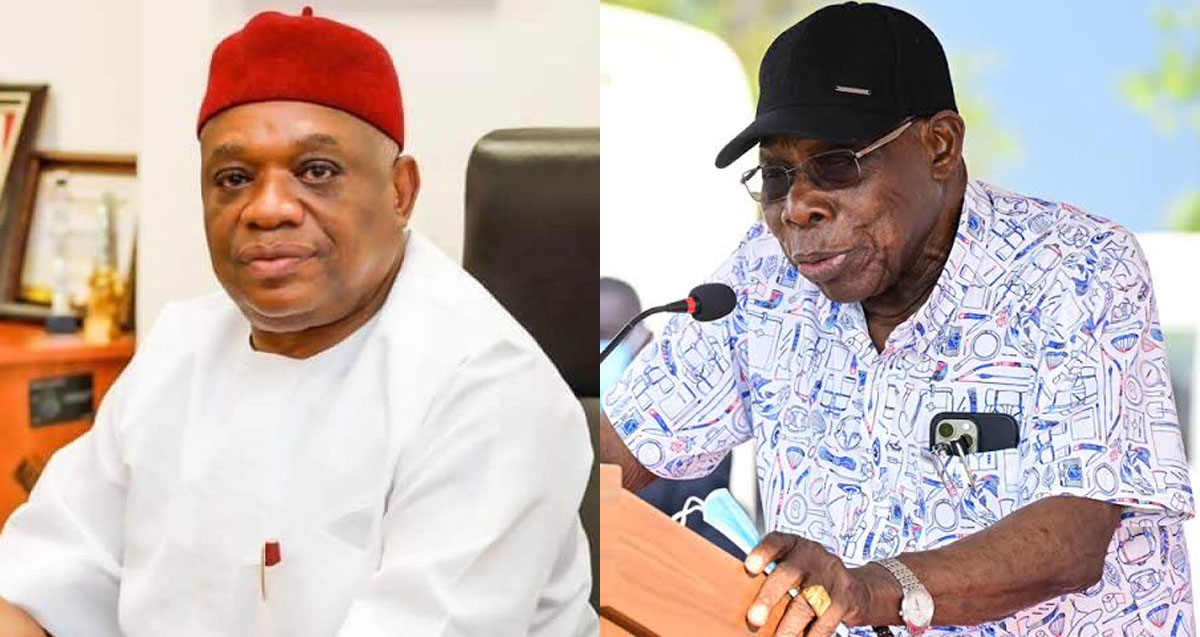
Members of the families of former President Olusegun Obasanjo and former Abia State governor Orji Uzor Kalu are among 61 Nigerian-linked individuals identified in a fresh investigation into about $271 million worth of US property and assets.
The investigation was conducted by the Platform to Protect Whistleblowers in Africa (PPLAAF) in partnership with the Anti-Corruption Data Collective (ACDC) as part of a broader examination of how wealth connected to Nigerian politically exposed persons (PEPs) has been moved into and held through United States real estate.
The findings, released on Tuesday, September 22, 2026, examine property ownership records, corporate structures and other data relating to Nigerian political figures, their relatives and associates.
The investigation comes days after PPLAAF announced that it had uncovered additional US properties linked to the families of former Nigerian officials, saying the findings pointed to gaps in the ability of Nigerian and American authorities to trace assets across borders.
However, being named in the investigation does not by itself establish that an individual committed a crime or that every property identified was acquired with proceeds of corruption.
Rather, PPLAAF and ACDC have presented the investigation as an examination of asset ownership, financial flows and corporate structures, with the aim of identifying properties and transactions that may warrant further scrutiny by competent authorities.
The investigation has renewed attention on the overseas assets of Orji Kalu, whose family has previously been the subject of a separate PPLAAF investigation into US property.
According to PPLAAF’s earlier findings, Kalu spent about $3.3 million on US properties while serving as Abia State governor and acquired additional properties worth about $4.4 million in the 18 months after leaving office, during a period when he was facing corruption charges in Nigeria.
PPLAAF further reported that Kalu and members of his family had owned properties valued at approximately $20 million across Maryland, North Carolina, South Carolina and Texas.
The properties included residential, commercial and undeveloped assets, with some acquisitions made through companies associated with Kalu and his family.
READ ALSO:
- Nationwide Blackout Looms As Electricity Workers Give NAF Three-Day Ultimatum
- Phyna, Nkechi Blessing Take Social Media Feud To Boxing Ring In Lagos
- Edo Police Arrest Cleric Over Alleged Abduction, Sexual Abuse Of Five Girls
Kalu was governor of Abia State from 1999 to 2007 and was subsequently prosecuted by the Economic and Financial Crimes Commission (EFCC) over allegations relating to the diversion of public funds.
He was convicted in 2019, but the Supreme Court overturned the conviction in 2020 on grounds relating to the composition of the trial court.
The PPLAAF investigation into Kalu’s US assets therefore predates the latest $271 million investigation and provides part of the background to his inclusion in the broader examination of Nigerian-linked wealth in the United States.
The investigation has also brought renewed attention to the use of family members, trusts, companies and other legal structures in holding foreign property.
A recent PPLAAF investigation involving former Enugu State governor Chimaroke Nnamani illustrates the type of transactions the organisation has been examining.
PPLAAF said its investigation identified at least nine properties in Florida and Virginia acquired by Nnamani and members of his family during and after his tenure as governor.
The properties were reportedly worth several million dollars, with seven of those identified being purchased after the EFCC had begun proceedings against Nnamani.
According to PPLAAF, the EFCC had accused Nnamani, his sister Chinero Nwaigwe and associated companies of stealing and laundering approximately $41.8 million from Enugu State.
The organisation said US authorities subsequently investigated financial transactions linked to the family and identified companies, wire transfers and a Florida property purchased for about $1.8 million.
PPLAAF’s review of property records subsequently identified other assets that it said were not mentioned in the earlier Nigerian or US proceedings.
READ ALSO:
- Abia Police Rescue Four-Day-Old Baby, Arrest Four Over Alleged Theft, Trafficking
- Rent Crisis Deepens as Tenants Struggle With Soaring Housing Costs in Calabar, Lagos, Abuja
- Plateau Imposes 6pm–6am Curfew on Three LGAs After Fresh Attacks
One of the properties, according to the organisation, was purchased by Nwaigwe in Virginia in January 2022 for approximately $1.5 million and transferred to Nnamani in December of the same year without stated consideration. Nnamani was serving as a senator at the time.
PPLAAF said the wider Nnamani property network included assets acquired through trusts and companies, which it said raised questions about beneficial ownership and the source of funds.
Nnamani has denied wrongdoing and rejected allegations that he was the subject of an FBI investigation or US criminal proceedings, according to PPLAAF’s published investigation. The organisation said other family members it contacted did not respond to its questions.
The Nnamani case is significant to the latest investigation because PPLAAF had announced ahead of the September 22 release that it would publish a broader report detailing how hundreds of millions of dollars in American real estate were connected to current and former senior Nigerian officials.
The organisation said the report would examine the structures and regulatory gaps that can allow wealth to move across international borders and become invested in foreign property.
The broader investigation focuses on a problem that extends beyond Nigeria: the difficulty of identifying the true owners of property when assets are held through corporations, trusts or other legal arrangements.
Such structures are not inherently illegal. Companies and trusts are routinely used for legitimate estate planning, investment, privacy and commercial purposes.
However, investigators and anti-corruption organisations have argued that opaque ownership structures can also make it more difficult for authorities to establish who ultimately controls an asset and where the money used to purchase it originated.
This has made US real estate an important area of interest in international investigations into suspected illicit financial flows.
The latest investigation by PPLAAF and ACDC consequently raises questions about whether Nigerian and US authorities have sufficient information to trace the ownership and source of funds behind Nigerian-linked property holdings.
ACDC has worked with investigative journalists, researchers and other organisations on investigations involving transnational corruption and illicit financial flows, while PPLAAF focuses on whistleblower protection, investigations and legal advocacy concerning matters of public interest.
The two organisations have previously collaborated on investigations involving complex international financial structures and property ownership.
For Nigeria, the issue is particularly relevant because the recovery of assets allegedly acquired with public funds often depends on cooperation between domestic agencies and foreign authorities.
The EFCC, Independent Corrupt Practices and Other Related Offences Commission (ICPC), Nigeria Financial Intelligence Unit (NFIU) and other agencies can require international cooperation when assets suspected of being proceeds of crime are located outside the country.
The latest findings therefore do not amount to a judicial determination that the individuals identified are guilty of corruption or money laundering.
Instead, the report places a large number of Nigerian-linked US properties and assets under renewed public scrutiny and calls attention to the need for authorities to establish ownership, source of funds and, where necessary, whether particular assets are connected to criminal proceeds.
The distinction is important because property ownership alone is not evidence of corruption. Any allegation that a particular asset represents proceeds of crime would ultimately require evidence and, where contested, determination through the appropriate legal process.
The investigation is nevertheless likely to generate further questions about Nigerian politicians’ foreign assets, the role of relatives and corporate entities in holding property abroad, and the capacity of Nigerian institutions to recover assets located in other jurisdictions.
PPLAAF’s recent investigations have also highlighted cases in which property records revealed assets that investigators said were not fully reflected in earlier corruption or forfeiture proceedings.
The organisation has called on Nigerian and US authorities to investigate the newly identified financial and property structures and determine whether any of the assets warrant further action.
As scrutiny of the $271 million US property investigation continues, the central issue will be whether the ownership structures and financial transactions identified by the investigators can be independently verified and whether competent authorities find evidence of unlawful conduct.
For the individuals and families named, inclusion in the investigation should therefore be understood as an allegation or investigative finding requiring further verification, rather than proof of criminal liability.
Obasanjo Family, Orji Kalu Among Nigerians Linked to $271m US Property Investigation





metro
Niger Police Arrest Five Over Alleged Plot to Sacrifice Biological Children for Wealth
Niger Police Arrest Five Over Alleged Plot to Sacrifice Biological Children for Wealth
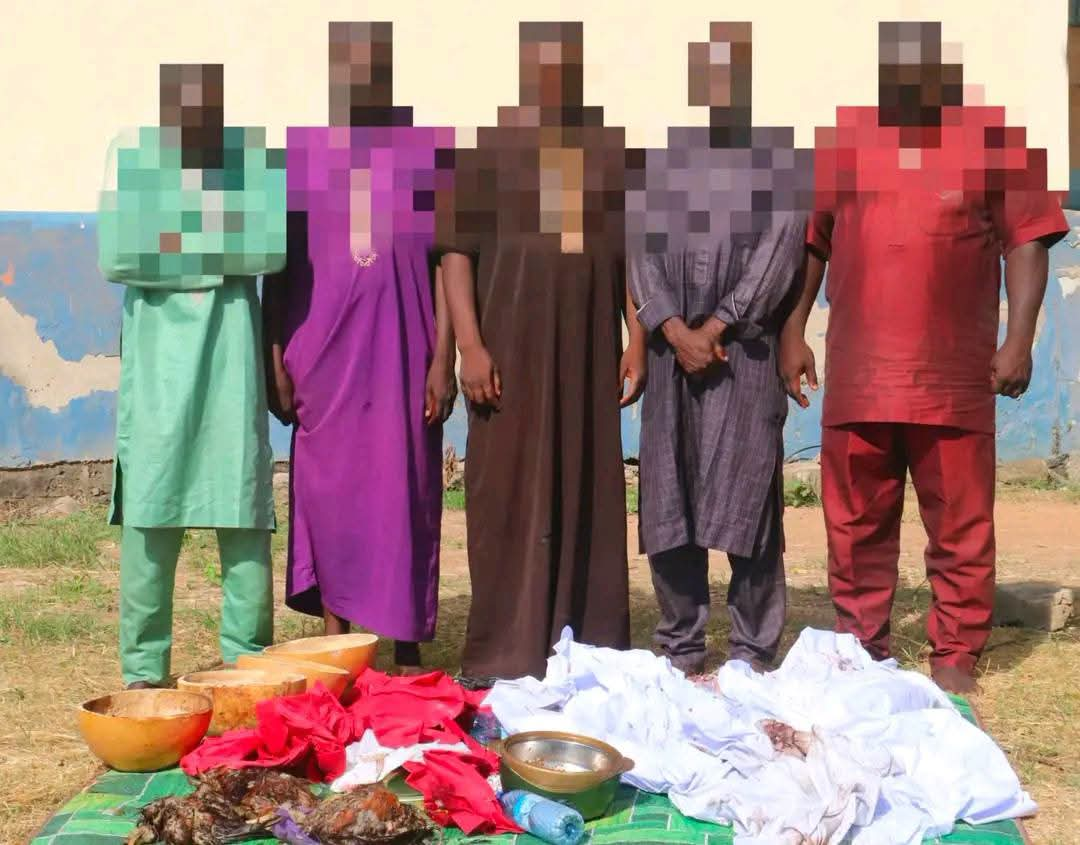
The Niger State Police Command has arrested five suspects, including four fathers accused of offering their biological children for money rituals in exchange for wealth.
The suspects were reportedly apprehended while allegedly preparing to perform a money ritual at an isolated compound in the Garima area of Bosso, Minna, following an intelligence report received by police operatives.
The Police Public Relations Officer, SP Wasiu Abiodun, disclosed this in a statement issued in Minna, saying the operation was carried out on October 27, 2026, at about 8:30pm.
According to him, operatives of the Anti-Kidnapping Unit, while on routine patrol around Bosso, received information about suspected ritual activities taking place at an isolated compound in Garima.
The officers reportedly stormed the location and arrested five men, identified as Mohammed Idris Dogara, 57, from Nasarawa State but residing in Bosso; Aliyu Sule, 25; Abubakar Abdullahi, 40, both of New Garima; Ibrahim Mohammed Hamisu, 43; and Shehu Abubakar, 40, a native doctor from Maikunkele.
Items recovered from the scene included blood-stained red and white clothing, four calabashes, two live chickens, three slaughtered chickens, a blood-stained knife and a large mat on which the suspected ritual materials were arranged.
The police said preliminary investigations revealed that four of the suspects — Ibrahim, Abubakar, Aliyu and Mohammed — had approached the native doctor to perform money rituals for them using a human skeleton allegedly discovered during mining activities.
However, the native doctor reportedly declined their request, insisting that he did not offer such services.
The four men allegedly persisted and offered their biological children as sacrifices in exchange for different sums of money.
Following their insistence, the native doctor reportedly instructed each of them to procure a chicken and meet at a designated location for the ritual.
The police said the suspects were arrested while allegedly carrying out the activities. Aliyu Sule was reportedly found holding a blood-stained knife and preparing to slaughter his chicken, while three other suspects had already slaughtered theirs.
The command added that the suspects had confessed to the allegations and were undergoing further investigation before being charged to court.
Meanwhile, the police statement did not disclose the identities or ages of the children allegedly offered for the ritual, or whether they had been located and placed under protective care.
It also remained unclear whether any of the children had been exposed to immediate danger or whether the alleged ritual had progressed beyond the slaughtering of the chickens.
The circumstances surrounding the alleged discovery of the human skeleton and its intended use in the ritual were also not fully explained by the police.
metro
NNPCL Slashes Petrol Price By Up To ₦80, Sells At ₦1,325 Per Litre In Abuja
NNPCL Slashes Petrol Price By Up To ₦80, Sells At ₦1,325 Per Litre In Abuja
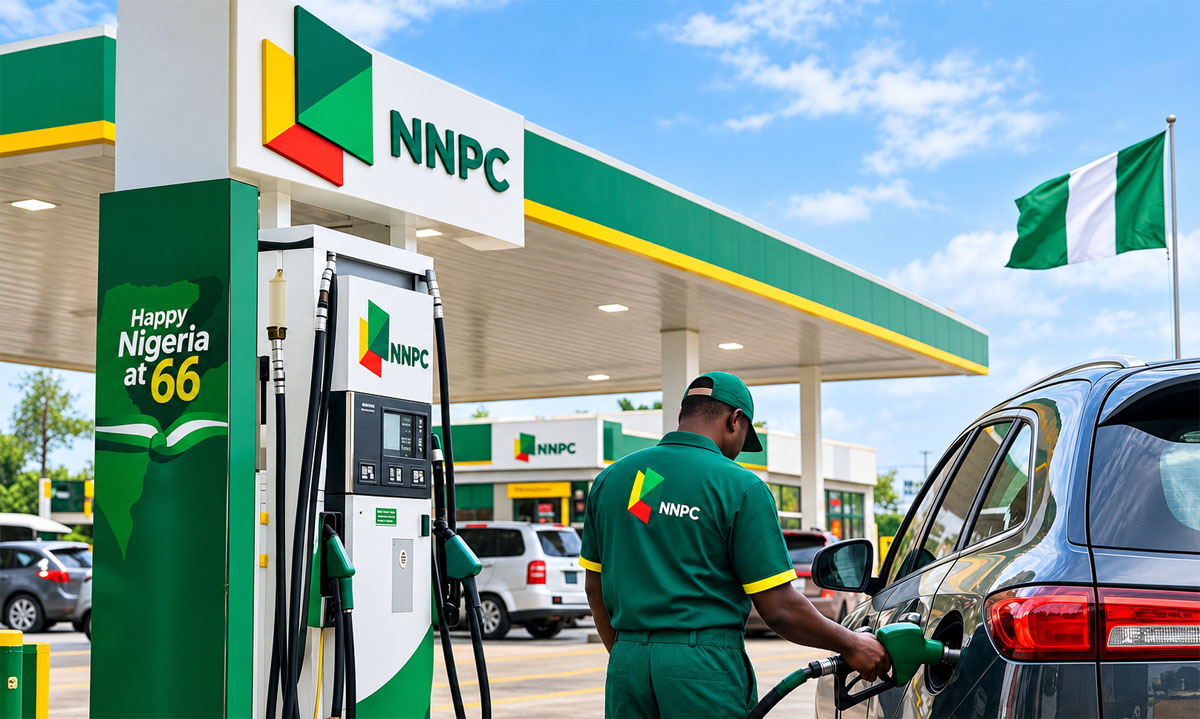
ABUJA — Motorists in Abuja have received some relief following a downward adjustment in petrol pump prices by the Nigerian National Petroleum Company Limited (NNPCL), with its retail outlets now dispensing the product at ₦1,325 per litre in parts of the Federal Capital Territory.
The reduction, which followed a recent adjustment in the petrol pricing structure by the Dangote Petroleum Refinery, represents a decrease of between ₦45 and ₦80 per litre compared with the previous prices charged by NNPCL retail outlets.
According to a report by DAILY POST published on Wednesday, November 4, 2026, a market survey showed that NNPCL filling stations in Abuja and neighbouring areas had adjusted their pump prices from between ₦1,370 and ₦1,405 to ₦1,325 per litre.
The new price was reportedly implemented at the company’s retail outlets in Gwarimpa and along the Kubwa Expressway.
A fuel attendant at one of the affected NNPCL filling stations confirmed the development, explaining that the downward adjustment took effect on Wednesday afternoon.
The latest reduction comes amid renewed movements in Nigeria’s downstream petroleum market, where changes in the prices of petrol supplied by domestic refineries and depot operators continue to influence retail pump prices.
Barely two days before the adjustment, Dangote Petroleum Refinery reportedly reduced its petrol gantry price to ₦1,215 per litre, prompting expectations that filling stations would review their retail prices downward.
The development had raised hopes among motorists that the reduction in the refinery’s wholesale price would translate into cheaper petrol at filling stations across the country.
However, the impact has not been uniform across locations, as petrol prices continue to fluctuate among different marketers.
In Lagos, for instance, separate market checks reported by Vanguard showed that NNPCL and MRS filling stations were selling petrol at approximately ₦1,360 per litre, while some independent marketers charged between ₦1,365 and ₦1,370.
The differing prices highlight the competitive and changing nature of Nigeria’s deregulated downstream petroleum market.
Although the latest adjustment offers some relief to motorists patronising the affected NNPCL outlets in Abuja, it remains unclear whether the company will extend the new price to all its filling stations nationwide.
For now, motorists in Abuja can take advantage of the reduced price at the affected outlets, while consumers elsewhere will have to monitor developments in their respective locations as petroleum marketers continue to adjust their pump prices.
NNPCL Slashes Petrol Price By Up To ₦80, Sells At ₦1,325 Per Litre In Abuja
metro
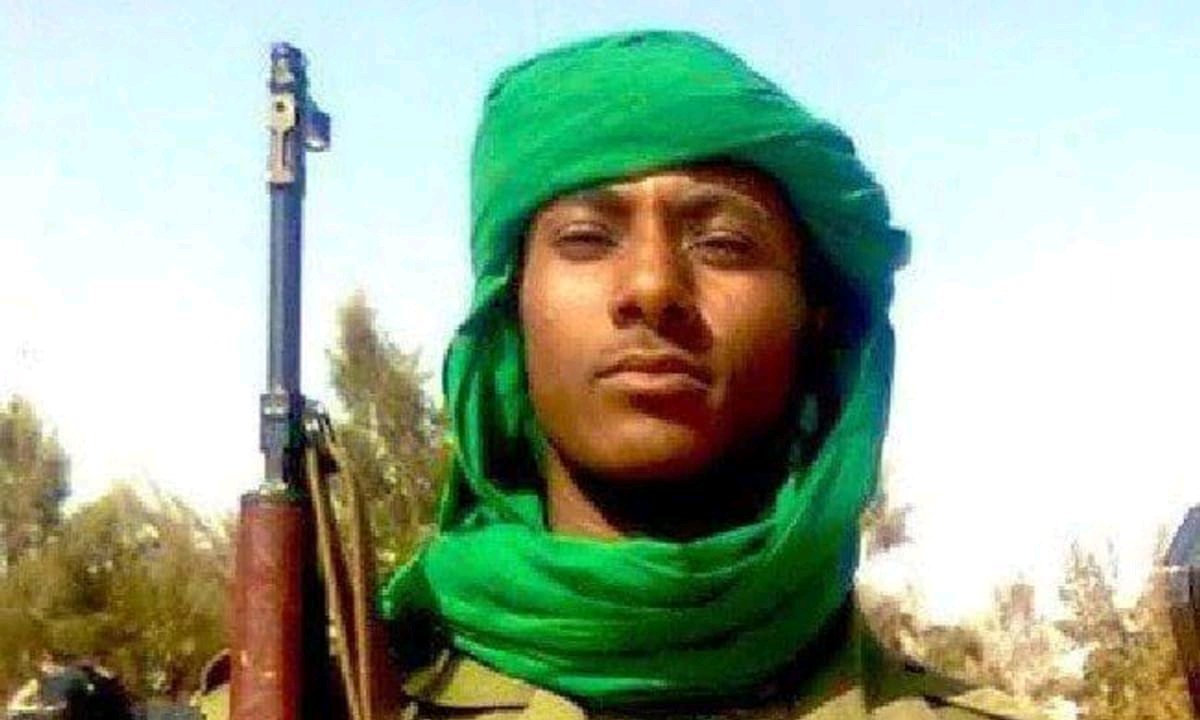
Dogo Gide Throws Spanner in Islamic State’s Expansion Plans, Forces Terrorists to Retreat in North-West Nigeria
Dogo Gide Throws Spanner in Islamic State’s Expansion Plans, Forces Terrorists to Retreat in North-West Nigeria
A notorious Nigerian bandit kingpin, Dogo Gide, has reportedly emerged as a major obstacle to the expansion of the Islamic State Sahel Province (ISSP) in north-western Nigeria, after confronting the terror group over attempts to establish control in territories dominated by armed bandit groups.
The development represents another significant dimension of the increasingly complicated security situation in northern Nigeria, where criminal bandit groups and internationally affiliated terrorist organisations are competing for territorial influence, recruits and control of local communities.
According to a report published by Daily Post on Wednesday, November 4, 2026, security analyst Brant Philip disclosed that Dogo Gide had frustrated the Islamic State’s expansion efforts following a confrontation with its fighters around the middle of 2026.
Philip, in an analysis shared on X, reportedly explained that ISSP had spent the past two years attempting to establish stronger relationships with armed groups operating across Sokoto, Zamfara and Niger states.
The organisation reportedly approached several bandit groups, seeking to persuade their members to abandon their existing criminal networks, embrace its extremist ideology and become part of its wider terrorist campaign.
While some groups in Zamfara and Sokoto reportedly accepted the overtures and joined the Islamic State’s network, others resisted the attempts to bring them under its control.
Philip further disclosed that ISSP fighters had defeated several bandit groups in northern Zamfara, subsequently taking over their camps, weapons and vehicles.
However, the group’s expansion reportedly encountered a formidable challenge when its fighters came into confrontation with Dogo Gide, one of the most influential bandit warlords operating in north-western Nigeria.
According to the analyst, Gide’s resistance presented one of the most significant obstacles to the Islamic State’s efforts to extend its influence into the region.
Dogo Gide’s confrontation with ISSP is particularly significant given his previous associations with jihadist groups operating in Nigeria.
A January 2026 research publication by the Combating Terrorism Center (CTC) at the United States Military Academy, West Point, examined the complicated relationship between powerful bandit leaders and jihadist organisations seeking to expand their influence in Nigeria.
The study, titled Kachallas and Kinship: Understanding Jihadi Expansion and Diffusion in Nigeria, identified Dogo Gide as an influential warlord whose relationship with extremist groups had historically been opportunistic rather than based on firm ideological commitment.
Researchers explained that Gide had previously maintained relationships with jihadist factions, including Ansaru and the faction led by Sadiku, while using such associations to strengthen his influence among fellow bandits and in his dealings with local communities.
However, the relationship eventually deteriorated as the jihadist groups attempted to extend their authority over territories controlled by his fighters.
The research documented confrontations between Gide’s group and Ansaru in 2024, as well as clashes with Sadiku’s faction in early 2025.
According to accounts cited by the researchers, the jihadists wanted Gide to embrace their ideology and surrender control of his territory, but he rejected the demands, insisting that outsiders could not take over areas controlled by local armed groups.
The study further explained that Gide had become increasingly determined to protect his territorial influence against jihadist encroachment.
The Islamic State Sahel Province is an affiliate of the global Islamic State terrorist organisation, with its traditional operational strongholds across parts of Mali, Niger and Burkina Faso.
However, the group has increasingly sought to extend its activities into north-western Nigeria, exploiting insecurity, weak border controls and existing networks of armed groups.
Security assessments by the Centre for Strategic and International Studies (CSIS) have also identified the growing activities of ISSP in Nigeria, particularly through its connections with militant networks operating around the Niger-Nigeria border.
The group’s activities have raised concerns about the possible convergence of Sahel-based terrorist organisations and Nigeria’s longstanding banditry crisis.
Research by the Combating Terrorism Center has similarly highlighted how jihadist organisations attempt to establish relationships with local armed groups to gain access to territory, recruits, resources and logistical support.
However, the researchers cautioned that powerful bandit leaders are not necessarily willing to surrender their independence or territorial authority to foreign or externally based extremist organisations.
The reported confrontation involving Dogo Gide illustrates the complex relationship between banditry and terrorism in Nigeria’s north-west.
Although both criminal bandits and jihadist organisations engage in armed violence, kidnapping and attacks on communities, their objectives and interests are not necessarily identical.
For powerful warlords such as Gide, maintaining territorial control and influence over local armed networks remains a major consideration.
Consequently, attempts by jihadist organisations to impose ideological authority or absorb independent bandit groups can trigger violent resistance.
Nevertheless, resistance from powerful bandit leaders does not automatically eliminate the threat posed by jihadist organisations.
The January 2026 West Point study specifically cautioned that although Dogo Gide has the capacity to complicate jihadist expansion in core bandit territories, extremist networks could continue establishing themselves in other parts of western Nigeria.
For Nigeria’s security agencies, the emerging situation presents another challenge in the fight against insecurity: confronting criminal banditry while preventing internationally affiliated terrorist organisations from exploiting existing armed networks to establish deeper roots in the country.
The reported confrontation between Dogo Gide and ISSP therefore underscores an important reality: the battle for influence in north-western Nigeria is no longer simply between security forces and bandits, but increasingly involves competing armed organisations seeking control of the region.
Dogo Gide Throws Spanner in Islamic State’s Expansion Plans, Forces Terrorists to Retreat in North-West Nigeria
-
 metro2 days ago
Bandits Demand Over ₦100m Ransom for 15 Abducted Islamiya Students in Niger
-
 metro2 days ago
FG’s N50,000 Relief: OPay Details Eligibility Check Process, Issues Strong Warning Against Scams
-

 metro3 days ago
Tears In Ebonyi Community As Newlyweds, Groom’s Mother, Seven Others Perish In Crash
-

 International2 days ago
Australia Under Pressure To Scrap $368bn US-UK Nuclear Submarine Deal As Inquiry Warns Of China War
-
 Politics3 days ago
DSS Denies Plot to Disrupt ADC Rally, Orders Probe into Atiku’s Allegations
-

 metro2 days ago
‘I Went to My Pastor for Deliverance, Ended Up in Bed With Him’ – Lady Recounts Encounter
-

 International2 days ago
Musk Breaks Silence After $458M Gamble Backfires in Historic Democratic Sweep
-

 International2 days ago
US Midterm Elections: ‘Americans Said No To War,’ Iran Speaker Declares As Democrats Take Control Of Congress