

International
Outrage as Israeli Settlers Torch Mosque, Burn Vehicle in Occupied West Bank
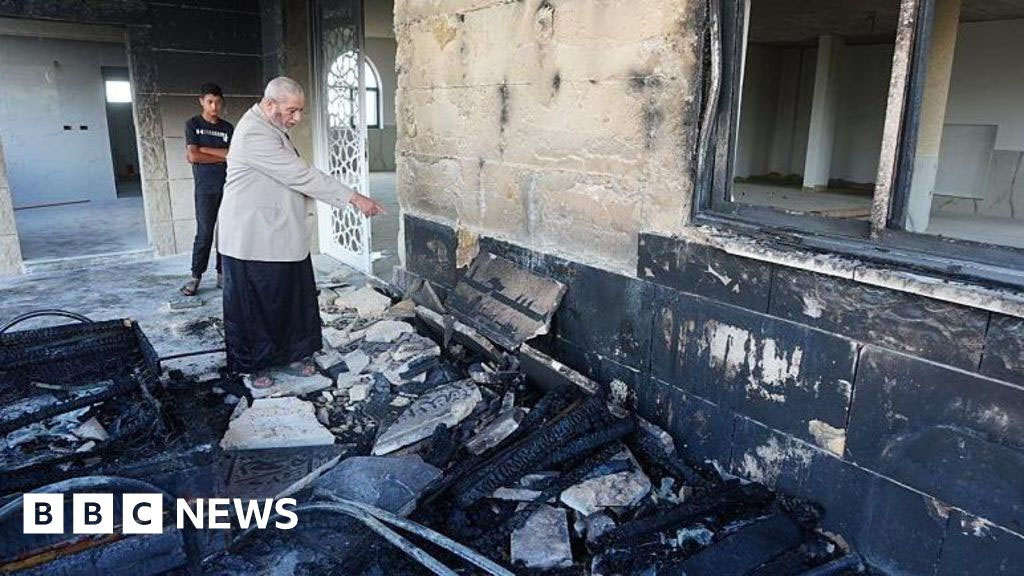
Israeli settlers have reportedly set fire to a mosque, a vehicle and an olive tree in a Palestinian village in the occupied West Bank, in an attack that has renewed concerns about violence against Palestinian communities and religious sites.
The incident occurred in the early hours of Wednesday, October 14, 2026, when a group of settlers raided Mikhmas, also spelt Mukhmas, northeast of occupied Jerusalem.
According to the Palestinian news agency WAFA, the Jerusalem Governorate reported that dozens of settlers entered the village shortly after midnight and set fire to a mosque and a nearby olive tree. A vehicle was also completely burned during the attack.
Reports from the scene showed damage to the mosque’s entrance. No injuries were reported in the initial accounts of the incident.
Mohammed Kanaan, a member of Mikhmas’ municipal council, told Anadolu Agency that the attackers set fire to a prayer room and a vehicle at about 2 a.m. local time. He said residents alerted the relevant authorities and requested the intervention of firefighting crews.
Reports also indicated that nationalist and racist slogans were spray-painted on the mosque and other buildings in the village. The extent of the damage and whether anyone had been arrested in connection with the attack were not immediately clear.
READ ALSO:
- Attempted Suicide: ‘If You Survive, We’ll Jail You’ – Akpabio
- Yamal Inspires Barcelona Comeback to Sink Osimhen’s Galatasaray
- Press Freedom: Judge Blocks Trump’s Ban on Three Major US Media Outlets
The attack adds to continuing concerns over Israeli settler violence in the occupied West Bank, where Palestinian residents have reported assaults, intimidation, property destruction and attacks on farmland.
The incident is particularly sensitive because it involved a Muslim place of worship. Religious sites and civilian property are protected under international humanitarian law, and deliberate attacks against them raise serious legal concerns.
The latest incident also comes amid the annual olive harvest, an important source of income for many Palestinian farming families. The Palestinian Colonization and Wall Resistance Commission said on Monday that it had documented 136 attacks linked to the olive harvest since the beginning of October. The reported incidents included beatings, intimidation, gunfire, theft of olives and farming equipment, and damage to trees.
The burning of the mosque in Mikhmas follows other reported arson attacks on mosques in the West Bank in recent months. In July, two mosques in the Palestinian villages of Qusra and Kour were set on fire following deadly clashes in the territory.
Reuters reported at the time that the Israeli military had confirmed evidence of arson and graffiti at the affected mosque sites and condemned attacks on religious places. The incidents prompted renewed calls for measures to prevent further attacks and hold those responsible accountable.
The wider situation in the Israeli-occupied Palestinian territory remains tense, with attacks by settlers and Israeli military operations contributing to insecurity for residents. Palestinian officials have repeatedly called for stronger protection of communities and accountability for attacks on civilians and their property.
The circumstances surrounding Wednesday’s mosque attack remain under investigation, and it was not immediately clear whether Israeli authorities had announced arrests or opened a formal inquiry.
The incident has once again highlighted concerns over the safety of Palestinian religious sites, homes and agricultural land, as calls grow for effective action against violence in the occupied West Bank.
Outrage as Israeli Settlers Torch Mosque, Burn Vehicle in Occupied West Bank








International
Iran Threats: Trump Officials Abandon Luxury Homes for Military Base
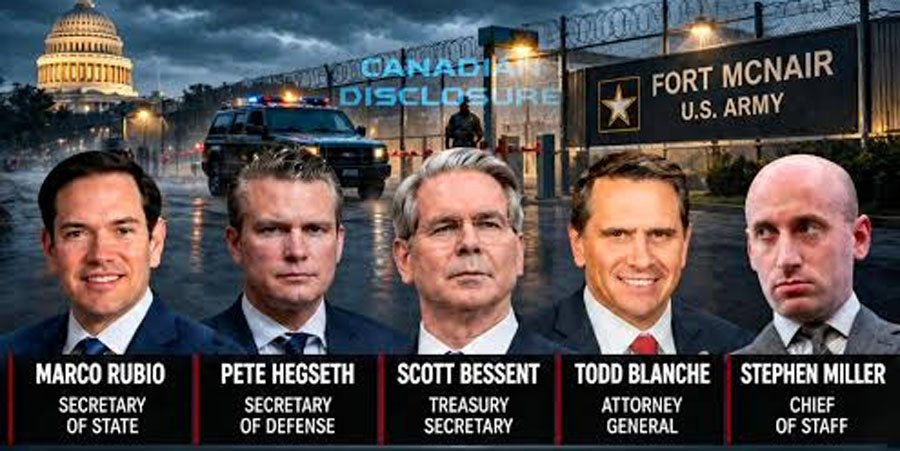
Several senior officials in the administration of United States President Donald Trump have relocated from their private residences to military housing in Washington, DC, amid growing concerns over their personal security, including reported threats linked to Iran and domestic political violence.
The unusual development has heightened attention around the security of top government officials, with approximately six senior administration figures reportedly taking up residence in military facilities traditionally reserved for senior military officers and defence officials.
Among those who have moved into military accommodation are Treasury Secretary Scott Bessent, Secretary of State Marco Rubio, Defence Secretary Pete Hegseth, Attorney-General Todd Blanche and White House Chief of Staff Stephen Miller.
The relocations are understood to be connected to concerns about threats against senior members of the Trump administration, particularly officials associated with the President’s policies towards Iran.
Bessent is the latest senior official reported to have moved into military accommodation. He reportedly left his mansion in Georgetown, an affluent neighbourhood in Washington, for a more heavily secured government residence.
The Treasury Secretary’s relocation followed reported threats to his life linked to the Trump administration’s economic pressure campaign against Iran.
Speaking during an interview with CNBC in November, Bessent confirmed that Iranian threats had targeted him and other members of the administration.
“They have initiated death threats against other members of the Cabinet and me. We’re not going to be cowered,” he said.
READ ALSO:
- 2027: INEC’s Mock Poll Tests BVAS, Exposes Low Turnout, Logistical Gaps
- How Senator Adebule Reportedly Collapsed During APC Campaign Before Her Death
- Canada’s ICAS Stops Assessing Certificates From Four Nigerian Universities, Graduates Face Uncertainty
His comments have drawn renewed attention to the security challenges facing senior American officials as tensions between Washington and Tehran continue to influence diplomatic and security discussions.
Earlier, CNN reported on November 17 that US intelligence assessments had identified alleged Iranian plans involving the possible use of a chemical weapon or a radioactive device, commonly known as a dirty bomb, targeting Washington.
However, the reported intelligence assessment should not be interpreted as confirmation that an attack was imminent or that such an operation had been carried out.
Attorney-General Todd Blanche has also reportedly relocated to military housing because of concerns about his personal safety.
His predecessor, former Attorney-General Pam Bondi, similarly lived on a military installation in 2025 after security concerns were raised.
Stephen Miller, Trump’s White House Chief of Staff, and his family have also moved into military accommodation following threats and harassment reportedly directed at their former residence in Virginia.
The family reportedly relocated after a protester demonstrated outside their home and distributed flyers containing their private address.
A White House official described the incidents as part of an organised campaign of stalking, doxing and threats against Miller and his family.
Miller reportedly shares a military installation with Rubio and Hegseth, who have also been living in military accommodation.
The military facilities provide enhanced security through controlled access points, surveillance systems and other protective arrangements designed to safeguard senior government and military personnel.
However, the increasing number of civilian government officials occupying military residences has raised questions about the use of public resources and whether the arrangements comply with existing regulations.
Democratic lawmakers have questioned whether politically appointed officials should occupy accommodation traditionally designated for military personnel and whether they are paying appropriate rental charges.
California Democratic Representative George Whitesides has called for greater scrutiny of the arrangements.
The House Armed Services Committee has directed the Pentagon to submit a report by May 1, 2027, detailing political appointees who occupied military housing between January 2025 and December 2026.
The proposed report is expected to provide information about the number of officials living in the facilities, the security threats that justified their relocation, the legal authority for the arrangements and the rental payments involved.
Whitesides has argued that the investigation is necessary to establish whether civilian political appointees are paying appropriate rates for accommodation provided through military facilities.
Although civilian officials are required to pay rent when occupying military housing, the charges may vary depending on the property and applicable arrangements.
The issue has also attracted attention following reports that the US Army planned to spend $137,297 on repairs and improvements to Hegseth’s residence at Fort McNair in Washington.
The use of military accommodation by senior civilian officials is not entirely unprecedented in the United States.
Former Defence Secretary Robert Gates became the first Pentagon chief to live in military housing during his tenure under Presidents George W. Bush and Barack Obama.
Former Secretary of State Mike Pompeo also moved into military accommodation during Trump’s first administration, although his initial request reportedly generated legal, financial and ethical concerns within the US Navy.
The latest relocations have brought renewed attention to the security of senior American government officials, particularly amid concerns about possible foreign threats and domestic political violence.
They have also raised questions about the balance between protecting public officeholders and ensuring that military facilities and government resources are used appropriately.
For the Trump administration, the decision to move senior officials into military installations reflects the growing importance attached to personal security, while the congressional scrutiny highlights the need for transparency over the use of government-provided accommodation.
Trump officials move into military bases
International
BREAKING: Deadly Blast Near School in Eastern Afghanistan Kills 10 Students, Injures Over 100
BREAKING: Deadly Blast Near School in Eastern Afghanistan Kills 10 Students, Injures Over 100
ASADABAD, Afghanistan — At least seven students have been killed and nearly 100 others injured after a powerful explosion rocked an area near a middle school in eastern Afghanistan’s Kunar province on Saturday morning.
The explosion occurred at about 10:00 a.m. local time in the Andar Ser area on the outskirts of Asadabad, the provincial capital.
Initial reports gave varying casualty figures, but Kunar provincial officials later confirmed that seven students had died, while 97 others sustained injuries. Other reports put the number of injured at as many as 99.
According to preliminary findings, the explosion originated from a nearby house or depot where explosives belonging to mining companies were reportedly stored.
Abdul Mateen Qani, spokesperson for the Taliban-led government’s Interior Ministry, attributed the incident to negligence and carelessness involving the storage of explosives.
Sami ul Haq Bayan, Kunar’s director of Information and Culture, also said preliminary investigations suggested that explosives kept at the nearby property for mining operations had detonated.
The authorities have launched an investigation to establish the precise circumstances surrounding the explosion.
Kunar Provincial Police Headquarters spokesperson Farid Dehqan confirmed that investigative teams had been deployed to the scene following the incident.
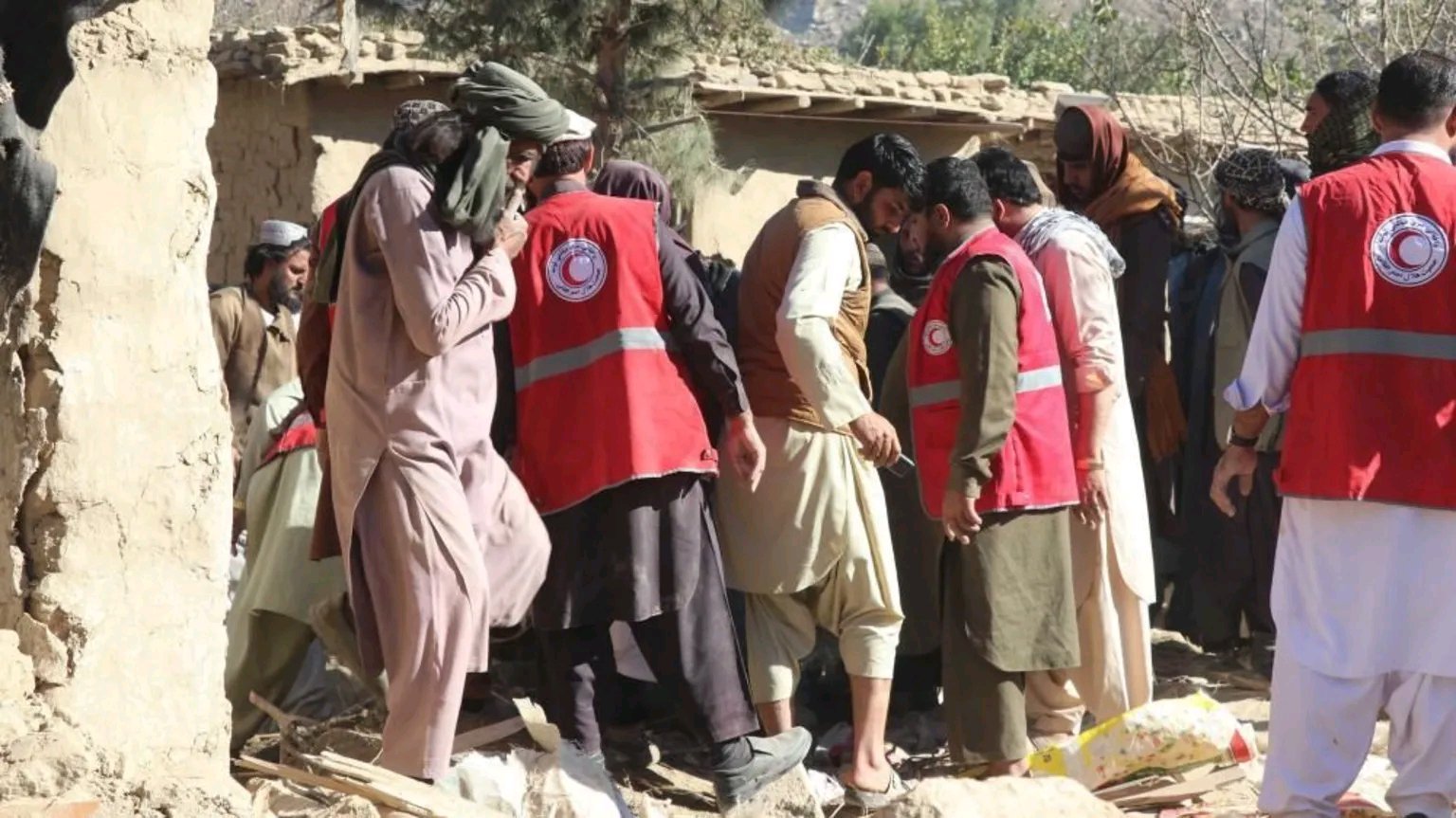
Footage circulating on social media showed emergency responders, including Red Crescent personnel, assisting victims at the scene, while residents joined efforts to evacuate the injured.
Several videos also showed vehicles transporting wounded children to hospitals for emergency treatment.
The explosion reportedly damaged parts of the school building and nearby structures, with images from the scene showing sections of the building apparently collapsed.
According to provincial officials, about 15 injured victims remained hospitalised, while others were discharged after receiving medical attention.
The tragedy has renewed concerns about the handling and storage of industrial explosives in Afghanistan, particularly in areas where mining activities take place close to residential communities and public institutions.
Afghanistan is rich in mineral deposits and precious stones, with mining activities providing economic opportunities in several provinces, including Kunar.
However, the reported storage of explosives in a residential property close to a school has raised serious questions about safety regulations and the protection of civilians.
The latest incident also comes months after a separate explosion at a school complex in Kabul in August, which reportedly injured more than 40 children aged between nine and 14.
Authorities say investigations into Saturday’s explosion are continuing as emergency teams attend to the injured.
BREAKING: Deadly Blast Near School in Eastern Afghanistan Kills 10 Students, Injures Over 100
International
London Tragedy: Man Dies During Christmas Lights Installation at Shopping Centre
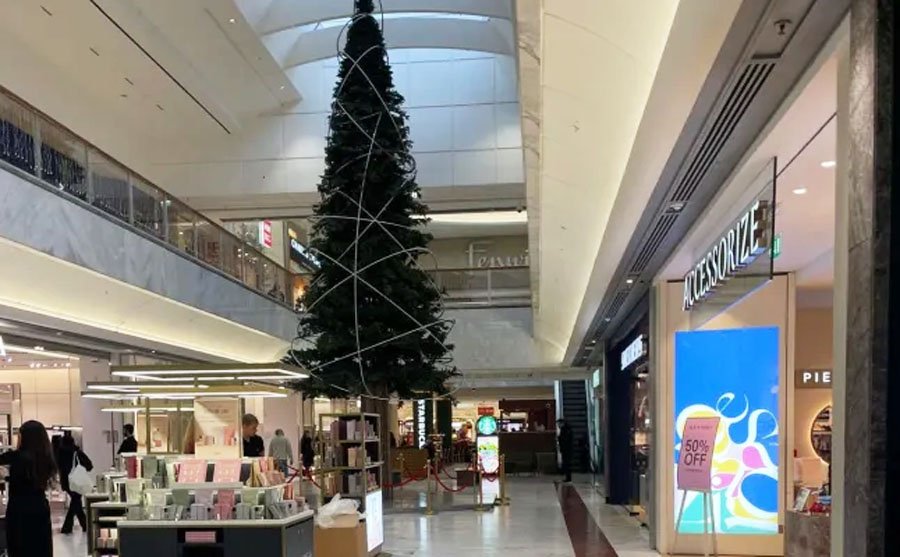
A man in his 40s has died after suffering a medical emergency while carrying out work connected with Christmas decorations at a shopping centre in north London.
The incident occurred at Brent Cross Shopping Centre on Wednesday, November 18, 2026, during overnight work involving a contractor responsible for servicing or installing seasonal decorations.
The contractor was reportedly found seriously injured at the shopping centre and was subsequently taken to hospital, where he died on Thursday, November 19.
The circumstances surrounding the incident remain under investigation, with authorities yet to establish the precise cause of his injuries.
Following the incident, the shopping centre temporarily closed its premises while emergency services and relevant authorities responded to the situation.
READ ALSO:
- Church of England Bans Married Vicar for Life Over Secret Affair With Vulnerable Parishioner
- BREAKING: Sanwo-Olu Cancels November 28 Environmental Sanitation Exercise Over INEC Mock Accreditation
- Ondo: 17-Year-Old Girl Confesses to Poisoning Housemate’s Drink
The centre later reopened after the initial response and safety procedures had been completed.
In a statement, Brent Cross Shopping Centre expressed sadness over the contractor’s death and extended its condolences to his family, friends and colleagues.
The management also clarified that the incident was connected with a contractor’s servicing work and was not directly related to the Christmas tree itself.
The Metropolitan Police were notified, while the Health and Safety Executive and Barnet Council were also informed as part of the investigation into the circumstances surrounding the fatal incident.
The development has raised concerns about workplace safety during the busy Christmas decoration season, particularly for contractors involved in electrical installations, maintenance and other potentially hazardous activities.
Authorities are expected to establish how the incident happened and whether any workplace safety procedures were breached.
London Tragedy: Man Dies During Christmas Lights Installation at Shopping Centre
-

 News24 hours ago
BREAKING: Lagos Senator Idiat Adebule Dies at 56, Hours After Birthday Celebration
-

 News10 hours ago
Canada’s ICAS Stops Assessing Certificates From Four Nigerian Universities, Graduates Face Uncertainty
-

 metro1 day ago
Patience Jonathan Challenges Claims Of Goodluck’s Second Wife, Cites Court Marriage In Viral Interview
-

 News2 days ago
Adeleke Begins Second Term, Pledges Industrialisation, Jobs, Infrastructure
-

 Politics2 days ago
Fayose Accuses Obasanjo Of Using Tinubu Visit To Pursue Daughter’s Governorship Ambition
-

 Politics2 days ago
OK Movement Faction Withdraws Support for Obi, NDC, Pulls Nationwide Structures
-

 News10 hours ago
How Senator Adebule Reportedly Collapsed During APC Campaign Before Her Death
-

 metro2 days ago
BREAKING: Sanwo-Olu Cancels November 28 Environmental Sanitation Exercise Over INEC Mock Accreditation