

International
BREAKING: Bloodbath at Pakistan Mosque as Suicide Blast Kills 21, Injures 103
BREAKING: Bloodbath at Pakistan Mosque as Suicide Blast Kills 21, Injures 103
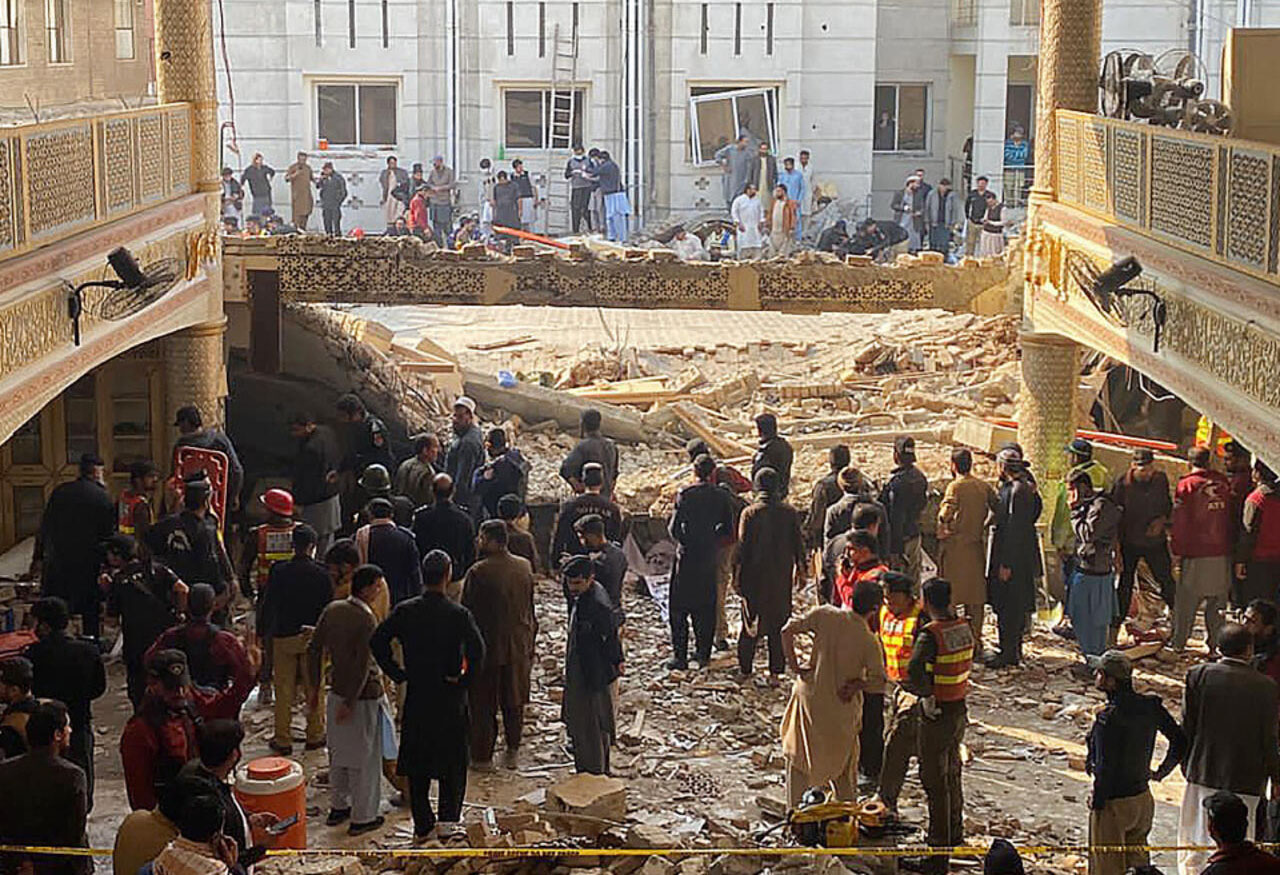
KOHAT, Pakistan — Friday prayers turned into a scene of horror in Pakistan on Friday as a powerful suicide attack ripped through a mosque inside a police compound in Kohat, leaving at least 21 people dead and 103 others injured.
The devastating attack, which struck the Old Police Lines in Kohat, Khyber Pakhtunkhwa province, claimed the lives of 15 police personnel and six civilians, while 73 policemen and 30 civilians were injured, according to health officials.
The attack occurred at about 1:20pm local time, when worshippers had gathered for the weekly Friday prayers at the mosque located inside the heavily guarded Police Lines compound.
Eyewitness accounts and initial reports described scenes of panic as a massive explosion tore through the facility, sending debris flying and trapping victims beneath damaged sections of the mosque and surrounding buildings.
According to Khyber Pakhtunkhwa Inspector-General of Police Zulfiqar Hamid, an explosives-laden vehicle was rammed into the gate of the old Police Lines before detonating, unleashing the devastating blast.
The explosion caused extensive damage to the police facility and mosque, with parts of the structure collapsing as worshippers and police officers were caught in the blast.
But the nightmare did not end with the explosion.
As rescue workers rushed to evacuate the wounded, gunfire erupted inside the compound after armed militants reportedly attempted to force their way deeper into the police facility.
A further suicide explosion was also reported near the Special Branch building during the ensuing confrontation between the attackers and security forces.
READ ALSO:
- Xenophobia: FG Brings 33 More Nigerians Home From South Africa
- Falconets Thrash England 3-0, Face Colombia in U-20 World Cup Quarter-Finals
- Replace Fuel Subsidy With Vehicle Credit to Drive Mobility, Jobs,LCCI, Ilekuba tell FG
Police said seven armed attackers had entered the compound following the initial assault, triggering a fierce firefight involving police and Counter-Terrorism Department personnel.
Security forces eventually killed the attackers, including a suicide bomber and a sniper, as they battled to regain control of the compound.
The scale of the casualties overwhelmed medical facilities in Kohat, forcing the District Headquarters Hospital to declare an emergency.
Ambulances raced to the scene as doctors and medical workers treated scores of victims suffering blast injuries, gunshot wounds and injuries caused by collapsing structures.
Health authorities put the number of injured at 103, with 73 police personnel and 30 civilians among those receiving treatment.
Some of the wounded were reportedly in critical condition, while rescue teams continued searching the damaged compound for possible survivors trapped under debris.
The heavy police casualties were attributed to the location and timing of the attack, with officers among those gathered inside the mosque for Friday prayers.
Among those reportedly killed were SP Traffic Akbar Shinwari and Dr Israel Orakzai, head of the children’s department at DHQ KDA Kohat, according to Pakistani media reports.
Security forces subsequently cordoned off the area and restricted movement around the Police Lines as investigators began examining the scene and searching for explosives or possible accomplices.
The Kohat-Hangu Road was also closed temporarily as security and rescue operations continued.
The attack triggered widespread outrage across Pakistan, with President Asif Ali Zardari and Prime Minister Shehbaz Sharif condemning the bombing and mourning the victims.
Sharif directed authorities to ensure that the injured received immediate and adequate medical treatment while security agencies were ordered to investigate the attack.
Khyber Pakhtunkhwa Chief Minister Sohail Afridi also condemned the assault and directed officials to mobilise available resources for the treatment of the wounded.
Interior Minister Mohsin Naqvi expressed solidarity with the families of those killed and injured, as condemnation poured in from within and outside Pakistan.
Countries including Saudi Arabia, the United Kingdom, Russia, Poland, Australia and Jordan also condemned the attack and expressed sympathy with the victims and their families.
The Kohat bombing comes against the backdrop of an escalating militant threat in Khyber Pakhtunkhwa, one of Pakistan’s most violence-prone regions.
The province, which shares a border with Afghanistan, has witnessed repeated attacks targeting police, soldiers and civilians.
The latest bloodshed also came shortly after a roadside bombing in neighbouring Hangu district reportedly killed six soldiers, further raising security concerns in the region.
Pakistan has repeatedly accused militants linked to the Tehrik-e-Taliban Pakistan (TTP) of using hideouts in Afghanistan to launch attacks inside Pakistan. Afghanistan’s Taliban authorities have consistently rejected allegations that they permit their territory to be used for attacks against Pakistan.
Responsibility for the Kohat attack remained disputed in the immediate aftermath.
While later reports attributed a claim to a faction associated with the TTP, other reports said the TTP denied involvement. Security authorities have therefore continued investigations to establish the identity of those behind the attack and determine whether others assisted the attackers.
The deadly incident has also drawn painful memories of the January 2023 Police Lines mosque bombing in Peshawar, in which more than 100 people, mostly police officers, were killed.
For residents of Kohat, Friday’s attack once again turned a place of worship into a battlefield, leaving families searching for loved ones and hospitals struggling to cope with the influx of casualties.
As security agencies combed through the wreckage and investigators worked to establish the circumstances surrounding the assault, the death toll and number of injured remained subject to further updates.
At least 21 people are confirmed dead and 103 injured in the latest official figures, with fears that the casualty figures could change as authorities complete rescue and medical operations.
BREAKING: Bloodbath at Pakistan Mosque as Suicide Blast Kills 21, Injures 103












International
Russian Bomb Kills 33 in Ukraine, Hits Two Passenger Buses
Russian Bomb Kills 33 in Ukraine, Hits Two Passenger Buses
At least 33 people have been killed and 18 others injured after a Russian guided bomb struck a road in Kramatorsk, eastern Ukraine, hitting two passenger buses in one of the deadliest attacks on civilians reported in the country this year.
The attack occurred at about 10am in the Donetsk region, where two scheduled buses were operating when the Russian munition struck the road.
The blast triggered fires in the buses and surrounding area, leaving passengers and other civilians dead or injured. Emergency workers were deployed to the scene to extinguish the fires, recover victims and evacuate the wounded.
The death toll rose from an initial figure of 12 as rescuers continued their search of the area.
Preliminary investigations indicated that the weapon may have been a UMPB D-30SN guided aerial bomb, although authorities said investigations were continuing to establish the exact type of munition used.
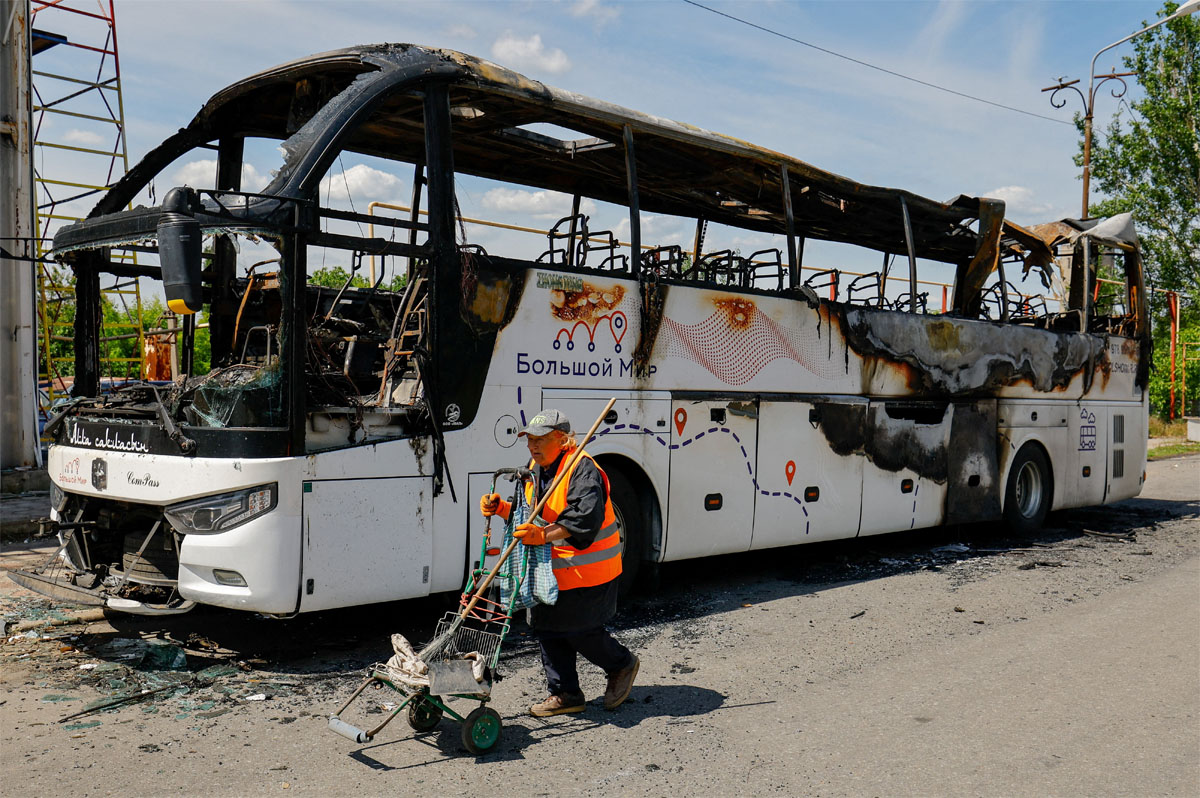
Images from the scene showed a badly burned bus, debris scattered across the road and bodies lying near the site of the explosion.
Donetsk Governor Vadym Filashkin accused Russian forces of deliberately targeting civilians, while Ukrainian President Volodymyr Zelenskyy condemned the attack and described the location as a bus stop.
READ ALSO:
- How Six Members of a Family Were Murdered in Oyo
- World Bank Raises Nigeria Growth Forecast, Demands More Jobs, Poverty Reduction
- Flood Submerges Enugu Road, Strands School Children, Passengers
Russia has not immediately commented on the attack or the reported casualty figures. Moscow has consistently denied deliberately targeting civilians during its war against Ukraine.
Authorities suspended public transportation in Kramatorsk and neighbouring Sloviansk following the attack as a precaution against further strikes.
Kramatorsk, an important Ukrainian-controlled city in the Donetsk region, has faced repeated Russian drone and guided-bomb attacks as fighting intensifies along the eastern front.
The latest attack came a day after another deadly Russian strike on Pryluky, in Ukraine’s Chernihiv region, where a missile hit a five-storey residential building.
The death toll in Pryluky rose to 22 people, including five children, while 54 others were injured. Several people were rescued from the damaged building as emergency crews continued search-and-rescue operations.
The attacks came amid an intensified Russian aerial campaign involving missiles, drones and guided bombs against Ukrainian cities and infrastructure.
Ukrainian authorities have appealed for stronger air-defence support from international partners as the country faces renewed attacks ahead of winter.
The latest strikes have also renewed concerns over the safety of civilians and critical infrastructure nearly five years after Russia launched its full-scale invasion of Ukraine.
Russian Bomb Kills 33 in Ukraine, Hits Two Passenger Buses
International
US Proposes $70,000 OPT Fee for Nigerians, Other Foreign Students

US Proposes $70,000 OPT Fee for Nigerians, Other Foreign Students
The administration of US President Donald Trump has proposed a $70,000 fee for international students seeking to participate in a programme that allows them to work in the United States after completing their studies.
The proposed rule by the US Department of Homeland Security (DHS) targets the Optional Practical Training (OPT) programme available to eligible foreign students on F-1 visas, including Nigerians studying in the US.
Under the proposal, US educational institutions would be required to pay $70,000 for each student’s initial OPT participation, while an additional $30,000 fee would apply for each renewal or further training.
The proposal does not initially require students themselves to pay the $70,000 directly. Instead, the financial obligation would fall on the schools recommending students for OPT, although education groups warn that the cost could ultimately affect students and universities.
The OPT programme allows eligible international students to obtain temporary work experience in jobs related to their fields of study. Most students can participate for up to one year after graduation, while graduates in qualifying science, technology, engineering and mathematics (STEM) fields can receive an additional two years.
READ ALSO:
- EFCC Re-Arraigns Two Over Alleged £110,000 Money Laundering, ₦500m Fraud
- Three Killed, 36 Injured as Houthi Attacks Hit Saudi Airports
- Bandits Kill Three in Fresh Attack on Kebbi Community
DHS said the proposed fees are intended to combat fraud, strengthen the integrity of the immigration system and protect US workers.
The department has also argued that OPT has been misused as a source of cheap foreign labour and that the proposed fees would encourage universities to exercise greater scrutiny when recommending students for the programme.
The proposed charge represents a sharp increase from the current cost associated with OPT applications, which is around $500.
The plan could have significant implications for international students from countries such as Nigeria, India and China, whose graduates make substantial use of OPT, particularly in technology and other specialised fields.
American universities and business groups have raised concerns that the proposed fee could discourage international students from studying in the US and make it harder for companies to recruit skilled graduates.
Education groups have also warned that the measure could affect American universities that rely on international enrolment for tuition revenue and employers that depend on foreign graduates to fill specialised positions.
The proposal is part of the Trump administration’s broader effort to tighten US immigration policies and impose greater restrictions on foreign students and workers.
The DHS proposal is subject to a public comment period before it can be finalised. If approved, the rule would take effect after an additional implementation period, while legal challenges are also expected.
The proposed OPT fee is separate from other changes to the H-1B visa programme, which has also faced increased costs and restrictions under the Trump administration.
US Proposes $70,000 OPT Fee for Nigerians, Other Foreign Students
International
Three Killed, 36 Injured as Houthi Attacks Hit Saudi Airports
Three Killed, 36 Injured as Houthi Attacks Hit Saudi Airports
Three people have been killed and 36 others injured after attacks struck two major airports in Saudi Arabia, with Yemen’s Houthi rebels claiming responsibility for the strikes.
The attacks targeted Abha International Airport in the southern Asir province and King Khalid International Airport in the capital, Riyadh, according to Saudi Arabia’s General Authority of Civil Aviation.
Two women, identified as Moroccan and Algerian residents, were killed in the attack on Abha Airport, where 28 people were also injured.
A separate attack on King Khalid International Airport killed a Sudanese national and injured eight others, including five Saudi citizens, two Egyptian residents and a Pakistani resident.
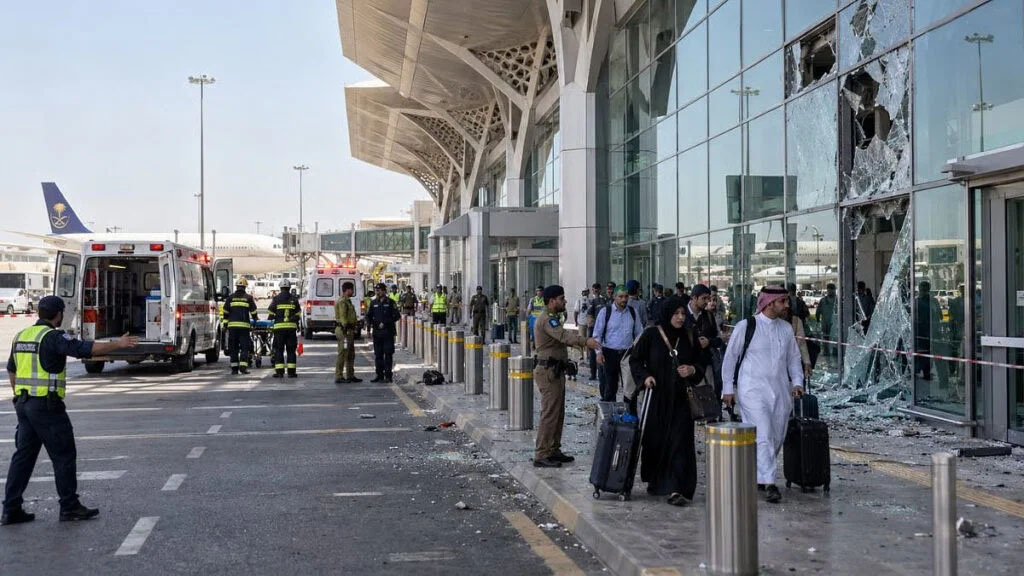
The Saudi aviation authority said the attacks caused material damage and that emergency and security agencies were assessing the impact while taking measures to protect passengers and airport workers.
READ ALSO:
- Bandits Kill Three in Fresh Attack on Kebbi Community
- Ronaldo Pays Emotional Tribute to Messi After Argentina Farewell
- US Set to Charge Maduro, Wife Over Alleged Torture of Americans
The Houthis, who control large parts of Yemen, claimed responsibility for the attacks. Houthi military spokesman Yahya Saree said the group had targeted King Khalid Airport with drones and attacked Abha Airport with ballistic missiles and drones.
Saudi authorities did not directly attribute the attacks to the Houthis in their initial statement, although the claims by the group came shortly before the Saudi casualty figures were announced.
The attacks came amid a sharp escalation in the Yemen conflict, after Saudi-backed Yemeni government forces launched an offensive against Houthi fighters holding territory along the strategically important Red Sea coast and near the Bab el-Mandeb Strait.
The Houthis have also claimed attacks on other Saudi targets, while Saudi-led forces have intensified air operations against Houthi positions in Yemen.
The renewed fighting has raised fresh concerns about the security of Saudi airports and regional air travel, with airlines and aviation authorities monitoring developments closely.
The latest violence marks another escalation in a conflict that has repeatedly threatened civilian infrastructure and vital shipping routes in and around the Red Sea.
Three Killed, 36 Injured as Houthi Attacks Hit Saudi Airports
-
 metro2 days ago
Ondo Air Tragedy: Soldiers, Families Among 32 Killed In NAF Crash
-

 metro2 days ago
Gunmen Open Fire At Lagos Bus Stop, Kill NURTW Member, Injure Three
-

 News3 days ago
President Tinubu Mourns 32 NAF Personnel in Ondo Jet Crash, Orders Immediate Probe
-

 metro3 days ago
No Survivors Found in Ondo NAF Plane Crash — Ondo Governor
-

 metro2 days ago
Ogun Crash: Nine Die As Bus Collides With Truck On Ijebu-Ode-Ore Road
-

 metro2 days ago
UCH CMD: After Decades Without Muslim, Agunbiade Demands Fair Chance
-
 metro11 hours ago
[UPDATED] 20 NYSC Prospective Corps Members Freed After Seven Days in Captivity
-

 International2 days ago
Kemi Badenoch: I Don’t Want Migrants Turning UK Into Nation Of ‘Little Ghettos’