

Auto
China’s Auto Price War Hits German Giants as Nigeria’s Market Offers Fresh Hope
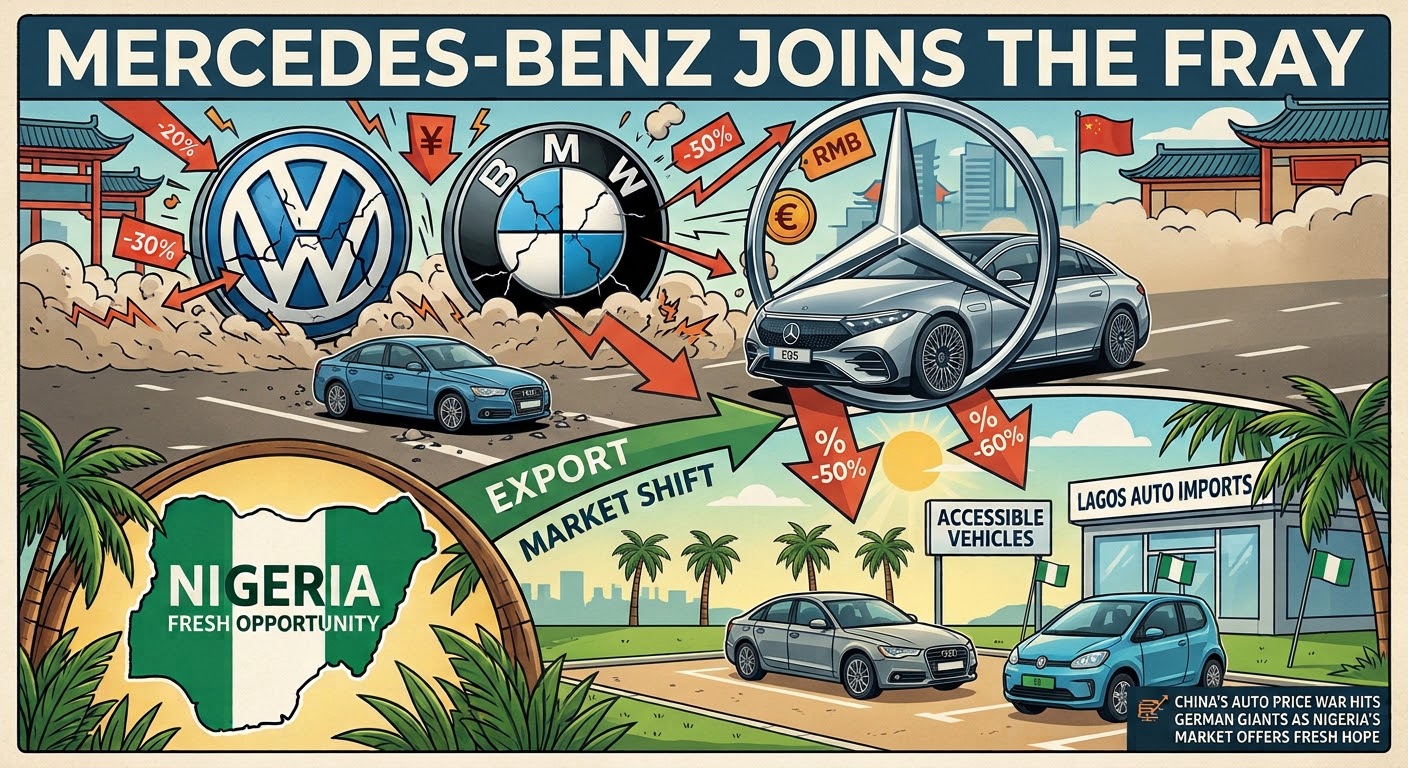
China’s Auto Price War Hits German Giants as Nigeria’s Market Offers Fresh Hope
The global automotive industry is facing a deepening shake-up as fierce competition from Chinese manufacturers, weakening demand and rising production costs force some of the world’s biggest automakers to slash profit expectations, even as Nigeria’s automobile market shows signs of renewed activity, with dealers reporting improved sales of new vehicles.
Mercedes-Benz, BMW and Volkswagen, three pillars of Germany’s automotive industry, have all come under mounting pressure from China, the world’s largest vehicle market, where domestic brands are increasingly challenging established international manufacturers with competitively priced vehicles, advanced electric-car technology and faster product development.
The latest warning came from Mercedes-Benz on Tuesday, October 27, when the luxury carmaker cut its 2026 profitability forecast, citing deteriorating market conditions in China and higher costs expected in the fourth quarter.
The company now expects an adjusted return on sales of between two and three per cent for its cars division, down from its previous forecast of three to five per cent. Its group operating profit is also expected to remain broadly flat compared with last year, instead of recording the previously anticipated improvement.
Mercedes-Benz’s car sales fell eight per cent year-on-year in the third quarter, with weak demand in China contributing to the decline. The announcement sent its shares down by more than five per cent during Tuesday’s trading.
BMW and Volkswagen have also lowered their financial expectations this year, reflecting the increasingly difficult operating environment confronting European manufacturers.
Chinese competitors, including BYD and other rapidly expanding electric-vehicle makers, are gaining ground through aggressive pricing, technological innovation and frequent model upgrades. The shift is forcing established brands to rethink their product strategies, production costs and investment priorities.
For German manufacturers that built their reputations on engineering excellence, premium vehicles and strong brand loyalty, the challenge is no longer simply selling more cars but maintaining profitability in a market where consumers have more alternatives and price competition is intensifying.
Nigeria’s contrasting market outlook
While the global picture presents significant challenges, Nigeria’s automotive market offers a more nuanced outlook.
Although many buyers of new vehicle in Nigeria are shifting to China-made brands largely due to low prices and improved technology, the Japanese, Korean and German automobiles are still holding their own, Newstrends can authoritatively report.
Despite persistent affordability concerns, high vehicle acquisition costs and pressure on household purchasing power, automobile dealers say demand for new vehicles by corporate buyers is picking up in Nigeria, suggesting that parts of the market may be regaining momentum.
However, the reported improvement should not be mistaken for a comprehensive industry recovery, as publicly available sales data have yet to establish a significant scale of increase.
Nigeria’s market dynamics also differ considerably from China’s. Import dependence, foreign-exchange exposure, financing costs and the purchasing power of consumers shape vehicle demand, while the relatively small base of locally assembled vehicles presents opportunities for manufacturers willing to invest in domestic production.
The Federal Government’s Nigeria First Policy is expected to influence this landscape by directing ministries, departments and agencies to procure vehicles from licensed local assemblers or their authorised retailers, subject to specified exceptions and approval requirements.
The National Automotive Design and Development Council’s Director-General, Oluwemimo Joseph Osanipin, has said Nigeria’s vehicle assembly plants have an annual capacity of 370,520 units. The government is seeking to increase local production, create jobs and reduce reliance on imported vehicles.
Osanipin has also highlighted the country’s substantial unmet vehicle needs, estimating that Nigeria requires about 40 million vehicles to adequately serve its population, compared with an estimated 12 million to 14 million currently on the roads.
These figures point to significant long-term opportunities, although translating them into actual sales will require improved affordability, accessible vehicle financing, stronger consumer confidence and dependable after-sales services.
For dealers, assemblers and distributors, the reported improvement in new-car sales offers encouragement. Sustaining that momentum, however, will depend on whether manufacturers can deliver vehicles that match Nigerian buyers’ budgets and operating conditions.
The contrasting developments underline a central reality for the global automotive industry: established manufacturers can no longer rely on brand prestige alone. In China, survival increasingly depends on competing with agile domestic rivals. In Nigeria, growth will depend on affordability, reliable customer service, accessible financing and policies that support local production.
As the industry navigates these competing pressures, the winners will be those that adapt fastest to changing consumer needs without sacrificing quality or financial sustainability.
After-sales service emerges a new strategy
More automobile dealers and assemblers in Nigeria are placing greater emphasis on after-sales service as a strategy to retain existing customers, attract new buyers and build long-term brand loyalty.
Companies such as Carloha Nigeria, Toyota Nigeria, Jetour Nigeria, Mikano Motors, Coscharis Motors, Hyundai Motors Nigeria and CFAO Mobility are among the industry players operating in a market where the customer experience increasingly extends beyond the point of sale to maintenance, spare-parts availability, warranty support and access to reliable service centres.
For customers investing millions of naira in vehicles, dependable after-sales support has become an important consideration, particularly as the cost of repairs, replacement parts and vehicle maintenance continues to rise. Buyers are increasingly concerned not only about the purchase price but also about the cost of keeping their vehicles roadworthy throughout their ownership.
For dealers and assemblers, the strategy offers an opportunity to differentiate their brands in a market where foreign-used vehicles remain a major source of competition. Accessible service centres, trained technicians, genuine spare parts, transparent maintenance costs and responsive customer-care teams can strengthen confidence and encourage repeat purchases.
The emphasis on customer retention is also commercially significant. A satisfied vehicle owner is more likely to return to the same dealer when replacing a car, recommend the brand to others and remain within its service network. Conversely, poor maintenance support and difficulty obtaining spare parts can undermine confidence, regardless of how attractive a vehicle appears in the showroom.
As Nigerian dealers report improving new-vehicle sales, particularly among corporate buyers, a stronger after-sales proposition could help sustain demand beyond fleet purchases and appeal to individual customers seeking greater value for money.
Ultimately, the evolving competition in Nigeria’s automotive market will not be decided by vehicle prices and specifications alone. Just as German manufacturers must respond to Chinese rivals with more competitive products, Nigerian dealers and assemblers must demonstrate that their brands offer dependable ownership experiences long after the keys have been handed over.
In a market where every major purchase demands careful financial consideration, the ability to keep customers satisfied after the sale may prove just as important as the ability to win them in the showroom.




Auto
On the Highway Marks 30 Years, Sets Agenda for Safer Roads, Sustainable Mobility

On the Highway Marks 30 Years, Sets Agenda for Safer Roads, Sustainable Mobility
As stakeholders prepare to assess Nigeria’s highway challenges, road safety, emergency rescue services and the transition to CNG-powered mobility at anniversary lecture in Lagos
JCN Consulting and On The Highway Africa, a magazine dedicated to Nigeria’s highway and transport sectors, will on November 3, 2026, mark three decades of highway journalism with a legacy lecture and anniversary celebration in Lagos.
The event, tagged JCN @ 30 (1996–2026): 30 Years On The Highway, is scheduled to hold at the Lagos Chamber of Commerce and Industry (LCCI), Ikeja, from 9 a.m., bringing together stakeholders from the automotive, transport, road safety, security, logistics, government and corporate sectors.
The milestone celebration is expected to provide a platform for reflecting on the evolution of highway journalism in Nigeria and Africa, while examining persistent challenges confronting the country’s road infrastructure and exploring pathways towards safer, more efficient and sustainable mobility.
Central to the anniversary programme will be discussions on road conditions, traffic congestion, road safety, emergency rescue services and Nigeria’s transition towards Compressed Natural Gas (CNG)-powered transportation.
The organisers have proposed two themes for the anniversary lecture: “30 Years On The Highway: Safety, Security and Sustainability – From Bad Roads to CNG Revolution” and “The Nigerian Highway in 2026: Roads, Roils & Rescue – Auditing Pain, Progress and the Pathway to Safe Mobility.”
The discussions are expected to draw attention to the realities confronting motorists and other road users, alongside the policy interventions, infrastructure improvements and industry collaboration required to address longstanding highway challenges.
Beyond the anniversary lecture, the celebration will feature a special legacy edition of the magazine documenting its 30-year journey, its contributions to road safety advocacy and its role in raising public awareness about developments in Nigeria’s highway and transport sectors.
Since its establishment in 1996, On The Highway Africa has maintained a focus on road conditions, traffic management, the experiences of road users and the broader issues shaping highway development. Through its reporting and advocacy, the publication has continued to draw attention to the need for safer roads and improved transportation infrastructure.
Over the years, its coverage has also evolved to accommodate emerging developments in the transport industry, including conversations around Nigeria’s CNG initiative and the drive towards cleaner and more sustainable mobility alternatives.
Speaking ahead of the anniversary, the Publisher and Chief Executive of JCN Consulting, Mrs Julie Chi-Nwaoha, described the milestone as an opportunity to acknowledge the contributions of the stakeholders, readers, partners and road users who have supported the publication throughout its journey.
“This is not just about me; it is about every road user, every stakeholder, every reader who has believed in our brand. Thirty years on the highway is by God’s grace and the support of great people who believe in me,” she said.
Chi-Nwaoha said the anniversary would provide an opportunity to celebrate the organisation’s achievements, reflect on its experiences and articulate its vision for the future of highway journalism and sustainable mobility in Nigeria.
The management disclosed that media partners, sponsors and well-wishers had begun indicating interest in supporting the anniversary, which is expected to attract participants from different segments of the transport and highway ecosystem.
The celebration comes at a time when road safety, highway infrastructure, efficient emergency response and alternative-fuel transportation remain important considerations in Nigeria’s mobility development.
For JCN Consulting and On The Highway Africa, the 30th anniversary represents not only a celebration of longevity in specialised journalism but also an opportunity to renew the call for safer highways, stronger transport infrastructure and greater accountability in addressing the challenges confronting road users across Nigeria and Africa.
For media enquiries, partnerships and sponsorship:
JCN Consulting
20A, Bayo Ajayi Street, CBD, Agidingbi, Ikeja, Lagos.
Telephone: 08130779590, 08023015560
Email: jcn4real@yahoo.com
Website: www.jcn.com.ng | ONTHEHIGHWAYAfrica.ng
Auto
Car of the Year, other top honours up for grabs as NAJA Awards race begins
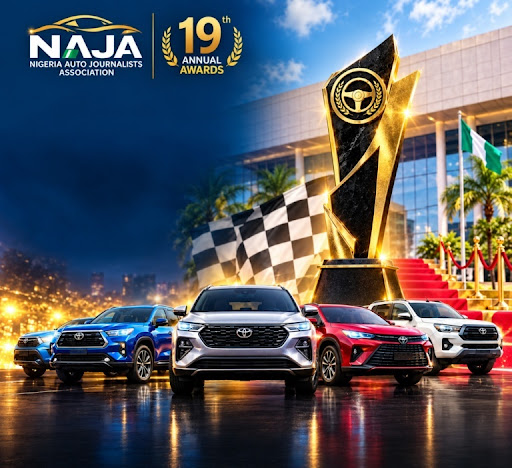
Car of the Year, other top honours up for grabs as NAJA Awards race begins
Nigeria’s leading automobile brands and industry players are gearing up for a keen contest for the coveted Car of the Year title and other top honours as nominations open for the 19th Nigeria Auto Journalists Association Awards, scheduled for December 3, 2026, in Lagos.
With the Civic Centre, Victoria Island, set to host the ceremony for the first time, the competition is expected to spotlight outstanding vehicles, automotive companies, assemblers, after-sales service providers and industry personalities whose products, innovations and contributions are shaping Nigeria’s evolving automotive market.
The Car of the Year category is expected to be a major highlight as nominations begin, with competing brands seeking to outshine one another in a market increasingly influenced by vehicle technology, affordability, performance, customer experience and the growing adoption of alternative-energy mobility solutions.
The commencement of nominations marks a significant step towards the December 3, 2026 grand finale, where outstanding automobile brands, manufacturers, distributors, service providers and industry personalities will be recognised for their performance and contributions to the sector.
The Car of the Year award has become a major talking point at the annual event, providing an opportunity for competing vehicle brands to demonstrate their strengths in an increasingly competitive Nigerian automotive market.
Other categories will spotlight excellence across different segments of the industry, such as vehicle manufacturing and assembly, commercial vehicles, alternative-energy mobility, after-sales services, automotive distribution and individual contributions to sector development.
The awards are expected to attract leading automobile manufacturers, distributors, dealers, financial institutions, policymakers and other stakeholders, as the industry navigates changing consumer preferences, technological advancements, alternative-energy vehicles and renewed efforts to promote local assembly.
Chairman of the 2026 NAJA Awards Planning Committee, Frank Kintum, said the committee was determined to deliver a ceremony worthy of the growing importance of Nigeria’s automotive industry.
Kintum described the awards as an important platform for recognising individuals, brands and organisations whose activities have contributed significantly to the development of the sector.
He said the 19th edition was being planned to be bigger and more glamorous than previous editions, while upholding the credibility and professional standards associated with the awards.
According to the organisers, products, brands and personalities will be assessed across relevant categories, with the final outcomes determined in line with the association’s approved award modalities.
NAJA Chairman, Theodore Opara, said the awards were not merely about celebrating the biggest players in the market but also recognising organisations and individuals that had demonstrated measurable excellence and made meaningful contributions to the automotive ecosystem.
He noted that the credibility of the evaluation process had helped strengthen the awards’ relevance as a reference point for industry stakeholders.
As nominations progress, competition is expected to reflect the growing diversity of Nigeria’s automotive market, where established manufacturers and distributors are facing increasing competition from emerging brands, new vehicle models and alternative-energy mobility solutions.
The outcome of the 2025 edition provides an indication of the competition that could unfold in this year’s contest.
At the 18th NAJA International Auto Awards, held on December 16, 2025, at the Oriental Hotel, Victoria Island, Lagos, the Jetour Dashing emerged as Nigeria’s Car of the Year after beating the Changan CS55 and Chery Tiggo to the top prize.
The award placed the compact crossover SUV in the spotlight, reflecting the growing competition among vehicle brands seeking to attract Nigerian buyers through design, technology, performance and value.
Mikano Motors also recorded a major success, winning Auto Company of the Year, while its Changan CS55 was named Midsize SUV of the Year.
Toyota Nigeria’s Isolo facility won Workshop of the Year, while the Toyota Hilux and Toyota Hiace emerged Pick-Up of the Year and Minibus of the Year, respectively.
Other notable winners included Dangote Sinotruk as Heavy-Duty Truck Brand of the Year, Iron Products Industries Limited as Truck Assembler/Body Builder of the Year, Lanre Shittu Motors as Truck Plant of the Year and Innoson Vehicle Manufacturing as Passenger Car Assembly Plant of the Year.
In the alternative-energy segment, SAGLEV won EV Brand of the Year, while Jet Automobiles was recognised as CNG Vehicle Assembler of the Year. NORD Automobiles emerged Fastest Growing Auto Brand of the Year.
Carloha Nigeria secured the Auto Aftersales Company of the Year and Pre-owned Company of the Year awards, while Winpart by CFAO won Auto Aftersales Service Provider of the Year for parts and workshop services.
The awards also recognised individual contributions, with NORD Automobiles Chairman and Chief Executive Officer, Oluwatobi Ajayi, named Auto Personality of the Year in the private-sector category, while National Automotive Design and Development Council Director-General, Joseph Osanipin, received the public-sector honour.
The range of winners illustrated the breadth of the awards, which extend beyond passenger vehicles to recognise achievements in commercial transportation, local assembly, workshop services, electric mobility and automotive business development.
Industry expectations rise
The 2026 awards come at a time when the automotive industry is undergoing significant changes, with vehicle electrification, compressed natural gas adoption, local manufacturing, after-sales support and evolving government policies shaping its direction.
Against this background, the awards provide an opportunity to highlight businesses and individuals responding to these changes while delivering products and services to Nigerian consumers.
For vehicle manufacturers and distributors, winning a major category could strengthen brand visibility and market positioning, while recognition for assembly plants, service providers and transport operators would underscore the importance of the wider automotive value chain.
The organisers have urged automobile brands and other industry stakeholders to participate actively in the nomination process as preparations gather momentum for the December ceremony.
With the 2025 winners setting a competitive benchmark, attention will now turn to the brands, companies and personalities that will emerge at the 19th edition of the NAJA awards on December 3.
Auto
Toyota Corolla Cross: The SUV That Blends Everyday Comfort With Practicality
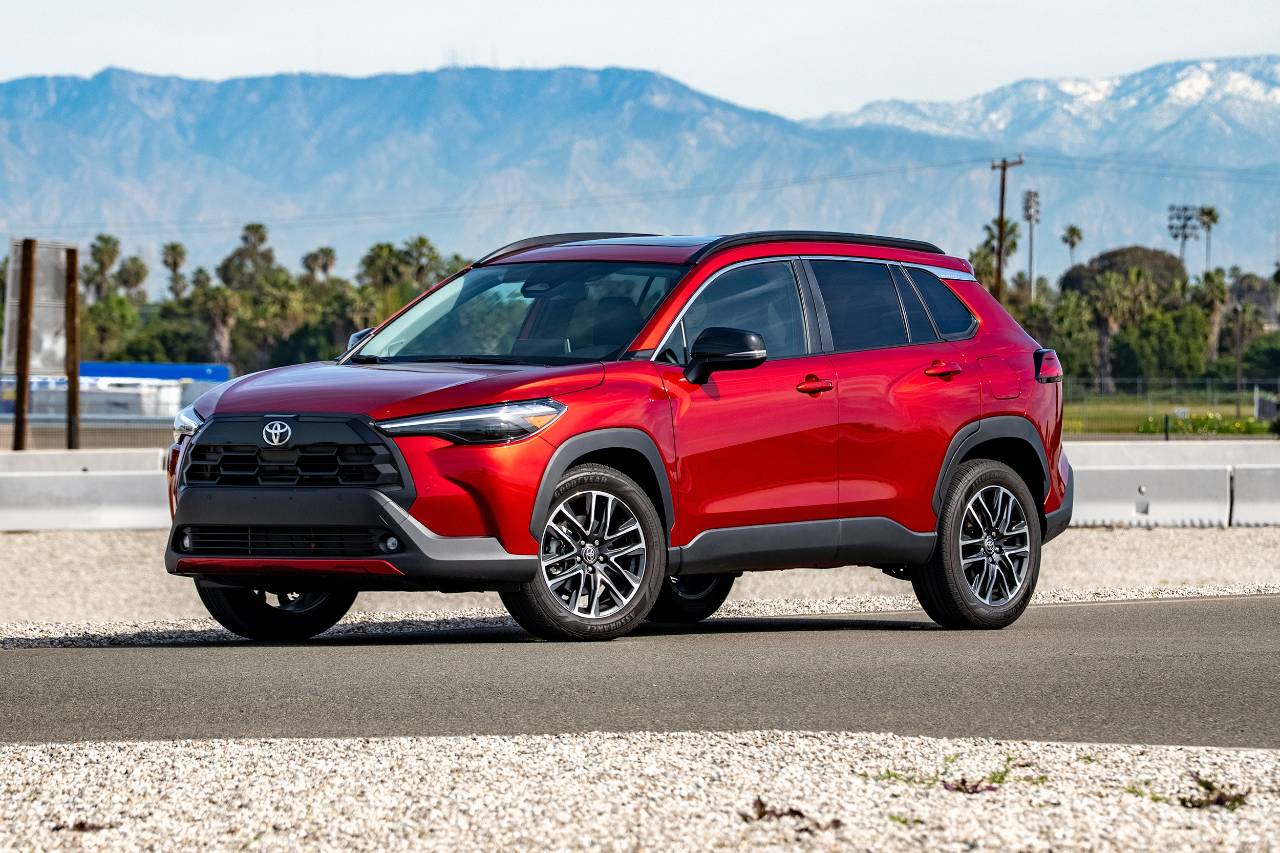
Toyota Corolla Cross: The SUV That Blends Everyday Comfort With Practicality
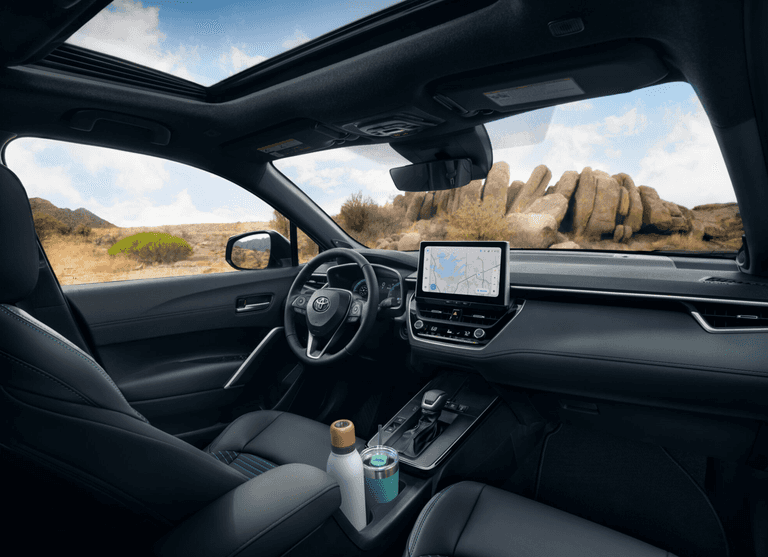
With its elevated driving position, spacious cabin, advanced safety technologies and fuel-efficient hybrid options, the Toyota Corolla Cross offers motorists a compelling blend of SUV versatility and everyday convenience.
For motorists seeking a vehicle that combines the comfort of a family car with the versatility of a sport utility vehicle, the Toyota Corolla Cross presents an attractive option in the increasingly competitive crossover market.
Developed around the familiar Corolla nameplate, the Corolla Cross brings together the practicality associated with the Corolla range and the elevated stance, generous interior space and utility expected of an SUV.
Toyota describes the model as combining spacious interior accommodation and outstanding utility with responsive performance and fuel efficiency.
The result is a vehicle designed to appeal to families, professionals and urban motorists who want a versatile vehicle for daily commuting, business engagements, weekend outings and longer journeys.
SUV styling meets everyday functionality
The Corolla Cross adopts the raised body profile and commanding road presence of an SUV while retaining proportions intended to make it manageable for everyday driving.
Its design seeks to balance visual appeal with functionality, giving buyers an alternative to conventional saloon cars without requiring them to move into a larger SUV.
The elevated seating position can provide drivers with a more commanding view of the road, while the crossover format offers flexibility for passengers, shopping, luggage and other everyday transportation needs.
For Nigerian motorists navigating a combination of busy city streets, highways and varying road conditions, these characteristics make the model worth considering as an all-round family and business vehicle.
Comfort and space for modern motorists
Interior space is an important part of the Corolla Cross proposition. Its cabin is designed to accommodate passengers comfortably while providing practical storage and luggage-carrying capability for everyday activities.
The model’s SUV-inspired layout offers an alternative for customers who need more versatility than a conventional compact saloon but do not necessarily require a full-size SUV.
Depending on the grade, Nigerian buyers should confirm the availability of specific convenience and infotainment features, including touchscreen functions, smartphone connectivity, climate control and other equipment, with an authorised Toyota dealer.
Fuel efficiency and hybrid technology
Fuel economy remains a significant consideration for Nigerian vehicle buyers, particularly households and businesses seeking to manage running costs.
Toyota’s Corolla Cross range includes hybrid versions in selected markets, combining a petrol engine with an electric motor to improve efficiency. The official Toyota Corolla Cross product information highlights fuel-saving hybrid technology as one of the model’s major strengths.
Toyota also lists an E-Four electric four-wheel-drive system on applicable hybrid versions. Availability of this drivetrain and the associated features depends on the specific version.
Actual fuel consumption will vary according to the powertrain, driving conditions, traffic, vehicle load and driving style. Prospective Nigerian buyers should therefore confirm the engine, transmission and hybrid availability of the exact vehicle being offered locally rather than assume that every international specification is available in Nigeria.
Safety and driver assistance
Safety is another important element of the Corolla Cross package.
Toyota’s international product information highlights Toyota Safety Sense, a suite of active safety and driver-assistance technologies designed to support drivers in everyday traffic situations. Depending on the model grade and market, the package may include functions intended to help detect potential collisions and support safer driving.
The manufacturer’s information also identifies parking assistance and a back-guide monitor on applicable grades, helping drivers manoeuvre in confined spaces.
However, equipment can differ by market and specification. Buyers should request confirmation of the safety features fitted to the particular Corolla Cross being sold by Toyota (Nigeria) Limited or its accredited dealers.
Backed by Toyota’s Nigerian dealer network
Beyond the vehicle’s design and equipment, the availability of authorised sales, servicing and genuine spare parts is an important consideration for buyers.
Toyota (Nigeria) Limited, appointed distributor of Toyota Motor Corporation in Nigeria, operates through seven accredited dealers across the country. The company says its network supports vehicle sales, after-sales services and the supply of genuine parts.
Purchasing an eligible new vehicle through an accredited dealer also provides access to Toyota (Nigeria) Limited’s stated basic warranty of three years or 100,000 kilometres, whichever comes first, subject to the manufacturer’s terms and conditions.
The company says its Nigerian-market vehicles are configured with local operating conditions in mind, including a Severe User Package designed to help vehicles cope with challenging road and environmental conditions. Customers should confirm the precise specification applicable to the Corolla Cross they intend to purchase.
Where to enquire about the Toyota Corolla Cross
Customers can contact Toyota (Nigeria) Limited’s accredited dealers to confirm the Corolla Cross’s availability, current price, engine and transmission options, colour choices, warranty coverage and delivery arrangements.
The seven dealers listed on Toyota (Nigeria) Limited’s official website are:
Elizade Nigeria Limited, R.T. Briscoe (Nigeria), Omoregie Motors, Germaine Auto Centre, Mandilas Enterprises Limited,
Kojo Motors Limited and Metropolitan Motors Limited.
Dealer contacts and locations can be checked on Toyota (Nigeria) Limited’s official website at www.toyotanigeria.com/dealers/.
A versatile choice for the modern driver
The Toyota Corolla Cross brings together the elevated stance of an SUV, the everyday practicality of the Corolla nameplate and the availability of fuel-efficient hybrid technology in selected versions.
For Nigerian buyers weighing comfort, utility, safety and long-term ownership support, the model deserves consideration as a versatile vehicle for both personal and family use.
-

 Politics2 days ago
2027: APGA Chairman Says South-East Must Back Tinubu to Secure Igbo Presidency
-

 metro9 hours ago
Cancelled Wedding: Man Sues Ex-Fiancée’s Father Over Unpaid ₦70,000 Dowry
-

 Entertainment2 days ago
Tope Alabi Threatens Pastor With Lawsuit Over Toluwanisings’ Death Claims
-

 International2 days ago
France Deploys 70,000 Police as Cost-of-Living Protests Intensify
-
 metro2 days ago
Borno: Troops Kill 15 Terrorists in Midnight Air Strike
-

 Auto9 hours ago
Car of the Year, other top honours up for grabs as NAJA Awards race begins
-

 Politics2 days ago
Atiku Condemns Attack on Edo Comedian Over Refusal to Support Tinubu
-

 News2 days ago
Bill Clinton condemns anti-Muslim prejudice, cites Qur’an’s message of coexistence