

Auto
Nigeria can now produce 400,000 cars annually, says NADDC

Private investors including foreigners have invested a total of N500bn in the Nigeria’s auto industry, which now has the capacity to manufacture 400,000 cars annually.
Chairman, National Automotive Design and Development Council, Senator Osita Izunaso, disclosed this when he led members of the council’s board on a tour of auto assembly plants in Lagos and other parts of the country.
Other board members on the tour are Mr Tokunbo Aromolaran, Dr. Nankin Bagudu, Engr. Emmanuel Kwaya, Reverend Lambert, Dr. Obi, and Director General Jelani Aliyu.
A report obtained on Sunday from the Facebook page of the council stated that fundamentally, the Nigerian Automotive sector could produce 400,000 vehicles per annum, adding, “What the nation needs is Nigerians to buy that number of these locally produced/assembled vehicles instead of spending money on 400,000 second hand imported vehicles that have been used and dumped by other counties.
“As a result of NADDC’s unrelenting efforts, over half a trillion naira, i.e. over N500 billion has been invested by credible Nigerian and international companies in setting up factories towards the development of the nation’s automotive sector: companies such as Dangote-SinoTrucks, Innoson, PAN, Cherry, Peugeot, Stallion Group, Hyundai, Honda, Elizade, Lanre Shittu, JAC, Kojo, Nord, Omaa, Vistar, Jet Systems, National Trucks Manufacturers, GAC, Kia, Mikano/Geely.”
It stated that these commited companies are now actively producing/assembling vehicles in Nigeria. “They have a combined installed capacity to produce over 400,000 vehicles per year. And this capacity is not only made up of fossil fuel powered vehicles: recent developments have seen the start of electric vehicles assembly in Nigeria with the Hyundai Kona EV, and the test run of the Jet Systems Electric Van,” it added.










Auto
AutoFast By CFAO Assures Former Moove Drivers of Continued After-Sales Support, Free Diagnostics
AutoFast By CFAO Assures Former Moove Drivers of Continued After-Sales Support, Free Diagnostics
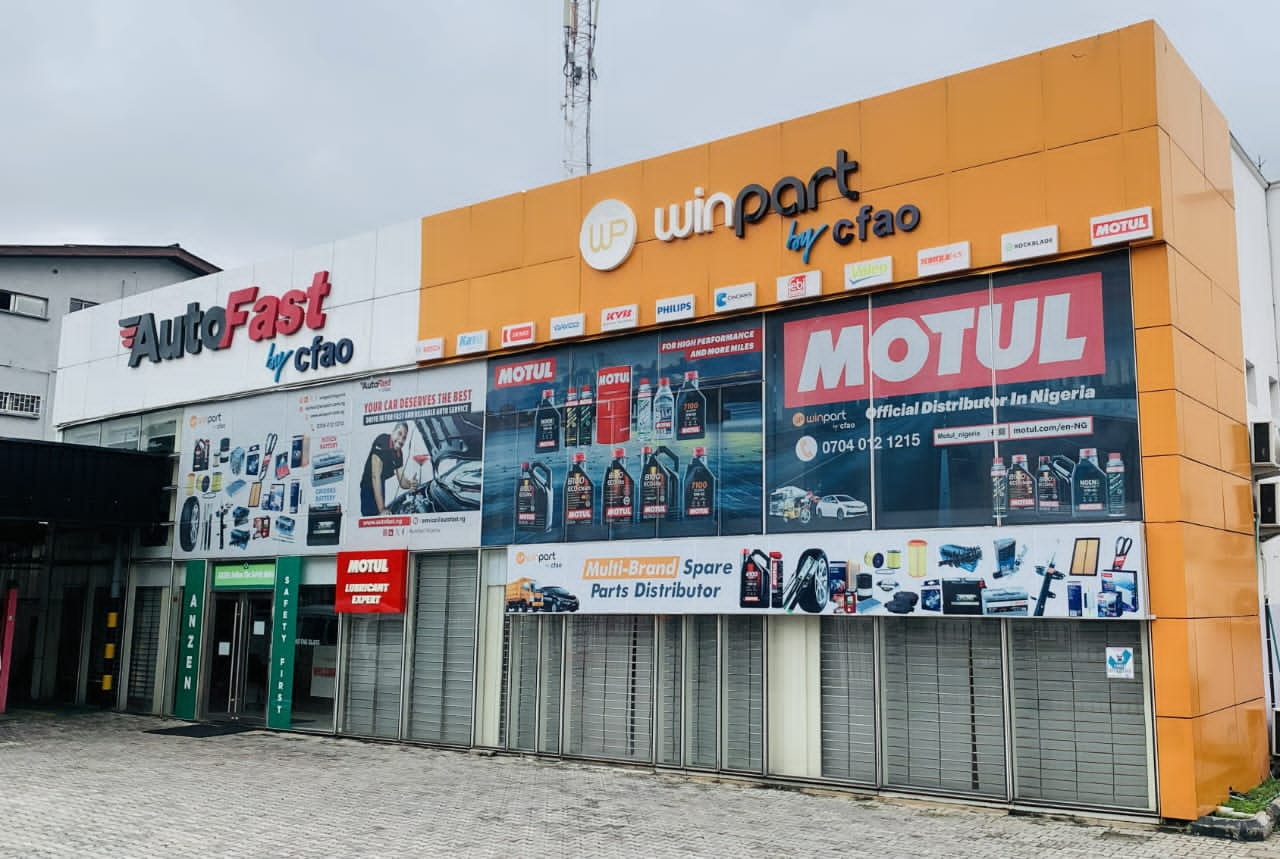
As the exit of mobility platform Moove from Nigeria raises concerns over vehicle maintenance and repair costs among affected drivers, AutoFast by CFAO has moved to reassure them of continued access to professional servicing, quality lubricants and affordable spare parts.
The company said its commitment to supporting former Moove drivers remained unchanged, despite the platform’s withdrawal from the Nigerian market, stressing that it would continue helping them keep their vehicles roadworthy, minimise downtime and protect their livelihoods.
AutoFast by CFAO, which has serviced and maintained the vehicles for more than four years, said it understood the concerns drivers might face regarding maintenance, repairs and the availability of essential spare parts following Moove’s exit.
To address these challenges, the company is introducing dedicated service support for former Moove drivers, including free vehicle diagnostics, access to quality Motul lubricants and a loyalty programme offering exclusive discounts to returning customers on their third service.
The initiative, according to the company, is designed to make vehicle maintenance more accessible, convenient and affordable, while enabling drivers to get their vehicles back on the road without unnecessary delays associated with service approvals.
Speaking on the initiative, General Manager of Winpart by CFAO and AutoFast by CFAO, Mr. Eric Fantodji, said the company recognised the critical role the vehicles played in the daily operations and income generation of the drivers.
“Our relationship with these drivers spans more than four years, and we understand how important their vehicles are to their livelihoods. Our priority is to ensure they continue to have access to dependable after-sales support, professional servicing and affordable maintenance solutions,” Fantodji said.
He also underscored the importance of using the appropriate engine lubricants, particularly for vehicles equipped with small-capacity engines that require specific lubricant standards.
“From the beginning of our partnership, we have used Motul lubricants to service these vehicles. Maintaining consistency with the manufacturer-recommended lubricant specification is particularly important for the sensitive 0.8-litre or one-litre engines. Switching to unsuitable or lower-quality lubricants can have serious consequences for engine performance and potentially increase repair costs,” he said.
 According to him, using the correct lubricant helps protect engine components, maintain performance and reduce the risk of avoidable mechanical problems.
READ ALSO:
- US Extradites Nigerian Over Alleged $100m Tax Refund Fraud
- Panic as Gunmen Storm Kaduna Estate at Midnight, Abduct Residents
-
NSCDC Evidence Scandal: Tunji-Ojo Says Officers Tampered With Evidence in Miners’ Deaths
He therefore urged drivers to adhere to the recommended lubricant specifications when servicing their vehicles, warning that cutting corners on essential maintenance could lead to more expensive repairs in the long run.
Beyond routine servicing, Fantodji said AutoFast by CFAO was also making essential maintenance components, including oil filters, air filters, brake pads and other spare parts, available at affordable prices.
“We want drivers to know that they can continue to count on AutoFast by CFAO for quality products, professional service and support that recognises their needs,” he added.
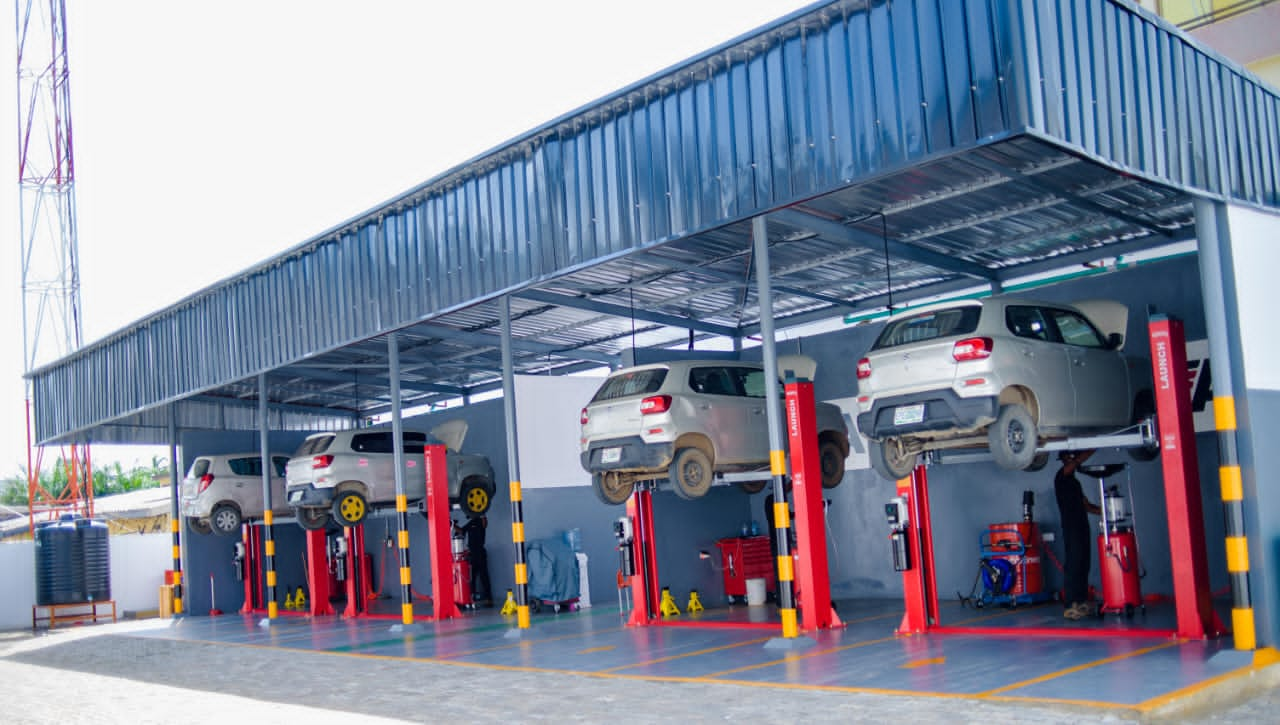
The company said former Moove drivers could access the support services at its Sanusi Fafunwa and Amuwo Odofin service stations, where offerings include free diagnostics, priority servicing, quality spare parts, lubricants and a customer loyalty programme.
AutoFast by CFAO provides multi-brand vehicle maintenance, servicing and repair solutions for individual motorists and businesses. Its services are complemented by access to spare parts and lubricants supplied through Winpart by CFAO.
The latest initiative underscores the importance of reliable after-sales support in Nigeria’s automotive and mobility sectors, particularly for drivers whose vehicles are essential income-generating assets.
For former Moove drivers, continued access to professional maintenance, appropriate lubricants and affordable spare parts could prove critical to keeping their vehicles operational, controlling repair expenses and sustaining their daily earnings following the platform’s exit from the country.
AutoFast By CFAO Assures Former Moove Drivers of Continued After-Sales Support, Free Diagnostics
Auto
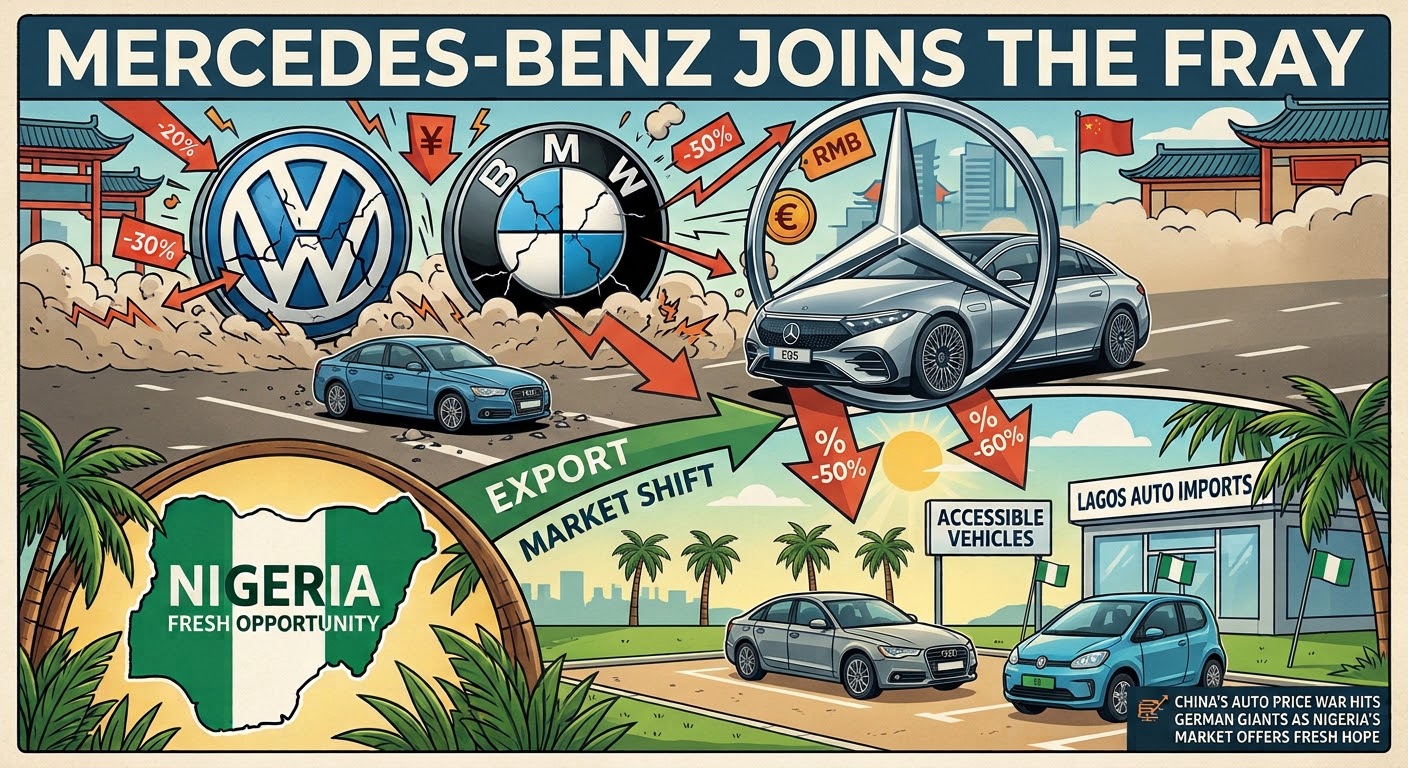
China’s Auto Price War Hits German Giants as Nigeria’s Market Offers Fresh Hope
China’s Auto Price War Hits German Giants as Nigeria’s Market Offers Fresh Hope
The global automotive industry is facing a deepening shake-up as fierce competition from Chinese manufacturers, weakening demand and rising production costs force some of the world’s biggest automakers to slash profit expectations, even as Nigeria’s automobile market shows signs of renewed activity, with dealers reporting improved sales of new vehicles.
Mercedes-Benz, BMW and Volkswagen, three pillars of Germany’s automotive industry, have all come under mounting pressure from China, the world’s largest vehicle market, where domestic brands are increasingly challenging established international manufacturers with competitively priced vehicles, advanced electric-car technology and faster product development.
The latest warning came from Mercedes-Benz on Tuesday, October 27, when the luxury carmaker cut its 2026 profitability forecast, citing deteriorating market conditions in China and higher costs expected in the fourth quarter.
The company now expects an adjusted return on sales of between two and three per cent for its cars division, down from its previous forecast of three to five per cent. Its group operating profit is also expected to remain broadly flat compared with last year, instead of recording the previously anticipated improvement.
Mercedes-Benz’s car sales fell eight per cent year-on-year in the third quarter, with weak demand in China contributing to the decline. The announcement sent its shares down by more than five per cent during Tuesday’s trading.
BMW and Volkswagen have also lowered their financial expectations this year, reflecting the increasingly difficult operating environment confronting European manufacturers.
Chinese competitors, including BYD and other rapidly expanding electric-vehicle makers, are gaining ground through aggressive pricing, technological innovation and frequent model upgrades. The shift is forcing established brands to rethink their product strategies, production costs and investment priorities.
For German manufacturers that built their reputations on engineering excellence, premium vehicles and strong brand loyalty, the challenge is no longer simply selling more cars but maintaining profitability in a market where consumers have more alternatives and price competition is intensifying.
Nigeria’s contrasting market outlook
While the global picture presents significant challenges, Nigeria’s automotive market offers a more nuanced outlook.
Although many buyers of new vehicle in Nigeria are shifting to China-made brands largely due to low prices and improved technology, the Japanese, Korean and German automobiles are still holding their own, Newstrends can authoritatively report.
Despite persistent affordability concerns, high vehicle acquisition costs and pressure on household purchasing power, automobile dealers say demand for new vehicles by corporate buyers is picking up in Nigeria, suggesting that parts of the market may be regaining momentum.
However, the reported improvement should not be mistaken for a comprehensive industry recovery, as publicly available sales data have yet to establish a significant scale of increase.
Nigeria’s market dynamics also differ considerably from China’s. Import dependence, foreign-exchange exposure, financing costs and the purchasing power of consumers shape vehicle demand, while the relatively small base of locally assembled vehicles presents opportunities for manufacturers willing to invest in domestic production.
The Federal Government’s Nigeria First Policy is expected to influence this landscape by directing ministries, departments and agencies to procure vehicles from licensed local assemblers or their authorised retailers, subject to specified exceptions and approval requirements.
The National Automotive Design and Development Council’s Director-General, Oluwemimo Joseph Osanipin, has said Nigeria’s vehicle assembly plants have an annual capacity of 370,520 units. The government is seeking to increase local production, create jobs and reduce reliance on imported vehicles.
Osanipin has also highlighted the country’s substantial unmet vehicle needs, estimating that Nigeria requires about 40 million vehicles to adequately serve its population, compared with an estimated 12 million to 14 million currently on the roads.
These figures point to significant long-term opportunities, although translating them into actual sales will require improved affordability, accessible vehicle financing, stronger consumer confidence and dependable after-sales services.
For dealers, assemblers and distributors, the reported improvement in new-car sales offers encouragement. Sustaining that momentum, however, will depend on whether manufacturers can deliver vehicles that match Nigerian buyers’ budgets and operating conditions.
The contrasting developments underline a central reality for the global automotive industry: established manufacturers can no longer rely on brand prestige alone. In China, survival increasingly depends on competing with agile domestic rivals. In Nigeria, growth will depend on affordability, reliable customer service, accessible financing and policies that support local production.
As the industry navigates these competing pressures, the winners will be those that adapt fastest to changing consumer needs without sacrificing quality or financial sustainability.
After-sales service emerges a new strategy
More automobile dealers and assemblers in Nigeria are placing greater emphasis on after-sales service as a strategy to retain existing customers, attract new buyers and build long-term brand loyalty.
Companies such as Carloha Nigeria, Toyota Nigeria, Jetour Nigeria, Mikano Motors, Coscharis Motors, Hyundai Motors Nigeria and CFAO Mobility are among the industry players operating in a market where the customer experience increasingly extends beyond the point of sale to maintenance, spare-parts availability, warranty support and access to reliable service centres.
For customers investing millions of naira in vehicles, dependable after-sales support has become an important consideration, particularly as the cost of repairs, replacement parts and vehicle maintenance continues to rise. Buyers are increasingly concerned not only about the purchase price but also about the cost of keeping their vehicles roadworthy throughout their ownership.
For dealers and assemblers, the strategy offers an opportunity to differentiate their brands in a market where foreign-used vehicles remain a major source of competition. Accessible service centres, trained technicians, genuine spare parts, transparent maintenance costs and responsive customer-care teams can strengthen confidence and encourage repeat purchases.
The emphasis on customer retention is also commercially significant. A satisfied vehicle owner is more likely to return to the same dealer when replacing a car, recommend the brand to others and remain within its service network. Conversely, poor maintenance support and difficulty obtaining spare parts can undermine confidence, regardless of how attractive a vehicle appears in the showroom.
As Nigerian dealers report improving new-vehicle sales, particularly among corporate buyers, a stronger after-sales proposition could help sustain demand beyond fleet purchases and appeal to individual customers seeking greater value for money.
Ultimately, the evolving competition in Nigeria’s automotive market will not be decided by vehicle prices and specifications alone. Just as German manufacturers must respond to Chinese rivals with more competitive products, Nigerian dealers and assemblers must demonstrate that their brands offer dependable ownership experiences long after the keys have been handed over.
In a market where every major purchase demands careful financial consideration, the ability to keep customers satisfied after the sale may prove just as important as the ability to win them in the showroom.
Auto
On the Highway Marks 30 Years, Sets Agenda for Safer Roads, Sustainable Mobility

On the Highway Marks 30 Years, Sets Agenda for Safer Roads, Sustainable Mobility
As stakeholders prepare to assess Nigeria’s highway challenges, road safety, emergency rescue services and the transition to CNG-powered mobility at anniversary lecture in Lagos
JCN Consulting and On The Highway Africa, a magazine dedicated to Nigeria’s highway and transport sectors, will on November 3, 2026, mark three decades of highway journalism with a legacy lecture and anniversary celebration in Lagos.
The event, tagged JCN @ 30 (1996–2026): 30 Years On The Highway, is scheduled to hold at the Lagos Chamber of Commerce and Industry (LCCI), Ikeja, from 9 a.m., bringing together stakeholders from the automotive, transport, road safety, security, logistics, government and corporate sectors.
The milestone celebration is expected to provide a platform for reflecting on the evolution of highway journalism in Nigeria and Africa, while examining persistent challenges confronting the country’s road infrastructure and exploring pathways towards safer, more efficient and sustainable mobility.
Central to the anniversary programme will be discussions on road conditions, traffic congestion, road safety, emergency rescue services and Nigeria’s transition towards Compressed Natural Gas (CNG)-powered transportation.
The organisers have proposed two themes for the anniversary lecture: “30 Years On The Highway: Safety, Security and Sustainability – From Bad Roads to CNG Revolution” and “The Nigerian Highway in 2026: Roads, Roils & Rescue – Auditing Pain, Progress and the Pathway to Safe Mobility.”
The discussions are expected to draw attention to the realities confronting motorists and other road users, alongside the policy interventions, infrastructure improvements and industry collaboration required to address longstanding highway challenges.
Beyond the anniversary lecture, the celebration will feature a special legacy edition of the magazine documenting its 30-year journey, its contributions to road safety advocacy and its role in raising public awareness about developments in Nigeria’s highway and transport sectors.
Since its establishment in 1996, On The Highway Africa has maintained a focus on road conditions, traffic management, the experiences of road users and the broader issues shaping highway development. Through its reporting and advocacy, the publication has continued to draw attention to the need for safer roads and improved transportation infrastructure.
Over the years, its coverage has also evolved to accommodate emerging developments in the transport industry, including conversations around Nigeria’s CNG initiative and the drive towards cleaner and more sustainable mobility alternatives.
Speaking ahead of the anniversary, the Publisher and Chief Executive of JCN Consulting, Mrs Julie Chi-Nwaoha, described the milestone as an opportunity to acknowledge the contributions of the stakeholders, readers, partners and road users who have supported the publication throughout its journey.
“This is not just about me; it is about every road user, every stakeholder, every reader who has believed in our brand. Thirty years on the highway is by God’s grace and the support of great people who believe in me,” she said.
Chi-Nwaoha said the anniversary would provide an opportunity to celebrate the organisation’s achievements, reflect on its experiences and articulate its vision for the future of highway journalism and sustainable mobility in Nigeria.
The management disclosed that media partners, sponsors and well-wishers had begun indicating interest in supporting the anniversary, which is expected to attract participants from different segments of the transport and highway ecosystem.
The celebration comes at a time when road safety, highway infrastructure, efficient emergency response and alternative-fuel transportation remain important considerations in Nigeria’s mobility development.
For JCN Consulting and On The Highway Africa, the 30th anniversary represents not only a celebration of longevity in specialised journalism but also an opportunity to renew the call for safer highways, stronger transport infrastructure and greater accountability in addressing the challenges confronting road users across Nigeria and Africa.
For media enquiries, partnerships and sponsorship:
JCN Consulting
20A, Bayo Ajayi Street, CBD, Agidingbi, Ikeja, Lagos.
Telephone: 08130779590, 08023015560
Email: jcn4real@yahoo.com
Website: www.jcn.com.ng | ONTHEHIGHWAYAfrica.ng
-

 metro1 day ago
Cancelled Wedding: Man Sues Ex-Fiancée’s Father Over Unpaid ₦70,000 Dowry
-

 Auto1 day ago
Car of the Year, other top honours up for grabs as NAJA Awards race begins
-

 metro2 days ago
School Bus Driver Turns Kidnapper, Collects ₦503,000 Ransom, Rapes 14-Year-Old Delta Student
-

 metro2 days ago
IKEDC Blames National Grid for Two-Week Power Crisis in Ishaga, Oke-Ayo
-

 Sports1 day ago
KANE ENDS 25-YEAR WAIT! England Captain Wins 2026 Ballon d’Or After Stunning 73-Goal Season
-

 metro1 day ago
Man, Teenage Girl Found Dead in Toyota Corolla as Police Begin Investigation
-
 metro1 day ago
EFCC Busts Four Illegal Lithium Plants in Ogun, Arrests 14 Chinese Nationals
-

 metro24 hours ago
Nigerian Navy Recruitment 2026: October 31 Deadline, Full Requirements and How to Apply