

News
NMA, others threaten to join resident doctors strike sept 18

– Medical bodies to give FG 21-day ultimatum
– Forum of health institutions’ chairmen seek end to NARD strike
– Ngige: Striking doctors begrudge government’s generosity, want to act above law
The three-week-old strike embarked upon by the Nigerian Association of Resident Doctors (NARD) assumed a new dimension on Saturday with threats by three other associations of medical doctors to join them if pending issues are not resolved before September 18.
The Nigerian Medical Association (NMA), the Medical and Dental Consultants’ Association of Nigeria (MDCAN) and the Medical and Dental Doctors in Academics (MEDSABAM) unanimously agreed to join their counterparts in NARD if the Federal Government fails to resolve all the pending issues.
The threats coincided with calls by the Forum of Chairmen of Health Institutions in Nigeria (FCHIN) for quick resolution of the ongoing strike by resident doctors.
At a just concluded National Executive Council (NEC) meeting of the NMA, the various medical bodies agreed to send a letter to the Federal Government to register their displeasure and give it a 21-day ultimatum, which will lapse on September 18, 2021.
The NEC frowned at the instruction for immediate implementation of the “No Work, No Pay” rule issued by the Federal Ministry of Health to the Chief Medical Directors and Medical Directors of Federal Tertiary Institutions.
The rule applies to all resident doctors and other medical professionals who have failed to report to work since August 2.
It will be recalled that MDCAN had on August 15 resolved to shelve its planned strike while it gave the Federal Government a four-week grace to reverse the removal of the Consultants from the Consolidated Medical Salary Structure (CONMESS) to the Consolidated University Academic Salary Structure (CONUASS) by their employing universities.
MEDSABAM had also given the federal government a four-week ultimatum to resolve its issues.
Speaking with The Nation correspondent in Abuja yesterday, the Chairman of Communication and Communique of the NARD, Dr Julian Ojebo, said: “The National Executive Council (NEC) meeting of the Nigerian Medical Association (NMA) held from Wednesday till the early hours of this morning (yesterday).
“The crux of the matter was the Nigeria Association of Resident Doctors’ strike, and the memorandum of understanding (MoU) signed with the NMA.
“There is also the issue of the Medical and Dental Consultants Association of Nigeria (MDCAN) pending strike. MDCAN gave the government a four-week ultimatum to fulfill their demands.
“Also, there was the issue of the Medical and Dental Doctors in Academics (MEDSABAM) pending strike. MEDSABAM also gave the government a four-week ultimatum.
“These and many more issues were also discussed at the meeting.
“However, the highlight of the meeting was item number 6, which was the NARD strike.
“Discussions on item number 6 lasted for seven hours where state chairmen and secretaries, alongside all the committee members, debated on the issues surrounding the NARD strike, and the need for the NMA to put forth a strongly worded letter to the government – the Ministry of Health and the Ministry of Labour and Employment.
“During the meeting, most members of the NEC were made aware of the implementation of the ‘No Work No Pay’ which is against the backdrop of the signatures of the memorandum of understanding, which goes to show that government has already reneged on the MoU they had with the NMA.
“After these, motions were moved and it was unanimously agreed that a 21-day ultimatum, which expires on the 18th of September, be given to the Federal Government, after which the Nigerian Medical Association will embark on a total indefinite strike.
“If the government does not resolve all pending issues before those 21 days, the NMA will be left with nothing than to join the doctors – NARD, MDCAN, MEDSABAM, in a total indefinite strike.
“The NMA NEC also frowned at the circular from the Office of the Head of Service removing house officers from the scheme of service and ordered that the NMA approaches the Head of Service for immediate withdrawal of that circular, and also place caution on the Ministry of Health and the Office of the Head of Service of Lagos State against adopting that heinous circular from the Head of Service of the Federation.
“The meeting was attended by 37 Chairmen and Secretaries of the various NMA plus the FCT, Committee Chairmen and Secretaries, President of Affiliates and other observers.
“Also present were past presidents and secretaries and the President of the Commonwealth Medical Association, Dr Osahon Enabulele.”
The Forum of Chairmen of Health Institutions in Nigeria (FCHIN) yesterday called for quick resolution of the ongoing strike by the National Association of Resident Doctors.
The body said the continued resort to strike by health workers disrupt services, adding that it does not portray the country in good light.
The forum said it would meet with the leadership of the Nigerian Medical Association and representatives of the Federal Ministry of Health to find solution to incessant strike in the health sector.
The chairman of the forum, Dr. Sam Jaja, who led the leadership of the forum to a meeting with the Minister of Labour and Employment, Senator Chris Ngige in Abuja, said the forum would choose a four-pronged approach to resolve the dispute.
A statement issued by the Deputy Director, Press and Public Relations, Federal Ministry of Labour and Employment, Charles Akpan, yesterday frowned at the frequent resort to strike by doctors.
“Strike should be the last resort when every other effort has been exhausted in terms of finding solution to whatever the problem is.
“But for any little thing, you resort to disruption of services; it does not portray the country in good light.
“It does not also portray the profession in good light, especially such a profession that has to do with the preservation of human lives.
“The Committee of Chief Medical Directors (CMDS) briefed us and it is just exactly what you have narrated.
“All hope was that the meeting of last week where all the affiliates of the Nigerian Medical Association (NMA) except NARD signed the MOU would resolve the strike.
“We feel so concerned the strike hasn’t been called off.
“It makes them (doctors) insensitive, and that is not right. For whatever reason, I think we should nip it in the bud. That is what we as Forum of Chairmen of Health Institutions of Nigeria are in for.
“We need to find a solution to this. It is not good for us and it is not good for them.
“I bet that as you are solving this problem, others are warming up to start theirs.
“We can’t allow them to continue. We must find a permanent solution.
“As the representatives of their employers, we can’t continue to fold our hands over this constant disruption of health services in the country.
“Our plan was to meet first with the NMA, NARD and the Ministry of Health before coming to you.
“Incidentally, you are the first to open your doors to us. So, we came to intimate you with our plans. We will return when we round off meeting with them,” the statement said.
Striking doctors want to act above law — Ngige
Ngige faulted the ongoing strike, describing it as unjustifiable and unwarranted, even as he said the implementation of the Memorandum of Understanding (MoU) signed with doctors on August 21 was on course.
He said government had adopted a holistic approach to tackling the challenges in the health sector, noting that some of the issues in contention cut across sectors.
He added that government bent backwards to improve the ease of practice of medicine in the country despite dwindling resources.
The statement said: “The resident doctors are on the scheme of service against which obtained earlier. There was nothing like that when we started practice.
“Nigeria is also about the only country that has the Medical Residency Training Fund backed up by an act, Medical Residency Training Act, passed into law by this administration in 2018.
“N4.8 billion is already in 2021 Service Wide Vote for this – to cover exam fees, books, travel to exam centres and accommodation. We are battling to meet up the timeline on this.
“As a matter of fact, the Residency Training Fund for 2021 is a borrowed fund. It is part of the deficit budget funded by the World Bank and IMF.
“Now that the President has signed the law governing it, with signatures appended, we can access this fund through the CBN and from there to the Federal Ministry of Finance, Budget Office and to the Accountant General of the Federation.
“But it is not what you achieve in a day. It takes some time. But these young doctors will hear none of that.
“Take the issue of hazard allowance. It was even the Federal Government who noticed the paltry sum doctors and health workers receive and said no during the peak of COVID-19 pandemic last year.
“Considering the dangers they face, government took the bull by the horn, approved and released a jumbo, the sum of N32 billion as hazard allowance.
“We felt this is commensurate with the dangers of the pandemic and immediately after, felt the need to re-negotiate and give them something more meaningful than the N5000 they were earning since 20 years and kept quiet.
“Now that we have invited them for re-negotiation, they turned round to make it an issue, claiming that the process is too slow.
“Meanwhile, they are the ones causing the delay. NMA and JOHESU can’t agree on the table.
“Right now, the two have written to me to say they won’t negotiate together again.
“NMA said that they must compartmentalise into clinical and non-clinical, and that the people who are clinical should take more money.
‘JOHESU said no, we don’t want clinical and non-clinical. We have clinical and non-clinical people but the hazard is the same because we are working in the same hospital environment.
“So, who do you blame for the delay? Government or doctors and JOHESU?”
Ngige said all the issues contained in the MoU, ranging from arrears of the consequential adjustment of the national minimum wage to skipping allowance and bench fees, among others, have successfully been tackled at the meeting of 20 and 21 August, and all affiliates of the NMA signed the MOA with NARD dissenting.
He said: “NARD wants a particular clause to be inserted in the agreement that section 43 of the Trade Dispute Act should not apply to them. That we should insert in it a government agreement that they should be paid for the period they are not at work.
“I’m being careful about this. This is law and I will not lend myself to illegality to state in the agreement that a group of Nigerians are above the law. But as a matter of fact, a clause in that agreement states clearly that nobody should be punished for participating or not participating in the strike.
“So, what else do they want? They want me to put it in writing that they are above the law. That ‘No work No pay’ should not apply to them. That ‘No work, No pay’ is no more part of our law, despite the fact that I swore to uphold the constitution?
“This is notwithstanding that a clause in the agreement says that no one should be punished for any role in the strike. This is why they refused to sign the MOU and call off the strike, and not because government has not substantially met their demands.”
The minister further urged the officials in the parent ministries of the unions in perennial strikes to sit up and effectively play their roles.
“Whether you are talking about ASUU, SSANU, NMA, JOHESU, etc., their employers are the federal ministries of education and health respectively. Those Ministries should do their work with their employees.
“The employers of workers under these unions should take care of them. Here, I’m only a conciliator, but the load is much because some people aren’t doing their beat,” the statement said.

News
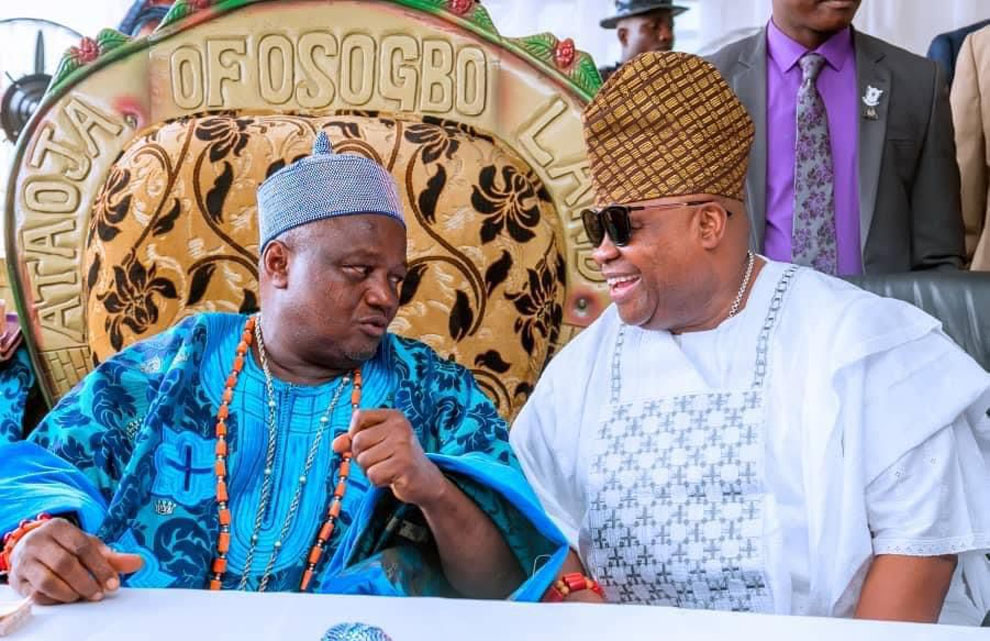
Adeleke Rejects Ataoja Palace Appointment, Reaffirms Oyebode as Osun Iyaloja-General
Adeleke Rejects Ataoja Palace Appointment, Reaffirms Oyebode as Osun Iyaloja-General
OSOGBO — Osun State Governor, Senator Ademola Adeleke, has reaffirmed Mrs Oyebode Mary as the Iyaloja-General of the state, declaring that any purported appointment of another person to the position is invalid.
The governor’s position followed an announcement reportedly emanating from the palace of the Ataoja of Osogbo concerning the appointment of a new Iyaloja-General.
In a statement issued on Friday by his spokesperson, Mallam Olawale Rasheed, Adeleke maintained that the authority to appoint the Iyaloja-General of Osun State rests with the state government.
The governor specifically warned market associations, traders and women across the state against recognising or acting on any announcement of a new Iyaloja-General from any quarter other than the state government.
READ ALSO:
- Flydubai Co-Pilot Attacked Captain With Axe in Attempted Terrorist Act, UAE Says
- Nigerian-Born Ex-Professor Jailed 78 Months Over $1.3m US Student Aid Fraud
- Police Arrest Man Caught Sexually Assaulting 12-Year-Old Girl in Car
According to him, “any announcement from any other quarter including the Osogbo Royal Palace is null and void.”
Adeleke further declared that Mrs Oyebode remains the legally recognised Iyaloja-General of Osun State and continues to enjoy the full backing and recognition of his administration.
The governor urged market leaders and womenfolk across the state to disregard any purported appointment of another person to the position, stressing that Mrs Oyebode remains the duly appointed Iyaloja-General under the authority of the state government.
He also appealed to traditional institutions, organisations and individuals to respect the law and remain within the boundaries of their respective mandates.
Adeleke cautioned against actions capable of creating tension or disturbing the peace of the state, urging all parties involved in the development to exercise restraint.
The governor’s statement could further deepen attention around the authority and processes governing the leadership of market associations in Osun State, particularly amid the conflicting positions attributed to the state government and the Osogbo traditional institution.
Adeleke Rejects Ataoja Palace Appointment, Reaffirms Oyebode as Osun Iyaloja-General
News
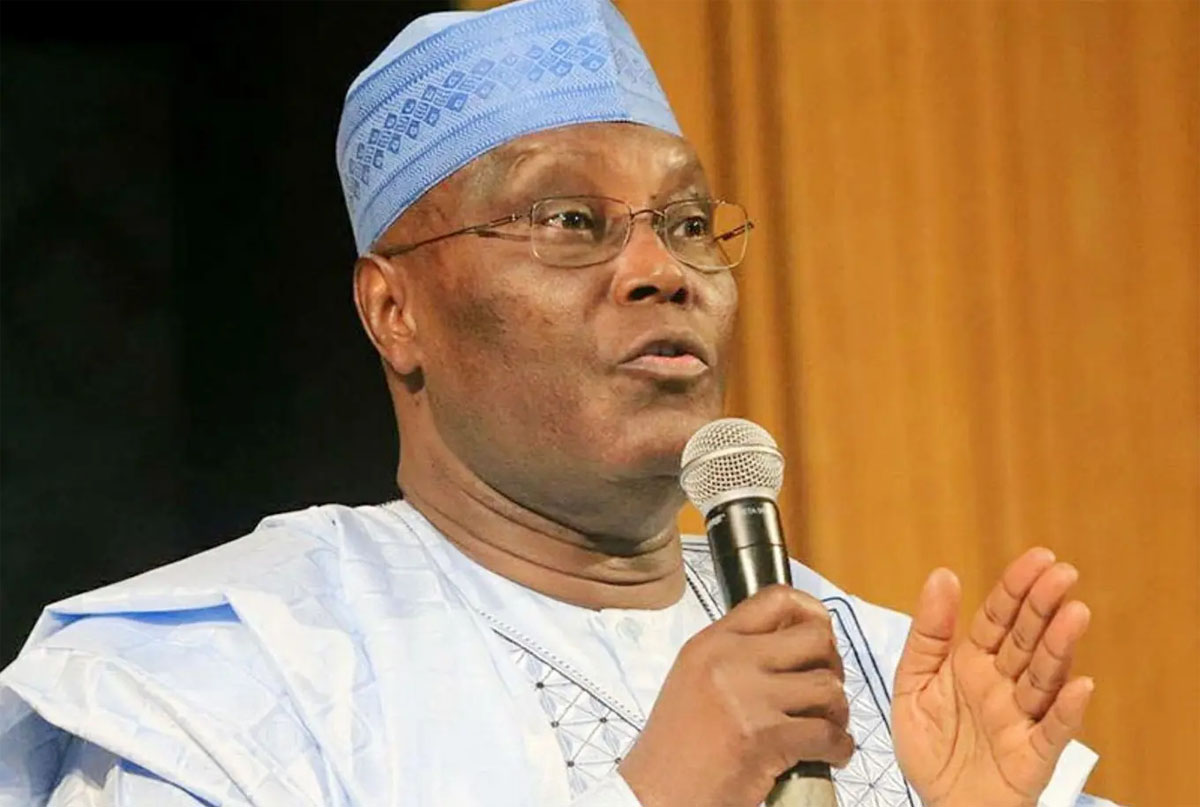
Atiku Challenges Tinubu’s Prosperity Claim, Says Nigerians Can Barely Afford to Live
Atiku Challenges Tinubu’s Prosperity Claim, Says Nigerians Can Barely Afford to Live
Former Vice President and African Democratic Congress (ADC) presidential candidate, Atiku Abubakar, has criticised President Bola Ahmed Tinubu’s claim that Nigeria has entered an era of prosperity, saying millions of Nigerians are still struggling to afford basic necessities.
Atiku made the remarks in his Independence Day address on Thursday as Nigeria marked its 66th anniversary, arguing that the economic gains highlighted by the government have yet to translate into improved living conditions for many households.
Tinubu, in his own Independence Day address, said Nigeria had moved from a period of difficult economic reforms into what he described as an era of shared and widespread prosperity. He said the government’s focus was now on lowering the cost of living, creating jobs, expanding production and improving opportunities for Nigerians.
Atiku, however, disputed that assessment, saying the reality confronting ordinary Nigerians was different from the picture presented by the government.
He argued that a reduction in the rate of inflation does not automatically restore the purchasing power lost by households after years of rising prices.
According to Atiku, the current N70,000 minimum wage can purchase about 50 litres of petrol, compared with about 118 litres that the former N30,000 minimum wage could buy in April 2023.
He also cited the rising prices of basic food items, including bread and eggs, as evidence of the pressure facing families.
READ ALSO:
- Edo Police Arrest 37-Year-Old Man Over Alleged Rape of 70-Year-Old Woman
- Why Ronaldo Left Portugal Camp Ahead of Denmark Clash
- 2027: Amaechi Vows to Resign If Nigeria Fails to Change Within One Year
The ADC candidate said his approach to reducing petrol prices would include a capped and budgeted production subsidy restricted to petrol refined in Nigeria. Under his proposal, imported petrol would not qualify for the subsidy.
He said the arrangement would have a spending limit, with the cost made public and payments independently audited. He argued that such a policy could reduce pump prices while supporting domestic refining and creating jobs.
Atiku also questioned the Federal Government’s reported cash transfers to vulnerable Nigerians, asking how more than 10 million beneficiaries were identified and paid.
He said the government should provide details of the beneficiaries and explain how the funds were disbursed.
The former vice president also raised concerns over Nigeria’s public debt, citing a debt stock of about N166.79 trillion as of the end of June 2026. He criticised the extension of the 2025 budget into 2026 and questioned the management of public resources.
On insecurity, Atiku said Nigerians continued to face threats from armed groups, while farmers in some communities remained unable to access their farms safely.
He also called for greater adherence to the rule of law, raising questions about the continued detention of certain individuals, including Sheikh Sani Khalifa Zaria and former Kaduna State governor Nasir El-Rufai.
On the case of Nnamdi Kanu, Atiku said the legal process should respect his right to appeal and that the grievances surrounding the case should be addressed through lawful means.
He also criticised the reported arrest of Nigerians over the wearing of T-shirts bearing the slogan “Tinubu Must Go”, arguing that political expression should not by itself be treated as a criminal offence.
Atiku further challenged the administration over its handling of the economy, saying Nigerians had endured substantial hardship following the removal of the petrol subsidy and other economic reforms.
He maintained that the benefits promised from the reforms had not yet been sufficiently felt by ordinary citizens.
The ADC candidate urged Nigerians to remain engaged in the political process ahead of the 2027 general election, calling on voters to protect their votes and participate actively in determining the country’s leadership.
Atiku said the central issue was whether government policies were improving the daily lives of Nigerians, particularly in the areas of food prices, transportation, employment, healthcare, security and household income.
His address came shortly after Tinubu told Nigerians that the government had completed the most difficult phase of its economic reforms and was now focused on translating those reforms into broader prosperity.
The contrasting Independence Day messages highlighted the competing assessments of Nigeria’s economic situation ahead of the 2027 elections, with Tinubu defending the direction of his reforms and Atiku arguing that the hardship experienced by many households remains unresolved.
Atiku Challenges Tinubu’s Prosperity Claim, Says Nigerians Can Barely Afford to Live
News
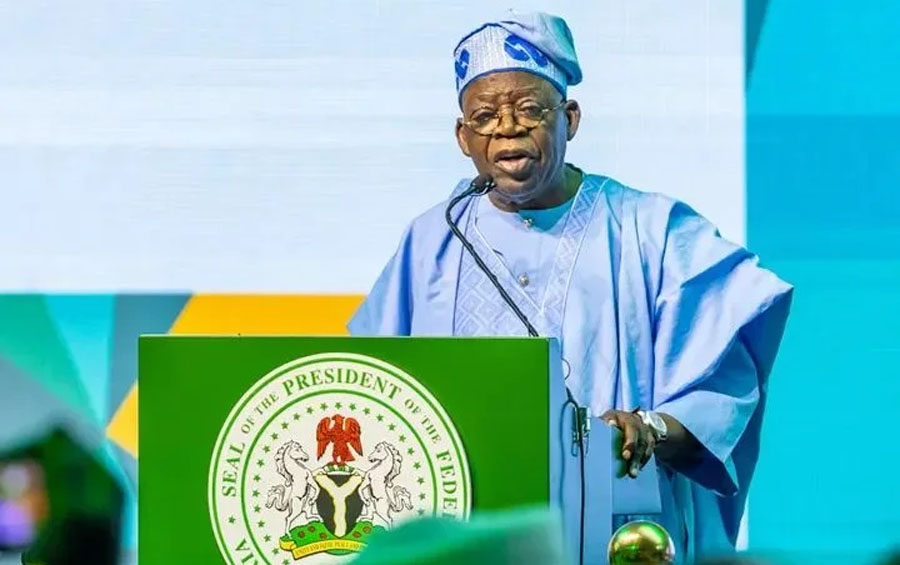
Nigeria at 66: Tinubu Unveils Fresh Push for Lower Costs, Jobs, Prosperity (Full Text)
Nigeria at 66: Tinubu Unveils Fresh Push for Lower Costs, Jobs, Prosperity (Full Text)
President Bola Ahmed Tinubu has declared that Nigeria is entering what he described as an “age of prosperity”, saying the focus of his administration will now shift from economic reforms to lower living costs, job creation, industrial growth and improved living standards.
Tinubu made the declaration in his 66th Independence Day address to Nigerians on Thursday, October 1, 2026, saying his administration had spent the past three years addressing what it regarded as longstanding economic distortions and was now moving towards what he called “shared and widespread prosperity.” (State House)
“The emergency treatment is over. The foundation has been repaired,” the President said, arguing that the country had reached a turning point after a difficult period of economic adjustment.
Tinubu said the next phase would concentrate on translating economic improvements into tangible benefits for Nigerians, particularly by reducing the cost of producing and transporting goods, expanding agricultural production and creating millions of productive opportunities.
According to the President, the government will pursue expanded mechanised irrigation and dry-season farming, improved access to seeds and fertiliser, greater agricultural mechanisation, storage facilities and better transportation infrastructure.
He said investments in roads, railways and ports would also help connect farms and factories to markets and reduce the cost of moving goods across the country.
READ ALSO:
- Israeli Actor, Flight Instructor Among Two Killed In California Plane Crash
- Flood Cuts Off Part of Agbarho-Ughelli Road, Strands Commuters in Delta
- Dangote Draws Battle Lines as Fuel Import Fight Heads Back to Court
Tinubu said the administration’s approach was based on lowering production costs so that savings could eventually be reflected in the prices paid by consumers.
He also placed job creation and industrialisation at the centre of the next phase of his economic programme, saying Nigeria’s large youth population could become an engine of production if provided with the right opportunities, skills, infrastructure and access to finance.
The President said government would use the country’s natural gas resources to support new industries and help businesses revive factories, while expanding digital connectivity and skills development.
“I want to see more Nigerians making things,” Tinubu said, outlining a vision in which Nigerian farms supply cities and factories, local businesses expand their exports and young Nigerians build technology companies and other enterprises.
On social protection, Tinubu acknowledged that millions of Nigerians still face difficulties paying for food, education, healthcare and transportation.
He said government would strengthen support for vulnerable households through the National Social Register, while continuing programmes such as the Nigerian Education Loan Fund (NELFUND) and CREDICORP.
The President also said the Federal Government would continue working with state and local governments to strengthen primary healthcare, basic education and other essential public services.
Tinubu said these interventions were intended to support vulnerable Nigerians while the broader economy expands, rather than serve as a permanent substitute for economic opportunity.
He also defended the administration’s economic reforms, arguing that the measures did not create Nigeria’s longstanding economic weaknesses but were intended to address them.
The President said the Nigerian economy had grown by more than four per cent in 2026, while inflation had fallen from its peak, foreign reserves had been rebuilt and the foreign exchange market had stabilised. He also said oil theft had declined and that Nigeria generated more than $6 billion in non-oil export revenue in 2025, which he described as a record. These figures were presented as part of the administration’s assessment of its economic performance. (State House)
Tinubu acknowledged the hardship associated with the reforms but argued that the government could not reverse in four years problems that had accumulated over several decades.
“We cannot erase in four years what accumulated over generations,” he said, while promising to change the country’s economic direction and steadily reduce poverty.
The President said the administration’s ultimate objective was not merely to manage poverty but to create conditions that would allow more Nigerians to move out of poverty through sustained economic growth and productive employment.
“The age of reform has done its work. Now begins the age of prosperity,” Tinubu declared.
He urged Nigerians to look ahead and support efforts to build what he described as a country of greater abundance and opportunity.
Tinubu concluded his Independence Day speech by calling for national unity and renewed confidence in Nigeria’s future, saying the country had corrected its economic direction and should now move forward without looking back. (State House)
Full Tinubu Independence Day speech
The complete 66th Independence Day address by President Bola Ahmed Tinubu, titled “From Reform to Prosperity,” is available in full on the official State House website. (State House)
Read Tinubu’s full 66th Independence Day address
Nigeria at 66: Tinubu Unveils Fresh Push for Lower Costs, Jobs, Prosperity (Full Text)
-
 metro3 days ago
Workers to Begin Nationwide Warning Strike Over Petrol Price, Wage Award
-
 metro3 days ago
[UPDATED] Imo Highway Attack: 10 Rescued after Gunmen Abducted NYSC Prospective Members
-
 Entertainment2 days ago
Phyna Knocks Out Nkechi Blessing in Fourth Round, Wins ₦50m, New Car
-
 metro1 day ago
NYSC Kidnap: Abductors Demand N950m for 19 Prospective Corps Members in Imo
-
 metro2 days ago
2027 Hajj: Nigeria Secures 10,000 Extra Slots, Allocation Hits 60,000
-
 metro3 days ago
Nigeria at 66: MURIC Urges Unity, Peace, Justice Ahead of 2027 Elections
-
 metro3 days ago
Bandits Kill Man, Abduct Wife, Children, Seven Others in Kaduna Community
-
 Entertainment2 days ago
Olu Jacobs Laid to Rest in Lagos as Dignitaries, Nollywood Stars Honour Screen Icon