

News
Buhari Congratulates Babalola at 91

President Muhammadu Buhari has congratulated Chief Afe Babalola, on his 91st birthday.
The Special Adviser to the President on Media and Publicity, Mr Femi Adesina, in a statement issued Thursday, said the President saluted the educationist for his high sense of patriotism, visionary leadership and penchant for always channelling his energy and resources into projects that directly impact the life of Nigerians, and providing wise counsels to leaders in both the private and public sectors on best ways to move the country forward.
“President Buhari congratulates Aare Babalola for another year added to his life, and more opportunities to give and show that sharing brings more joy than acquisition, while commending his antecedents in health, education and legal career, training more than 2,500 lawyers in the country, with 15 already recognised as Senior Advocates of Nigeria.
“As the renowned lawyer and philanthropist turns 91, President Buhari prays that the almighty God will bless him and his family, and grant him longer life to keep serving the nation and humanity,” the statement said.






News
2027: Davido Says Nobody Can Force Presidential Candidate on Him, Claims He Defeated 17 Governors With Phone
2027: Davido Says Nobody Can Force Presidential Candidate on Him, Claims He Defeated 17 Governors With Phone
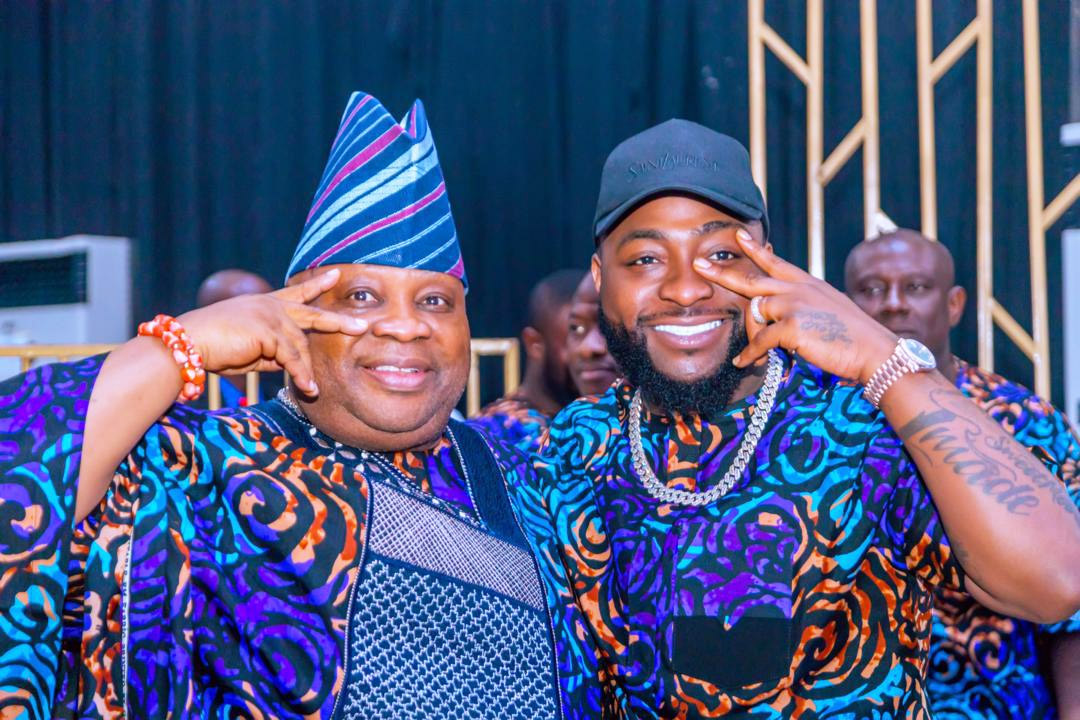
Nigerian Afrobeats star David Adeleke, popularly known as Davido, has declared that nobody can force him to support a presidential candidate in the 2027 general elections, insisting that his political choices remain personal despite his uncle’s endorsement of President Bola Ahmed Tinubu.
The singer made the remarks while reflecting on his involvement in the Osun State governorship election, where he campaigned for his uncle, Governor Ademola Adeleke, against the All Progressives Congress (APC).
Davido also claimed that he confronted the political influence and resources of 17 APC governors during the campaign, saying he relied largely on his mobile phone and social media presence to mobilise support.
“I defeated 17 governors with all their power, with all their immunity, with all their aides, with all their escort commanders, with all their DSS, with all their billions. I defeated them with my phone,” the singer said during an interview with News Central TV.
The remark referred to his role in the Osun governorship contest and was Davido’s personal assessment of the campaign, rather than an independently established account of the involvement of 17 governors.
The singer’s comments have drawn renewed attention amid discussions about the political influence of celebrities and expectations that he might support a presidential candidate in 2027 following his involvement in his uncle’s campaign.
Davido said he had received messages from people urging him to replicate his support for Governor Adeleke at the national level. However, he rejected the suggestion that his participation in the Osun election meant he had already chosen a presidential candidate.
READ ALSO:
- NRC Denies Ticket Racketeering, Says Abuja-Kaduna Rail Demand Exceeds Seats by 10-Fold
- FG Draws Red Line on Fuel Subsidy, Warns of Naira Crisis if Reforms Are Reversed
- NRC Denies Ticket Racketeering, Says Abuja-Kaduna Rail Demand Exceeds Seats by 10-Fold
“For now, I feel like I did what I had to do for the Osun people and my family. You can’t force me to have a presidential candidate,” he said.
He also made it clear that Governor Adeleke’s political decisions did not automatically determine his own position.
The Osun governor declared support for President Tinubu after his electoral victory, but Davido said his uncle might have personal or state-related reasons for the decision.
According to the singer, maintaining a cordial relationship with the Federal Government could be beneficial to a state administration seeking support and allocations. He stressed, however, that such considerations were for his uncle to make.
Davido further stated that he was not prepared to endorse any presidential candidate at the time of the interview and ruled out supporting the ruling APC, while leaving open the possibility that his position could change.
The singer recalled supporting political candidates in previous elections, including former Vice-President Atiku Abubakar when he was associated with the Peoples Democratic Party. He also referred to his involvement in earlier political campaigns linked to his late uncle, Isiaka Adeleke.
His latest position highlights the distinction between his support for Governor Adeleke in a state election and his personal decision about the next presidential contest.
Davido has also previously discussed the challenges facing Nigeria’s electoral process and questioned whether the country’s political system adequately protects voters’ choices. During the interview, he reflected on the difficulties of participating in politics and the responsibilities that come with seeking public office.
Despite his involvement in political campaigns, the award-winning musician has not announced a presidential candidate for 2027.
His comments come as political parties and prospective candidates prepare for the next general election, with public figures and entertainers likely to remain part of the wider debate over political participation and voter mobilisation.
For now, Davido says he intends to make his own decision rather than follow pressure from supporters or family members.
2027: Davido Says Nobody Can Force Presidential Candidate on Him, Claims He Defeated 17 Governors With Phone
News
FG Draws Red Line on Fuel Subsidy, Warns of Naira Crisis if Reforms Are Reversed
FG Draws Red Line on Fuel Subsidy, Warns of Naira Crisis if Reforms Are Reversed
The Federal Government has ruled out a return to petrol subsidy and multiple foreign exchange rates, warning that reversing the economic reforms introduced under President Bola Ahmed Tinubu could worsen Nigeria’s fiscal position, weaken the naira and increase the cost of living.
The Minister of Finance and Coordinating Minister of the Economy, Taiwo Oyedele, reiterated the government’s position on Saturday, October 17, 2026, amid renewed debate over fuel prices and economic policy ahead of the 2027 general elections.
Speaking on the sidelines of the World Bank and International Monetary Fund meetings in Bangkok, Thailand, Oyedele said the administration would not reverse its decisions to remove petrol subsidies and liberalise the foreign exchange market.
He maintained that the government’s priority was to preserve the reforms while pursuing measures to ease the pressure of high fuel prices on households and businesses.
The minister’s latest comments followed his October 8 briefing in Abuja, where he warned that restoring petrol subsidy could cost Nigeria more than ₦20 trillion annually if petrol prices were returned to their pre-reform levels.
According to Oyedele, even a proposal to sell petrol at ₦500 per litre could require more than ₦16 trillion annually, depending on consumption and other factors.
He argued that financing such expenditure would put significant pressure on public finances and potentially divert resources from essential responsibilities, including salaries, pensions, education, healthcare, infrastructure and security.
Oyedele also warned that reversing the reforms could undermine investor confidence, increase borrowing costs and put further pressure on the naira. He said the exchange rate could approach ₦3,000 to the dollar within months under the scenario he outlined, while subsidised petrol could still cost at least ₦2,000 per litre.
READ ALSO:
- NRC Denies Ticket Racketeering, Says Abuja-Kaduna Rail Demand Exceeds Seats by 10-Fold
- Tinubu Reappoints INEC Commissioner, Nominates Six Others Ahead of 2027 Elections
- Trump’s White House Press Secretary Quits After Just Five Days as Credentials Storm Erupts
These figures were presented as warnings about the possible consequences of restoring subsidy, rather than confirmed predictions of future exchange rates or petrol prices.
The minister argued that a subsidy does not eliminate the actual cost of petrol but transfers part of the bill from consumers to the government. Since crude oil, shipping and many refining inputs are priced in dollars, he said, keeping domestic petrol prices artificially low could expose public finances to additional foreign exchange costs.
He also warned that subsidised petrol could encourage cross-border smuggling if prices in Nigeria fell significantly below those in neighbouring countries, potentially leaving Nigerian taxpayers to finance fuel consumed elsewhere.
Oyedele further rejected calls to restore multiple foreign exchange rates, arguing that doing so would recreate distortions the government sought to eliminate through market liberalisation.
Under the previous system, different exchange rates operated across official and other market segments. The government argued that the arrangement encouraged arbitrage, reduced transparency and weakened confidence in the foreign exchange market.
The administration has maintained that a more unified, market-driven system would improve transparency and allow the naira’s value to respond more closely to market conditions, although exchange-rate volatility and the cost of living remain major concerns for Nigerians.
Despite ruling out a return to broad-based fuel subsidy, the government has announced temporary measures intended to moderate petrol prices.
One of the measures is a 30-day petrol discount at Nigerian National Petroleum Company Limited (NNPC) Retail stations, introduced in October. Under the arrangement, NNPC Retail agreed to forgo its retail profit margin and sell petrol at cost for the period, with priority intended for public transport operators.
Oyedele has insisted that the arrangement is not a return to fuel subsidy because the discount is borne by the company through reduced margins rather than payments from public funds. The distinction has nevertheless attracted debate, with critics questioning whether the intervention amounts to a form of subsidy in practice.
The government has also proposed a ₦1,350-per-litre ceiling on the ex-gantry or landing cost of petrol to moderate sudden price movements caused by changes in global crude oil prices and exchange rates.
The proposed ceiling is not a fixed pump price of ₦1,350 per litre. Under the mechanism outlined by the minister, refiners and importers would initially absorb costs above the ceiling and seek to recover the shortfall when market conditions improve. The arrangement is intended to smooth price fluctuations rather than permanently fix petrol prices.
Other measures highlighted by the government include support for local refining, the expansion of compressed natural gas (CNG) as an alternative transport fuel, tax and duty waivers on petroleum products, and targeted assistance for vulnerable households and businesses.
The government says such interventions can provide temporary relief without recreating the large and recurring liabilities associated with the former subsidy regime.
The fuel subsidy debate has intensified as Nigerians continue to face the effects of higher petrol prices on transport fares, food distribution, electricity generation and business operating costs.
The removal of petrol subsidy in May 2023 was one of Tinubu’s major economic policy decisions. The government has defended the reform as necessary to reduce fiscal pressure and redirect resources towards other priorities, while critics argue that the resulting rise in living costs has placed a heavy burden on households and businesses.
Calls for a return to subsidy have featured prominently in political discussions ahead of the 2027 elections, with proponents arguing that government intervention is needed to provide relief to consumers.
Oyedele said the government remained open to alternative proposals but insisted that anyone advocating a return to subsidy should explain its total cost, how it would be financed sustainably and the price consumers would ultimately pay at filling stations.
The administration’s challenge remains balancing its commitment to market-oriented reforms with demands for more immediate and meaningful relief for Nigerians struggling with the high cost of living.
FG Draws Red Line on Fuel Subsidy, Warns of Naira Crisis if Reforms Are Reversed
News
Tinubu Reappoints INEC Commissioner, Nominates Six Others Ahead of 2027 Elections
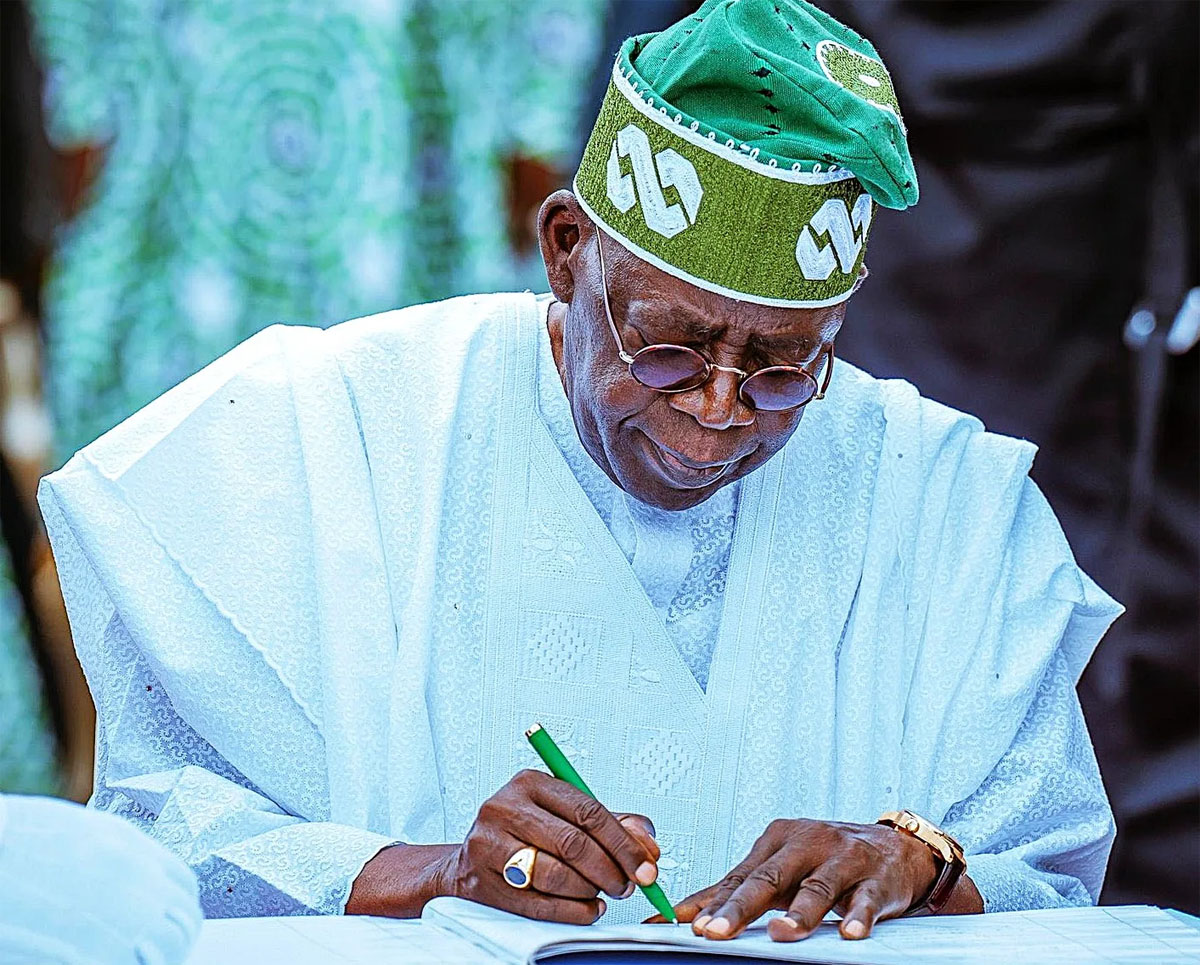
President Bola Ahmed Tinubu has reappointed Dr Bala Bila as a National Commissioner of the Independent National Electoral Commission (INEC) and nominated six other officials to fill vacancies in the electoral body ahead of the 2027 general elections.
The nominations cover four National Commissioner positions and two Resident Electoral Commissioner (REC) positions. All six nominees are expected to undergo screening and confirmation by the Senate before assuming their respective offices.
The Presidency announced the appointments in a statement issued on Friday, October 16, 2026, by Bayo Onanuga, Special Adviser to the President on Information and Strategy.
According to the statement, the nominations became necessary following the expiration of the tenures of serving officials, leaving vacancies within the electoral commission.
Among the nominees is Professor Mustapha Aliu, who has been nominated to replace Professor Abdullahi Zuru as the National Commissioner representing the North-West.
Bashir Muhammed Umar was nominated to replace Professor Muhammad Adamu as the National Commissioner representing the North-Central zone.
READ ALSO:
- Imodi-Ijebu Muslim Community Bets on 20 Chiefs to Drive Education, Economic Growth
- Imodi-Ijebu Muslim Community Bets on 20 Chiefs to Drive Education, Economic Growth
- Suspended Archbishop Ibezim Drags Anglican Primate to Court, Challenges Six-Month Leave
Tinubu also nominated Mrs Oluwatoyin Babalola, the current Resident Electoral Commissioner in Osun State, as the National Commissioner representing the South-West. She is expected to succeed Professor Cornelius Ajayi, whose tenure expires on October 24, 2026.
For the Resident Electoral Commissioner positions, the President nominated Dr Samuel Akinjide Akinleye, a retired permanent secretary, to represent Ekiti State.
Zahradden Basiru Sanusi, from Jigawa State, was nominated to replace Professor Saidu Ahmed Babura as a Resident Electoral Commissioner.
Meanwhile, Tinubu reappointed Bala Bila to continue serving as the National Commissioner representing the North-East.
The President urged the Senate to expedite the screening and confirmation process to enable INEC to fill the vacancies ahead of the forthcoming general elections, which the Presidency says are scheduled for January 2027.
The appointments come as INEC prepares for the next general elections, with the commission responsible for managing electoral activities, including voter registration, political party compliance, candidate nominations and the conduct of national elections.
The Senate’s consideration of the nominees will determine when the newly nominated officials can formally assume their respective positions.
With the 2027 elections approaching, the appointments are part of efforts to fill vacant positions within the electoral body and ensure that its leadership structure is in place ahead of the polls.
The nominations do not take effect as confirmed appointments until the required Senate screening and confirmation process has been completed.
Tinubu Reappoints INEC Commissioner, Nominates Six Others Ahead of 2027 Elections
-

 metro1 day ago
₦130m Toyota Tundra Wrecked: Lagos Dealer Questions Police Over Suspect’s Release
-

 News1 day ago
₦200m Fake Alcohol Packaging Uncovered as NAFDAC Raids Aba Market
-

 metro2 days ago
Borno Woman Jailed Two Years for Sexual Exploitation of 16-Year-Old Girl
-

 metro2 days ago
Outrage as Residents Scoop Groundnut Oil From Lagos Tanker Crash Scene
-

 International3 days ago
Houthi Missile Targeting Riyadh Shot Down as Debris Injures Four, Damages 15 Homes
-
 International3 days ago
Nigeria Secures UN Human Rights Council Seat With 172 Votes
-
 Health3 days ago
Cosmetics Top Fake Products as NAFDAC Seals 179 Establishments, Arrests 52
-
 Sports23 hours ago
Real Madrid Demand Tebas’ Exit After Explosive Nazi Propaganda Row
You must be logged in to post a comment Login