

Railway
Breaking: Reprive as railway workers call off strike

Nigerian railway workers have called off their warning strike less than 48 hours after embarking on a nationwide three-day industrial action.
The decision to end the strike was taken after the leaders of the Nigeria Railway Workers Union (NUR) and the Senior Staff Association had met in Abuja with the board of the Nigerian Railway Corporation (NRC), Federal Ministry of Transportation and the NRC management.
This is contained in a communique issued on Friday jointly signed by Innocent Ajiji (for NUR), Aliyu Mainasara (SSA) and Dr Monsurat Omotayo (NRC management), a copy of which was obtained by Newstrends from the union.
Earlier, Managing Director of the NRC, Engr Fidet Okhiria, had appealed to the workers to return to work, saying their demands were receiving accelerated consideration.
Part of the resolutions is that a committee be immediately set up to review the workers’ condition of service.
It was also agreed that all train crew members should be given insurance cover along with the passengers and the goods in transit.
Okhiria said during a press conference in Lagos on Friday that the Federal Government through the National Salaries, Incomes & Wages Commission (NSIWC) had almost concluded the process of increasing the workers’ salaries.
He said, “The workers are on three-day warning strike. The management met with them several times, the board met with them and the Minister even met with them and we thought issues have been resolved, only to come back and say they are going on warning strike.
“As they are on strike, we are still discussing with them. We are working hard to make sure that they come back as soon possible. In communication, the way people understand it is different from others.
“So we are now talking to them to understand with us and understand with government and let them cut short the warning strike. Who is government? We are all government and it would not be proper, that now that the government is bringing us to limelight, we use our hands to disrupt what the government is doing.
We can see the attention railway is getting now. Six, four, five years back, that attention was not there. The attention is there because government is putting efforts to make sure railway is viable in Nigeria.
“Money is not everything. People and joy and what we provide for humanity override money. So we will work so that their welfare would be better off, for all Nigerians, not just railway workers.”
The workers had commenced the strike on Thursday, demanding an increase in salary and better welfare package. They also protested at Idu Station in Abuja on Thursday.
The NRC had earlier ordered the suspension of train services between Abuja and Kaduna, Lagos and Ibadan, and Warri due to the strike.
See the communique below
COMMUNIQUE OF RESOLUTIONS MADE AFTER THE MEETINGS WITH THE NRC BOARD IN ABUJA AND ANOTHER WITH THE FMOT, NRC MANAGEMENT, AND THE LEADERSHIP OF NUR & SSA IN IKEJA LAGOS ON FRIDAY, 19TH NOVEMBER 2021 OVER THE WORKERS’ AGITATION FOR ENHANCED SALARY REGIME; IMPROVED WELFARE, ET AL
The followings are the resolutions made between the above captioned parties:
i. a committee has been set up with immediate effect on the review of the standard condition of service with timeline lasting to the 31st day of January 2022;
ii. it has been agreed that the personal data on deceased workers be collected for processing for immediate payment as every worker is already covered by the group life assurance scheme;
iii. it has been agreed that all the train crews be given insurance cover as the train passengers and the goods in transit;
iv. enhanced salary regime has been taken up as a priority by the NRC Board and FMoT with a view to securing approval for implementation in the earliest time possible;
v. it has been agreed that no member of staff shall be victimized as a result of his/her participation in the 3-day industrial action of November 2021;
vi. by this communique and foregoing resolutions, the 3-day warning strike action is hereby suspended. Therefore, workers are hereby directed to resume work with immediate effect.
Signed
Comr. Aliyu Mainasara
PG, SSA
Signed
Comr. Innocent L. Ajiji
PG NUR
Signed
Dr. Mrs. Monsurat O. Omotayo
Director Admin/HR
For: NRC management






Railway
NRC graduates 31 locomotive pilots to power rail expansion, freight reforms
NRC graduates 31 locomotive pilots to power rail expansion, freight reforms
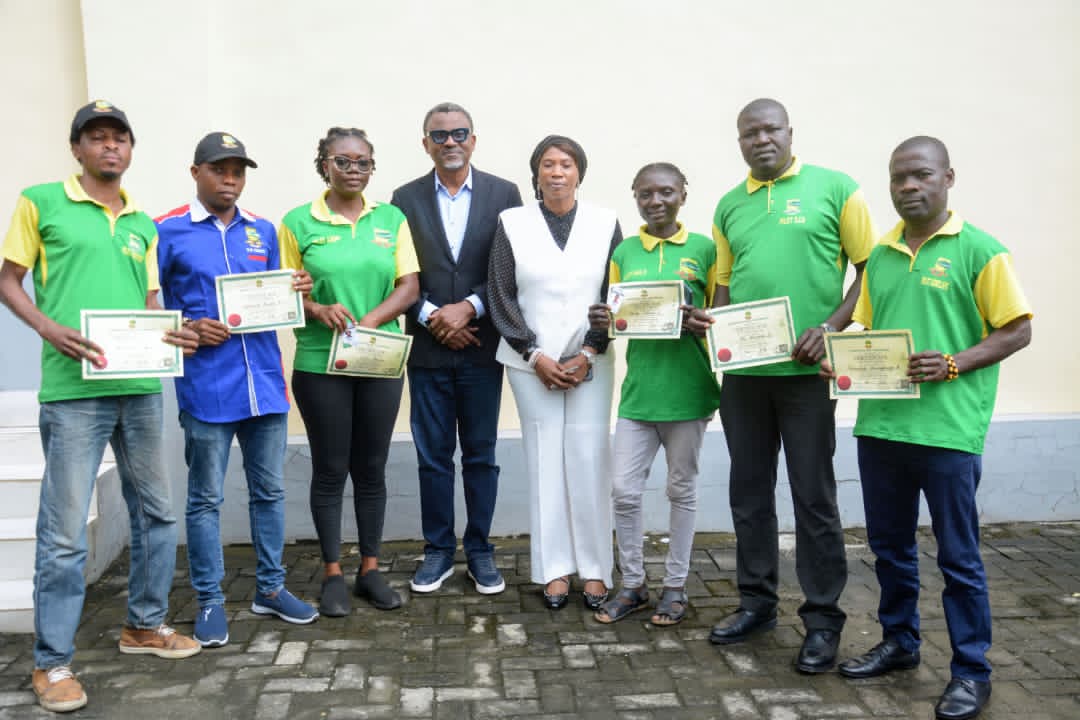
The Nigerian Railway Corporation (NRC) has strengthened its drive to reposition rail transportation with the graduation of 31 newly trained locomotive pilots, declaring that a new generation of skilled operators will be at the heart of the Federal Government’s railway expansion and freight revolution.
Speaking at the graduation ceremony, the Managing Director of the NRC, Dr. Kayode Opeifa, described locomotive pilots as the “driving force” behind the corporation’s ongoing reforms, stressing that the graduates would play a pivotal role in improving safety, efficiency and reliability across Nigeria’s rail network.
Represented by the Director of Administration and Human Resources, Dr. Monsurat Omotayo, Opeifa said the graduates had completed more than one year of rigorous classroom and practical training, reflecting the corporation’s commitment to professionalism and operational excellence.
He said the pilots would be central to the expansion of railway operations nationwide, particularly as the Federal Government pursues partnerships with state governments to develop rail infrastructure and provide affordable, reliable transportation.
According to him, the corporation’s Track Access Policy and freight transportation reforms remain top priorities.
“As locomotive pilots, you will be at the centre of these initiatives and the future of railway transportation in Nigeria,” Opeifa said.
He assured the graduates—including two women—that the corporation would continue to invest in their professional development through exposure to global best practices aimed at enhancing operational safety and efficiency.
Earlier, the Assistant Director, Motive Power, Mr. Abiodun Olokun, disclosed that 45 employees drawn from different operational departments were selected for the training programme conducted at the NRC Training Schools in Lagos and Zaria, Kaduna State.
He explained that while 31 trainees successfully completed the programme, 11 were retained for further practical training to strengthen their competence. Two others did not meet the required performance standard, while one trainee was unable to complete the programme after being involved in a road accident. The three were returned to their respective departments.
Olokun said the trainees underwent three months of intensive classroom instruction, followed by six months of practical exposure across operational departments and simulator training in Zaria.
“The programme was designed to expose the trainees not only to locomotive operations but also to the entire railway operating environment,” he said.
Chief Locomotive Instructor Mr. Godwin Edet described the graduates as exceptional in both theory and practical performance, expressing confidence that they could compete favourably with locomotive operators anywhere in the world.
The Technical Adviser to the Managing Director on Railway Operations and Services, Mr. Adeife Olukolade, urged the graduates to strictly adhere to the operational rule book, noting that discipline and compliance with safety procedures remain the best safeguards against accidents.
Also speaking, the Director of Operations, Mr. Akin Osinowo, reminded the new pilots that they would be responsible for the safety of hundreds of passengers and the movement of freight, an area receiving renewed government attention.
The Director of Civil Engineering and New Lines, Engr. Adekunle Ayeni, described the graduation as a sign of renewed hope for the corporation and called for the recruitment and training of younger engineers to replace ageing personnel.
Similarly, the Deputy Director, Mechanical, Electrical, Signals and Telecommunications, Engr. Habeeb Olakunle Alaka, urged the graduates to collaborate closely with engineers by providing operational feedback that would improve equipment performance and overall efficiency.
Speaking on behalf of the graduating class, Amina Oden thanked the management for investing in their development and pledged that the graduates would uphold the highest standards of professionalism, discipline and dedication in the discharge of their duties.
The ceremony ended with the presentation of souvenirs to the NRC Managing Director, Dr. Kayode Opeifa, and the Director of Operations, Mr. Akin Osinowo, by the graduating locomotive pilots.
Railway
Oyetola, VP’s aide, Opeifa to drive discussions at 2026 TCAN Transport Summit
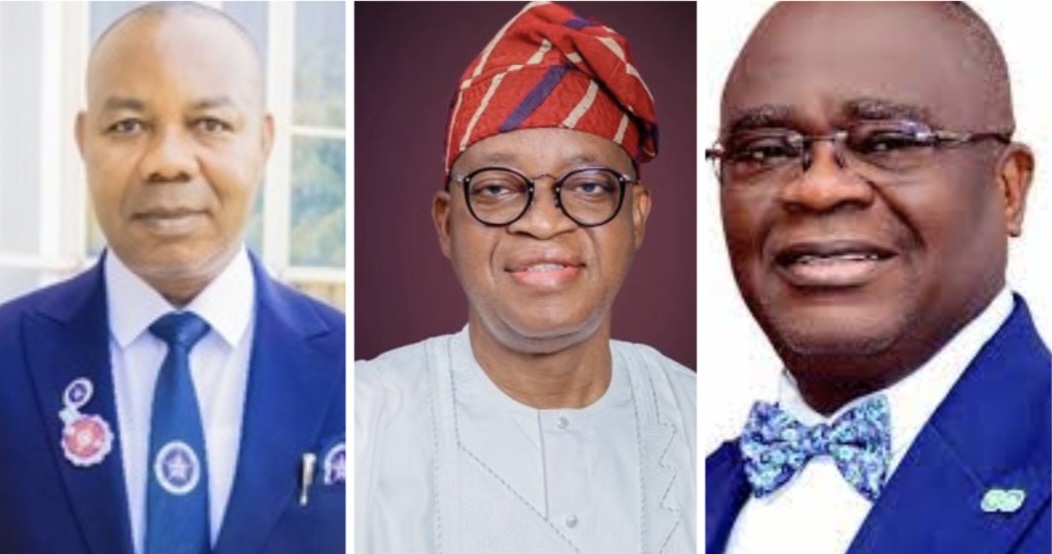
Oyetola, VP’s aide, Opeifa to drive discussions at 2026 TCAN Transport Summit
LAGOS – Nigeria’s drive to build a more efficient and integrated transportation system will take centre stage on September 24 as the Minister of Marine and Blue Economy, Dr Adegboyega Oyetola, the Technical Adviser to the Vice President on Transportation, Logistics and Innovation, Dr Segun Obayendo, and the Managing Director of the Nigerian Railway Corporation (NRC), Dr Kayode Opeifa, have confirmed their participation in the 2026 Transportation Summit organised by the Transportation Correspondents Association of Nigeria (TCAN).
Their participation is expected to provide a major boost to the annual summit, which has evolved into one of the country’s foremost platforms for discussions on transportation policy, infrastructure development, logistics and sustainable mobility.
The summit, themed “Unlocking Nigeria’s Economic Growth Through Transportation Logistics,” will bring together policymakers, regulators, transport operators, industry leaders, development partners, academics and other stakeholders to chart practical pathways for strengthening Nigeria’s logistics ecosystem and accelerating economic growth.
Participants will examine the current state of the nation’s transportation architecture across the road, rail, maritime and aviation sectors, while identifying solutions to the bottlenecks hindering seamless movement of passengers and cargo.
Discussions will also focus on multimodal transport integration, investment opportunities within the logistics and supply chains, digital transformation, infrastructure financing, and public-private partnership initiatives.
READ ALSO:
- Is Nigeria’s Electricity Tariff Going Up? FG Finally Breaks Silence
- ISWAP finance chief surrenders to Nigerian troops with two children in Borno
- Al-Mustapha Fires Back: Ex-DSS Officer’s Account of Abacha’s Death Is a Lie, I Have CCTV Evidence
TCAN Chairman, Mr Tola Adenubi, said the summit would equally review regulatory frameworks needed to improve operational efficiency and enhance Nigeria’s competitiveness in the global logistics industry.
According to him, the confirmation by Oyetola, Obayendo and Opeifa underscores the Federal Government’s commitment to engaging stakeholders in driving reforms that will reposition the nation’s transport sector.
Oyetola is expected to deliver the keynote address, outlining the Federal Government’s agenda for the marine and logistics sector, ongoing reforms, infrastructure investments and policies aimed at improving intermodal connectivity, boosting port efficiency and strengthening the country’s logistics value chain.
Obayendo will provide insights into the transportation and logistics components of President Bola Ahmed Tinubu’s Renewed Hope Agenda, highlighting key reforms and their impact on national economic development.
Opeifa, on his part, will present updates on the railway modernisation programme, operational improvements, rail safety, passenger and freight services, and the expanding role of the Nigerian Railway Corporation in supporting economic growth.
Expressing optimism over the calibre of participants, Adenubi said the summit would offer stakeholders a rare opportunity to engage directly with key government officials shaping Nigeria’s transportation future.
“We are delighted that the Honourable Minister of Marine and Blue Economy, Dr Adegboyega Oyetola, the Technical Adviser to the Vice President on Transportation, Logistics and Innovation, Dr Segun Obayendo, and the Managing Director of the Nigerian Railway Corporation, Dr Kayode Opeifa, have accepted our invitation to participate in the 2026 TCAN Summit.
“Their presence will provide participants with first-hand insights into the Federal Government’s vision for the transport sector while creating opportunities for meaningful engagement between policymakers, industry operators and the media,” he said.
Beyond the keynote sessions, the summit will feature presentations by government agencies and leading players across the transportation and logistics value chain, alongside networking sessions designed to strengthen collaboration across the road, rail, maritime, aviation and multimodal transport sectors.
As part of the event, TCAN will also recognise individuals and organisations that have made significant contributions to the growth of Nigeria’s transport industry through its “Champion of Transport Industry Development” compendium.
The summit is scheduled to hold on September 24, 2026, at Radisson Hotel, Ikeja, Lagos.
Oyetola, VP’s aide, Opeifa to drive discussions at 2026 TCAN Transport Summit
Railway
NRC, Police Intensify Crackdown on Railway Vandals as Opeifa Pushes for Tougher Asset Protection
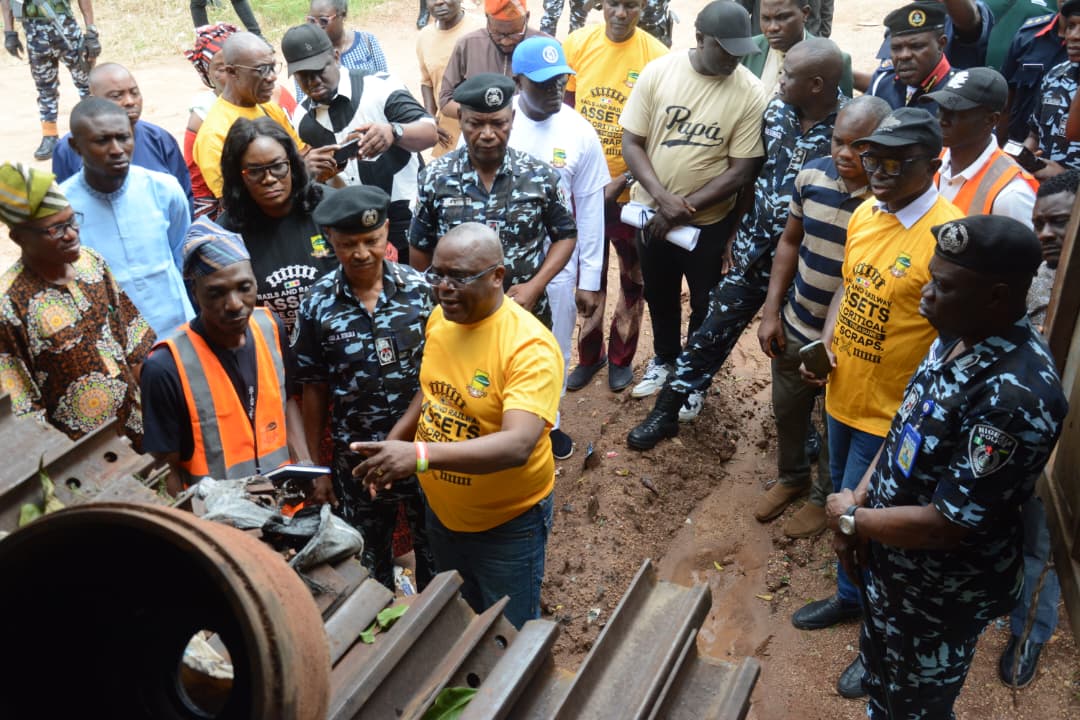
NRC, Police Intensify Crackdown on Railway Vandals as Opeifa Pushes for Tougher Asset Protection
Managing Director of the Nigerian Railway Corporation (NRC), Dr. Kayode Opeifa, has vowed to strengthen the Corporation’s partnership with the Nigeria Police Force and other security agencies to combat vandalism and safeguard Nigeria’s railway infrastructure, following the recent arrest of three suspected railway vandals and the recovery of stolen materials valued at about ₦200 million.
Opeifa made the pledge on Friday during a courtesy visit to the Commissioner of Police, Oyo State Command, CP Olugbenga Ayodeji Abimbola, at the Command Headquarters in Eleyele, Ibadan.
He described the nation’s railway infrastructure as a strategic national asset that must be protected from criminal activities capable of disrupting rail operations and undermining the Federal Government’s investments in the sector.
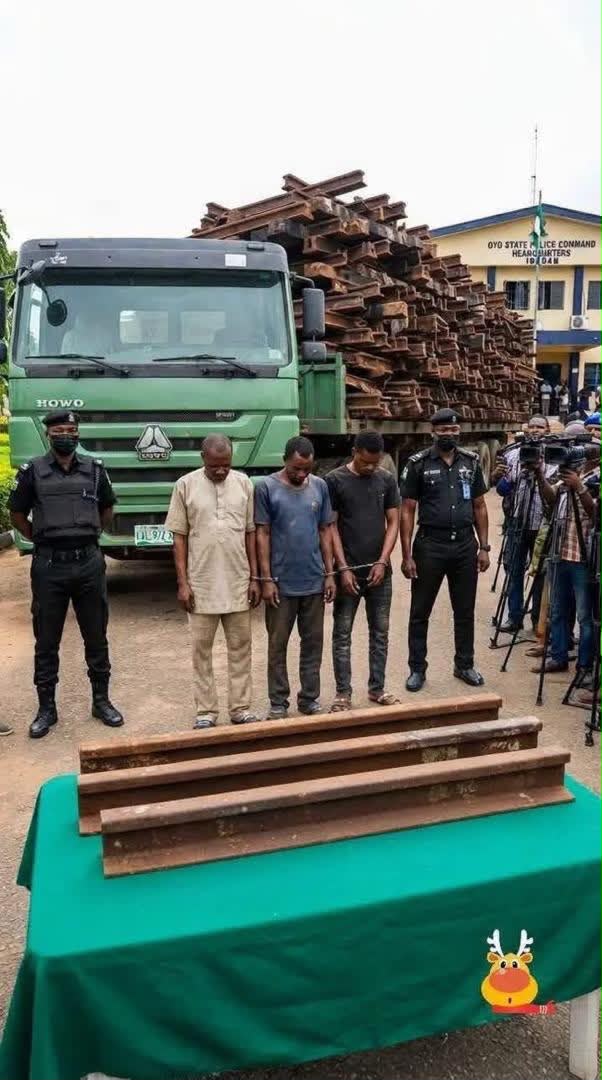
Accompanied by the Commissioner of Police, Nigeria Railway Police Command, CP Lasisi Titilola, Opeifa said the NRC would continue to work closely with security agencies to ensure that all suspects arrested for vandalising railway facilities are thoroughly investigated and prosecuted to serve as a deterrent to others.
The NRC boss praised the Oyo State Police Command and the Nigeria Railway Police Command for their professionalism, vigilance and swift response, which led to the arrest of the three suspects during an intelligence-led operation.
The suspects were intercepted while allegedly transporting vandalised railway materials from Niger State to Lagos, with the recovered items estimated to be worth about ₦200 million.
Describing the operation as a significant breakthrough in the fight against railway vandalism, Opeifa said the success underscored the value of sustained collaboration between the Corporation and security agencies in protecting critical public infrastructure.
He reaffirmed the Corporation’s resolve to deepen cooperation with the police, other security agencies, state governments, host communities and relevant stakeholders to curb vandalism, theft and sabotage across the country’s railway network.
Opeifa also appealed to members of the public to support the campaign against railway vandalism by providing credible and timely information that could help security agencies prevent attacks on railway facilities.
“The Nigerian Railway Corporation remains committed to delivering safe, reliable and sustainable rail transportation while working closely with security agencies and other stakeholders to protect the nation’s railway infrastructure,” he said.
Responding, the Commissioner of Police, Oyo State Command, CP Olugbenga Ayodeji Abimbola, called on the National Assembly to review existing laws on vandalism of critical national infrastructure by prescribing stiffer penalties for offenders.
He warned vandals and other criminal elements to stay away from Oyo State, assuring that the Command would continue to track, arrest and prosecute anyone involved in the destruction or theft of public infrastructure.
Abimbola added that the three suspects and the recovered railway materials would be handed over to the Nigeria Railway Police Command for further investigation and prosecution.
The renewed security collaboration comes as the NRC intensifies efforts to protect rail infrastructure amid ongoing investments by the Federal Government to modernise Nigeria’s railway network and improve the safety and reliability of rail transport nationwide.
-
 Education3 days ago
Nigerian Young Academy, LASU to Host 16th International Conference on Convergent Research
-
 News3 days ago
Trump smuggled out of Turkey in catering truck over Iran threat
-
 International24 hours ago
Iran Had Detailed Intel on Trump’s Location Before Secret Turkey Escape
-
 News2 days ago
Tinubu Vows to Secure Nigeria, Declares Unity Non-Negotiable Amid Worsening Insecurity
-
 News24 hours ago
FG to Attach 300 NYSC Corps Members to CNG Workshops for Skills Training
-

 metro2 days ago
Nigeria Needs Competent, Ethical Young Leaders, Says HAVEK Leadership Academy
-

 Auto3 days ago
Omoda, Jaecoo Shake Global Auto Market, Hit One Million Sales in Three Years
-
 metro19 hours ago
Seven Miners Killed in Plateau Mining Pit Collapse, Renewing Urgent Calls for Safety Reform